David Held Saul's Life Twice and Let Him Go Both Times
Doeg watched the bread change hands at Nob. Saul's men would not touch the priests. Doeg took a few of his own kind and did it.
Table of Contents
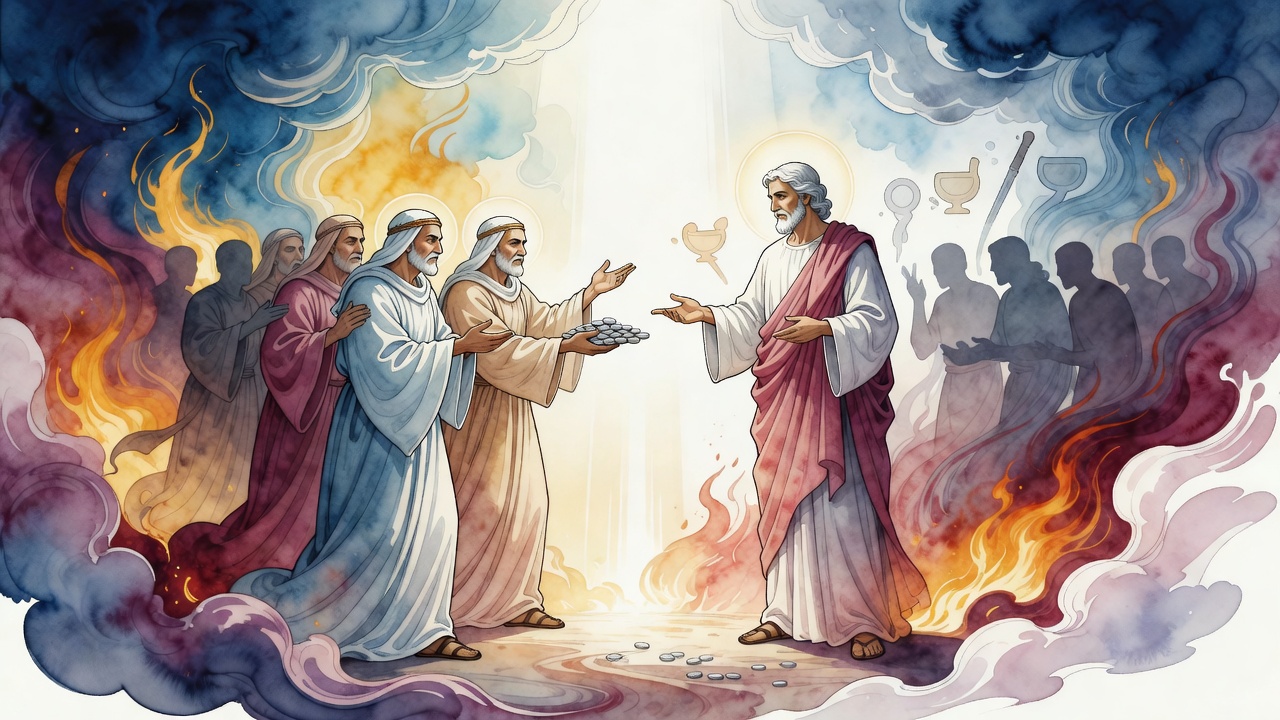
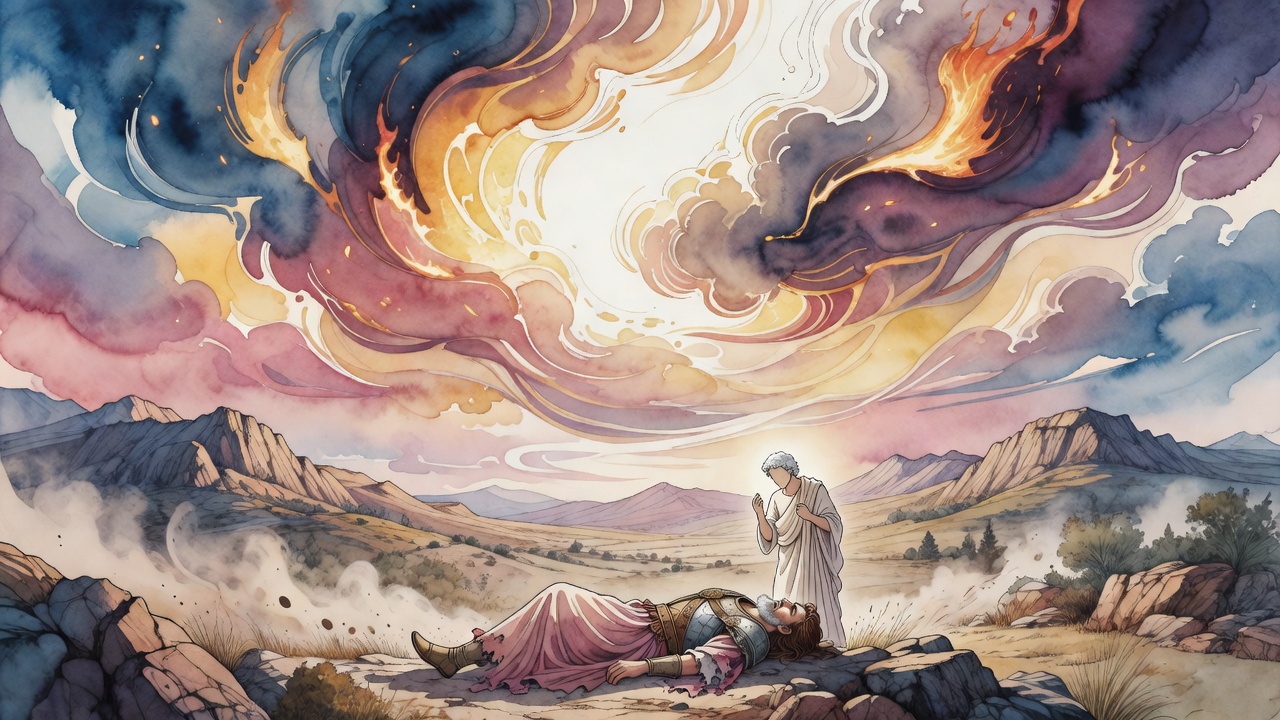
David came into Nob hungry and unarmed, and the high priest Ahimelech gave him bread and put a sword in his hands. It was the giant's own sword, the one taken off Goliath in the valley, kept behind the ephod like a trophy.
 Click for full size
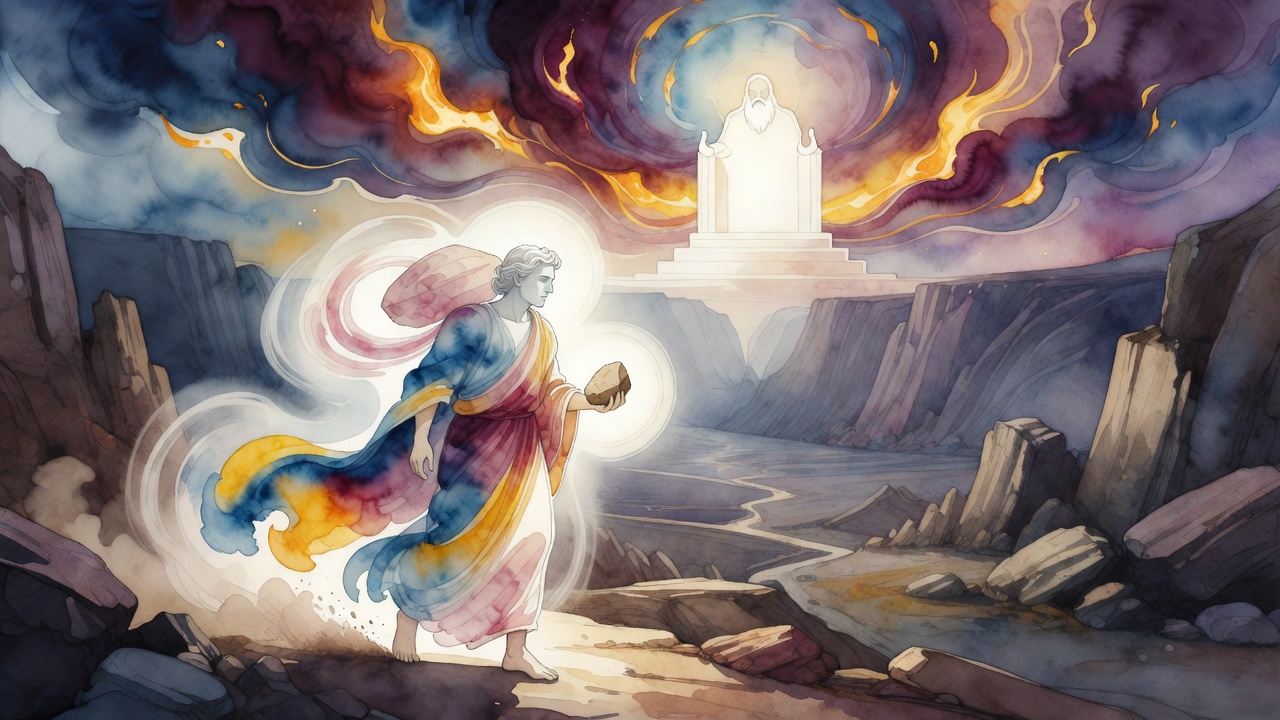
Killing that giant had been the easy one. Goliath had come out morning and evening for forty days shouting at Israel, and when the day came the ground took hold of him. Two hundred and forty-eight iron fetters sat on the two hundred and forty-eight limbs of his body. The boy across the valley prayed, "Do not grant the wicked what he wants. Do not loosen his muzzle." Then the stone went into his forehead.
Nothing was going to bind Saul that way. And a man called Doeg the Syrian, who fed the king's mules, was in the sanctuary at Nob that afternoon and saw the whole transaction.
Doeg Stood in the Doorway
Saul gathered his own tribesmen on the hill by his palace and sat down at a place called Aroura with his guards around him. He asked them what the son of Jesse could possibly offer that he had not already given them himself. Nobody answered. Then Doeg spoke up and described the bread and the sword.
Ahimelech was brought in and did not deny any of it. He had helped a captain of a thousand, the king's own son-in-law, a man he had every reason to think was on the king's business. "Men do not do such favors for their enemies," he said.
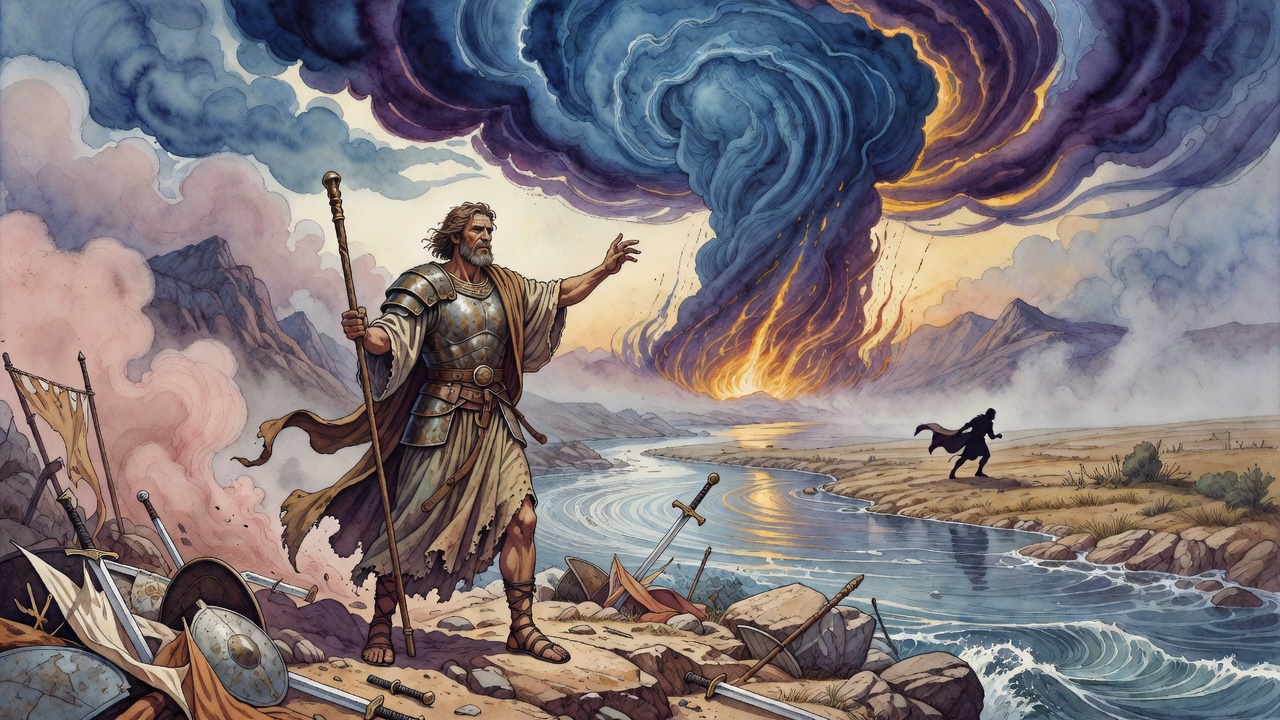
Saul told his armed men to kill him and his whole family. They would not put a hand on the high priest. So Doeg took a few men of his own kind and did it, and when it was finished there were three hundred and eighty-five bodies. Then Saul sent to Nob itself and had the town killed, women, children, whoever was in it, and burned.
One son of Ahimelech, Abiathar, got out and ran to David and told him. David heard him out and said he had known it the moment he saw Doeg standing there. He blamed himself for the whole of it. The bread in his mouth had cost a town.
A Corner of the Robe
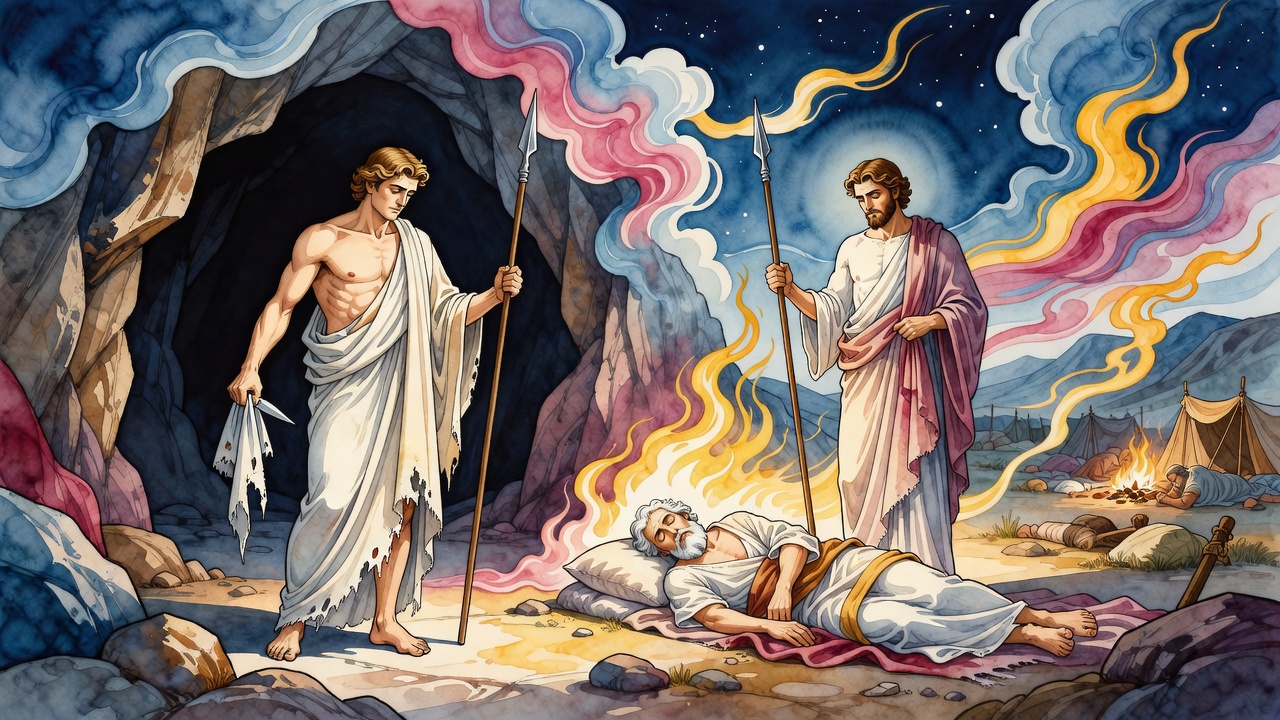
Saul took three thousand picked men into the wilderness of Engedi. David and four hundred men were sitting in the dark at the back of a cave beside the road when the king walked in alone to relieve himself.
One of David's companions saw who it was. "Here is the day," he whispered. "Take his head and be done with the running."
David went forward in the dark. He got close enough to reach the man's neck and cut a corner off the skirt of his robe instead, and then he was sorry he had done even that. It was not right to raise a hand against his master, he said, against a man God had thought worthy of the kingdom. However Saul was disposed toward him, that was no rule for how he should be disposed toward Saul.
When the king was back out on the road David came to the mouth of the cave and shouted after him, then went down on his face in the dust the way a man does before a king. He held up the piece of cloth. "I could have taken your head as easily as I took this."
Saul groaned. He said David had shown the righteousness of the ancients, who held that a man should spare his enemy even when he catches him in an empty place, and that the kingdom was going to be his. Then he asked for an oath: do not root out my family. David swore it, and sent him home.
Abigail Met Him on the Hill
A rich man named Nabal was shearing in Maon, three thousand sheep and a thousand goats, and David had kept his men off those flocks all season. He sent ten of them to ask for a share of the feast. Nabal asked who David was, heard the answer, and said, "This is the season when runaways get above themselves and walk out on their masters."
David buckled on his sword and took four hundred men and swore that by morning nothing in that house would be breathing. The man who would not cut Saul's throat was ready to wipe out a household for an insult. The bread of Nob was still on his hands, and still he reached for a massacre of his own.
A shepherd ran to the wife. Abigail loaded the donkeys with everything she could carry and told her husband nothing, because he was too drunk to follow it, and rode out. She came on David halfway down a hill with the four hundred behind him. She got off the donkey and put her face on the ground. "Thank God, who has kept you from spilling blood today."
David took the food. "It was God's own mercy that brought you here," he said. "Otherwise you would not have lived to see tomorrow." She went home and found Nabal at a feast, too far gone to be told anything. In the morning she told him. He lay ten days and died.
The Spear and the Water Jug
The Ziphites came back to Saul, and Saul came out again with three thousand men and camped at Hachilah. David sent scouts, then went down himself at night with his nephew Abishai and Ahimelech the Hittite, straight through the sleeping ranks to the middle, where Saul lay with his spear driven into the ground by his head and Abner asleep in the circle around him.
Abishai reached for the spear. David stopped him. Killing a man God had made king was a horror even when the man was wicked, he said. Whoever gave him the throne would deal with him. They took the spear and the water jug and walked back out, and nobody in the camp woke.
From a hill across the brook David called down and woke them all. He asked Abner how a man of his rank slept through strangers walking up to the king's own bed, and told him to go and look for the spear.
Twice Saul had been in his hands, and twice he had gone home. He never touched him. The town that died for a loaf did not become David's excuse to become Saul.
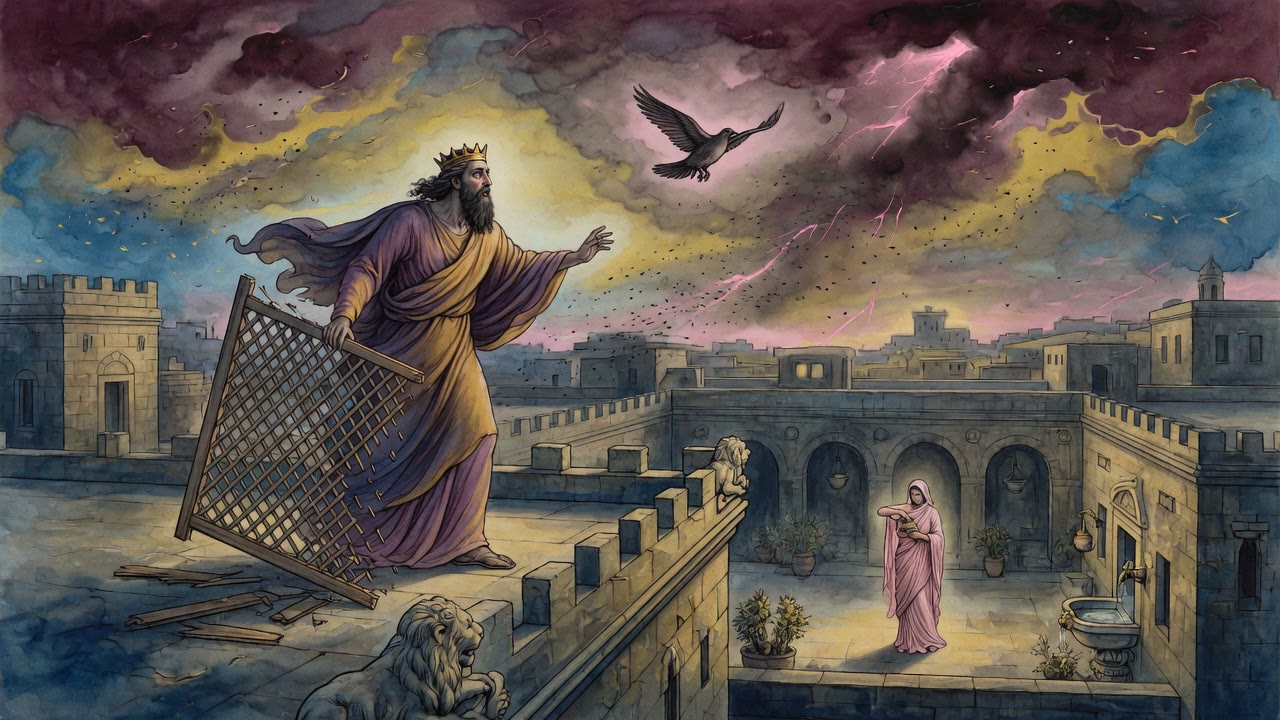
Years later Ha-Satan (the Accuser) came to David in the shape of a bird. He threw a dart at it. The dart glanced off and broke through a wicker screen, and behind the screen Bathsheba was combing her hair. After that he wept for one hour every day for twenty-two years and ate his bread with ashes in it. For half a year the disease took him and the Sanhedrin, who never left his side, had to leave it. The Shechinah (שכינה), the Divine Presence, went out of the room with them.
He had held a king's life twice and opened his hand. He could not hold his own eye when the bird moved and the screen fell.
← All myths