Sodom Took the Mercy Rain as Proof That No One Was Watching
Lot set unleavened cakes in front of two travelers and it only seemed to him that they ate. Before the night ended the whole city was at his door.
Table of Contents
 Click for full size
The Rain Came Down First
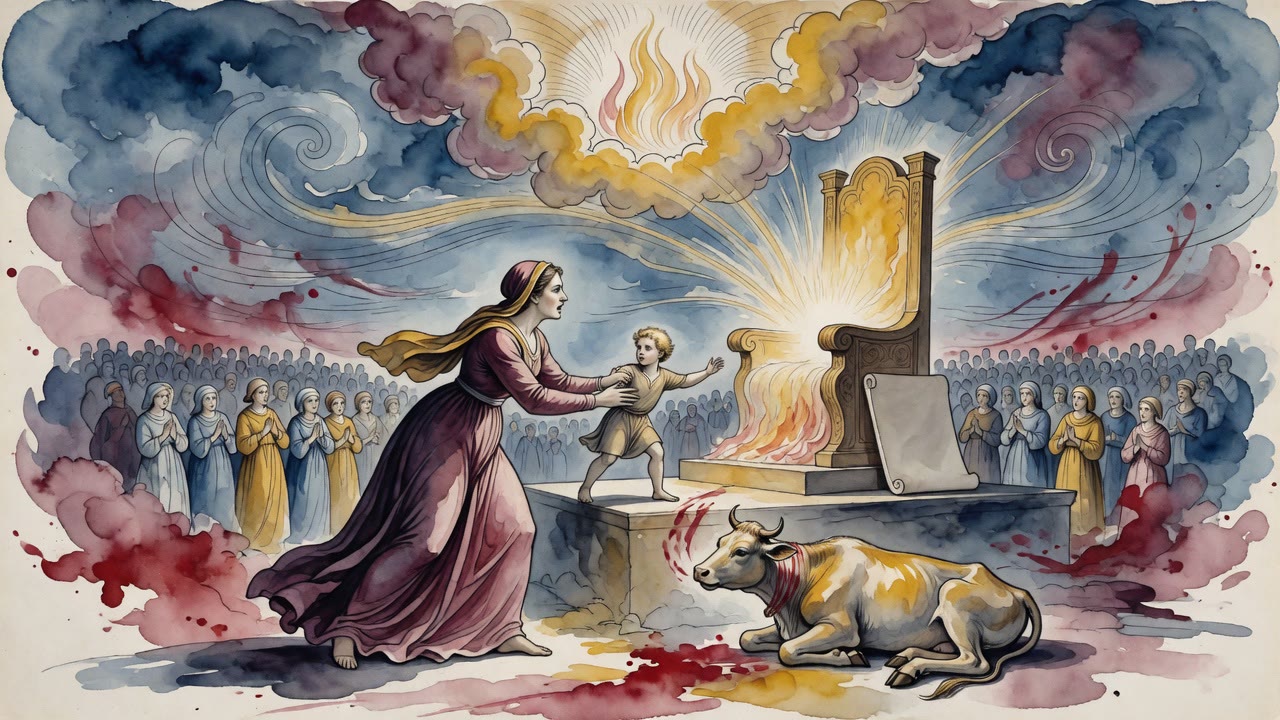
Before the fire, God sent rain over Sodom and Gomorrah. Showers of favor, dropped on the two cities so that the people in them would turn around while there was still time to turn around.
They stood in it and worked out what it meant. "If this is what falls on us," they said, "then wickedness is not visible to God. He is not looking, or He cannot see, or He does not mind." They went back indoors with their crops watered and the question settled.
A City With Nothing to Be Afraid Of
Nothing threatened Sodom. No army massed on any border, no season of want, no rival close enough to matter. The people lived at ease, in houses safe from fear, filled up on everything the ground could produce.
And when a hungry man came through, they did not put a loaf in his hand.
That was the whole charge against them. Not idols, not sorcery, not blood on an altar. Pride, a full stomach, an easy life, and a hand that never opened for anyone poor. A city that had received more than it needed had made a policy out of passing none of it on.
Lot Sat in the Gate at Evening
Two travelers came in at dusk and Lot got up from his place at the gate and went to meet them and bowed his face to the ground. "Come to my house," he said. "Wash your feet, sleep, leave in the morning."
"No," they said. "We will sleep in the street."
He kept at them until they gave in and came with him. He made them a meal and baked unleavened cakes and set the food down, and it seemed to him that they ate.
The Whole City Came to the Door
They had not lain down yet when the men of Sodom came around the house. Every man in the place, from the boys to the old, the whole city standing in the street.
"Where are the men who came in with you tonight. Bring them out to us."
Lot came out and pulled the door shut behind him and stood on his own step. He offered them his two daughters. He offered to hand over his children if they would leave the men under his roof alone.
"Get out of the way. This one came here on his own to live among us and now he sets himself up to judge all of us. We will do worse to you than to them."
They came at him hard and pressed up to the door to break it in. Two hands came out, took hold of Lot, pulled him inside, and shut the door. Then the men in the street were struck across the eyes, the young ones and the old ones together, and the whole crowd stayed out there in the dark wearing itself out trying to find a doorway.
Lot went out again later that night to his sons-in-law, the men who had married his daughters, and told them the Lord was about to destroy the city and they should get up and come. They looked at him the way you look at a man ranting in the street.
The Little Hour He Asked For
At first light the two were urgent with him. "Get up. Take your wife and your two daughters, or you go down with the rest of the city."
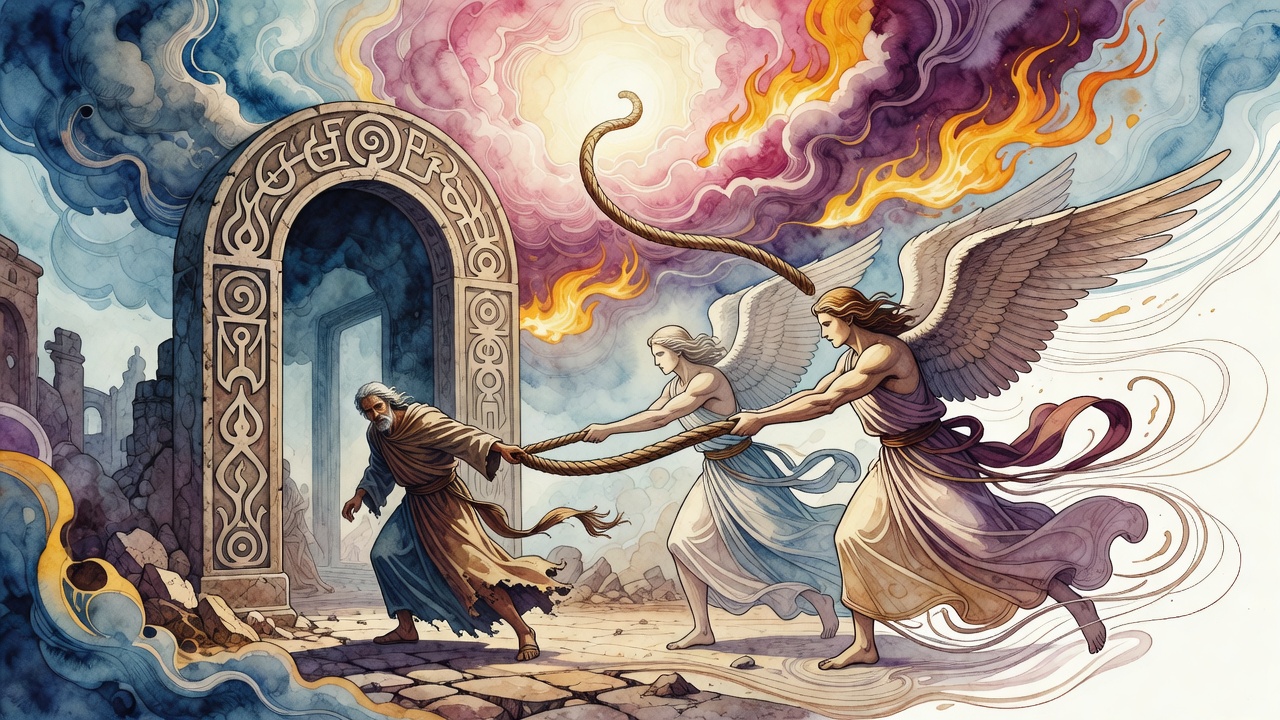
He delayed. He stood in his own house doing sums. What a loss, he was thinking, the silver and the gold, the gems, the jewels. So they took hold of his hand and his wife's hand and the hands of both daughters and set the four of them down outside the wall. Then one of the two turned and went back into Sodom to destroy it, and the other one stayed.
"Wait with me a little hour," Lot said. "Let me pray for mercy first."
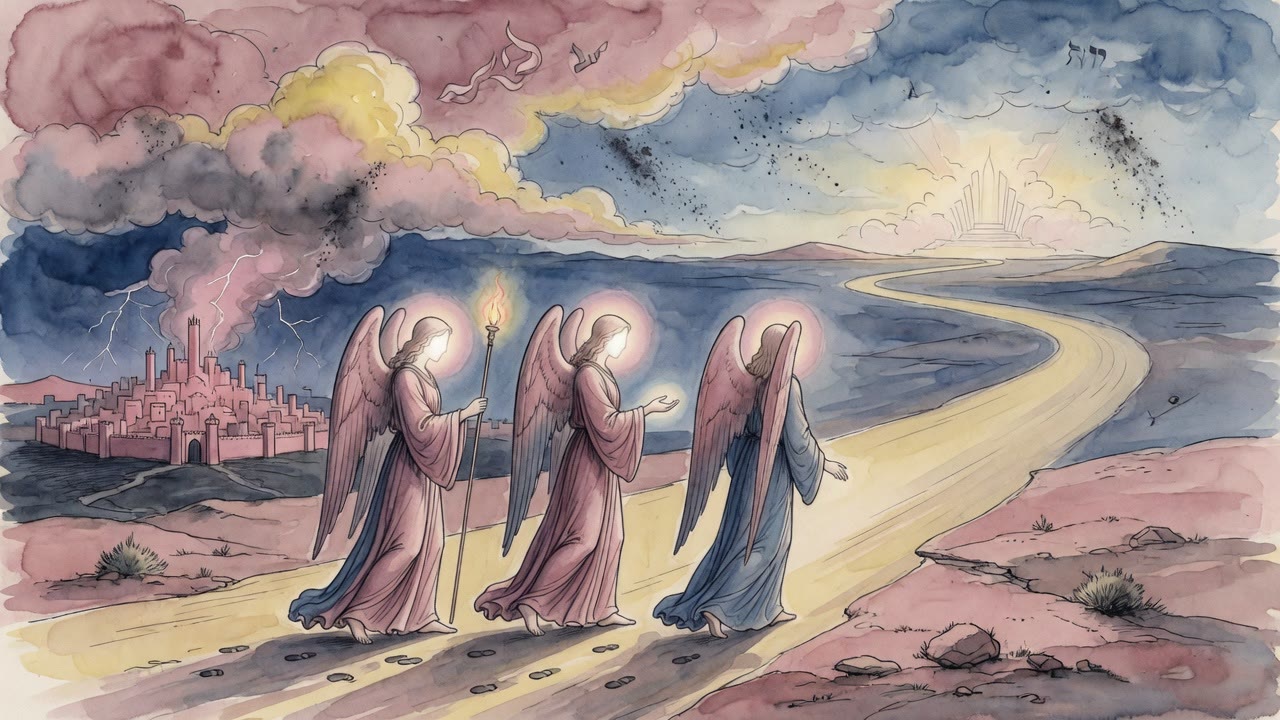
He would not run for the mountain. He wanted the small city on the plain, the near one. "It is little," he argued, "and its guilt is light." He got it. The sun had crossed the sea and come up over the land, three hours into the day, when Lot walked into Tzoar.
Smoke Going Up Like a Furnace
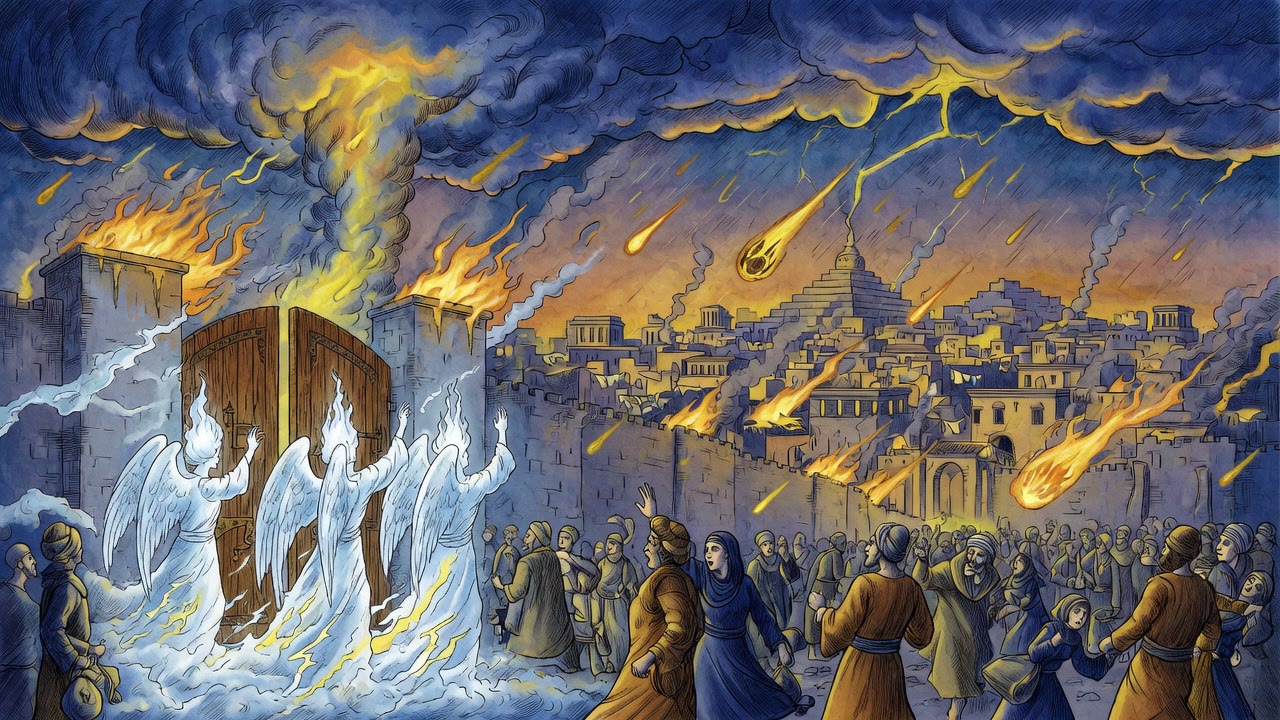
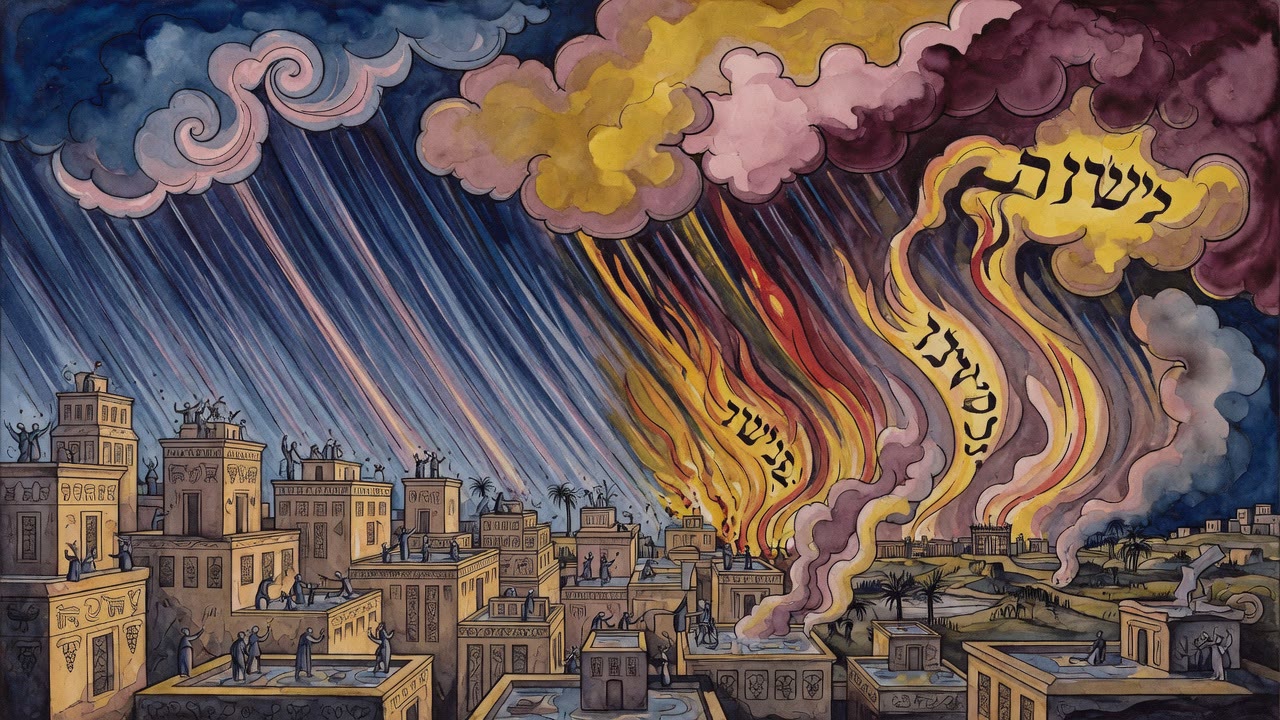
Then the sulphur and the fire came down out of heaven, and the cities went, and the whole plain with them, and everyone living in them, and the grass off the face of the ground.
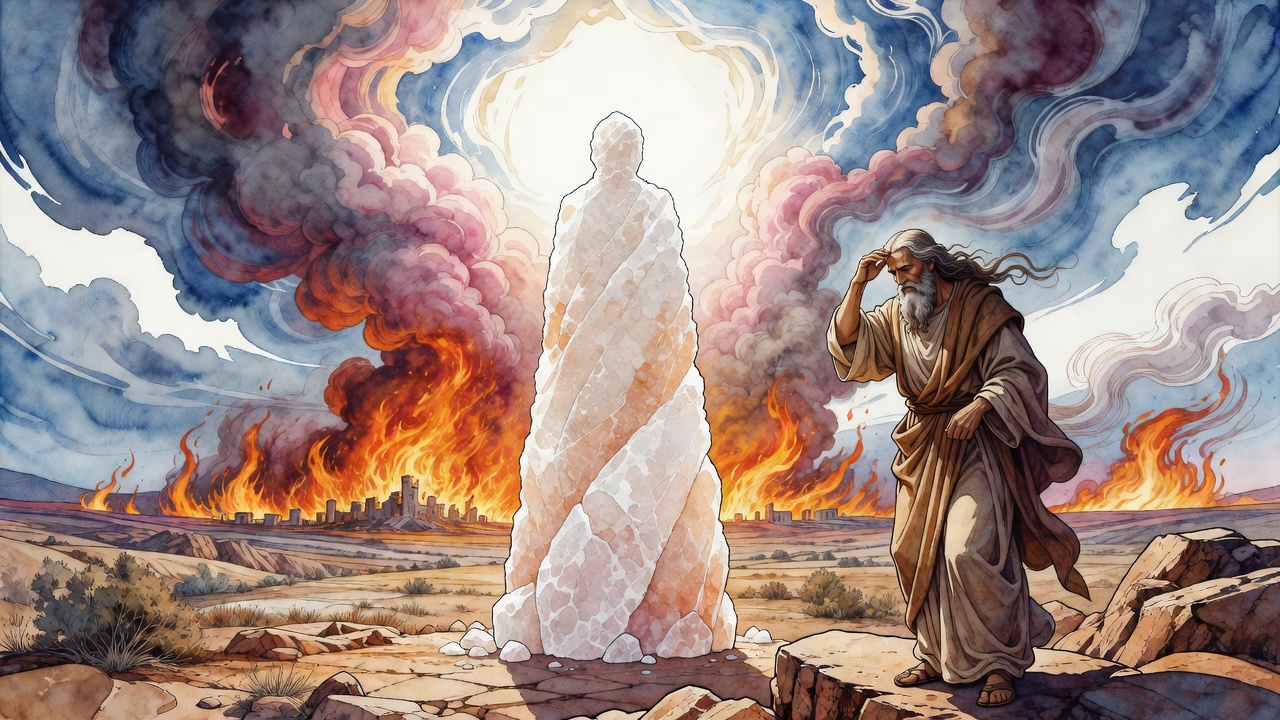
His wife looked back to see how it would end for her father's house, because she was a daughter of Sodom herself, and she was left standing in the road as a figure of salt.
Abraham got up early and walked out to the place where he had stood praying about those cities, and looked south across the plain. The smoke of the whole country was going up like the smoke of a furnace.
He had talked God down to ten. There had not been ten.
← All myths