Destruction

83 texts · Page 1 of 2

Myths, legends, and mystical writings about Destruction from across Jewish tradition.

The Gnat in the Brain of Titus the Destroyer

Midrash Aggadah Midrash Aggadah

After Titus destroyed the Second Temple in 70 CE, the Rabbis tell us, a small insect flew up his nose and lodged in his brain. It ate at him for the rest of his life. The only thin...

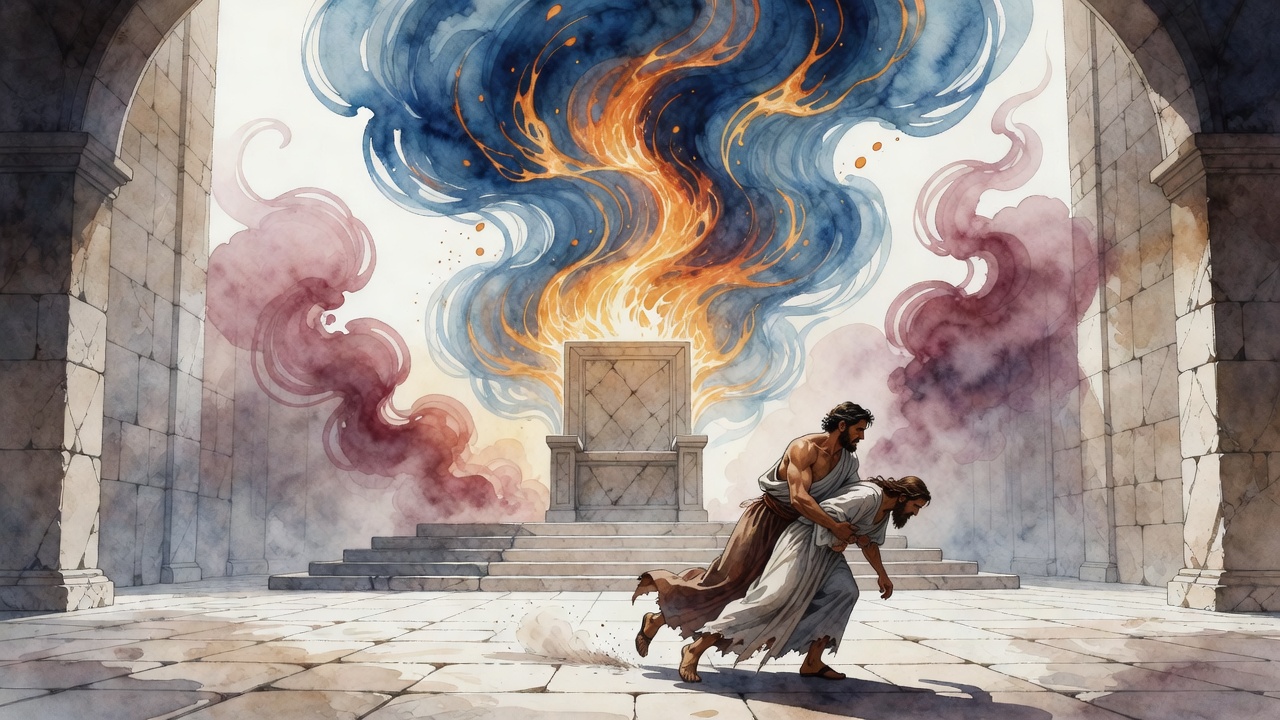
Rabbi Yochanan ben Zakkai Escaped Besieged Jerusalem in a Coffin

Midrash Aggadah Midrash Aggadah

During the Roman siege of Jerusalem in 70 CE, the storehouses had been burned by Jewish zealots to force the city to fight. Rabbi Yochanan ben Zakkai, walking through the streets a...

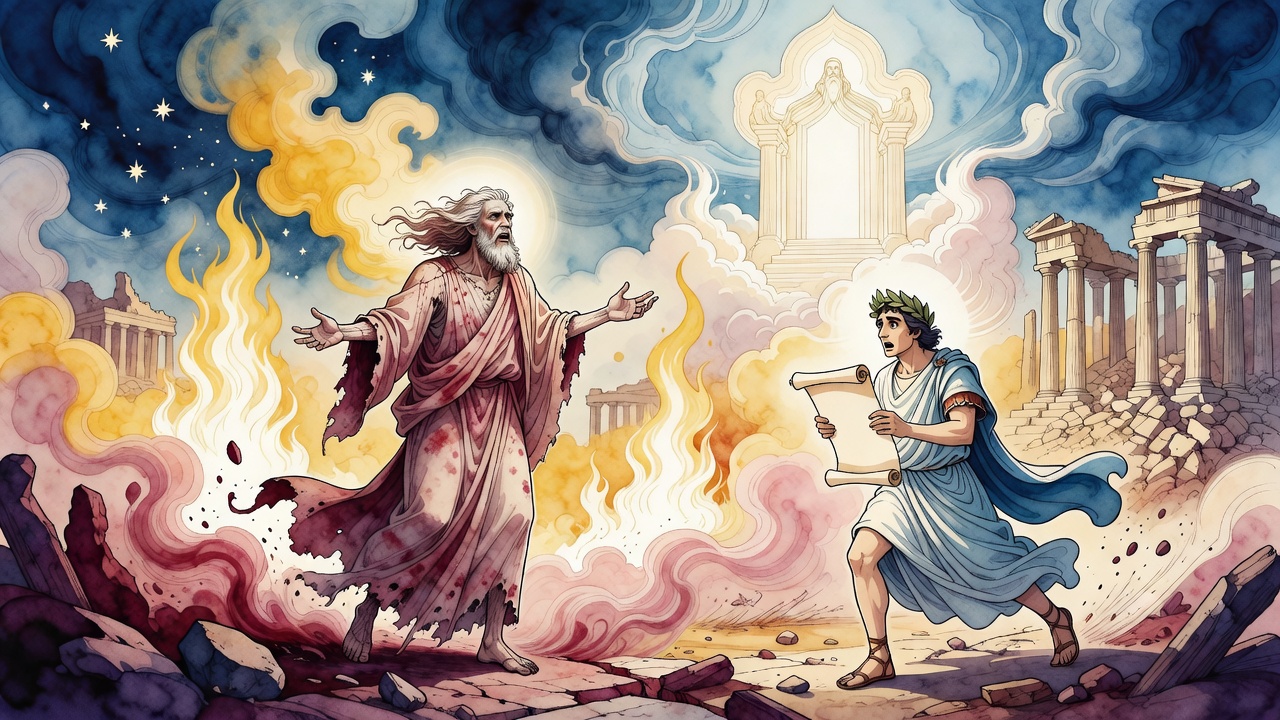
The Rabbi, Two Wives, and the Fire God Kindled in Zion

Midrash Aggadah Midrash Aggadah

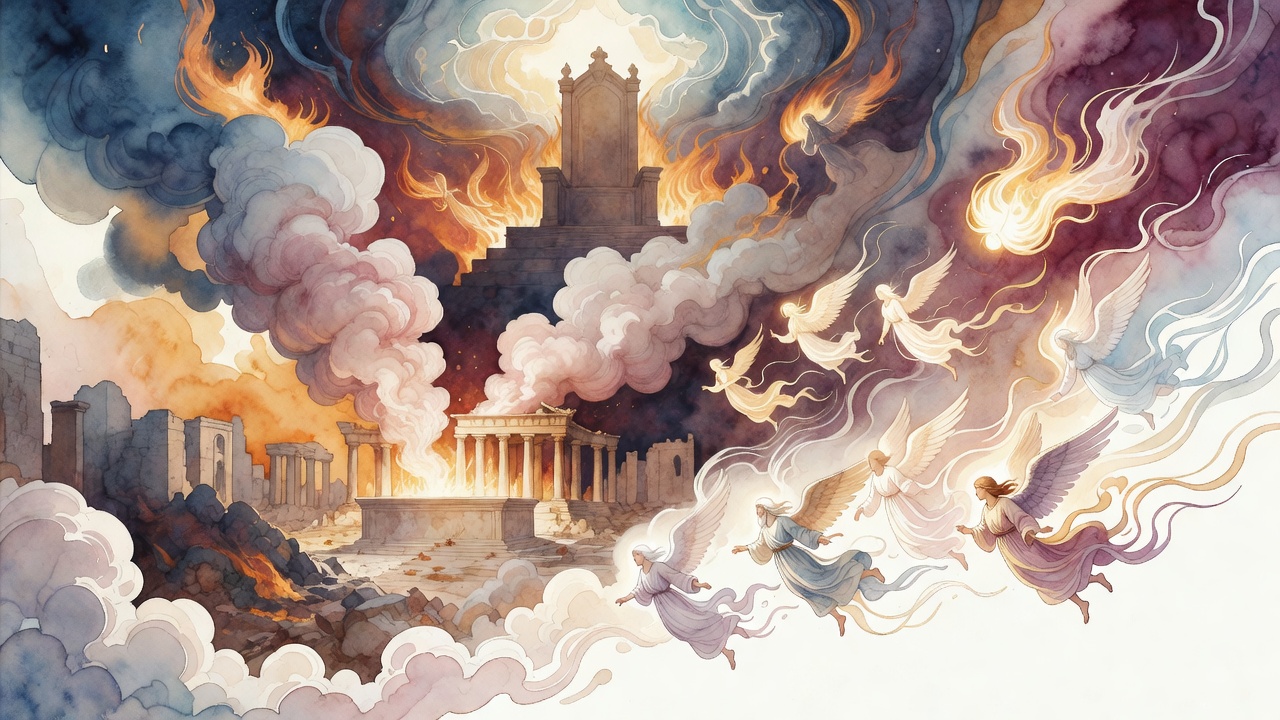
Two great sages, Rav Ami and Rav Assi, sat one day in the company of Rabbi Isaac Naphcha, and the three men fell into conversation. One of them turned and said, "Rabbi, tell us a b...

Why the Second Temple Was Called Greater Than the First

Midrash Aggadah Midrash Aggadah

The First Temple, the sages taught, held five tokens of God's nearness that the Second Temple lacked: the Ark and its cover, the sacred fire that came down from heaven, the Shekhin...

The Forty Signs Before the Temple Fell

Midrash Aggadah Midrash Aggadah

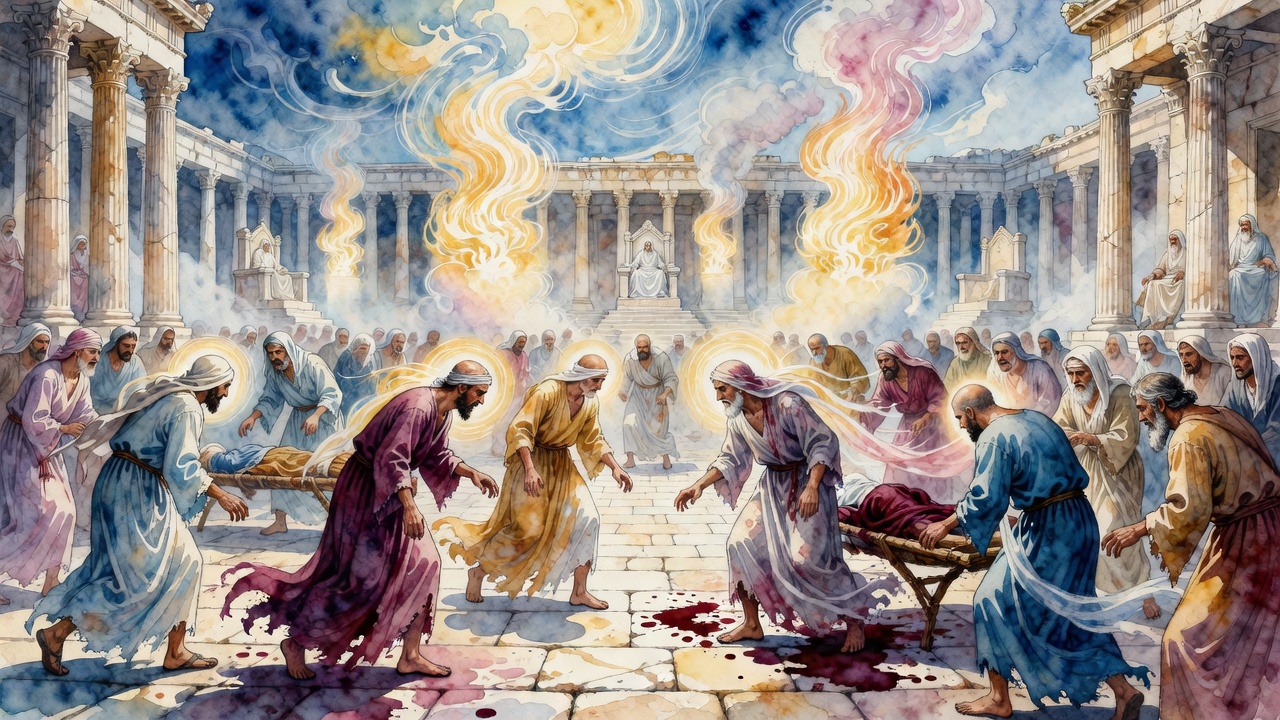
The sages taught that forty years before the Second Temple burned, its destruction had already begun to show in the quiet details only the priests could read. On Yom Kippur, the lo...

The Great Synagogue of Alexandria and Its Guilds

Midrash Aggadah Midrash Aggadah

The Alexandria synagogue, the Talmud remembers, was so large that a cantor had to wave a flag when the congregation was meant to answer Amen — no human voice could carry from pulpi...

The Beautiful Children of Rabbi Ishmael Who Died in an Embrace

Midrash Aggadah Midrash Aggadah

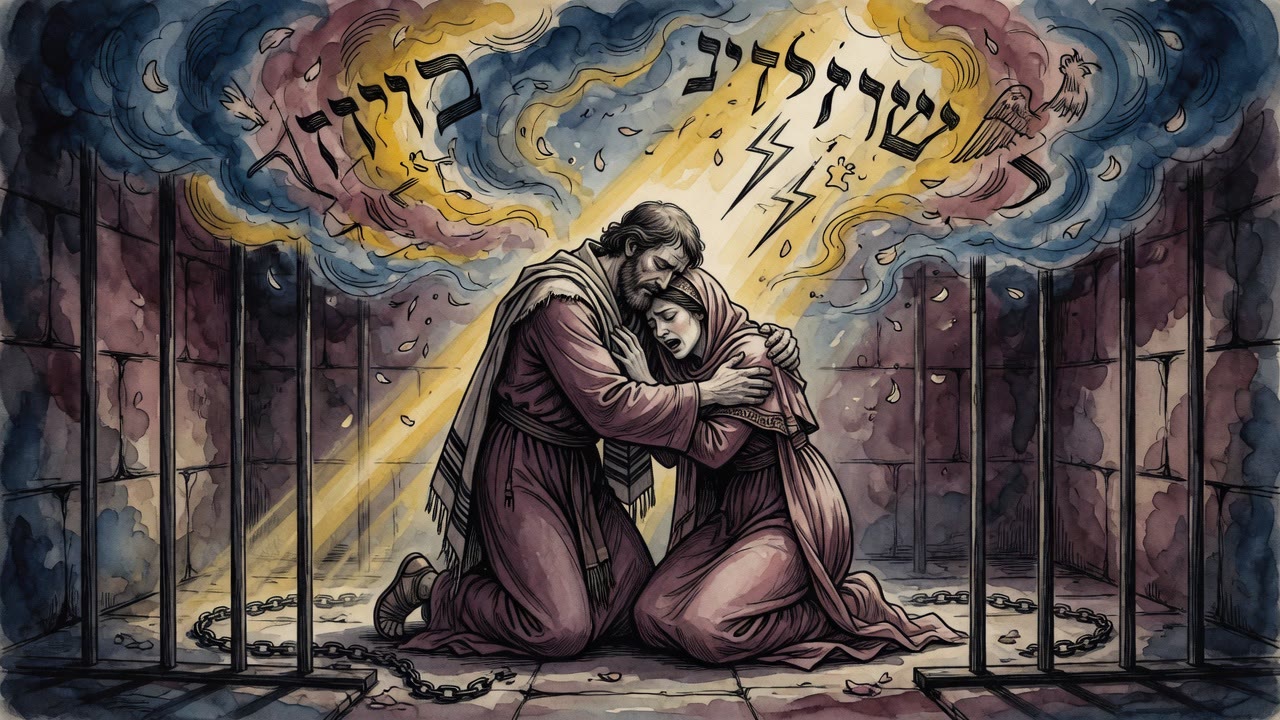
When the wicked kingdom destroyed the Temple and carried the people into slavery, the son and daughter of Rabbi Ishmael — both famous for their beauty — were seized and sold to dif...

Ten Disasters on Two Summer Days of Mourning

Midrash Aggadah Midrash Aggadah

The rabbis counted the wounds and found that five had opened on the seventeenth of Tammuz and five more on the ninth of Av, the two fast days that frame the Three Weeks of summer m...

What a Jew May Read on the Ninth of Av

Midrash Aggadah Midrash Aggadah

On the ninth of Av, the blackest day on the Jewish calendar, the normal pleasures drop away one by one. No eating. No drinking. No anointing with oil. No leather shoes on the feet....

The Rabbis Who Broke Cups at Their Sons' Weddings

Midrash Aggadah Midrash Aggadah

The verse says Rejoice with trembling (Psalm 2:11). The rabbis took that seriously. If joy goes unchecked, they feared, it becomes carelessness, and carelessness forgets that the T...

The High Priest's Daughter Sold as a Slave

Midrash Aggadah Midrash Aggadah

Her name was Tzafnat, daughter of Peniel, and her father had been high priest of Israel. She had grown up in the holiest household in the land, with the aroma of incense in her clo...

The Daughter of Nakdimon Picking Grain from Dung

Midrash Aggadah Midrash Aggadah

Nakdimon ben Gurion, one of the three wealthiest men of Jerusalem before the Roman siege, had been so rich that, according to tradition, his daughter's dowry alone was twelve thous...

When Solomon Married Pharaoh's Daughter, Rome Was Born

Midrash Aggadah Midrash Aggadah

The Talmud preserves a strange tradition about how Rome came to be. When Solomon married the daughter of Pharaoh — a politically brilliant match that would one day haunt the house ...

The Blood That Would Not Stop Boiling in Jerusalem

Midrash Aggadah Midrash Aggadah

For seven years after the destruction of the First Temple, the Sages say, the nations of the world cultivated their vineyards with no other manure than the blood of Israel. The soi...

The Prophet's Blood That Named Its Killers

Midrash Aggadah Midrash Aggadah

Rabbi Yehoshua, the son of Korcha, heard the story from an old man of Jerusalem who had lived through the Babylonian destruction. In the valley below the city, Nebuzaradan — captai...

The Shechinah That Went into Exile with the Children

Midrash Aggadah Midrash Aggadah

Rabbi Isaac noticed something in the book of Eicha, the Lamentations read on the Ninth of Av every year. "Her children are gone into captivity before the enemy" (Lamentations 1:5)....

Josef Meshita, the Jew Who Would Not Enter the Temple Twice

Midrash Aggadah Midrash Aggadah

When the Romans stormed the Second Temple, they faced a problem their swords could not solve: none of them wanted to be the first to walk into the sanctuary. The inner chambers wer...

How the World Lost Its Flavor When the Temple Fell

Midrash Aggadah Midrash Aggadah

Rabbi Shimon ben Gamliel, quoting Rabbi Yehoshua, said something that should stop us: since the destruction of the Temple, not a single day has passed without a curse (Sotah 48a). ...

What the Voice of Jacob Really Means in Rabbinic Tradition

Midrash Aggadah Midrash Aggadah

When blind Isaac reached out to bless his son and said, "HaKol kol Yaakov v'ha-yadayim y'dei Esav" — "The voice is the voice of Jacob, but the hands are the hands of Esau" (Genesis...

Why Rabbi Akiba Laughed When the Others Wept Over Jerusalem

Midrash Aggadah Midrash Aggadah

Four rabbis were walking together on Mount Scopus, looking down at the ruin of Jerusalem. They saw a fox running out of the Holy of Holies. The three older sages began to weep. Rab...

Eight Hundred Children Who Chose the Sea Over Shame

Midrash Aggadah Midrash Aggadah

Gittin 57b tells a story that Jewish liturgy still refuses to round off. Four hundred boys and four hundred girls were once kidnapped from their families by Roman captors. As the s...

Why Akiva Laughed in the Ruins of Jerusalem

Midrash Aggadah Midrash Aggadah

Gaster's Exempla (1924), No. 240, preserves a story that the Talmud tells at length in Makkot 24b. Rabbi Akiva was traveling with colleagues when they came within sight of Rome. Th...

The Pig on the Wall and the Earthquake Felt for 400 Miles

Midrash Aggadah Midrash Aggadah

Jerusalem was under siege. Day after day, the defenders inside the city lowered a basket of silver over the walls, and the besiegers below filled the basket with a lamb, a kid, or ...

How Jeremiah's Absence Let Nebuchadnezzar Burn the Temple

Midrash Aggadah Midrash Aggadah

The sins of Israel had grown too heavy for the patience of the Holy One. The prophet Jeremiah had warned for decades and had been ignored, mocked, thrown into a pit. A time came wh...

The Hidden Tempter Who Destroyed Both Temples

Midrash Aggadah Midrash Aggadah

The prophet Joel called him "the hidden one," and the sages took the phrase at its full weight. "I will remove far from you the hidden one, and I will drive him into a land barren ...

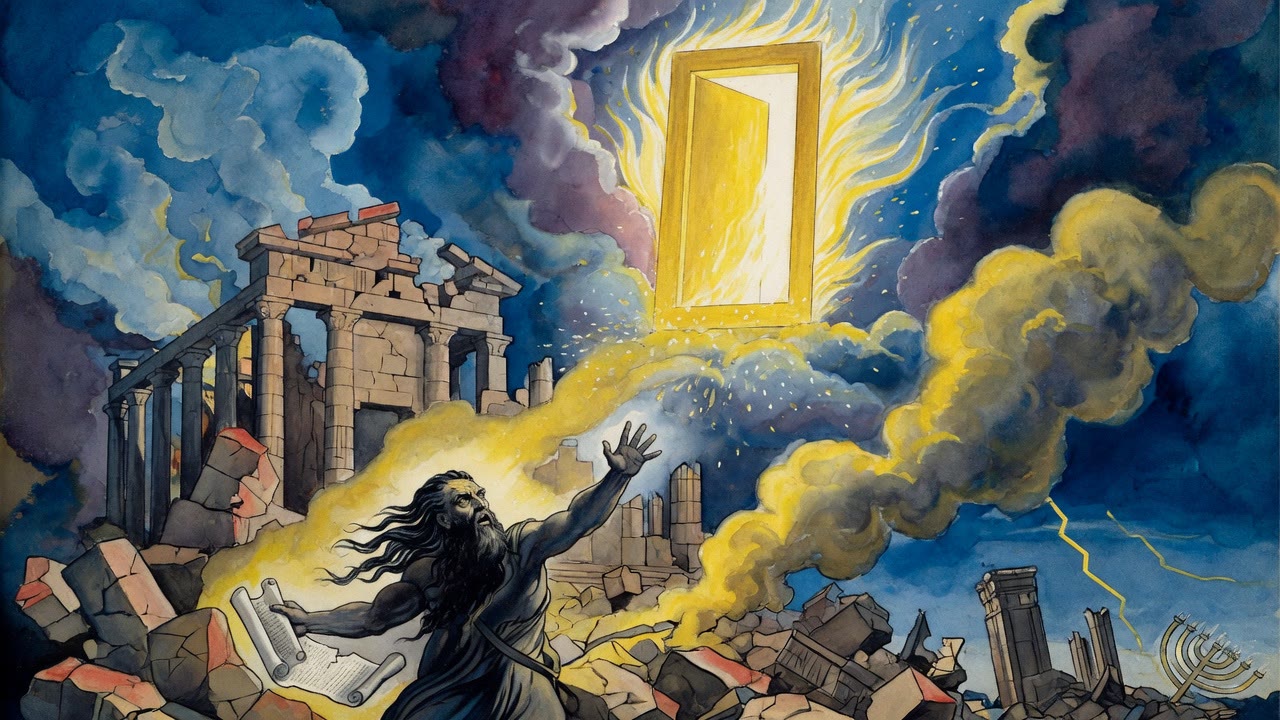
Why the Temple Gates Sank Into the Ground

Midrash Aggadah Midrash Aggadah

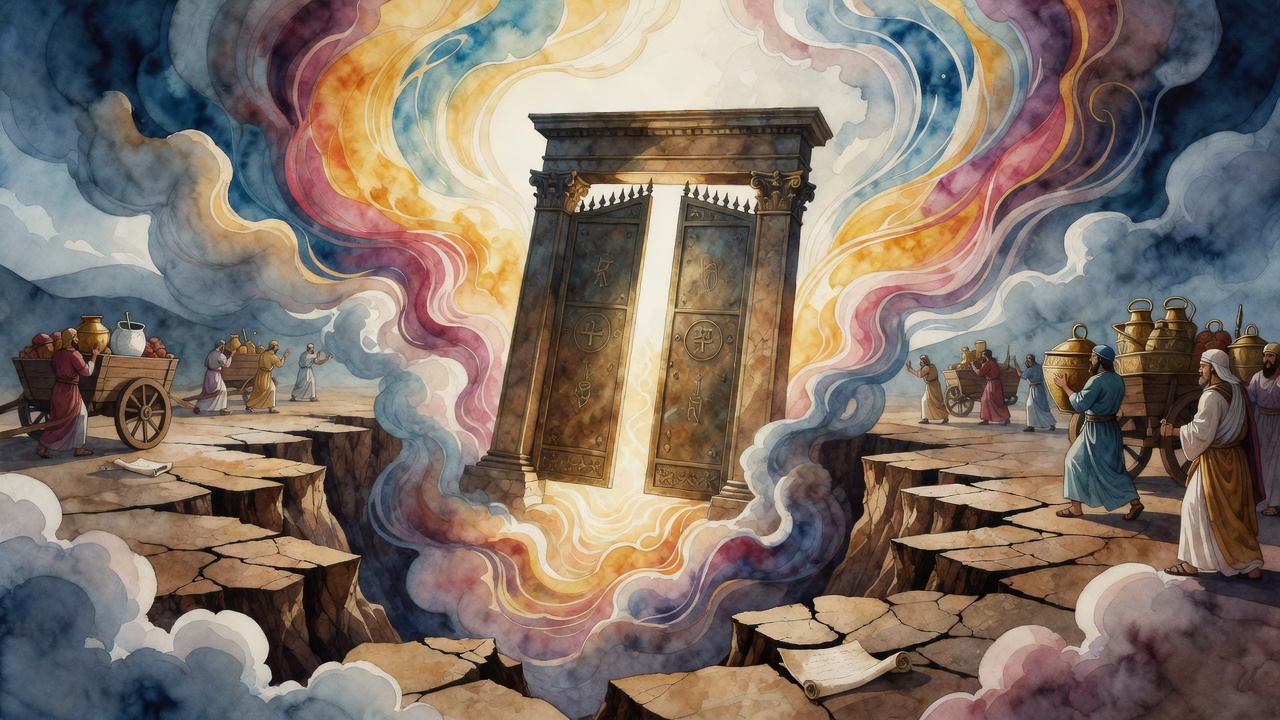
Midrash Rabbah on Deuteronomy preserves a strange detail about the fall of the First Temple. When the Babylonian conquerors carried away the holy vessels, they did not carry away t...

The Size of Sennacherib's Army Against Jerusalem

Midrash Aggadah Midrash Aggadah

The sages loved to measure the enemies of Israel, because their sheer size made the victory more astonishing. When Sennacherib the Assyrian invaded Judah, he came with forty-five t...

Nebuchadnezzar's Three Arrows All Pointed to Jerusalem

Midrash Aggadah Midrash Aggadah

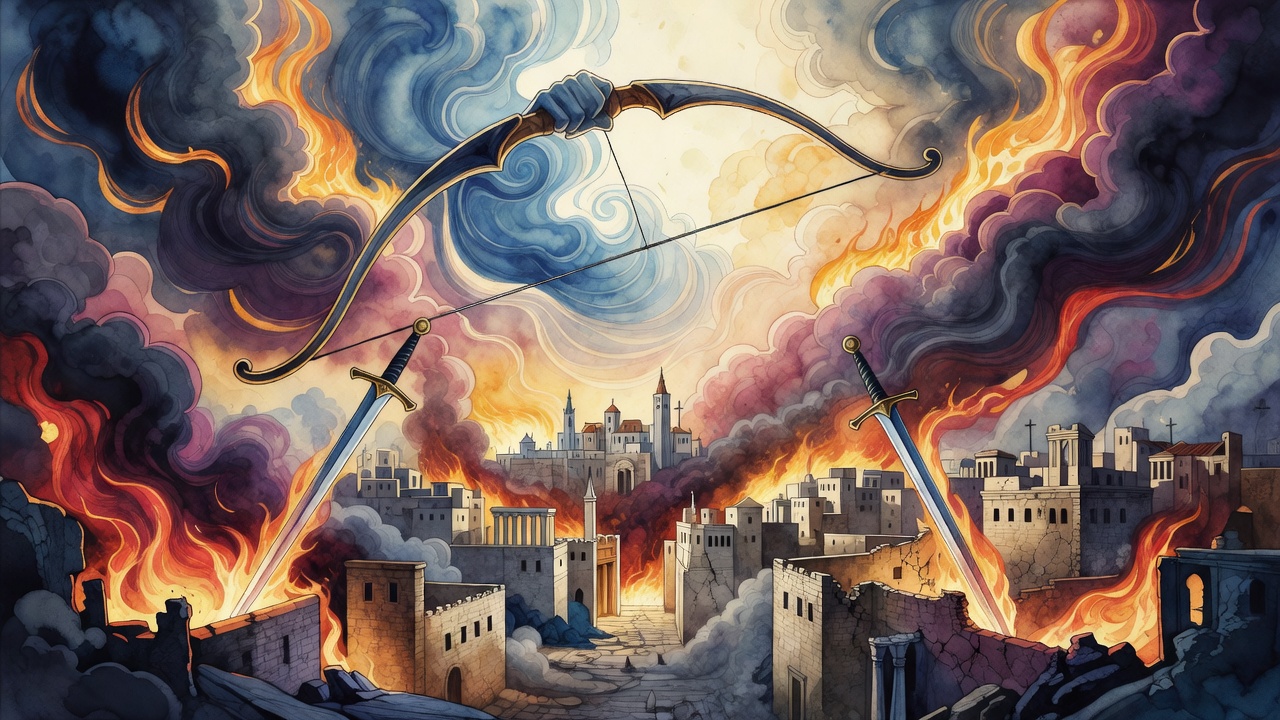
Before he launched his final assault on Judah, Nebuchadnezzar paused to consult the omens. He was a king of his age, and the practice of his age was belomancy, divination by arrows...

The Mother of Seven Sons Who Out-Sacrificed Abraham

Midrash Aggadah Midrash Aggadah

Tractate Gittin (folio 57, column 2) preserves one of the most devastating martyrdom stories in all of rabbinic literature — a Jewish mother and her seven sons dragged before a Rom...

Why the Second Temple Needed Three Hundred High Priests

Midrash Aggadah Midrash Aggadah

Tractate Yoma (folio 9, column 1) asks a question no one would think to ask unless they were counting: how many kohanim gedolim, high priests, served during each of the two Temples...

Why the Holy One Disguised Himself Before Sennacherib

Midrash Aggadah Midrash Aggadah

Rabbi Abhu once said, "Were it not for this Scripture text, it would be impossible to repeat what is written." He meant the verse in Isaiah: "On that day the Lord shall shave with ...

Jeremiah Tells the Captives Why Jerusalem Fell

Midrash Aggadah Midrash Aggadah

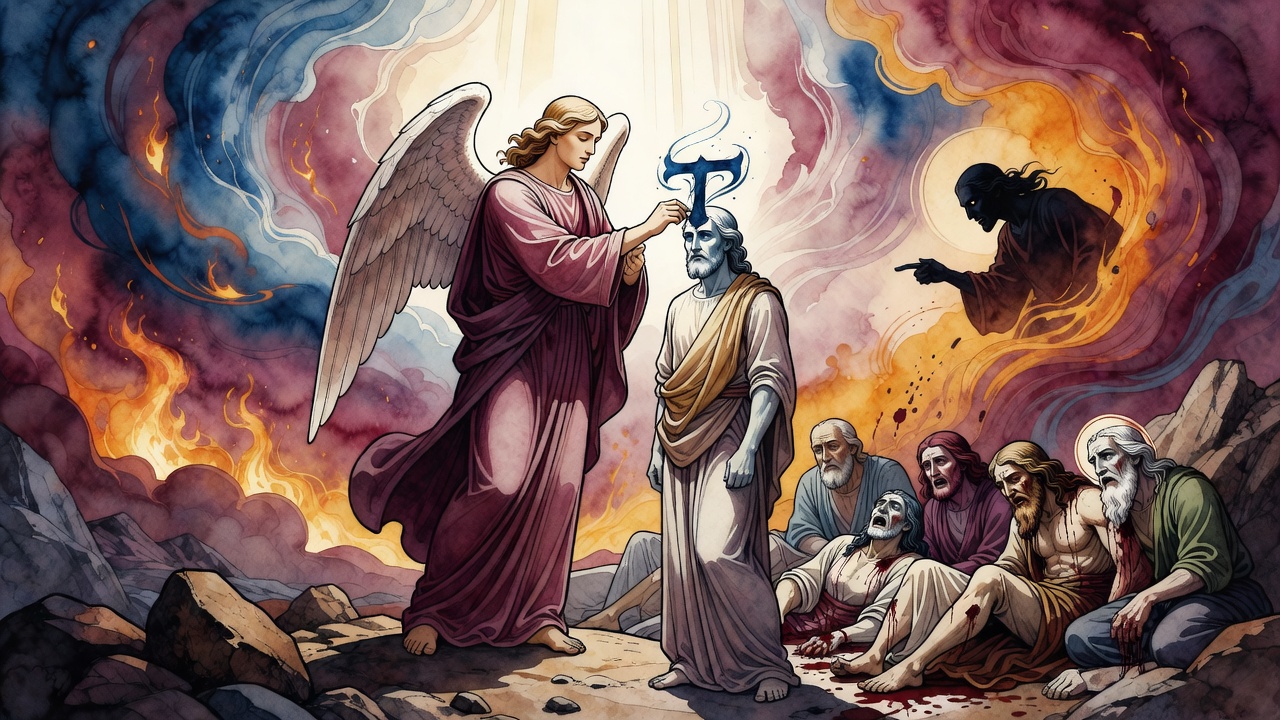
The midrashic retelling of the destruction of the First Temple in 586 BCE preserves an image that belongs to nightmares. The high priest stood in the burning courts of the Beit HaM...

The Seven Wicked Kings Who Sealed Israel's Exile

Midrash Aggadah Midrash Aggadah

The sages taught that the Land of Israel was not destroyed until seven royal courts had turned to idolatry. They counted them by name: Jeroboam son of Nebat, Baasha son of Ahijah, ...

How the Levites Hung Their Harps on the Willows of Babylon

Midrash Aggadah Midrash Aggadah

When Nebuchadnezzar led Israel into the Babylonian captivity, he demanded that the Levites — the Temple singers — perform the Songs of Zion for his court. The Levites had spent the...

The Temple Gates That Refused to Open for Solomon

Midrash Aggadah Midrash Aggadah

When Solomon completed the First Temple and prepared to carry the Ark of the Covenant through the main gates, he opened his mouth to sing the words of Psalm 24: Lift up your heads,...

Pelatya Argued God's Case Before Nebuchadnezzar

Midrash Aggadah Midrash Aggadah

When Nebuchadnezzar carried Judah into exile, his officers wanted the captives dead. These men are men of death, they said. They refuse to obey the king's order. Execute them. One ...

The Starvation of Doeg ben Yosef in Besieged Jerusalem

Midrash Aggadah Midrash Aggadah

When the Roman siege tightened around Jerusalem in 70 CE, wealth stopped meaning anything. Doeg ben Yosef was a rich man, and in the final weeks of the siege he stood in the street...

Nero Flees to Become a Jew

Midrash Aggadah Midrash Aggadah

When Nero first entered the Holy Land, he did not arrive as a conqueror sure of his victory. He arrived as a diviner uncertain of his fate. He took up his bow and shot an arrow eas...

Nikodemon's Daughter Gathering Barley from Dung

Midrash Aggadah Midrash Aggadah

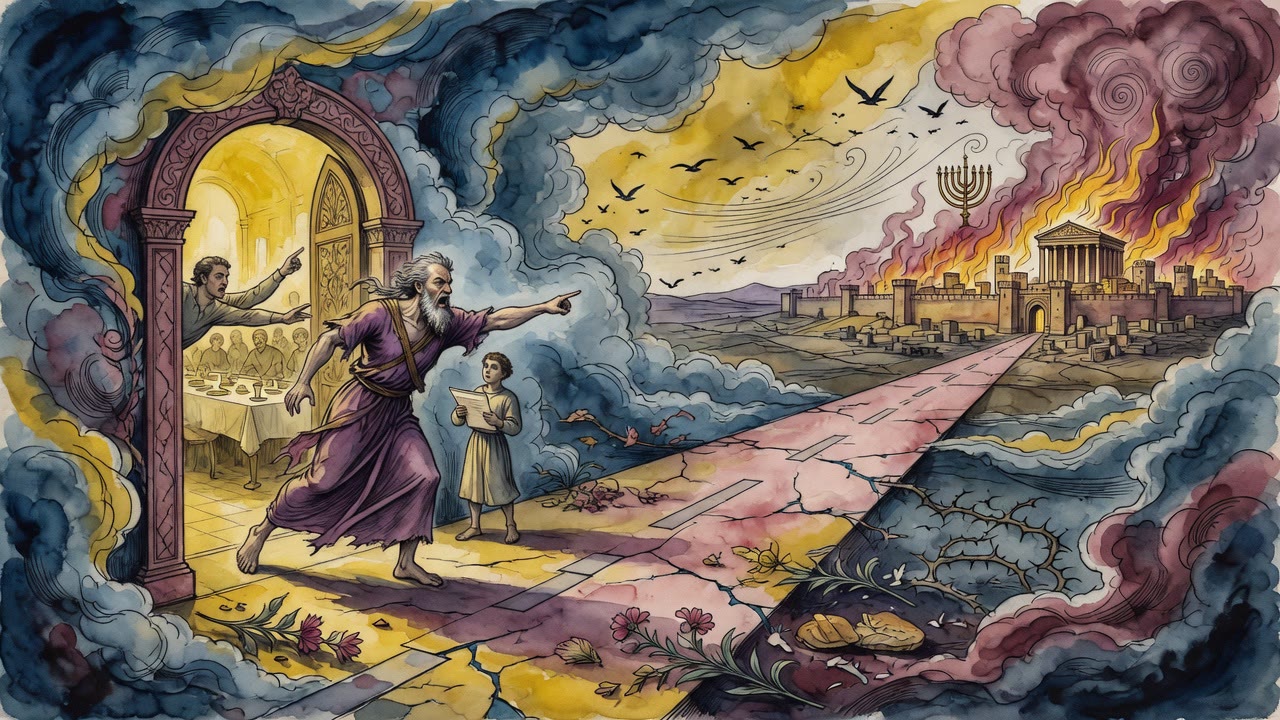
One morning Rabban Yochanan ben Zakkai rode out of Jerusalem with his disciples. On the road, he saw a young woman bent over, picking individual barley grains out of the droppings ...

Bar Kamtza's Revenge at the Wrong Door

Midrash Aggadah Midrash Aggadah

A man in Jerusalem held a grand banquet. He had a friend named Kamtza and an enemy named Bar Kamtza. He sent his servant to invite Kamtza. The servant, confused by the similar name...

Hadrian's Strange Mercy to a Failing Minister

Midrash Aggadah Midrash Aggadah

A Roman official named Hadrakitilios wrote a troubled letter to the Emperor Hadrian. "Clearly the God of the Jews hates me," he wrote. "I do not circumcise myself as the Saracens d...

Titus at Sea and the Gnat That Humbled Rome

Midrash Aggadah Midrash Aggadah

When Titus sacked Jerusalem in 70 CE, the Talmud tells us, he did not content himself with fire and slaughter. He stripped the Temple of its sacred vessels, wrapped them in the vei...

Miriam bat Baythus Eats a Fig Skin and Dies Rich

Midrash Aggadah Midrash Aggadah

The midrash tells of the last days of Jerusalem under Roman siege. One of the wealthiest women of the city, Miriam the daughter of Baythus, sent her servant to buy flour for the ho...

Bar Deroa, the Giant Who Forgot He Needed God

Midrash Aggadah Midrash Aggadah

There was once a custom in a Jewish town that newlyweds were greeted with a hen and a rooster, symbols of fruitfulness. One day Roman soldiers marched through the town, saw the bir...

Yochanan ben Zakkai Consoles a Mourning Rabbi After the Temple Falls

Midrash Aggadah Midrash Aggadah

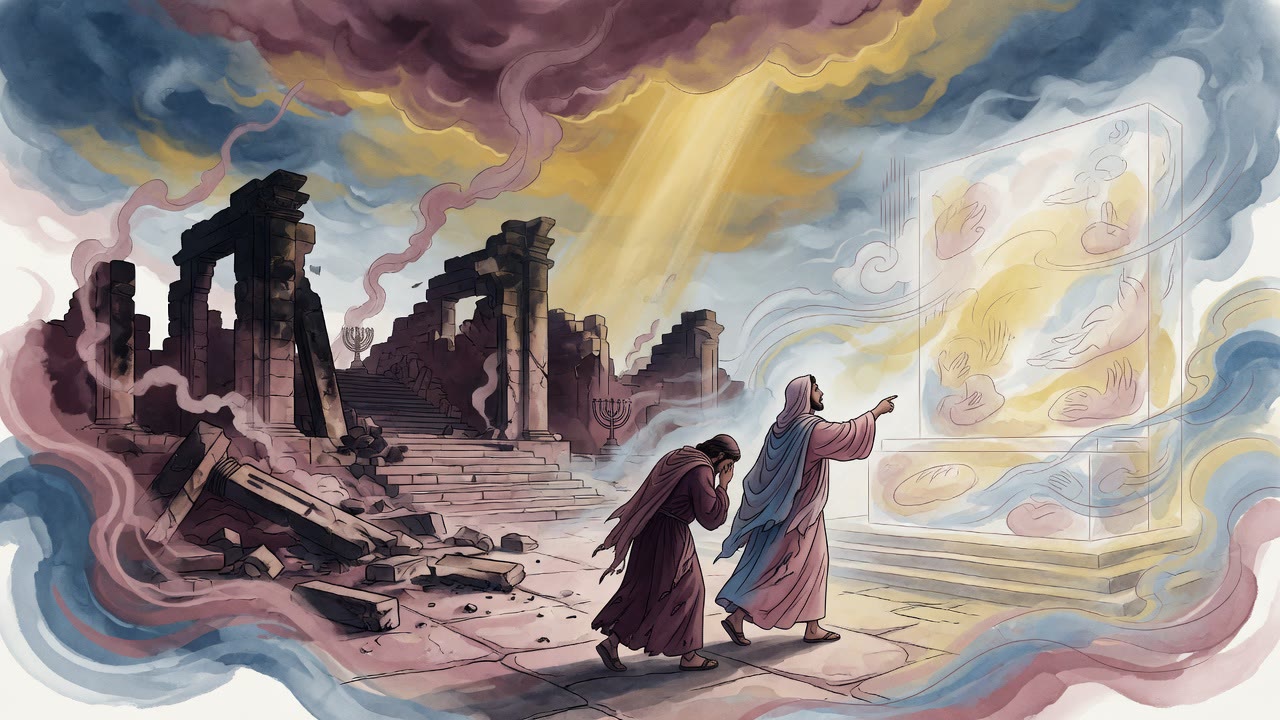
The Temple had been burned. Rabbi Joshua walked through the ashes of Jerusalem and said aloud, to no one in particular, “Woe to us. The place where Israel atoned for its sins...

The Giants Who Fought the Flood and Lost

Midrash Aggadah Midrash Aggadah

The Flood did not arrive gently. Targum Pseudo-Jonathan on Genesis 7:11 dates it with astonishing precision: the six-hundredth year of Noah's life, the second month, the seventeent...

All Flesh That Moved Upon the Earth Expired

Midrash Aggadah Midrash Aggadah

Targum Pseudo-Jonathan on Genesis 7:21 is short and unbearable. Every bird. Every domestic animal. Every wild beast. Every crawling creature. And every one of the sons of men. Expi...

Only Noah and the Ark Were Left on the Earth

Midrash Aggadah Midrash Aggadah

Targum Pseudo-Jonathan on Genesis 7:23 ends the Flood with six words the reader will never forget: Noah only was left, and they who were with him in the ark.The Targum has just fin...