Sodom Burned From Below as Well as Above
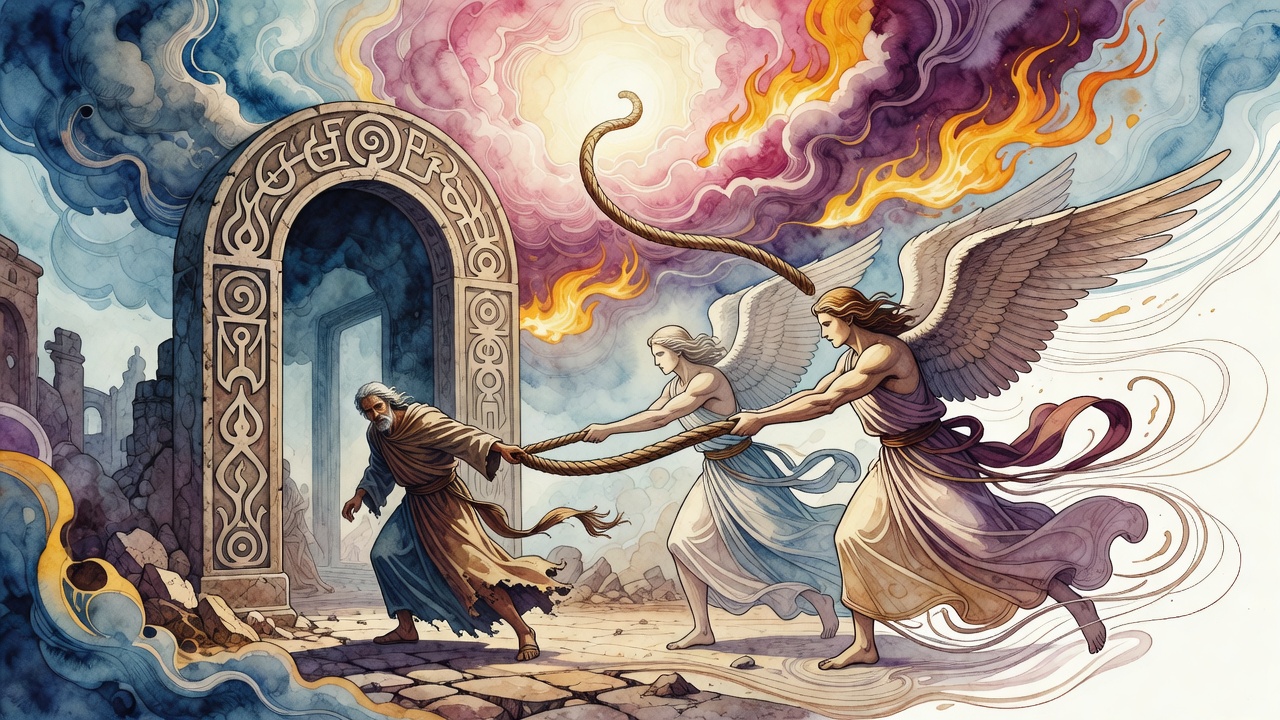
The fire that fell on Sodom from the sky had a partner rising from Gehinnom (afterlife of judgment) beneath. Both were prepared before the world began.
Table of Contents
 Click for full size
The Fire From Below
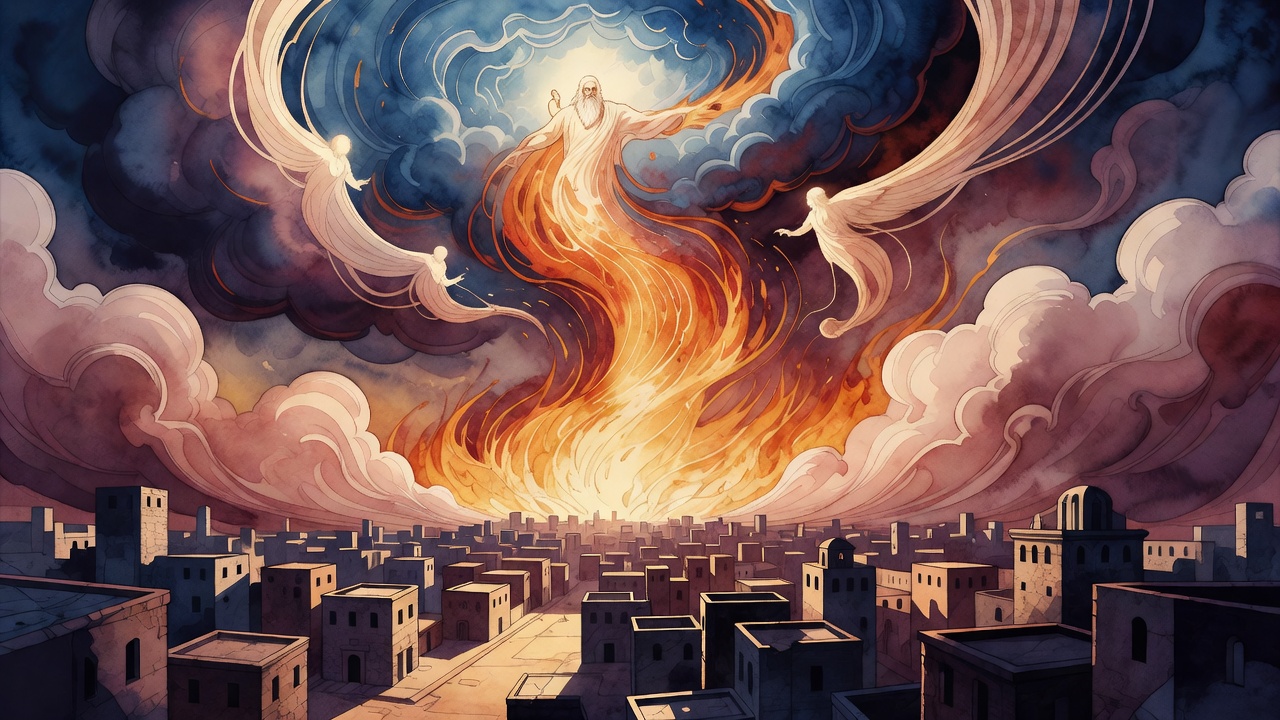
The fire from the sky is the part the Torah states plainly: brimstone and fire from the Lord out of heaven (Genesis 19:24), the famous celestial rain that turned Sodom and Gomorrah to ash and salt. That part is well attested.
The other part begins underground.
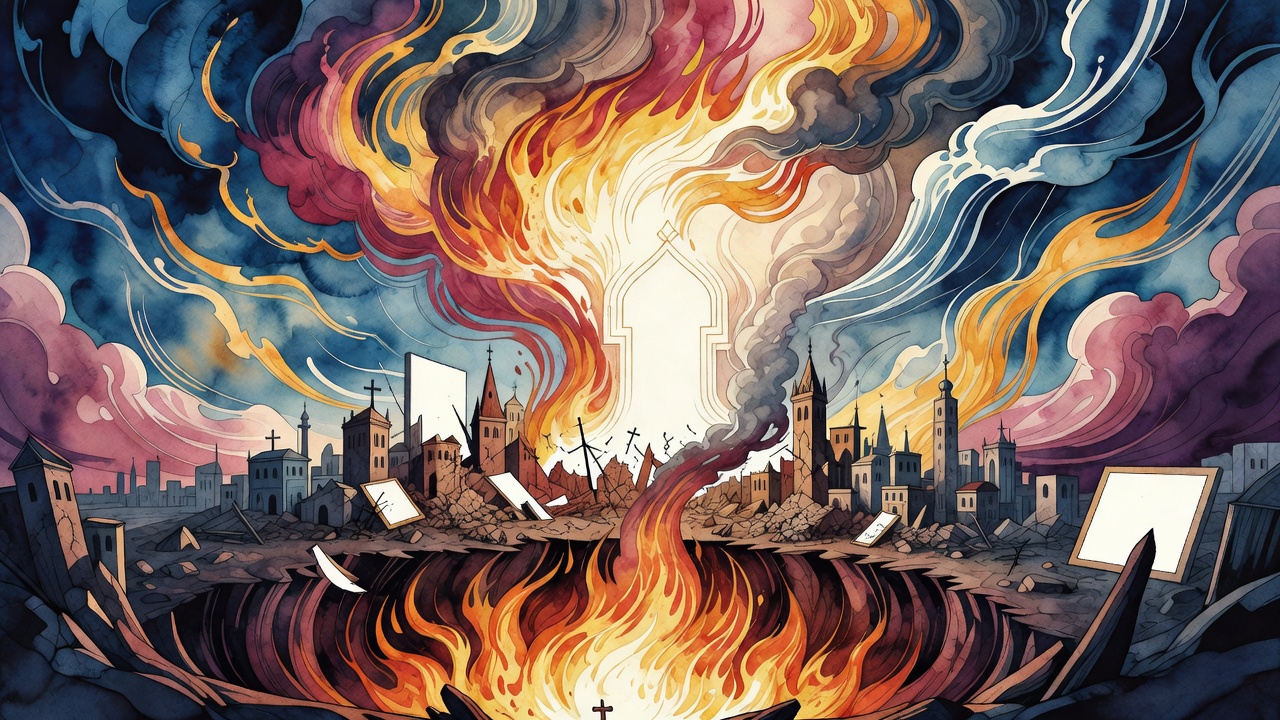
Jewish tradition, in texts ranging from the 2nd century BCE to the medieval period, describes a second fire that rose from beneath the city at the same moment the first descended from above. Sodom was caught between two fires that met in the middle and left nothing between them. The fire that rose came from Gehinnom, the netherworld of punishment, which has a gate in inhabited land, and whose gates open where sin has so thoroughly soaked the ground that the boundary between the upper world and the lower world thins to nothing.
The Fire Was Older Than the Valley
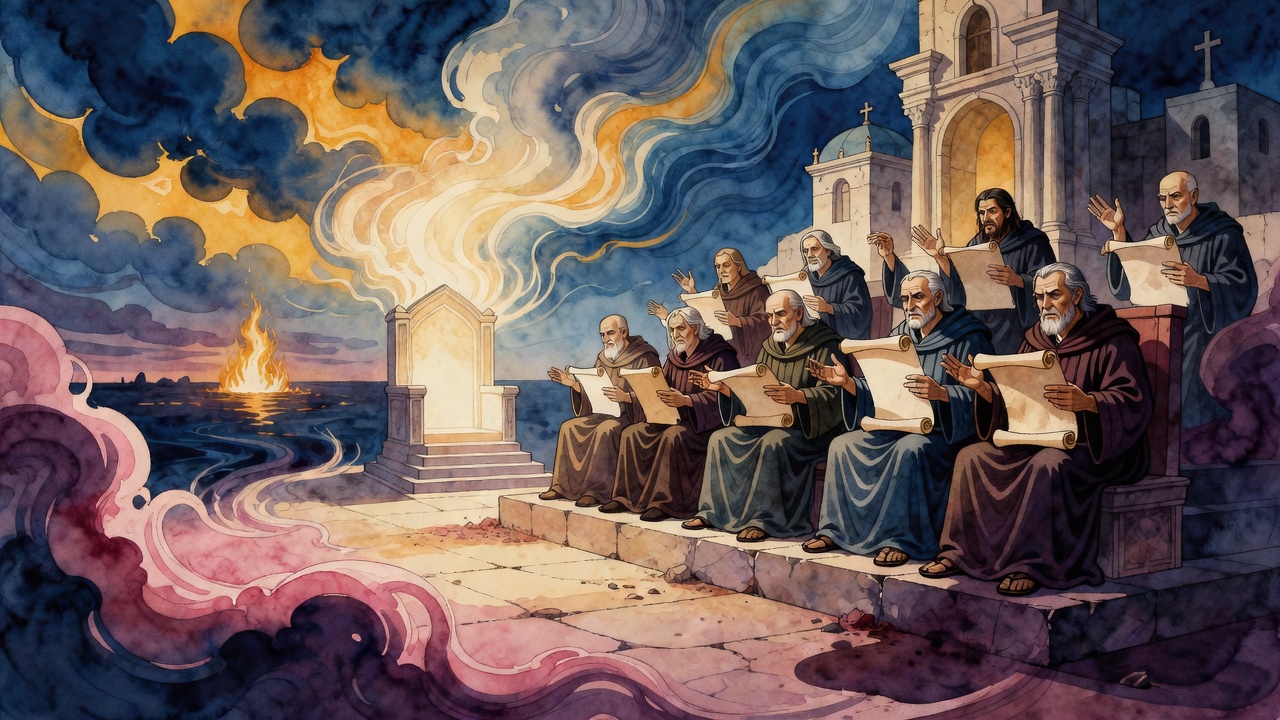
Gehinnom (the realm of judgment after death) was not improvised. According to the tradition preserved in Bereshit Rabbah, compiled c. 400-500 CE in the Land of Israel, Gehinnom was among the seven things created before the world itself. The list is specific: the Torah, repentance, the Garden of Eden, Gehinnom, the Throne of Glory, the Temple, and the name of the Messiah. All seven preexisted the six days of creation. Gehinnom was not built as a response to human sin after humans appeared and sinned. It was built before humans were made, in full foreknowledge that they would need it.
This is a disturbing kind of planning. It means that when Lot lifted his eyes and surveyed the Jordan plain and saw something that looked like the garden of God, the fire stored beneath that plain was already older than the plain itself. The valley and the judgment waiting under it had been placed side by side in the structure of reality before the first human being drew breath. The beauty was real. The fire beneath it was also real. Both were prepared in the same primordial act of creation.
Seven Levels and Five Kinds of Fire
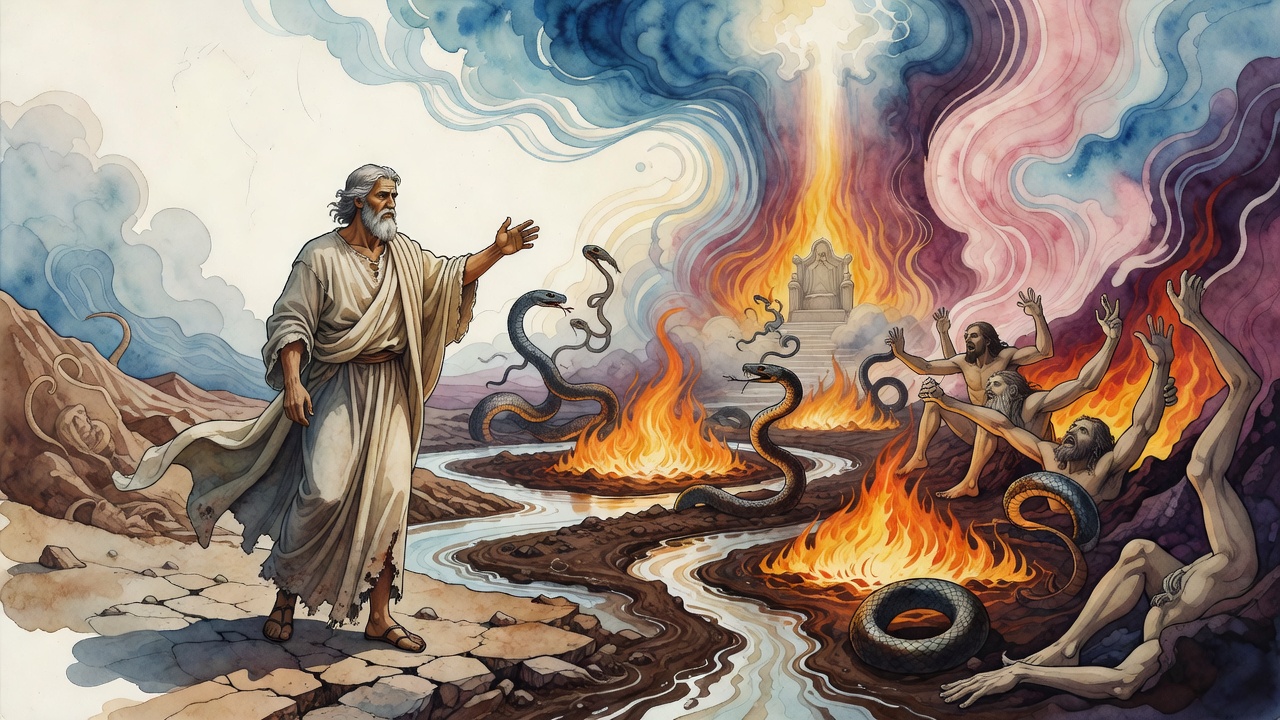
The Chronicles of Jerahmeel, a 12th-century Hebrew chronicle compiled by Jerahmeel ben Solomon, describes the architecture of Gehinnom with the precision of someone who has studied a building's plans. Three gates: one that opens at the sea, one that opens in the wilderness, one that opens in inhabited land. The gate in inhabited land is the most dangerous because it requires no journey. You reach it by staying where sin has become the local custom.
The interior is organized into seven levels, each divided into seven compartments, each threaded with rivers of fire. The fire itself comes in five varieties, each calibrated for a different category of transgression. None of this was assembled after the fact. The architecture had been in place since before the world was made, waiting for the crimes that would eventually require each chamber.
Sodom had filled those chambers' registers long before the angels arrived. The Book of Jubilees, c. 160-150 BCE, describes the crimes with the directness of a legal indictment: they had soiled themselves and committed fornication in the flesh and polluted the earth. The language is not rhetorical. It is taxonomic. These were specific violations of the categories that had been built into Gehinnom's architecture at creation.
Abraham's Distress and the Hole in Heaven
While Sodom burned, Abraham stood on the hill where he had interceded and watched the smoke rise from the plain. The midrash adds a detail to the day before the destruction. Abraham sat at his tent in the heat of the day, suffering, because no travelers were passing by. His whole identity was organized around hospitality. He needed guests the way other men need food.
God's solution was to open a hole in Gehinnom itself and pour the heat upward so that righteous travelers would stay home rather than walk in the furnace-like air. Abraham's suffering was specifically arranged so that wicked men would not have to walk in the heat. God created a private misery for the righteous so that the wicked would be kept from merit they did not deserve.
The fire beneath the world was active before Sodom's destruction, already close enough to the surface to be used for smaller manipulations. When the destruction came, it was simply the final opening of what had been cracked for some time.
← All myths