5 min read

Joseph Revealed Himself and an Angel Shook Egypt

Joseph's brothers could not recognize the viceroy before them. Then he showed Abraham's sign, and an angel shook Egypt awake.

Curated by Arthur · Told by Maggid ·
Table of Contents
  1. The Golden Throne Hid the Brother
  2. The Sign of Abraham
  3. An Angel Threw Them Back
  4. Asenath's Plate Had Arrived First
  5. The Viceroy Became Joseph Again

The brothers bowed to a stranger wearing gold.
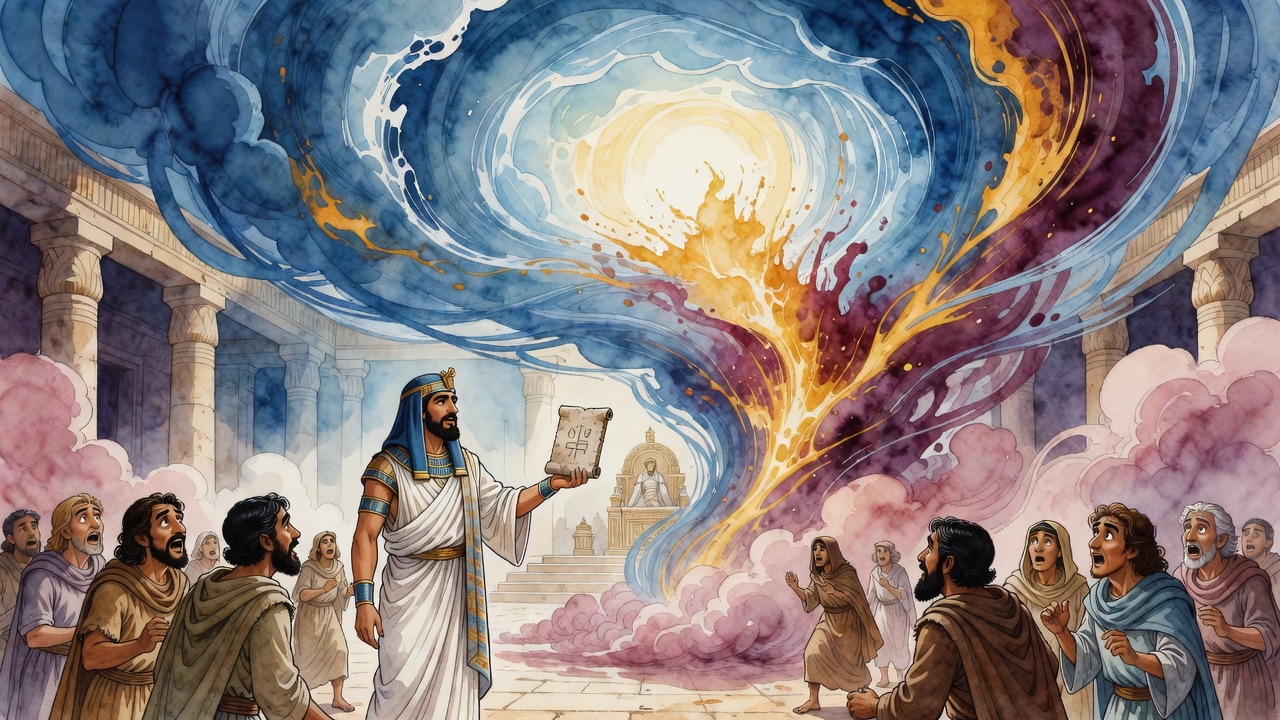
Joseph sat on a throne in Egypt, crowned, dressed in fine linen and purple, surrounded by armed men. The boy they had sold was gone from their eyes. That boy had been beardless, frightened, stripped, carried away by traders. This man ruled grain, guards, gates, and the hunger of nations.

They bowed because Egypt required it. They did not know they were bowing to their own blood.

The Golden Throne Hid the Brother

Joseph knew them at once. Their faces had not changed the way his had. They had been grown men when he disappeared into the pit, already bearded, already fixed in the shape memory would keep. He could look from one to another and find the old field, the old coat, the old hands that had lifted him toward slavery.

He held back. Power gave him time. Pain gave him caution.

When the moment of revelation finally came, he spoke Hebrew. The language of their father filled the Egyptian room. He told them to look with their own eyes. Benjamin too could hear it. He was their brother.

Still they stood stunned.

The Sign of Abraham

Words were not enough. Years of guilt had made the truth almost impossible to receive. The brothers could understand an Egyptian tyrant. They could understand punishment. They could understand a trap. They could not understand Joseph alive, powerful, and speaking without revenge in his mouth.

So Joseph showed them the mark of Abraham's covenant.

The room narrowed around that sign. It reached past Egyptian clothing, past Pharaoh's titles, past the beard that hid the youth they remembered. Joseph was not merely claiming kinship. His own body testified that he belonged to the house they had betrayed.

Shame hit them harder than fear.

An Angel Threw Them Back

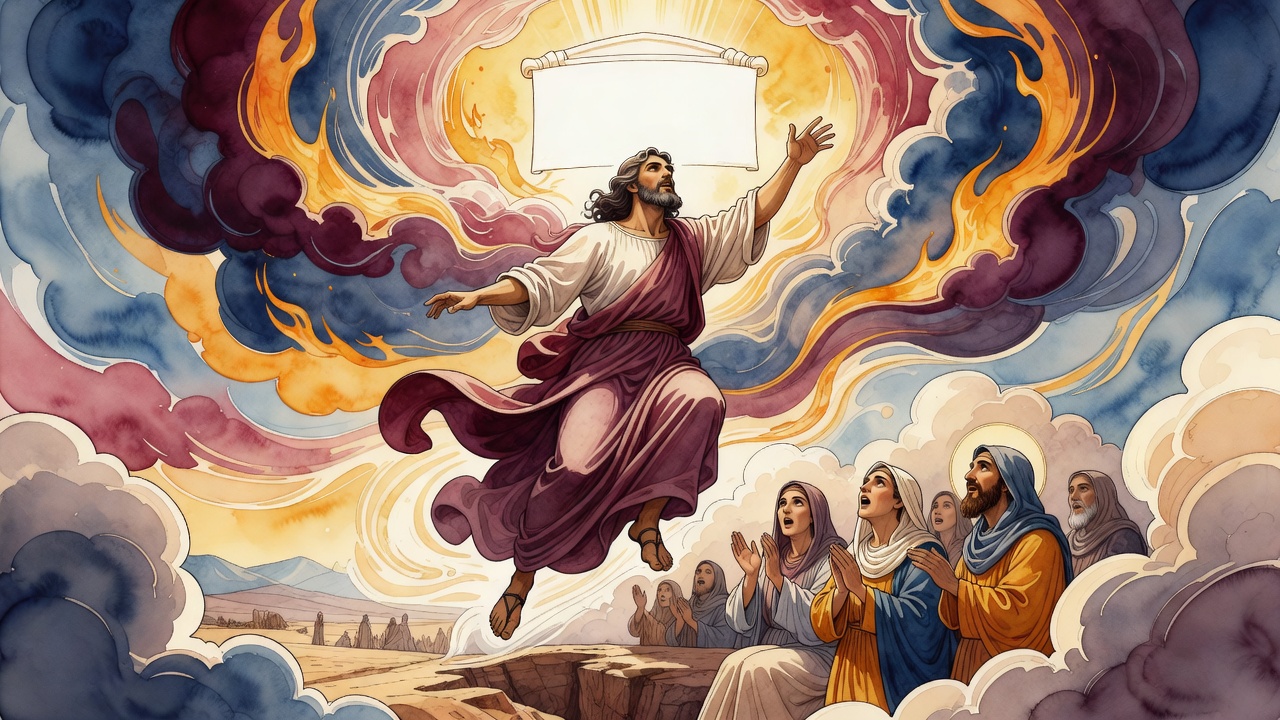
The brothers wanted to silence the truth. Rage rose because guilt had no place to go. An angel entered before their violence could become another family crime and flung them to the corners of the house.

Judah answered with a roar.

His cry shook Egypt. Walls trembled. Women went into premature labor. Joseph and Pharaoh were thrown from their thrones. Guards trained for war felt the sound pass through their bones. This was not court politics anymore. The family wound had broken into the open, and the whole country felt it.

Joseph did not meet their terror with a sword. He held the room until recognition became possible.

Asenath's Plate Had Arrived First

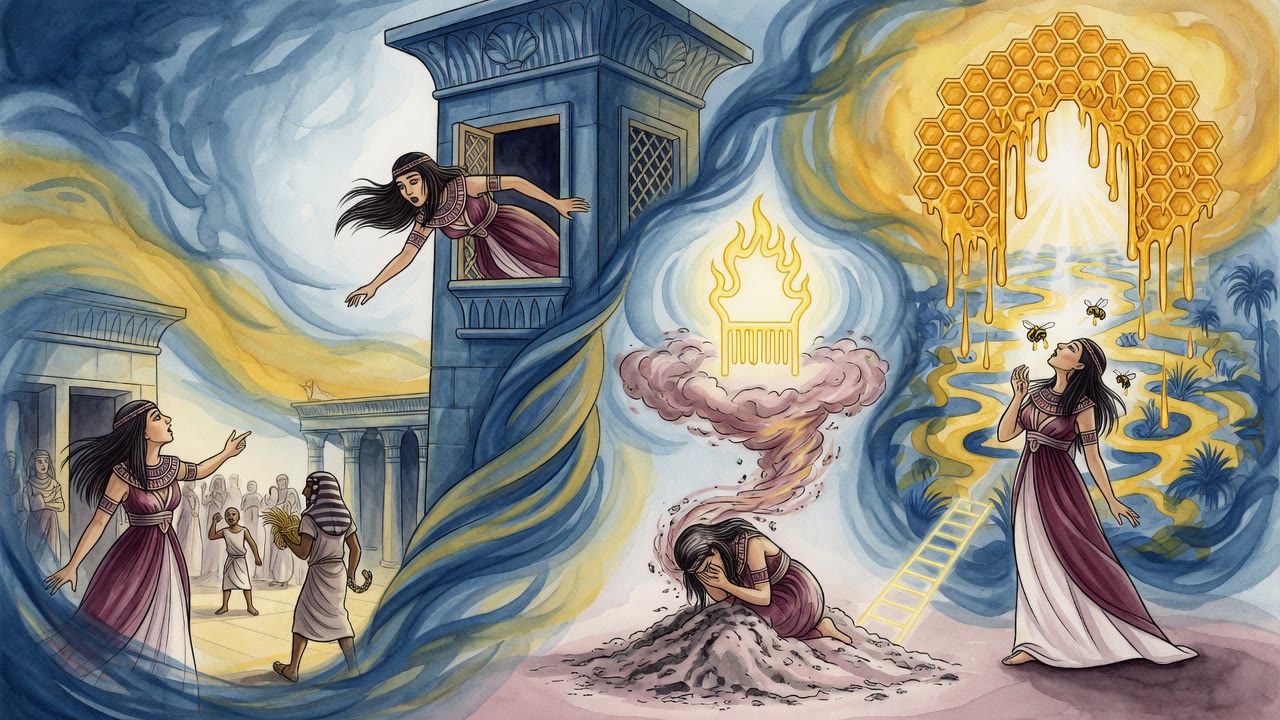
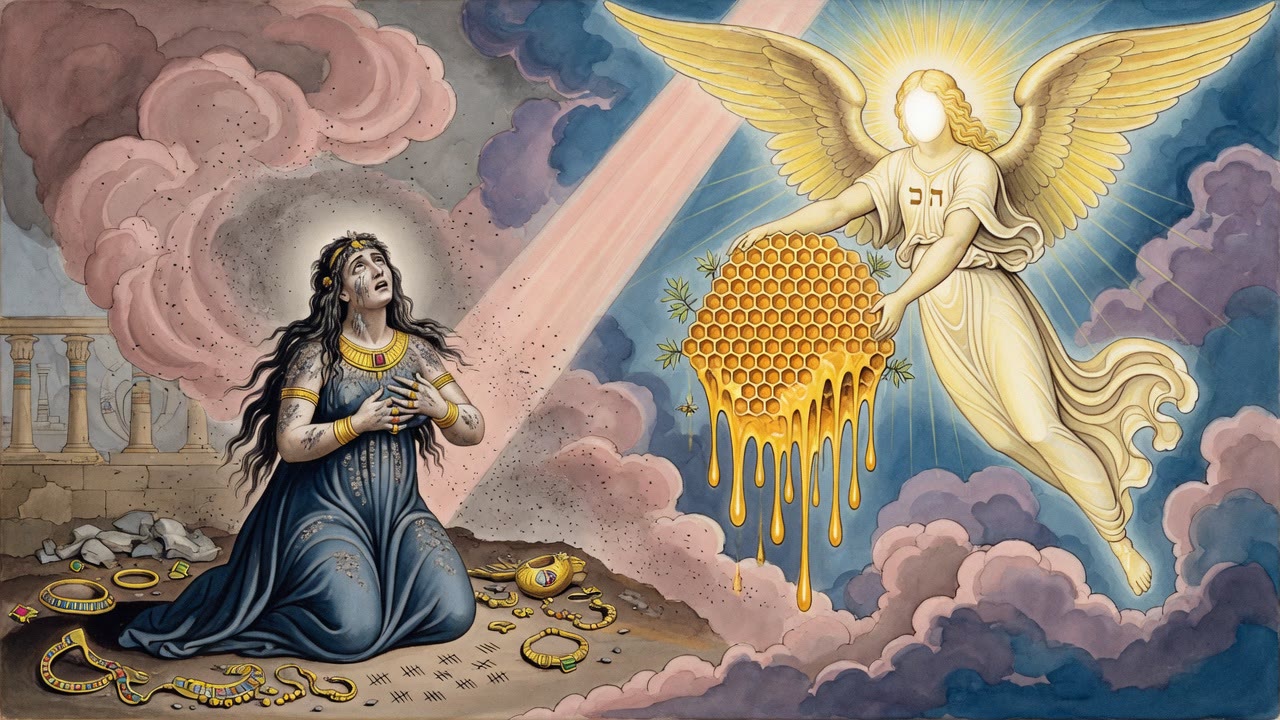
Long before this scene, another hidden identity had crossed into Egypt. Asenath, raised as the daughter of Potiphera, carried a secret older than Pharaoh's marriage arrangement. Jacob had written the Holy Name on a golden plate and sent the child away under divine protection. An angel carried her to Egypt because Joseph would one day need a wife from within Jacob's line.

Egypt kept receiving people it did not understand.

Joseph looked Egyptian and was Israel. Asenath looked Egyptian and belonged to Jacob's house. Their sons would stand before Jacob and receive blessing as tribes. The disguise did not destroy the line. It preserved it until the appointed hour.

The golden plate around Asenath's neck and the covenant mark on Joseph's body belong to the same hidden grammar. Egypt sees what it can name: priest's daughter, Pharaoh's officer, viceroy, foreign bride. Heaven sees what has been carried quietly through danger. A sign on skin. A Name on metal. A child moved by an angel. A brother preserved under a crown.

Recognition comes late in both cases, but late does not mean lost.

The Viceroy Became Joseph Again

When Joseph revealed himself, heaven recognized the moment before the brothers could bear it. The angel's force, Judah's roar, the shaken thrones, the covenant sign, and the hidden wife all pressed toward one truth: Egypt had not swallowed Joseph.

It had dressed him. It had crowned him. It had renamed him and seated him above grain. But beneath the gold sat the son of Jacob, still marked by Abraham, still speaking Hebrew when the door finally closed and only brothers remained.

The stranger on the throne had been family all along.

That is why the room shakes before peace arrives. Recognition in this family is never gentle at first. It breaks the false surface before it heals the wound beneath.


← All myths

From the tradition

Sources

3 sources

The texts this telling draws on, in full. Open a card to read inline, or expand it for a wider, quieter read.

Legends of the Jews 1:312Legends of the Jews

After years of famine, Joseph, now the all-powerful viceroy of Egypt, finally reveals himself to his brothers. Can you imagine their shock? "Ye see it with your own eyes," Joseph declares, "and also my brother Benjamin seeth it with his eyes, that I speak with you in Hebrew, and I am truly your brother." (Genesis 45:12). It's right there in the text. But they’re stunned. They can’t quite grasp that this powerful figure, speaking their native tongue, is the same smooth-faced youth they sold into slavery so long ago. He’s transformed, a bearded man in a position of immense authority.

Even after he reveals himself, they still can’t accept it. The Joseph of their memory is gone.

In Ginzberg's retelling in, Legends of the Jews, they needed more proof. Joseph, understanding their disbelief and perhaps their fear, bared his body. This wasn’t an act of aggression but one of undeniable identification. He showed them the physical mark, the sign that he belonged to the lineage of Abraham, their shared ancestor. It was a desperate attempt to bridge the gap of years and trauma.

The truth is a harsh light. Ashamed and enraged, the brothers were overcome with a primal urge: to silence the source of their guilt. They wanted to slay Joseph, viewing him as the author of their shame and suffering. The air crackled with potential violence.

Then, things get… well, let's just say "Biblical." An angel intervenes, flinging the brothers to the four corners of the house. Judah, known for his strength and fierce loyalty, lets out a cry so earth-shattering that the very foundations of Egypt tremble. Ginzberg paints a vivid picture: the walls of the city crumble, women experience premature labor, Joseph and Pharaoh are thrown from their thrones. Even Joseph’s elite guard, his three hundred heroes, are affected. Their heads are twisted backward, forever stuck in a posture of astonishment.

It’s a scene of cosmic upheaval, a physical manifestation of the emotional turmoil ripping through the room. Midrashic (rabbinic interpretive commentary) literature often uses hyperbole to convey the immense power of divine intervention and the profound impact of these moments.

Yet, despite this divine display of force, the brothers remain paralyzed. They are "too greatly ashamed" to approach Joseph. The weight of their past actions, the betrayal of their own brother, has them frozen in place.

And what does Joseph do? He offers them grace. "Now be not grieved, nor angry with yourselves, that ye sold me hither, for God did send me before you to preserve life" (Genesis 45:5). He reframes their horrific act as part of a divine plan, a necessary step in saving their family from starvation.

It’s a powerful moment of forgiveness and redemption. It also invites us to consider: Can good truly come from evil? Can we ever fully escape the consequences of our past actions? And perhaps most importantly, can we find the strength to forgive ourselves, even when we feel most unworthy?

Full source
Pirkei DeRabbi Eliezer 38:2Pirkei DeRabbi Eliezer

Her story, as told in Pirkei DeRabbi Eliezer (chapter 38), takes a turn you might not expect.

So, what happened to Asenath before she met Joseph? According to this tradition, Jacob played a pivotal role. He took a golden plate and inscribed upon it the Shem HaMeforesh ( שם המפורש ), the Holy Name of God. This wasn't just any inscription; it was a powerful act of protection, a divine amulet. He then hung this golden plate around Asenath’s neck and sent her on her way.

Why would he do that? Well that everything is revealed before the Holy One, blessed be He. God knew Asenath's destiny. And so, the angel Michael descended and took her, bringing her down to Egypt, specifically to the house of Potiphera.

Potiphera’s wife was barren, and Asenath grew up in their household as a daughter. From a protected child, guided by divine intervention, to an adopted daughter in a foreign land. It’s quite the journey.

Then Joseph arrives on the scene. The story unfolds as we know it from Genesis: Joseph rises to power, interprets Pharaoh’s dreams, and ultimately, as it is said in (Genesis 41:45), Pharaoh "gave him to wife Asenath the daughter of Potiphera priest of On." The circle closes. The golden plate, the angel's intervention, it all leads to this moment.

But what does it all mean? Pirkei DeRabbi Eliezer isn't just giving us a backstory; it's emphasizing the divine plan, the intricate web of fate and free will. Asenath wasn't simply chosen at random to be Joseph's wife. She was protected, guided, and prepared for her role. It's a reminder that even in the seemingly random events of our lives, there might be a hidden hand at play, a larger purpose unfolding.

It prompts us to consider: What "golden plates" are protecting us? What unseen forces are guiding us toward our own destinies? And how can we be open to recognizing the divine hand in our own lives, even when it's hidden in plain sight?

Full source
Legends of the Jews 1:203Legends of the Jews

The familiar story is this:,

Joseph, now a powerful figure in Egypt. He’s no longer the naive youth they tossed into a pit. The text paints a vivid scene: "A large crown of gold on his head, apparelled in byssus (fine linen) and purple, and surrounded by his valiant men, Joseph was seated upon his throne in his palace." It's quite a contrast to the Joseph they last saw, isn’t it?

His brothers arrive, bowing low, awestruck by his splendor. Ginzberg, in Legends of the Jews, captures their reaction perfectly: "They fell down before him in great admiration of his beauty, his stately appearance, and his majesty." They are completely oblivious to the fact that they stand before the brother they wronged. How could they know? As the story goes, "when Joseph was sold into slavery, he was a beardless youth." Time, power, and Egyptian garb have rendered him unrecognizable.

Joseph? He knows them. Their faces haven't changed. "He knew his brethren," the text says, "their appearance had not changed in aught, for they were bearded men when he was separated from them." Can you imagine the emotions swirling within him at that moment? Revenge? Joy? Confusion?

He's on the verge of revealing himself, ready to bridge the chasm of years and betrayal. But then, a twist. "An angel appeared unto him," we are told, "the same that had brought him from Shechem to his brethren at Dothan." This angel, a messenger of God, reminds Joseph of their original intent: "These came hither with intent to kill thee."

Whoa.

This isn't just a reunion; it's a confrontation with the past, a reminder of the potential for deadly sibling rivalry. It throws a whole new light on Joseph’s subsequent actions, doesn't it? What would you do?

The narrative continues, explaining how the brothers, back home, recount their experiences to Jacob. They speak of a mysterious man who falsely accused them before the Egyptian ruler, unaware that this "man" was, in fact, their own brother. They have no idea that the person who stirred up trouble for them was an angel, as well.

It's fascinating how angels operate in these ancient tales. They aren't always benevolent, are they? Sometimes, they seem to be instigators, pushing events toward a predetermined path.

And Jacob, sensing something amiss, prays to God for mercy. As we find in the text, when he dispatches his sons on their second expedition to Egypt, he prays, "God Almighty give you mercy before the man." It's a powerful, heartfelt plea, laden with unspoken anxieties and a father's love.

What does it all mean? Perhaps that even in moments of great power and potential reconciliation, the shadows of the past can linger, influencing our decisions and shaping our destinies. And maybe, just maybe, that even divine intervention can sometimes feel like a mixed blessing.

Full source