Pharaoh Knocked on Moses's Door at Midnight While Israel Sang
Inside the house they sang the first Hallel with sandals on. Outside, Pharaoh named himself humiliated and begged Moses to come to the window.
Table of Contents
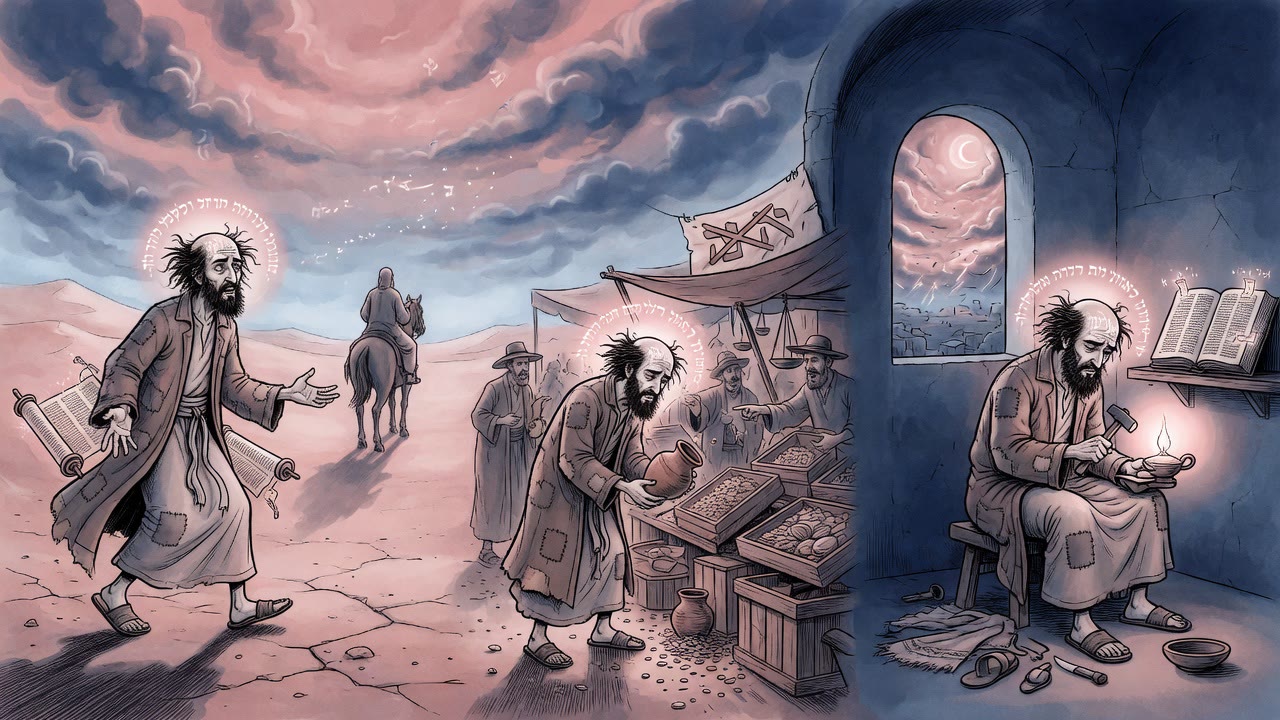
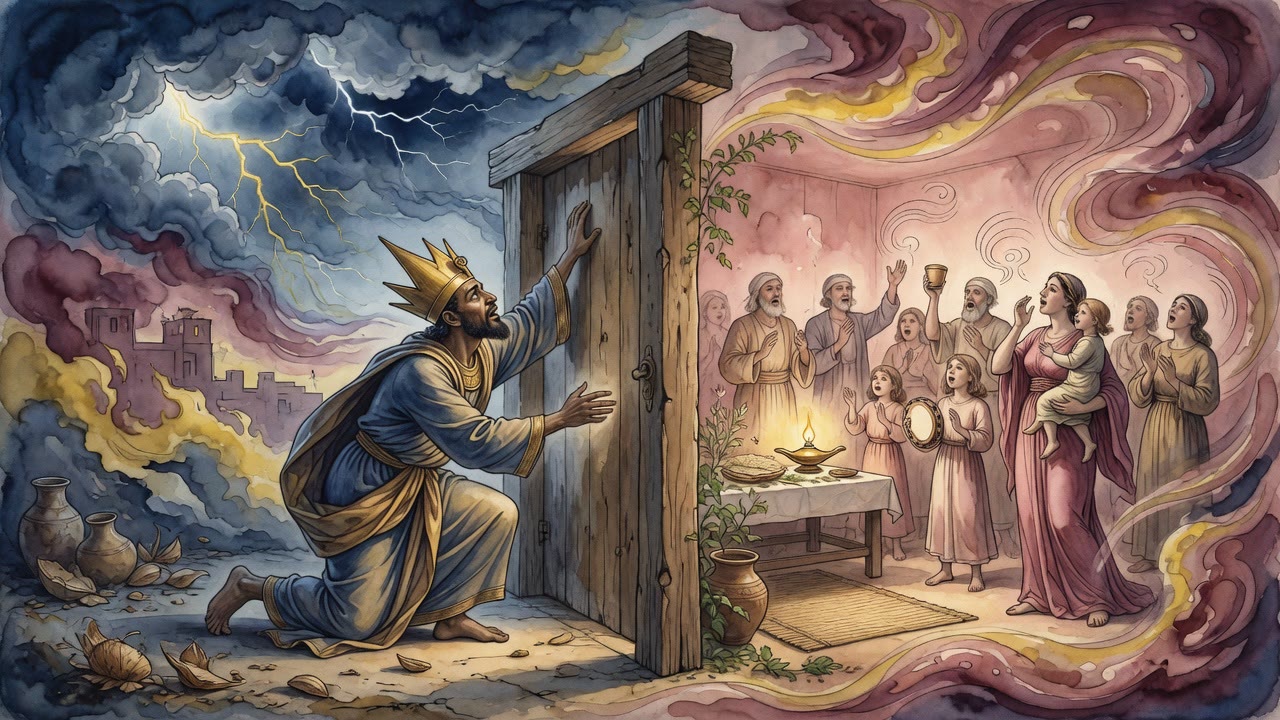
The fist hit the door after midnight. Inside, Israel had already eaten the lamb. Blood was on the posts. Sandals were on their feet. Staffs were in their hands. They were singing the first Hallel, the psalms of praise, while Egypt screamed from palace to dungeon.
 Click for full size
Outside stood Pharaoh, who had thrown Moses out of his presence and told him never to come back. The most powerful king in the world was knocking on a Hebrew door in the dark.
Pharaoh Named Himself at the Door
"Who art thou, and what is thy name?" Moses called through the wood.
Pharaoh had to say it. "I am Pharaoh, who stands here humiliated."
Moses pressed him. "Why dost thou come to me thyself? Is it the custom of kings to linger at the doors of common folk?"
"I pray thee, my lord, come forth and intercede for us," Pharaoh said, "else there will not remain a single being in Egypt."
Moses would not open. God had commanded, "None of you shall go out of the door of his house until the morning" (Exodus 12:22). Compassion sat on one side of that command. Obedience sat on the other. Moses stayed inside.
None Shall Go Out Until Morning
Pharaoh begged him at least to step to the window. Moses yielded that far. He came to the opening. He did not cross the threshold.
"Thou didst say yesterday, 'All the first-born in the land of Egypt will die,'" Pharaoh cried. "But now as many as nine-tenths of the inhabitants have perished." The tenth plague had not stayed with the firstborn. The night had eaten further. Houses that still had a living firstborn had lost the rest. The king who had said he did not know the Lord now named the count himself, standing in the street, asking a slave to come out and stop it.
Moses's answer was cold and exact. They would not leave at night like fugitives. They would leave in the morning, in the light, with flocks and herds and everything Pharaoh had agreed to give. Take your people, Pharaoh said. Take the animals. Take everything. Bless me too. The blessing he asked for had to wait on a door that would not open until dawn.
Golden Crowns on a Hebrew Head
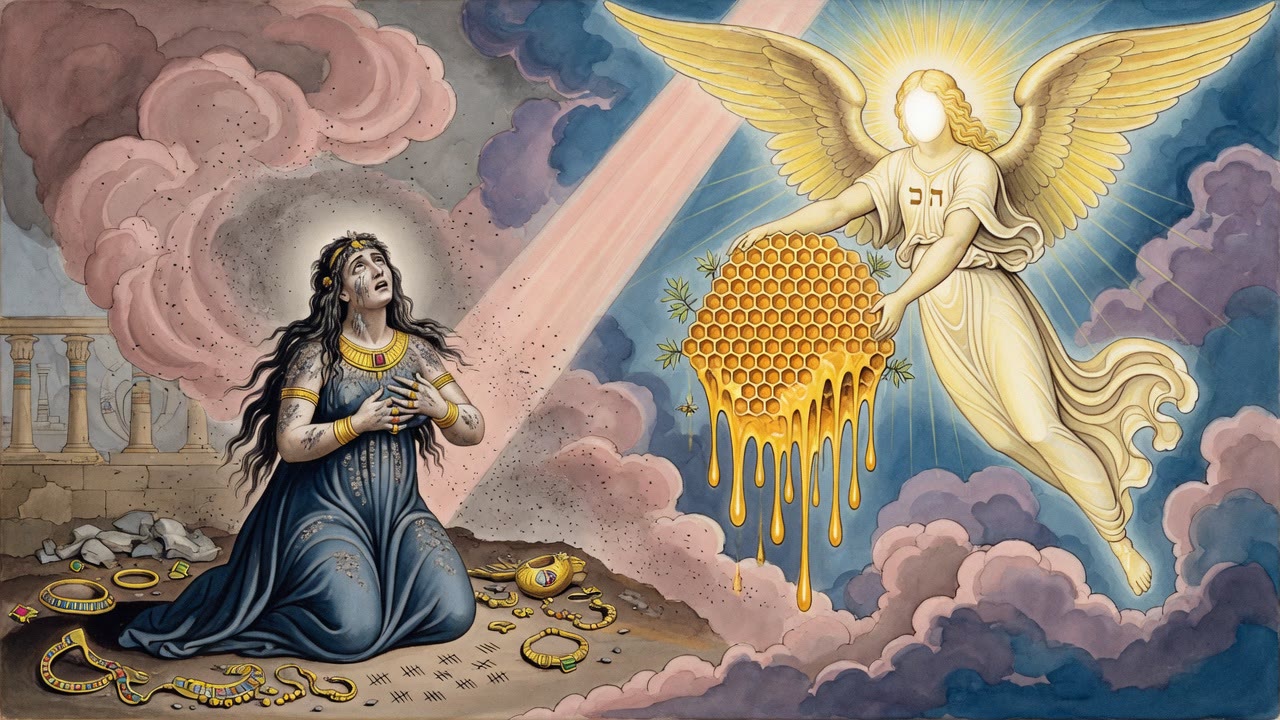
This was not the first time an Egyptian throne had bent toward a Hebrew. Generations earlier, when Joseph came out of prison to read Pharaoh's dreams, that earlier king had taken the wedding into his own hands. He set a golden crown on Joseph's head and a golden crown on Asenath's head, daughter of Potiphera, priest of On (Genesis 41:45). He blessed them. He called the princes and made them bow.
Potiphar and his wife threw the engagement banquet. Pharaoh threw the wedding. For seven days the people of Egypt were forbidden, under penalty of death, to do any work. The nation stopped so a Hebrew could be crowned vizier and take a wife. Joseph and Asenath embraced and kissed as a sign of betrothal in that same court.
That Pharaoh had put gold on a Hebrew head and halted a country for the feast. This Pharaoh stood in the dark and named himself humiliated at a Hebrew door. The house of Egypt had learned both gestures. It had forgotten which one kept it alive.
The First Hallel
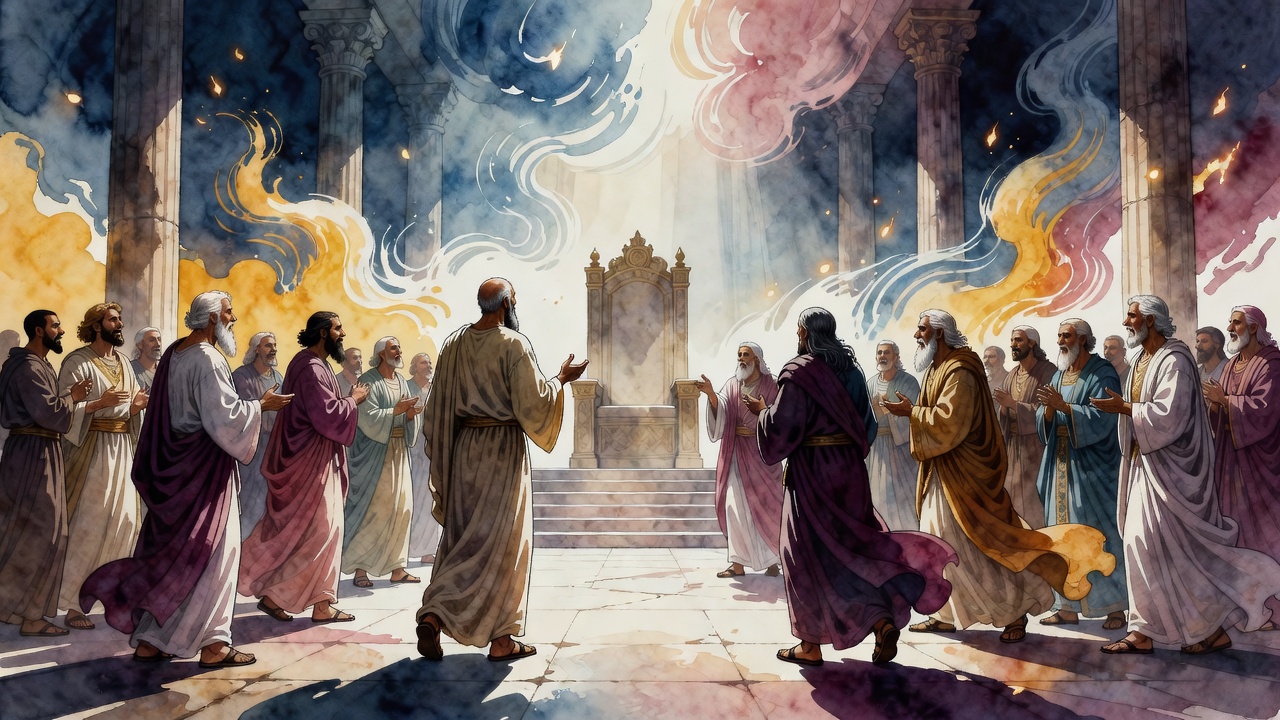
Inside, they kept singing. Moses, Aaron, and all Israel sat to the paschal meal while the knocking went on. The Hallel that night was the first time those psalms of praise were recited as a people leaving. Sandals stayed on. The staffs stayed in their fists. No one went out to see the king. The distinction God had drawn between Goshen and Egypt held at the wood of the door.
When morning came they walked out in the light, not as men slipping away, but as a people Pharaoh himself had begged to leave. The flocks went. The herds went. The dough that had not risen went on their shoulders. Behind them the houses of Egypt counted their dead.
Ten Times They Tested God
Years later Moses stood east of the Jordan, about to die, and recited the record. He did not spare them. Ten times they had tested God in the wilderness, the same number as the plagues that had broken Egypt.
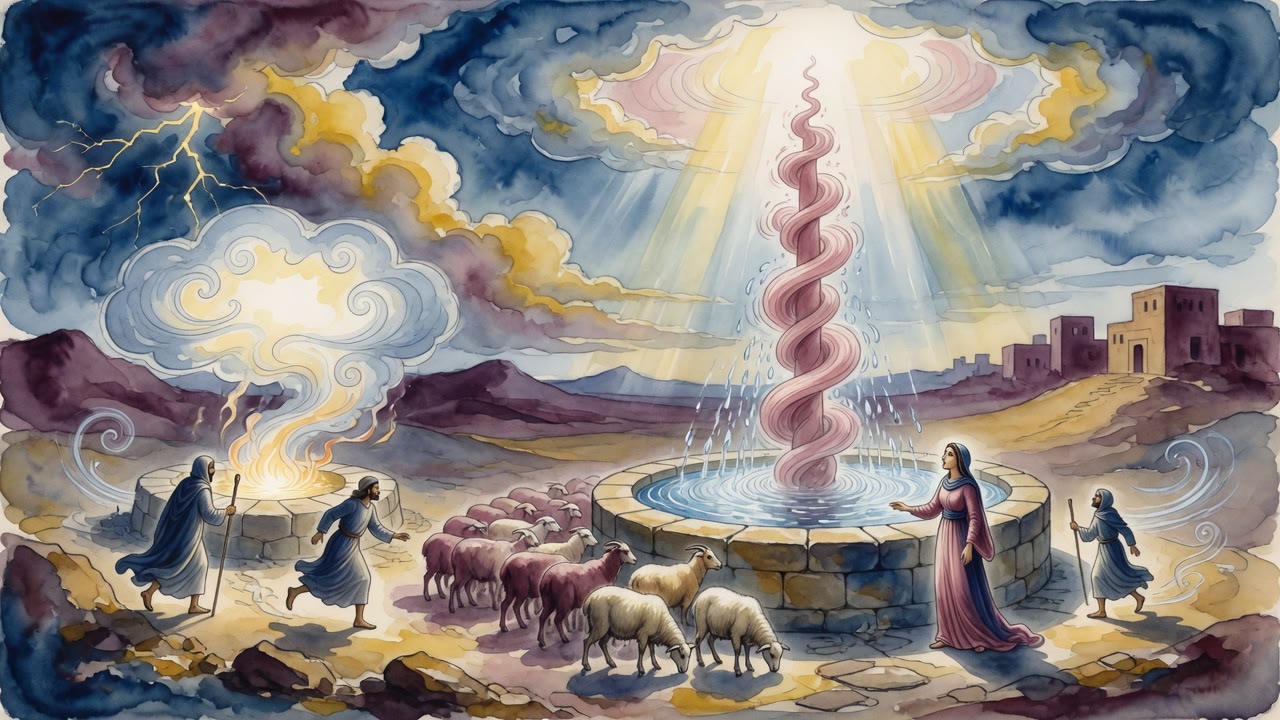
At the sea they regretted the leaving and turned back three stations toward Egypt, and claimed the Egyptians had crossed unharmed somewhere else. Twice they tested Him for water, at Marah and at Rephidim. They hoarded manna overnight when they were told not to, and went out to gather it on the Sabbath. Twice they craved meat while the manna was still in their mouths. They made the calf. In Paran the spies misled them, and they wanted another idol to walk them back to the brick yards.
He handed them the tally so they could read it. The people who had sung Hallel behind a barred door, while Pharaoh named himself in the street, had still found ten ways to try the One who opened that door. Moses was not warning them from a throne. He was a dying man east of the river, listing the nights they had forgotten the knock.
← All myths