Moses Walked Out So Pharaoh's Servants Could Speak
Moses promised locusts, then left the throne room. With him gone, the servants told Pharaoh the land of Egypt was already ruined.
Table of Contents
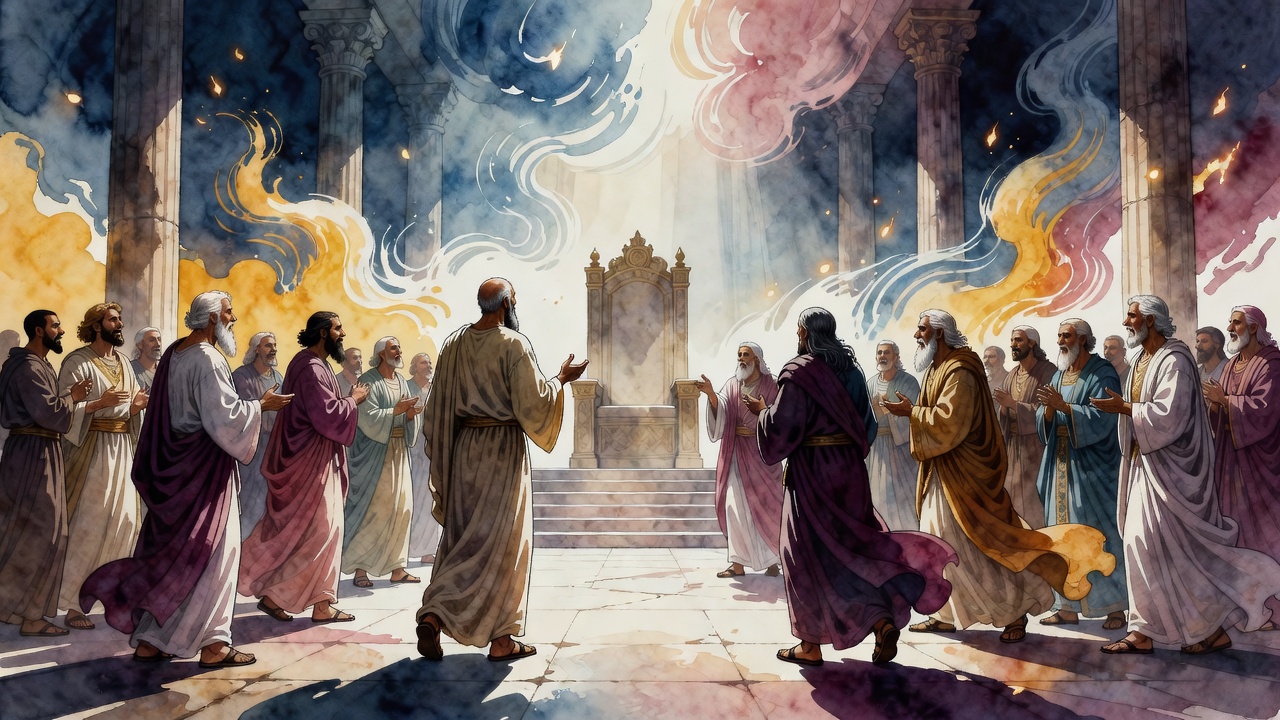
Moses told Pharaoh that locusts would cover the land and eat what the hail had left. Then he turned his back on the throne and walked out before the king could answer.
 Click for full size
It was not fear. He had watched the faces of the advisers while he spoke, and he had seen the words land.
He Left Them the Room
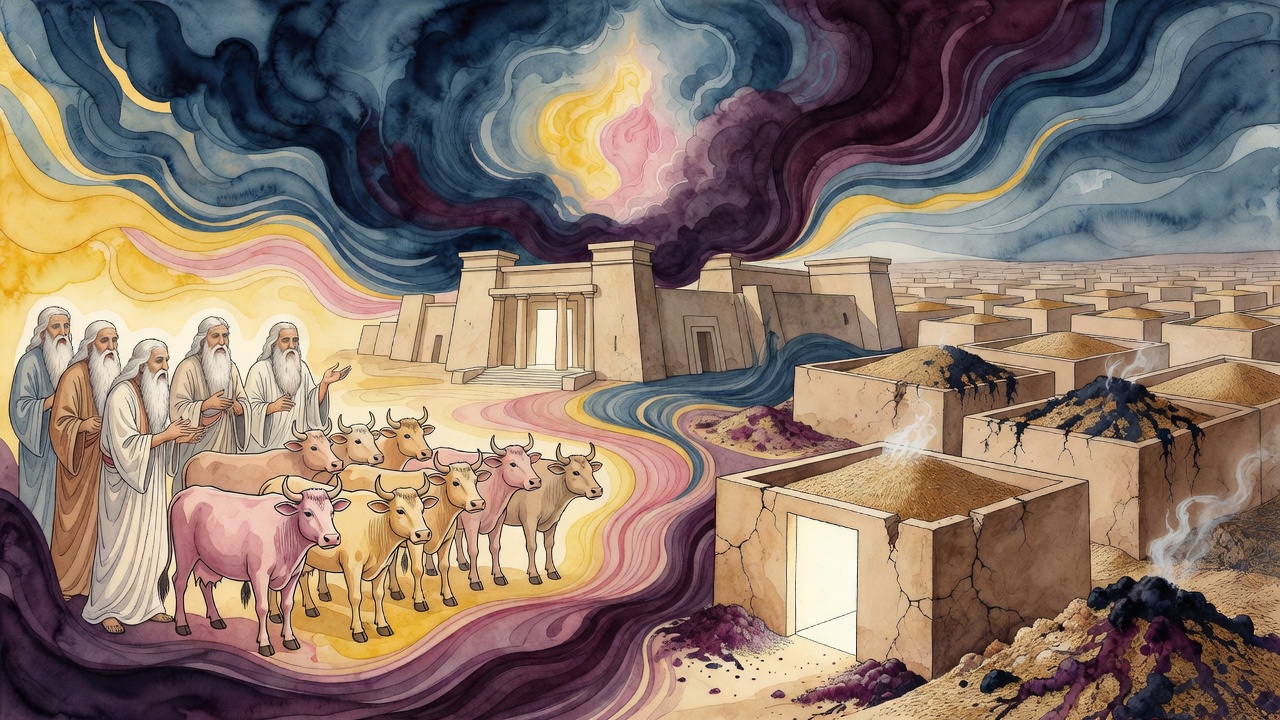
The hail had stopped. Pharaoh had gone back to refusal, as Moses knew he would. Moses moved at once to the eighth warning. Locusts, he said, would eat the standing grain, the trees, every green thing the ice had missed. He did not wait for the old no.
A prophet standing in the room while a king's servants argue the prophet's sentence is a weight on their tongues. They cannot tell their own master the country is dying while the outsider watches their mouths. They cannot look weak in front of the man they still call a stumbling block.
Moses outmaneuvered that silence by leaving it. He gave the court the one thing it had not had in seven plagues: a closed door and permission to panic without an audience.
How Long Will This Man Be a Stumbling Block
The servants turned on Pharaoh the moment the door shut.
"How long shall this man be a stumbling-block to us? Let the men go, that they may worship before the Lord their God. Do you not know that by His hand the land of Egypt will be destroyed?"
They still called Moses "this man," as if the name could be kept small. The rest of the sentence betrayed them. They had begun to see him as the hinge on which Egypt turned.
Pharaoh sent for Moses. The negotiation came back, now with the court's break inside it. Moses insisted the whole people must go, young and old, sons and daughters. Pharaoh balked. Young men and old men belong at a sacrifice, he said. Little children do not. If you demand the children, you mean to run and never return. I will have nothing more to do with it. My god Baal-zephon will block you on the road.
The warning had opened a crack. Pharaoh filled the crack with a smaller permission and a temple of his own. The locusts still came.
The Firstborn Went to Their Fathers
The last warning did a different kind of work. Moses announced that every firstborn in Egypt would die, and the designated dead were in the room when the sentence went out. They heard it as a timetable for their own throats.
They went to their fathers. Whatever Moses has said has come. Let the Hebrews go, or we die. The fathers refused. Better that one in ten of us die, they said, than that the Hebrews succeed.
The firstborn took the plea to Pharaoh. So far from granting it, he ordered his servants to fall on them and beat them for the presumption. The sons who had tried speech tried force. They could not override the refusal. They could only make the household's cost visible to itself.
Egypt's last night did not begin as a blow from outside. It began as sons looking at fathers and understanding the price of pride, then being struck for saying it.
The Children Lifted on Clouds
While Egyptian firstborn were begging not to die, Israel had a problem of a different kind. The Passover sacrifice may not be eaten outside the borders of the Holy Land, and they were still in Egypt. The warning had a table attached to it, and the table was in another country.
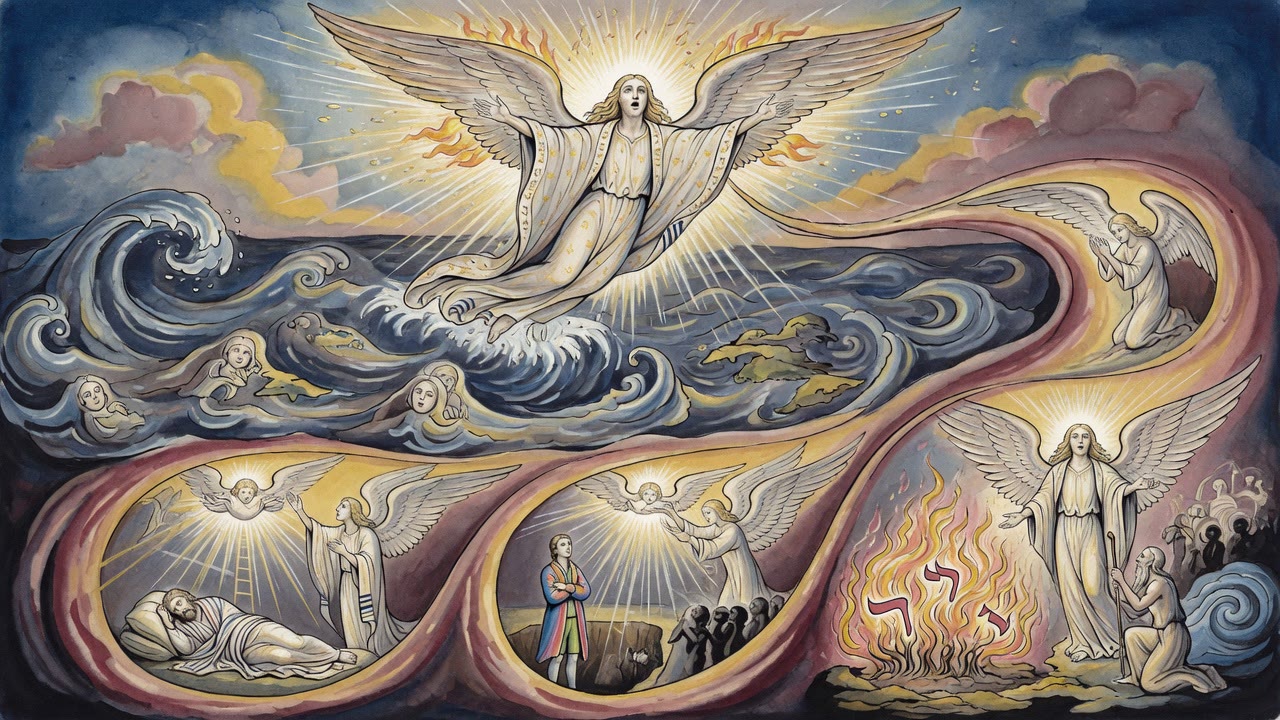
God lifted the Israelite children onto clouds, carried them to the land, let them eat of the sacrifice, and brought them back the same way, in time for the night.
Two houses, one hour. In one, sons were beaten for asking to live. In the other, children were flown to eat a meal that the law would not let them eat in Goshen. Moses had not only stacked plagues. He had moved the argument inside Egypt until Egypt argued with itself, and he had kept Israel's table legal even while their bodies were still under Pharaoh's roof.
Pharaoh's last presentiment was the shrine of Baal-zephon waiting on the road. He named a block. Moses had already taught the court how a block works. Leave a room, and the people who serve the block will say the true name of the ruin.
The Court Broke Before the King Did
Each warning had a door. Hail, then locusts, then the death of the firstborn. Moses did not only strike. He stepped back. He let servants speak. He let sons plead. He let a king refuse in a voice that his own house could no longer bear.
The exodus that followed was not won by a single blow on a palace roof. Advisers told their king the land was already destroyed. Firstborn chose their own lives over their fathers' pride and were beaten for it. Children ate a sacrifice on clouds because the Holy Land would not come to them.
Moses walked out of a throne room. The servants said the sentence he had left for them. Pharaoh still said no. The no was already leaking.
← All myths