Jacob Found His Dead Son Alive at a Feast in Goshen
The coat had been enough to close the grave. In Goshen, Jacob sat at the table and watched Joseph eat bread like any living man.
Table of Contents
 Click for full size
Blood on the Coat
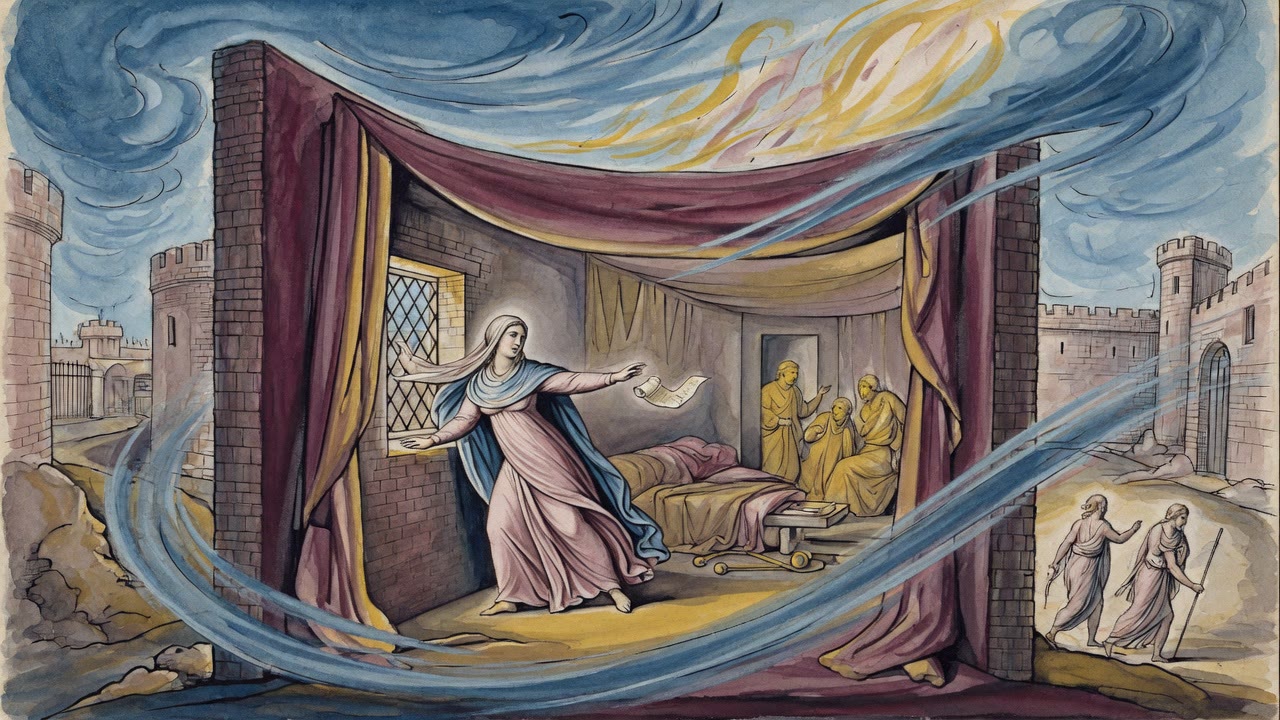
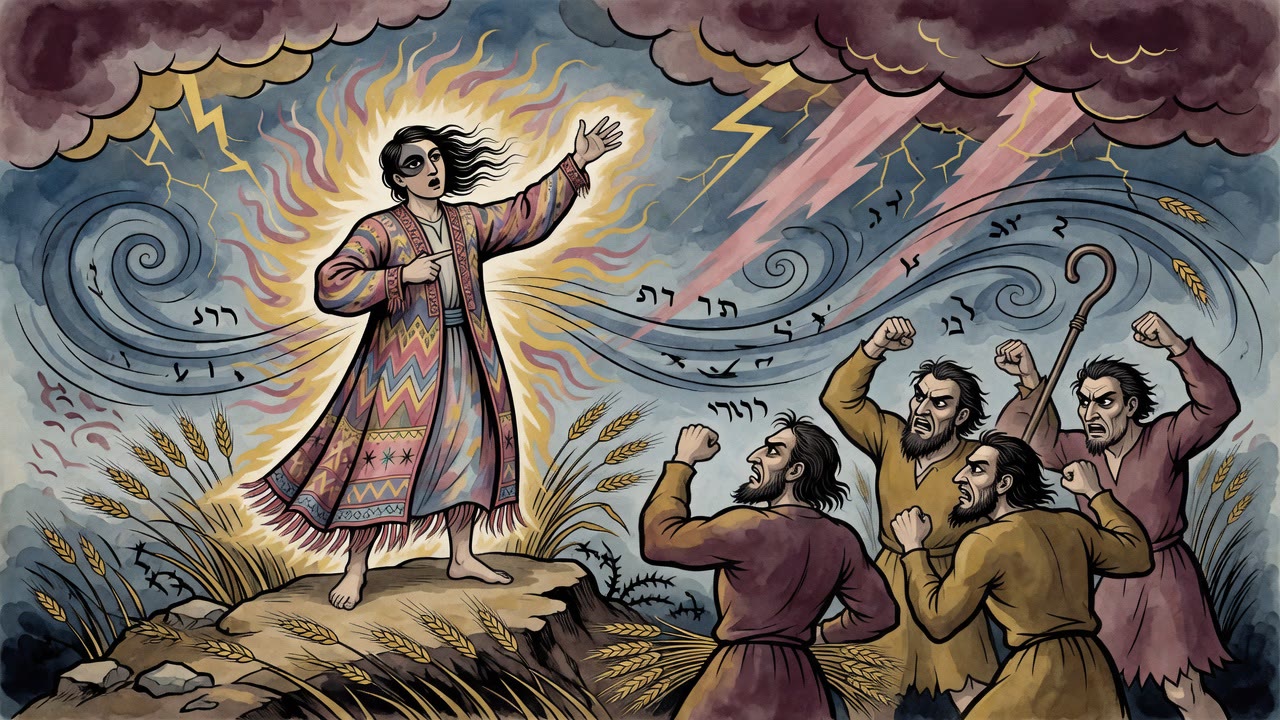
When they brought Jacob the coat, the blood on it settled something in his mind that his heart refused. His sons said they had found it. Did he recognize it? He recognized it. He tore his clothes and put on sackcloth and mourned for many days. His children tried to comfort him. He would not be comforted. He said he would go down to his son in the pit in mourning.
He mourned for twenty-two years. Through his sons' marriages, through the children that came from those marriages, through Canaan's ordinary time, the wound stayed open. Joseph was the son of Rachel, the wife he had worked fourteen years to earn. Joseph was the coat he had given. Joseph was the hole in the family that every day confirmed was still there.
Kings Who Lost Their Nerve
Years before the coat, after Shechem, the kings of the Amorites had gathered in a field to decide what to do with Jacob's sons. Two of those sons had taken a whole city. The kings wanted a war they could finish.
God heard the prayers of Isaac and Jacob and filled the advisors' hearts with terror. The advisors turned on their own kings. Were they silly, they asked, to fight the Hebrews? Two had killed Shechem and no man had stood up. How would they fight all of them? Their God had pulled Abraham from Nimrod's fire. He had sent Abraham after the kings of Elam. He had stopped the knife over Isaac. He had turned Esau's four hundred men aside. Fight these men, the advisors said, and you fight the God who is fond of them.
The kings' hearts went hollow. They did not come. Jacob lived. The household stayed in the land long enough for a famine to find it, and for a coat to lie about a death.
Ten Gates
The famine came. "Behold I hear that there is corn in Egypt," Jacob told his sons. "Why will you show yourselves satisfied before the whole earth?" He sent them down to buy grain. He kept Benjamin. He would not risk the last son of Rachel on the road.
He told them not to enter the city by one gate. They split. Ten brothers, ten gates. The keepers wrote the names and brought the lists to the grain minister that evening. Joseph read his brothers' names and shut every storehouse but one. He stationed a man there with the list. Anyone whose name was on it was to be held.
On the road the brothers had already spoken of Joseph. They would find him, they said, and ransom him, or take him by force, and die for him if they must. They did not know they were walking toward the man who was reading their names by lamplight.
Bread and Wine in Goshen
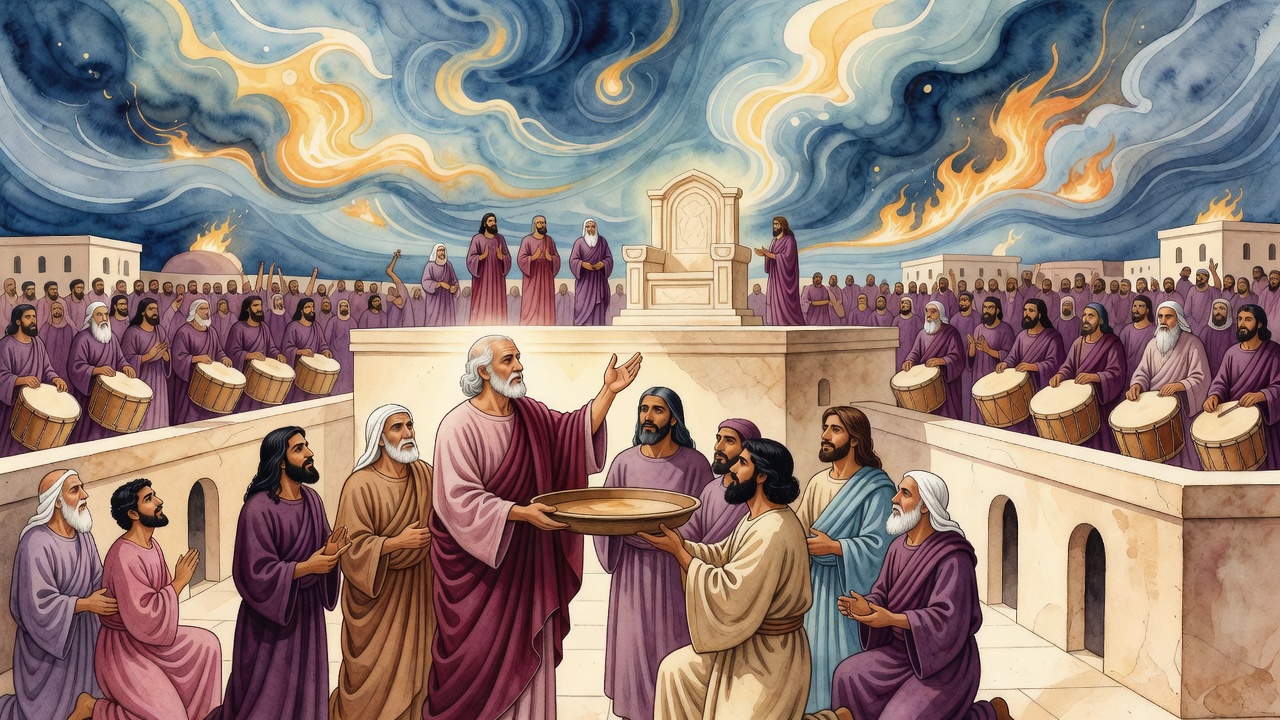
Long before the famine, a voice had told Jacob he would not die in the land of his fathers. He would die in Egypt in peace, and be buried with honor in the cave with Abraham and Isaac. At Beersheba, on the way down, God spoke again. Do not be afraid to go down to Egypt. I will make you a great nation there. I will go down with you, and I will also bring you back (Genesis 46:3-4).
Jacob sent Judah ahead to Goshen. When Joseph heard his father was close, he harnessed his chariot and rode out. He fell on Jacob's neck and wept a long time. He had been a slave and a prisoner and then the second man in Egypt. He had married Asenath. He had learned to hold his past at a distance while he managed the present. The sight of his father broke that management. The wept-for time was not only grief for what had been lost. It was the release of something he had held so long that the release itself shook him apart.
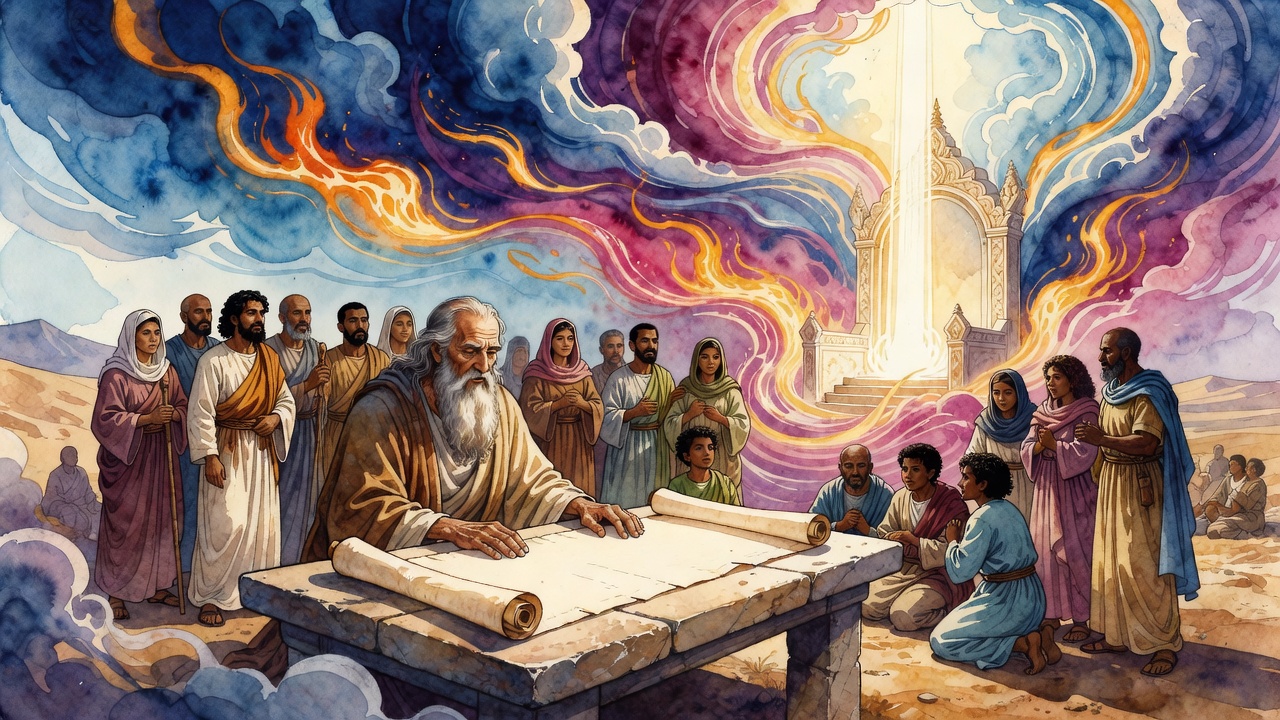
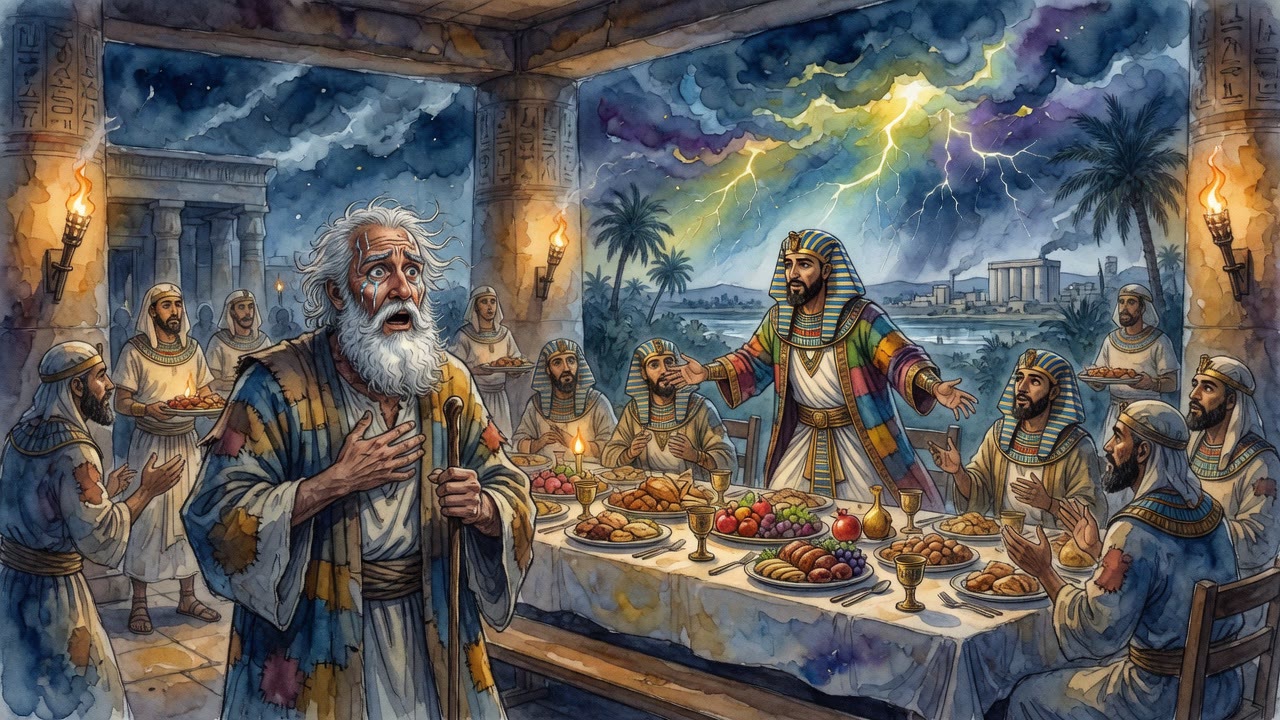
Then they sat. Joseph and his brothers ate bread before their father and drank wine. Jacob watched Joseph's mouth. Bread went in. A cup rose. The ordinary mechanics of a living body, the chew, the swallow, the hand that reached without trembling. This was not a ghost. This was not a report. This was his dead son alive at a feast in Goshen. Jacob rejoiced with exceeding great joy because he saw Joseph eating with his brothers and drinking before him. He blessed the Creator of all things who had preserved him, and had preserved for him his twelve sons.
Few and Evil Years
Joseph brought his father before Pharaoh, and Jacob blessed Pharaoh. A man of seventy souls, a refugee from famine, stood in the court of the empire and put a blessing on its king. Pharaoh asked how old he was. Jacob said the years of his pilgrimage were one hundred and thirty years, few and evil (Genesis 47:7-9).
Few and evil, and still the meal in Goshen sat above them. The twenty-two years of mourning, the years in Laban's house, the night at Jabbok, the rape of Dinah, the loss of Rachel: all of it stood behind the sight of Joseph chewing bread, and the bread was still better.
Joseph gave them Goshen and Rameses and the region round about, the best of Egypt, which he ruled before Pharaoh. Israel was one hundred and thirty when he came. He would die there in peace, as the earlier voice had said, in the fourth year of the fifth week of the forty-fifth jubilee, after he had blessed his sons about Egypt and given Joseph a double portion. They would carry him to the double cave in Canaan. First he had to sit at a table and watch a mouth he had buried move again.
← All myths