Joseph Was Seventeen When He Made His Brothers His Enemies
Gad pulled a lamb out of a bear's mouth and had to put it down. Joseph went home and told their father the handmaids' sons were eating the herd.
Table of Contents
 Click for full size
The Lamb Gad Pulled Out of a Bear
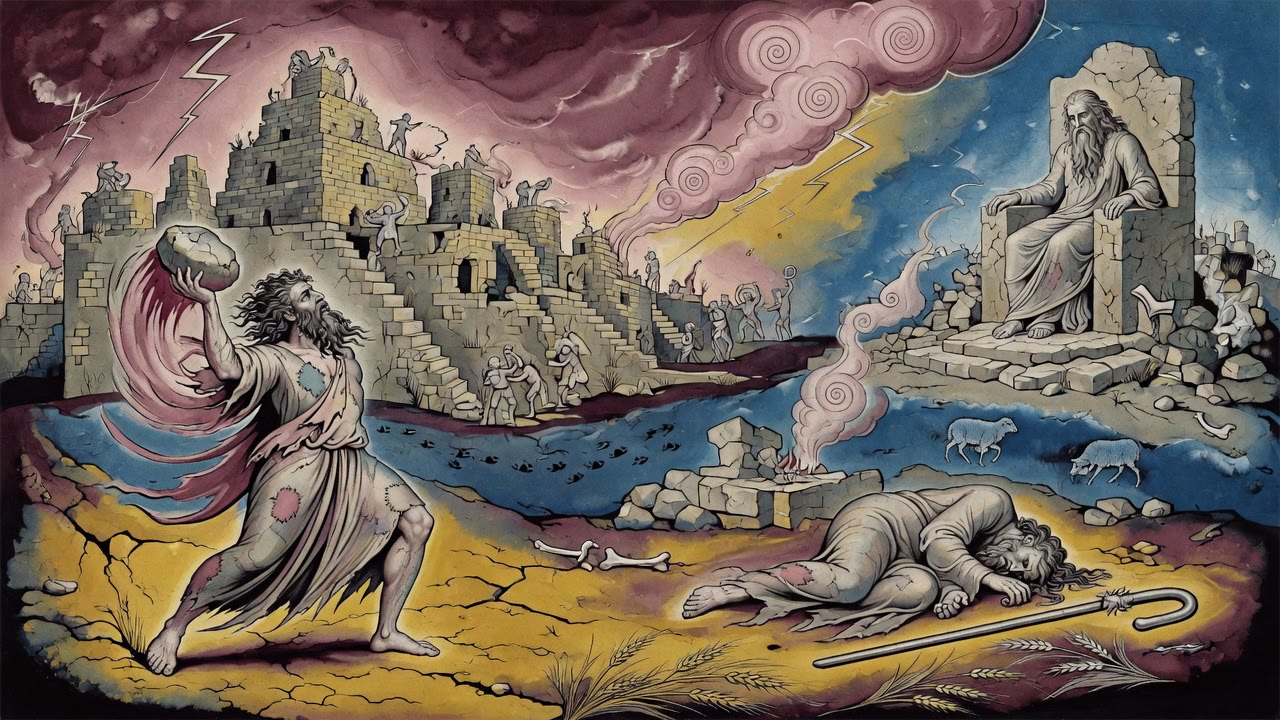
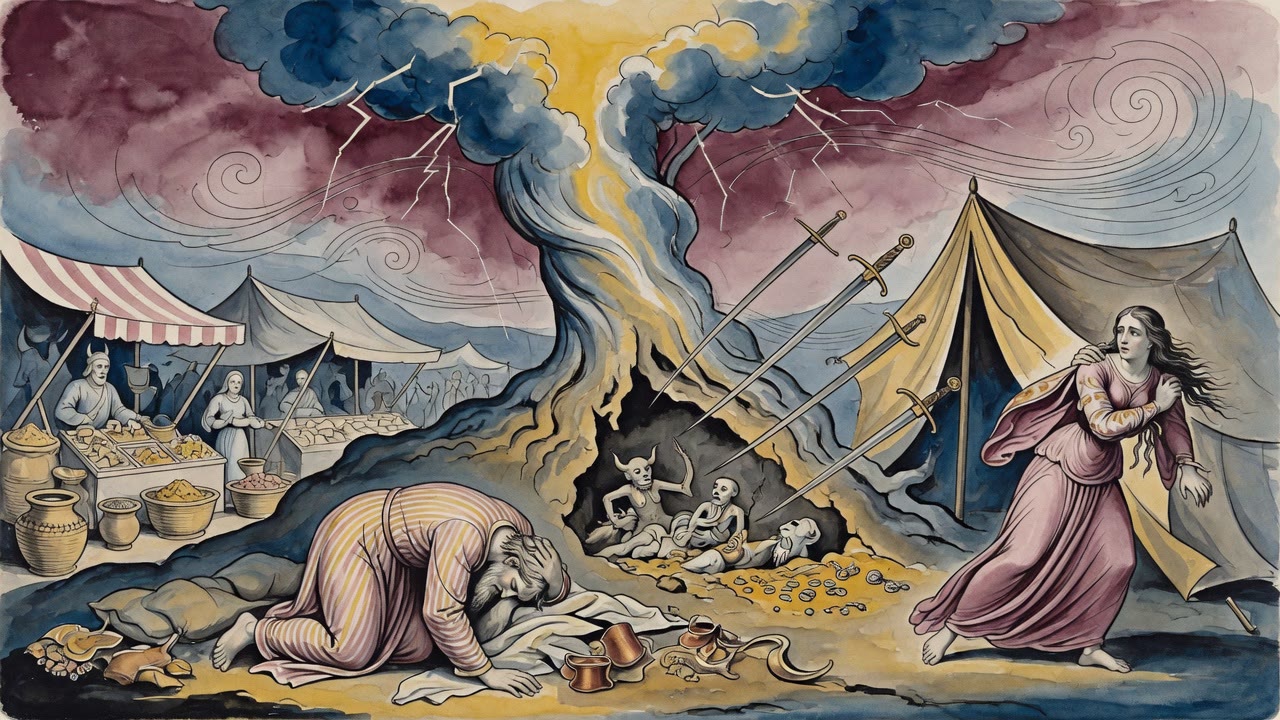
Gad guarded the flock at night, and when something came out of the dark for the sheep he did not run. He caught it by one hind leg and swung it around his head until it hung slack, and then he threw it, and it landed two stadia off, dead before it stopped rolling. That was the kind of man he was.
One night a bear got a lamb in its jaws before Gad reached it. He tore the lamb loose. It stood there shaking in his hands with the marks of the teeth on it, too far gone with terror to eat or be driven, and Gad did the only thing left and cut its throat.
Joseph had been in the field that season too. Jacob had sent him out to help with the flock and he lasted thirty days before the heat put him on his back, and he came home sick to his father. What he brought home with him was a report. The sons of the handmaids, he told Jacob, were slaughtering the best animals in the herd and eating them, and they never asked Judah or Reuben for permission.
One lamb. One bear. One night. Out of it Joseph made a habit, a pattern, a family of thieves. And of all the brothers it was Gad who carried that the longest.
What Joseph Had Never Done
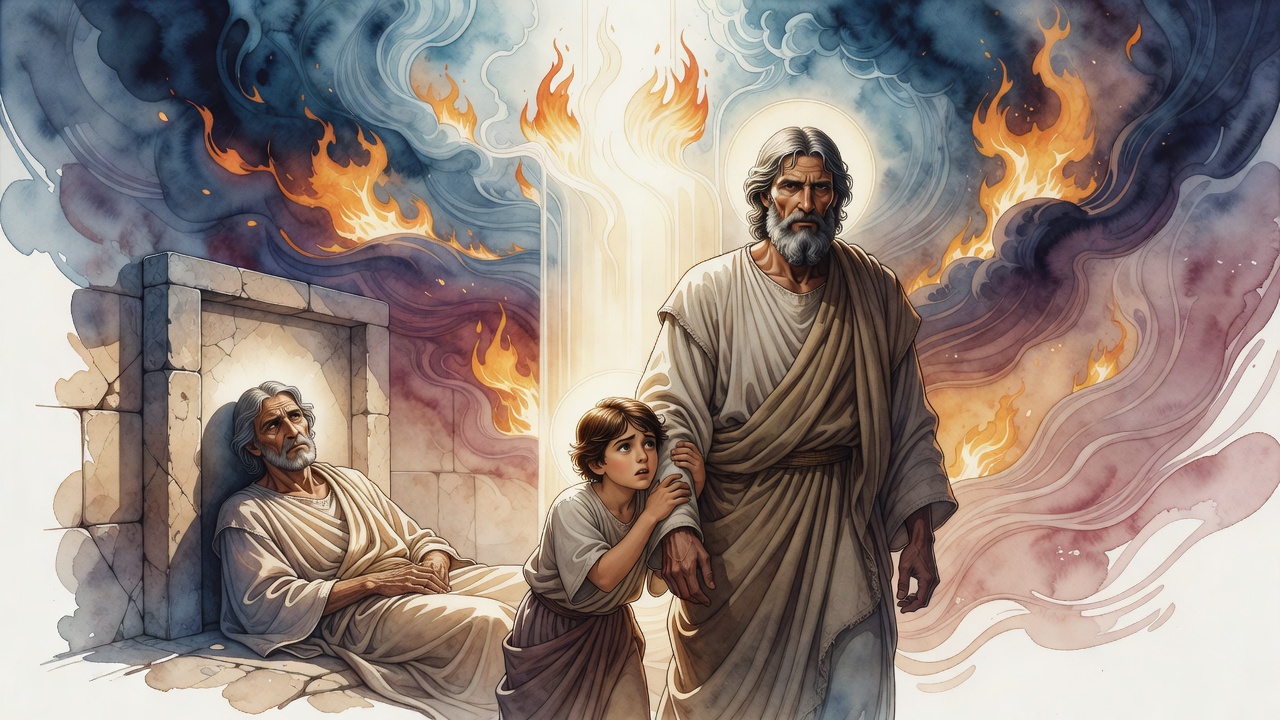
The brothers had taken the castle at Bethchorin in the dark. The men of that place were fighters who would not turn from a thousand, and the sons of Jacob had never fought at night before and were terrified of them, and they called out to God from the middle of it. God answered by putting a madness into the Chorinites, who swung at each other until morning while the sons of Jacob slipped down the slope and waited. The noise carried so far that kings on the other side of the Jordan lay awake asking who could stand against the Hebrews.
Joseph was not there. Neither was Benjamin. They were the young ones, the sons of Rachel, kept home while the rest of the household went out against the cities of the Amorites. When his brothers came back Joseph praised them. He admired their strength, he told them so, and then in the same breath he set himself above them, and he kept doing it. Jacob helped him do it. The coat of many colors was on him every day, and it said in public what a father is supposed to keep private.
After a while they could not say a civil word to him. Joseph had made enemies of eleven men, and he went on eating at their table.
Two Dreams He Told to Their Faces
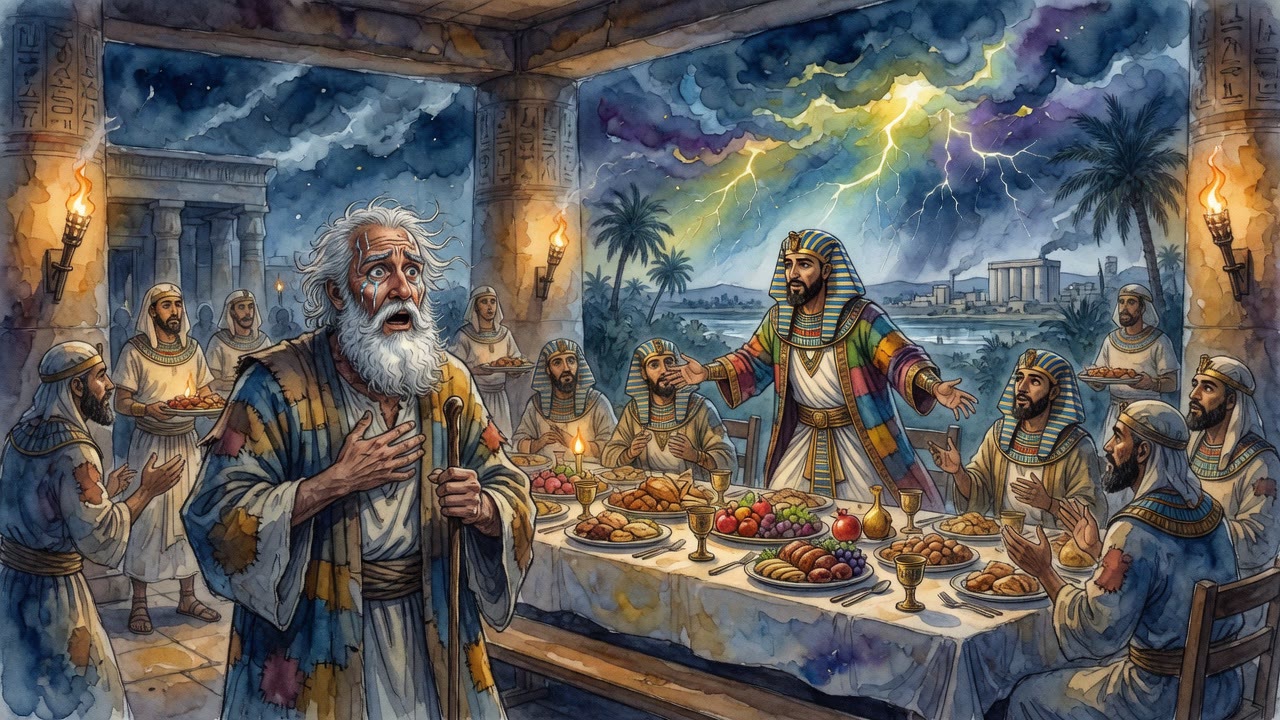
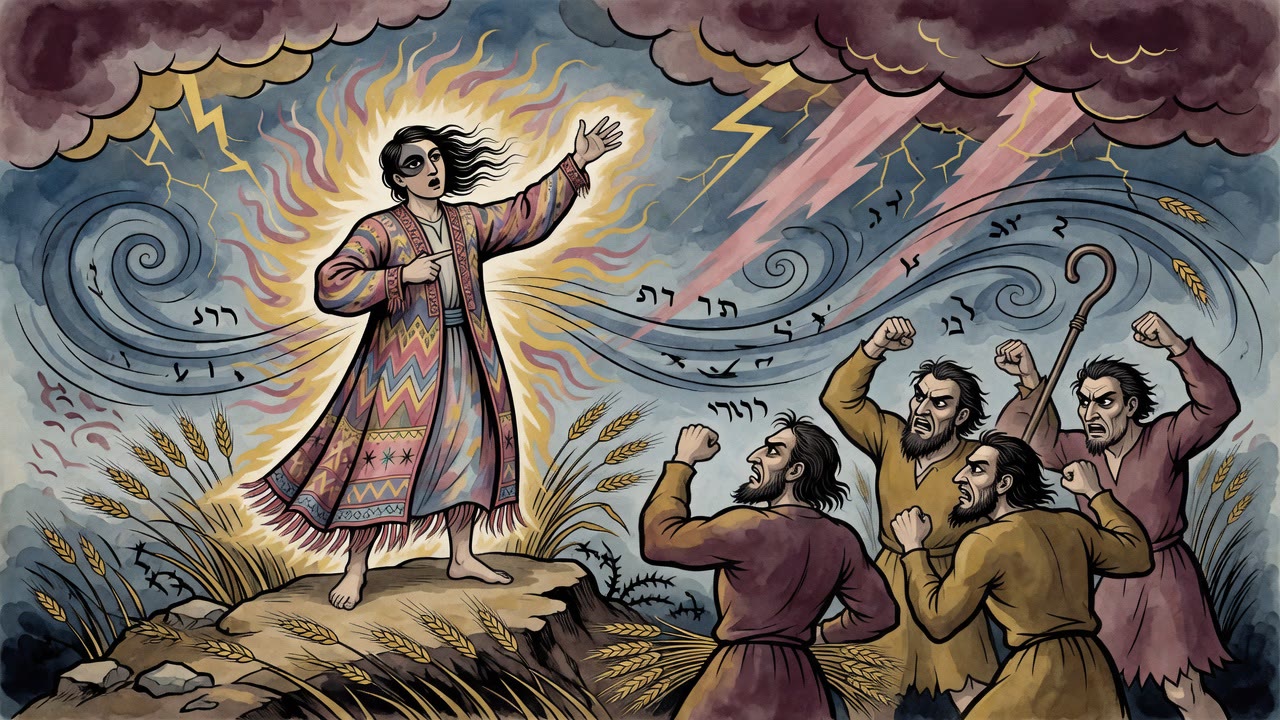
He was seventeen the year the dreams started, and he could not hold one in his mouth. He came to his brothers in the field. "We were binding sheaves," he said, "and mine stood up, and yours came around it in a circle and bowed down to it."
They stared at him. "Do you mean to reign over us? Do you mean to rule us?"
He went and told Jacob, and Jacob kissed him and blessed him, and the brothers watched that happen too. Then came the second dream, and this one he delivered with everybody in the room. The sun, the moon, and eleven stars, all of them bowing.
Jacob rebuked him in front of them. "What is this dream? Why do you magnify yourself over brothers who are older than you? Do you imagine that I and your mother and your eleven brothers are going to come and bow to the ground in front of you?" Then Jacob said nothing more about it, and kept the dreams somewhere in himself where he could get at them later.
The Angel Who Sent Him to Dothan
The brothers were late coming back from Shechem with the flock, and Jacob worried the men of Shechem had risen against them, so he sent Joseph to go and see. Joseph did not find them at Shechem. He walked the fields around the town, took a wrong turn, and lost the road entirely.
An angel of the Lord found him wandering there. Joseph asked him where his brothers were feeding. The angel said he had heard them say they were going on to Dothan. So Joseph thanked him and went to Dothan.
They saw him coming across the open ground while he was still small in the distance, and by the time he reached them they had decided. Simeon said it out loud: here comes the man of dreams, let us kill him and drop him in one of the pits and tell our father a wild animal ate him. Reuben would not have it. Throw him in the pit if you have to, he said, but do not put a hand on him to spill his blood. He meant to come back for him at dark.
Joseph sat down among them and they were on him. They stripped the coat off his back and threw him into a pit with no water in it and serpents and scorpions along the bottom. Joseph screamed, and God pushed the serpents and the scorpions back into the sides of the pit, and they did not touch him.
Then he started calling up through the hole. What have I done to you? What is my sin? Judah, Simeon, Levi, lift me out of this dark place. Are you not the sons of Abraham and Isaac and Jacob, who fed strangers and clothed them? Am I not your bone and your flesh? He cried and he called and he cried again, and his brothers stood up and walked away from the mouth of the pit until they could not hear him, and sat down to eat.
The Day They Set Aside Forever
A caravan came along the Egypt road and Judah asked what profit there was in a dead brother. They sold him for twenty pieces of silver. Then they killed a goat, dipped the coat in its blood, and carried it home.
Jacob knew it on sight. He tore his clothes, put sackcloth on, and refused every son and daughter who came to comfort him. He said he would go down to the grave mourning.
What the brothers did afterward is the part nobody expects. They fixed a day. One day out of every year, marked off and handed down to their children, to grieve for their sins and their transgressions and every wrong they had done, so that they could be cleansed of it once a year. They knew what they had thrown into the pit. They arranged to keep knowing.
← All myths