19 myths
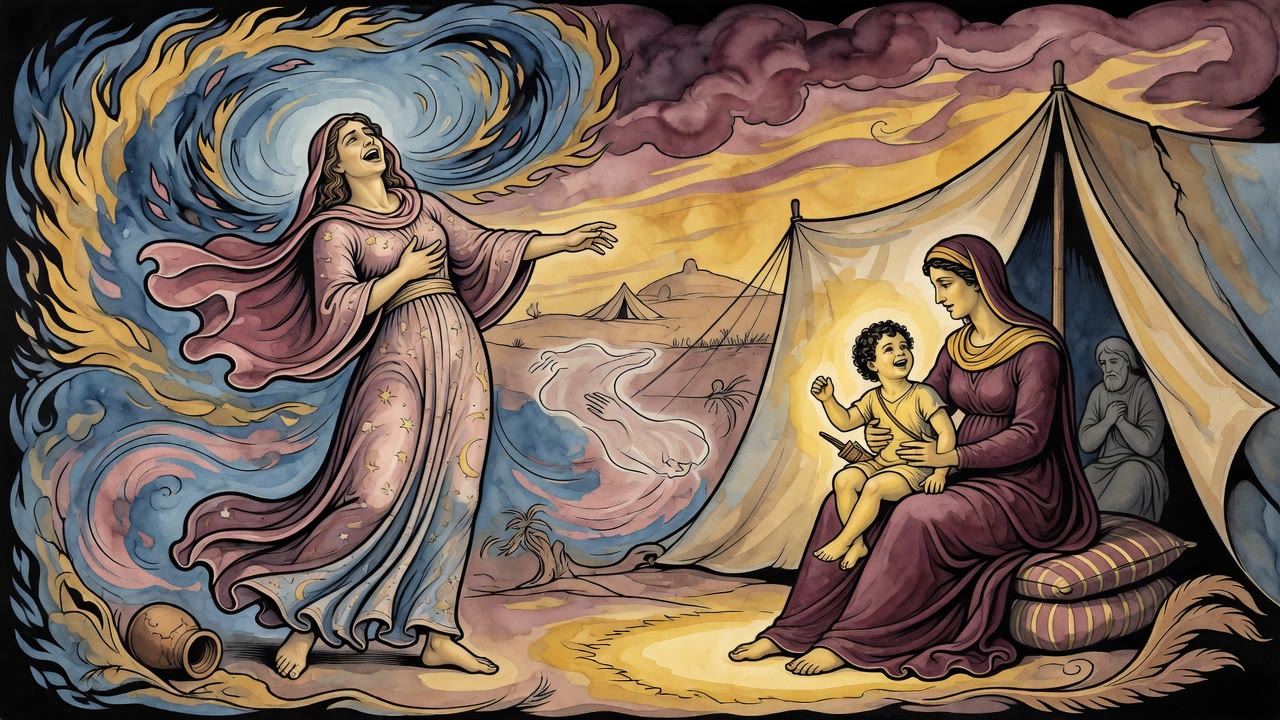
Go in unto Hagar, my Egyptian maid: Sarah said it first, and Abraham listened. Years later he sent Hagar off with bread and a skin of water on her shoulder.
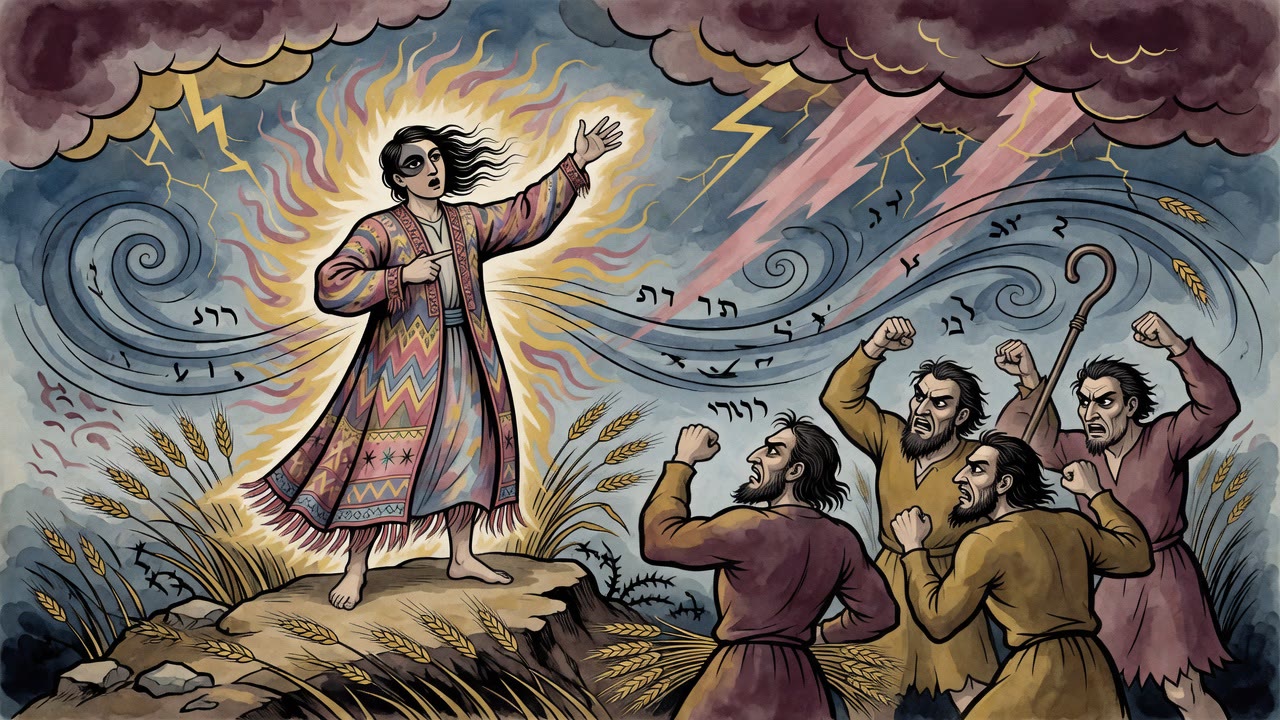
Gad pulled a lamb out of a bear's mouth and had to put it down. Joseph went home and told their father the handmaids' sons were eating the herd.
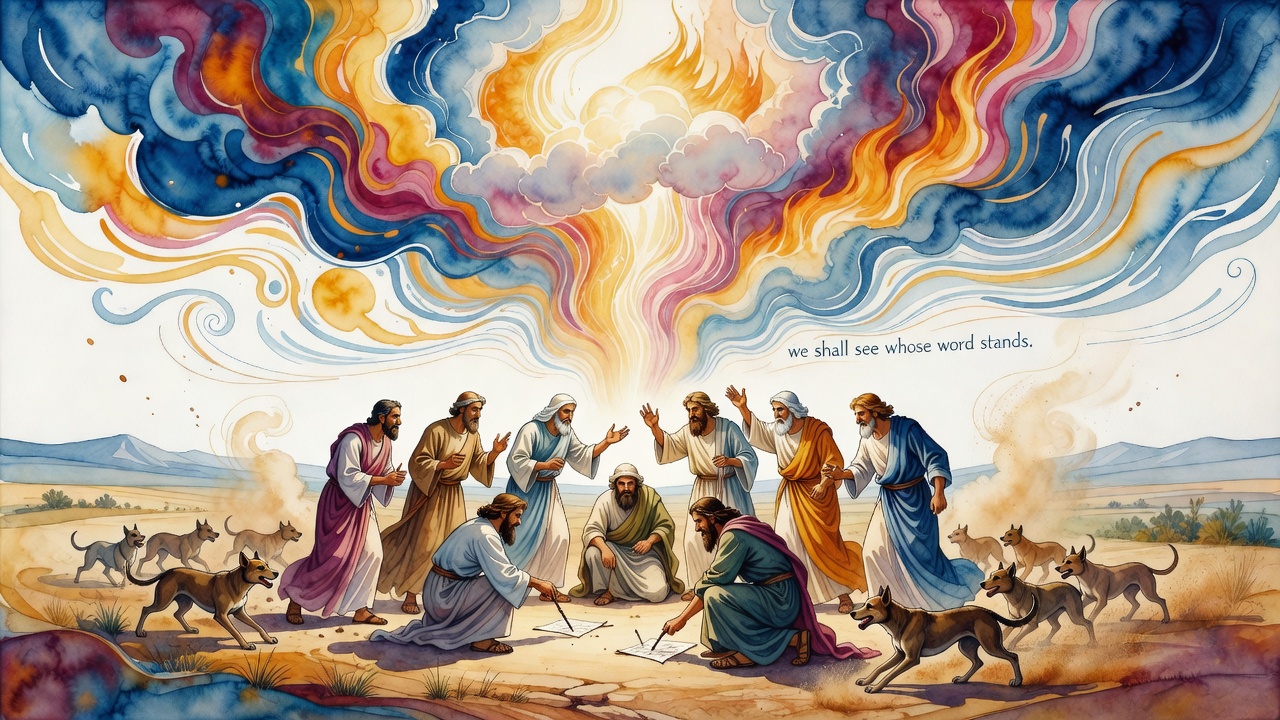
Before Joseph reached Dothan the brothers cycled through plans, including dogs. God heard every word and answered: we shall see whose word stands.
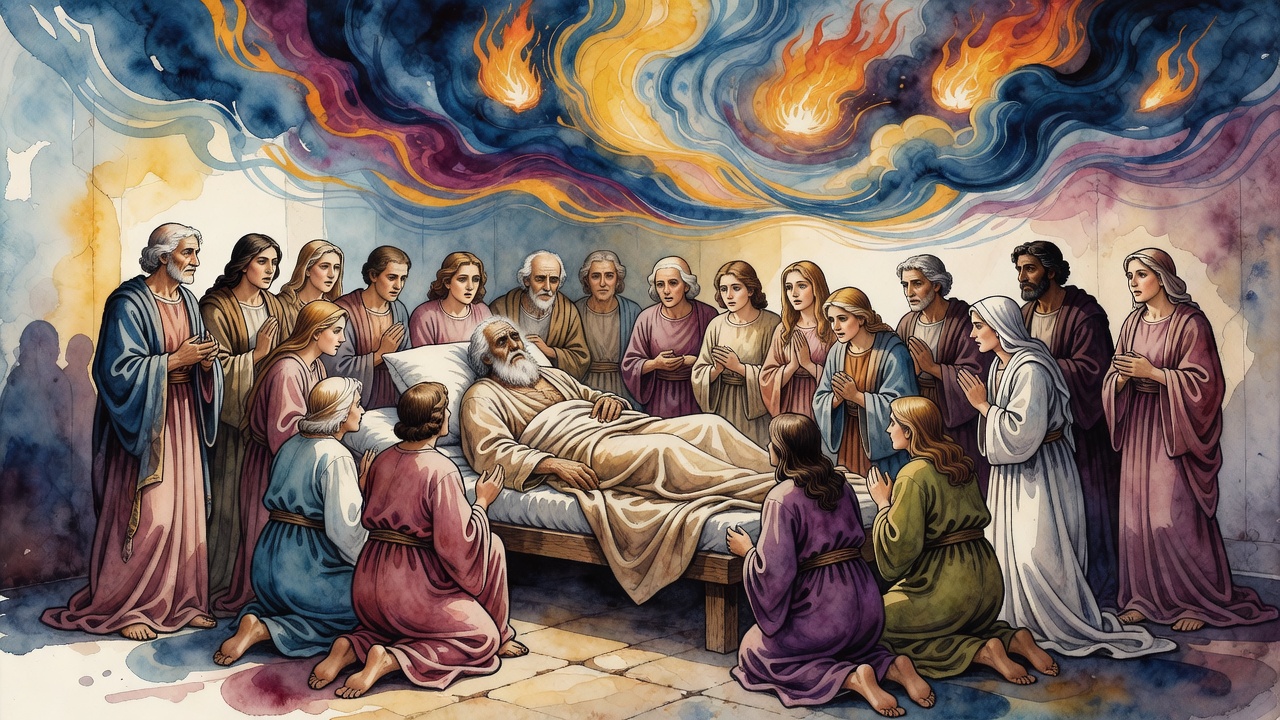
On his deathbed, the patriarch Simeon gathered his children and named the force that had once brought him to the edge of fratricide: not hatred, but envy.
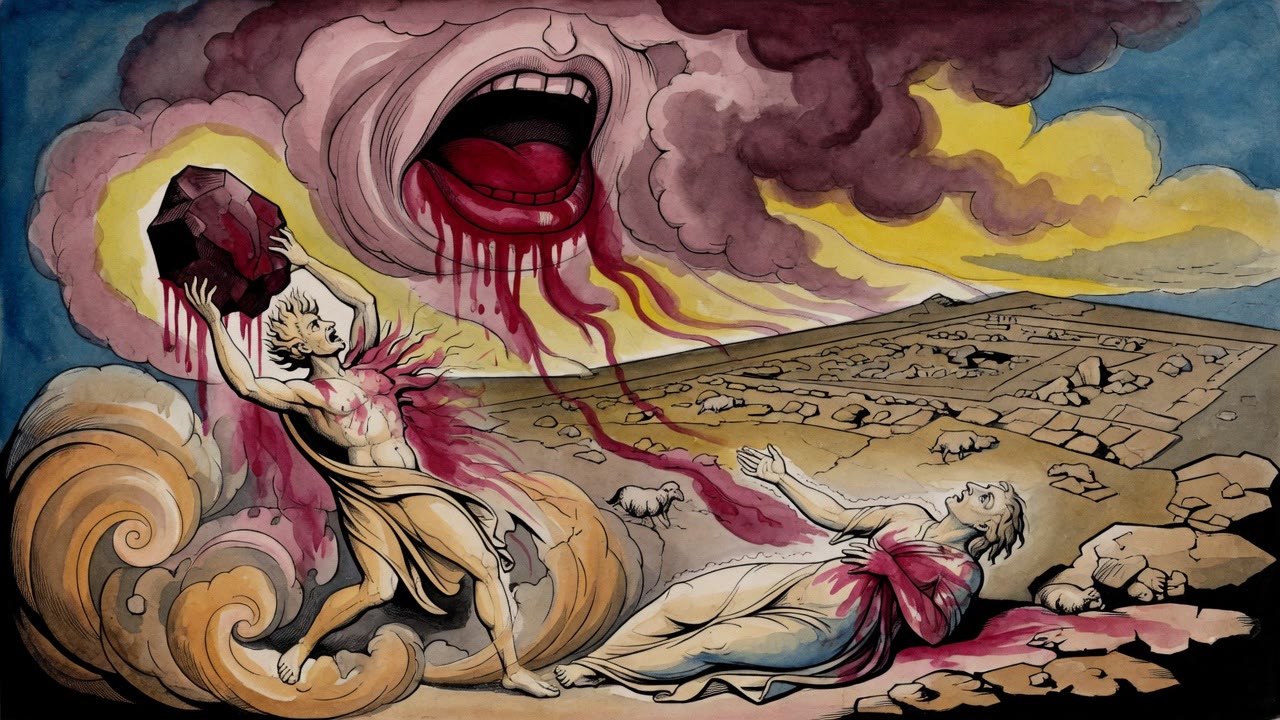
Eve woke tasting blood that was not hers. Abel's offering burned clean. Cain scraped leftover flaxseed onto the ridge and waited.
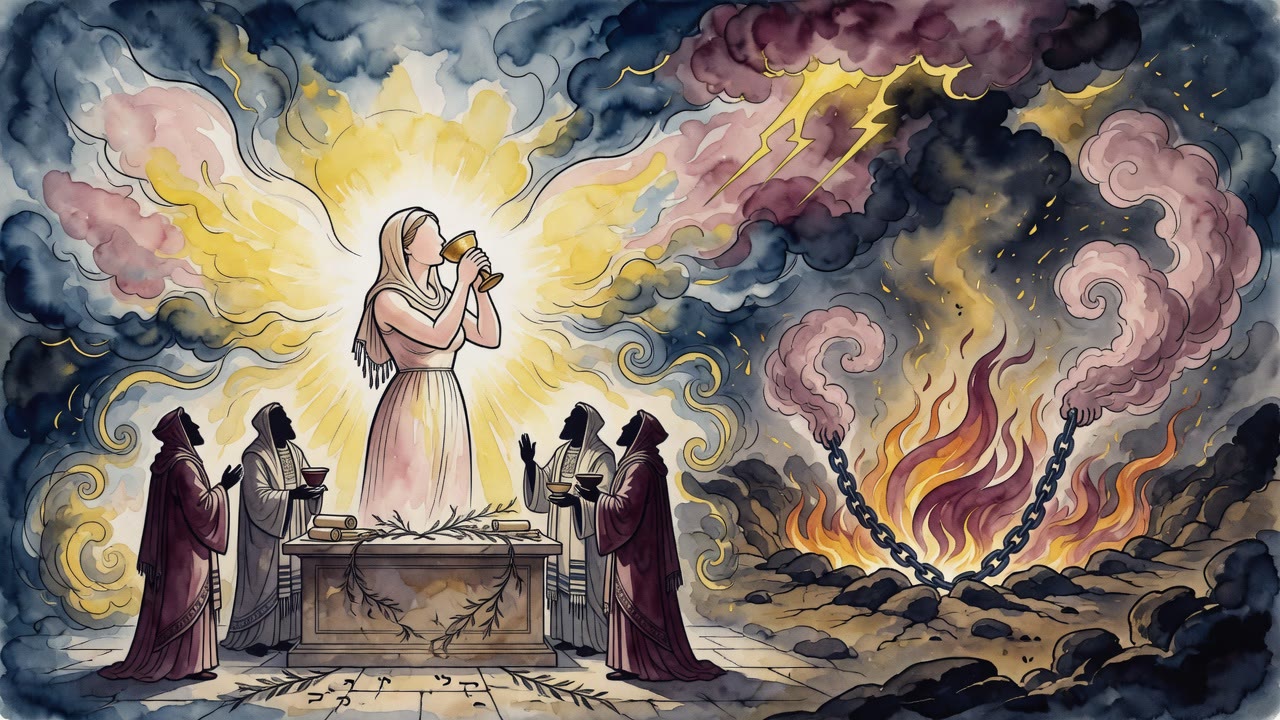
A suspected wife drank bitter water under oath and curse. If pure, she left unharmed, sometimes to conceive, while fire waited for the guilty.
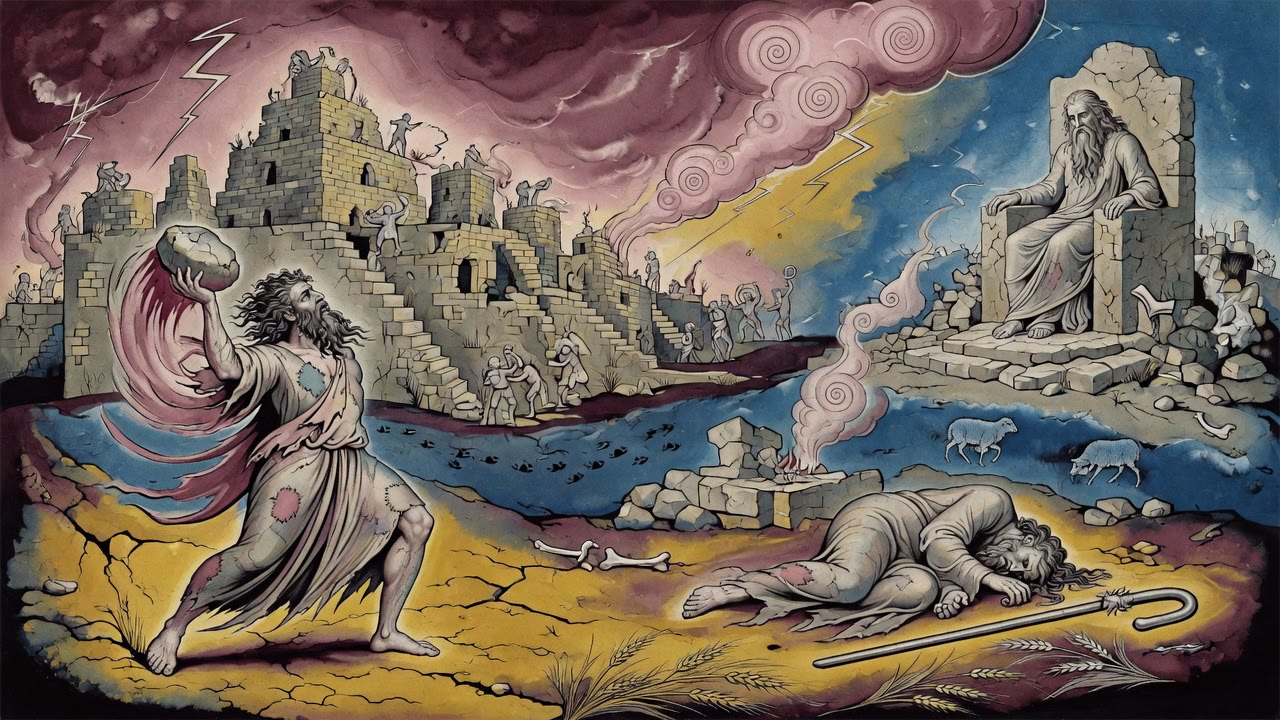
Cain waited some days, then set dull fruit on the altar. Abel brought the first lambs and their fat. Heaven turned toward the flock.
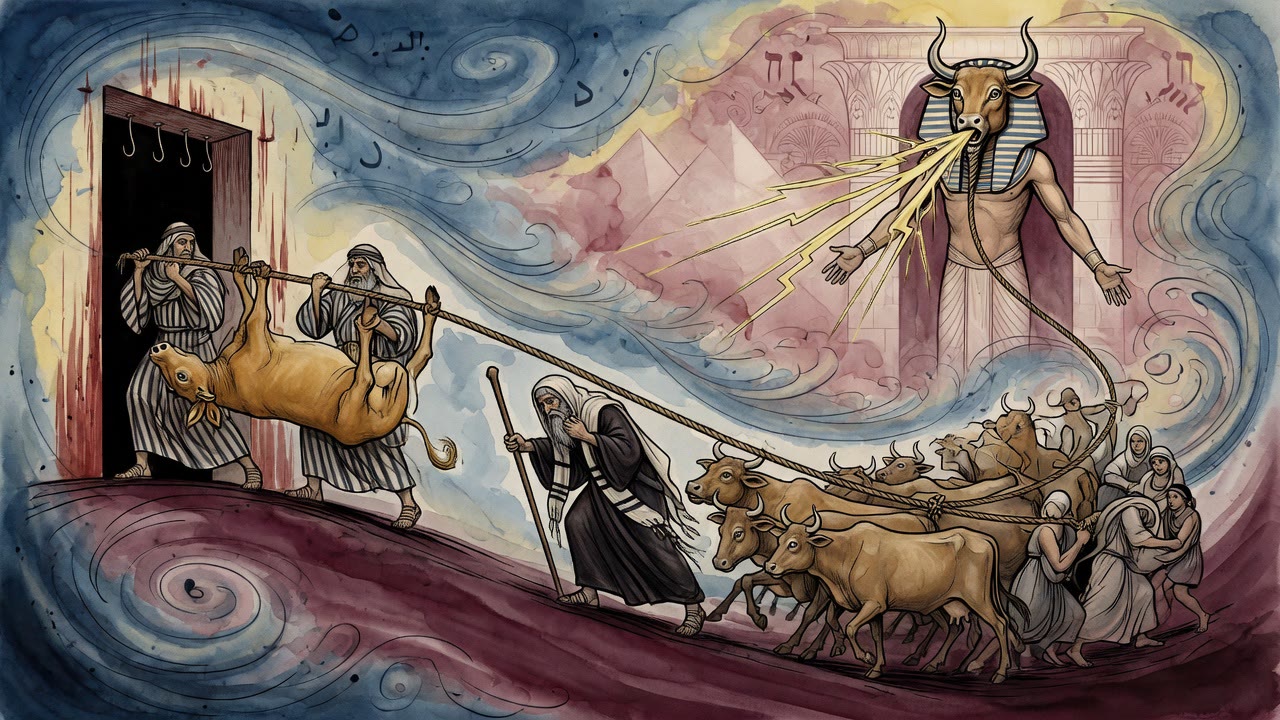
Herdsmen carried a calf into the slaughterhouse first. Joseph's cry from Egypt pulled Jacob and the stubborn cow of Israel across the threshold.
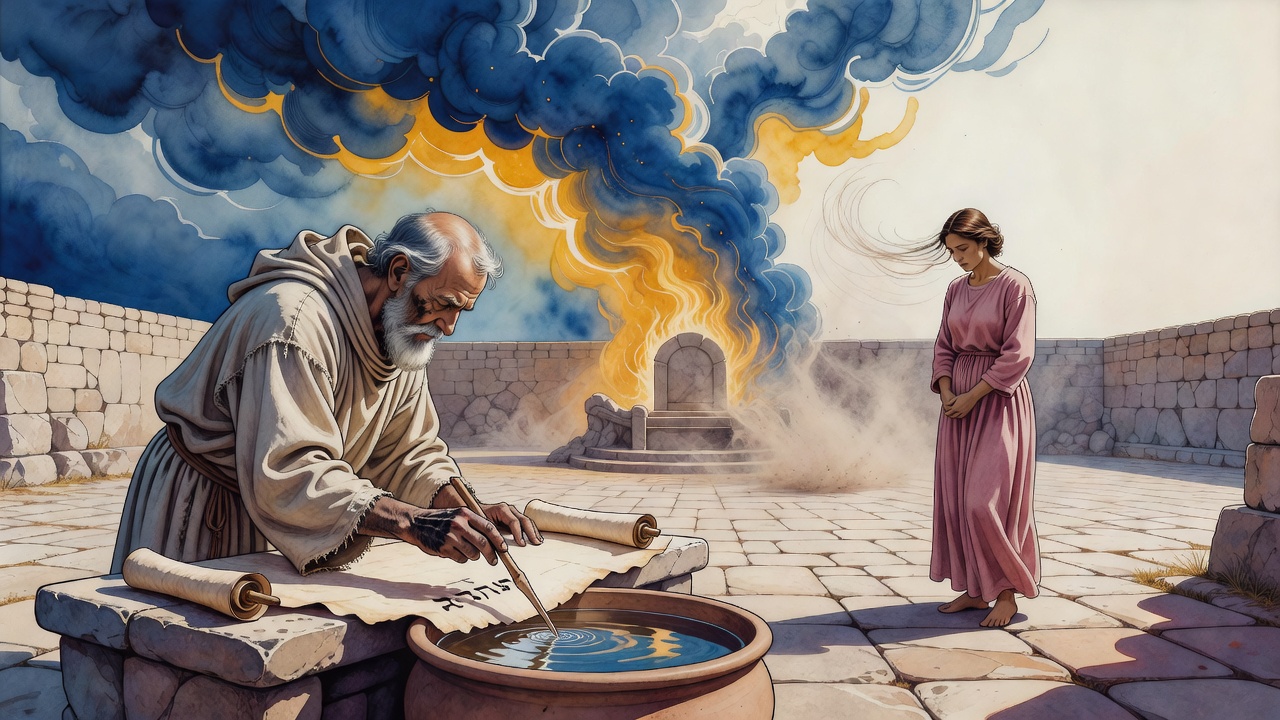
A priest writes curses, scrapes God's Name into bitter water, and a woman alone in a cleared courtyard must drink while her body waits for the answer.
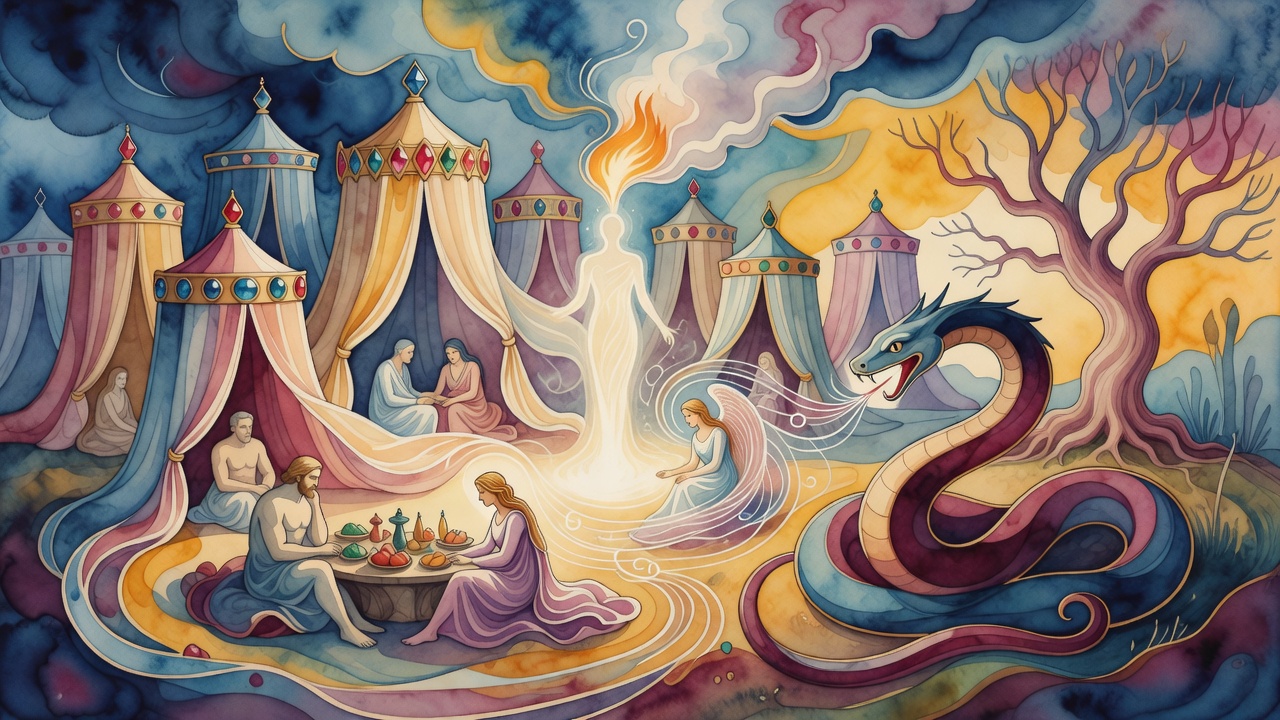
God built twelve jewel canopies for Adam and led Eve with angel music. After the feast the jealous serpent chose the tree.
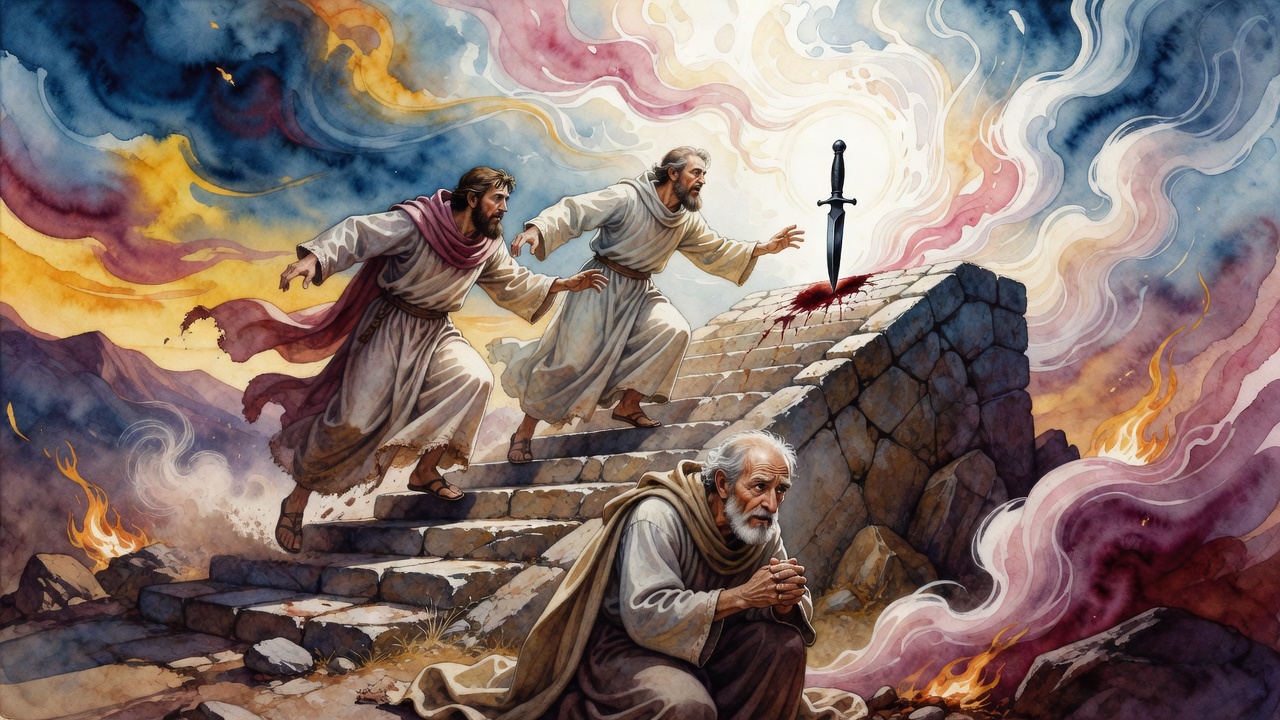
Two equal priests sprinted the altar ramp for one sacrifice; a knife found a heart, and a father begged only that the blade stay pure.
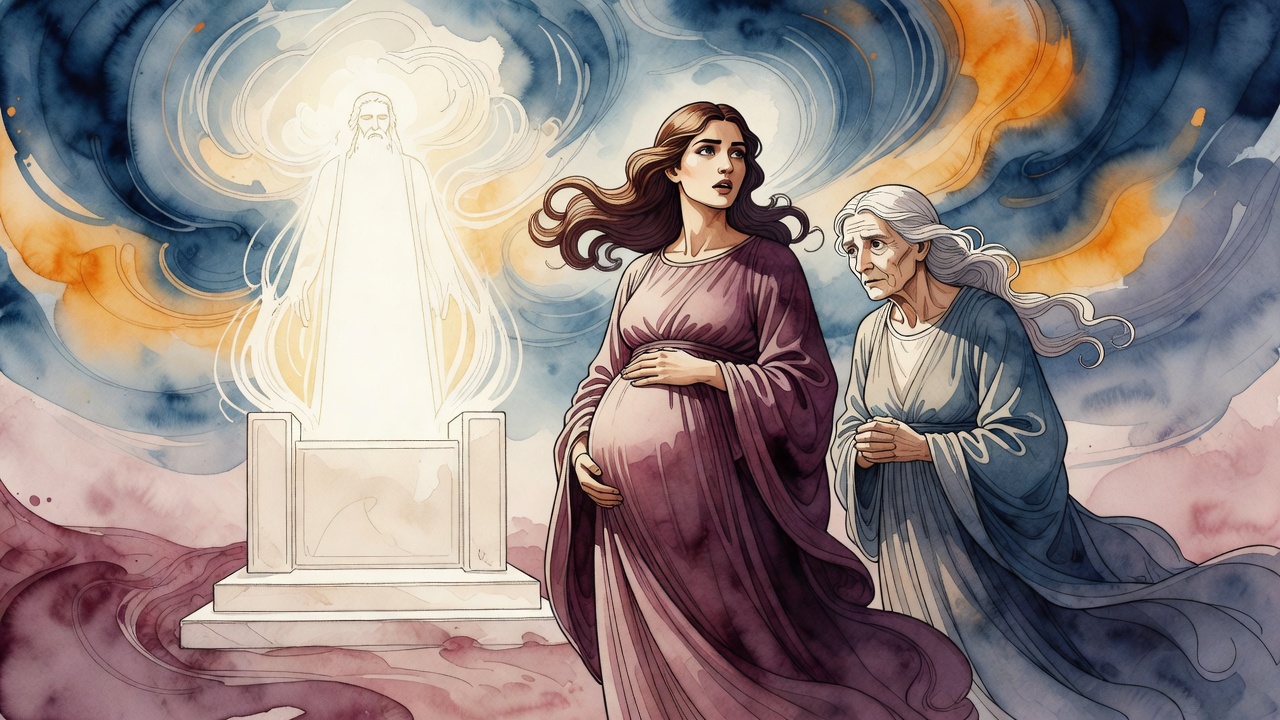
Hagar filled with child on the first night, then whispered that Sarah's piety was a sham, while the mistress had waited through ninety empty years.
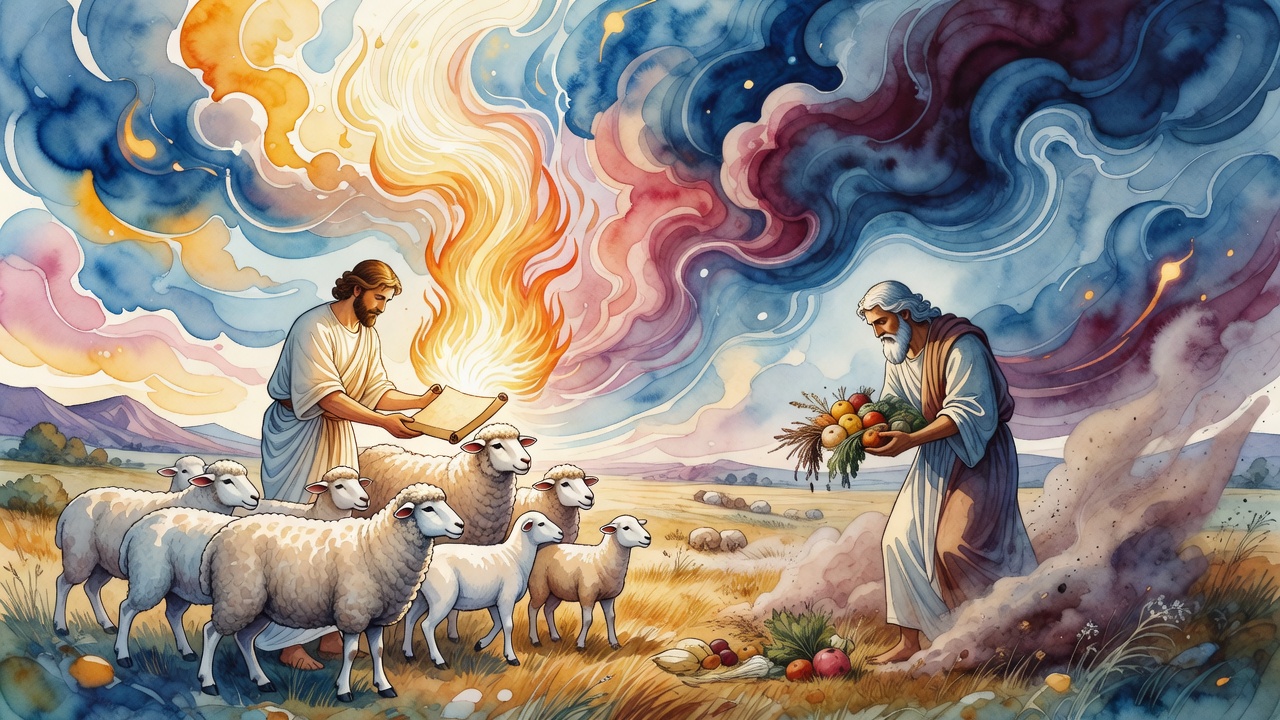
God did not weigh the two gifts. He weighed the men holding them, and Cain had kept the first and best of his harvest back for himself.
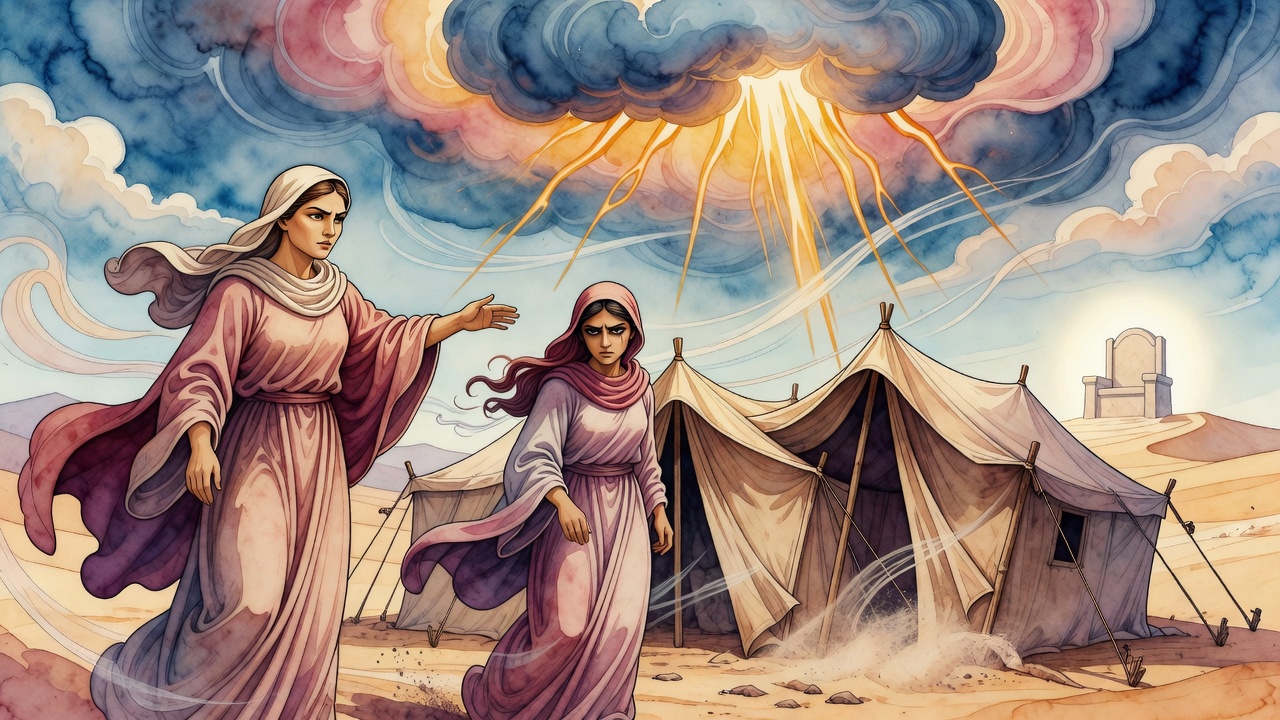
Hagar did not rise when Sarah entered the tent. The title wife still sat on Sarah. The look in the room did not.
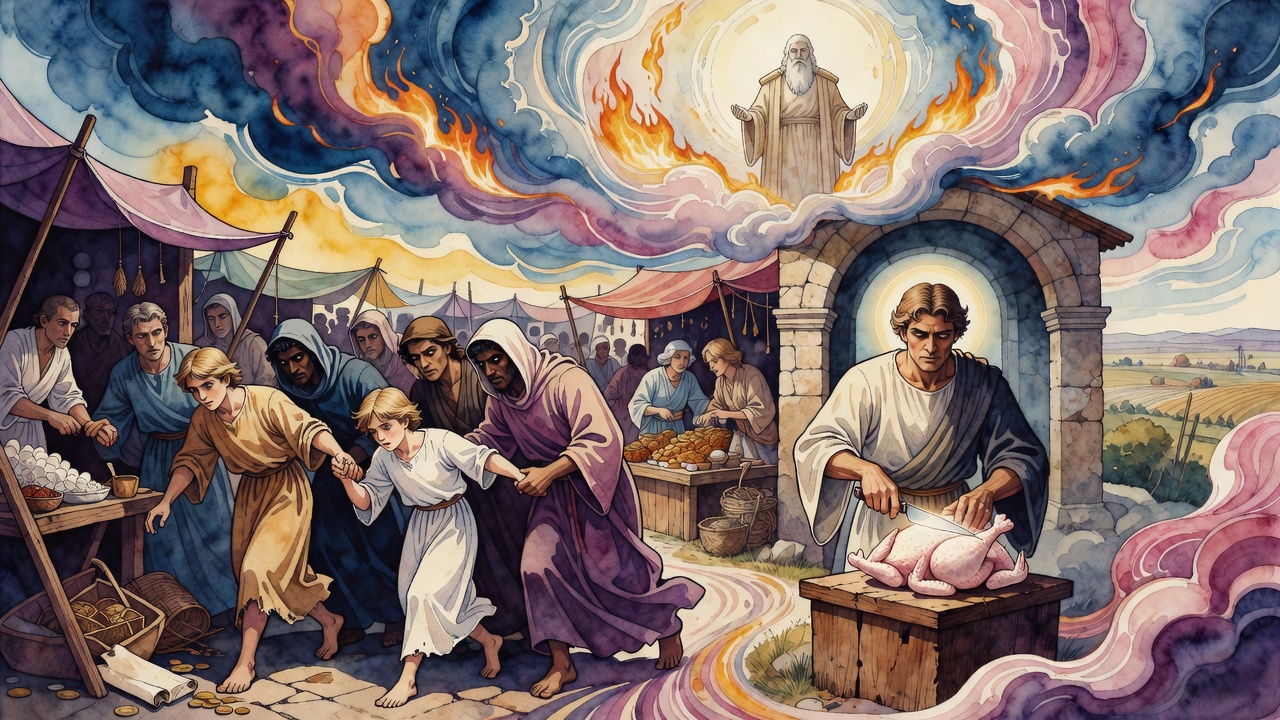
A scholar raised his son indoors. The father's students took the boy to sea and left him there, and he came home with a princess hidden in a ship.
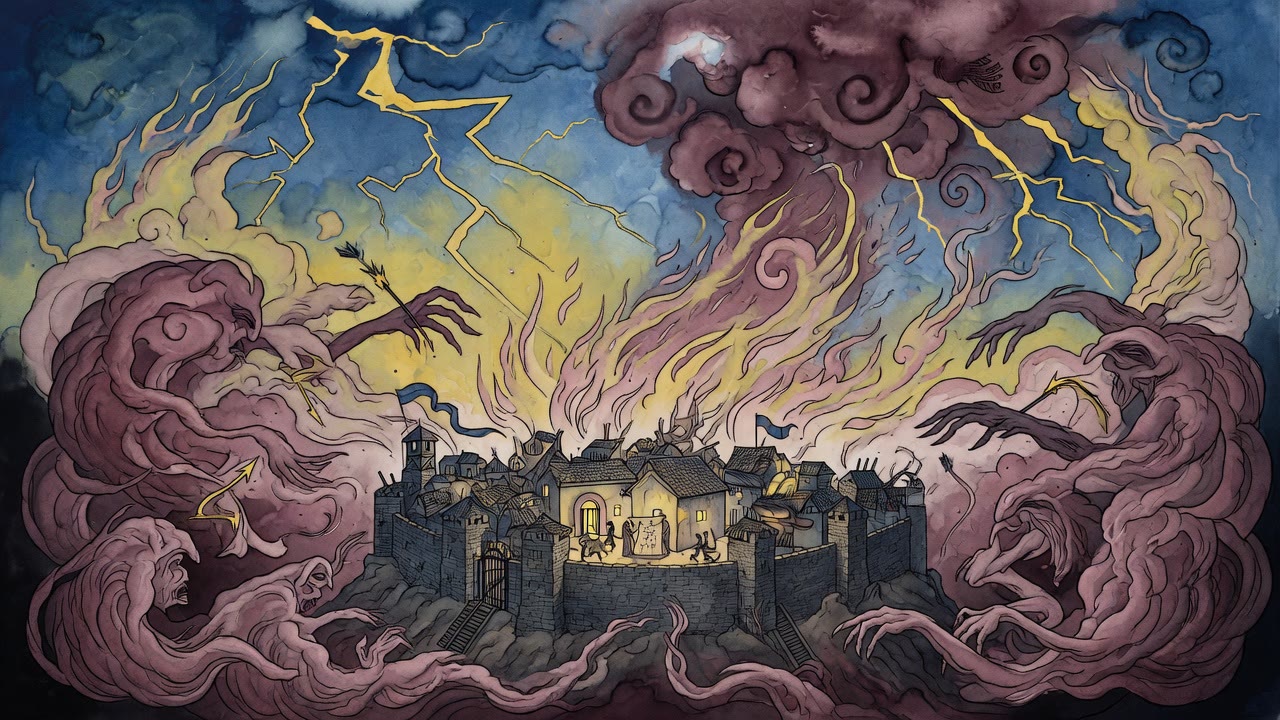
They traded dresses in a back room. The innocent one swallowed the priest's cup. At the door her sister kissed her mouth and fell.
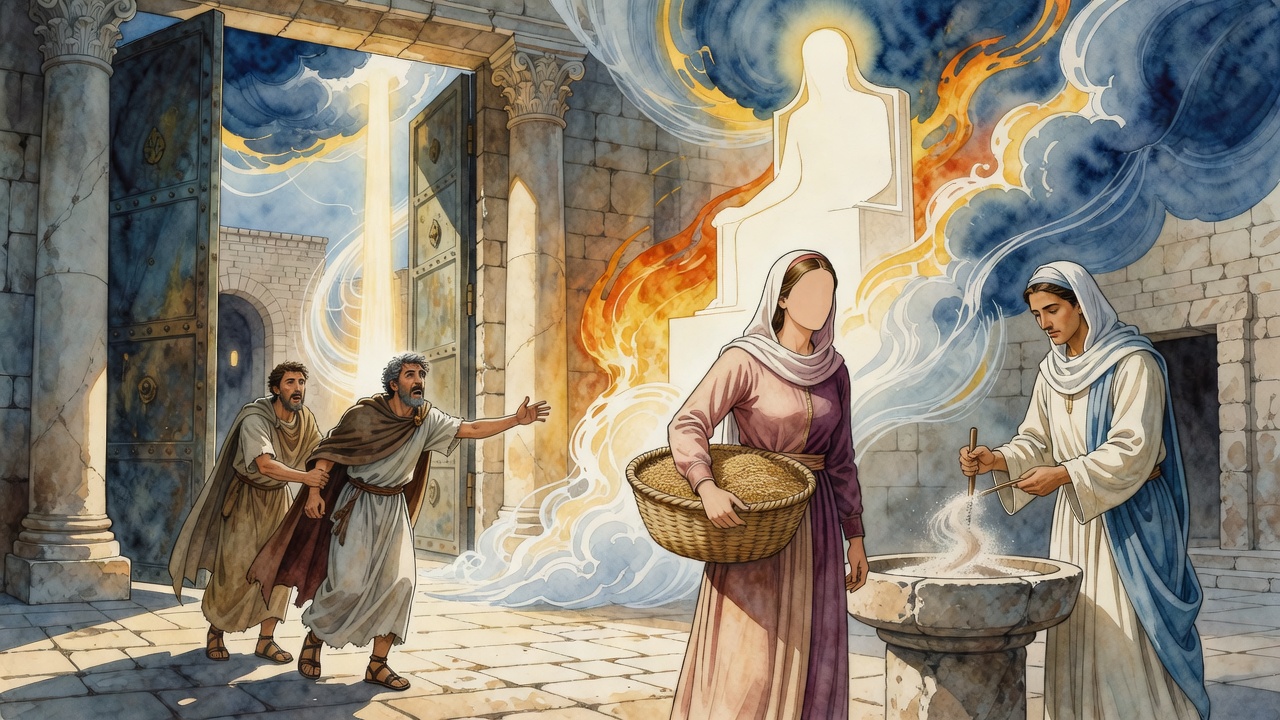
A husband dragged suspicion to Jerusalem's great court. At Nicanor Gate a priest mixed dust and water while her barley offering held no oil.
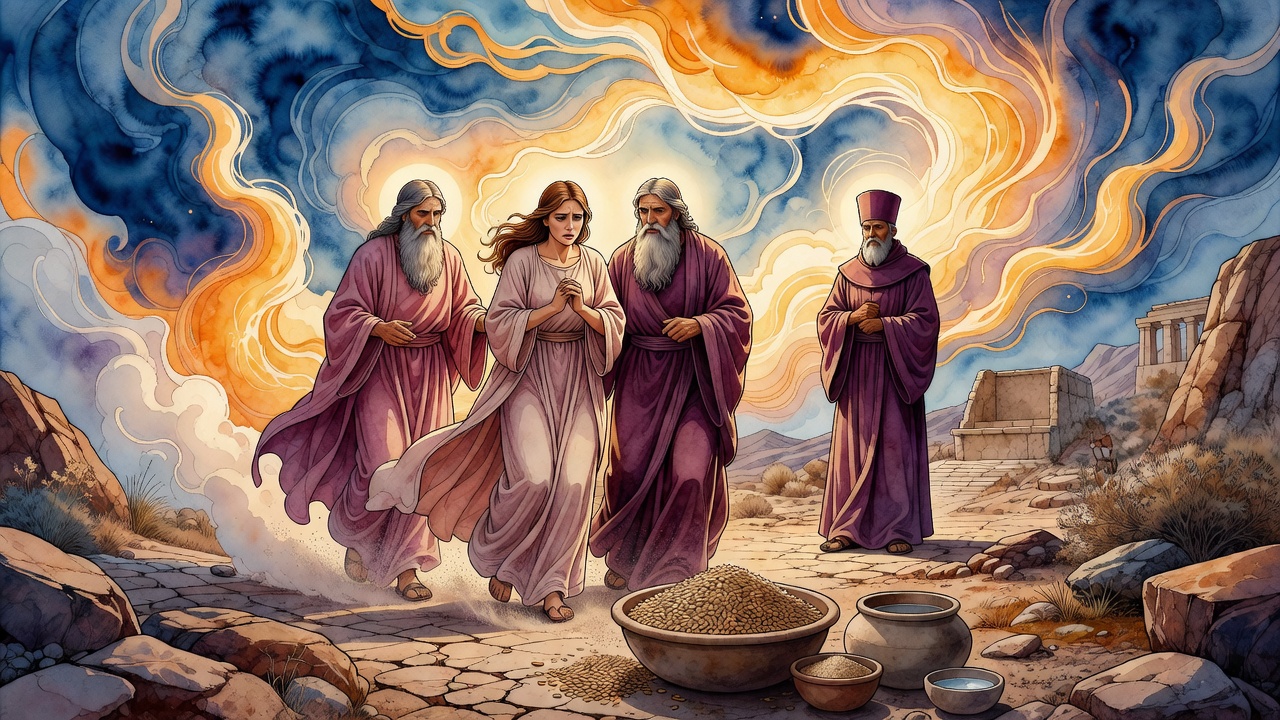
She walked between two scholars with her eyes on the dust. Ahead, her husband carried a bag of barley and did not look back.
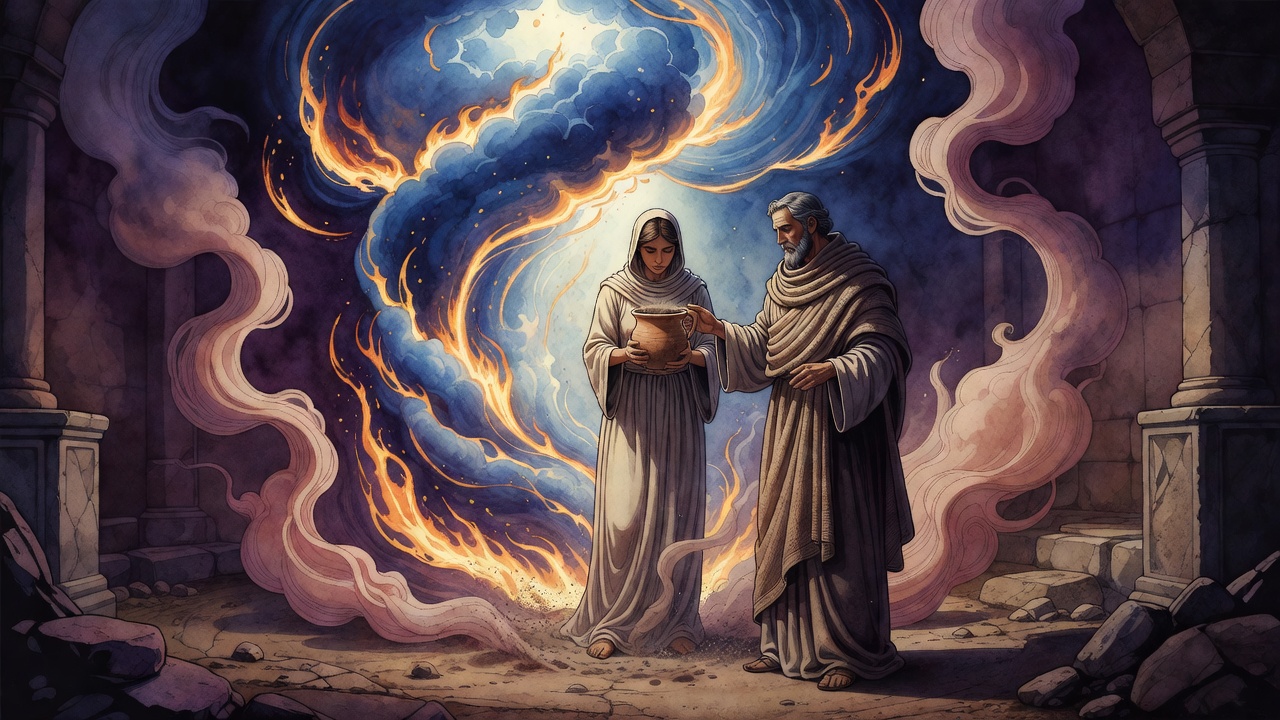
Dust from the sanctuary floor mixed with water and erased curses. A woman stood before the priest with a cup that could clear her name or write her as a curse.
