Israel Feasted While Jerusalem Burned and Tobit Refused to Eat
On Shavuot in Nineveh the harps were already going. Tobit stepped past a body in the street that the king had ordered left there.
Table of Contents
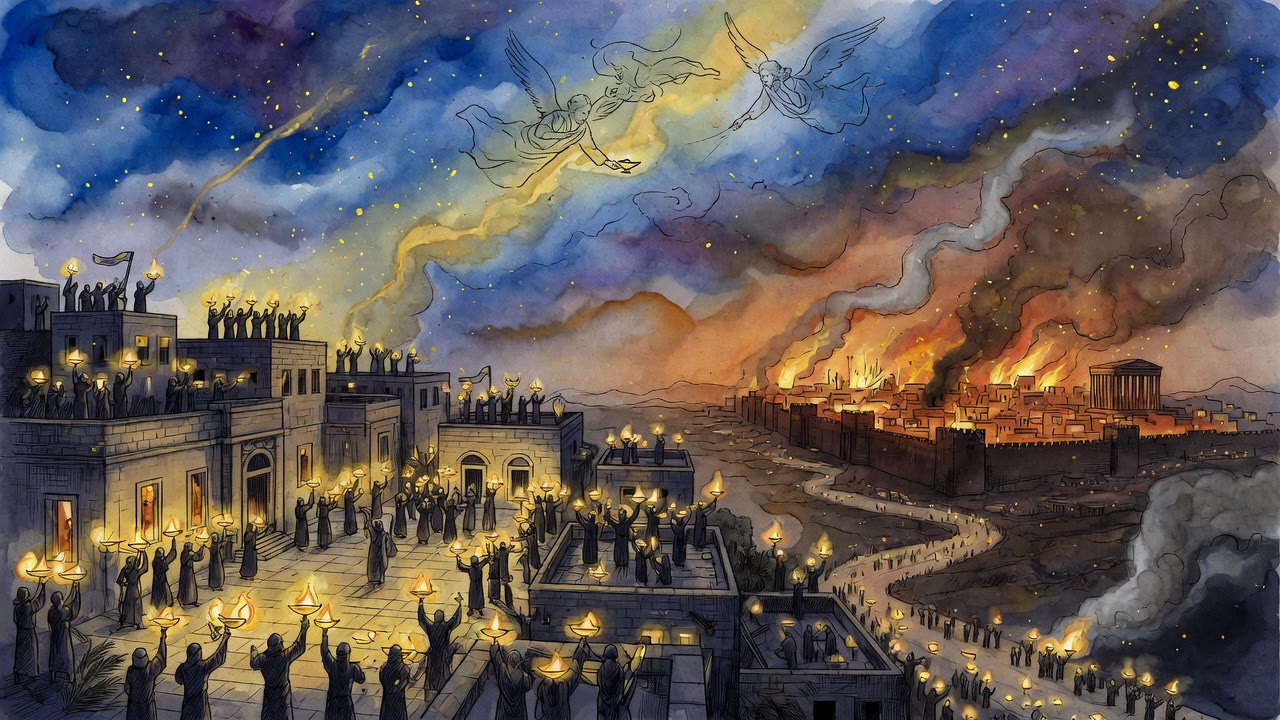
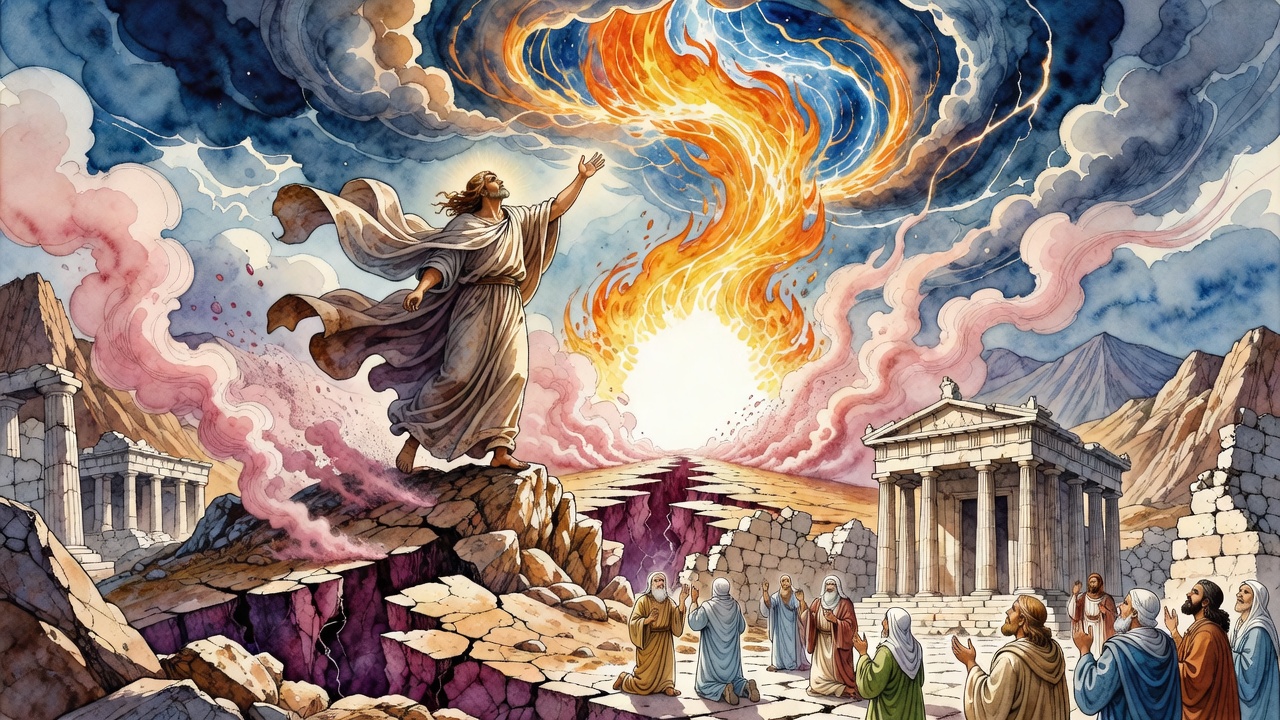
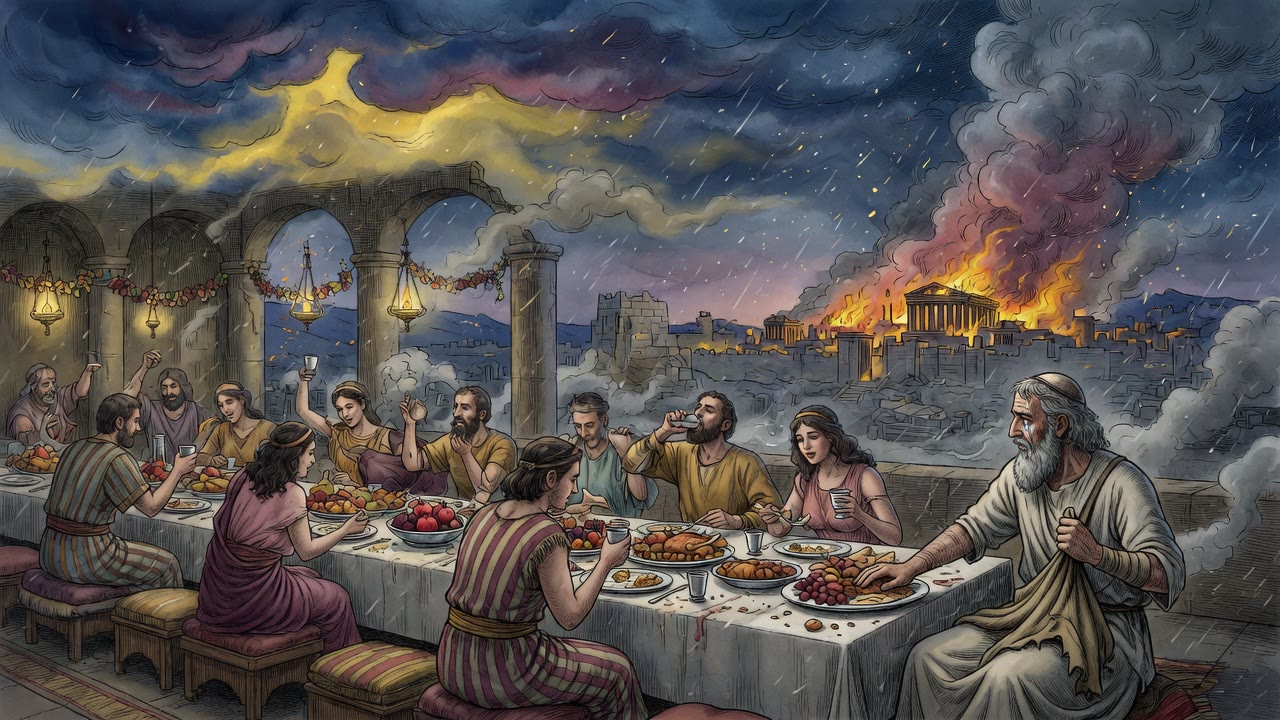
They feasted. Jerusalem burned, and the Temple lay in ruins, and the people torn from Judah sat in Nineveh with wine and harps and psalteries, making merry as if the house of God were a rumor from a poorer year. Tobit walked past the tables and refused to eat.
 Click for full size
Amos had already named this kind of evening. They drink wine in bowls and anoint themselves with fine oils, but they are not grieved for the affliction of Joseph (Amos 6:6). The sin was not the bread. It was the not-grieving. It was choosing an evening's pleasure over the witness of their own catastrophe.
The Body in the Street
It was Shavuot, the festival of weeks, fifty days after Passover. Tobit walked through Nineveh and found a dead man lying in the road, a man no one else had stopped to bury. The king had decreed that the bodies of Israelites who had been killed were to remain exposed as a warning. Burying them was defiance.
Tobit buried him anyway. To leave a man in the street was its own kind of not-grieving. He carried the weight, dug, covered, and went home with the dust of a forbidden grave on his hands. The feast went on behind him. Harps do not pause for a burial they refuse to see.
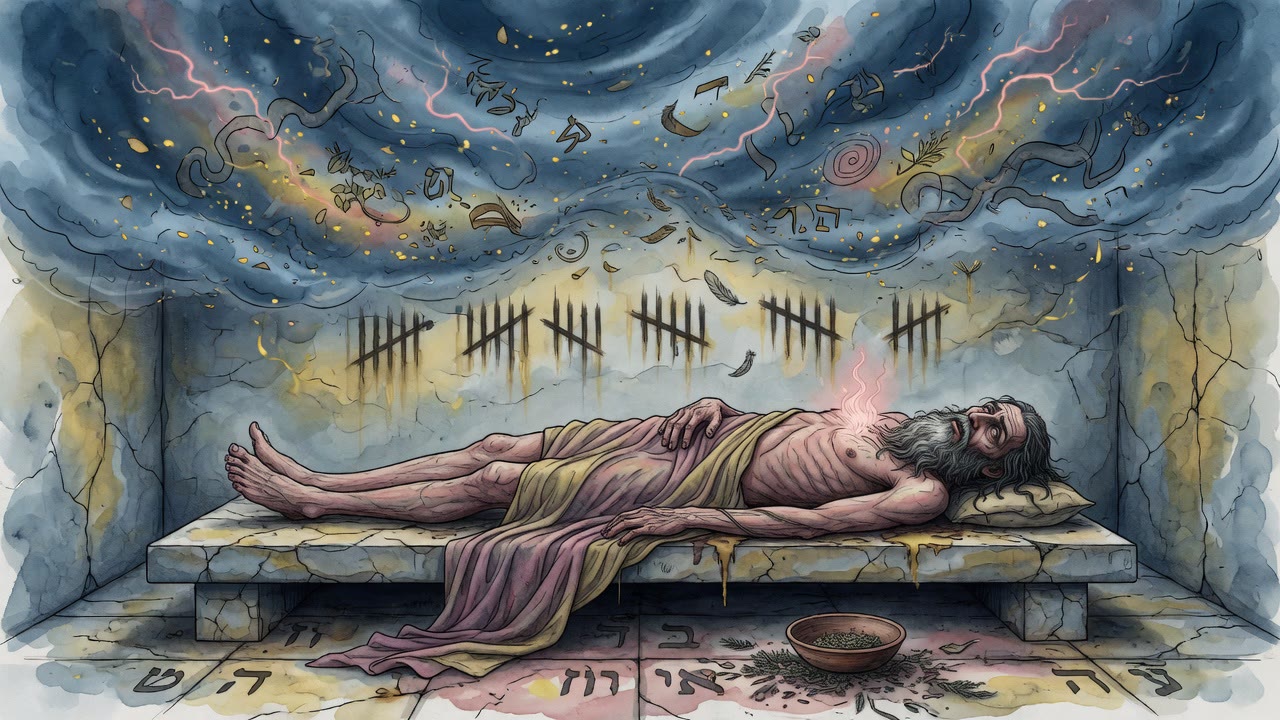
Later the same loyalty cost him his sight. Bird droppings fell on his eyes while he slept by a wall, and the world went dark. He sat in Nineveh blind, tired, and still unwilling to join the song. Memory does not require volume. It required a man who would still put a body in the ground when the law of the city said leave it.
Sarah Asked to Die
In Ecbatana, in her father's upper chamber, a young woman named Sarah stood at the window and asked God to kill her. She had been married seven times. Each husband had died on the wedding night, killed by the demon Asmodeus before the marriage was consummated. A servant girl had said the cruelest possible thing out loud: you are the one who kills your husbands. Sarah could not disprove it.
She prayed for death because living meant watching an eighth man die on her account. Her parents' humiliation sat in the room with her. She finished the prayer and came down from the upper chamber with the request still in the air, because a window is a poor place to keep a cry.
Two Prayers Reached the Throne
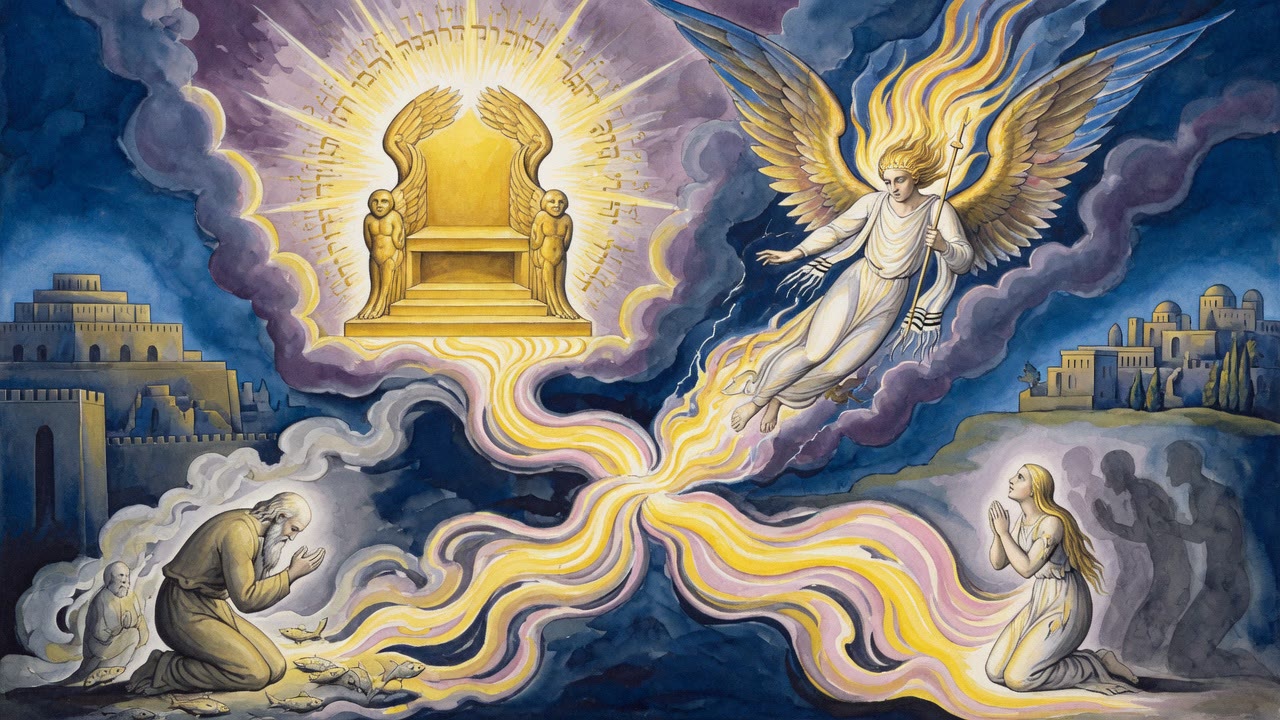
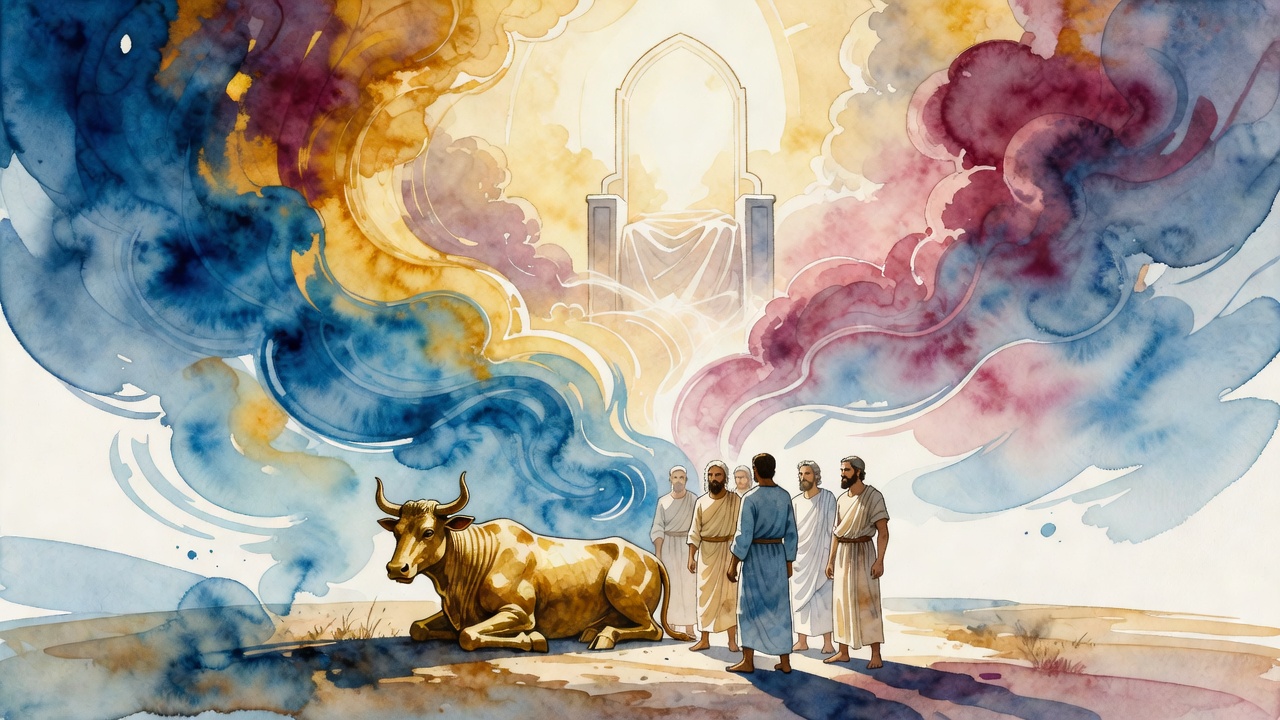
Tobit prayed concerning his blindness. Sarah prayed concerning the shame on her father's house. At that time the prayer of them both was heard before the throne of glory, two separate sorrows from two cities, arriving together. God sent the angel Raphael, the prince appointed over healing, to heal them both: to clear Tobit's eyes, to give Sarah to Tobiah son of Tobit as wife, and to take Asmodeus, king of the demons, off her.
Tobit finished his prayer and went back into his house. Sarah came down from the upper chamber when she had made an end of praying. Neither of them knew the other existed. The throne knew both.
The Cry God Already Knew
A people had cried like this before. In Egypt, after many days, the king died, and the children of Israel moaned under the toil and cried out, and God heard their voices. He saw their affliction, and the affliction named was the forced gap between husband and wife, the life that could not be lived as a life. God knew. He took it to heart.
Tobit in Nineveh and Sarah in Ecbatana stood in that same gap. One could not see. One could not keep a husband alive through a night. Around Tobit the harps still played for a Temple that was ash. Around Sarah a servant's insult still hung. The feast was louder than either of them. The feast is always louder.
The cry did not need to be loud. It needed to be true. Two mouths, two cities, one throne. Raphael was already on the road.
← All myths