5 min read

Jezebel and the Hands the Dogs Could Not Eat

Jezebel filled Jezreel with fear, but her hands clapped for the dead and her feet followed them. The dogs stopped at those limbs.

Curated by Arthur · Told by Maggid ·
Table of Contents
  1. The Palace Looked Over the Market
  2. Ten Steps Behind the Dead
  3. Music Passed the Same Gate
  4. Elijah's Word Found Her
  5. The Dogs Stopped at the Working Limbs

Jezebel's body vanished before the burial party could finish its errand.

By the time the servants came to gather her from the ground at Jezreel, the dogs had already done their work. Flesh was gone. The queen who had frightened prophets and bent a king toward murder had been reduced to pieces in the dirt.

But three parts remained.

The Palace Looked Over the Market

Her palace stood near the marketplace, where the city did its loudest living. Merchants weighed grain. Donkeys brayed. Brides passed with music. Mourners carried the dead through the same streets, because in a city the dead also need a road.

Jezebel could have shut her shutters. She could have let grief pass below her windows like dust. She had done worse than indifference. She had hunted the prophets. She had helped take Naboth's vineyard with lies, royal pressure, and blood. Her name entered Israel's memory with the smell of fear around it.

Still, when a corpse crossed the market, the queen came down.

Ten Steps Behind the Dead

She did not send a servant. She did not toss coin from above. Jezebel left the palace and entered the procession herself. Her palms struck together in mourning. Her mouth praised the dead. Her feet followed the bier for ten steps.

Ten steps can disappear quickly. A child can count them before the corner. But a narrow deed repeated for years cuts its own channel in heaven. Ten steps for the known and the forgotten. Ten steps behind the wealthy, and ten behind the poor whose names never reached a royal table.

The city saw the contradiction walking in daylight. The same hands that helped strengthen a wicked house clapped for mourners. The same mouth that could command cruelty gave honor to the dead. The same feet that stood in a palace of terror followed bodies toward burial.

No one confused this with righteousness. The blood did not dry because she walked ten steps. Naboth did not rise from his field.

Music Passed the Same Gate

The market did not carry only wailing. Sometimes flutes cut through the crowd and a wedding procession came bright with song. Then Jezebel came down for joy as she had come down for grief.

A bride and groom passed before the palace, and the queen joined the merrymaking. The source of fear in the city moved for a moment inside another household's gladness. Her royal body lent weight to their celebration. Her presence said that their joy was public enough for a queen to notice.

That, too, entered the account. Not mercy large enough to heal a kingdom. Not repentance wide enough to undo the damage. A smaller thing. A hand at a funeral. A step behind a bier. A mouth blessing a bridegroom and bride while music filled the street.

Heaven does not need a person to become simple before it counts.

Elijah's Word Found Her

The prophet's sentence had already gone out. In the portion of Jezreel, dogs would eat Jezebel's flesh.

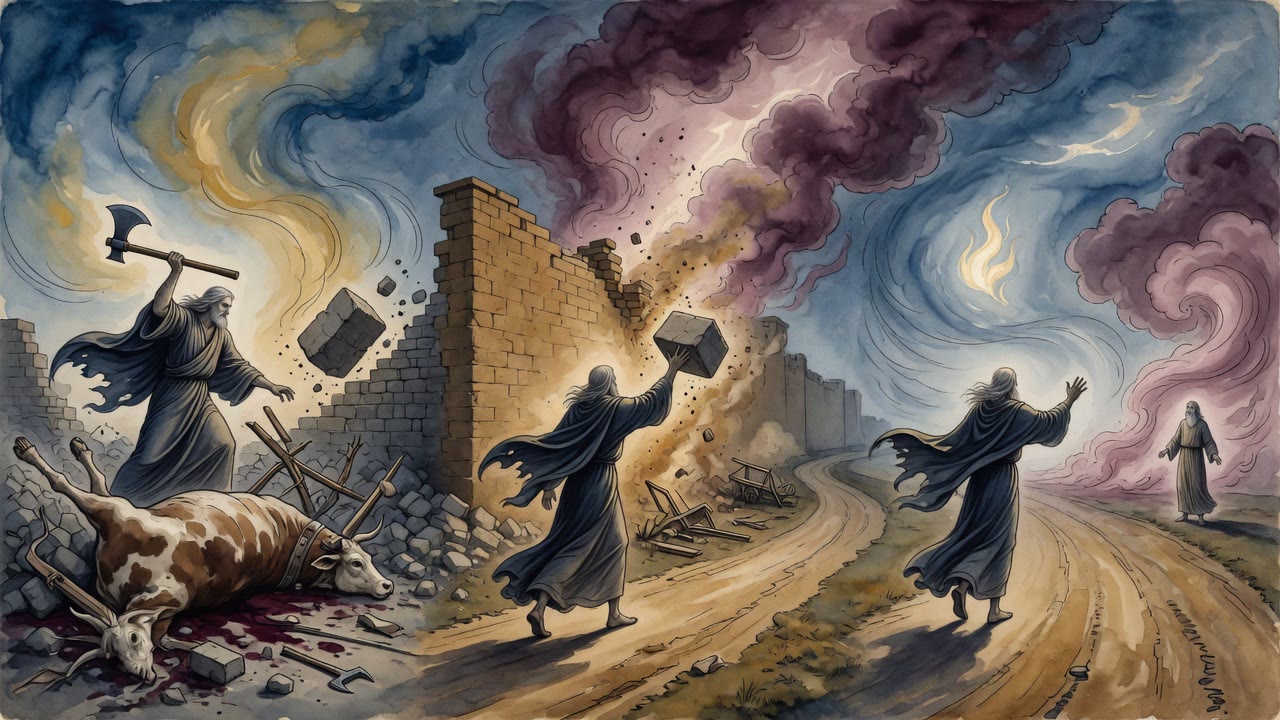
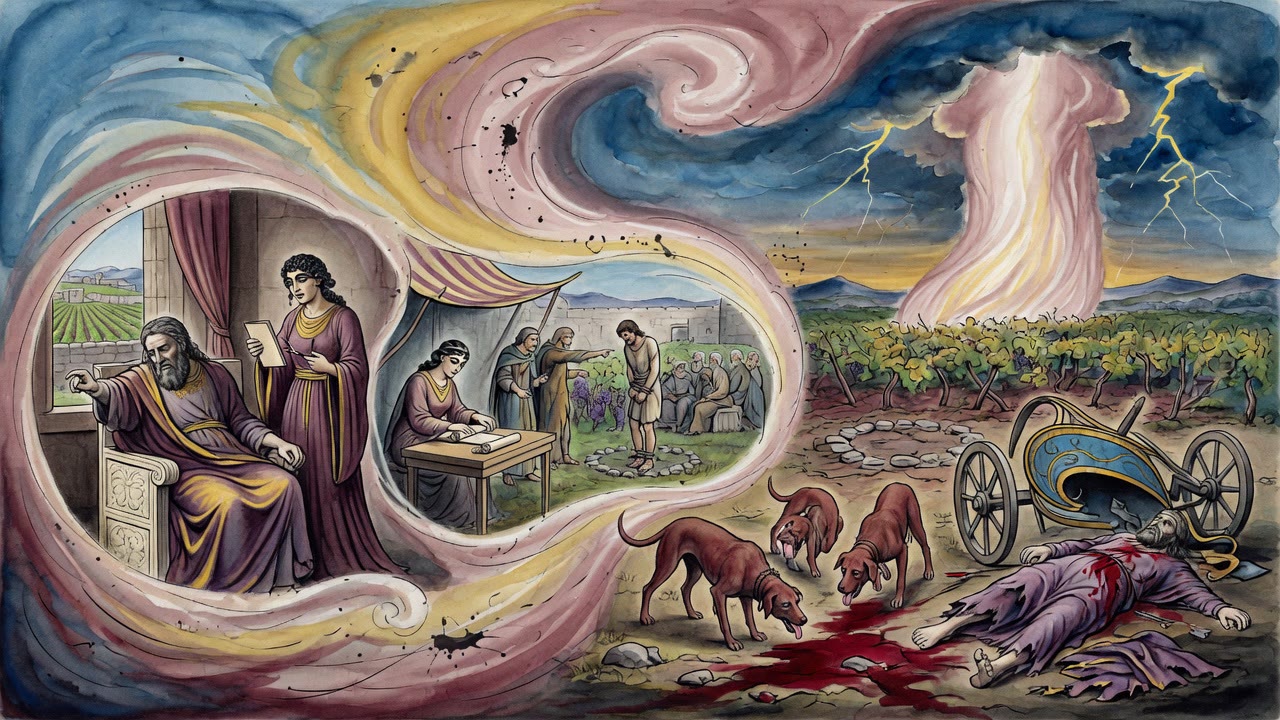
Years later, she looked down from a window while judgment rode into the city. She painted her eyes and set her head in order, queen to the last inch. The riders below did not bow. Hands from inside the house pushed her outward. She fell. Horses passed over her. The palace wall, the street, the hooves, the dogs, all became instruments of the word spoken against her.

For a while there was no burial, only the street taking back what the palace had claimed. Then someone remembered that she was a king's daughter and ordered her buried. Servants went to collect the body.

They found less than a body.

The Dogs Stopped at the Working Limbs

The skull remained. The feet remained. The palms of her hands remained.

The dogs had taken the rest. They had no power over the limbs that had performed chesed, loving-kindness, for mourners and celebrants. The palms had clapped for the dead. The feet had followed ten steps. The mouth that praised had left its trace in the skull.

The city was left with a terrible arithmetic. Jezebel's crimes were not erased. Her narrow acts were not erased either. The judgment reached her flesh, but stopped at the body parts that had once descended from the palace to honor another person's passage through the world.

In Jezreel, the dust held both accounts. A murdered man in his vineyard. Prophets driven into hiding. A queen at a window. Dogs in the street. And beside all that, two palms the animals would not eat.


← All myths

From the tradition

Sources

2 sources

The texts this telling draws on, in full. Open a card to read inline, or expand it for a wider, quieter read.

Pirkei DeRabbi Eliezer 17:5Pirkei DeRabbi Eliezer

Sometimes, the source is more surprising than it first appears. The concept of showing loving-kindness, or chesed, to mourners. Where do we learn about the importance of comforting those who grieve?

Yes, that Jezebel, the infamous daughter of Ethbaal, King of Sidon.

I know what you're thinking. Jezebel? The woman who, in the biblical narrative, promotes idol worship and persecutes prophets? How could she possibly be a model for chesed?

That Jezebel's palace was located near the marketplace. And whenever a funeral procession passed by, she would emerge from her palace. But instead of ignoring it, or worse, she would clap her hands, offer words of praise, and accompany the deceased for ten steps. Regardless of her other actions, Jezebel recognized the fundamental human need for dignity and respect, even in death. She understood the importance of acknowledging loss and offering comfort to those who mourned.

So, what happened to Jezebel? As we know from the Book of Kings (2 (Kings 9:3)6), Elijah prophesied a grim end for her: "In the portion of Jezreel shall the dogs eat the flesh of Jezebel.” A pretty harsh prophecy!

But here’s where the story gets really interesting. When they went to bury her, the biblical text tells us (2 (Kings 9:3)5), “they found no more of her than the skull, and the feet, and the palms of her hands.”

Pirkei DeRabbi Eliezer connects this to her acts of chesed. The text suggests that the dogs had no power over the limbs she used to show kindness. Her hands, which clapped in respect, and her feet, which followed the dead, were spared.

It's a powerful message, isn't it? Even in a figure often portrayed as villainous, we can find glimmers of humanity and acts of kindness that resonate. The text isn't trying to excuse Jezebel's overall behavior, of course. Rather, it's highlighting a specific instance where she acted with compassion, suggesting that such acts have a lasting impact.

What does this teach us? Perhaps it's that even those who seem furthest from righteousness are capable of good. Or maybe it’s that even small acts of chesed can have a profound effect, so much so that they can transcend even death. It reminds us that acts of kindness, no matter how small, leave an indelible mark on the world.

Full source
Legends of the Jews 6:27Legends of the Jews

Especially when we explore the lives of figures like Jezebel.

Jezebel. The name alone conjures up images of wickedness and idolatry. She's not exactly known for her charitable deeds. But, according to the Legends of the Jews, even she possessed a sliver of virtue. can someone be all bad? Is it possible that even within the heart of darkness, a tiny ember of light can still glow?

The Talmudic tradition, as retold by Ginzberg in Legends of the Jews, paints a surprising picture. It suggests that Jezebel, despite her notorious reputation, possessed a remarkable capacity for empathy.

Apparently, whenever a funeral procession passed by the royal palace, Jezebel would descend from her high place and join the mourners. Imagine that. The queen, stepping down to walk alongside those grieving a loss.

And it didn't stop there. When a wedding procession filled the streets with music and laughter, Jezebel would also participate in the joyous celebrations, honoring the bridal couple with her presence.

Why is this so striking? Because it challenges our easy assumptions about good and evil. It reminds us that human beings are complex. That even those we deem wicked can possess moments of compassion, acts of kindness.

So what became of her? Well, Jezebel met a gruesome end. A fitting end to her deeds, some might argue. She was trampled to death by horses in the portion of Jezreel. A tragic and violent end to a controversial life.

But here's where the story takes another unexpected turn. According to the legend, as a reward for her acts of sympathy and empathy, the limbs and organs that she used to perform these good deeds were left untouched by the trampling horses.

Think about the symbolism there. The parts of her body that expressed compassion were spared, as if to say that even in death, those acts of kindness held a certain power, a certain sanctity.

What are we to make of this? Is it a justification of Jezebel's actions? Absolutely not. But it does offer a glimmer of hope, a reminder that even in the most unlikely of places, goodness can exist. And perhaps, just perhaps, it can even leave a lasting mark.

So, the next time you encounter a story of seemingly pure evil, remember Jezebel. Remember that even in the darkest of hearts, a spark of light might still flicker. And that even the smallest act of kindness can have a profound and lasting impact. Can we ever truly know the full story of a person's life, the reasons behind their actions, the hidden corners of their heart? Perhaps not. But we can remain open to the possibility of redemption, of complexity, and of the enduring power of human connection.

Full source