Elijah Soaked the Altar on Carmel and Fire Still Fell
Baal's prophets cut themselves until noon and nothing burned. Elijah poured water until the trench was full. Then he asked for fire.
Table of Contents
 Click for full size
Four Hundred Until Noon
Elijah stood on Carmel and let the other side go first. Four hundred prophets of Baal had the bull, the wood, the morning, and the crowd. He had given them that on purpose.
They called from first light until the sun stood high. They danced. They shouted the name until their throats tore. They cut their arms with knives and lances, the way their custom asked, and the blood ran onto the stones. The altar stayed cold. No spark. No smoke. The bull lay where they had laid it.
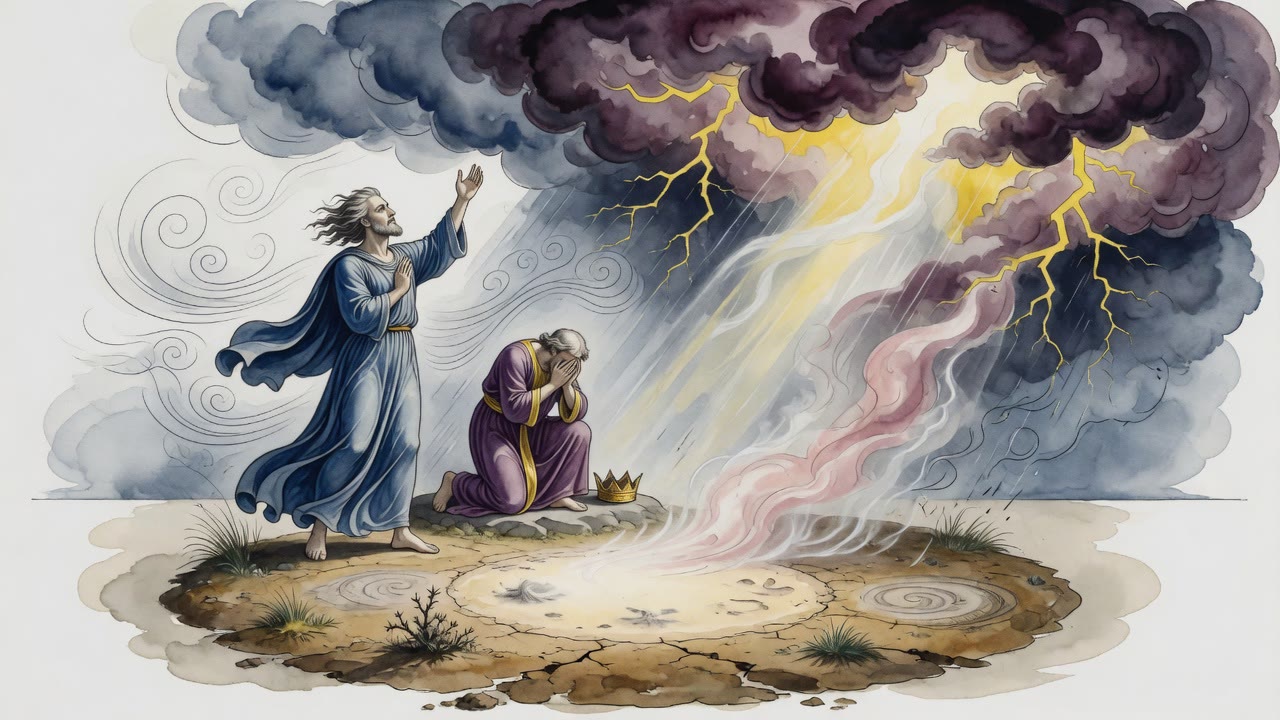
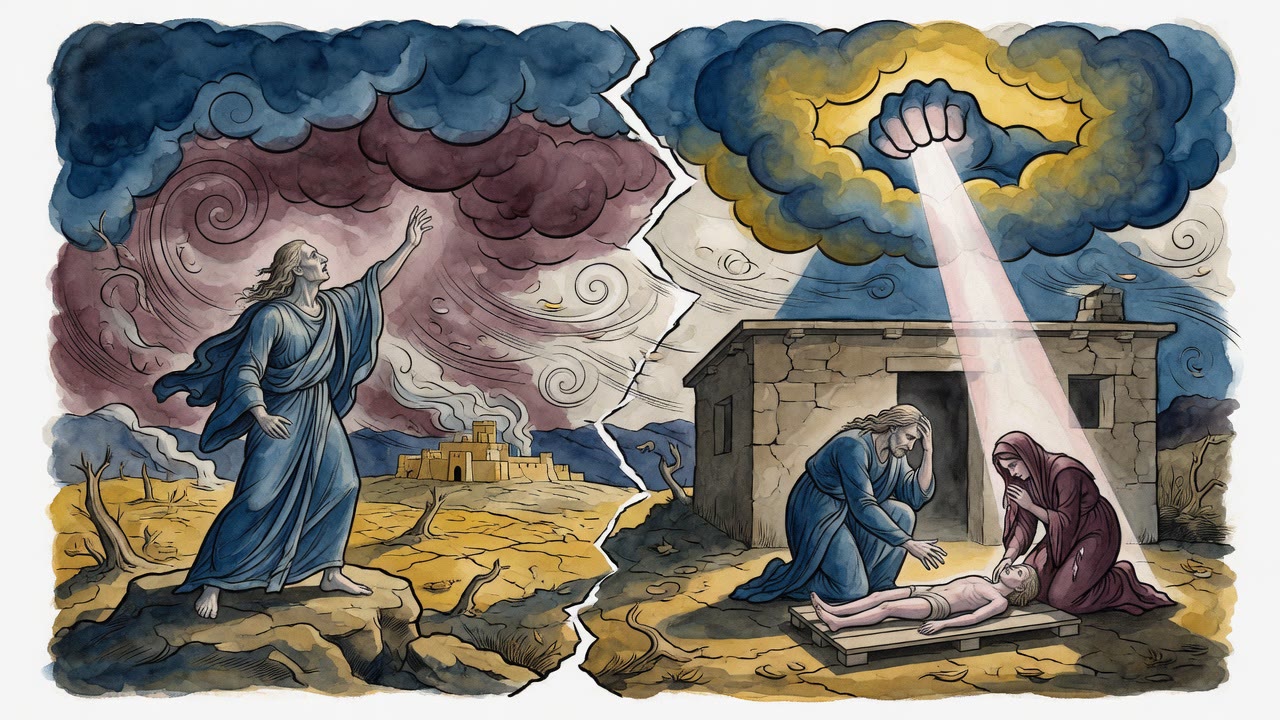
King Ahab watched. The nation watched. Three and a half years of drought had already answered a sentence Elijah had spoken: no rain, no dew, until he said otherwise. Rivers had failed. Horses had gone hungry. Ravens had fed the prophet by a brook, and a widow's jar in Zarephath had not run out. None of that had settled the question in Samaria. Jezebel, daughter of the king of Tyre, had filled the capital with Baal's house and Baal's mouths. This day was meant to finish the argument in front of everyone who still wavered.
Twelve Stones and a Trench of Water
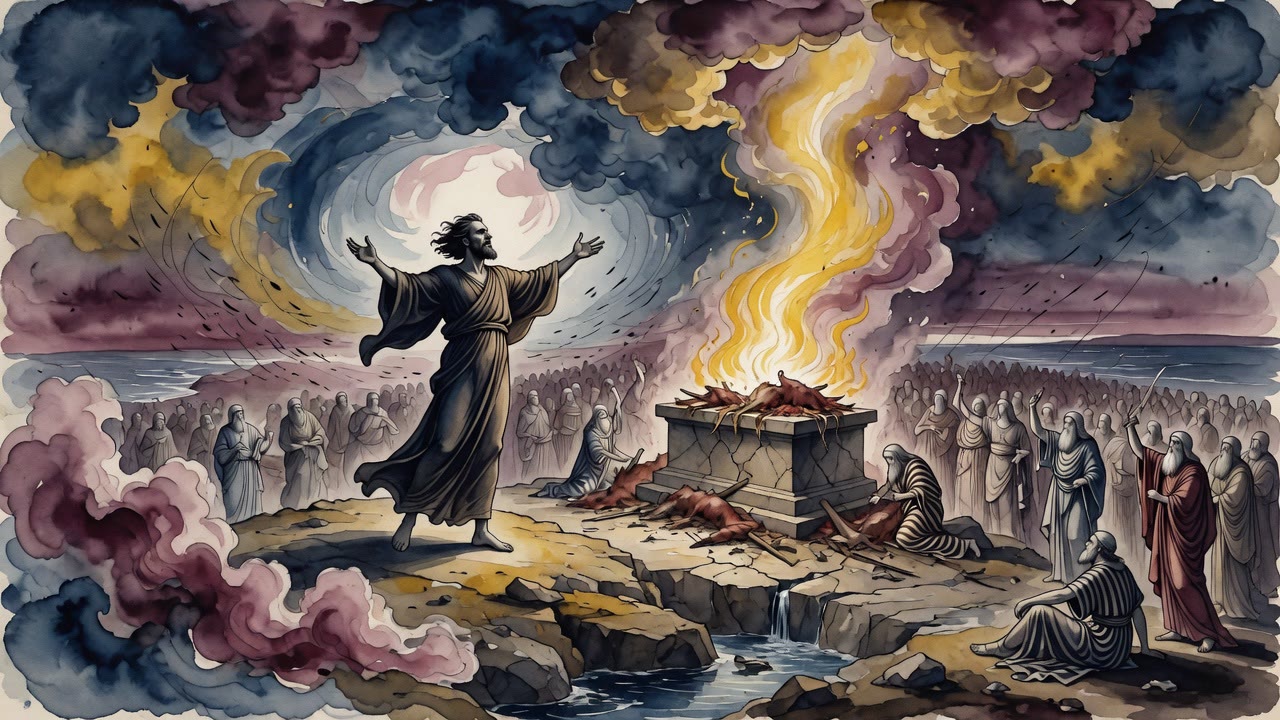
Elijah stepped forward when their voices had gone hoarse. He took twelve stones, one for each tribe, and built. He dug a trench around the altar. He had them pour water on the offering and the wood, then pour again, then pour until the trench itself stood full. A man who wants a cheap sign does not drown his own fuel.
Then he prayed. Not for a show. For a verdict. "God of Abraham, Isaac, and Jacob, make it plain which side has been telling the truth." The words were short. He did not cut himself. He did not dance.
Fire fell.
It ate the offering, the wood, the stones, the dust, and the water in the trench. What was left was a black wet nothing. The people went down on their faces. Elijah had the four hundred seized and taken down to the Kishon, and there they died. Then he told Ahab to eat, because rain was coming. He climbed the peak, put his head between his knees, and sent a servant to look at the sea. Six times, empty sky. On the seventh look, a cloud the size of a man's foot. The wind rose. The rain came hard. Elijah ran ahead of the king's chariot all the way to Jezreel (1 Kings 18:44-46).
Jezebel Named Tomorrow
The messenger found him after the rain. Jezebel's word was simple. "By this time tomorrow you will be as dead as those prophets." She did not argue names. She named a clock.
Elijah fled into the wilderness and sat under a broom tree and asked to die. The man who had stacked water against fire, who had outlasted four hundred mouths, who had run in the rain in front of a king, asked God to take his life. Israel had shouted on the mountain. The queen had scheduled his death. The victory had not made a safe country.
An angel came twice, each time with bread and water. "Arise and eat," the angel said. "The journey is too great for you." He ate. He slept. He walked forty days to the mountain of God.
He Would Not Comfort Hiel
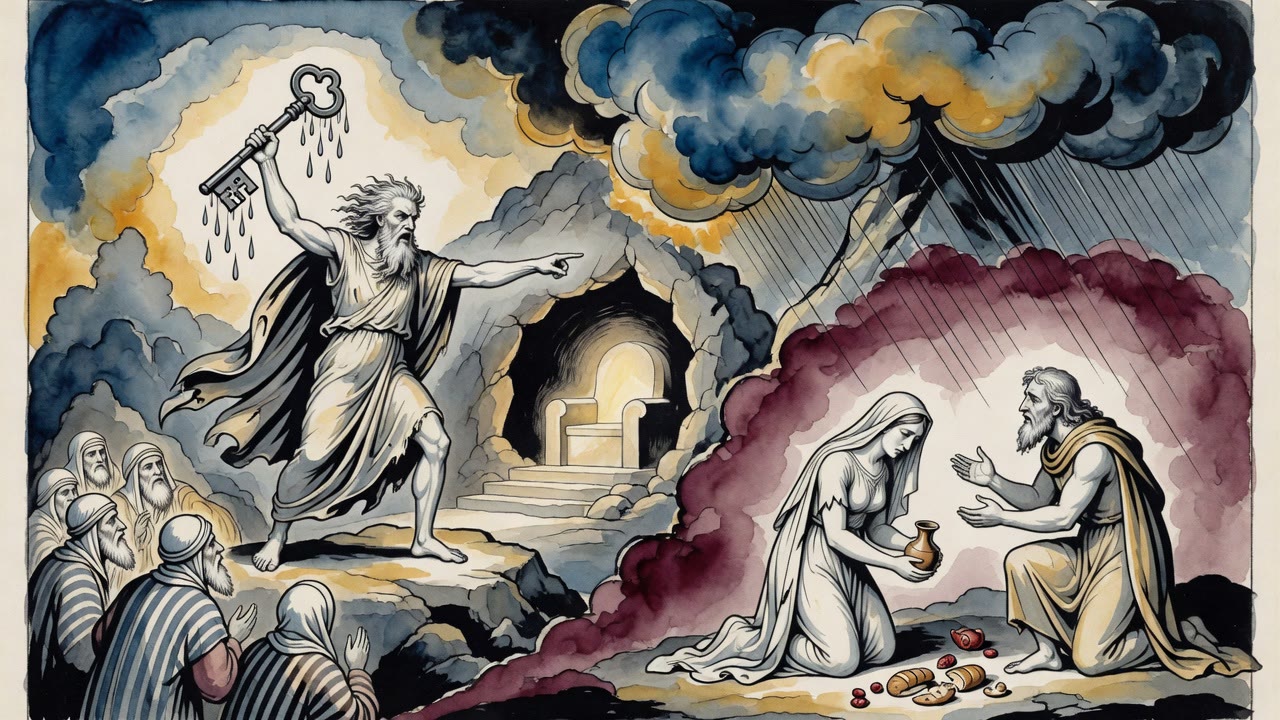
Before Carmel, God had sent him to a house of grief and he had refused to go. Hiel of Bethel, a commander in Ahab's army, had rebuilt Jericho and paid for it with his sons, just as Joshua's curse had said. God told Elijah to offer sympathy. Elijah would not. He said the man's talk would pull rage out of him. God sent him anyway, and promised that any curse that escaped Elijah's mouth in that anger would stand. So he went. He heard Hiel bless the God who keeps the words of the pious. The commander understood why his sons were dead. Elijah's first errand in that reign was a door he did not want to walk through.
The drought had been meant to turn a people, not only to dry a field. Distress, empty granaries, a sky that would not give. Carmel was the public proof. Israel cheered when the fire fell. Jezebel answered with a date. The shout and the threat came from the same afternoon.
The Prophet Who Went Silent
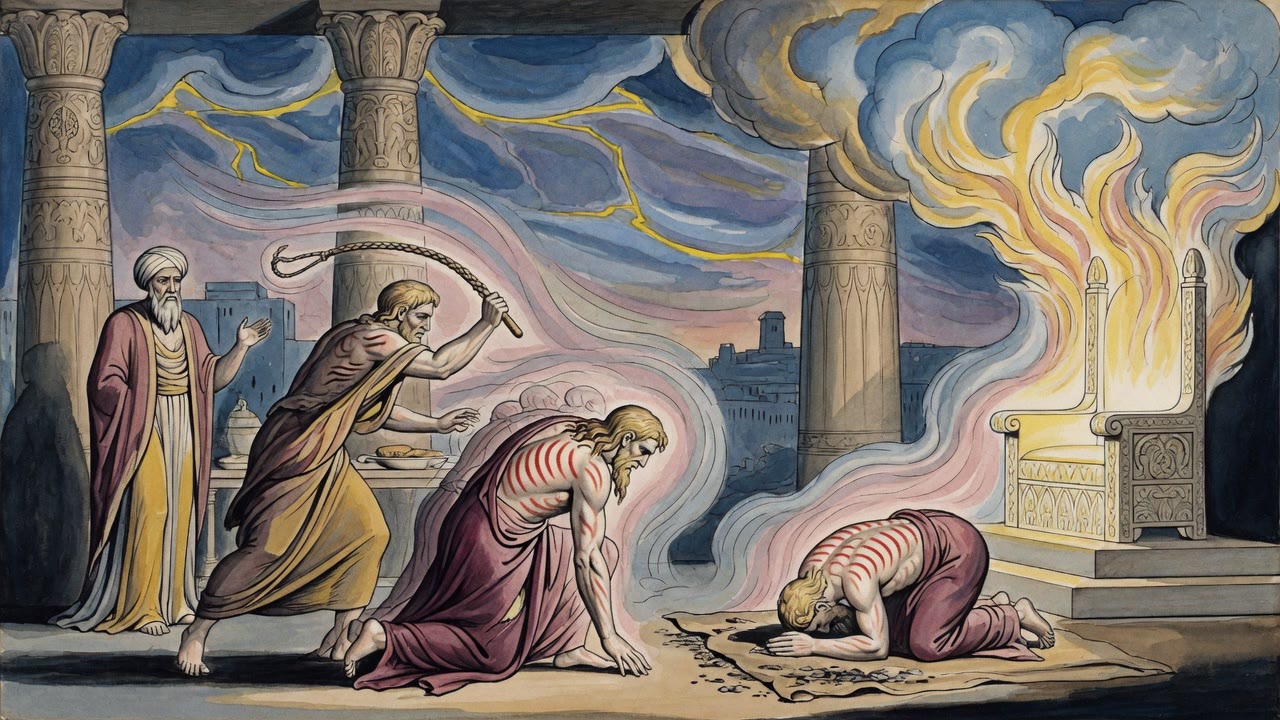
Long after the chariot of fire, Elijah still had the same temper. Rabbi Jose told him he was irascible. Elijah vanished. He gave the sage the silence a man gives when the charge is true and he cannot bear to hear it. When he came back, he admitted it. The mouth that had called fire shut itself for a long time rather than hear that it was too hard on people.
On Carmel he had chosen the worse odds and made them work. Under the broom tree he had asked to be done. God kept sending him toward doors he did not want: a grieving commander, a wilderness meal, a sage who would not flatter him. He ate the angel's bread. He still had to learn how to sit in a house of grief.
← All myths