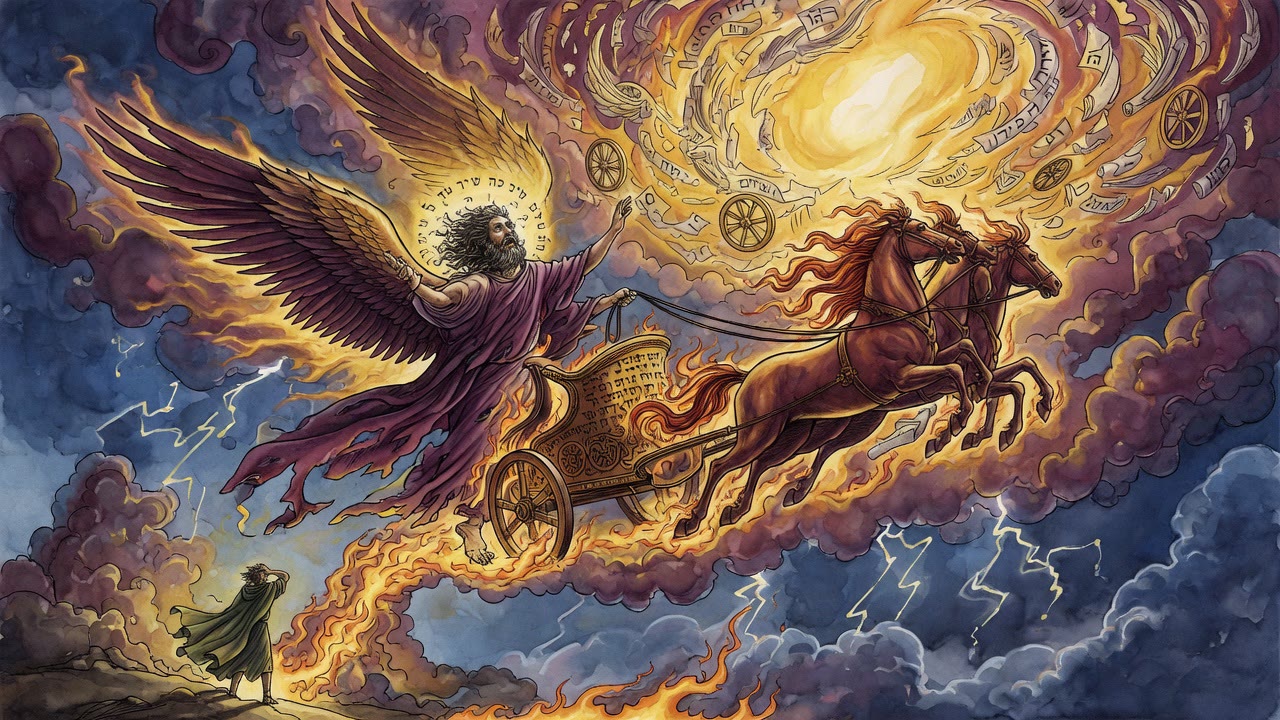
Elijah's Harsh Mercy Only Made Sense Later
Rabbi Joshua ben Levi could travel with Elijah on one condition: never ask why. Their third host gave them his best food. In the morning his only son was dead.
Table of Contents
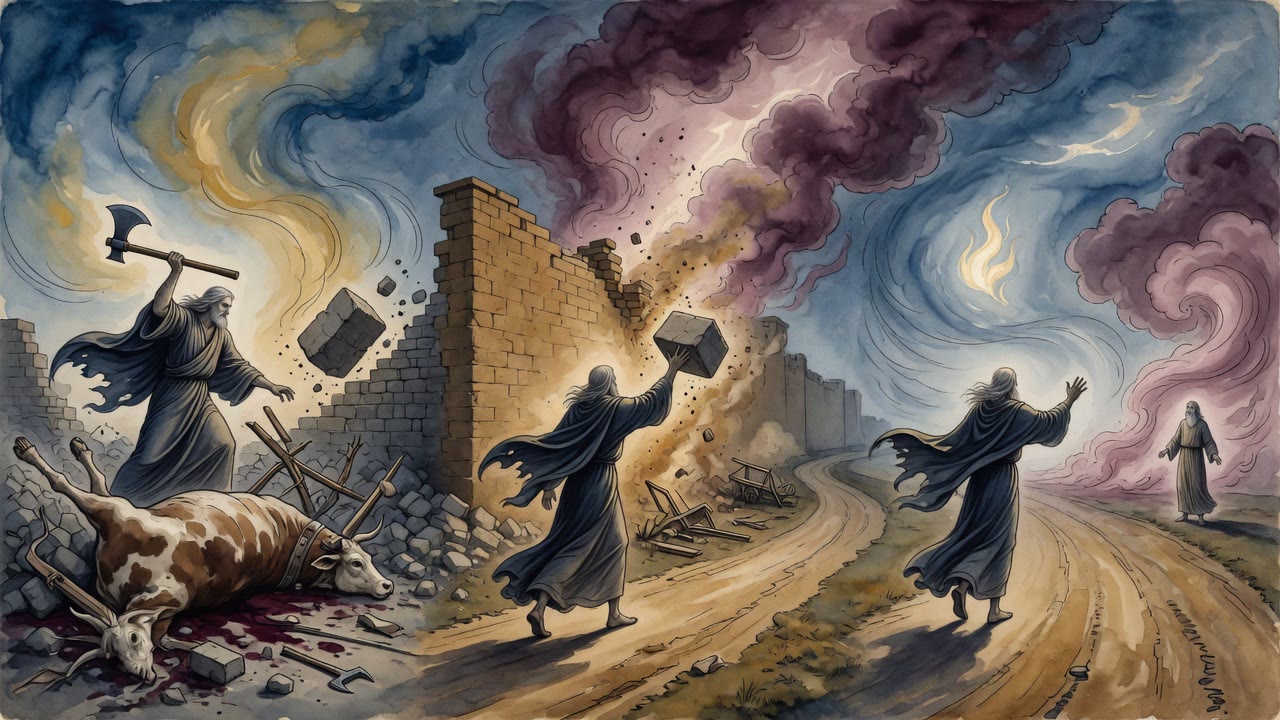
The cow was their only possession worth anything, and by morning it was dead. Elijah had prayed before leaving, and the prayer killed the cow.
 Click for full size
The family had fed him. They had shared what little they had. And the prophet, walking away in the early light, had answered their hospitality with loss.
The Cow That Had to Die
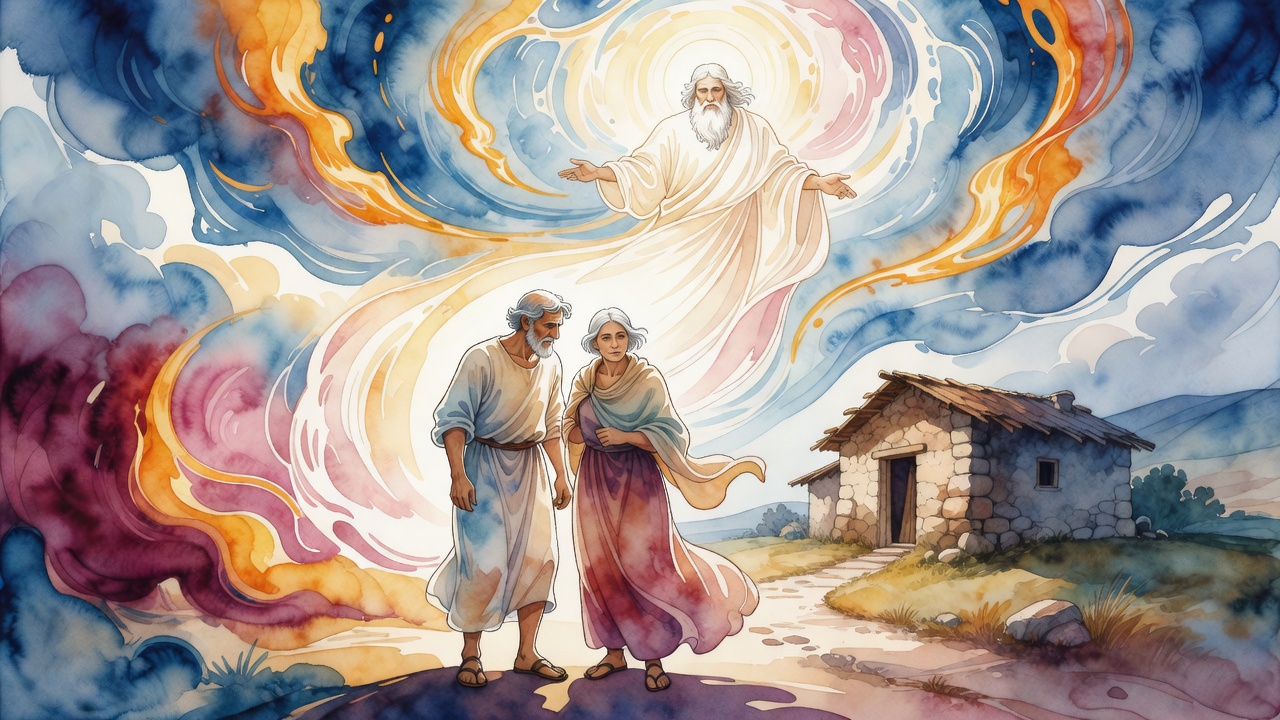
In the tradition preserved through Hebraic Literature and drawn from the Talmud's Nidah tractate, Elijah was traveling with a companion when they came to the house of a poor couple who had exactly one cow. The couple saw strangers on the road and ran out to meet them. They brought the visitors inside, fed them from their meager store, and gave them beds for the night.
In the morning, Elijah prayed. The cow dropped dead.
His companion watched and said nothing, because he knew Elijah and he knew enough not to ask. But the silence cost him. He had seen poor people be generous and receive destruction in return, and no theology he possessed could yet explain the exchange.
The hidden accounting appeared only later. In some forms of the tradition, the cow's death substituted for the wife, who had been fated to die that day. The family lost the animal and kept the person. But they did not know this. They only knew the cow was gone.
Mercy came wearing the exact shape of loss.
Rabbi Joshua Could Not Ask Why
Gaster's Exempla No. 393, published in 1924 and drawing on the tradition of Rabbi Nissim of Kairouan, turns the same pattern into a complete road cycle. Rabbi Joshua ben Levi, a third-century sage of the Land of Israel, was granted a companion that no one else in his generation was offered. Elijah agreed to travel with him under one condition: "do not ask me about anything I do. If you ask, I leave."
Rabbi Joshua agreed.
The first night they stayed with a poor couple who owned one cow. In the morning, Elijah prayed, and the cow died. Rabbi Joshua held his question in his teeth and walked on.
The second night they stayed at a rich man's house. The rich man fed them grudgingly, did not invite them to sit, and gave them the leaking wall of a barn instead of a proper room. In the morning, Elijah prayed and the wall rebuilt itself, perfect and new. Rabbi Joshua felt the injustice like a stone in his shoe and kept walking.
The third night a kind man received them with open hands, gave his best food, spoke warmly, treated them like people rather than burdens. In the morning, Elijah prayed, and the man's only son died.
The Question He Could No Longer Hold
Joshua could not hold it. He asked.
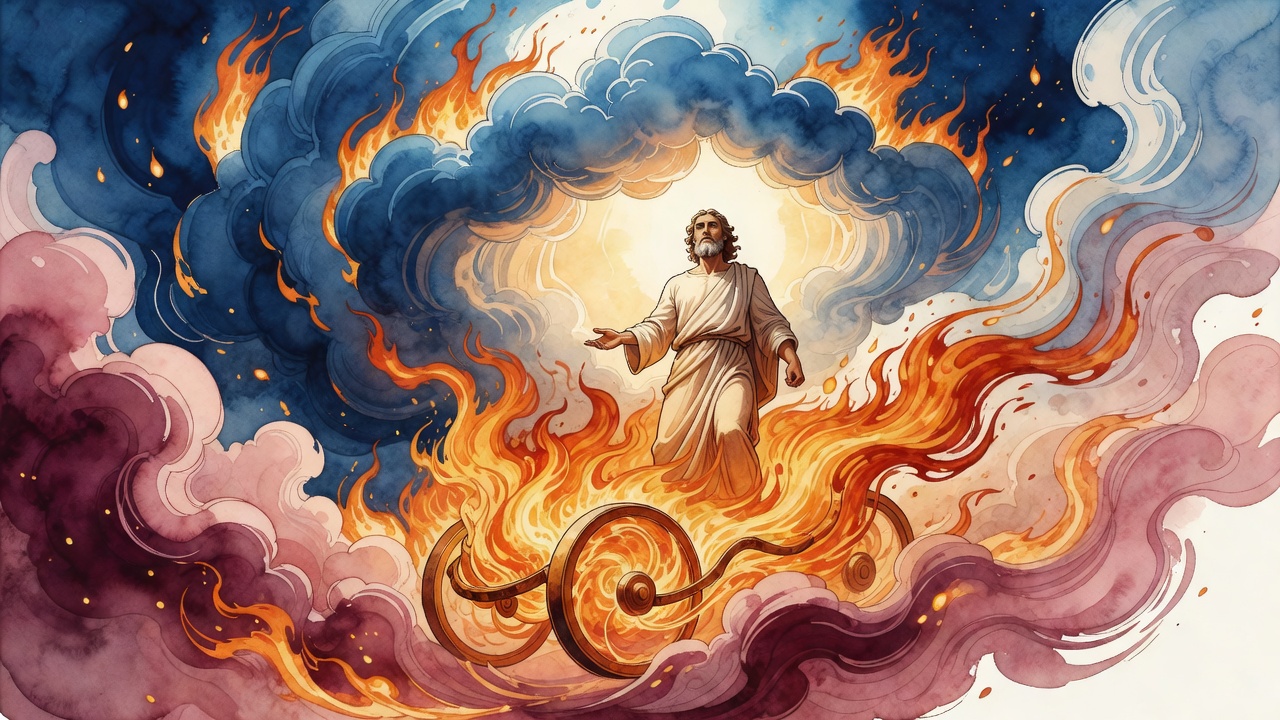
Elijah turned to face him. "The cow was fated to die. I prayed and the cow died instead of the wife. The rich man's wall had a treasure buried inside it. I repaired the wall so the treasure stayed hidden from him, because a generous man should not be robbed by a miser's windfall. And the kind man's son had been fated to become an apostate, a person who would tear his family apart. I prayed that the boy be taken now, with his soul still clean, rather than later with damage done." Then Elijah left. He had broken the condition. He was gone before Rabbi Joshua could speak again.
The Man Who Received a Good Wife
A third Elijah story works more slowly. There were three poor men, each with a longing. The first wanted wealth. The second wanted learning. The third wanted a good wife.
Elijah came to each in disguise and gave each what he asked for. The third man was directed to a woman who seemed rough at first meeting, but whose underlying character was the kind that does not break.
Years passed. Elijah returned in disguise to test them. He came to the wealthy man carrying five orphans and asked for charity. The man refused. His servants beat Elijah away. The next morning, the wealth was gone.
He came to the scholar and asked for hospitality. The scholar spoke beautifully about generosity and sent him away. His learning drained away and left him empty.
He came to the man with the good wife. Before he had finished speaking, the wife had already opened the door wider and was carrying food from the kitchen, asking no questions about who the stranger was or what he deserved. The family's small fortune multiplied.
The test was always the same. The gift was just the setup. What Elijah actually measured was what you did after you received it.
← All myths