Elijah Always Knew the Chariot of Fire Was His
Before any human existed, an angel asked to go down and be useful. God changed his name and later sent him into Ahab's ruined kingdom.
Table of Contents
Before a single human being existed, an angel stepped toward the throne.
 Click for full size
God had not asked. The other celestial beings held their stations. This one moved.
"Master of the world," he said, "if it please You, I will descend to earth and make myself useful to the sons of men."
God listened. Changed his celestial name. Later, under King Ahab, God sent him down in a body, with a name a man could call: Elijah.
The Hardest Court on Earth
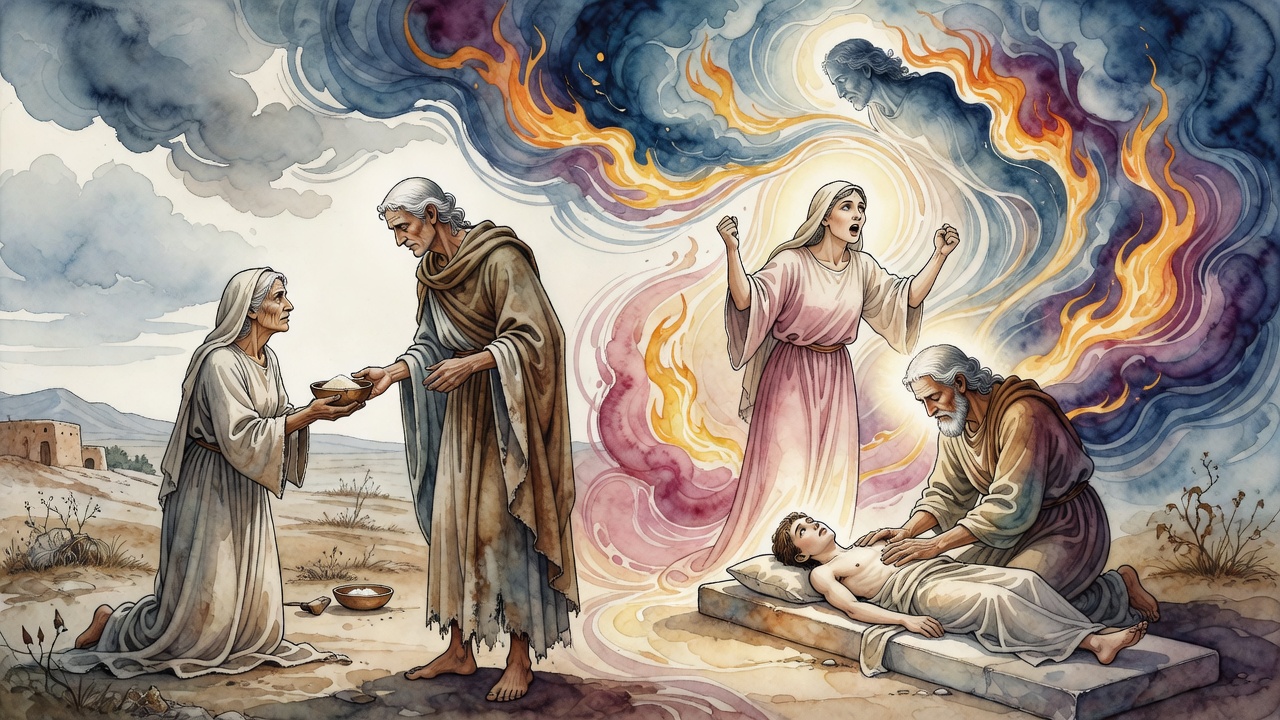
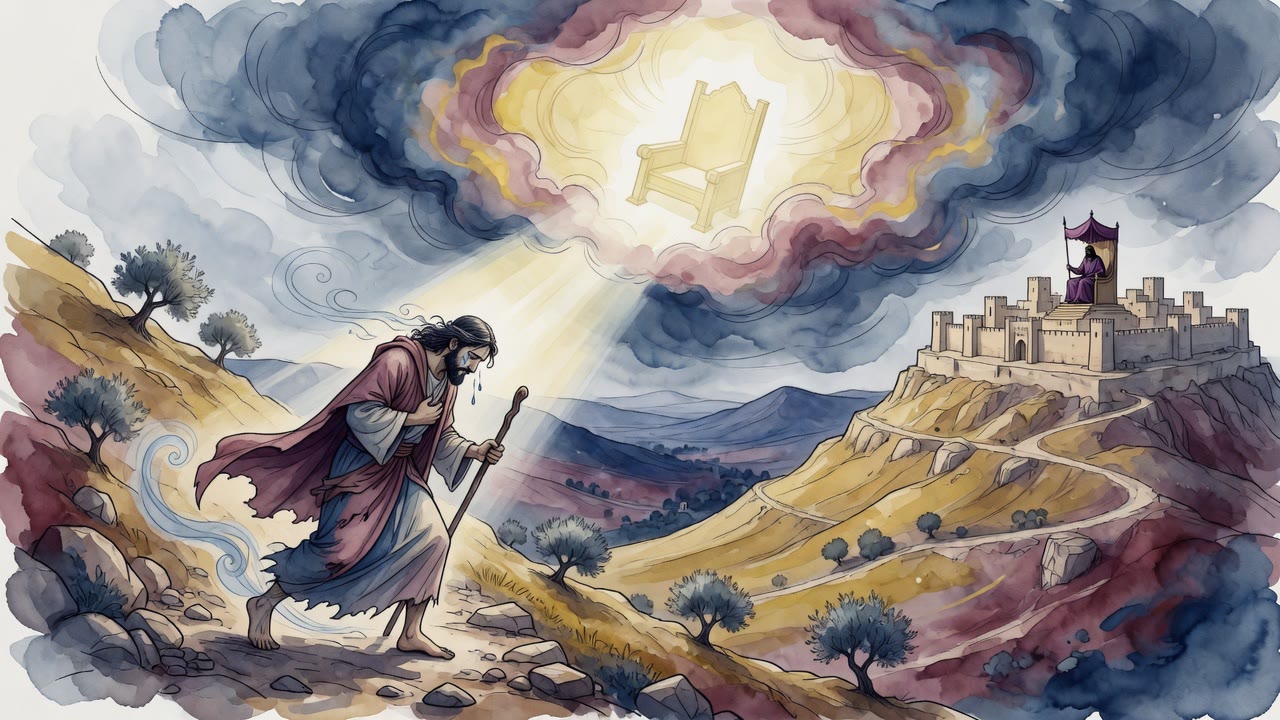
Ahab had pulled down the altars he could reach and raised Baal on the hilltops of the northern kingdom (1 Kings 16:30-33). The rot ran from the palace into the towns. Elijah arrived with a mouth and a body that could starve, and started the long work of pulling a people back toward the claim that the Lord alone is God.
He called fire down on Carmel. He ran ahead of Ahab's horses in the rain. He sat under a broom tree on the road to Beer-sheba and told God he was finished, that he was the last faithful person alive, and an angel came twice with bread and water and made him eat (1 Kings 19:5-7). The mission took everything a body has to give. He had asked for this. He did not get to be surprised by the cost.
The Chariot Cut Between Them
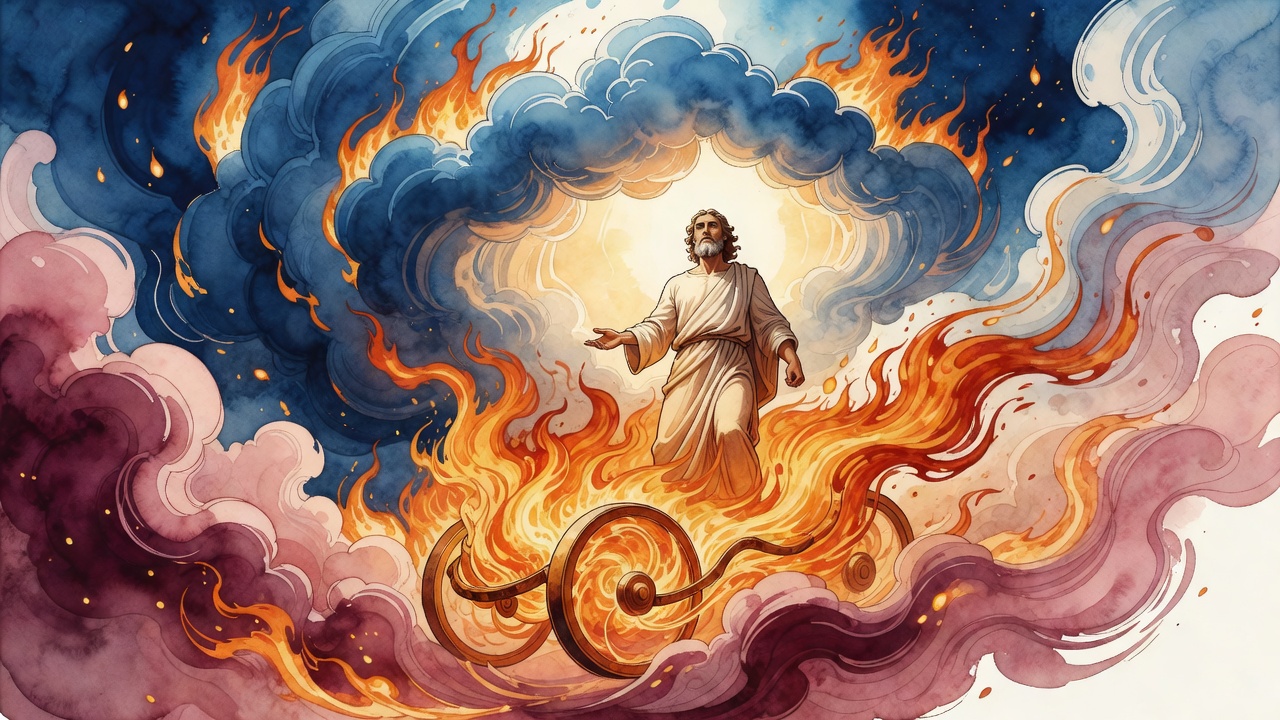
When the work was done, the chariot came. Not death. A taking back.
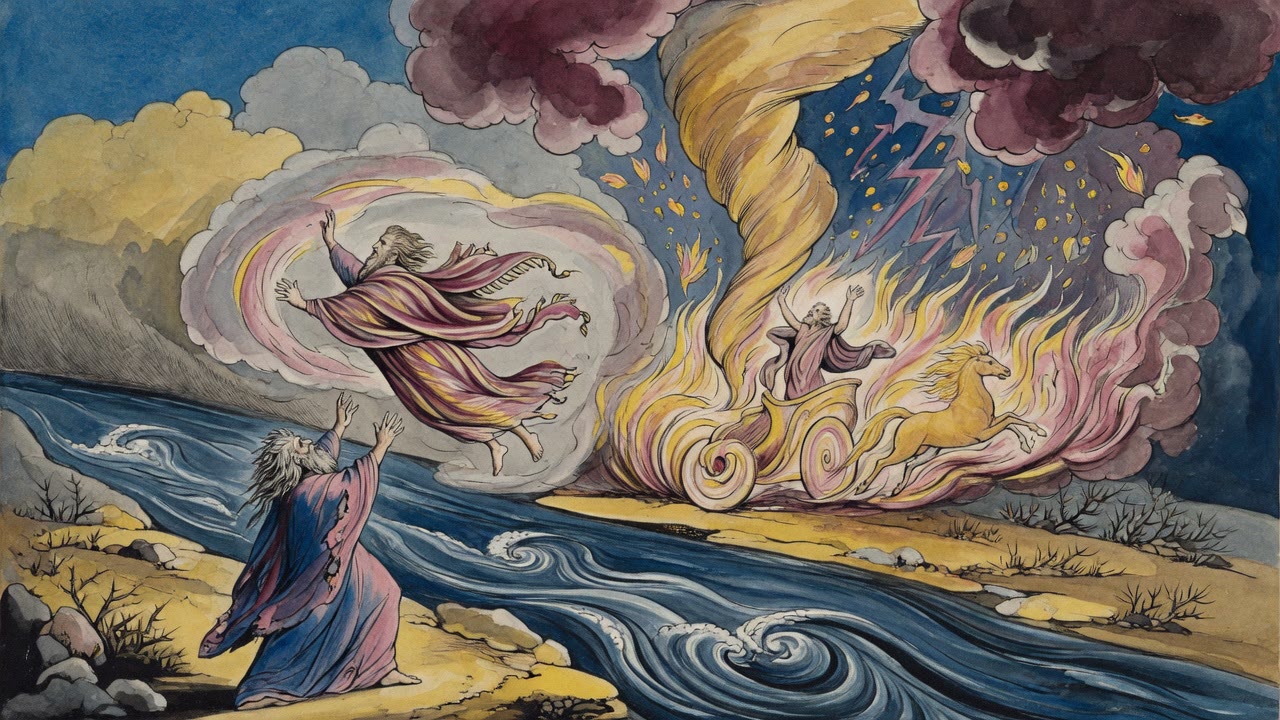
Elisha walked with him on the road from Gilgal. Elijah told him to stay behind. Elisha refused, twice. He followed his teacher to the bank of the Jordan, watched him strike the water with his mantle, watched the river split and let them cross on dry ground (2 Kings 2:8).
Then the whirlwind. A chariot of fire, horses of fire, cutting between the two of them on the bank. Elijah was inside it, going up. The fire drove a gap that widened until there was only sky where the teacher had been.
Elisha tore his clothes and picked up the mantle that had fallen. Elijah had not died. He had gone back. He did not look like a man caught off guard. He had always known the chariot of fire was his. He had known that fire before he had a body a king could threaten.
Guardian, Not Retired
God gave him a new commission on his return. "Be the guardian spirit of My children forever." Not a rest. More work, without the hunger.
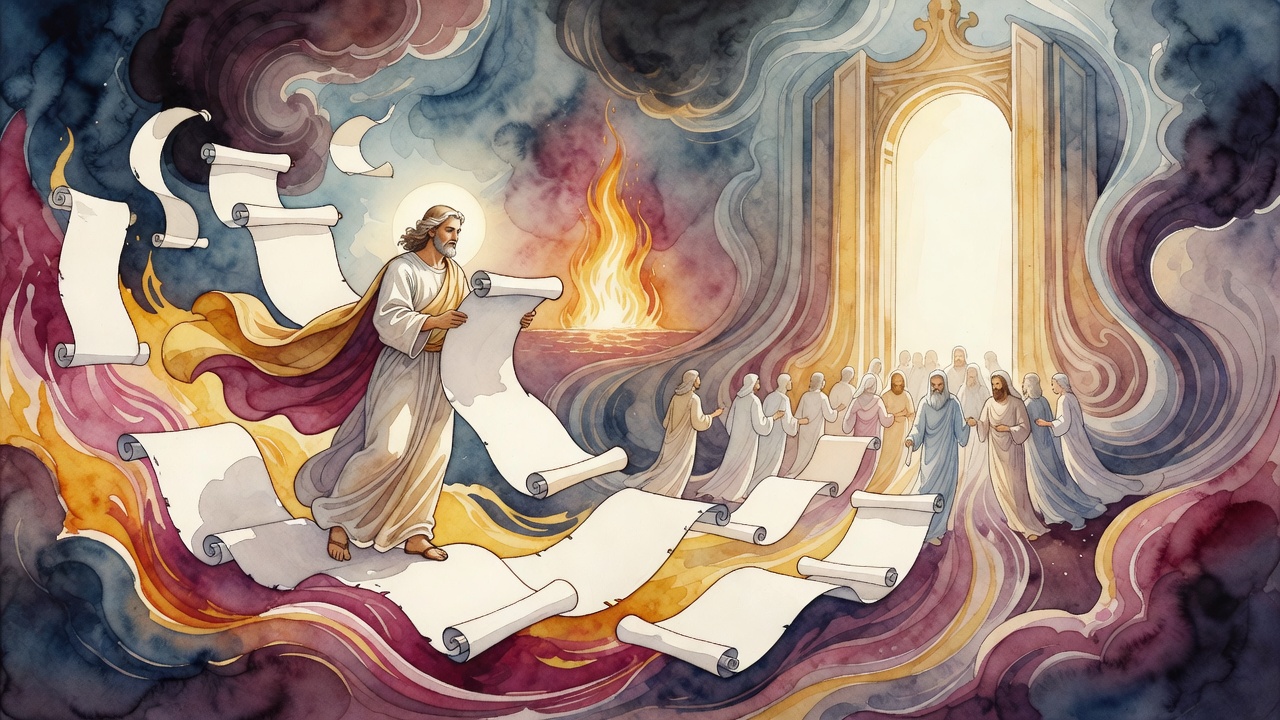
He moves through every age, appearing where he is needed and leaving before anyone can hold him to a name. He stands between a condemned person and the Angel of Death when a decree has fallen but has not yet closed. He cannot reverse a judgment. He can find the person before it lands and give them one more door, one act that tips a scale. The warning looks like a sudden conscience. The good deed that follows gets credited to the person's own character. Elijah collects none of it. He was never there to collect it.
Rabbi Shimon Would Not Let Him Leave
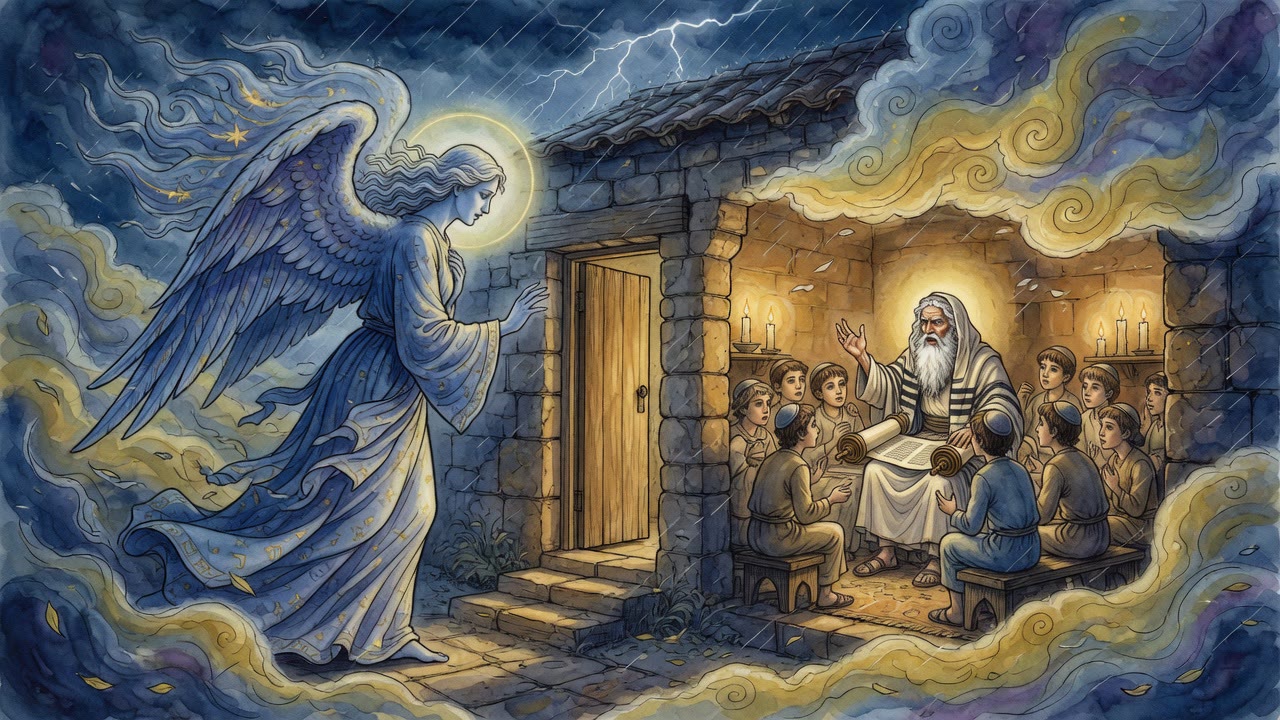
Generations later, Rabbi Shimon bar Yochai stopped mid-teaching and turned toward something invisible in the room.
"Elijah!" He was not calling idly. "I adjure you by the holy kingdom, Malkhut, She who has fallen in exile, take permission not to depart from us." The Shekhinah (שכינה), God's indwelling presence, had gone into exile with Israel. The ministering angels were crying out from inside their chambers. There was no one to receive the prayers rising from the earth (Isaiah 33:7). Birds nested on the ground, their chirping stretching upward like prayer (Psalm 84:4, Deuteronomy 22:6). Creation was reaching toward something that had moved out of reach.
Rabbi Shimon knew who carried those prayers up. He knew who walked the boundary between the world below and the chambers above. Elijah was the hinge. The Shekhinah in her exile watched for him because he was the one being who had chosen exile from the inside, had paid its cost before any human being was made, because someone needed to and he did not wait to be asked.
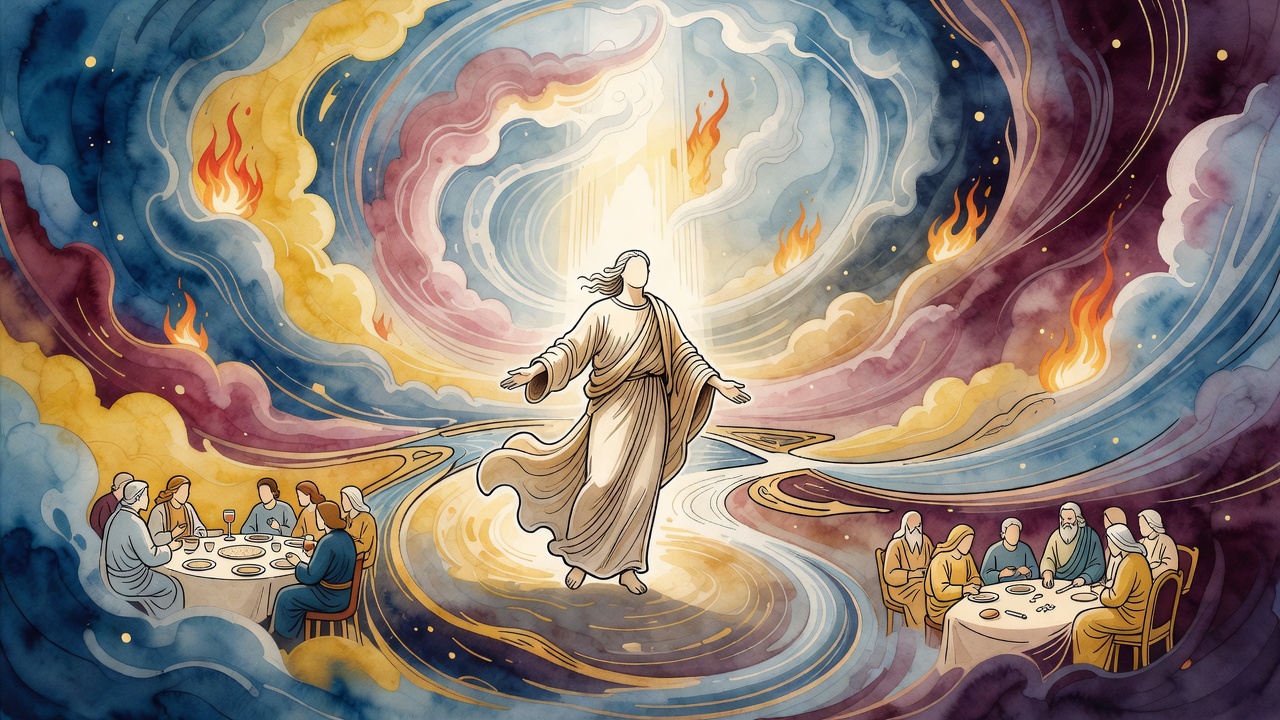
The chariot came for him once (2 Kings 2:11). It has not left. Every generation he is somewhere on the road between a dying person and a decree, or in a house where a teacher is speaking and the Presence is thin, or at a table where a cup has been poured and no one is sure whether the door moved by a hand or by wind. He carries the fire and the exile both, because he lived them in order: first the fire, then the descent, then Ahab's years, then the chariot again. Whatever he brings to a door, he brings as the one who stepped forward at the beginning and asked to be useful.
← All myths