Mother Zion Wandered Her Burned Streets Crying for Her Children
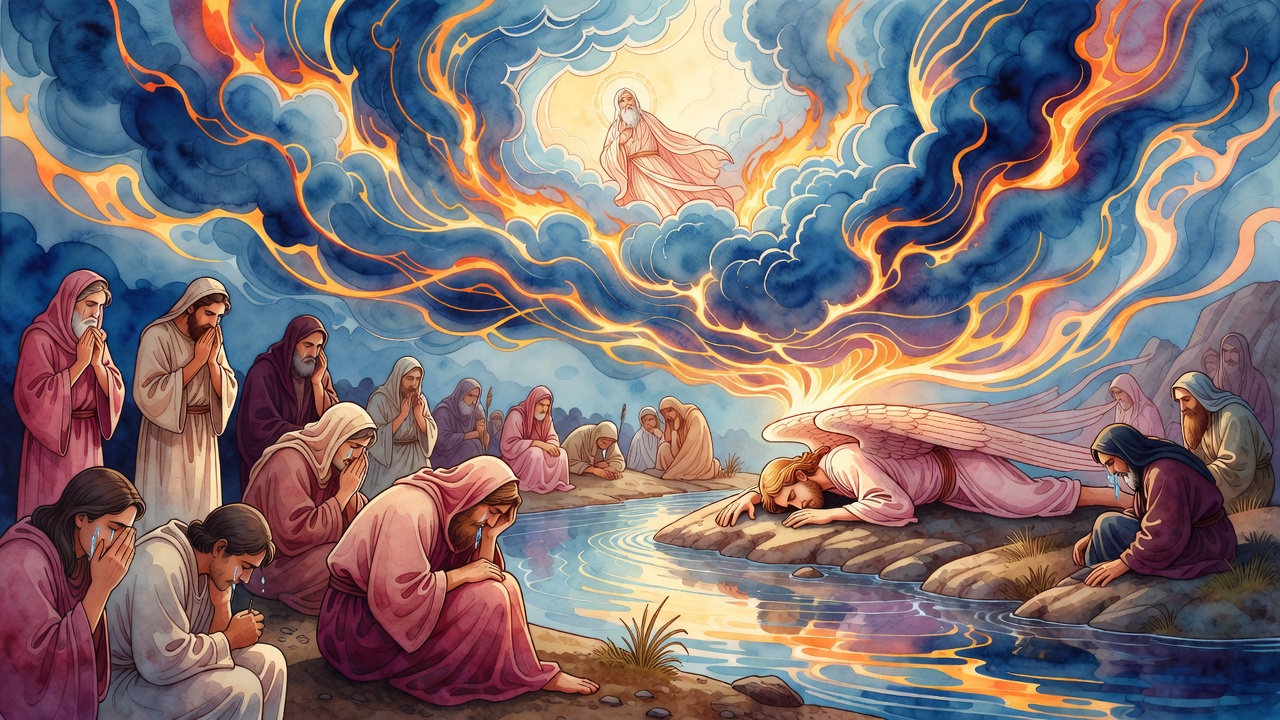
Jeremiah climbs the bloodied road and finds a woman weeping in black over empty cradles, and she is the burned land herself, the one God keeps His glory for.
Table of Contents
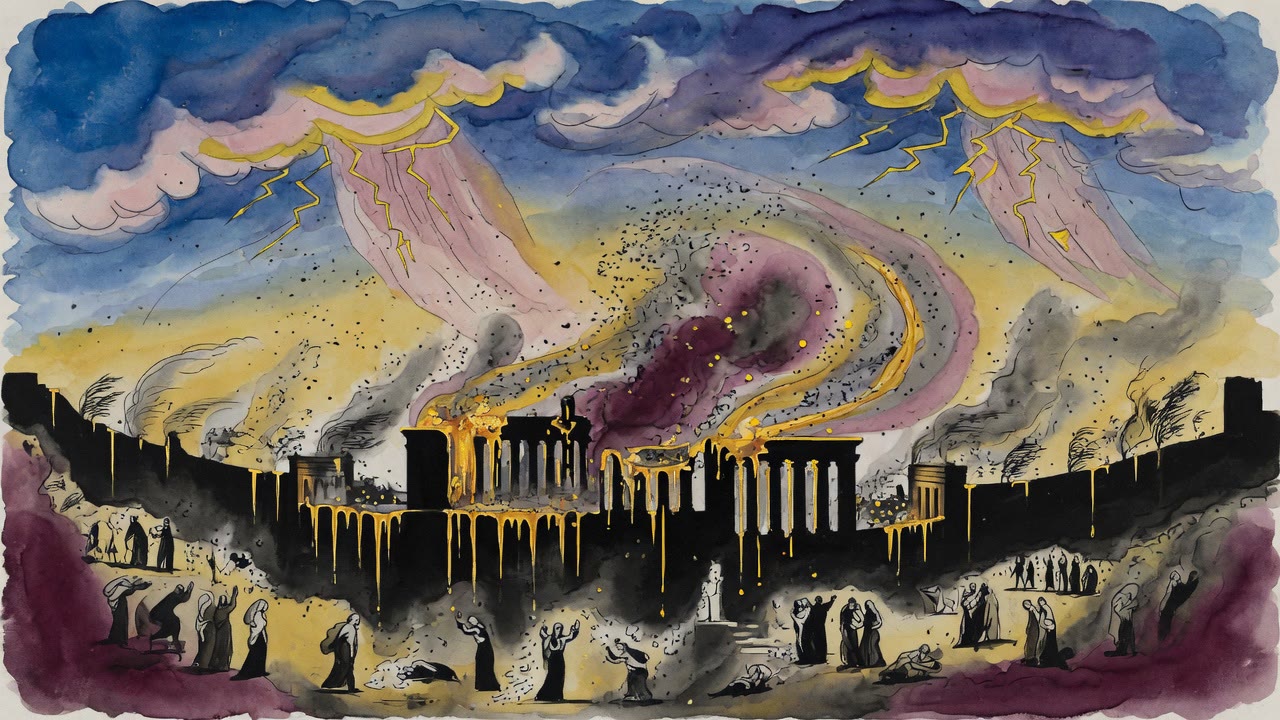
The smoke had not yet cleared from the mountain when Jeremiah came back up the bloodied road alone. He had followed the exiles as far as the river Euphrates, weeping the whole way, ready to lie down and die among them. Then a thought turned him around. If he went on to Babylon, who would stay behind to comfort the ones still trapped in the wreck of Jerusalem? So he climbed back toward the ruined city, and that was when he lifted his eyes and saw the woman.
 Click for full size
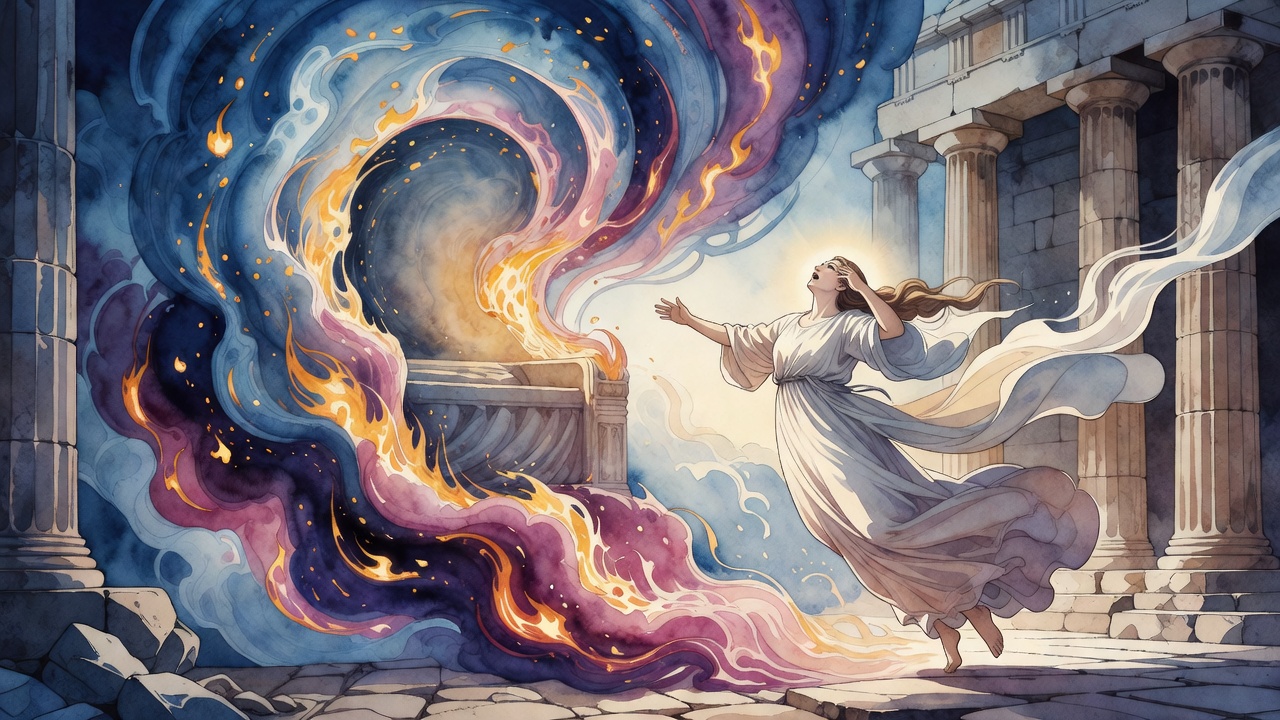
She sat at the top of the mountain, dressed in black, her hair loose, crying as if her body would come apart. The streets below her were scorched and empty. No pilgrim climbed them. No child ran in them. She rocked over something Jeremiah could not see, and the sound she made was older than the fire.
The Prophet Mistook Her for a Spirit
Jeremiah's own grief was already wild in him. He had buried a city. He wondered who would ever comfort him, and here was a creature weeping harder than he was. He came toward her slowly, afraid of what she might be.
"If you are a woman, speak to me," he said. "But if you are a spirit, depart at once."
She did not depart. She turned her wet face toward him, and what she said only deepened the riddle.
"Do you not know me?" she asked. "I am she who bore seven sons. Their father went down into a far city by the sea, and while he was gone a messenger came to me with word that he had been killed. And before that messenger had finished, another came on his heels and told me my house had collapsed and crushed all seven of my sons beneath it. I have no husband to bury and no children to bury. I have only the rubble that swallowed them."
Jeremiah heard her out, and his heart hardened with a strange jealousy of sorrow. He had lost more than a woman with a fallen house.
"Are you owed more comfort than Mother Zion?" he demanded. "She has been turned into a pasture for wild beasts. Her sons were dragged off in chains. What is your one ruined house against that?"
The Mountain Itself Was Mourning
She rose then, and the black of her dress was the black of burned stone, and the seven sons were the generations of her children, and the husband gone to a far city by the sea was every exile led toward the rivers of Babylon.
"I am Mother Zion," she said. "I am the mother of the seven. It was written long before this day that she who bore seven would be forlorn, that her sun would set while it was still morning, that she would be shamed and disgraced. You weep beside me for a city. You do not understand that the city is what you are looking at. I am the land, and these are my own scorched streets, and I am walking them looking for cradles that are empty."
Jeremiah's accusation died in his throat. He had been arguing with the wound itself. The hills around them were the gates that lament and mourn, sitting desolate on the ground, and the prophet stood among them with nothing left to say.
God Set a Glory Aside for Her Alone
Far above the ash, the question of who would honor this woman had already been answered, and not by men.
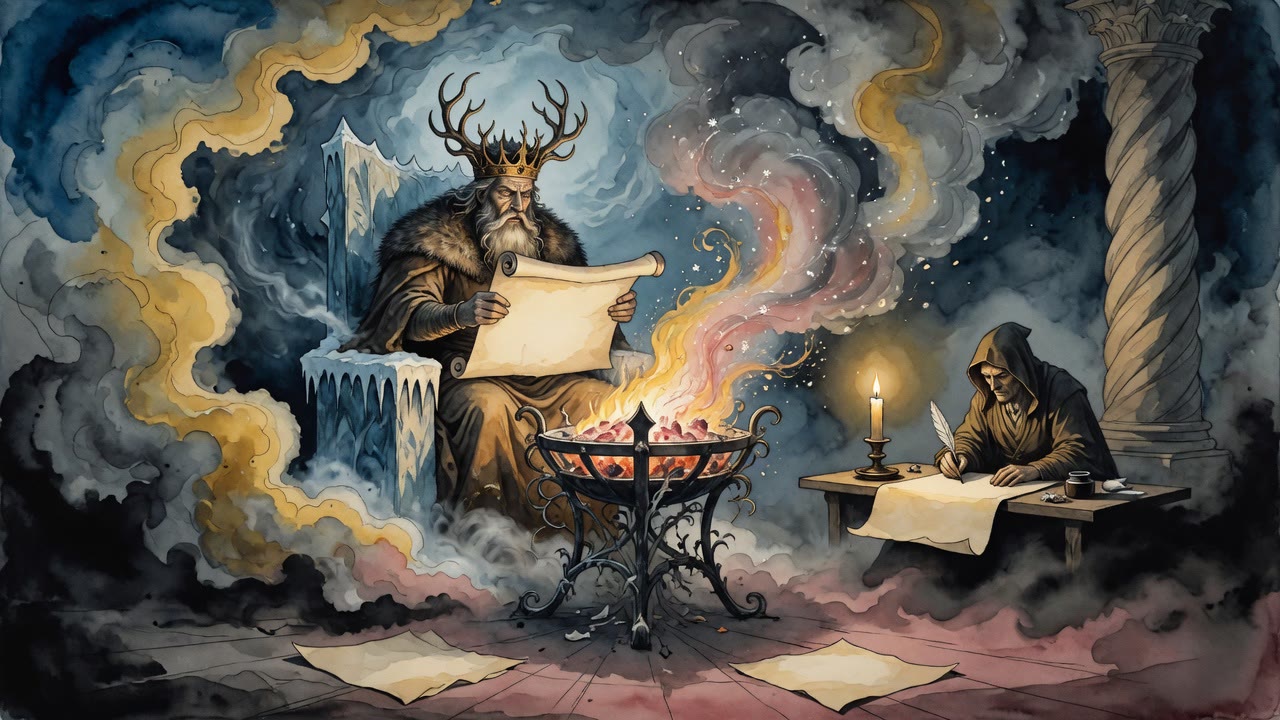
Long before, in the days when the world was being divided into its portions, God had drawn a line that no power in heaven or earth could cross. He had fixed it like a stipulation sealed between Himself and the ministering angels, those burning servants who carry His throne and sing through the night without rest.
"I am the LORD," He said. "That is My name. And My glory I will not give to another."
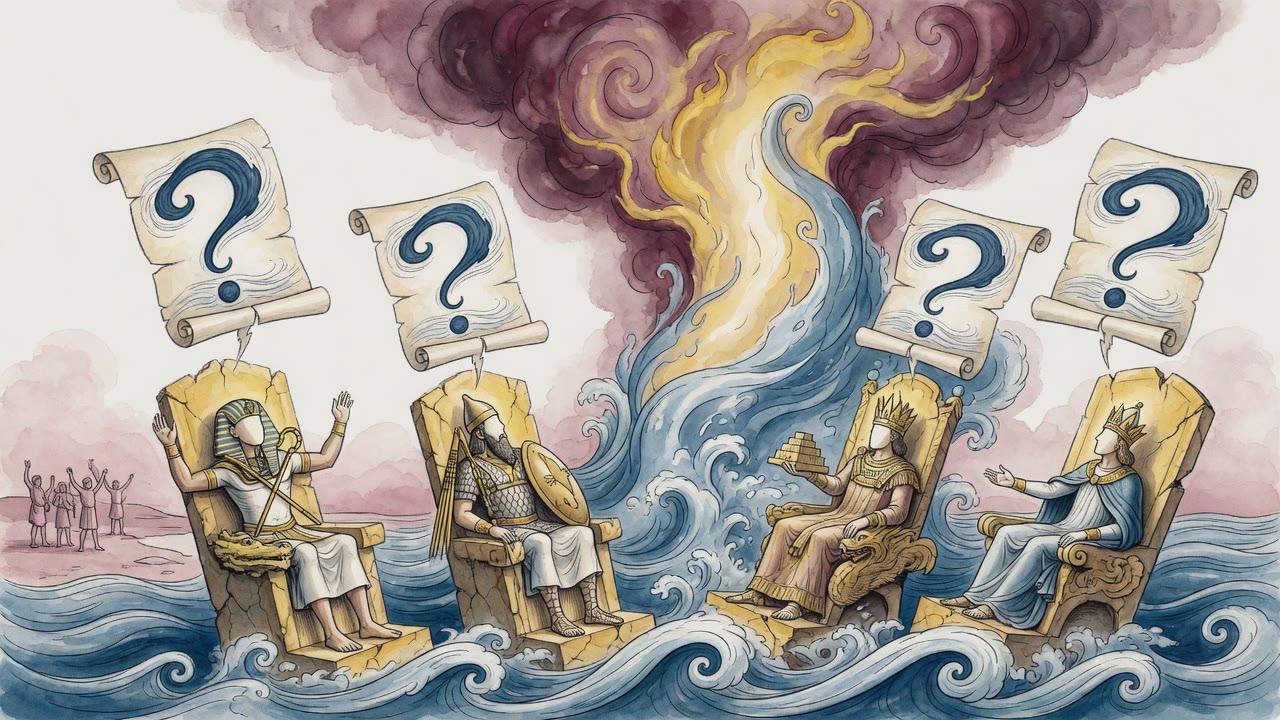
The angels understood what the words shut out. There were the goat-demons in the wild places who craved a portion of divine honor, the se'irim that haunt the ruins where men no longer walk. There were the graven images that nations carved and bowed to and fed with praise. To none of these would the glory pass. Not to an angel of fire, not to a demon of the waste, not to a statue of gold.
"My glory I do not give to another," God said. "Yet you give My praise to carved stones."
And then He named the one exception, the single place where His honor would rest. Not in heaven, where the angels expected it. In the ash. In the woman on the mountain.
The One She Was Promised
"To whom do I give it?" God said. "To Zion."
It was a jealous tenderness, the kind a husband holds for a wife the world has shamed. The angels did not receive His name. The demons did not. The idols of the nations did not. The desolate mother sitting in black over her empty cradles received it, and she did not yet know.
"Arise, shine," He said to her, "for your light has come, and the glory of the LORD has risen upon you."
Down on the mountain the woman went on weeping into the empty streets, walking past doorways with no children behind them, calling out names that no one answered. She did not hear the promise yet. But the glory that no angel could touch and no demon could steal and no idol could borrow had already been set apart, kept back from all the heights of heaven, reserved for the one place that lay in ruins. Her own.
← All myths