5 min read

Zion Asked the Questions Jeremiah Could Not Finish

Jeremiah asked God four charges after Jerusalem fell. Two were answered at once, and Zion carried the other two into her own argument.

Curated by Arthur · Told by Maggid ·
Table of Contents
  1. Four Wounds Entered the Court
  2. Moses Held Two Answers
  3. Zion Took the Silence
  4. The Complaint Rose Through Creation
  5. The Calf Was Forgotten, Sinai Was Not

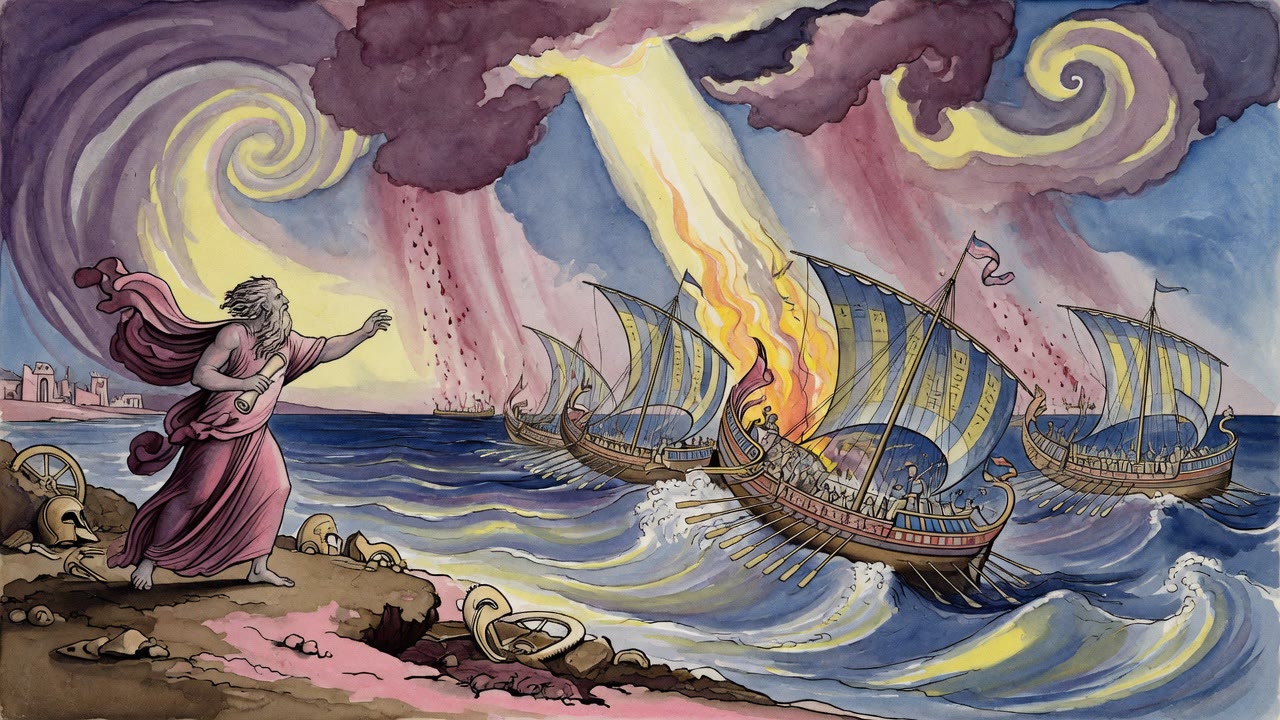
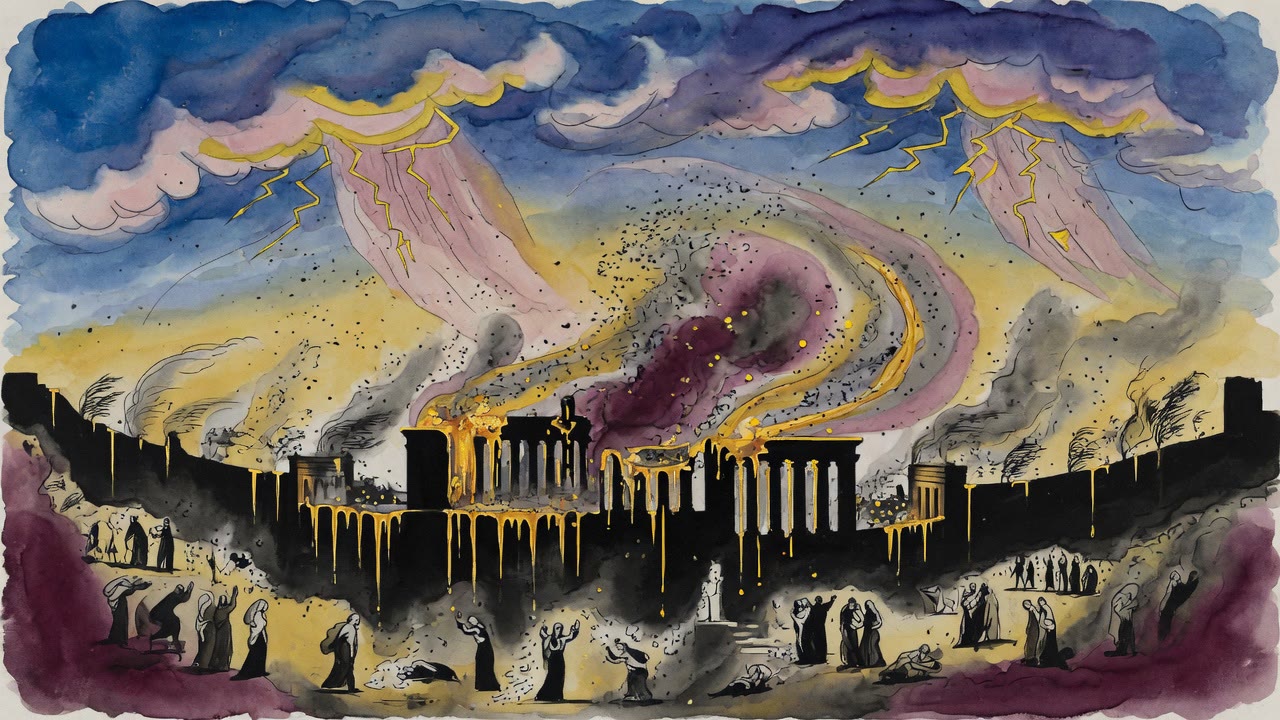
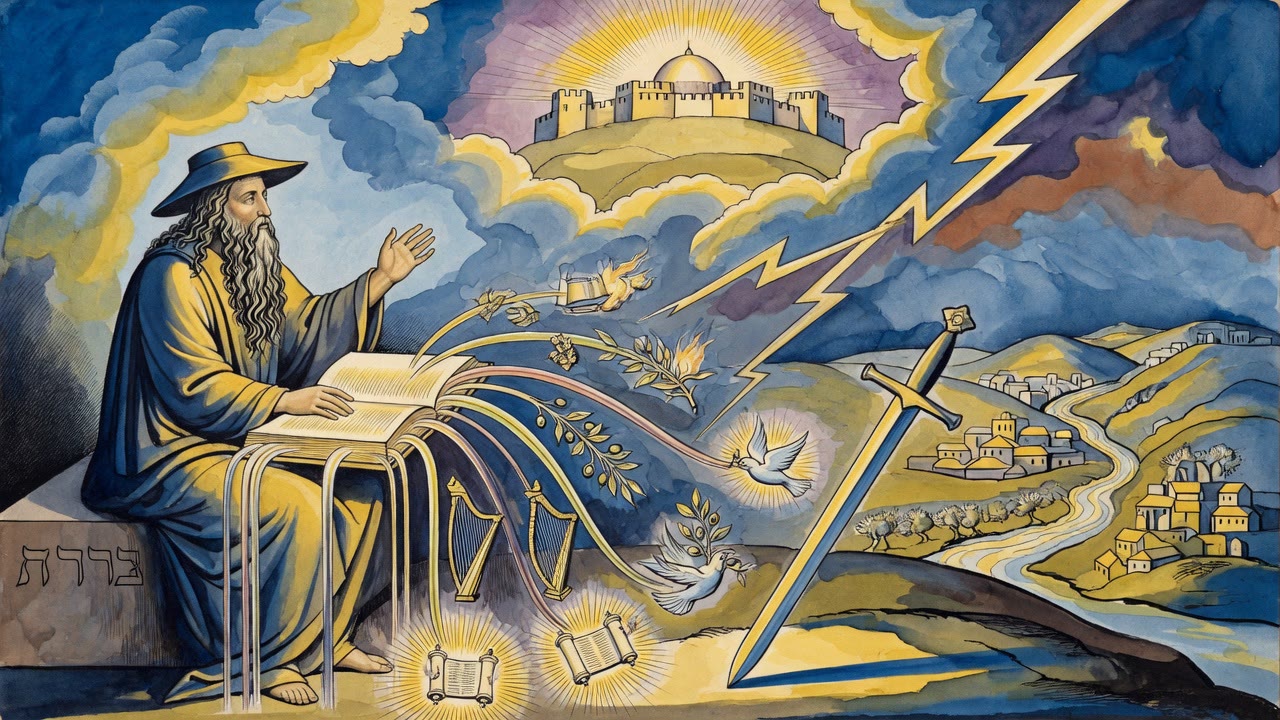
Jeremiah stood after the ruin with four wounds burning in his mouth: despising, rejection, abandonment, forgetting. Jerusalem had not merely lost a battle. She had been dragged through judgment like a beloved queen pulled by the hair through the palace gate.
\n\n

The prophet looked at the wreckage and could not leave the question alone. If the King meant to return to her, then let Him say so. If not, let Him release her. Do not leave a wife between house and street, neither held nor dismissed.

\n\n

Four Wounds Entered the Court

\n\n

So Jeremiah spoke for Judah and Zion. "Have You rejected Judah? Has Your soul despised Zion?" The questions were not polite. They had ash in them. A prophet who had watched the city burn could not bring a thin prayer before the Throne.

\n\n

He also carried the two deeper fears, the ones that do not end when the flames go out. "Have You abandoned us? Have You forgotten us?" Rejection can still be answered by anger. Abandonment is colder. Forgetting is worse. A forgotten people do not even remain in the King's grief.

\n\n

Moses Held Two Answers

\n\n

God did not answer Jeremiah from the smoke. He sent him backward to Moses, teacher of the prophets, to the words spoken at the end of the curses. Even in the land of their enemies, God had sworn not to despise them and not to reject them.

\n\n

Two wounds closed enough to breathe. Despised, no. Rejected, no.

\n\n

The other two stayed open. No voice answered abandonment. No voice answered forgetting. Jeremiah could carry only half the reply back through the broken land.

\n\n

When he prepared to leave the captives, they cried after him, "Father Jeremiah, will you abandon us too?" His answer did not caress them. "If you had wept once in Zion," he said, "you would not have been driven out." Tears after exile were real, but tears before exile would have shaken the decree.

\n\n

Zion Took the Silence

\n\n

Zion heard what Jeremiah received and what he did not receive. Then she rose into speech. "The Lord has forsaken me," she said, "and the Lord has forgotten me."

\n\n

She doubled the divine name because her grief doubled it first. The two names of mercy, the two faces of compassion, had turned from her. She searched her own abandonment and found images for it everywhere: gleanings left in a field, forgotten sheaves, corners abandoned for the poor and the stranger, vessels poured out and cast away.

\n\n

The city did not whisper. She argued. She had been wife, daughter, field, altar, song. Now she stood stripped of all of them and demanded to know whether mercy itself had left her.

\n\n

The Complaint Rose Through Creation

\n\n

The answer came with a rebuke sharp enough to wake the dead. "Complainers, children of complainers."

\n\n

God named the old pattern. Adam had received a helpmate and answered by blaming the woman given to him. Joseph had been lifted toward kingship in Egypt and still cried that his way was hidden. Israel had eaten bread fit for princes in the wilderness and called it rotten.

\n\n

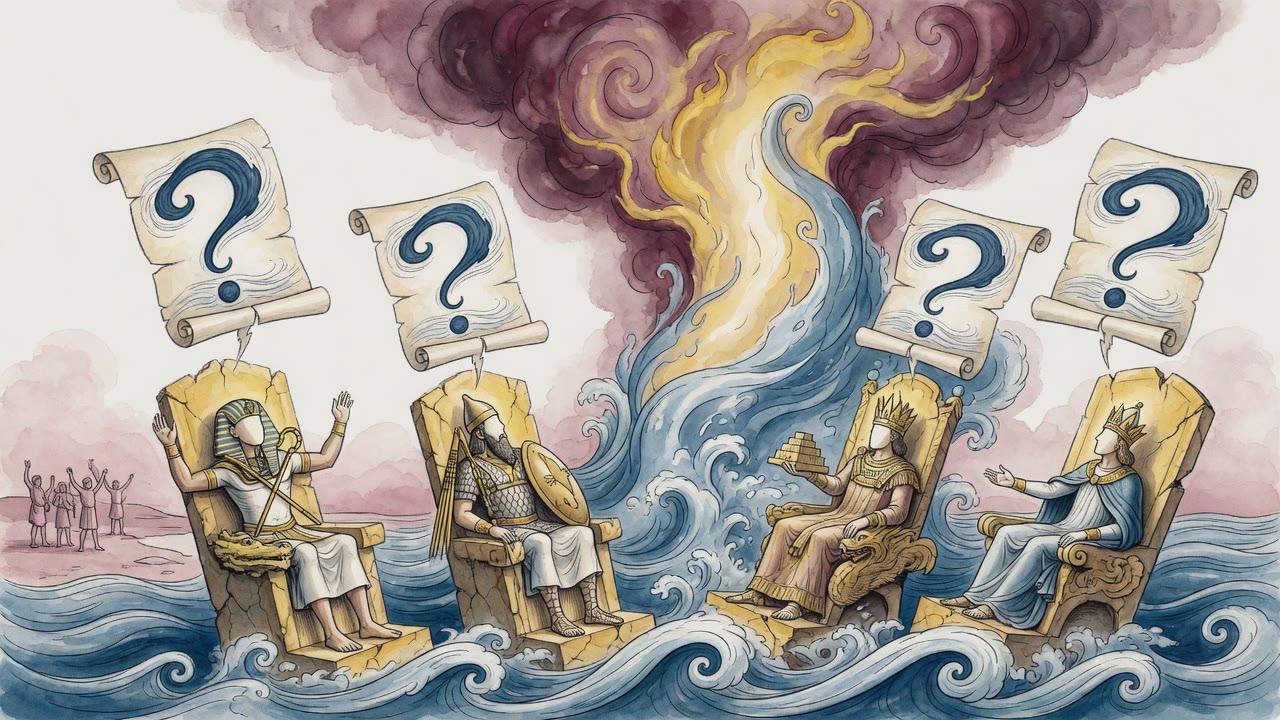
Zion had joined them. While she cried abandonment, God was already moving kingdoms aside. Babylon had fallen. Media had fallen. Greece had been removed. The fourth kingdom was being prepared for its own passing. Work was happening behind the curtain while the ruined city shouted at the silence.

\n\n

Then Zion pressed harder. "A man who takes a second wife still remembers the first," she said. "Have You done less than a man of flesh and blood?"

\n\n

God answered with the sky. Twelve constellations had been made opposite the twelve tribes. For each constellation, thirty troops. For each troop, thirty routes. For each route, thirty legions. For each legion, thirty camps. For each camp, thirty squares. In each square, three hundred and sixty-five stars, like the days of the solar year.

\n\n

"All of them," God said, "were made for you."

\n\n

The Calf Was Forgotten, Sinai Was Not

\n\n

The argument narrowed until it touched the most dangerous memory. God spoke of a nursing child and a mother's body, of offerings and firstborns that would not be forgotten. Zion seized the word.

\n\n

"If there is no forgetting before Your holy Throne," she asked, "then perhaps You will not forget the Golden Calf."

\n\n

"That," God said, "I will forget."

\n\n

Zion did not stop. "If there is forgetting before Your holy Throne, then perhaps You will forget Sinai too."

\n\n

"That," God said, "I will not forget."

\n\n

The two unanswered wounds finally received their shape. Abandonment was not the last word. Forgetting could become mercy when sin needed burial, and memory could become covenant when Sinai needed to stand. Jeremiah had asked four questions in the ruins. Zion forced the last two all the way to the Throne.

\n\n

← All myths

From the tradition

Sources

2 sources

The texts this telling draws on, in full. Open a card to read inline, or expand it for a wider, quieter read.

Yalkut Shimoni on Nach 470:1Yalkut Shimoni on Nach

The story begins with Jeremiah. As he's parting ways with God, he asks four weighty questions: despising, rejection, abandonment, and forgetting. He only gets answers to two. Imagine the prophet, witnessing the devastation of Jerusalem, bewildered and seeking answers. "Is it possible," he wonders, "that the Holy One will return to them after this?" He's like a friend pleading with a king on behalf of a beloved but disgraced queen. "If you intend to return to her," Jeremiah asks, "then treat her like a wife. If not, then divorce her!" He's essentially asking: "Have You truly rejected Judah? Has Your soul despised Zion?"

God's response is indirect. He tells Jeremiah to consult Moses, the teacher of all prophets. And what does Moses say? "But despite all this, while they are in the land of their enemies, I will not despise them nor will I reject them.." (Leviticus 26:44). So, Jeremiah gets answers about despising and rejection, but what about abandonment and forgetting?

She sees that Jeremiah's questions about despising and rejection were answered, but the questions about abandonment and forgetting were not. So, she cries out, "The Lord has forsaken me, and the Lord has forgotten me!" (Isaiah 49:14). But here's the twist: the verse repeats "The Lord." Why? Zion argues that even God's attributes of mercy, the very essence of "Lord, Lord, benevolent God, Who is compassionate and gracious." (Exodus 34:6), have abandoned her. Ouch. That's a deep wound.

The Yalkut Shimoni offers several interpretations of Zion's lament. One suggests she feels like the forgotten gleanings left for the poor (Leviticus 23:22), cast aside and overlooked. Another sees her burdened with punishments, made "worth abandoning."

But God isn't having it. He rebukes Zion, calling her a "complainer, the son of a complainer!" He reminds her that even Adam complained about the woman He provided, and even Joseph, destined to be king of Egypt, questioned God's plan. Even the Israelites in the wilderness, despite being given heavenly food, grumbled about "rotten bread" (Numbers 21:5).

God points out that He's already removed powerful empires like Babylon, Maday (the Medes), and Greece. He was even preparing to remove the fourth kingdom (understood to be Rome) when Zion started complaining. It’s as if God is saying, "I'm working on it! Have a little faith!"

The text offers another layer: Zion accuses God of forgetting the praises her children sang at the sea after the Exodus: "The Eternal's strength.." (Exodus 15:2). It's a poignant reminder of past glories and present suffering.

The passage then presents a powerful analogy from R’ Elazar. Zion cries out: Even a man who takes a second wife remembers his first wife, but You have forgotten me! The Holy One replies to her – my daughter, I created twelve constellations in the firmament opposite the twelve tribes and for each constellation I created thirty troops, and for each troop I created thirty routes, and on each route I created thirty legions, and for each legion I created thirty camps, and for each camp I created thirty squares, and for each square I created three hundred and sixty-five stars like the number of the days of the solar calendar. All of these I created only for you, and you say ‘He has forgotten me, He has abandoned me?!’

Finally, God uses the most powerful image of all: "Shall a woman forget her sucking child (ulah).." (Isaiah 49:15)? He vows never to forget the sacrifices (olot) and firstborns offered to Him. It's a promise of unwavering love and remembrance.

But Zion, still wrestling with her pain, pushes further. What about the Golden Calf? Will You forget that sin? God says He will. And then, she asks, what about the events at Mount Sinai? Will You forget the good things we did there? To which God responds, "I will not forget you."

So, what does this all mean? It seems to me that the Yalkut Shimoni isn't just about historical events. It's a deeply human exploration of faith, doubt, and the enduring, often turbulent, relationship between God and His people. It reminds us that even in our darkest moments, when we feel utterly forgotten, we are still seen, still loved, and still remembered. And maybe, just maybe, that's enough to keep us going.

Full source
Legends of the Jews 10:42Legends of the Jews

It’s a universal feeling, and it echoes through the ages, even finding its voice in the ancient stories of our people.

The scene: The Jewish people are in exile, far from their beloved Jerusalem. Jeremiah, the prophet, prepares to return to Eretz Yisrael, the Land of Israel. But as he gets ready to leave, the captives are overcome with sorrow. "O Father Jeremiah, wilt thou, too, abandon us?" they cry out. Can you feel their desperation?

Jeremiah's response, as recorded in Legends of the Jews, is heartbreaking. "I call heaven and earth to witness," he says, "had you wept but once in Zion, ye had not been driven out." Just one moment of genuine remorse, of acknowledging God in their own land, might have changed everything. One tear shed in the right place at the right time could have averted a tragedy of epic proportions. It makes you wonder about the power of repentance, of teshuvah, and how even a small act of contrition can alter the course of destiny.

The story doesn’t end there. The journey back to Palestine for Jeremiah was a harrowing one. Ginzberg, in Legends of the Jews, paints a vivid picture. The land is littered with corpses, a grim reminder of the devastation that had befallen the nation. And what does Jeremiah do? He gathers up the severed fingers scattered across the landscape. Can you picture that scene?

He gathers them, presses them to his heart, kisses them, and wraps them in his mantle. He laments, "Did I not tell you, my children, did I not say to you, 'Give glory to the Lord your God, before He cause darkness, and before your feet stumble upon the dark mountains'?" This is a quote from (Jeremiah 13:16), by the way.

What a powerful image. These fingers, perhaps symbolic of actions not taken or words not spoken, are now receiving the love and respect they were denied in life. Jeremiah's actions are a evidence of his unwavering compassion, even in the face of immense loss and suffering. It is also a powerful reminder of our own mortality and the importance of living a life dedicated to God and good deeds.

The story leaves us with a profound question: What are we holding onto that we should be cherishing? What warnings are we ignoring? And what can we do, even now, to make amends and create a brighter future? Maybe, just maybe, a single tear shed today can prevent a future tragedy.

Full source