Cain Built a City and Prayed His Way Out of Exile
Cain answered the verdict with a verse. You carry the whole world, he said, and you cannot carry me? God took half the sentence off.
Table of Contents
 Click for full size
The Argument After the Killing
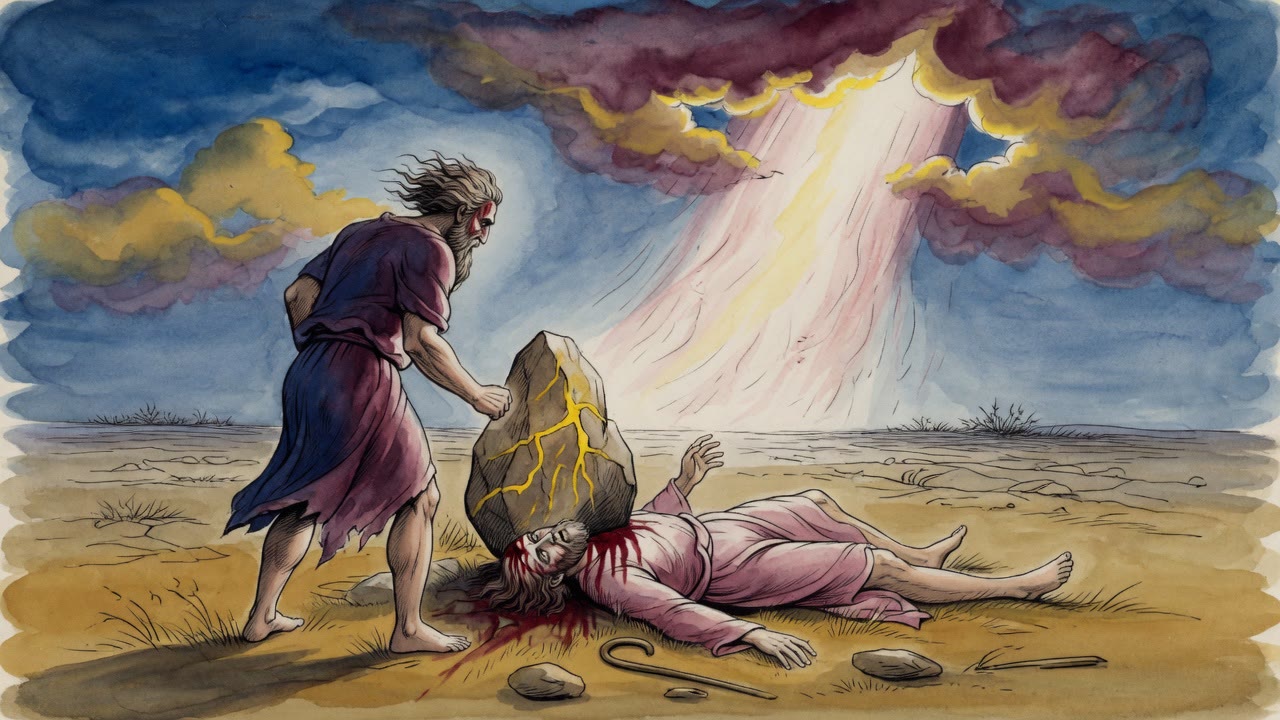
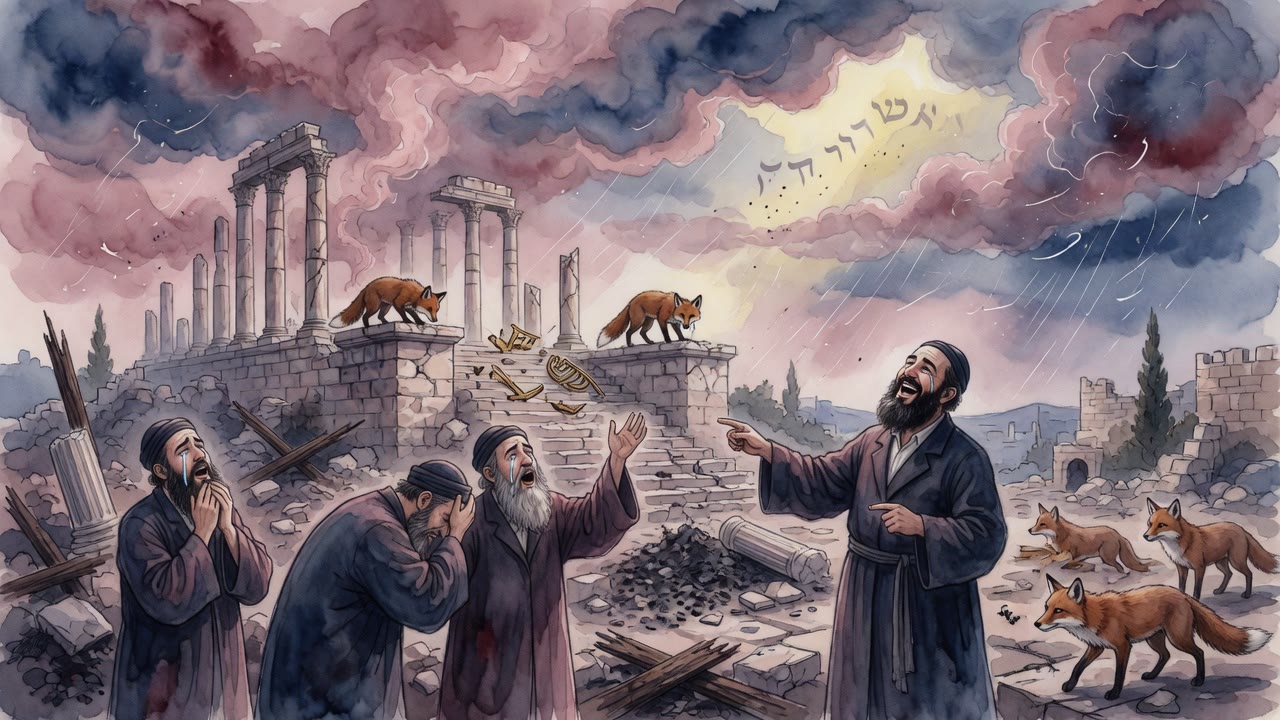
After God pronounced the sentence. Cain would be a wanderer and a fugitive, driven from the ground that had drunk his brother's blood. Cain did not accept it. He responded to the verdict with a verse. He said: Master of the universe, you bear the entire world, and you cannot bear me? You yourself wrote that you are a God who bears iniquity and overlooks transgression. If that is what you are, bear mine.
Devarim Rabbah, one of the Midrash Rabbah collections shaped in the early medieval period, reads this not as defiance but as prayer. Cain was the first human being to use Torah language as a lever against its own author. He found a verse that described God's character. Micah 7:18, which calls God one who bears iniquity, and turned it into an argument for his own case. The audacity was not lost on the rabbis. They recorded it precisely because it worked. God withheld half the decree. The restless wandering would be reduced. Something was removed from the sentence because Cain cited it back at God.
The First Petitioner
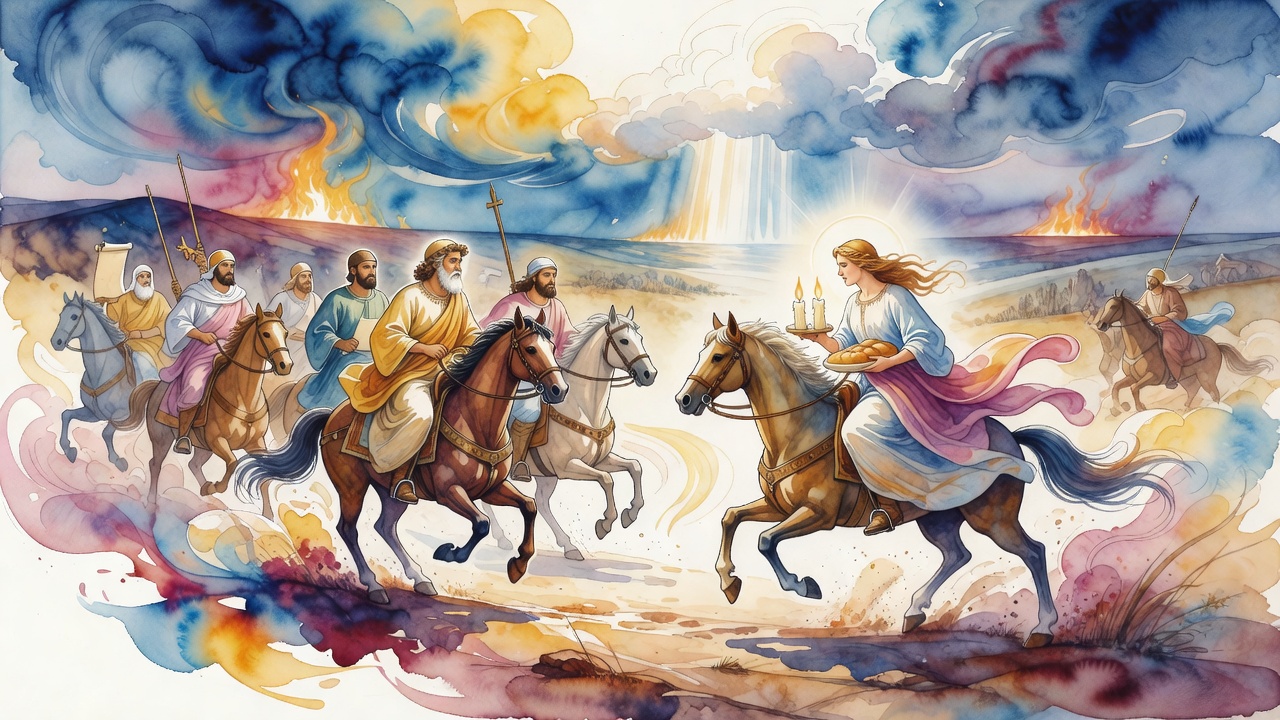
The rabbis connected Cain's prayer to the institution of the Mincha, the afternoon prayer. Devarim Rabbah 8 discusses the halakhic question of what happens if a person misses the proper time for prayer, how late can Shacharit be recited, how late Mincha, what is the outer limit for each service. This legal discussion is prefaced by Cain's petition, which the text treats as the origin point of a kind of prayer. Cain's argument before God was the first time a human being approached the divine after having committed an act requiring appeal. He did not build an altar. He did not bring an animal. He used words and a verse and the bare fact of his own desperation. Out of that came a ruling that his punishment would be reduced.
The association of this moment with Mincha, the prayer that falls between the completed day and the approaching night, is not accidental. Mincha is the prayer of the middle moment, offered after the full heat of the day, before the darkness comes. Cain stood in the middle of his own catastrophe and made a case.
The City and the Son's Name
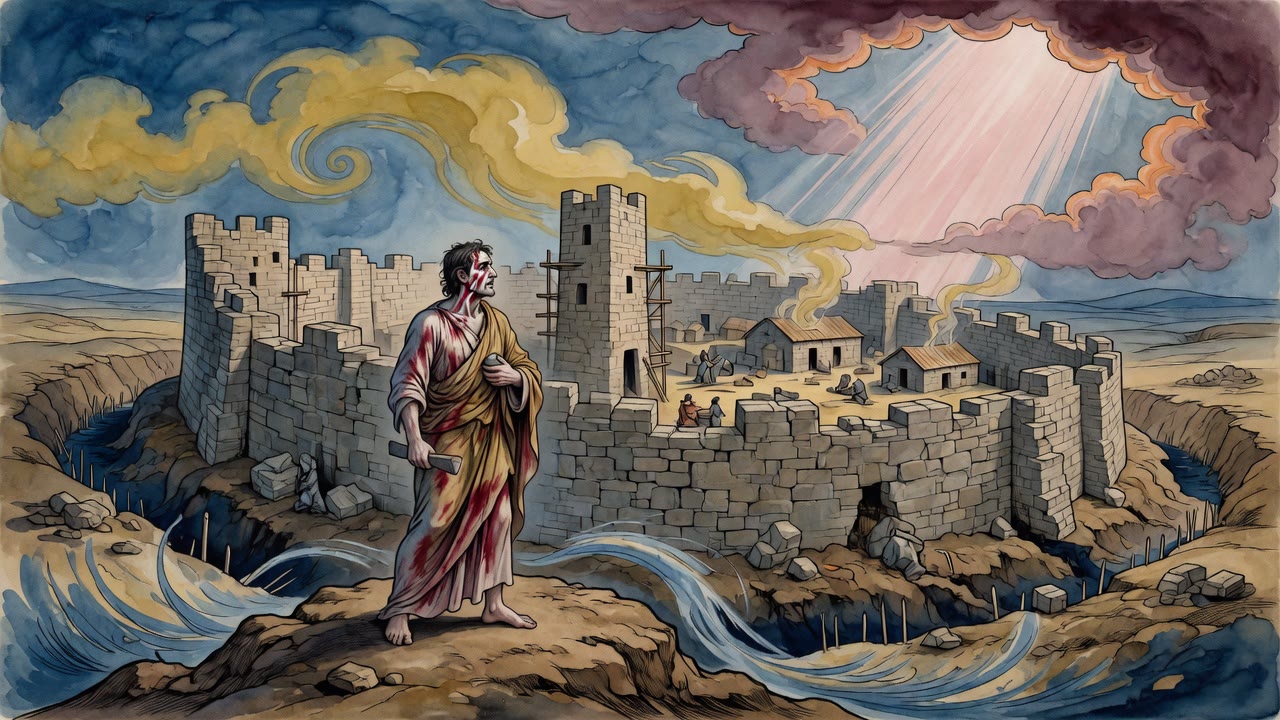
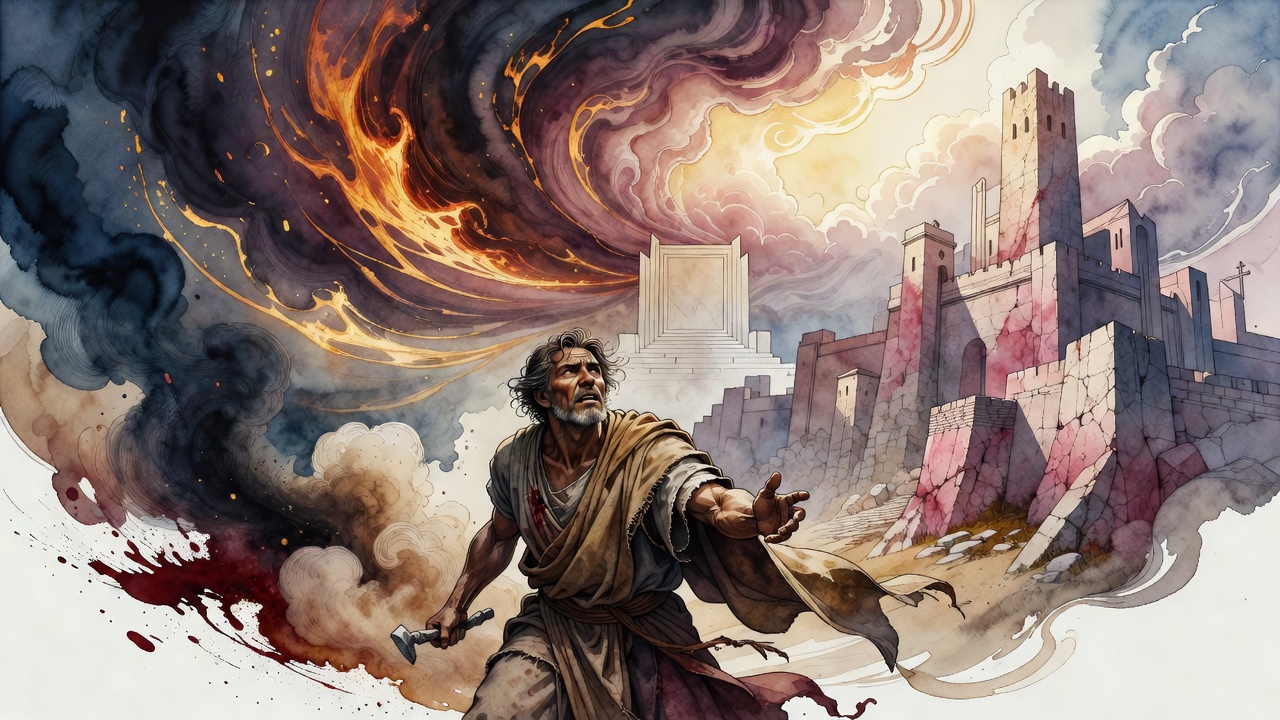
After the sentence was reduced, Cain went east of Eden, settled in the land of Nod, and built a city. He named it Hanokh, after his son. Bereshit Rabbah, the fifth-century CE Palestinian midrash on Genesis, connects this act to Psalms 49:12: "Their houses will endure in their midst forever, their dwelling places from generation to generation, they called lands by their names." The Psalmist says this with contempt. The wicked build cities and name them after their children because they believe that material permanence can substitute for actual immortality. If the city outlasts the man, the man has not entirely died.
Josephus, writing in the first century CE, adds external texture to what the city represented. Cain did not just build shelter. He invented weights and measures, drew property lines, set up the infrastructure of accumulation. Every system that makes hoarding possible, Josephus says, traces back to Cain. The first murderer was the first civilization-builder, and that pairing is not incidental. The same mind that could not give properly to God went on to build the systems that would allow humans to take from each other systematically.
Three Men of the Soil
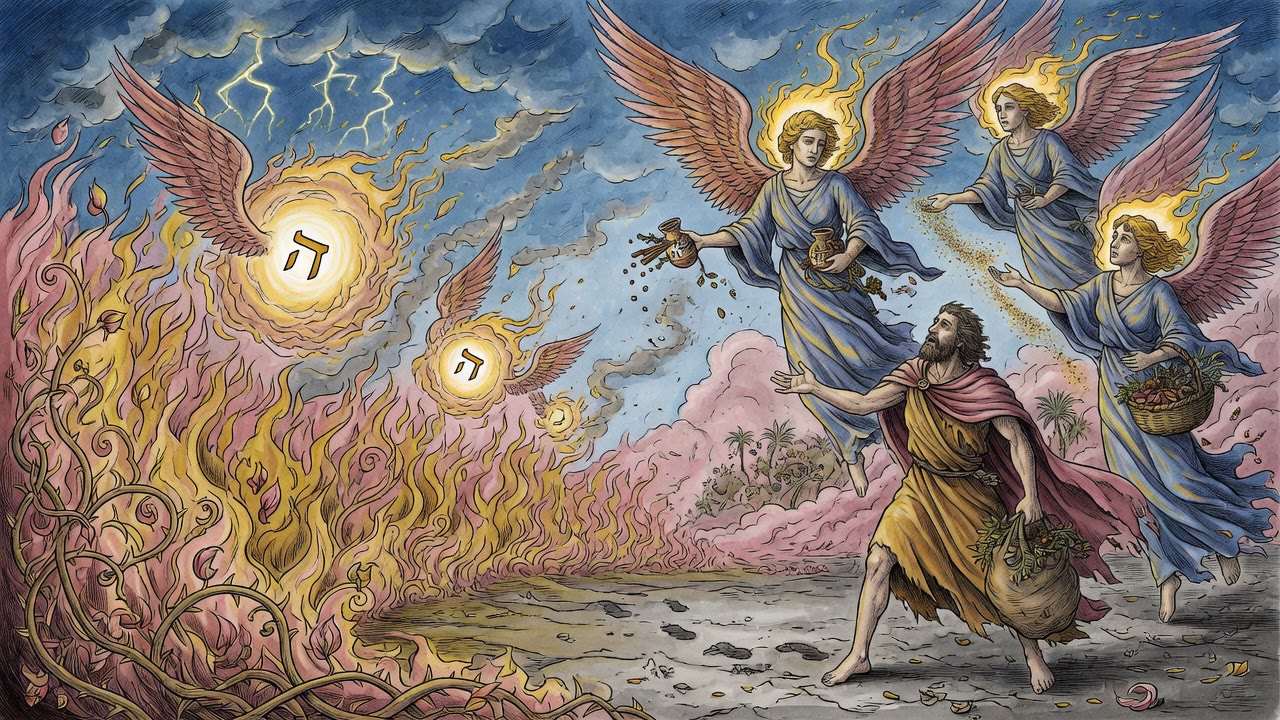
Bereshit Rabbah draws a broader category around Cain's fall. Three people in all of Torah are described as devoted to the soil, and nothing constructive came from any of them. Cain was a tiller of the soil and killed his brother. Noah became a man of the soil after the flood and ended drunk in his tent. Uzziah, king of Judah, was a lover of the soil and was struck with leprosy when he entered the Temple with a censer. Three men, three catastrophes, one pattern. The earth asks something from the people who love it most, and what it asks, they cannot give without losing themselves first.
← All myths