Jacob Saw Four Empires Rise and Fall on a Single Ladder
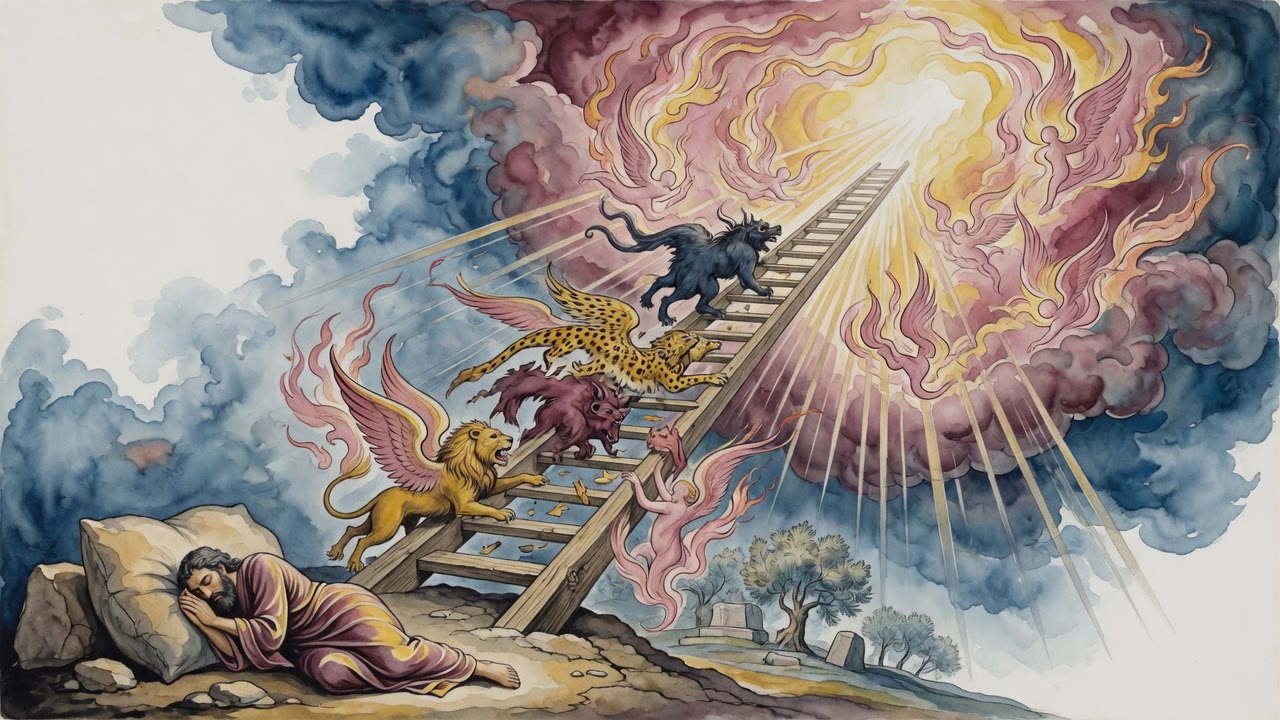
Each empire climbed the ladder and descended. The fourth climbed so high Jacob could no longer see the top and terror seized him until God spoke.
Table of Contents
 Click for full size
The Terror at the Top
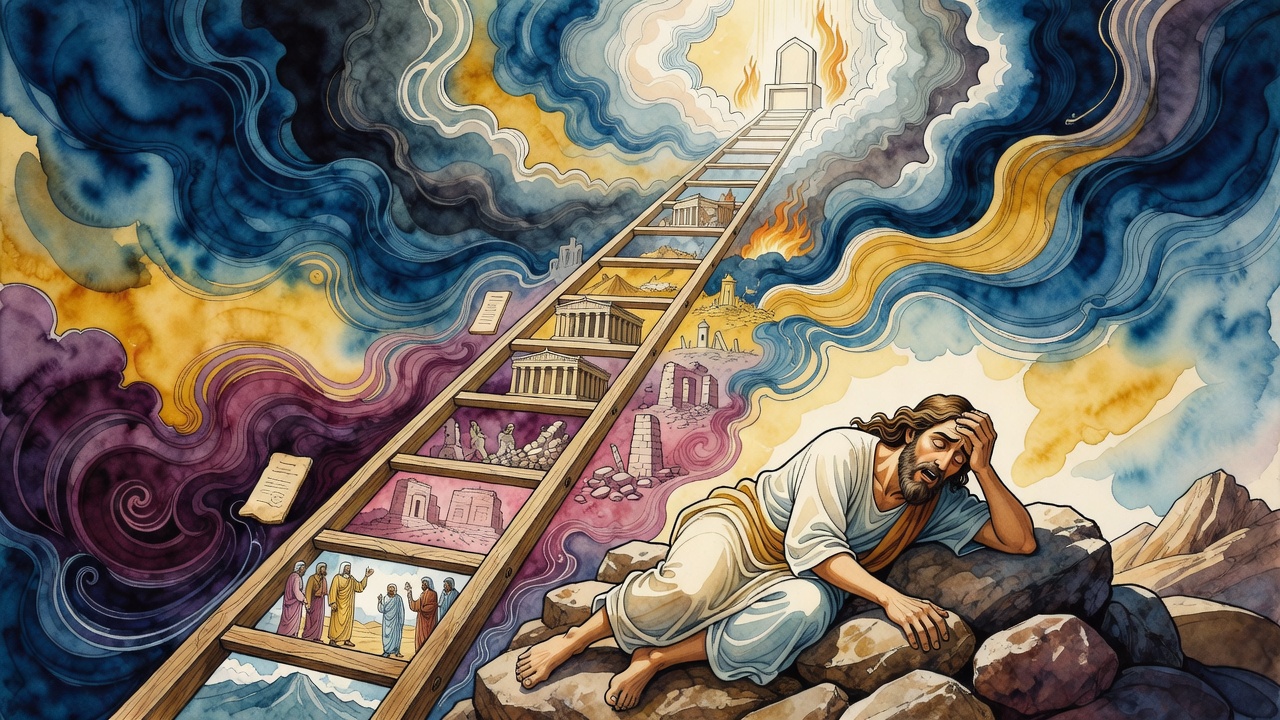
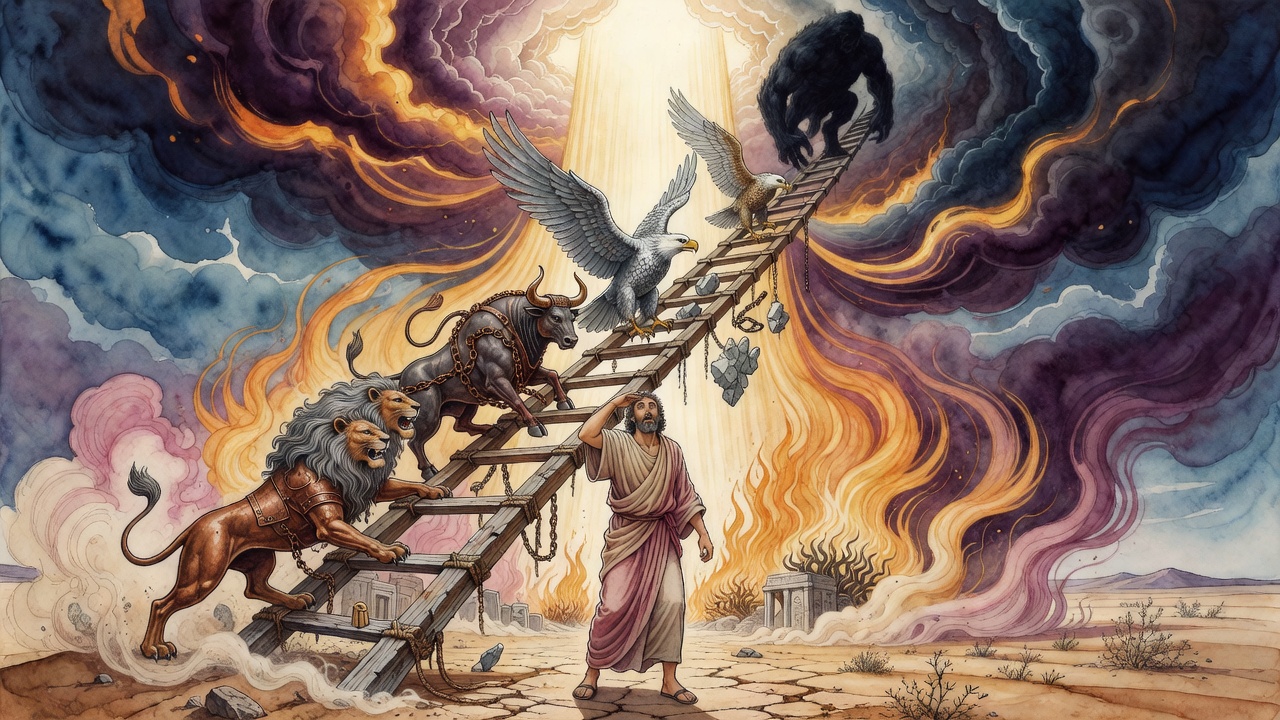
Jacob was watching the ladder when the fourth empire began to climb. Babylon had ascended seventy rungs and descended. Persia had climbed fifty-two and descended. Greece had climbed one hundred rungs and descended. Each empire had its count, its appointed height, its moment of descent. Jacob watched them go up and come down and understood the pattern. Then the fourth empire began.
It climbed past one hundred. Past two hundred. It kept climbing. Jacob strained to see the top and could not find it. The angel of the fourth empire went higher and higher, and the ladder stretched further than Jacob's eyes could follow, and the terror seized him: this one would not come down. This one had no appointed limit. This one would climb forever.
Then God spoke from above the ladder: Do not fear, Jacob. Even if this empire climbs to sit beside me, I will bring it down from there. Jacob relaxed. But the rabbis who recorded this moment in Bereshit Rabbah, the great midrashic compilation of the fifth century, recorded the terror as well as the reassurance. The terror was their own. They were not describing the past. They were describing where their own communities were standing, at the base of the ladder, watching something monstrous climb without stopping.
What the Ladder Showed About Sinai and the Temple
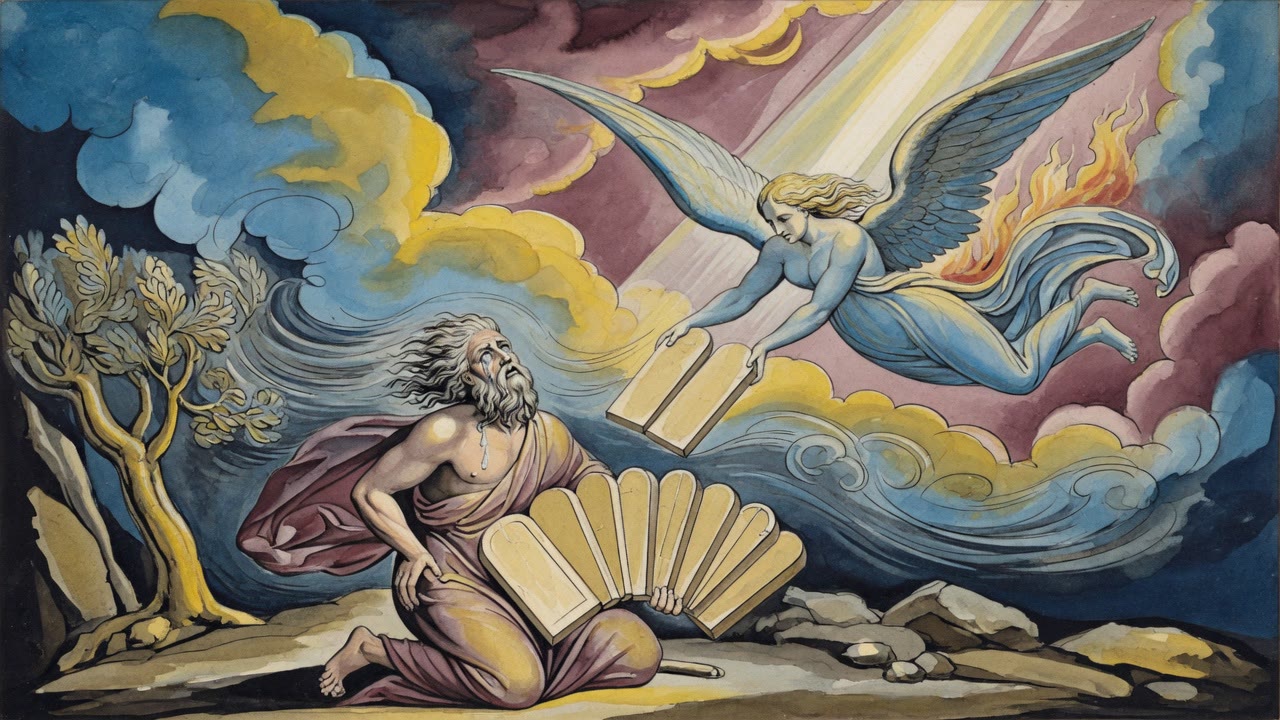
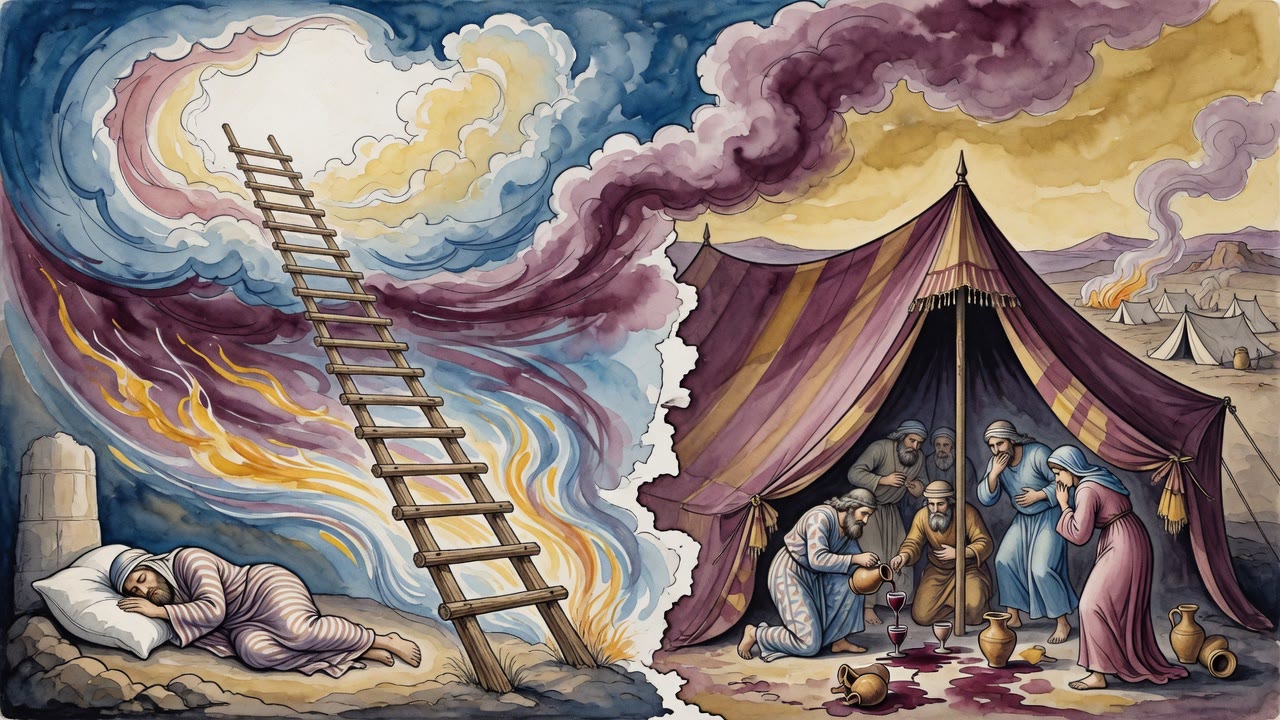
The vision at Bethel did not end with the four empires. The tradition preserves a second layer: Jacob's dream also showed him Sinai, the moment Moses would receive the Torah, and the Temple, the house his descendants would build and lose. He saw the whole arc of sacred history compressed into a single night of sleep on a stone that turned out to be the Foundation Stone of the world.
This is the reading preserved in multiple midrashic traditions: the ladder at Bethel was not primarily about empires. It was about God's continuous engagement with Israel across all the upheavals that empires cause. The Torah was given at Sinai and the Temple was built in Jerusalem and both were preceded by this vision, this assurance given to a man sleeping on the ground with no army and no city and no prophecy yet delivered, just the word of a God who described himself as the God of Abraham and Isaac and promised to bring Jacob back to this ground.
The Messianic Figure in the Dream
The midrashic reading of Jacob's dream extends further, to the figure who will appear at the end of the fourth empire's descent. The text is careful here: Jacob asked God to show him the Messiah and God showed him the ladder. The ladder is not a detour from the messianic question. It is the answer to it. The Messiah will come after the fourth empire descends. The descent is not optional. It is part of the structure.
Jacob's blessing of Dan records a moment the tradition found significant: Jacob blessed Dan and suddenly interrupted himself with an anguished cry, For your salvation I wait, O God. The rabbis read this as Jacob mistaking Samson for the Messiah when he foresaw Dan's champion, then correcting himself when he understood that Samson would be a deliverer, not the deliverer. The messianic hope ran through every blessing Jacob gave. He was looking for the one who would stand at the top of the ladder where only God could sit.
The Prophecy That Named Judah
When Jacob came to Judah's blessing, something different happened. The scepter shall not depart from Judah, nor the ruler's staff from between his feet, until Shiloh comes, and to him shall be the obedience of peoples. The rabbis spent centuries arguing about Shiloh. What the name meant. Who it referred to. Whether it was a place or a title or a description of the one who was coming. But the structure was clear: the royal line ran through Judah, and the royal line had a destination.
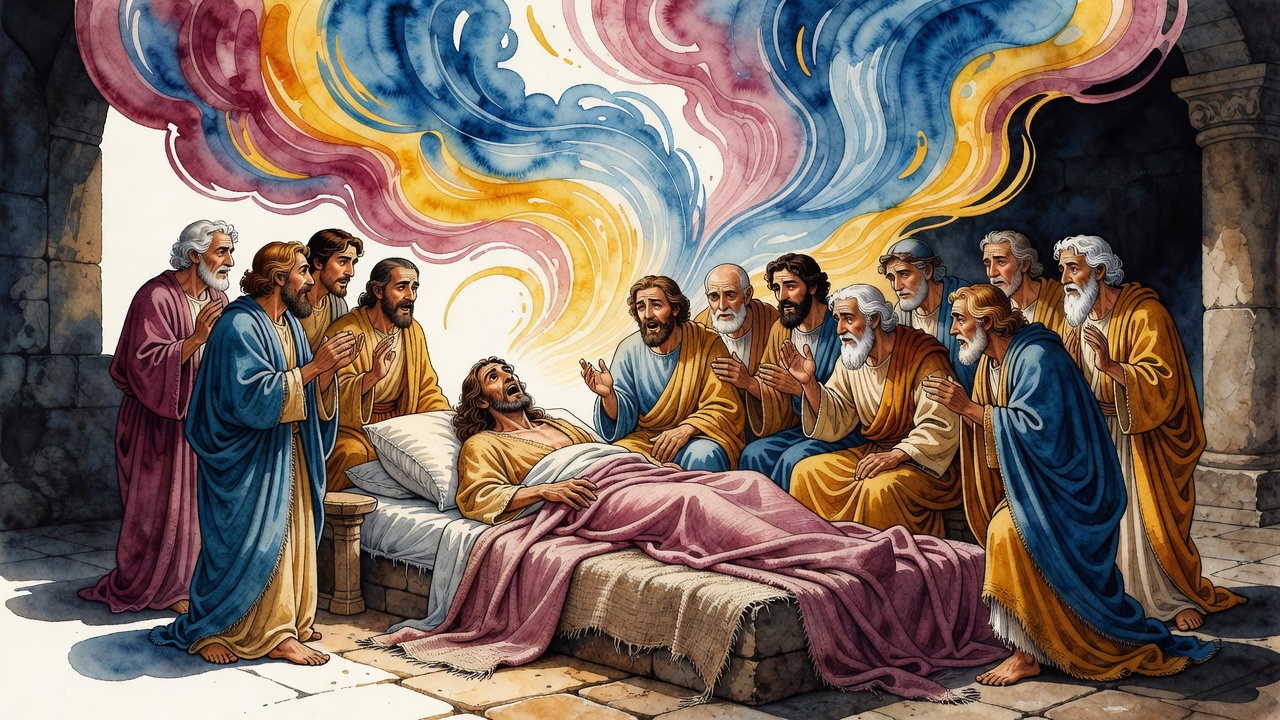
Jacob had stood at the base of that ladder. He had watched four empires climb and descend. He had heard the voice from above and been told not to fear. Now, blessing his sons on his deathbed, he placed the scepter in Judah's hands and pointed it toward a future he could not name. The ladder had shown him the shape of history. The blessing named the lineage that would carry it to its end.
← All myths