God Kissed Jacob's Engraved Face, and Adam Gave David Seventy Years
In Adam's vision of the generations, one soul had no years beside its name. Adam had a thousand of his own. He died at nine hundred and thirty.
Table of Contents
 Click for full size
The Face That Would Not Leave the Throne
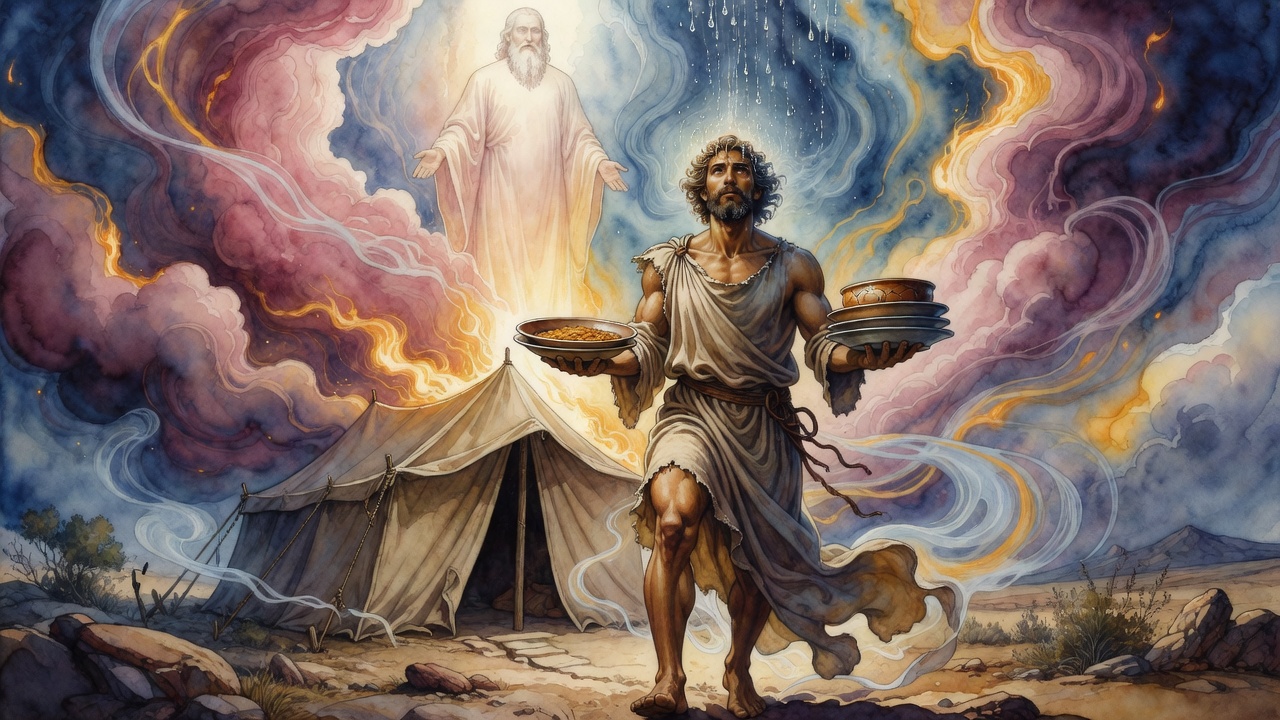
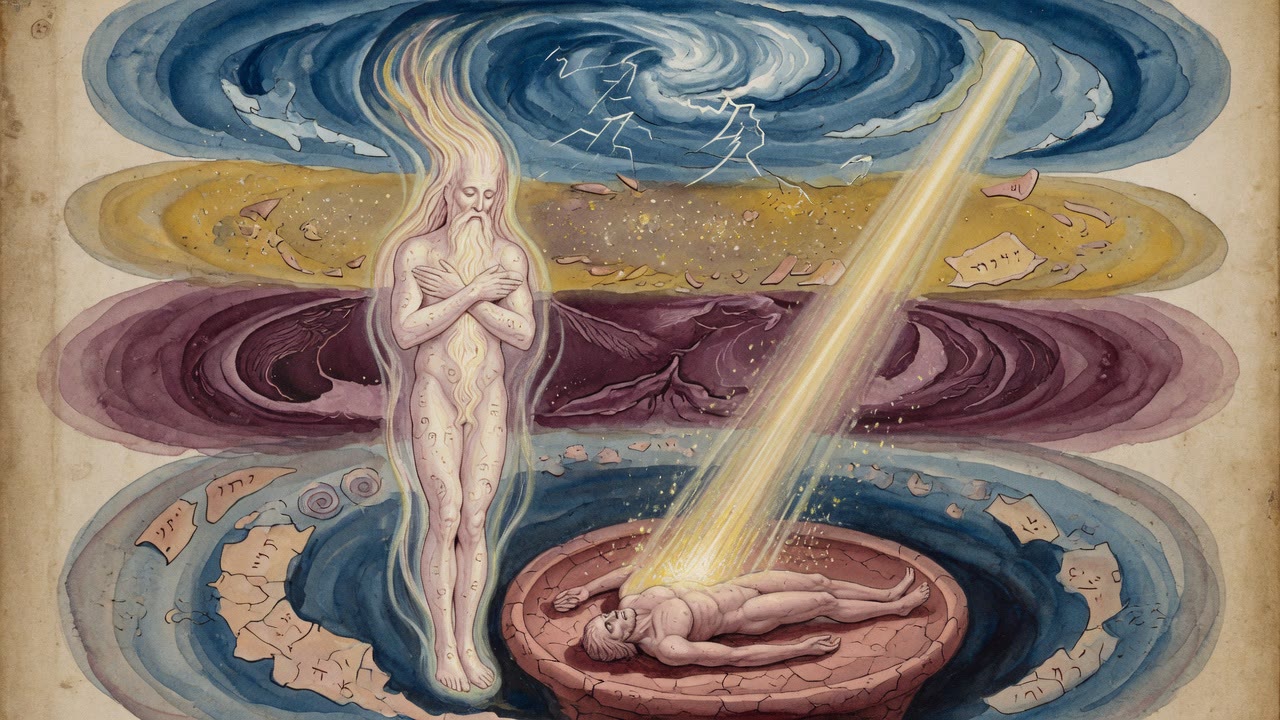
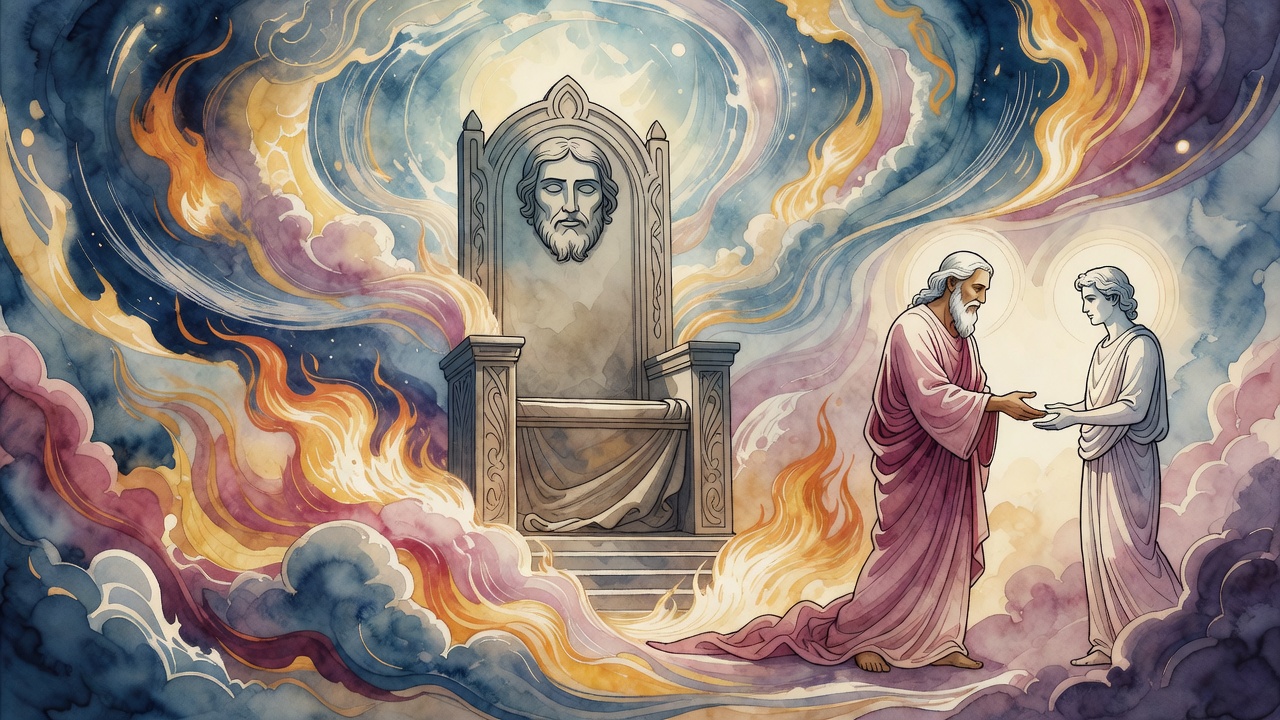
When Jacob slept at Bethel, his head on a stone, dreaming of a ladder with angels ascending and descending, something else was happening above that ladder. The kabbalistic tradition preserves a teaching that in that same night, God looked at Jacob's face sleeping on the ground and made a copy. He engraved Jacob's image into the throne of glory itself, cut it into the celestial seat that no human eye had ever seen clearly, the throne from which all creation was governed.
Why Jacob's face in particular? The tradition's answer is that Jacob was Israel, the nation in concentrated form. His twelve sons were the twelve tribes. His body held the future of the covenant people. When the four living creatures before the divine throne call out Holy, holy, holy, God bows to the engraved image of the patriarch. He clasps it and kisses it three times, once for each utterance of the word holy. The face of a sleeping shepherd carried into the highest heaven and pressed into the architecture of the divine, so that every time the angelic liturgy rises, God touches the face of Israel's ancestor and is moved to mercy for Israel's descendants.
Why the Throne Needed Jacob's Face
The purpose was specific. When Israel is in exile, when the people of Jacob are scattered and oppressed and the world shows no sign that the covenant holds, God looks at the engraved face and does not forget. The image is not decorative. It functions as an argument embedded in the architecture of the heavens: whatever happens in history, whatever the nations do to Israel, the face of the patriarch is cut into the seat of divine power, and that presence guarantees that the forgetting will not happen.
The Zohar, which develops this image most fully, describes the bowing as something God does willingly, not from compulsion but from love. He bows toward the image of Jacob the way a person bows toward someone they have not stopped loving despite long separation. The exile is the separation. The engraved face is the proof that the love continues.
Adam's Vision Before the Expulsion
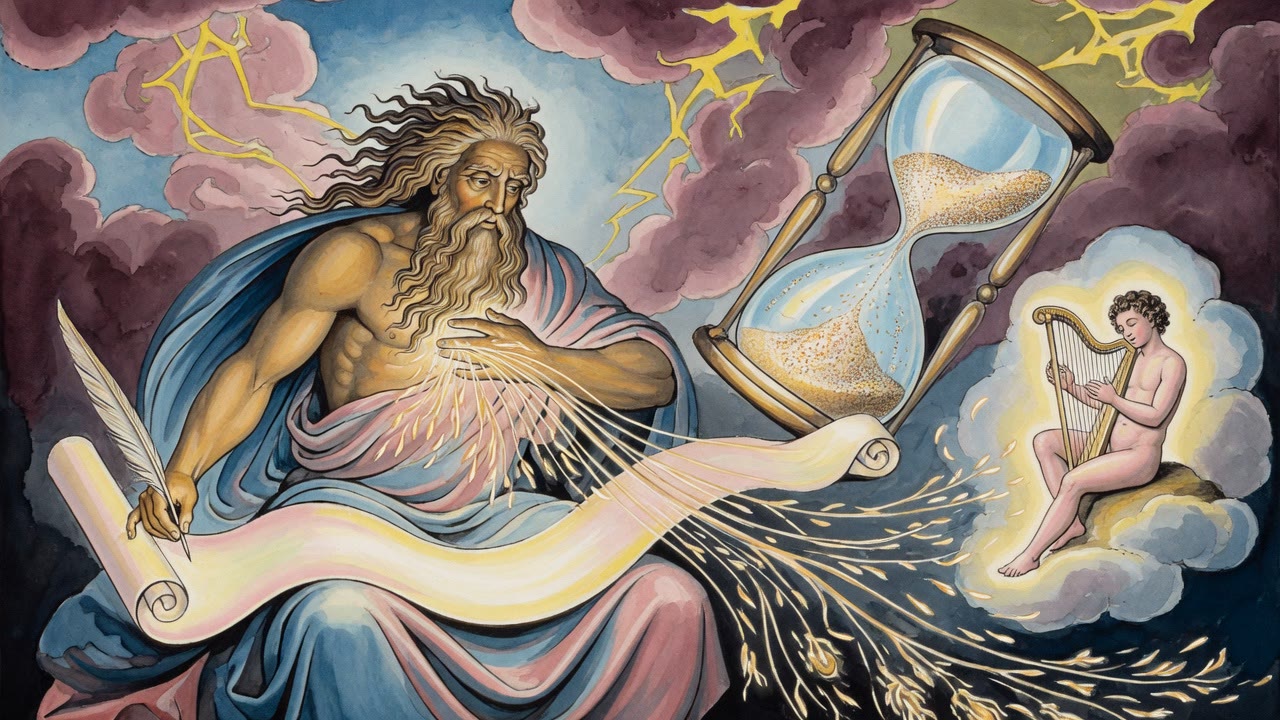
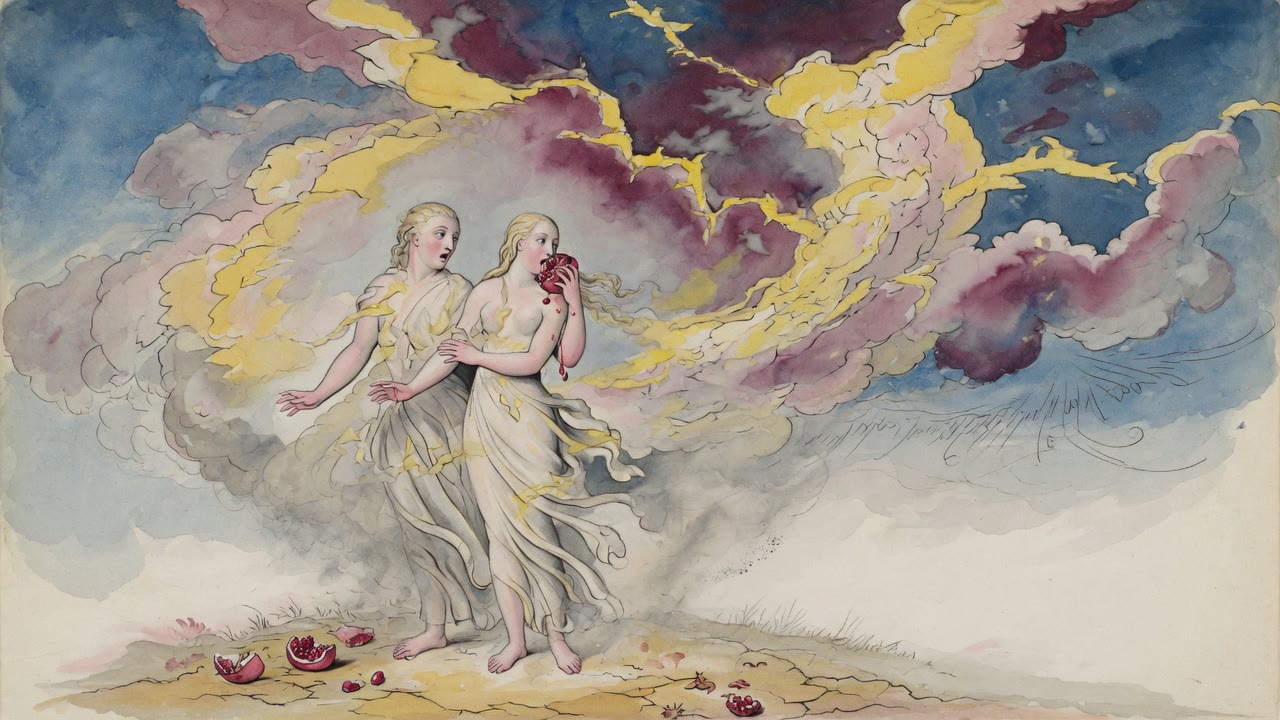
The second tradition concerns the birth of David. Before Adam was expelled from the Garden, God showed him a vision of every generation that would come from him, every soul that would live in the future. Adam saw the chain of generations unrolling forward through time, saw each soul allocated its years, saw the names and lives and deaths of his descendants.
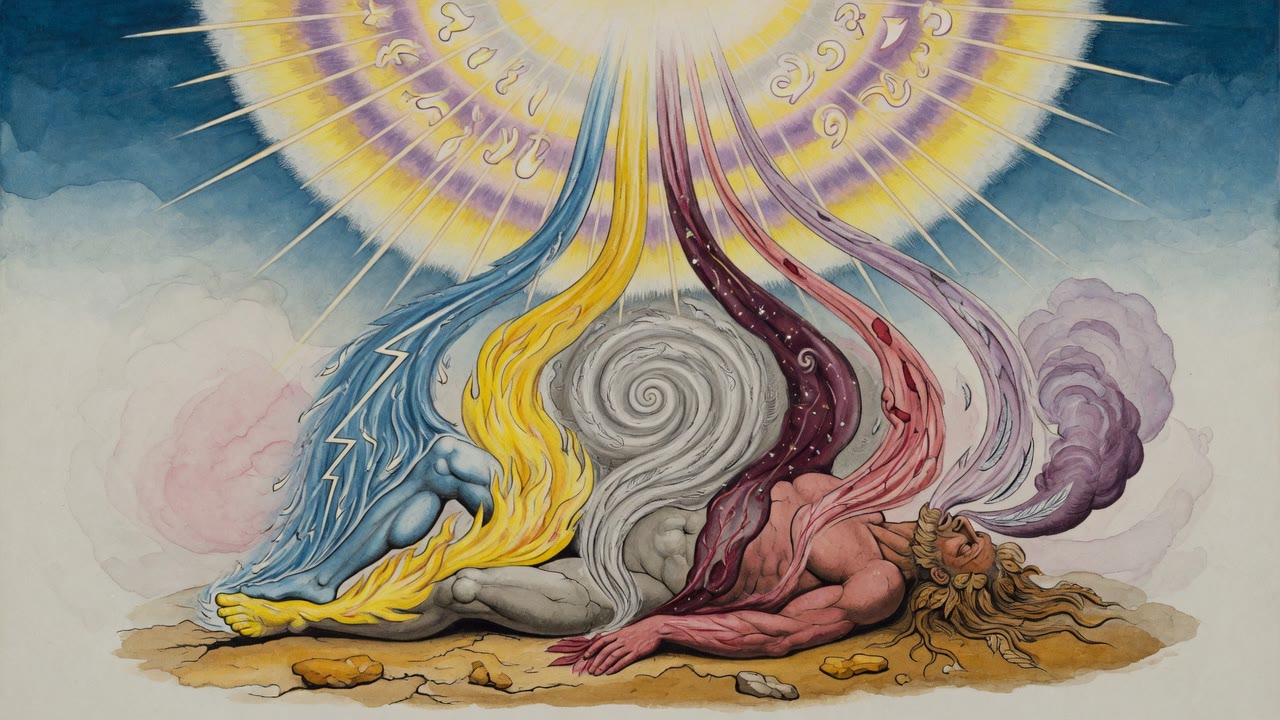
Then he saw David. In the vision, David had no years. He was a soul without an allocation, a presence without a life span, a name written in the celestial record with nothing next to it. Adam asked God: why does this soul have nothing? God said: that is how I made it. Adam said: how many years do I have? God said: a thousand. Adam said: I give seventy of my years to this soul.
The transaction was recorded. Adam took a vow. When Adam died at age nine hundred and thirty, seventy years short of the thousand he had been allocated, it was because he had already given those years away before the Garden's gate had closed behind him. And David lived to seventy, exactly the years that Adam had transferred, the exact span of a life built from borrowed time.
The Seven Shepherds and the Bond Between Them
The tradition of the seven shepherds names the figures who stand at the center of Israel's history as intercessors and protectors: Adam, Seth, Methuselah, Abraham, Jacob, Moses, David. They are connected not only by lineage but by what was transferred between them. Adam gave years to David. Jacob's face guards God's throne. Moses carried the Torah that David would spend his life singing. The seven are one body of covenant across the generations, each one bearing something for the others, each one's sacrifice and gift woven into the fabric of what comes after.
The connection between Jacob's face on the throne and David's borrowed years is not accidental in the tradition's arrangement. Both are about what love preserves across time. The face of the patriarch preserved in heaven as a standing argument for mercy. The life span of the king extended by the generosity of the first man, who had not yet met any of his descendants but already saw this one and could not bear for him to be absent from the world.
← All myths