Parshat Toldot6 min read

Why Rebekah Was Buried at Night With Only Esau to Mourn

Rebekah died with only the disgraced Esau free to walk at the head of her burial, so the family carried her body out at night.

Curated by Arthur · Told by Maggid ·
Table of Contents
  1. Two Fists Inside One Body
  2. The Younger Sent Into the Night
  3. A House Emptied of Men
  4. The Curse They Would Not Risk
  5. Comfort Sent to the Far Country

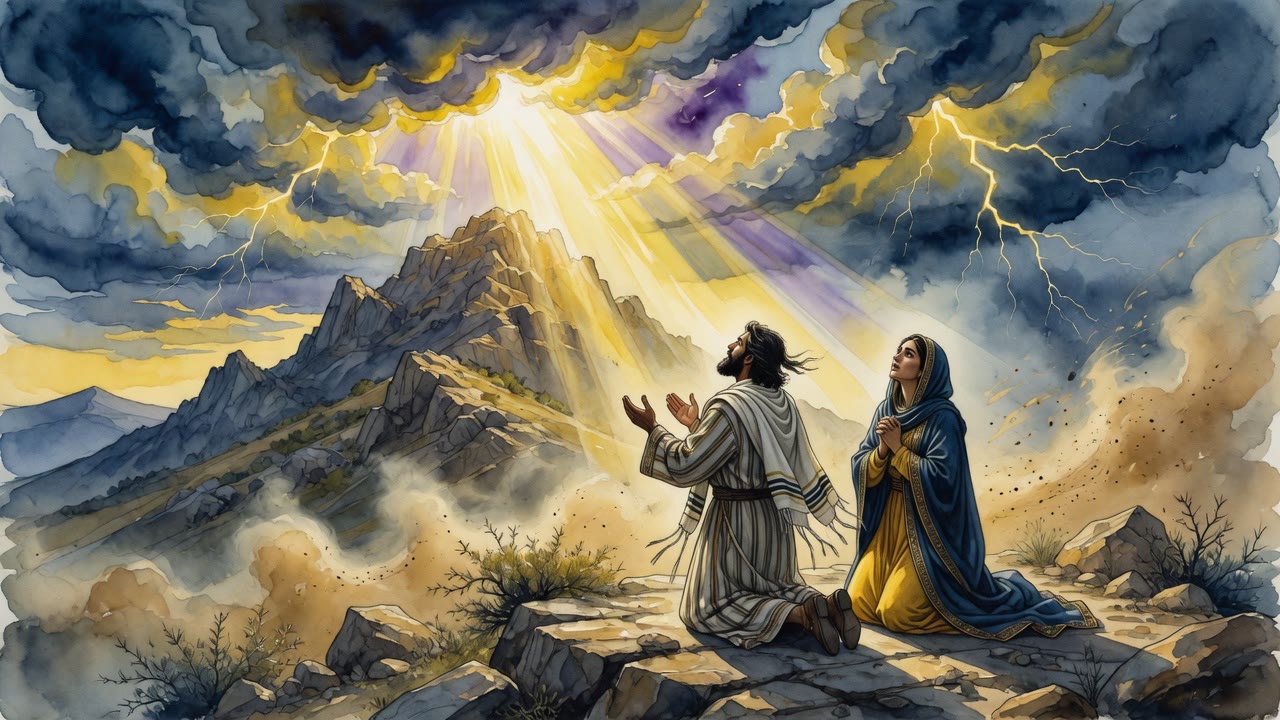
The kicking began before they were born. Rebekah pressed her hands to her own belly and felt it again, two small bodies driving against each other in the dark water inside her, fist against fist, heel against rib. It did not feel like life turning over. It felt like a fight. She bent forward over the loom and could not breathe for a moment, and the words came out of her low and frightened. If this is so, why do I exist? (Genesis 25:22). She went out from the tents to ask, because no woman should have to carry a war.
Two Fists Inside One Body

What she carried were two who could not share a single skin. One of them, the elder, lay with his small hand already stretched out across the womb toward his brother, the fingers open, reaching, as if even there he meant to close them around a throat (Psalm 58:4). They did not curl together for warmth. Each one ran at the other in that closed dark, the elder running to kill, the younger running to kill, neither yielding ground that did not exist. Whatever the one held sacred, the other held cheap. Whatever the one forbade, the other took as permitted. Rebekah did not know all of this. She only knew the bruising, and that the answer she received outside the tents was that two peoples were already at war beneath her own heart, and that the older would serve the younger.

The Younger Sent Into the Night

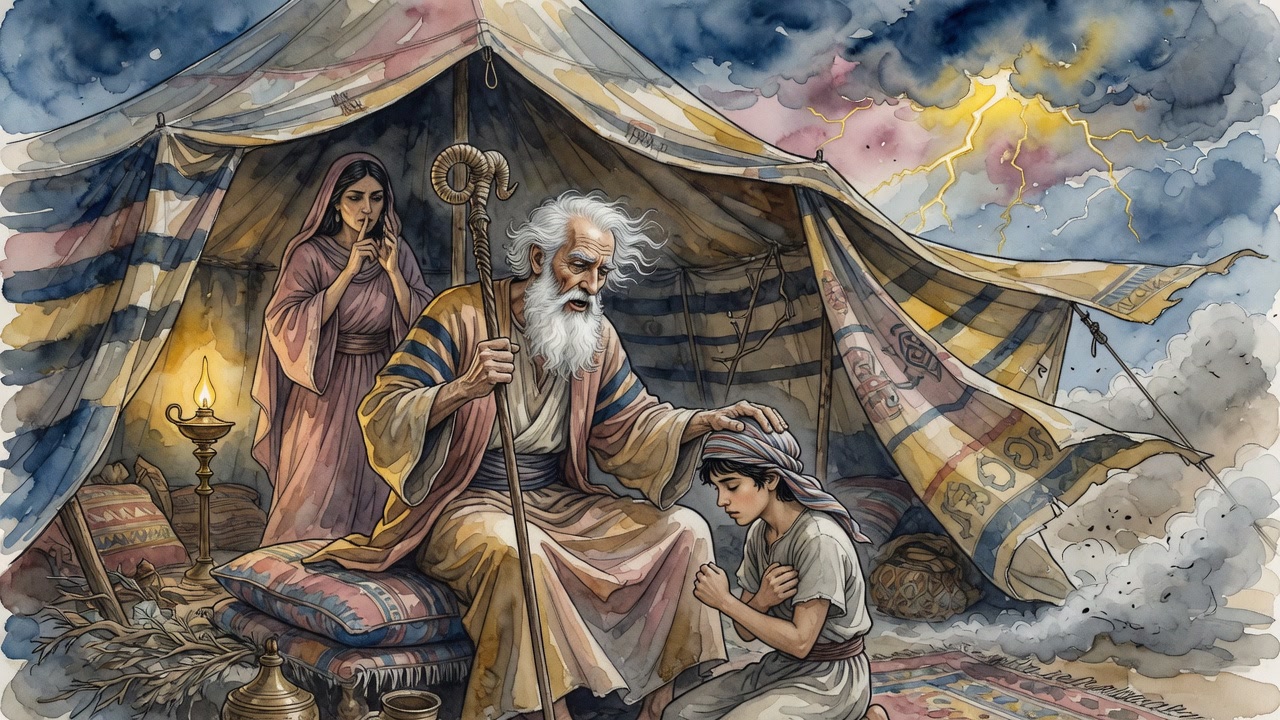
Years made the prophecy flesh. Esau grew red and broad and hungry, a man of the open field, and the birthright slid out of his hands for the price of a bowl of stew. Jacob grew quiet and watchful and kept to the tents. When their father Isaac went blind and called for his elder son to bless him, Rebekah moved fast. She wrapped Jacob's smooth arms in goatskin, she cooked the meal, she pushed her younger son into the dim tent to take the blessing meant for the other. And when Esau came back from the hunt and found the blessing gone, his cry filled the tent, and the murder he had carried since the womb woke up in him fully grown. Rebekah heard it. She sent Jacob running by night toward a far country, to save the boy from his brother's hands. She told herself it would be a few days. She did not see him again.

A House Emptied of Men

The years that followed hollowed out her household one mourner at a time. Abraham had long been laid in the cave at Machpelah. Isaac sat blind and still and could not lead anyone anywhere. Jacob stayed away in the far country, building a life among strangers, kept from home by the very danger his mother had sewn into goatskin. So when Rebekah herself lay down for the last time, the woman who had outmaneuvered an entire household to steer the covenant, there was almost no one left standing to carry her out.

There was Esau. The elder. The passed-over one. The man whose blessing she had taken with her own clever hands and given to his brother. He was near, and he was strong, and by every custom he was the son who should walk at the head of his mother's bier through the streets in full daylight, where the people could see.

The Curse They Would Not Risk

That was the thing the family could not allow. Not Esau's grief, which may have been real enough. What they feared was the crowd. They could picture it too clearly, the procession moving through the town, Esau at the front of it, and some voice rising out of the watching faces, sharp and unforgivable at a graveside. Accursed be the breasts that gave thee suck. A curse aimed at the living son would land on the dead mother. It would follow her into the cave. They could not let her memory take that wound on the last day anyone would speak of her aloud.

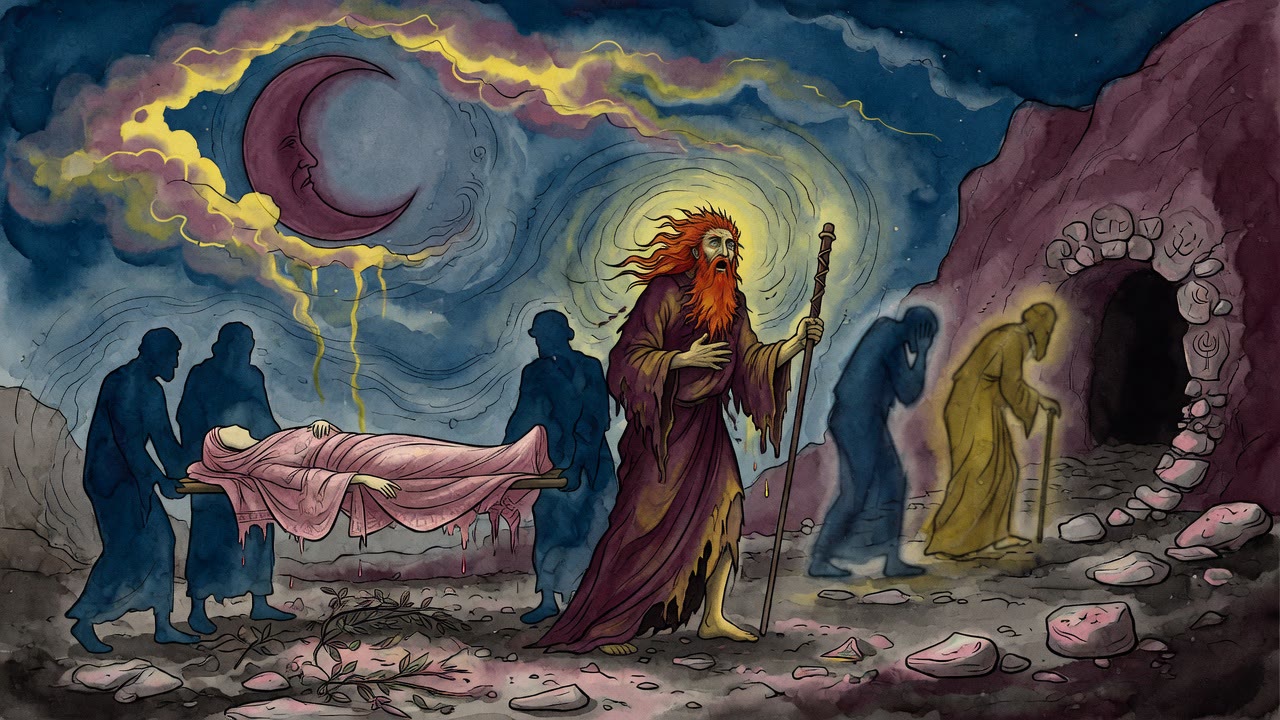
So they did not wait for morning. They lifted her in the dark. No procession through the streets, no crowd, no named tree of weeping such as had marked even the grave of her old nurse Deborah. They carried Rebekah out under cover of night, quietly, by torch and not by sun, and laid her in the cave at Machpelah where the others slept. The woman who had seen further than anyone in that house went into the ground unwitnessed, hidden from the very people her foresight had served, because the one son free to mourn her was the son she had spent her life working around.

Comfort Sent to the Far Country

Word of it had to travel. Jacob, still in the far country, still kept from home by the old fear, received no message in time to come and bury his mother. The night that hid her from the crowd hid her from him too. Into that absence came a comfort he had not asked for. The God of his fathers stood near him in his grief and did not leave him alone with it, far from the cave, far from the brother whose outstretched fist had been the first thing he ever touched. The war that began in the womb had cost Rebekah her own funeral. It had not, in the end, swallowed the son she ran into the night to save.


← All myths
From the tradition

Sources

2 sources

The texts this telling draws on, in full. Open a card to read inline, or expand it for a wider, quieter read.

Legends of the Jews 6:262Legends of the Jews

Legends of the Jews turns to Rebekah Was Buried Secretly Because Only Esau Was Nearby.

It wasn’t long after that Rebekah herself passed away. But unlike Deborah, her death wasn't marked by public mourning. Why?

Well, picture the scene. Abraham is gone. Isaac is blind. Jacob is away from home. That leaves Esau, that… character, as the only one to publicly represent the family. And, according to the legends, the fear was that the sight of Esau might provoke someone in the crowd to cry out, "Accursed be the breasts that gave thee suck!" Ginzberg, in Legends of the Jews, paints a vivid picture of the family’s concern. To avoid this potential public outburst, Rebekah's burial took place quietly, under the cover of night. It’s a poignant reminder that even in biblical times, families worried about public perception and protecting their legacy.

The story doesn't end there.

Imagine Jacob, grieving, far from home. Then, God appears to him, bringing comfort. And not just God, but the entire heavenly family! Midrash Rabbah sees this as a huge sign of grace. apparently Jacob’s sons had been carrying idols with them, and as long as that was happening, God wouldn’t reveal Himself to Jacob. This appearance signals a renewed closeness, a restored connection.

And what does God reveal? He announces the imminent birth of Benjamin, and then foretells the births of Manasseh and Ephraim, who, like Benjamin, will become founders of tribes. And even more, God tells Jacob that these three will have kings among their descendants: Saul and Ish-bosheth from Benjamin, Jeroboam the Ephraimite, and Jehu from the tribe of Manasseh. It's a powerful affirmation of the future, a promise of leadership and legacy.

In this vision, God also confirms the change of Jacob’s name to Israel – a name that had been promised by the angel he wrestled with upon entering the Holy Land. Remember that dramatic encounter? It all comes full circle here.

Finally, God reveals something deeply profound: Jacob will be the last of the three patriarchs whose name will be forever linked with the Divine Name. God is called the God of Abraham, the God of Isaac, and the God of Jacob. But never the God of anyone else. (This, by the way, is also noted in Legends of the Jews.) It's a beautiful and fitting end to the lineage, a evidence of the unique relationship God had with these three men.

So, what can we take away from this small glimpse into the lives of Rebekah and Jacob? Perhaps it's a reminder that even in the grand narratives of the Bible, there are quiet moments of grief, familial concern, and divine comfort. And that even the most flawed families can be part of something extraordinary.

Full source
Bereshit Rabbah 63:6Bereshit Rabbah

The verse in (Genesis 25:22) tells us "The children were agitated within her, and she said: If this is so, why do I exist? She went to inquire of the Lord." But what exactly does "agitated" mean? The Hebrew word used here is vayitrotzetzu, and it's… intense.

The sages of the Midrash (rabbinic interpretive commentary), those ancient interpreters of scripture, really dug into this. In Bereshit Rabbah, a collection of early rabbinic interpretations of Genesis, we find different takes. Rabbi Yoḥanan says that even in the womb, Esau was running (ratz) to kill Jacob, and Jacob to kill Esau. Reish Lakish offers another perspective: each one was "permitting the command of" (matir tzivuyo) the other – each considered actions forbidden by the other to be permissible. In other words, they were fundamentally opposed, even before birth.

Rabbi Berekhya, quoting Rabbi Levi, adds a powerful image: even in the womb, Esau's fist (zirte) was outstretched toward Jacob. It’s as if (Psalm 58:4), "The wicked are corrupt (zoru) from the womb," was playing out right there, inside Rebecca.

It gets even wilder. The Midrash continues: when Rebecca would walk near synagogues and study halls, Jacob would "convulse" to emerge, eager for Torah. As (Jeremiah 1:5) says, “Before I formed you in the belly I knew you.” But when she'd pass houses of idol worship, Esau would do the same, driven by his own, very different, inclinations. Can you imagine that? A constant battle, a physical manifestation of spiritual conflict, all within one person?

No wonder Rebecca was distraught. "If this is so, why do I exist?" she cried. Rabbi Yitzḥak, in Bereshit Rabbah, paints a picture of Rebecca going door-to-door, asking other women, "Have you ever experienced such suffering?" She wondered if bearing children was worth this kind of torment. Rav Huna even suggests she lamented, "If this is how I am destined to produce twelve tribes, would I only not conceive…"

And then there's the numerical interpretation. In Hebrew, each letter has a numerical value. Rabbi Nehemya points out that the phrase "lama zeh anokhi" – "why do I exist?" – can be interpreted numerically to suggest that Rebecca was originally meant to give birth to twelve tribes herself! The letters zayin and heh in zeh add up to twelve. It’s a fascinating idea, hinting at a potential destiny altered by the conflict within her.

So, where did Rebecca go to make sense of all this? The verse reads, "She went to inquire of the Lord." But as the Midrash asks, were there synagogues and study halls back then? If so, why didn't she just pray there? And if not, why not pray at home? The answer, the sages suggest, is that she went to the academy of Shem and Ever. Why? Because, the Midrash concludes, "anyone who enters before a Torah scholar, it is as though he enters before the Divine Presence." Rebecca, overwhelmed by the struggle within her, sought guidance not just from God, but from those who dedicated their lives to understanding God's word. It's a reminder that even in our most personal struggles, we don't have to go it alone. Wisdom, insight, and connection to something larger than ourselves can be found in community and in the pursuit of knowledge.

What does Rebecca's story tell us about the struggles within ourselves, within our families, within our world? Perhaps it's a reminder that conflict is inherent to life, but that seeking understanding, wisdom, and connection can help us navigate even the most turbulent of inner and outer landscapes.

Full source