Parshat Vaetchanan5 min read

Abraham Refused Sodom and Jacob Outweighed Kings

Abraham refused Sodoms spoils, and Jacob learned that covenant could outweigh the long procession of Esaus kings and thrones.

Curated by Arthur · Told by Maggid ·
Table of Contents
  1. The Covenant Changed His Name
  2. Jacob Counted Esau's Kings
  3. Joseph Stood Where Kings Failed
  4. The Throne Was Not the Measure

Abraham stood before the king of Sodom with victory in his hands.
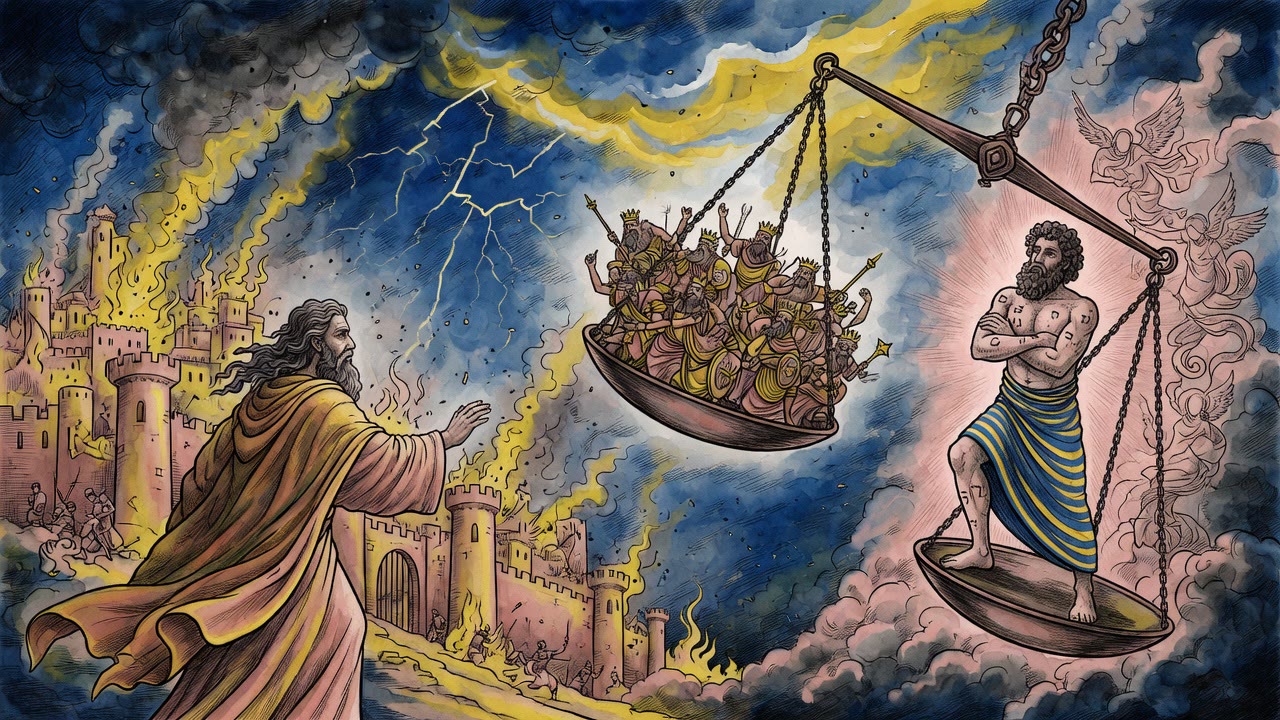
He had rescued Lot. He had broken the coalition that carried captives away. The spoils lay before him, and the king offered a bargain: give me the people, take the goods for yourself.

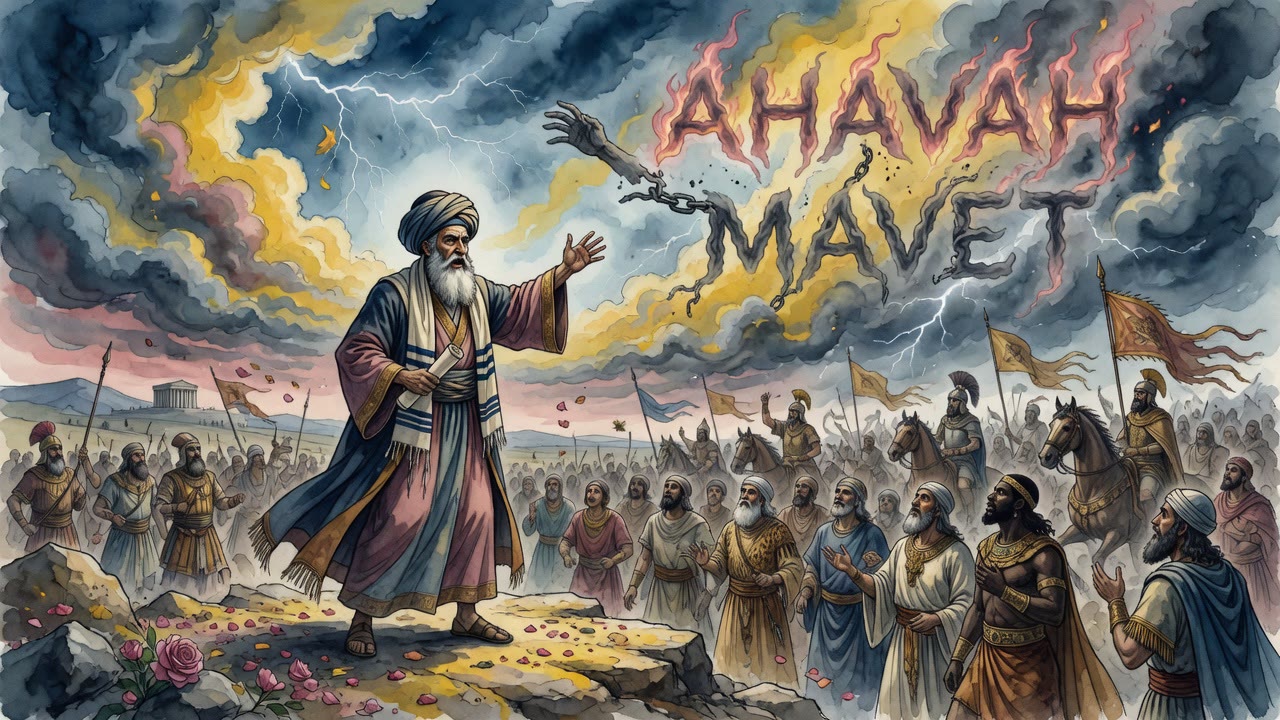
Abraham lifted his hand to God and refused even a thread or sandal strap.

He would not let Sodom say it had made Abraham rich. The midrash heard valor in that refusal. Not the valor of taking, but the strength to leave wealth on the ground when it would stain the covenant.

The Covenant Changed His Name

Years later, Abraham was ninety-nine.

God renewed the covenant with him, changed Abram to Abraham, and promised nations and kings from his line. Sarai became Sarah. The letter added to both names came from the divine name, a mark placed inside human speech so the covenant could be heard every time their names were spoken.

The sons of Korah sang, "Gird your sword upon your thigh, O mighty one." The rabbis placed that line on Abraham. He was more beautiful than the generations before him because he carried covenant into the body and into the name.

His sword was not only war. It was refusal, restraint, and the courage to belong to God more than to victory.

Jacob Counted Esau's Kings

Jacob faced a different terror.

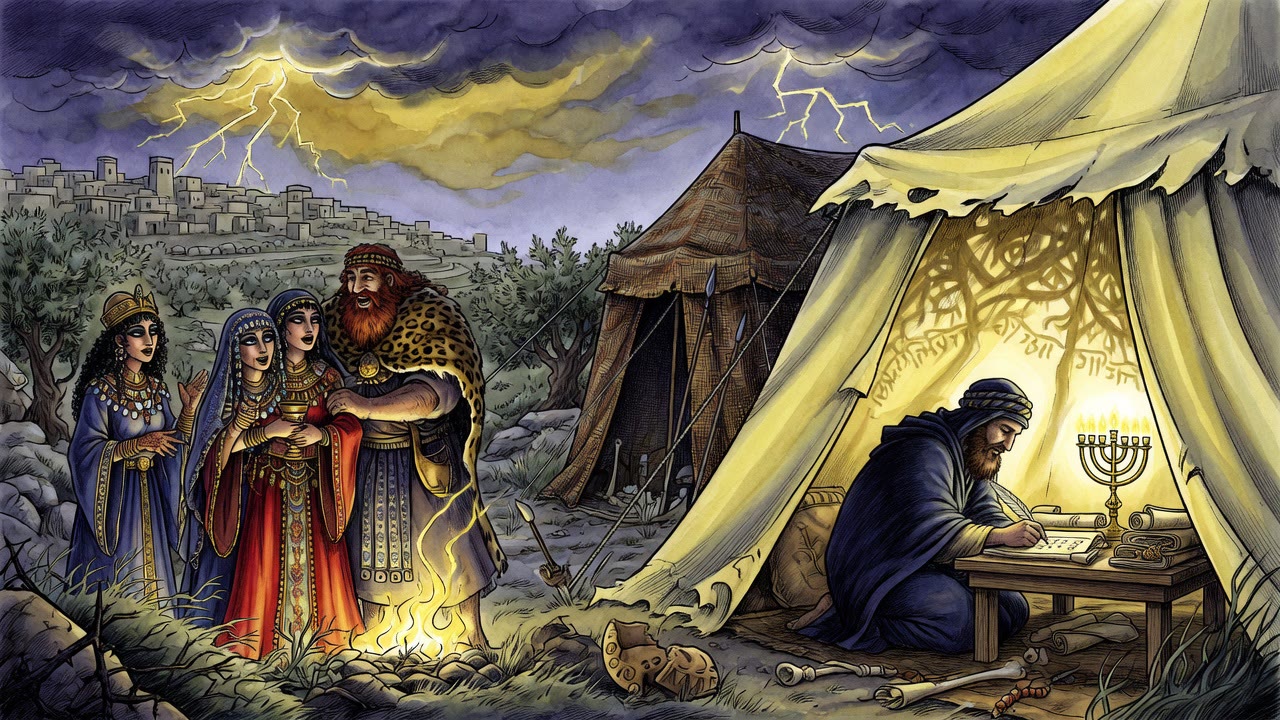
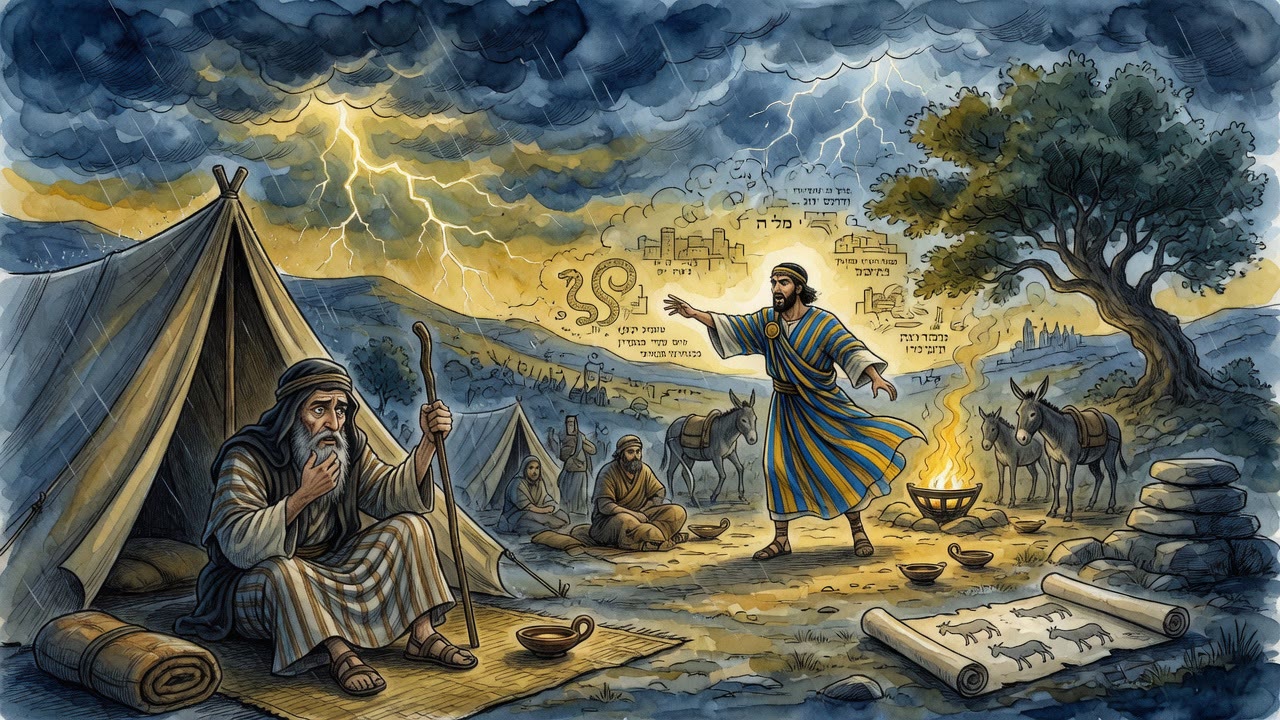
The Torah lists Esau's rulers one after another, king after king, a procession of names that looks like strength. Jacob saw them and felt small. How can one man stand against all of them?

God told him to look behind.

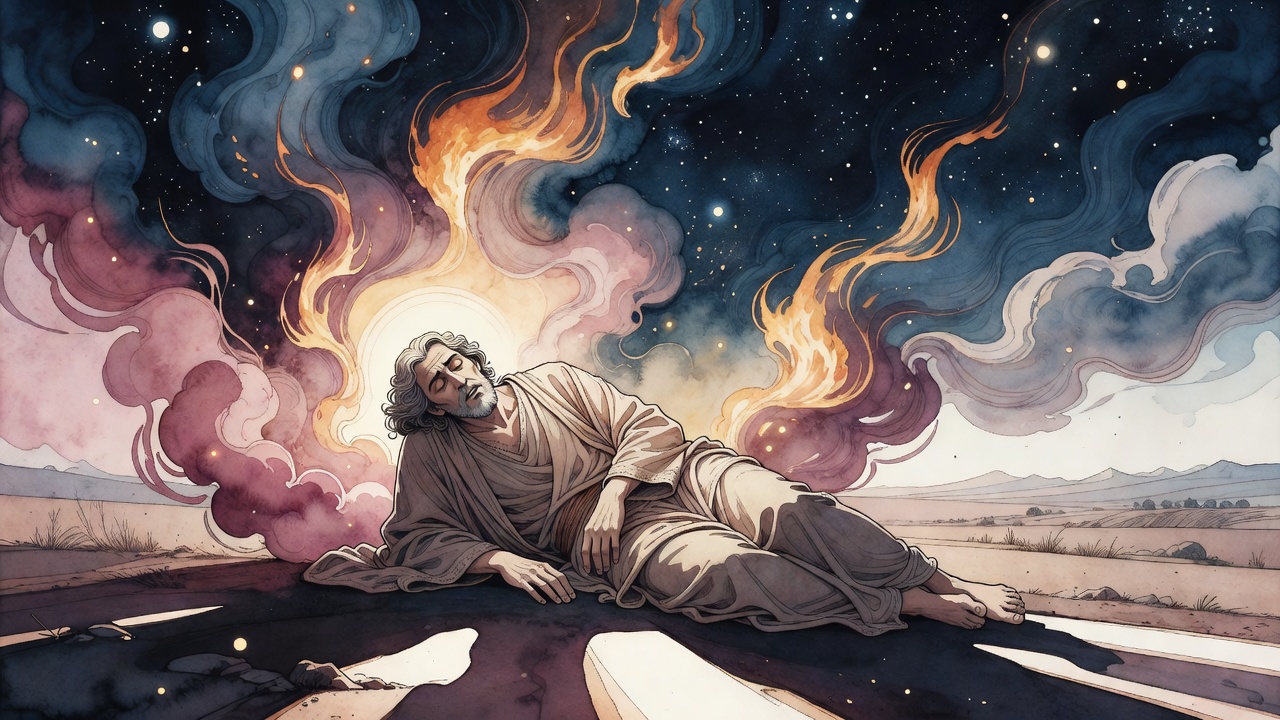
When Jacob turned, he saw Abraham, Isaac, and the generations of covenant stretching backward and forward. He was not one man. He was carried by everything before him, and everything promised after him.

Edom had kings. Jacob had a covenant.

Joseph Stood Where Kings Failed

The next verse after Esau's kings begins Jacob's generations with Joseph.

The rabbis would not let the placement sit quietly. Edom could display fourteen kings, but Jacob answered with one son. Joseph would become ruler in Egypt. His children, Ephraim and Manasseh, would become tribes. A faithful seed could outweigh a royal list.

That is how the midrash measures power.

Kings can rise and replace each other until the list itself reveals instability. Covenant can move through one family, one act of refusal, one son sold and lifted, and still outlast thrones. Abraham's lifted hand and Jacob's backward glance belong to the same inheritance.

The Throne Was Not the Measure

The nations feared visible power. The midrash feared forgetting what power is for.

Sodom's goods could have made Abraham rich. Esau's kings could have made Jacob despair. Both scenes tested whether covenant would be measured by what the world could count: spoils, armies, rulers, succession.

Abraham left the goods. Jacob looked behind him. Joseph stood ahead. The covenant held the family in a shape stronger than the throne lists of Edom.

One man with a clean refusal and one family with a remembered promise could stand where kings passed into dust.

The fear in Jacob was not cowardice. It was arithmetic. Fourteen kings looked like fourteen proofs that Esau's house knew how to rule while Jacob's house still moved by promise. God did not answer by denying the list. He answered by changing what Jacob counted.

Behind Jacob stood the tent, the altar, the binding, the lifted hand over Sodom's spoils, and the names changed by covenant. Ahead of Jacob stood Joseph, who would enter Egypt as a slave and rise higher than kings around him expected. The line was not thin. Jacob had mistaken a covenantal procession for solitude.

That is why Abraham's refusal belongs in the same frame. He had already chosen not to let a foreign king define his greatness. Jacob had to learn not to let foreign kings define his smallness.

Edom's kings had names, but the names passed quickly. Abraham's refusal had no throne attached to it, but it kept speaking. Jacob's fear had no army behind it, but it was answered by a line of fathers and sons whose covenantal weight could not be seen in a king list. The midrash teaches Jacob to read history by inheritance, not headlines.

That reading changed the scale of the room.

Jacob's answer was not a new army. It was a new memory. Once he saw what stood behind him, the kings of Esau no longer filled the whole horizon.


← All myths
From the tradition

Sources

5 sources

The texts this telling draws on, in full. Open a card to read inline, or expand it for a wider, quieter read.

Aggadat Bereshit 15Aggadat Bereshit

Abraham was ninety-nine years old when God renewed the covenant (Genesis 17:1). The sons of Korah composed a psalm about this moment, "Gird your sword upon your thigh, O mighty one, in your splendor and your majesty" (Psalm 45:3). The rabbis applied it to Abraham directly: more beautiful than Adam, more beautiful than Seth and Enosh, more beautiful than Noah's descendants who built Babel. This is a bold claim about the hierarchy of human achievement.

The covenant's terms were specific: circumcision for every male, a new name for Abram (now Abraham), and the promise that nations and kings would descend from him. God changed His own name in this transaction too, adding a letter to El Shaddai to make room for the new covenant relationship. The rabbis noted that the heh added to both names (Abram became Abraham, Sarai became Sarah) came from the divine name itself. Something of God was inscribed in their names permanently.

Grace was poured upon Abraham's lips, says the psalm. And the rabbis point to a specific moment as evidence. When the king of Sodom offered Abraham all the spoils of war after he rescued Lot, Abraham refused: "I have lifted my hand to the Lord God Most High, Creator of heaven and earth, that I will take nothing that is yours" (Genesis 14:22-23). He could have been rich. He stayed poor and kept his integrity. The rabbis called this the highest form of valor: not the ability to take, but the strength to decline.

Full source
Aggadat Bereshit 58Aggadat Bereshit

Jacob saw the leaders of Esau listed in the Torah, king after king after king (Genesis 36:31-43). And was afraid. "How can I stand against all of them? I am one man." The Holy One said: "Look what is behind you." And when Jacob looked, he saw the generations of Isaac, the generations of Abraham, the covenant stretching back and forward through time. He was not one man. He was the culmination of everything that had come before him (Genesis 25:19).

Obadiah's vision of Edom's judgment enters here because the rabbis connected Esau's fourteen kings to Edom's eventual fall. Edom had kings while Israel had none. And the rabbis noted the irony: Edom's royal succession proved its instability, not its strength. A nation that cycles through kings is a nation that cannot agree on who it is. Israel, by contrast, had no kings yet, it had a covenant. The covenant was worth more than any throne.

"These are the generations of Jacob: Joseph" (Genesis 37:2), the verse that follows the list of Edom's kings. The rabbis read the juxtaposition as deliberate. Edom has fourteen kings; Jacob has Joseph. But Joseph will become the viceroy of Egypt. Joseph's children, Ephraim and Manasseh, will become tribes. The seed of one faithful man outweighs the record of fourteen kings whose names are already forgotten by the nations who succeeded them.

Full source
Midrash Tanchuma Buber, Lech Lecha 17:4Midrash Tanchuma Buber, Lech Lecha

(Genesis 14:23:) "Not from a thread to a shoe-strap ." Why? Because the Holy One, blessed be He, has promised me that He will make me rich, as it is said (Genesis 12:2): "And I will make your name great." Should I then take from what is yours, so that you would say, "I have made Abram rich"? The Holy One, blessed be He, said: You said, "not from a thread." By your life, I Myself shall give to your children an altar with a thread of red dye encircling it, just as our Rabbis taught (in Mishnah Middot 3:1).

Full source
Targum Pseudo-Jonathan on Genesis 14:23Targum Pseudo-Jonathan on Genesis

After Abraham routed the four kings and rescued his nephew Lot, the king of Sedom came out to meet him with an offer that looked generous and was actually a trap. Take the spoil, the king said. Just give me the people. Targum Pseudo-Jonathan on (Genesis 14:23) preserves Abraham's answer with a sharpness the Hebrew only hints at.

Not a thread. Not the latchet of a sandal. Not one strap of leather from anything that belongs to you.

Why so absolute? Because Abraham understood how wealth gets retold. He could already hear the rumor that would follow him through Canaan for the rest of his life, Abraham the Hebrew? The rich one? The king of Sedom made him. In one sentence a lifetime of listening to the promises of the Lord would be reassigned to the generosity of a doomed city.

The Targum's gloss names the fear plainly: lest thou magnify thyself in saying, I have enriched Abram from mine own. The danger was not the wealth. The danger was the story attached to the wealth. Abraham refuses not because thread and sandal-straps are worth much, but because even one thread, in the mouth of the wrong witness, becomes the whole garment.

This is the Maggid's lesson in Abraham's tiny word lo. Be careful whose credit you wear (Genesis 14:23). Some gifts are loans the giver keeps collecting on forever.

Full source
Midrash Aggadah, Genesis 14:22Midrash Aggadah

"I have lifted up my hand." At that moment Abraham sanctified the name of the Holy One, blessed be He, so that the king of Sodom should not think that it was on account of money that Abraham made war with the four kings; rather, he made war only to rescue Lot and his possessions, because he was his brother's son.

Full source