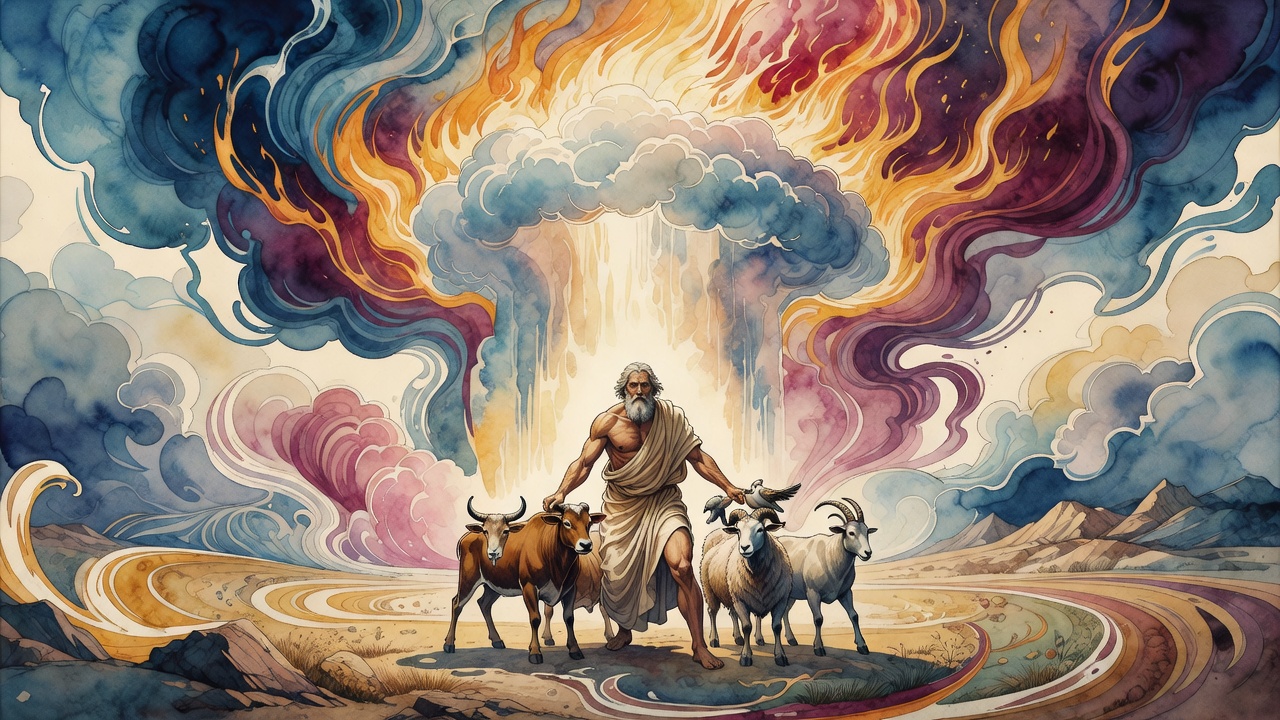
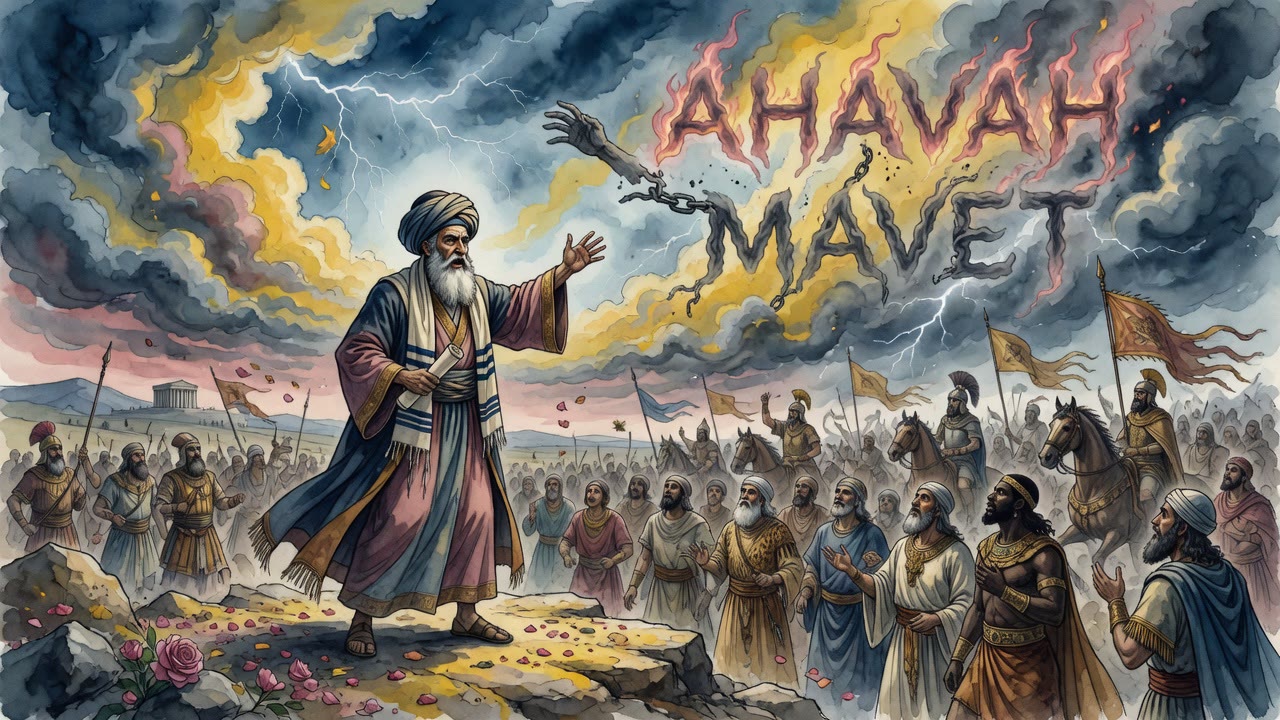
Israel the Vine and the God Who Would Not Let Go
In the clay pits God did not wait for Israel to look like a nation. He called the bent workers His kin while the lash was still up.
Table of Contents
The stick found the same backs every morning. Clay packed under the nails of Israel until the fingers looked like the bricks they made.
 Click for full size
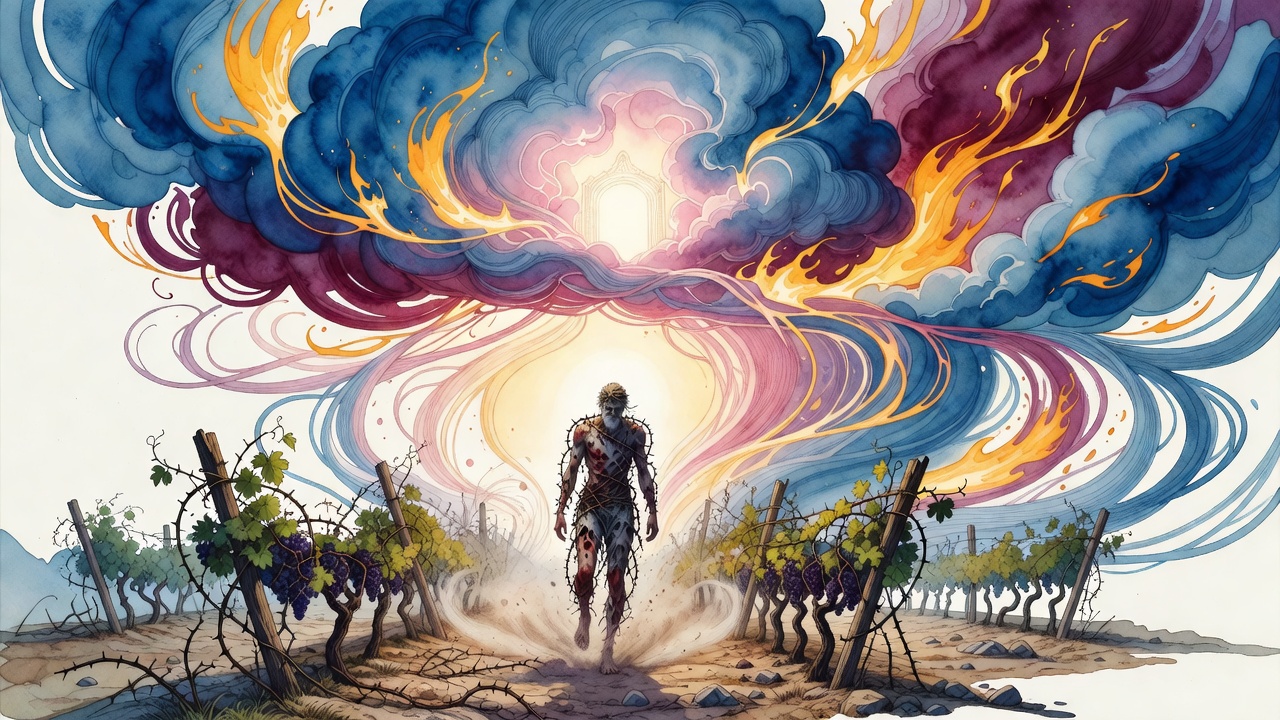
Egypt saw shoulders for bricks, backs for whips, hands for straw. A vineyard with no fence. Anyone on the road could walk through and take what they wanted. The people bent and stayed silent, and the silence looked like ownerless ground.
The Vine Went Down to Egypt
They had been planted by a promise older than the brickyards. A promise does not stop being alive because mud covers it. Children learned quiet before they learned song. Overseers counted bricks. No one counted the root.
God did not look away from the broken fence. He looked at the vine underfoot and still called it His planting. Egypt could own the workday. Egypt could weigh the clay. Egypt could not own the root.
Every morning the same airless labor. Straw cuts in the palms. Wet brick on the skin. The world looked at them and saw a people with no country and no sword bright enough to answer an empire. That is what a vineyard without a wall invites: every passing foot.
Stones Landed in the Branches
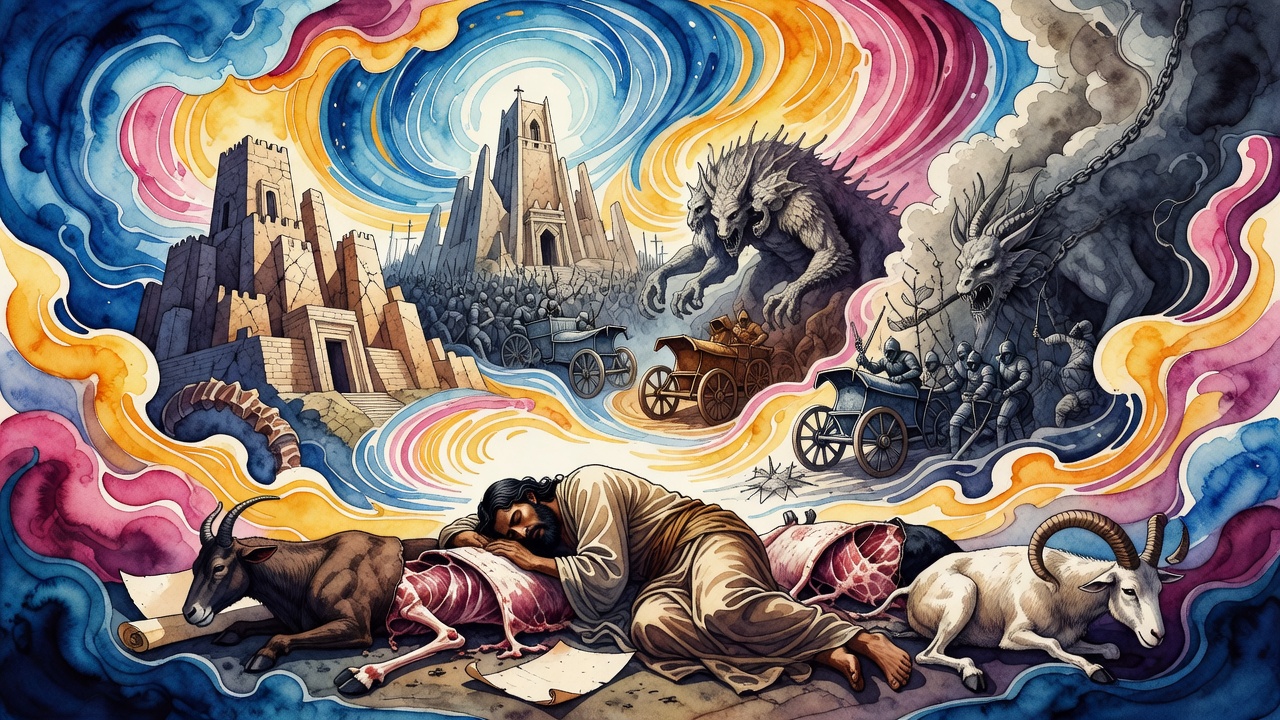
Later kingdoms made the same mistake. Babylon came with fire. Media came with decrees. Greece came with pressure that glittered. Edom came with iron. Each one found the vineyard already bruised and decided bruising meant no owner.
Stones landed among the branches. Thorns tore the leaves. Strangers stepped in and took what had grown there. The vine did not leap up with a spear. It took the trampling into itself, season after season, and went on making fruit in the place where insult expected nothing.
A foot on a cluster thinks the matter ends under the heel. The grape stores the sun anyway. The seed keeps its bitterness. The crushed fruit does not stay where the foot left it.
God Claimed the Poor Relative
People do not usually boast of a ruined cousin. A rich relative is named at the table, polished and displayed. A poor one knocks, and suddenly nobody remembers the family line. He is pushed to the side. The speaker makes himself the center and the poor man a guest who asked too much.
Israel was the poor relative of heaven in Egypt: no throne, no land, no public honor. Bent over clay pits. Enemies could have said, if they have a God, let Him claim them now.
He did. Not after the sea split. Not after Sinai thundered. Not after the camp stood in order around the Tabernacle. In Egypt, while the bricks were still wet and the lash was still raised, God said they were near to Him. His kerovim (קרובים), His close ones, His family. He did not say a nation had a God nearby. He said God had a people nearby, and He put them first.
The mud did not vanish that morning. The overseers did not drop their sticks. The lowest hour had been named from above, and the name was not slave. It was kin.
The Wine Reached the Head
The tramplers did not understand what they had stepped on. They thought a silent vine was safe to despise. They threw stones at it, broke its branches, tasted its fruit, and laughed at a planting that would not defend itself in the open field.
Then the wine rose.
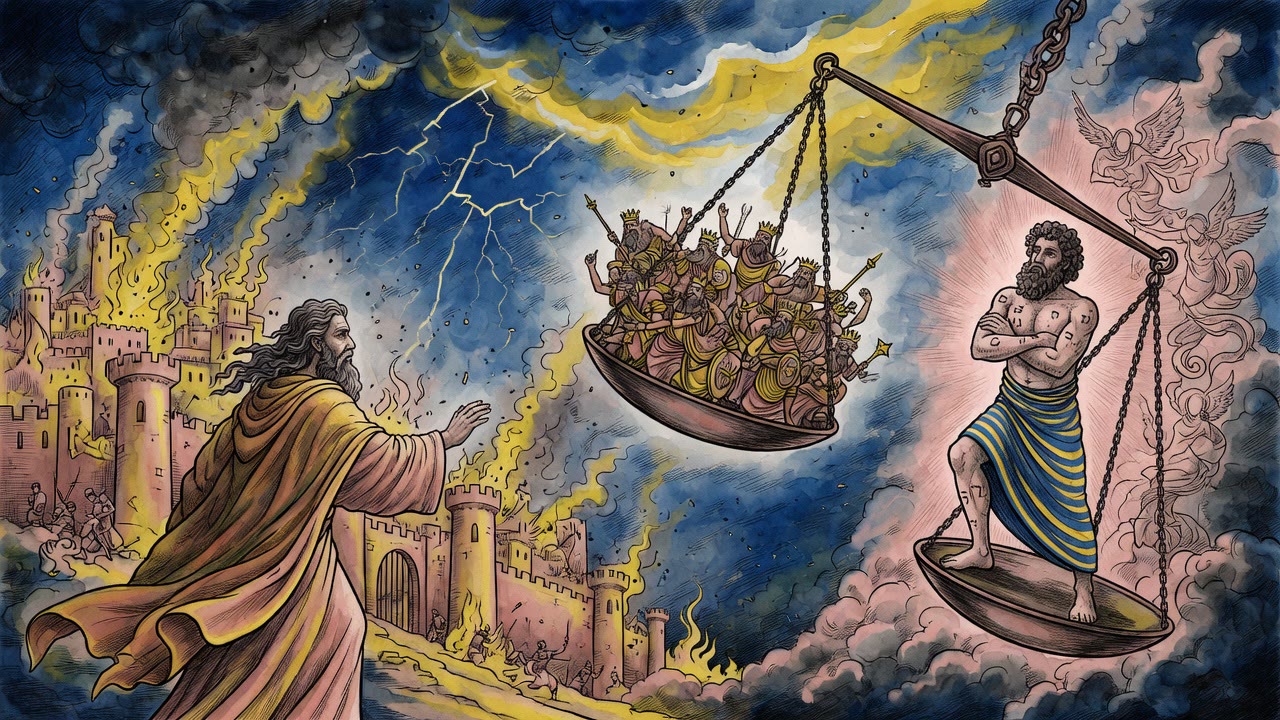
It entered the head of the one who had mocked the vine. The step became unsteady. The hand lost judgment. The empire that had walked through the vineyard as if it owned the earth began to stagger under the strength it had taken into itself. The crushed fruit became the hidden agent of consequence. What was trampled became what toppled.
Israel did not have to become Egypt to survive Egypt. The vine did not have to turn into a thornbush. Its answer came through the very fruit its enemies tried to seize.
The Planter Never Signed It Away
A broken fence can deceive the eye. So can exile. So can poverty. People see a vineyard exposed to the road and assume the planter has abandoned it. They see a family member in chains and assume the family has quietly let him go.
God made the opposite claim. The more exposed the vine became, the more stubbornly He named it His. The more humiliated Israel became, the more sharply He called them near. Heaven did not wait for power to return before renewing kinship. Heaven named kinship while power was gone.
Under foreign feet the root kept hold. In the brickyard the family name held. The road filled with armies, decrees, and dust, but the planter never signed the vineyard away.
← All myths