432 related texts · Page 1 of 9
The death of Moses is the most devastating scene in the Torah—and the Talmud in Sotah 13b expands it into something almost unbearable. Moses pleaded with God not to let him die. He...
The Talmud claims you are never alone. According to Berakhot 6a, the sage Abba Binyamin taught that if the human eye were granted permission to see demons, no living creature could...
"I will assemble Jacob, all of you; I will bring together the remnant of Israel" (Micah 2:12). The end of Aggadat Bereshit's prophetic arc arrives here: not the death of Jacob, not...
Rabbi Nachman of Breslov taught that in the future, all suffering will be revealed as good. Not philosophically. Experientially. You will bless God for your pain the same way you b...
“If it pleases the king, let it be written to eliminate them and I will weigh out ten thousand talents of silver by the hands of the king's craftsmen, to bring to the king's treasu...
A person trapped on a low spiritual level might assume that deep Torah understanding is beyond their reach. Rabbi Nachman of Breslov says the opposite is true: the pathway from the...
The question of whether Moses wrote the last eight verses of the Torah—the ones describing his own death—provoked one of the most poignant debates in the Talmud. Bava Batra 15a pre...
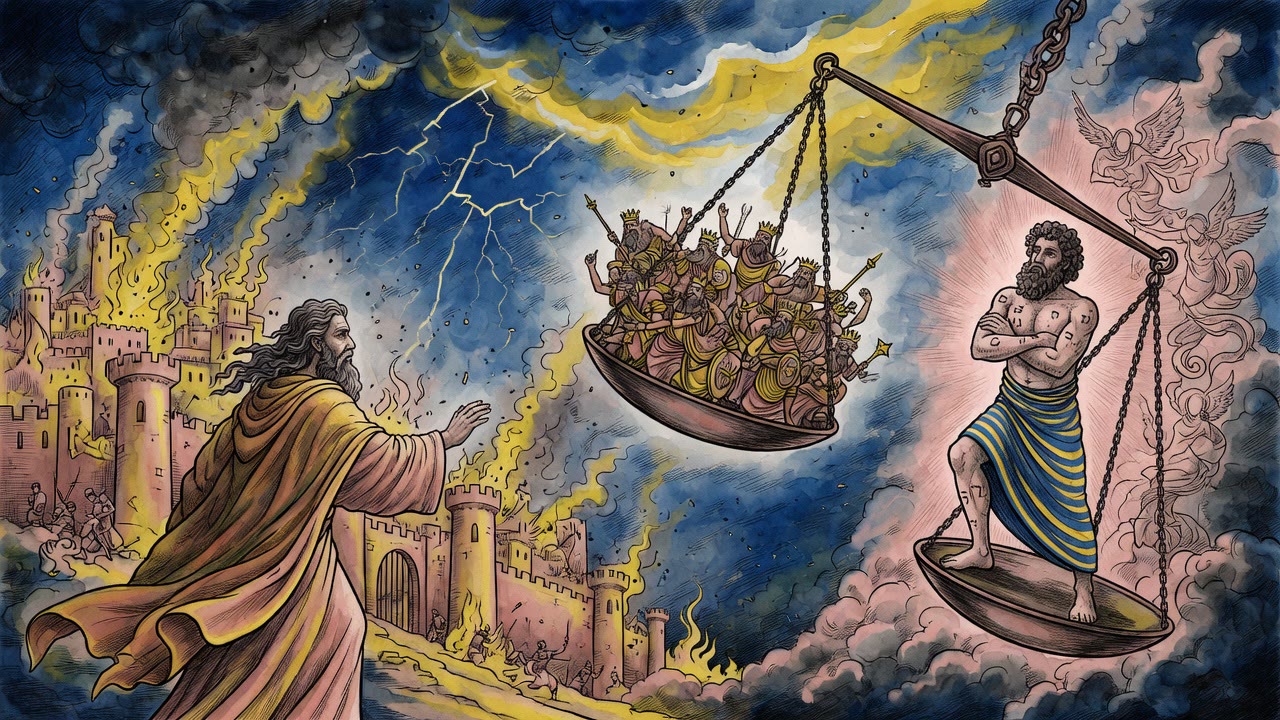
Jacob saw the leaders of Esau listed in the Torah — king after king after king (Genesis 36:31-43) — and was afraid. "How can I stand against all of them? I am one man." The Holy On...
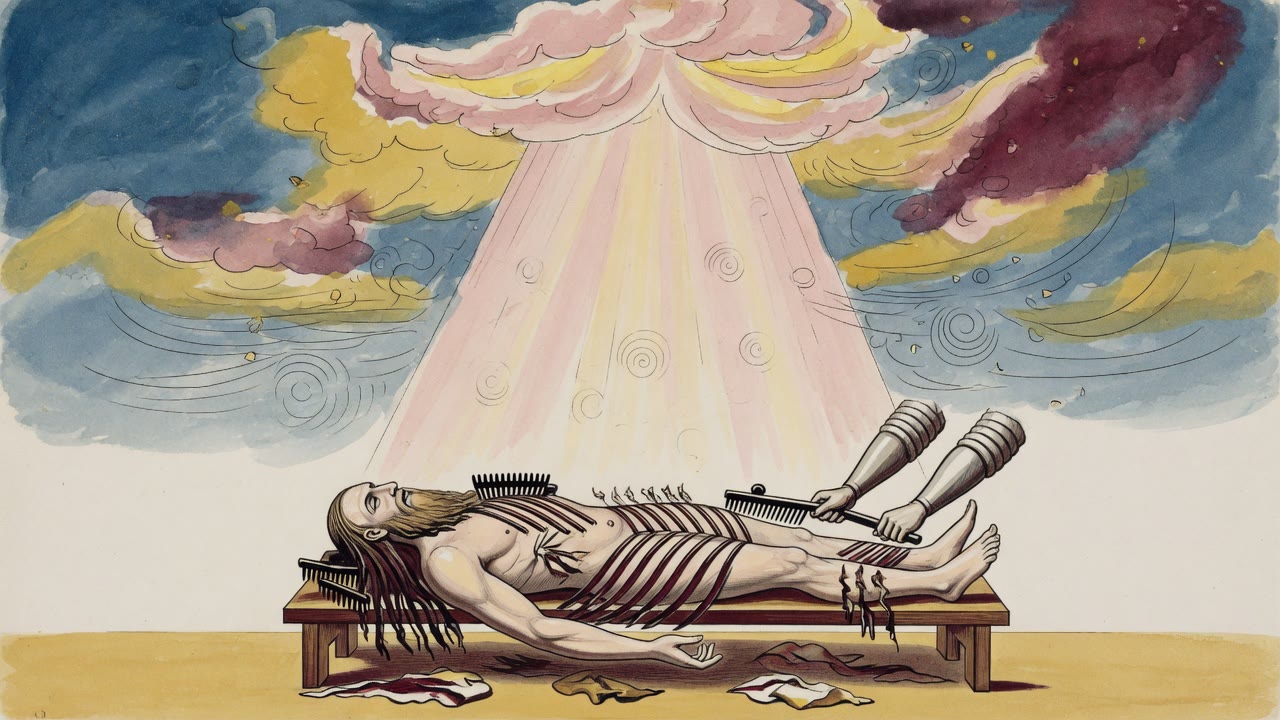
There was an incident involving Miriam daughter of the baker, who was taken captive with her seven sons. The emperor took them and placed them behind seven partitions. He brought t...
God told Moses: "Do not speak to Me on this matter again" (Deuteronomy 3:26). The decree was final. But Moses argued anyway. Rabbi Abbahu offered a parable. A nobleman found a magn...
Rabbi Akiva was caught teaching Torah in public after the Roman Empire banned its study following the Bar Kokhba rebellion. When Pappus ben Yehuda warned him of the danger, Akiva a...
Rabbi Nachman of Breslov taught that prayer is the essential weapon of the Messiah. Not a sword. Not an army. Prayer. The teaching begins with a striking image from the Zohar: the ...
Rabbi Nachman of Breslov taught that the pursuit of honor is a spiritual trap, and the only escape is through silence in the face of humiliation. When a person chases honor, they n...
When harsh decrees threaten the Jewish people, Rabbi Nachman of Breslov prescribes an unexpected remedy: dancing and clapping hands. The logic runs through a teaching about what co...
There exists a soul in every generation through whom Torah insights are revealed to the world. Rabbi Nachman of Breslov describes this soul as one burdened with suffering: "Bread w...
The Talmud in Chagigah 12b asks a foundational question: what holds up the world? The answer, according to Rabbi Yosei, is a chain of impossible supports—each one resting on someth...
The Hebrew Bible commands: "Hear, O Israel! God is our Lord, God is one" (Deuteronomy 6:4). Targum Onkelos translates the Shema—Judaism's central declaration of faith—with perfect ...
... Another reading: “Comfort, oh comfort My people” (Isaiah 40:1) Said the Holy Blessed One: Who needs to be comforted? For one whose wife died, not the husband? Thus was Zion ana...
On the last day of his life, Moses did something no prophet had ever done — he dressed his successor in public, with his own hands. He commanded that a golden throne be brought, al...
Midrash (rabbinic interpretive commentary) Sheni Ketuvim In the beginning God created etc. - To declare the might of the acts of creation to creatures, and to make it known to them...
The Messiah, say the rabbis, will be greater than all the patriarchs — greater than Abraham, greater than Isaac, greater than Moses. This is the reading Aggadat Bereshit makes of I...
“Pay them retribution, Lord, according to their handiwork” (Lamentations 3:64).“Pay them retribution” – Jeremiah said: “Pay them retribution.” Asaf said: “Pay our neighbors retribu...
You cannot receive complete divine providence until you shatter your desire for money. Rabbi Nachman of Breslov taught this as a direct spiritual mechanism, not a moral platitude. ...
In his commentary on Parashat Bereshit, Rebbe Elimelech of Lizhensk (the Noam Elimelech) asks a deceptively simple question: why does the Torah begin with the word "beginning"? Ras...
The Jewish people were redeemed from Egypt because of the righteous women. According to Sotah 11b, Rav Avira taught that while the men had given up hope under Pharaoh's slavery, th...
David lifts his eyes to the mountains and prays — "A song of ascents" — and God answers him through a text he might not have expected: Moses's blessing of Judah. "And this is the b...
Rachel had watched her sister enter the wedding canopy and had not envied her — not then. But when the children came, one after another from Leah's womb, Rachel's patience broke. "...
(Job 5:19) promises: "From six woes He shall save you, and in the seventh, evil shall not reach you." The midrash asks which six woes — and Solomon in Proverbs provides the list: "...
“Remember my affliction and my anguish, wormwood and gall” (Lamentations 3:19).“Remember my affliction and my anguish [umrudi]” – the congregation of Israel says before the Holy On...
The rabbis of Esther Rabbah made a stunning claim: every time the Hebrew word vayhi ("it was") appears in the Torah, it signals disaster. Rabbi Tanhuma, Rabbi Berekhya, and Rabbi H...
Bar Haddaya, the dream interpreter who gave favorable readings to paying clients and devastating ones to non-payers, eventually paid for his corruption with his life. Berakhot 56b ...
After Vespasian became emperor, his son Titus completed the destruction of Jerusalem. According to Gittin 56b, Rabban Yohanan ben Zakkai's famous encounter with Vespasian included ...
After the destruction of the Temple, Nebuzaradan, captain of the Babylonian guard under Nebuchadnezzar, found blood bubbling up from the ground in Jerusalem. According to Gittin 57...
Adam was created in twelve hours. According to Sanhedrin 38b, Rabbi Yohanan bar Hanina mapped each hour of the first man's first day onto a specific stage of formation. In the firs...
The parable of the blind man and the lame man in the orchard, told by Antoninus to Rabbi Yehuda HaNasi in Sanhedrin 91b, establishes one of the Talmud's most important doctrines: b...
A small city, few people, a great king who comes and builds fortifications — (Ecclesiastes 9:14) describes something small being threatened by something enormous. The rabbis identi...
We're about to dive into one of those head-scratchers, straight from the ancient Jewish legal text, Sifrei Devarim. The question? Whether the Ten Commandments are included in the c...
(Exodus 13:10) states, "from day to day" — miyamim yamimah. The Mekhilta asked why this phrase was necessary. After all, the previous verse already established that the account of ...
Our ancestors knew that feeling well. : Moses, standing before the Israelites, about to impart some final, crucial wisdom. He cries out, "Shema Yisrael – Hear, O Israel!" But...why...
The Talmud in Berakhot 57a catalogues an entire symbolic vocabulary of dreams—a dictionary of the unconscious, organized by category, where every image carries a fixed meaning. Ani...
Take the mezuzah (a parchment scroll affixed to doorposts), that little scroll we affix to our doorposts. We see them every day, maybe even take them for granted. But have you ever...
That feeling, that singular connection, is at the heart of Devarim Rabbah, a collection of rabbinic teachings on the Book of Deuteronomy. Specifically, the second section, where it...
to a fascinating exploration from Devarim Rabbah, a collection of rabbinic teachings on the Book of Deuteronomy, and see what we can uncover. "Hear, Israel" (Shema Yisrael) – these...
A man who had mastered Scripture, studied the Mishnah, and served many scholars dropped dead in the middle of his life. His widow seized his tefillin (leather phylacteries worn dur...
"And the habitation of the children of Israel in Egypt and in other lands was four hundred and thirty years." This is one of the verses that they (the seventy-two elders changed) i...
According to Tree of Souls, when Noah was loading up the ark, Og made a deal. He swore to Noah and his sons that if they’d let him come along, he’d be their servant forever. Now, s...
The Hebrew Bible records Moses's great farewell poem, the Song of Ha'azinu (Deuteronomy 32), a sweeping poetic indictment of Israel's future unfaithfulness. Targum Onkelos translat...
And these are the generations of Aaron and Moses. [Betai Midrash (rabbinic interpretive commentary)ot Third Chamber] Our rabbis taught: Brothers who are partners and who increased ...