Moses Saved Israel From God's Anger but Could Not Save Himself
Moses named seventy-seven living men and could not find three more. He asked the dead patriarchs to stand in the breach.
Table of Contents
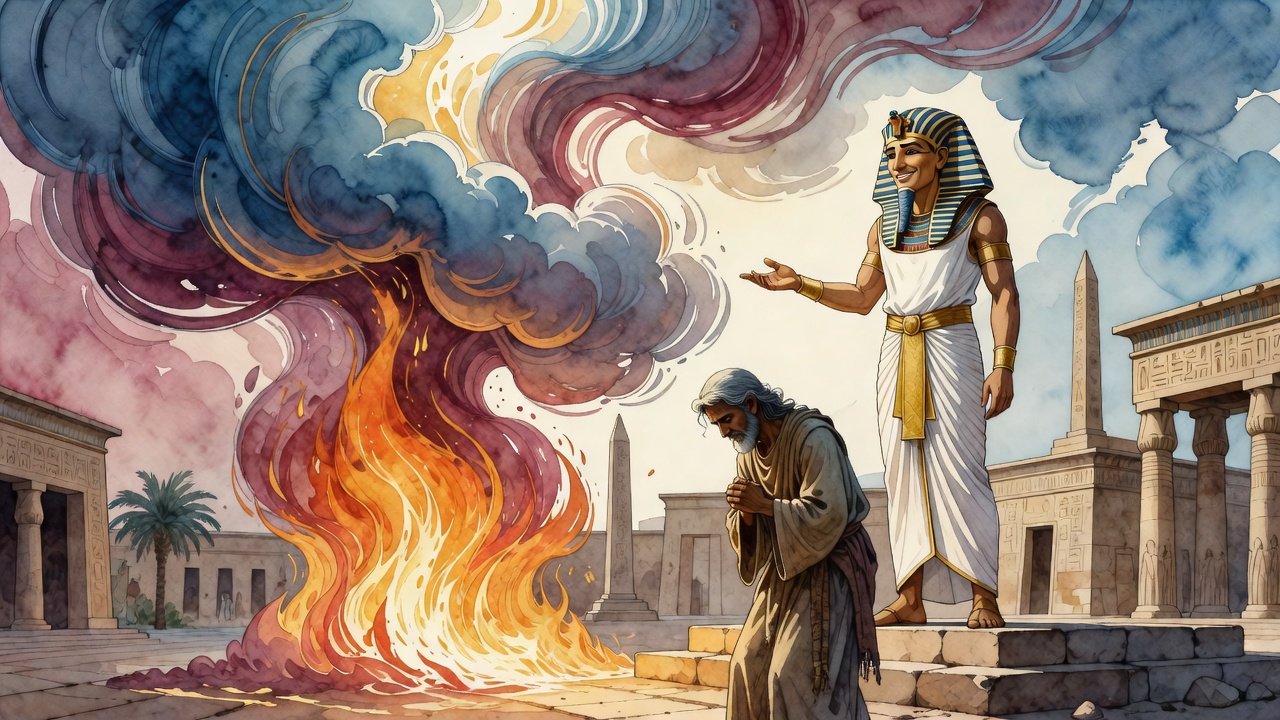
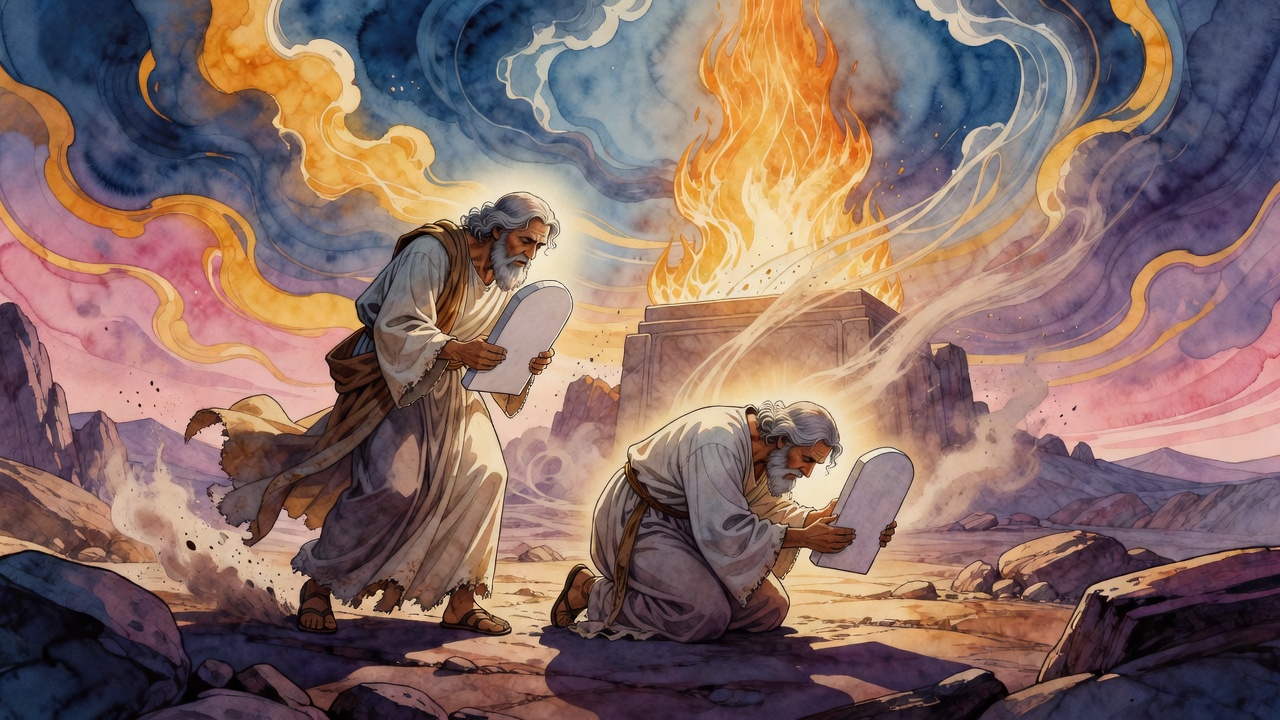
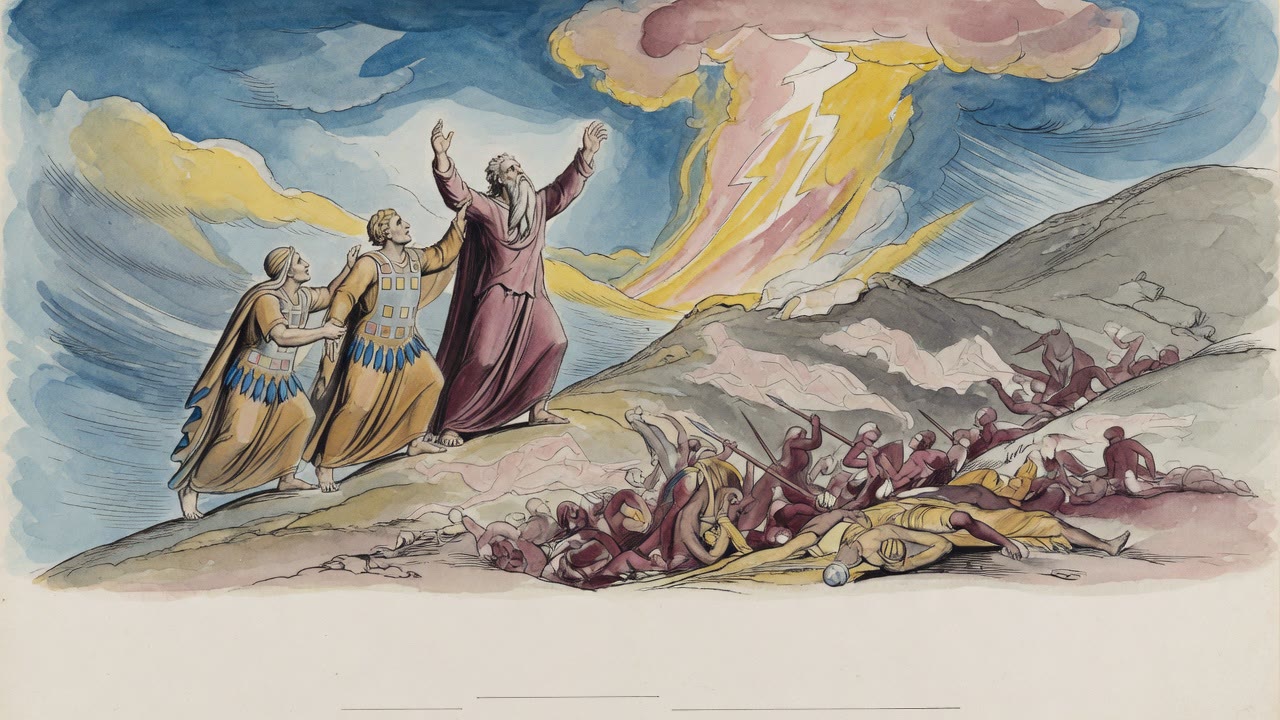
The tablets lay in pieces at the foot of the mountain. Israel had built the calf and danced around it while Moses was still above receiving the Torah. God was furious. Moses, coming down and seeing the scene, was furious too.
 Click for full size
If both of them stayed angry, nobody would stand between Israel and destruction.
Two Angers at the Mountain
Moses climbed back up. He did not start with soft words. He let his own anger show. "This people has sinned a great sin, and they made themselves a god of gold. Now, if You would, forgive their sin. But if not, erase me from Your book that You have written" (Exodus 32:31-32).
God saw that Moses was angry too.
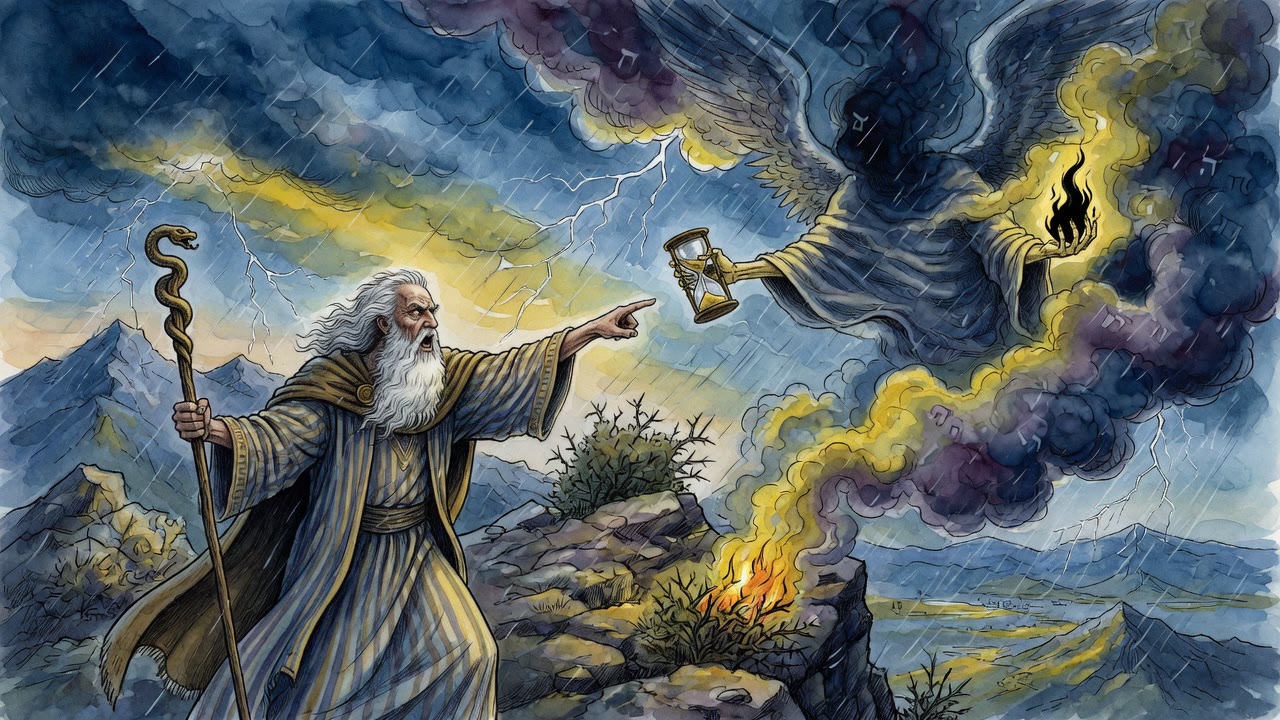
"There are two beings who are angry. You and I are angry at them."
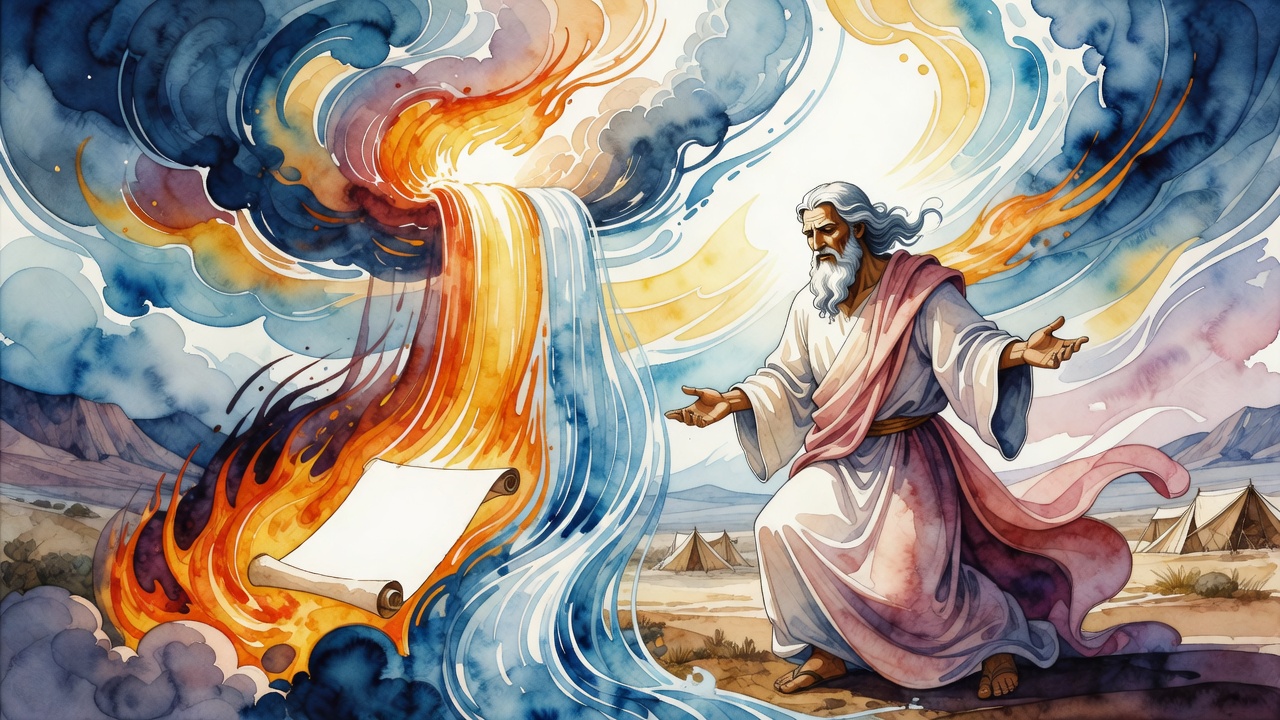
Then God gave him a rule. "There shall not be two beings angry. When you see Me pouring boiling water, you pour cold. When you see Me pouring cold water, you pour boiling."
Moses asked how. God said, "You implore for mercy."
He Counted the Living, Then the Dead
Moses did not plead with empty hands. He counted.
"Consider them like Sodom. You told Abraham that if You found fifty righteous in the city You would tolerate the place, and You conceded down to ten. I will produce for You eighty righteous men."
God said, "Produce them."
Moses named the seventy elders. He added Aaron, Nadav, Avihu, Elazar, Itamar, Pinchas, and Caleb. That was seventy-seven.
"But Moses, where are three more?"
Moses looked among the living and did not find them. He said, "If those who are alive cannot stand in the breach, let the dead stand. Do it by the merit of the three patriarchs." Abraham. Isaac. Jacob. Eighty.
Once Moses mentioned the merit of the patriarchs, God said, "I have pardoned in accordance with your word" (Numbers 14:20). The camp lived. When heaven poured boiling, Moses poured cold.
He Asked for the Land
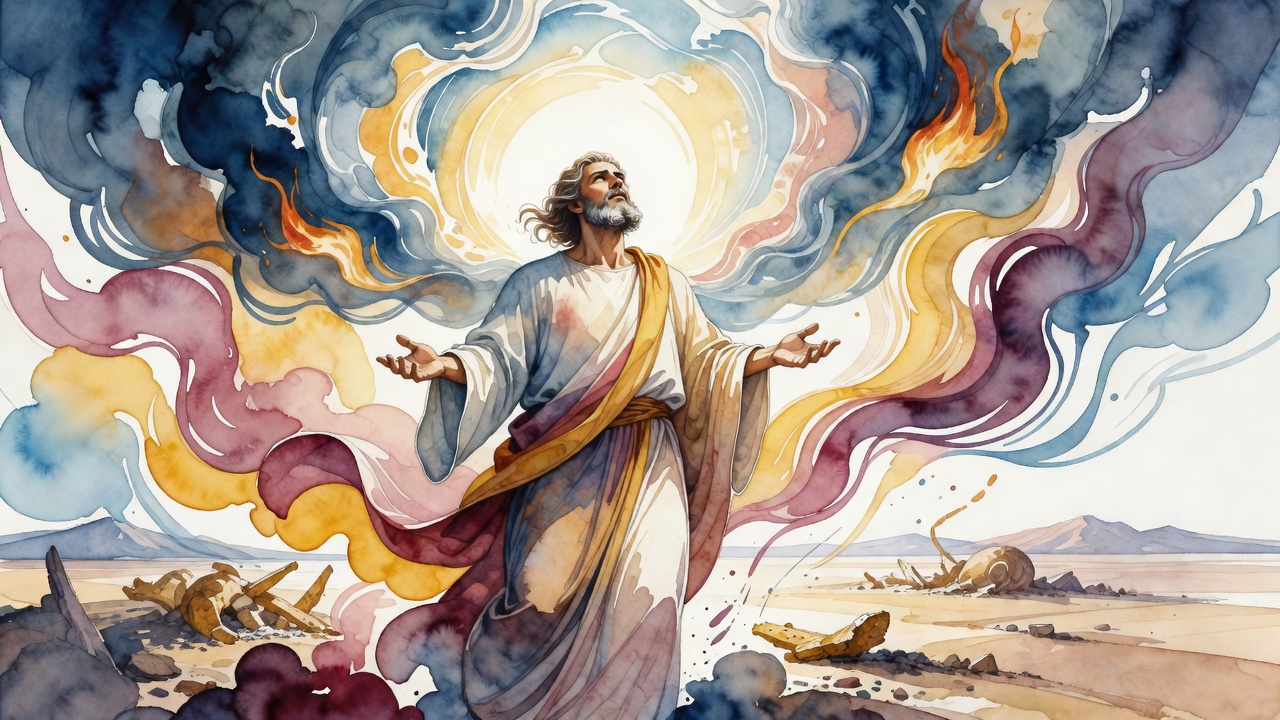
Years later Moses stood on the far side of the Jordan and wanted the land. He had spent forty years carrying Israel toward it. He could see the hills. He wanted to put his own feet on the ground.
He pleaded. The word he used was vaetchanan (ואתחנן), I pleaded. He asked from every angle. He named the years. He named the people he had carried. He named the promise. The count kept for that word is five hundred and fifteen. He had talked God out of destroying six hundred thousand people. He could not get this one petition granted.
God answered harshly. "Do not continue speaking to Me" (Deuteronomy 3:26). Moses stood with his mouth still open and the hills still on the other side. The conversation that had saved the camp was over for him.
The Rule Did Not Cover Him
He stood on the bank with the land in sight and the rule still in his mouth. When I pour hot, you pour cold. That was the work God had assigned, and it had always been work for Israel, not for Moses. He could invoke the patriarchs for the camp. He could not invoke anyone's merit to lift the consequence tied to the rock at Meribah.
For his own case he was not the advocate. He was the petitioner. The Torah he had carried down the mountain did not suspend itself because the man who carried it was the one asking. He had poured cold for everyone else. On this bank there was no one left to pour for him.
He saved Israel. He could not save himself. The hills stayed on the other side of the water, and Moses stayed where he was told to stay.
← All myths