Moses Offered His Own Name to Save Israel
After the golden calf, Moses offered his own name to save Israel, asking God to erase him if the people could not be forgiven.
Table of Contents
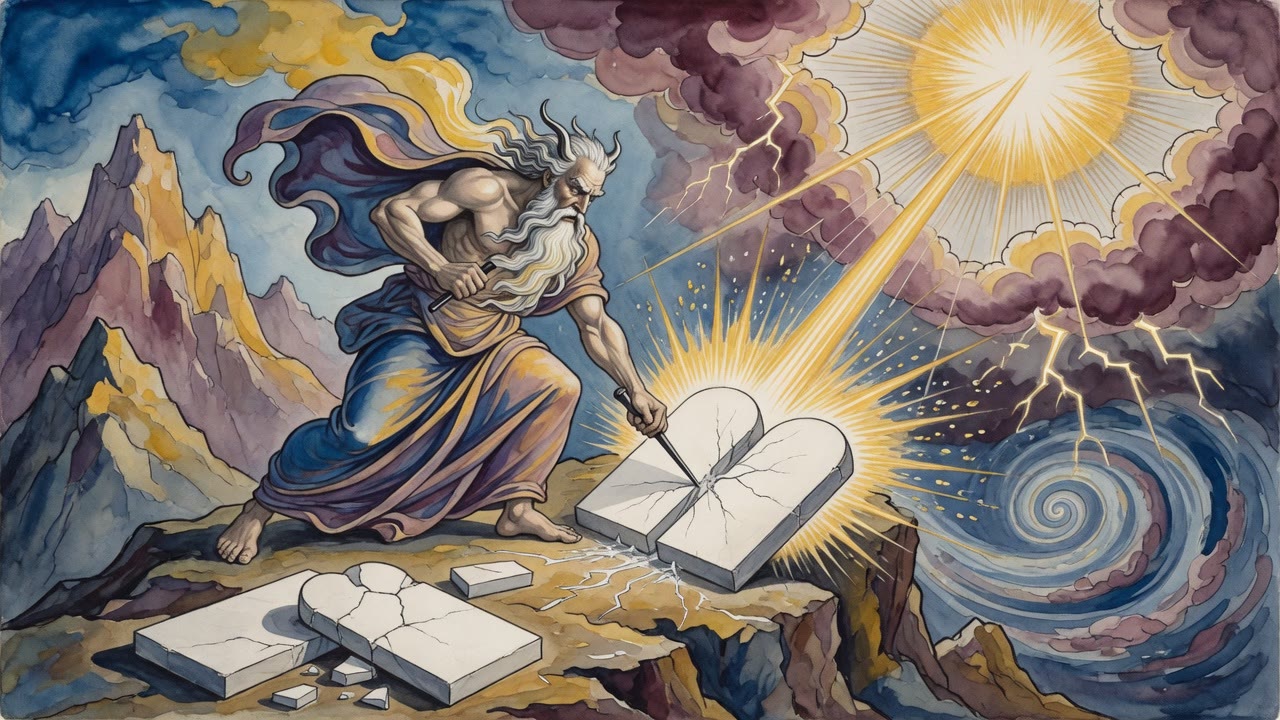
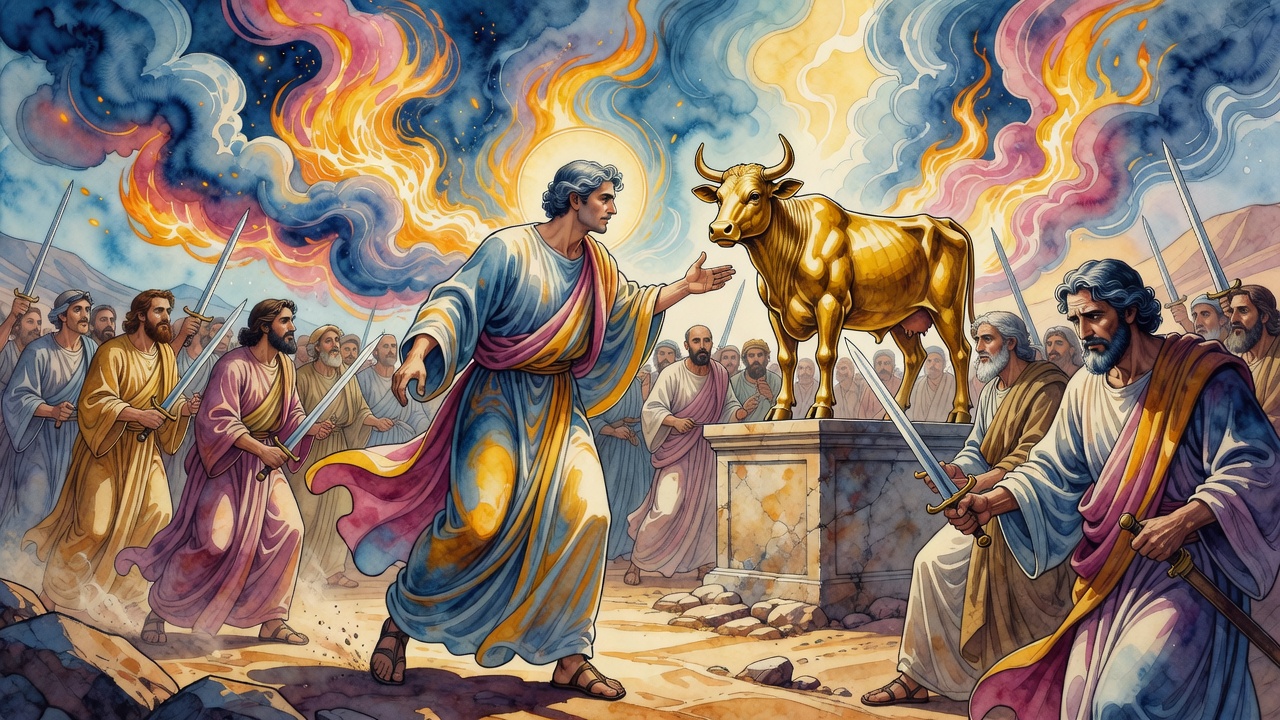
Moses came down holding broken stone and found a camp still warm from dancing.
 Click for full size
The calf was there. The shouting was there. The people who had heard God's voice at Sinai had lowered their eyes to gold and called it power. Moses shattered the tablets, ground the idol, made Israel drink the dust of its own betrayal, and then climbed back toward God with nothing in his hands except a people who had almost destroyed themselves.
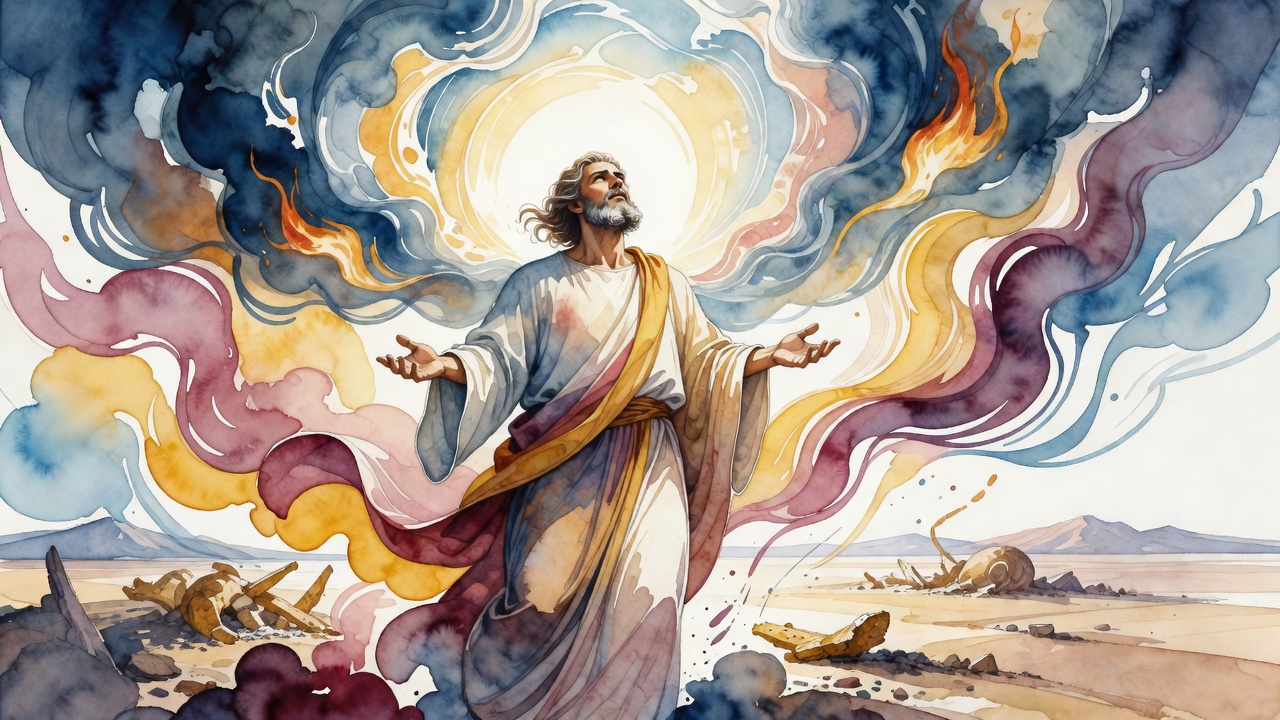
He did not ask for a smaller punishment. He put his name on the table.
The Prayer Had No Soft Edge
Moses did not defend the calf. He did not call it confusion or weakness. He named the sin and then did the reckless thing true shepherds do when the flock is under judgment. He refused to survive alone.
Forgive them, he pleaded. If forgiveness would not come, then erase him from God's book.
The sentence stands like a knife laid across the covenant. Moses had argued with God before. He had resisted the mission at the bush, lifted the staff over Egypt, and split a sea with the people pressing at his back. But after the calf, he offered something deeper than effort. He offered disappearance.
A leader who wants glory protects his record. Moses put the record itself in danger.
The Book Opened Above Him
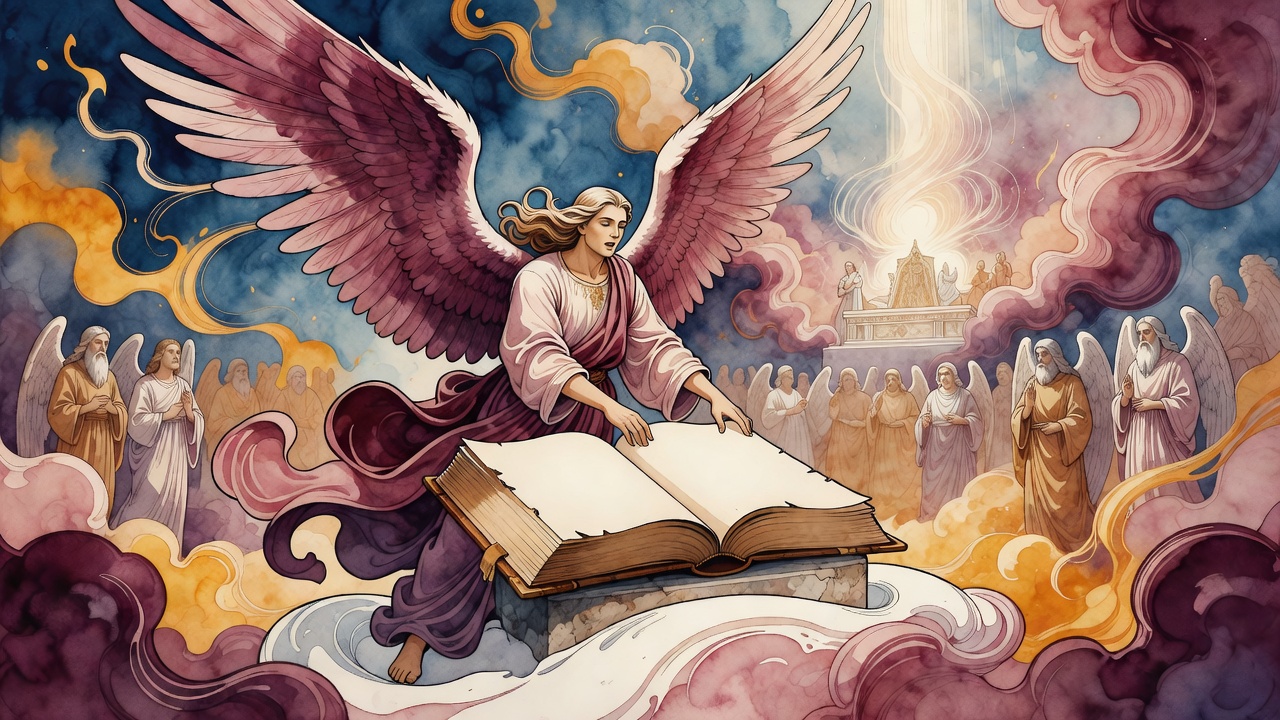
Targum Pseudo-Jonathan sharpens the offer. Moses asks to be blotted from the book of the righteous, the sefer ha-tzaddikim, where his own name had been written.
That is not only a death wish. It is the surrender of standing before heaven. Moses was willing to lose the line that marked him as faithful if Israel could live. The greatest prophet in the camp would rather be absent from the scroll of the just than present without his people.
God refused the bargain on Moses's terms. The sinner would bear the erasure. The guilty name, not the advocate's name, would be blotted out. Mercy came, but the sentence did not vanish into softness. The calf left a debt that later generations would still feel in moments of disaster.
The prayer worked. It also left a scar.
The Ornaments Fell From Israel
Before the calf, Israel had worn more than jewelry.
Midrash Tanchuma imagines the people armed at Sinai with weapons of glory, each engraved with the Ineffable Name. When they said na'aseh v'nishma (we will do and we will hear), heaven dressed them like soldiers of the covenant. The Name itself rested on their weapons.
After the calf, God ordered the ornaments removed. Israel stripped itself. The shining weapons came off. The gift that had made them dangerous in holiness vanished from their hands.
Moses saw what had been lost. The people were not merely spared sinners. They were diminished survivors. Forgiveness kept them alive, but it did not pretend the dance around the calf had cost nothing. A holy nation can be pardoned and still have to live with empty hands.
The Tent Moved Outside the Camp
Then Moses took the Tent and moved it away.
A full mile stood between the camp and the place of meeting. The distance was a judgment measured in footsteps. If the Shekhinah (God's presence dwelling on earth) had withdrawn from a rebellious people, Moses reasoned, the servant could not pitch his tent where the Master would not dwell.
The camp watched him go. Every person who wanted God had to leave the noise of the tents and walk out toward the place Moses had set apart. The calf had gathered Israel around gold at the center. Moses answered by creating an absence in the center and placing encounter beyond the boundary.
Forgiveness had begun, but nearness had to be relearned one walk at a time.
The Shepherd Would Not Leave the Flock
Yalkut Shimoni gathers Moses with other shepherds who offered themselves for Israel.
Jonah gave himself to the sea so the sailors might live. David stood before the plague and asked that the blow fall on him instead of the sheep. Moses stood highest and most terribly, because he faced not storm or plague but the divine book itself.
The sages also heard in his sentence the three books opened on Rosh Hashanah: the righteous, the wicked, and the suspended middle. Moses's plea turned into a yearly terror. Names can be written. Names can wait. Names can be erased. The world is never casual about a name before God.
Moses survived his offer, but not untouched. In one portion of the Torah, tradition notices, his name disappears. The advocate who asked to be erased was not erased from Israel, but the parchment kept a trace of the wager.
← All myths