Jacob the Patriarch Who Stood Trial Before He Was Born
The terms of Jacob's judgment were set inside the covenant God made with Abraham. Every blessing he received came with an obligation he had not chosen.
Table of Contents
 Click for full size
The Inheritance He Did Not Ask For
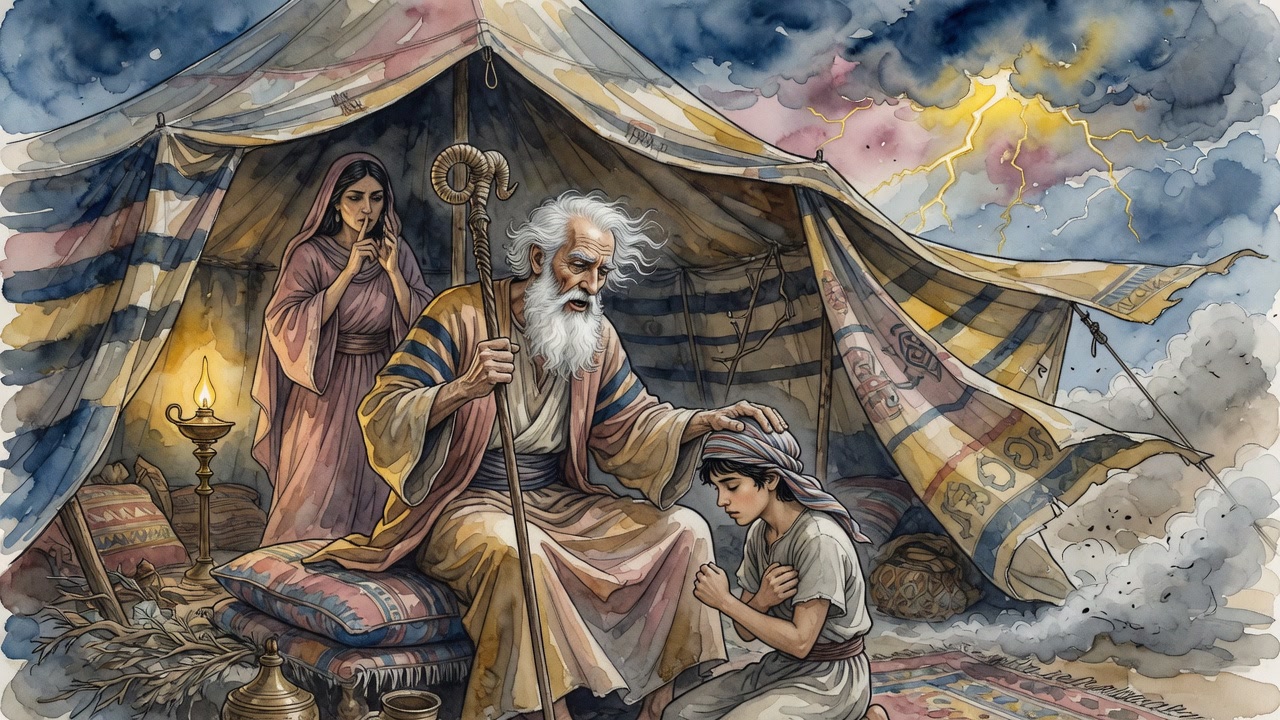
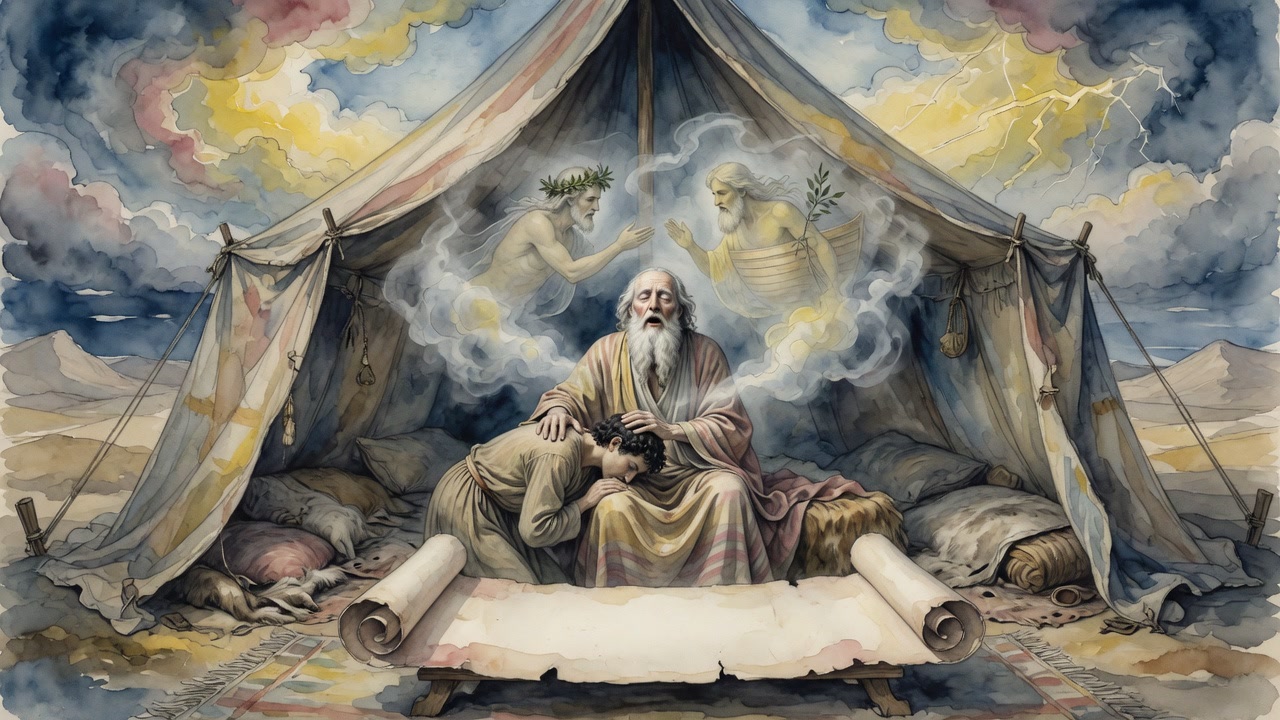
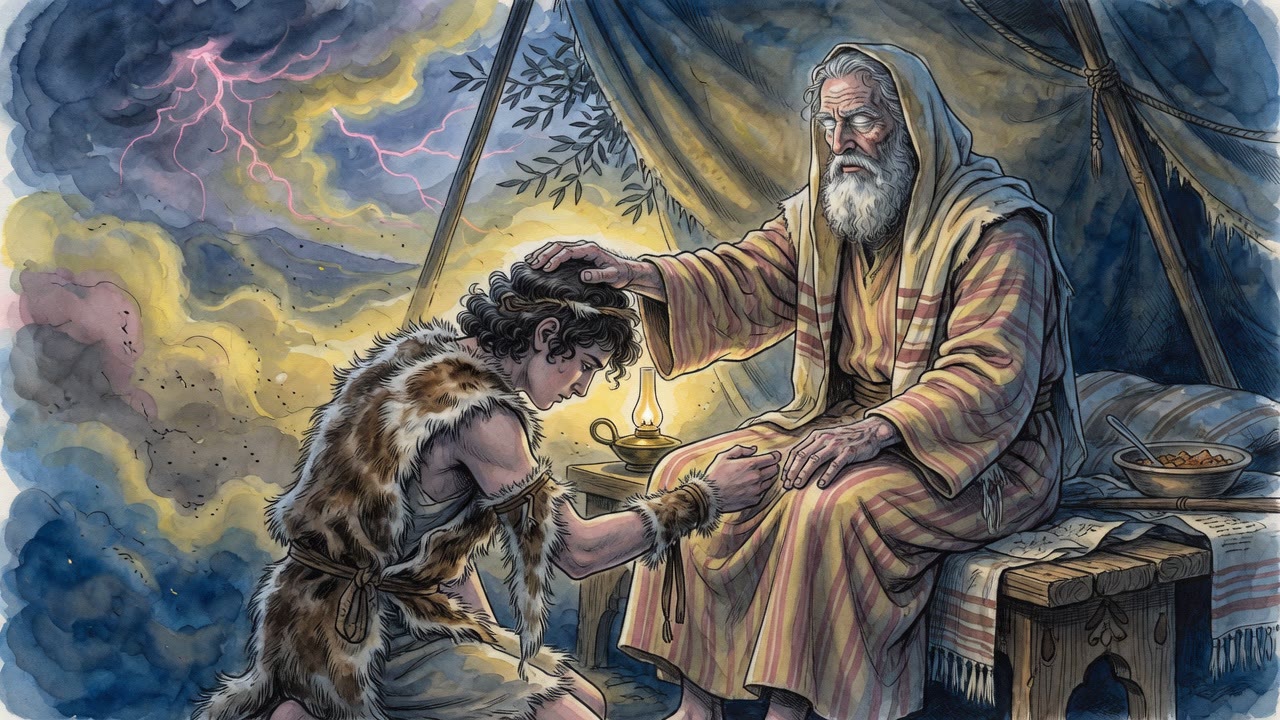
Jacob was still in the womb when the covenant found him. In the Book of Jubilees, a Second Temple-era reworking of Genesis that presents itself as angelic dictation to Moses at Sinai, Abraham did not simply pass his blessing through Isaac to Jacob at a distance. He passed it directly, in person, in a scene of striking tenderness, laying his hands on Jacob and affirming that the covenant God had made with Abraham would reach its fulfillment specifically through this grandson. The blessing was personal. The obligation was also personal.
To receive Abraham's covenant was to enter a structure of accountability that operated at a different level than ordinary human obligation. The rabbis who examined Jacob's life found a man whose every major encounter, the wrestling at the Jabbok, the incident at Shechem, the death of Rachel, the disappearance of Joseph, appeared to be proportionate to the weight of what he had been given. The covenant that blessed him also held him to account. The trial, in the rabbinic reading, had been running since before he was born.
The Standard He Was Held To
Vayikra Rabbah, the midrashic collection on Leviticus compiled in the Land of Israel around the fourth to fifth century CE, opens a discussion of the verse If you follow My statutes with a question about Jacob. Who are the sons commanded to observe God's ways? Jacob's descendants. Whose ways are they commanded to observe? Jacob's own. The implication is that Jacob had been following the Torah's ways before the Torah was given, and that this was not incidental biographical detail but the model his descendants were meant to emulate.
The Midrash Tanchuma, compiled in the Land of Israel in late antiquity and early medieval times, specifies the commandments Jacob kept: Sabbath, dietary laws, family purity, festival obligations, prayer. All of them, centuries before Sinai. He had worked out in his own practice what would later be formalized in law, and the tradition read this as both praise and burden. If he was already obligated to commandments that had not yet been given, then every deviation in his life required explanation.
What the Deathbed Command Meant
When Jacob gathered his sons at his death, the final instructions he left them were specific. He commanded them to practice truth and righteousness, to avoid false dealings, to maintain the standards he had set in his own life. The tradition preserves this deathbed command as the transmission of a covenant responsibility: Jacob was not simply giving advice. He was passing on the terms of the obligation he had been carrying since before he could speak.
The sons received it. They answered the question their dying father asked them, the question about whether they would remain faithful after he was gone, with the declaration that became the Shema (Hear O Israel). The covenant that had been transmitted to Jacob from Abraham was transmitted again from Jacob to his twelve sons at the end of his life, in a room in Egypt, with the full weight of every year he had spent carrying it behind the words he chose.
The Trial That Never Closed
The strangest part of the rabbinic picture of Jacob is not that he was held to an extraordinary standard. It is that the standard was applied retroactively, across a lifetime that looked, from the outside, like a series of punishments for deeds that should not have merited them. A man who observes all 613 commandments before they are given should be protected. Jacob was not protected. He fled Esau. He worked twenty years under Laban. He buried Rachel on the side of the road. He mourned Joseph for decades.
The rabbis did not smooth this over. They presented it as the cost of the covenant itself: to receive the most complete blessing in history was to be held to the most complete account. Jacob's suffering was not evidence against the covenant. It was evidence that the covenant was serious. The accounting was real, the blessing was real, and the two of them were inseparable in a way that made Jacob's life the most searching proof in the Torah of what it meant to be held by God.
← All myths