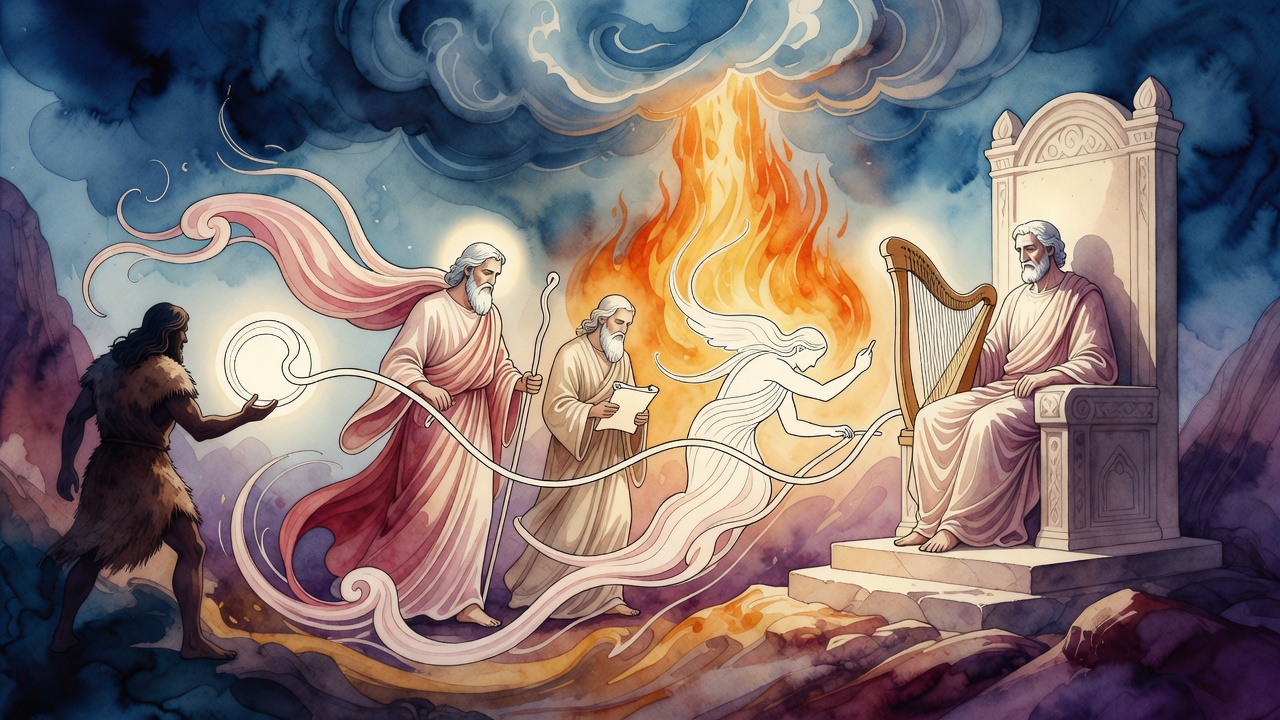
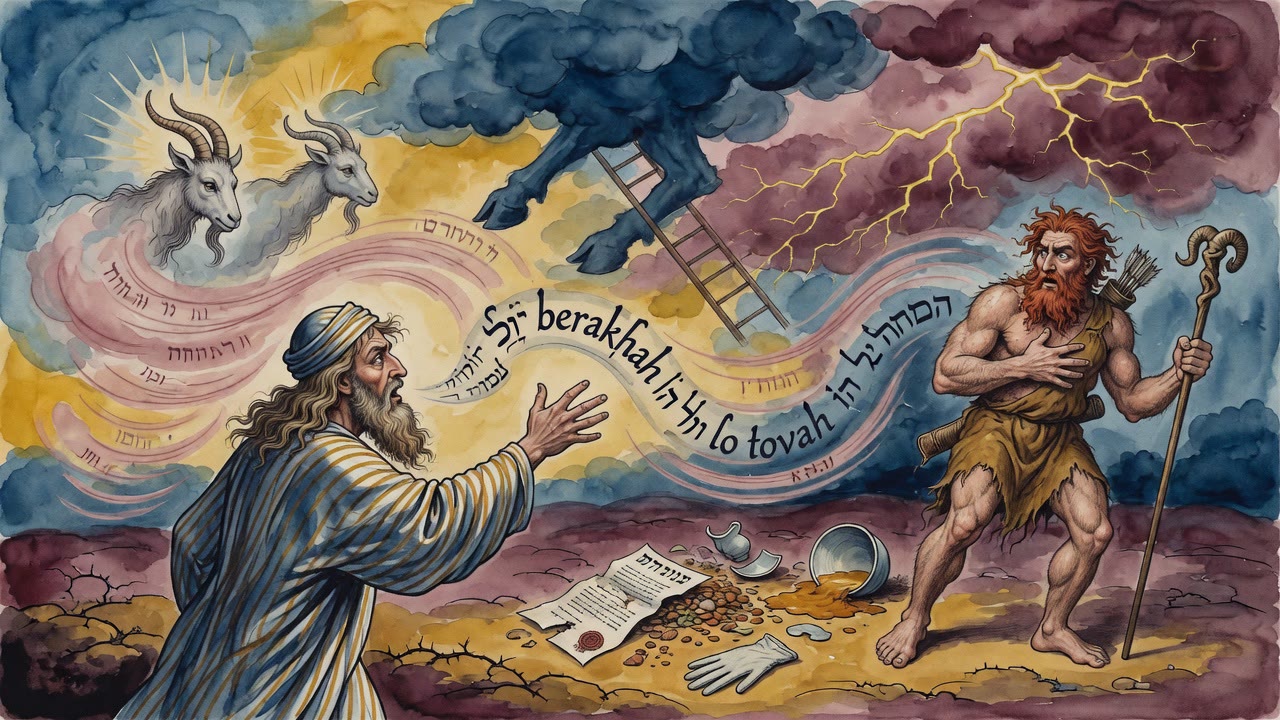
Jacob Crossed the Jordan and Escaped Esau at the Hot Springs
Esau's men held the road to Haran. Jacob had a staff and no bread. The river stood in his way, and his brother was already ahead.
Table of Contents
 Click for full size
The Road Was Already Taken
Esau did not sit with his loss. He sent men onto every road between Canaan and Haran. The blessing had gone to the younger son, and Esau meant to take it back with a knife.
Jacob saw the blockade before he reached it. Spears. Dust. Faces from his father's tents. He turned off the road toward the Jordan and walked until the river noise covered the sound of horses.
He had a wanderer's staff. He had no bread. The stolen blessing still sat hot in his mouth. The river was high, and the far bank looked like another country.
He Put His Staff in the River
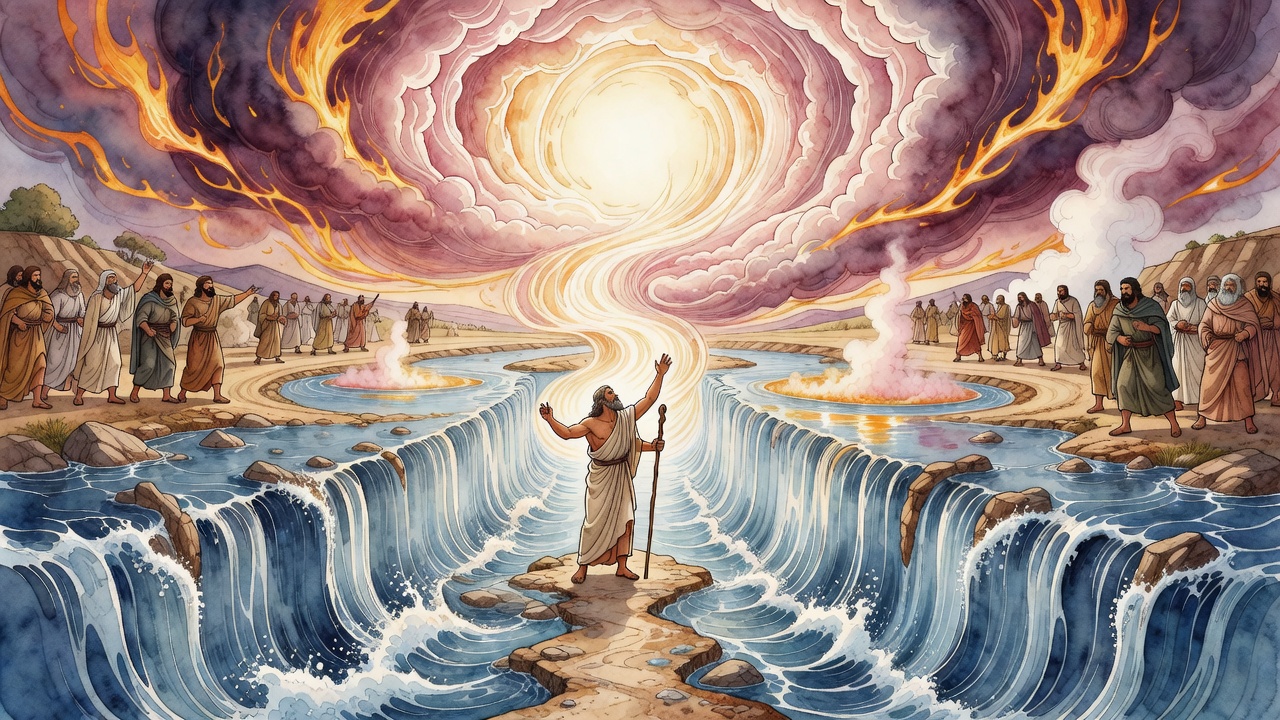
He planted the staff in the current and raised his eyes. No angel came down. No voice named the water. The Jordan split because he looked up.
He walked through on wet stones. The water stood like two walls and did not fall on him. A fugitive with a stick crossed a river that later armies would need a prophet to open. That river crossing bought him hours, not safety.
On the far bank he did not rest long. Esau was not a man who treated a closed road as the end of a hunt. The staff dripped. Jacob kept moving.
The Hot Springs at Baarus
Esau circled the long way and reached the hot springs at Baarus first. The water boiled. Cliffs stood over every approach. From above, a man in the pool was a clear mark.
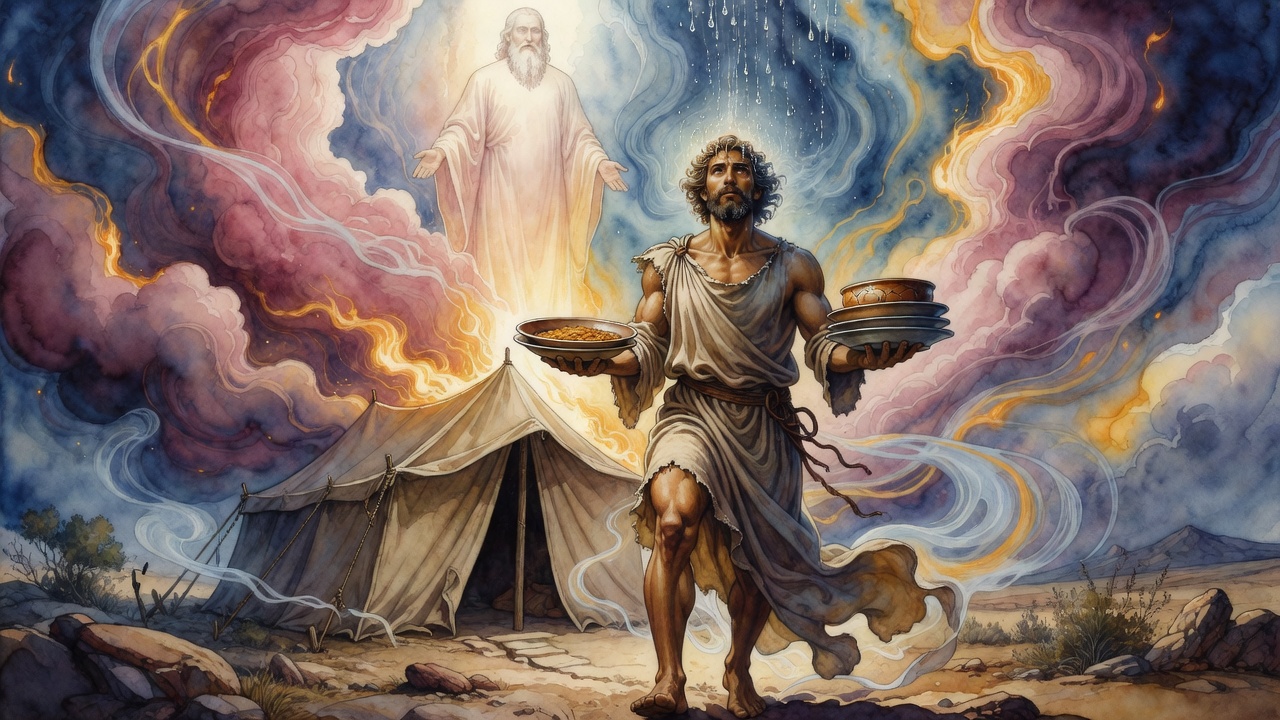
Jacob came on the path not knowing who had arrived ahead of him. The nights on the road had been cold. Steam rose off the springs. He looked at it and spoke to himself, because there was no one else to hear.
"I have no bread," he said. "I have no provisions. I will at least warm my body in the water."
He stepped in. Heat took his knees, then his ribs. He counted breaths. One. Two. The men on the cliff did not shout yet. They did not need to. Every path off the water was already a body with a spear. Above him Esau's men closed every exit. The trap was complete. Jacob stood in boiling water with no road left and the staff leaning on a rock he could not reach.
The Cliff Opened
The hot water turned cool around his legs. In the rock beside him a mouth opened that had not been there when he entered. He put his palm on the stone. It was wet. It was a door.
He stepped through. The opening shut. The men on the cliff had a pool and no brother in it. They shouted. The rock did not answer.
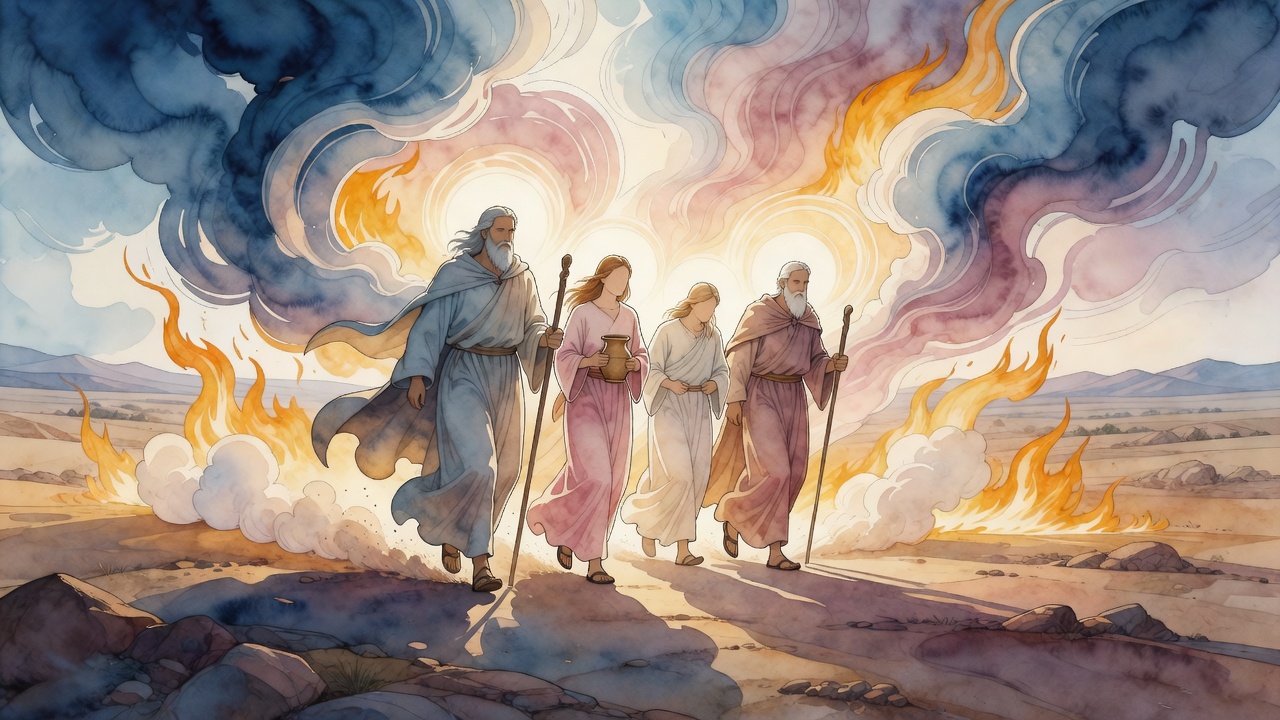
Water and fire had both been named as places where he would not be left. He had passed through the Jordan. He had walked in the fire of the spring. He was still running, and the miracles had not made him brave. They had made him late for the next ambush.
The Angel of Esau
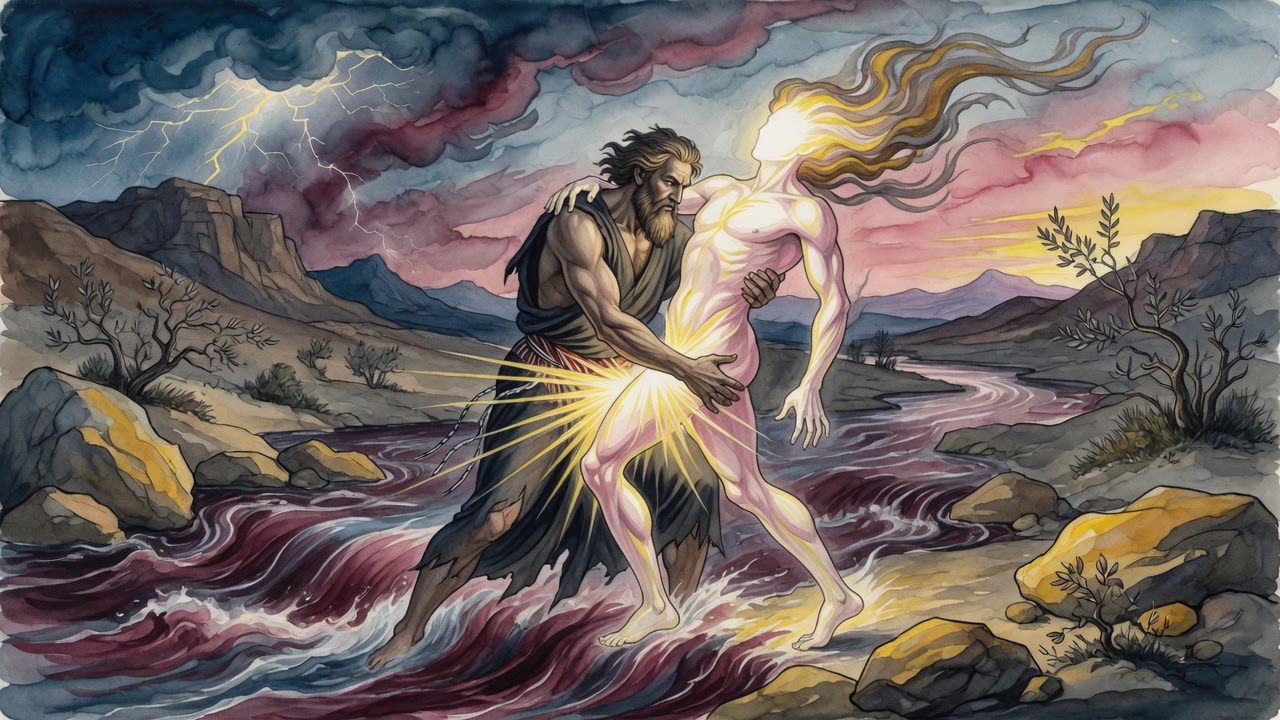
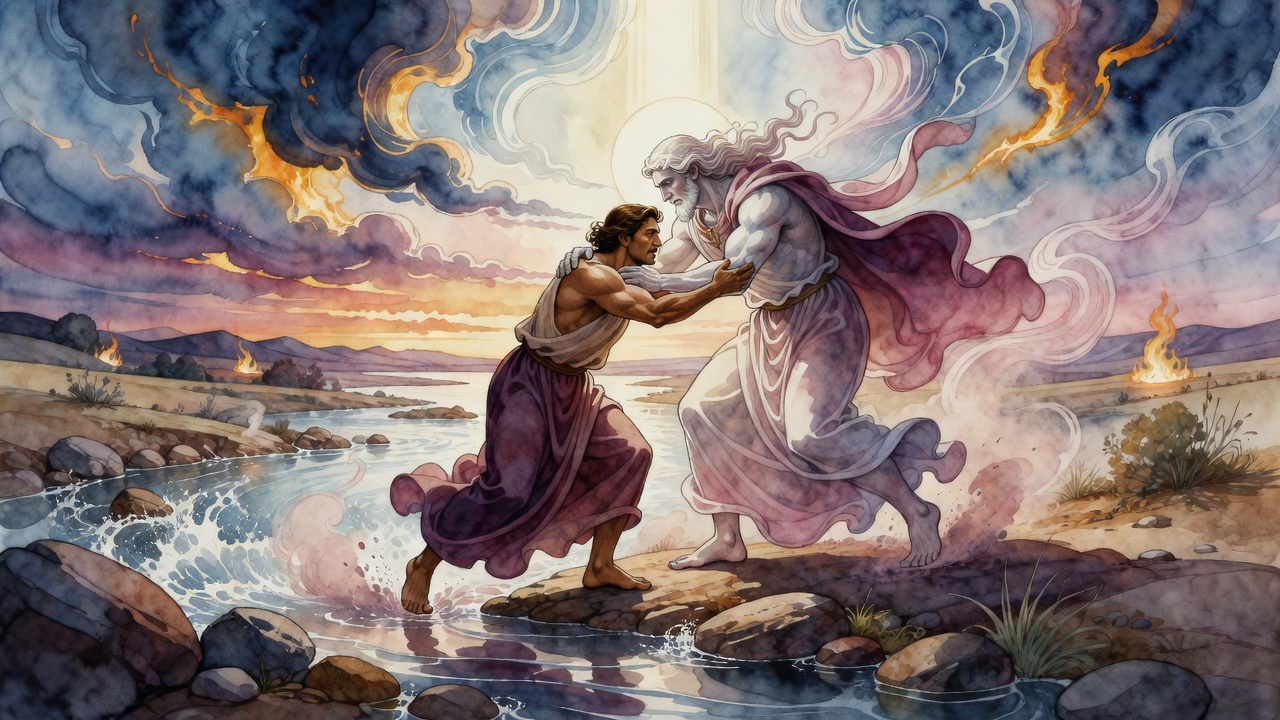
Night found him alone by a ford, and the hunt was not finished. A man seized him and would not let go. It was not a bandit from the road. It was Samael, Esau's guardian, wearing the younger brother down so that morning would belong to the older.
Jacob held. His hip went. He still held. The angel's breath was hot on his neck. Before he loosed him he asked for a blessing, not for his own name only. He asked it for the children who would come from him, so this accuser could not stand later and protest when God moved to free them.
The angel named him Israel and went. Esau still waited somewhere on the road. Dawn came over a man who limped.
When he came back from Padan Aram, after Shechem, after the dread that fell on the cities, after the mourner's blessing, God appeared to him again and blessed him. The haters saw it. The man with the staff had been helped. The door in the rock had not been the last door.
← All myths