4 min read

Rebecca Ran Down From Her Tower the Day Jacob Came Home

A mother who had not seen her son in twenty years watched him approach from her window. The old texts say she did not wait for him to reach the gate.

Curated by Arthur · Told by Maggid ·
Table of Contents
  1. The Woman the Torah Does Not Name at the Reunion
  2. The Spirit That Revived
  3. What She Did Before He Left
  4. The Blessing She Gave Before He Was Gone

The Woman the Torah Does Not Name at the Reunion

When Jacob finally crossed back into Canaan after twenty years in the house of Laban, the Torah says almost nothing about his mother. Rebecca does not appear at the homecoming. She is not named in the scene where Jacob meets Esau on the road. She does not appear at the reunion with Isaac. The Torah buries her in a single cryptic footnote, the death of Deborah her nurse, recorded in Genesis 35:8 without the death of the woman Deborah served.

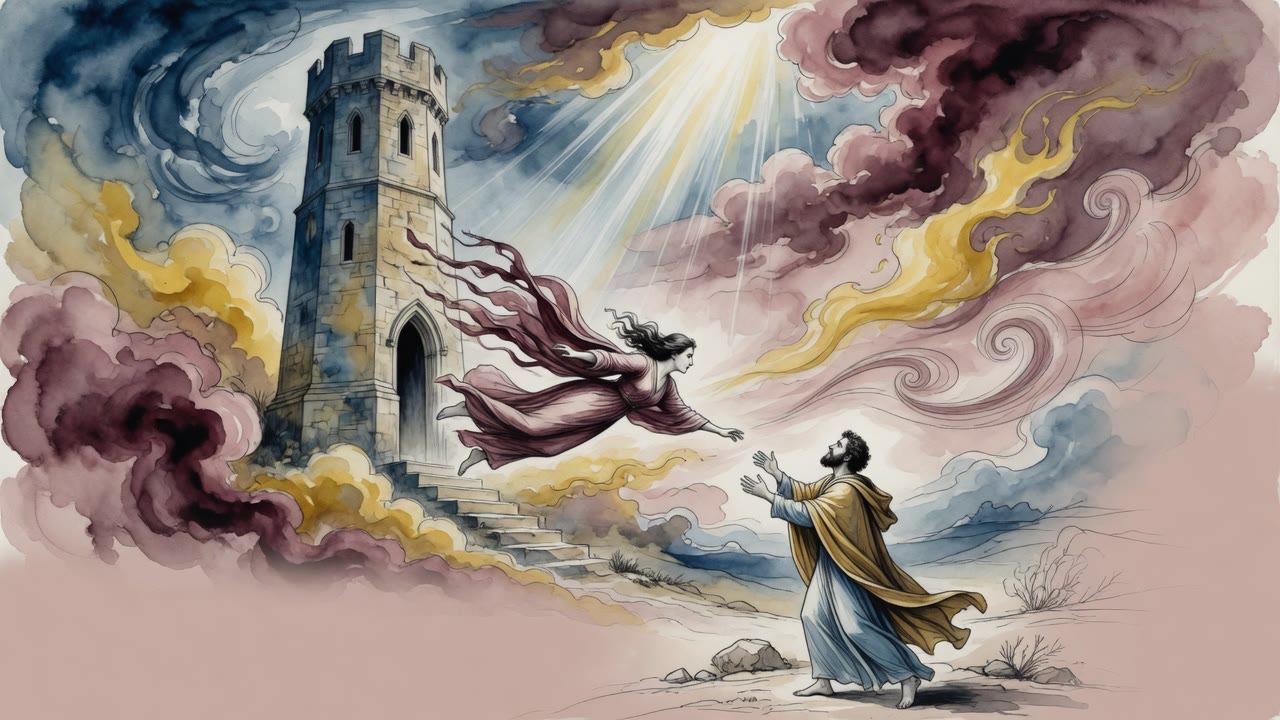
The Second Temple tradition refused to accept this silence as the whole story. It insisted that Rebecca had lived to see her son return, that she had been watching for him from a tower, and that when the word reached her, she did not wait.

The Spirit That Revived

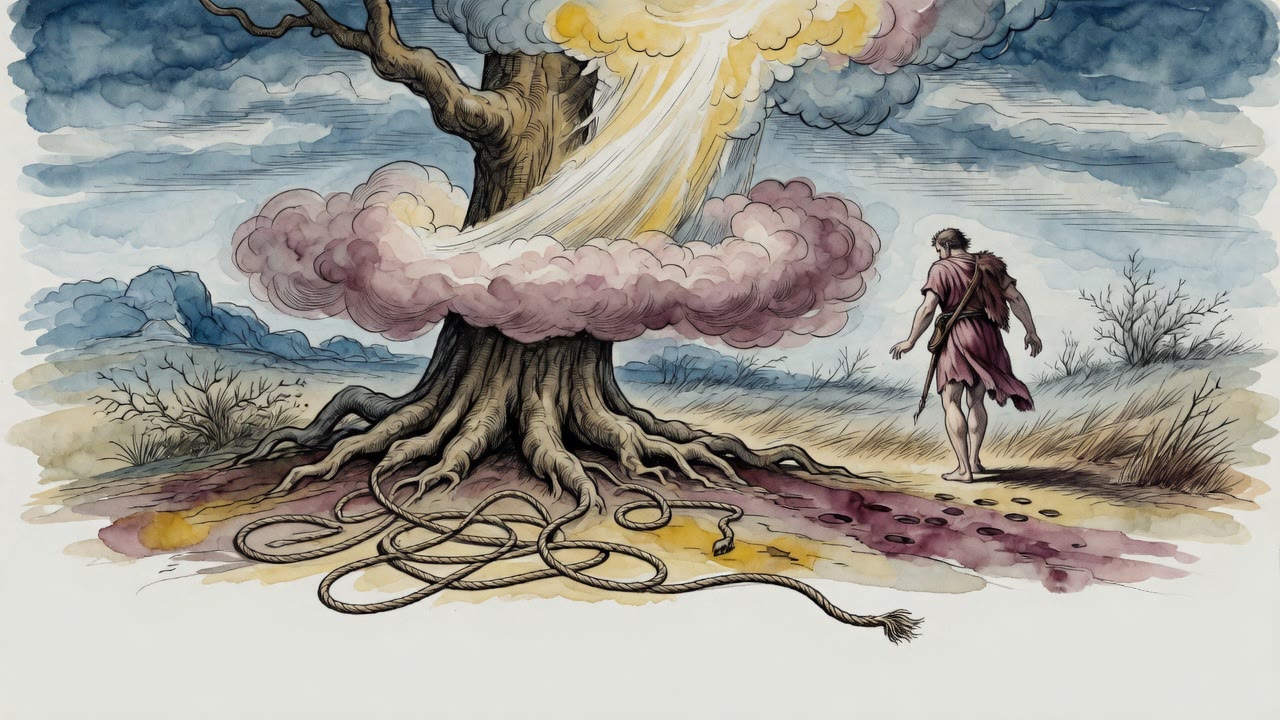
The Book of Jubilees, a Hebrew retelling of Genesis composed in the second century BCE and found among the Dead Sea Scrolls, puts Rebecca in a high tower of the household as Jacob's caravan approaches. The elder matriarch of a wealthy nomadic family, the kind of woman who has seen everything and still reads the horizon. Word comes that her son is on the road.

The text says her spirit revived. The phrase is nearly identical to the one used later in the Torah when the old patriarch Jacob hears that Joseph is alive in Egypt and the spirit of their father revived. The same construction, the same recovery from a grief that had taken up permanent residence in the chest.

She came out of the tower. Jacob was there. The text says she kissed him and embraced him, which in Jubilees is not a small gesture. It is the verb used for the fullest kind of reunion the text knows how to name.

What She Did Before He Left

The reason Rebecca knew Jacob had to come home safe was not sentiment. She had sent him away in the first place, over Esau's murderous rage, and she had done it with full knowledge that she was playing a longer game than Esau could see.

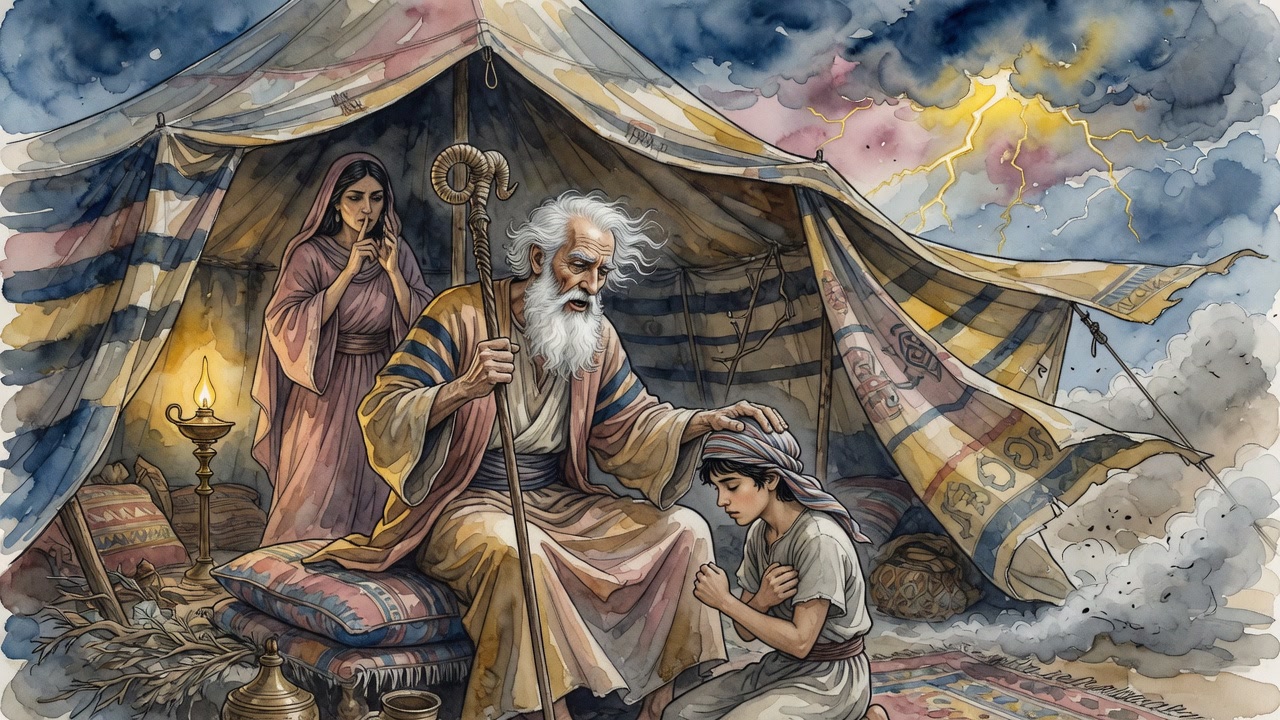
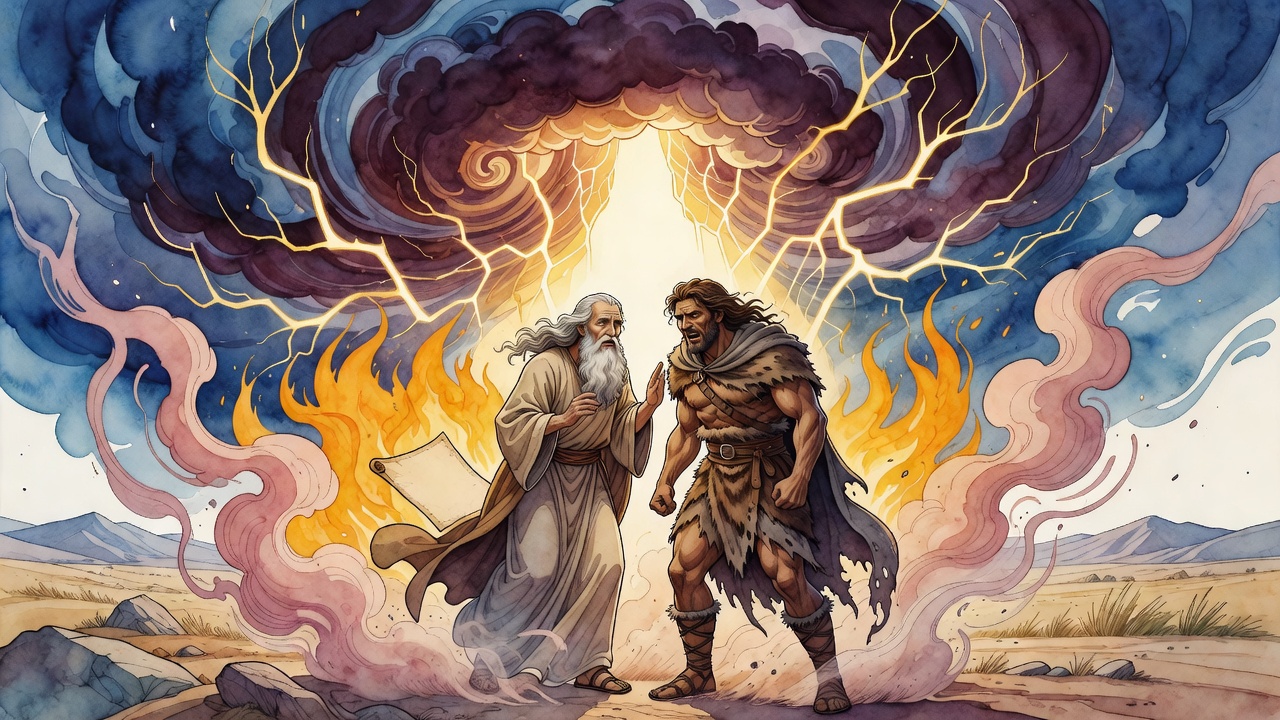
Ginzberg's synthesis of rabbinic traditions, drawing on Jubilees and the midrashim, preserves the conversation before the departure. Jacob had said he was not afraid. He said: if Esau comes, I will fight him. Rebecca had to explain to her second-born son that winning was not the question. What mattered was what came after: what a man becomes who has killed his brother, and what a family becomes that has watched it happen.

She sent him away. She told him it would be a few days. She lived long enough to know that few days was a translation of twenty years.

The Blessing She Gave Before He Was Gone

Jubilees chapter 25 gives Rebecca a long speech at Jacob's departure that the Torah does not record. She told him to take a wife from her father's house. She told him that the Most High God would bless him and his children. She gave him the blessing a mother gives when she is not sure she will still be there to give another one.

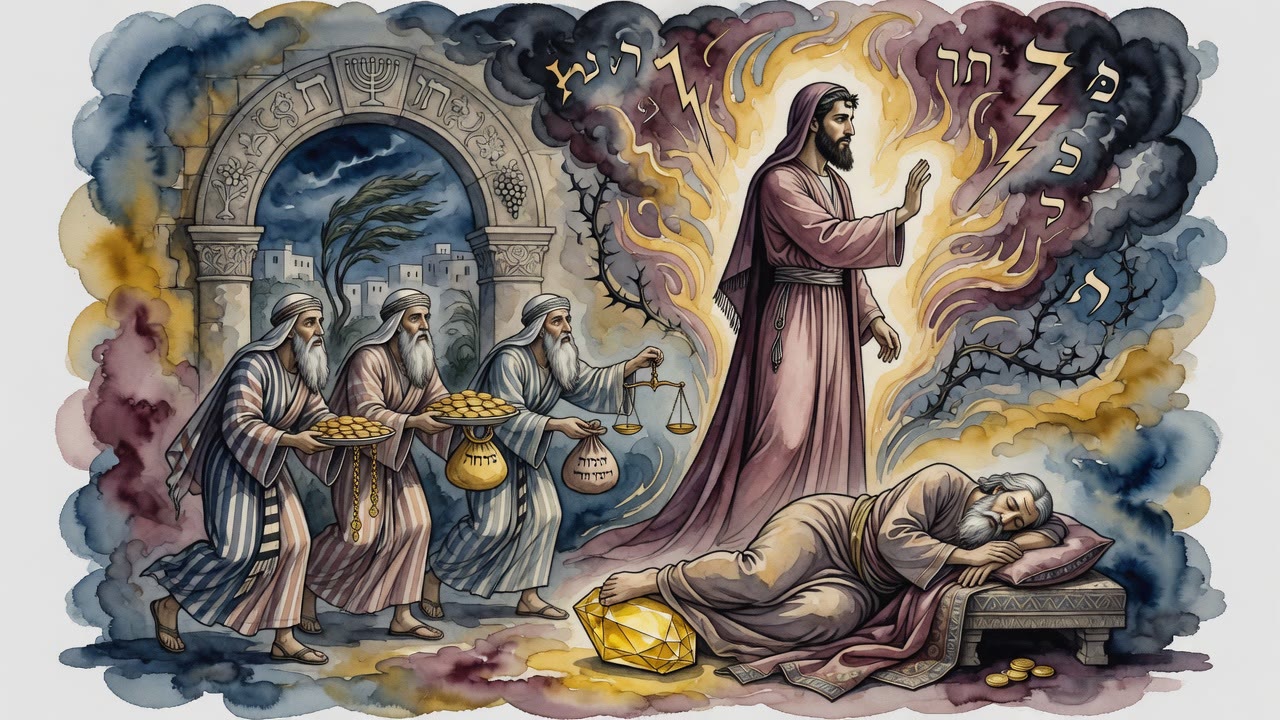
The midrashic tradition preserves a detail about her motivation that sharpens the whole story. Rebecca knew what she was doing when she dressed Jacob in Esau's clothes and sent him into the tent of a blind man. She had not done it out of favoritism alone. She had the ruach hakodesh, the holy spirit, and she knew that the blessing given to the wrong son would have consequences reaching forward across generations. She had not tricked Isaac. She had prevented a cosmic mistake.

Twenty years later, she was in a tower on a rise of ground, watching a caravan come in from the direction of Haran, and she came down the stairs before the messenger had finished speaking.


← All myths

From the tradition

Sources

5 sources

The texts this telling draws on, in full. Open a card to read inline, or expand it for a wider, quieter read.

Book of Jubilees 31:12Book of Jubilees

The Book of Jubilees, an ancient Jewish text, gives us a beautiful glimpse into that very moment.

Rebecca, Jacob's mother, is waiting, her heart pounding. She’s been living in a tower, perhaps seeking solace and reflection. Then, the news arrives: "Behold, Jacob thy son hath come!" Can you feel her spirit lift? The text says her spirit revived. What a powerful image!

She rushes out, and there he is. Jacob. After so long. The reunion is simple, pure. "And Rebecca came forth from the tower to the front of it to kiss Jacob and embrace him… and she kissed him." Just that. No grand pronouncements, just a mother's love overflowing.

The moment doesn't end there. Jacob isn't alone. He has two sons with him – Ephraim and Manasseh. Rebecca sees them, recognizes them, and asks, "Are these thy sons, my son?"

And here’s where it gets even more heartwarming. She embraces them, kisses them, and then, she blesses them. “In you shall the seed of Abraham become illustrious, and ye will prove a blessing on the earth.” Wow. What a blessing! What a legacy to bestow! Think about the weight of those words. The future of a people resting, in part, on these two young boys.

Finally, Jacob goes to see his father, Isaac, who is in his chamber, lying down. And his two sons are with him.

This short passage from Jubilees 31 isn't just a description of a family reunion. It's a evidence of the enduring power of family, the importance of blessings, and the continuation of a sacred lineage. It reminds us that even after years of separation and hardship, the bonds of love and faith can remain strong. It’s a beautiful, intimate moment amidst a larger narrative, reminding us of the human element within these grand, sweeping stories. It makes you wonder about your own family connections, doesn't it? What blessings have been bestowed upon you? What legacy will you leave behind?

Full source
Book of Jubilees 27:6Book of Jubilees

Remember Jacob and Esau? Those twins, locked in sibling rivalry from the womb? Yeah, the story gets even more complicated. Jacob, had just pulled a fast one on his father, Isaac, and tricked him into giving him the blessing meant for Esau. Whoops.

So, what happens next? Well, Rebekah, Jacob's mother, knows trouble is brewing. Big trouble. According to the Book of Jubilees, she tells Jacob, "Now, therefore, my son, obey my voice, and arise and flee thou to Laban, my brother, to Haran, and tarry with him a few days until thy brother's anger turneth away."

Basically, she's telling him to get out of Dodge! Hide out with her brother, Laban, in Haran, until Esau chills out. Seems like sound advice. But Jacob, ever the headstrong one, isn't so sure. "I am not afraid," he declares. "If he wisheth to kill me, I will kill him." Yikes.

Rebekah, being a mother, is having none of that. "Let me not be bereft of both my sons on one day," she pleads. Can you imagine the fear she must have felt? To lose both her sons because of this conflict?

It’s a powerful moment, highlighting the universal anxiety of a parent caught in the middle of their children’s battles.

And then, Jacob, perhaps realizing the gravity of the situation, responds to his mother, "Behold, thou knowest that my father hath become old, and doth not see because his eyes are dull..."

What's he getting at here? Is he manipulating his mother, reminding her of Isaac's frailty to get his way? Or is he genuinely concerned about his father’s well-being amidst all this chaos? It's open to interpretation, isn't it?

What's fascinating about this passage from the Book of Jubilees is how it humanizes these biblical figures. They're not just characters in a sacred text; they're a family dealing with jealousy, anger, fear, and the consequences of their actions. It’s a reminder that even in the most ancient stories, we can find reflections of our own lives and relationships.

And it makes you wonder, doesn't it? How many family feuds, both big and small, have played out across generations? How many times have parents tried to mediate between warring siblings? These stories, thousands of years old, still resonate because they tap into something deeply human. So, next time you're caught in the middle of a family squabble, remember Jacob, Esau, and Rebekah. It might just give you a little perspective.

Full source
Bereshit Rabbah 65:7Bereshit Rabbah

The Torah, and the wisdom of our Sages, are deeply concerned with justice, with making sure the scales are balanced. And the story of Isaac and his sons, Jacob and Esau, is a powerful example of this. Rebecca arranges this whole switcheroo. She favors Jacob, and helps him trick his blind father, Isaac, into giving him the blessing meant for Esau. Was it really just favoritism at play?

Rabbi Yehoshua ben Levi offers a different perspective. He points to (Proverbs 17:15): "One who exonerates the wicked and one who condemns the righteous, both of them are an abomination to the Lord." Rabbi Yehoshua suggests Rebecca wasn't just playing favorites. She understood something deeper about Esau. She knew that if Esau got to Isaac first, he might mislead the old man. He might paint a false picture of himself. And that, says Rabbi Yehoshua, is why she acted. She was trying to prevent a miscarriage of justice.

It's a fascinating idea, isn't it? That Rebecca's actions were less about love for Jacob and more about preventing Esau from manipulating his father. She was trying to protect the integrity of the blessing itself, ensuring it went to the one who would truly uphold its values.

What about Isaac? Why was he so easily fooled? The verse reads, "it was when Isaac was old, and his eyes dimmed." But why did his eyes dim?

Rabbi Yitzḥak, in Bereshit Rabbah, brings another piece of wisdom to the table, connecting Isaac's blindness to the idea of bribes. He quotes (Exodus 23:8): “You shall not take a bribe [for bribes blind the clear-sighted…].” Now, Rabbi Yitzḥak isn't necessarily talking about money. He’s talking about something more subtle. He says that if someone takes a bribe from someone who owes them something – in this case, Esau owed Isaac the mitzvah, the good deed, of honoring one’s father – his eyes will dim. Even if someone owes you something, accepting a "bribe" from them, maybe in the form of flattery, or special treatment, can cloud your judgment. You are not thinking clearly. How much more so, Rabbi Yitzḥak argues, if you take a bribe from someone who doesn't owe you anything? The implication is that Isaac, in some way, was susceptible to Esau's charm, to his outward displays of piety. He was, in a sense, "bribed" by his son, and that clouded his vision, both literally and figuratively.

These interpretations from Bereshit Rabbah add layers of complexity to this well-known story. They remind us that things aren't always black and white. That motivations can be complex. And that even the most righteous individuals can be susceptible to influence.

So, what does this mean for us today? Maybe it's a reminder to look beyond the surface. To question our own biases. To be wary of those who try to manipulate us with flattery. And, perhaps most importantly, to strive for justice, even when it's difficult, even when it means challenging our own preconceived notions. Because, as the Proverbs remind us, upholding righteousness is paramount in the eyes of the Divine.

Full source
Legends of the Jews 6:57Legends of the Jews

Rebekah, wife of Isaac and mother of Jacob and Esau, certainly did.

Isaac, old and blind, is about to bestow a blessing – a powerful, almost magical blessing – on his eldest son, Esau. But Rebekah knows this is wrong. It's not just a feeling; according to Legends of the Jews, she receives this knowledge through the ruach (spirit) hakodesh, the holy spirit.

Some might think she’s just playing favorites with her son Jacob. But Ginzberg, in his masterful retelling of the Legends, suggests otherwise. It wasn't simply love for Jacob motivating her; it was a fierce determination to prevent Isaac from making a terrible mistake. This blessing wasn't just some nice words. It was a divinely charged pronouncement. Giving it to the wrong person could have… cosmic consequences.

So, what does Rebekah do? She takes action. She tells Jacob: "This night... this night is special." She describes it as a night when the "storehouses of dew are unlocked," a poetic image hinting at divine abundance. It's a night, she says, when the celestial beings sing Hallel, praises to God. And crucially, she connects it to the future deliverance of the Jewish people from Egypt, when they too, will sing Hallel. Quite a powerful night, indeed! Hallel (הלל) is a Jewish prayer consisting of Psalms 113-118, which is used for praise and thanksgiving.

"Go now," she urges Jacob, "and prepare savory meat for thy father, that he may bless thee before his death." It’s a direct command, a call to action. She adds, appealing to his sense of duty and lineage: "Do as I bid thee, obey me as thou art wont, for thou art my son whose children, every one, will be good and God-fearing--not one shall be graceless." In other words, trust me, Jacob. This isn't just about you; it's about the future generations, your legacy.

Rebekah’s actions are often debated. Was she right to deceive Isaac? Was she manipulating her son? But perhaps, just perhaps, she was acting as an instrument of something larger than herself, guided by that inner knowing, that divine spark. And it certainly makes you wonder about the times in our own lives when we've had a gut feeling, a deep sense of right and wrong, guiding our decisions. Should we trust it? And how far should we go to act on it?

Full source
Book of Jubilees 25:9Book of Jubilees

Book of Jubilees turns to Rebecca Blesses Jacob Before He Departs in Jubilees.

The Book of Jubilees, sometimes called Lesser Genesis, is a fascinating ancient Jewish text. It retells the stories of Genesis, but with a lot of extra details and a unique perspective on things like chronology and law. It’s not part of the Hebrew Bible as we know it, but it gives us a peek into the beliefs and values of some Jewish communities way back when.

So, what's Jacob up to in Jubilees 25? It all starts with a blessing, a promise. He hears these words: "Thou wilt take thee a wife of the house of my father, and the Most High God will bless thee, and thy children will be a righteous generation and a holy seed."

Pretty straightforward. Find a wife from the family, and God will take care of the rest. But it’s the rest of the passage that really gets interesting.

Jacob then turns to his mother, Rebecca, and tells her something remarkable: "Behold, mother, I am nine weeks of years old, and I neither know nor have I touched any woman, nor have I betrothed myself to any, nor even think of taking me a wife of the daughters of Canaan."

Nine weeks of years? What on earth does that mean? Well, in Jubilees, time is often measured in "weeks of years", groups of seven years, like a sabbatical cycle. So, nine weeks of years would make Jacob sixty-three years old.

Sixty-three! And he's telling his mom he's never even thought about marrying a Canaanite woman. It's a pretty strong statement. It emphasizes his purity and his commitment to following his family's values.

Why is this so important? It's all about lineage, about keeping the bloodline pure and untainted. He continues, "For I remember, mother, the words of Abraham, our father, for he commanded me not to take a wife of the daughters of Canaan."

The shadow of Abraham looms large here. His command, passed down through generations, carries immense weight. It's not just a suggestion; it's a sacred obligation. We see here a real concern about assimilation, about the dangers of marrying outside the faith and losing one’s unique identity. It's a theme we see echoed throughout Jewish history and tradition.

And what's fascinating is how active Jacob is in this whole process. He's not just passively waiting for a wife to appear. He's actively reaffirming his commitment to his family's values and to God's will.

So, what can we take away from this little snippet from the Book of Jubilees? It’s a reminder that family expectations, religious obligations, and personal choices often intertwine in complex ways. It shows the importance placed on lineage and tradition in maintaining cultural and religious identity. And it highlights the tension between honoring the past and working through the present. It's a story about choosing a life partner, yes, but it's also a story about choosing who you are, and what you stand for, in the face of immense pressure.

Full source