Rebekah Bound Jacob by Oath Never to Take a Canaanite Wife
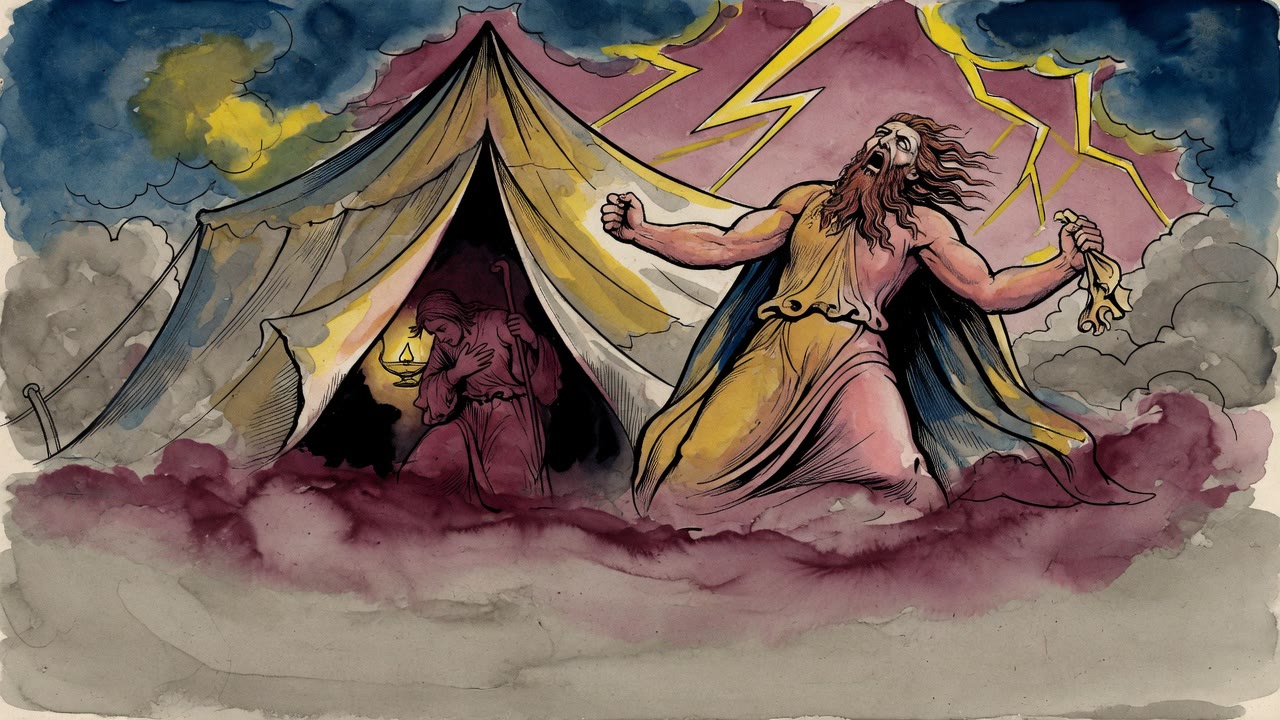
Esau's wives had made the tent bitter for years. Before Jacob left for Haran, his mother made him swear the words out loud, palms already opening.
Table of Contents
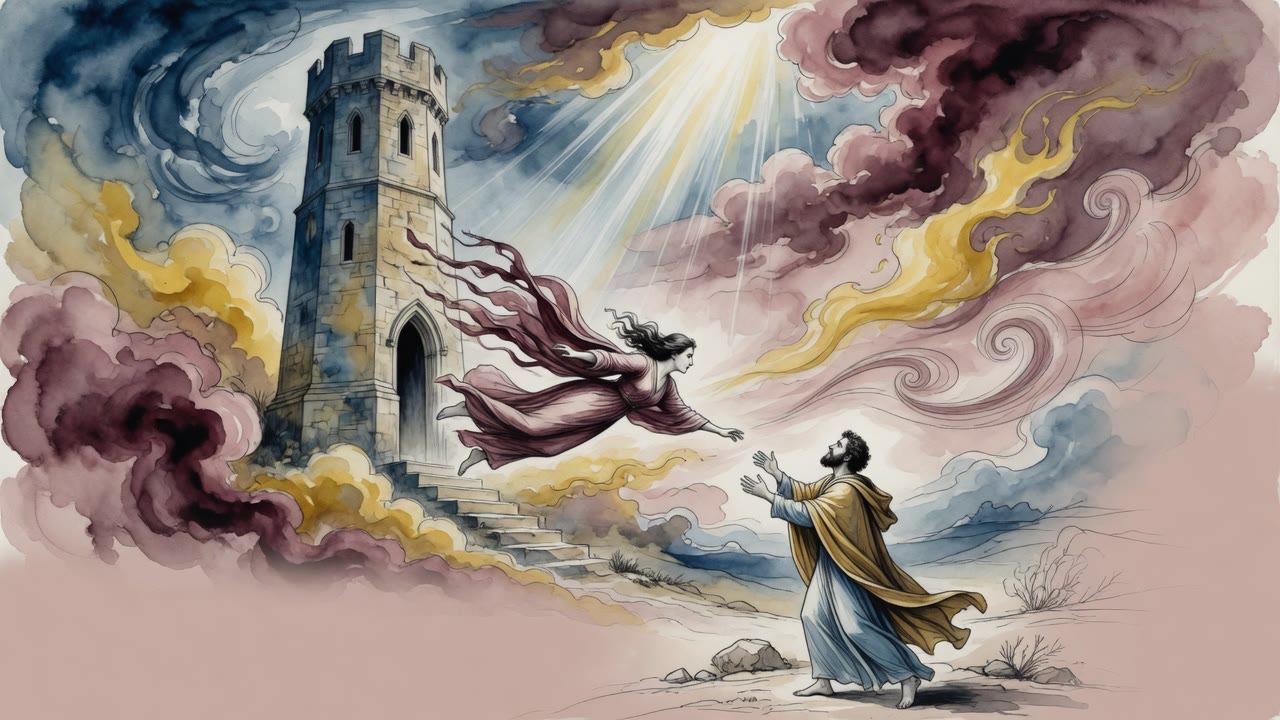
Rebekah called Jacob in while the house still slept. The stolen blessing was already behind them. Esau's anger was already in the yard. She was not sending her younger son to Haran with advice. She needed words he could not take back.
 Click for full size
"Thou wilt take thee a wife of the house of my father," she said. "The Most High God will bless thee, and thy children will be a righteous generation and a holy seed."
That was the road. Then she waited for him to bind himself to it.
Jacob Swore He Would Not Marry a Canaanite
Jacob stood in front of her. He was nine weeks of years old. Sixty-three. He had never touched a woman. He had not betrothed himself to anyone. He did not even think of taking a wife from the daughters of Canaan.
"I remember the words of Abraham, our father," he said. "He commanded me not to take a wife of the daughters of Canaan. I refuse to do as my brother hath done. I swear before thee, mother, that all the days of my life I will not take me a wife from the daughters of the seed of Canaan, and I will not act wickedly as my brother hath done."
He said it again, shorter, so she would stop being afraid.
"Fear not, mother. I shall do thy will and walk in uprightness, and not corrupt my ways for ever."
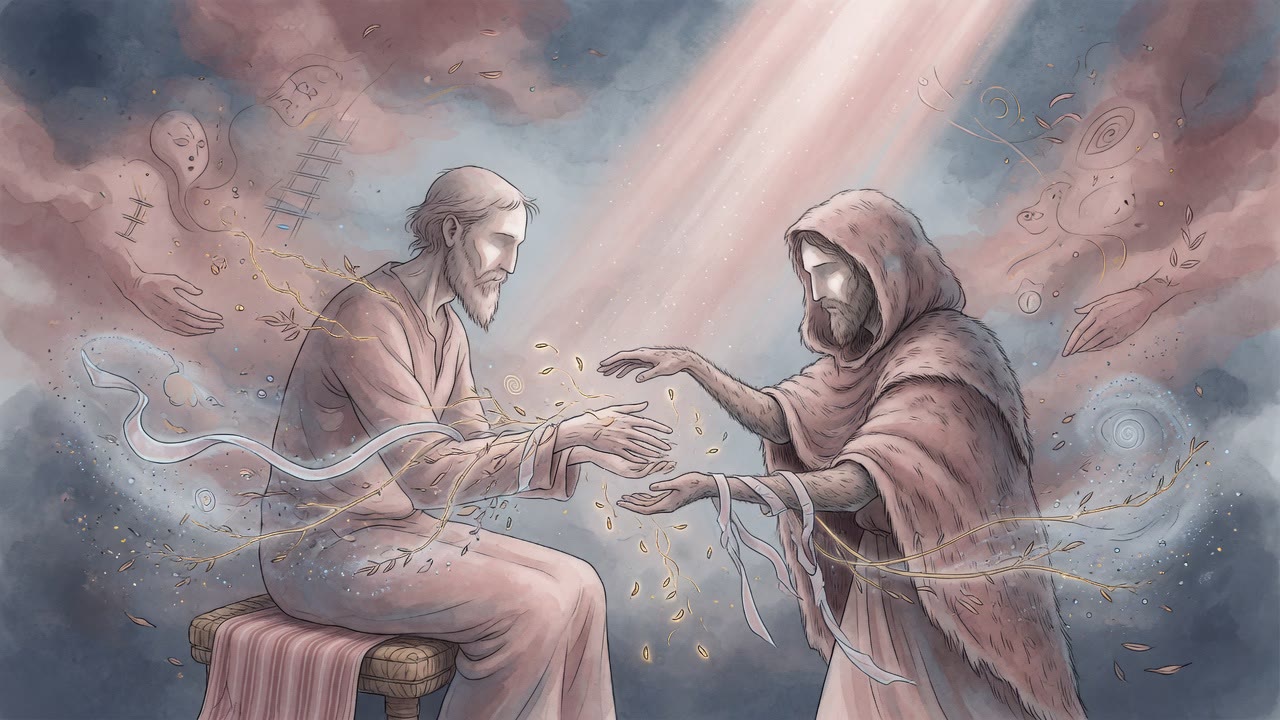
The oath was his now. Spoken. His. When he was far from this tent and lonely, the words would already be waiting in his mouth.
She Opened Her Palms to Heaven
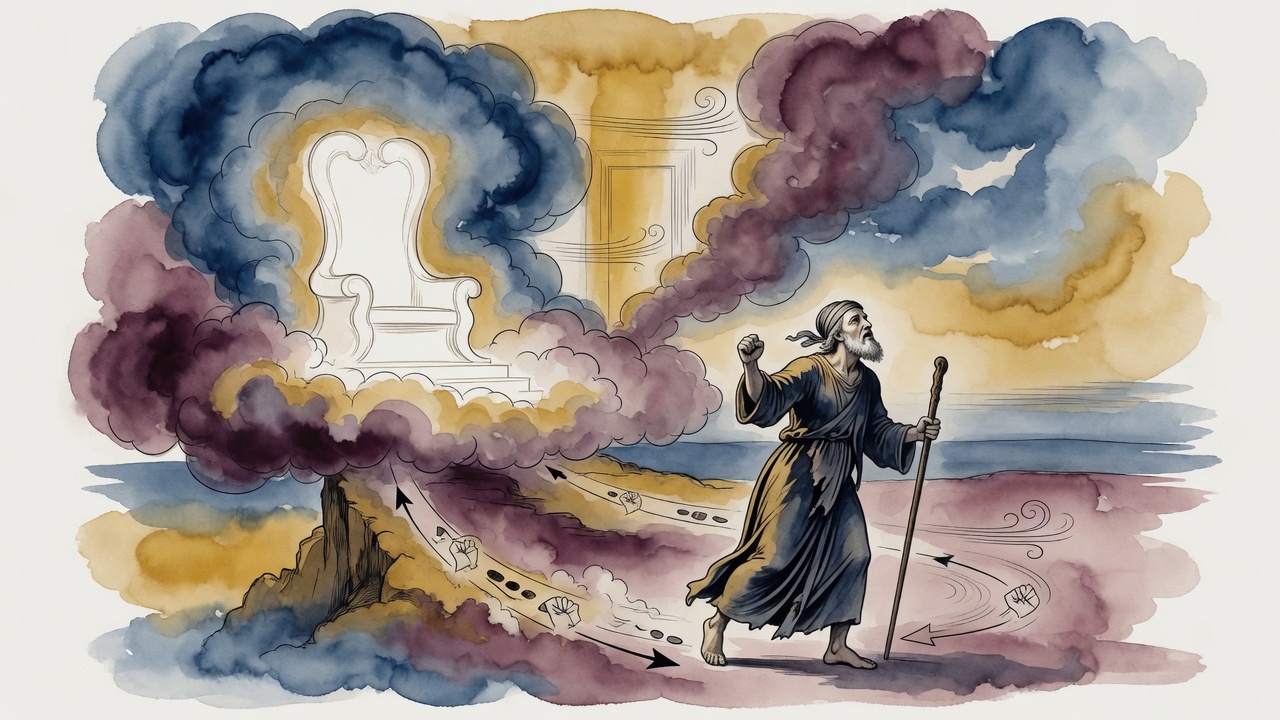
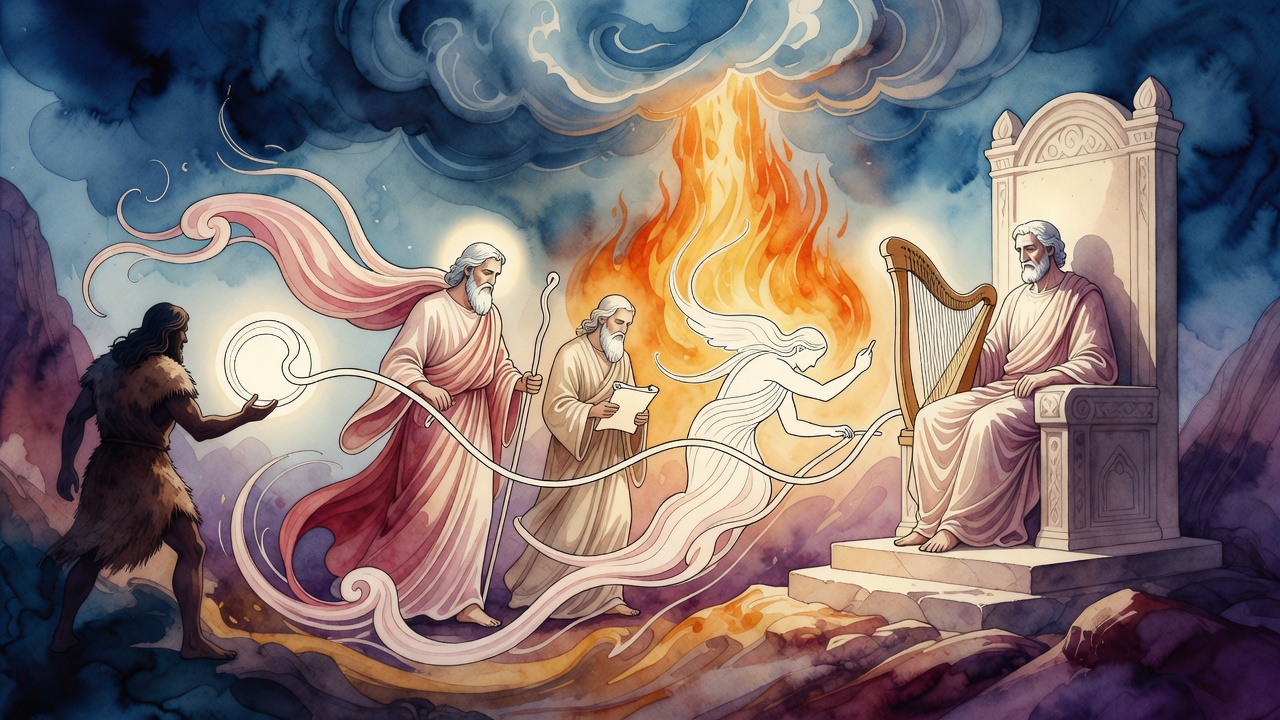
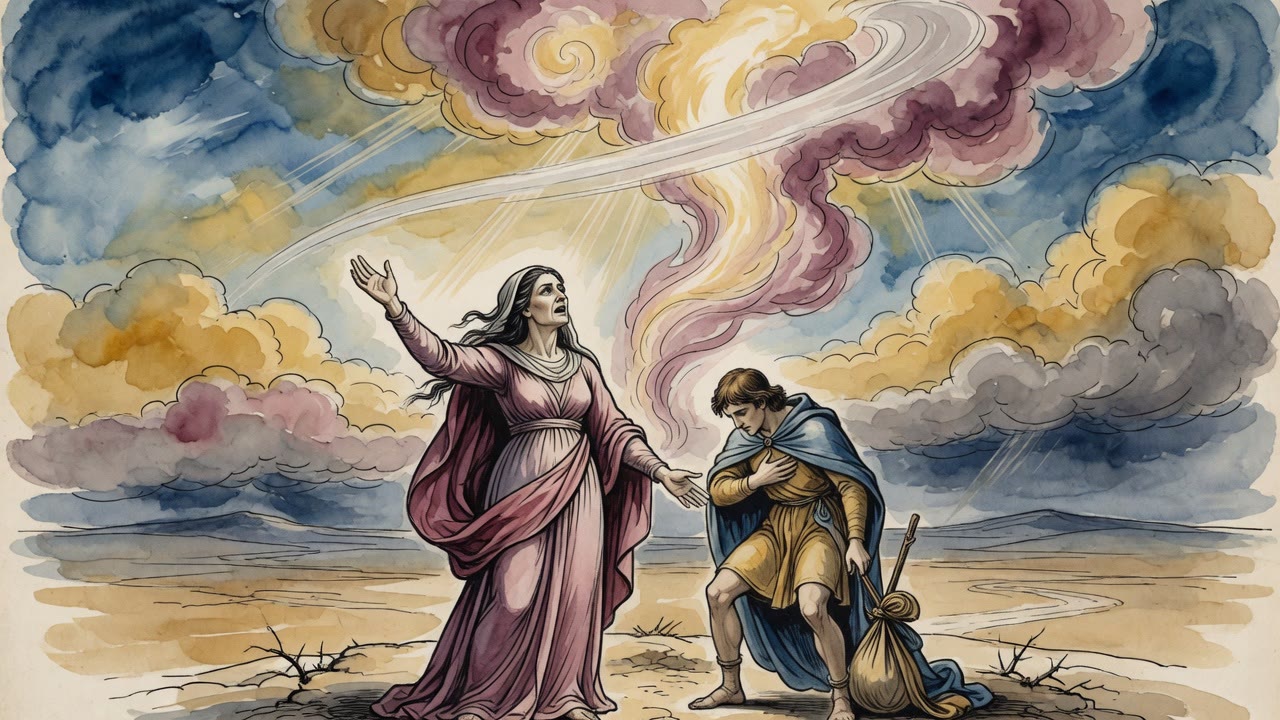
Rebekah lifted her face. She stretched out the fingers of her hands. She opened her mouth and blessed the Most High God, who had created the heaven and the earth, who had kept this son from the path Esau had taken.
Her palms were empty and facing the sky. That was the whole gesture. No closed fist. No bargaining. She thanked God for a holy seed that would not be mixed with the nations, and she did it while Jacob was still in the room, still hearing her, still bound.
She could not follow him to Laban's house. She could not stand in the dark on a wedding night and stop a switch of daughters. She could give him this: his own vow, and her hands open over it.
What Esau Had Already Done
Esau had married Canaanite women. The grief of it sat in the tent like weather. Isaac felt it. Rebekah felt it. The two wives had been a bitterness for years, and Genesis names that bitterness and moves on. Rebekah did not move on. She had watched one son choose the daughters of the land, and she had absorbed what the house became afterward.
She was not going to watch Jacob do the same thing without first making him say no out loud.
The vow was about a wife. It was also about which world he would live in when no one from this tent could see him. Esau had already answered. Rebekah extracted a different answer from Jacob before he left.
Abraham Had Charged Her to Watch
Abraham had seen Esau's deeds before he died. He knew that his name and seed would be called in Jacob. He called Rebekah and gave her a command, because he knew she loved Jacob more, and because love was not enough by itself.
"My daughter, watch over my son Jacob," he said. "He shall be in my stead on the earth, and for a blessing in the midst of the children of men, and for the glory of the whole seed of Shem. The Lord will choose him to be a people for possession unto Himself, above all peoples that are upon the face of the earth."
She had been watching. This morning was the watch turned into language. Abraham's warning, spoken one generation earlier, became an oath in a private room, with the younger son's voice doing the work the dying man could no longer do.
The Oath Had to Hold for Twenty Years
Jacob left for Laban's house. He would not return for twenty years. In those years a man would change his wages ten times, switch daughters on a wedding night, and come after him with armed riders when he finally fled. Rebekah could not have named each of those betrayals. She knew enough about Laban, and enough about distance, to know that settling where you are grows easier every year you stay.
The words spoken in Beersheba had to hold when nothing else could be held. Jacob had given them. Rebekah had opened her hands over them. Esau's path was already written in bitterness in that tent. Jacob walked north with a different sentence in his mouth, and his mother stood in the doorway with her palms still facing the sky.
← All myths