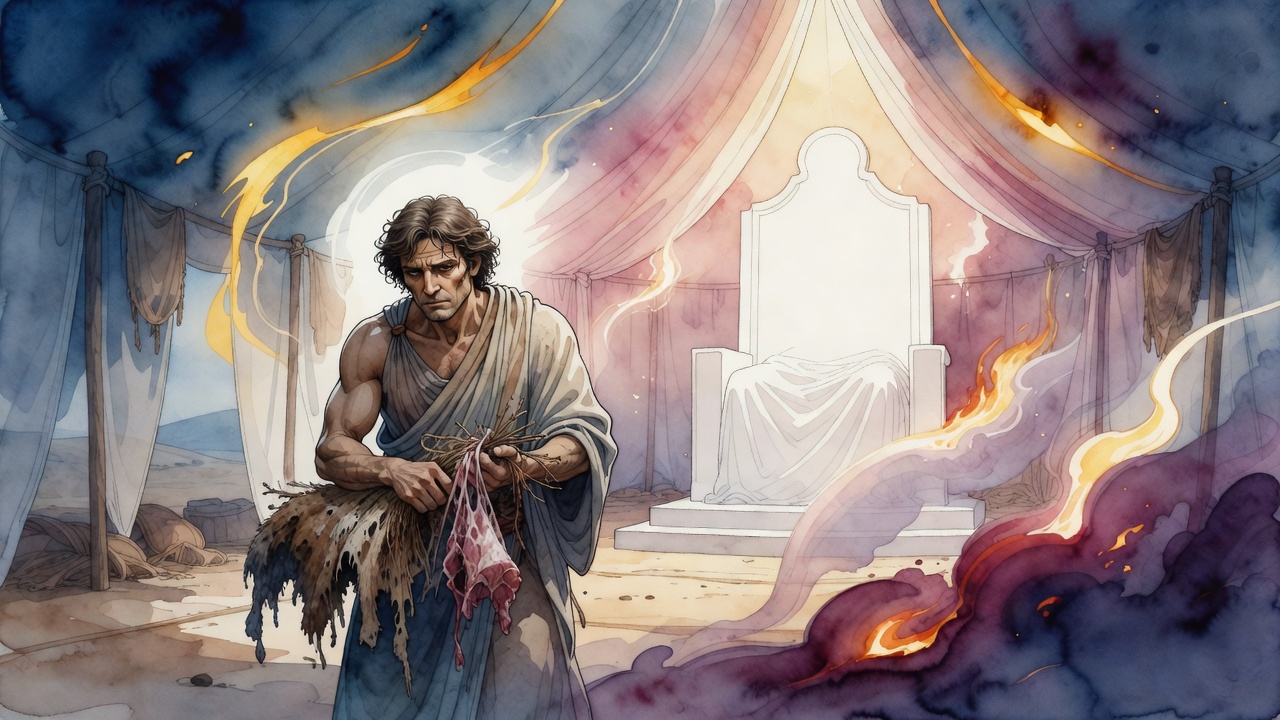
Esau Sold His Birthright and Learned What He Lost
The soup was real. So was the hunger. But Jubilees and the Midrash say Esau traded away his burial place beside the patriarchs along with his inheritance.
Table of Contents
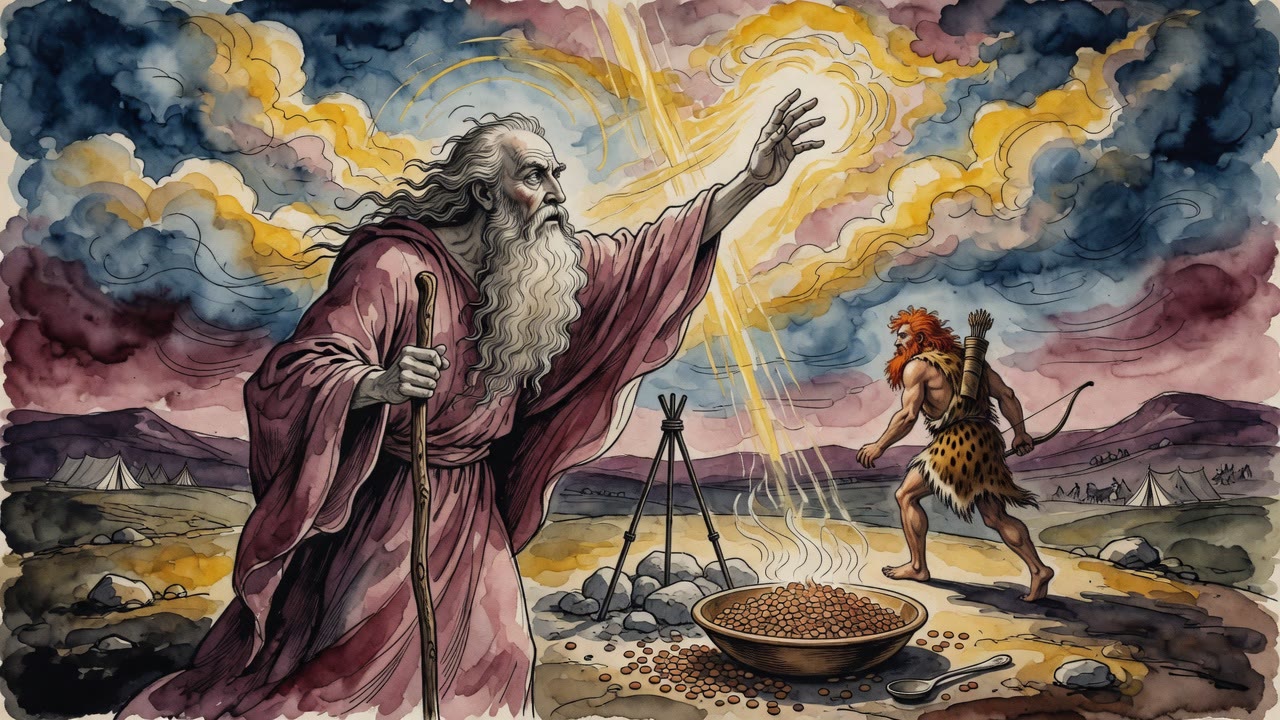
He came in from the field exhausted. The exhaustion was the hinge everything else would turn on. Esau was a hunter. He was built for physical labor in the open country. But on this particular day he had come back empty-handed, there was a famine on the land, the second famine since Abraham's time, and his brother was at the fire with a pot of something red and fragrant.
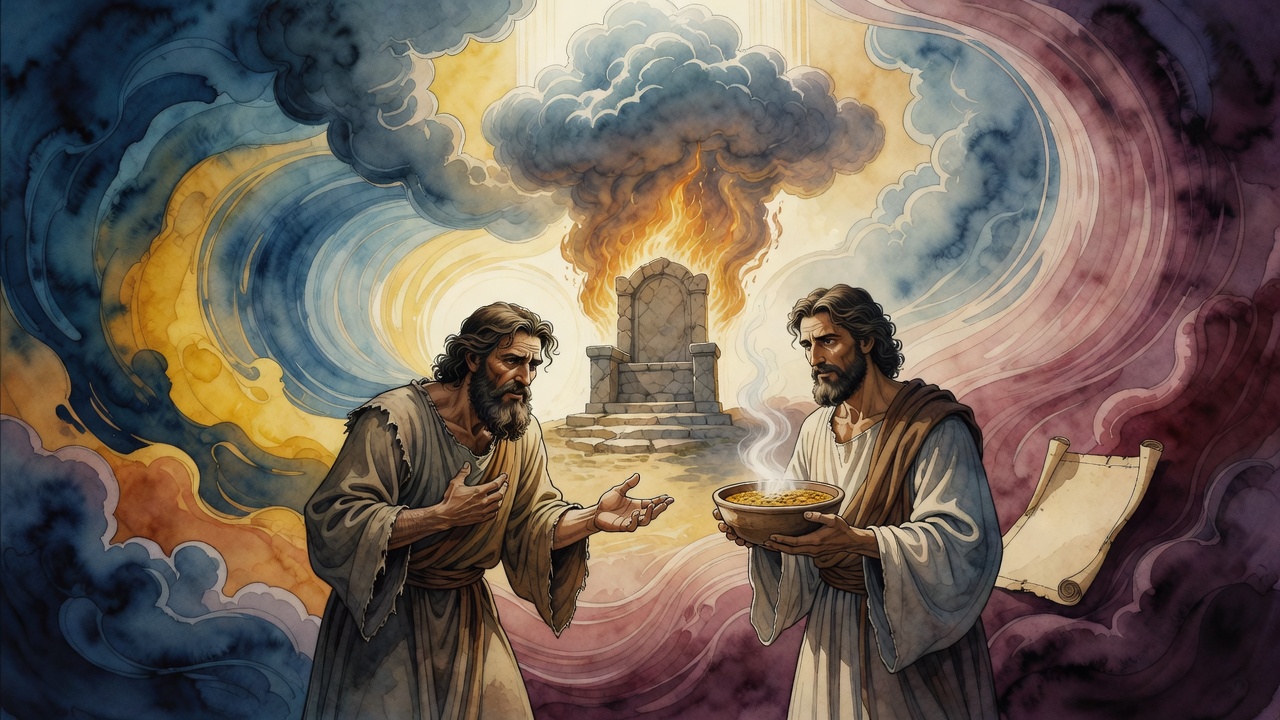 Click for full size
"Give me some of that red stuff," Esau said. "I am famished."
The Book of Jubilees, the second-century BCE retelling of the patriarchal cycle, locates this scene at the Well of Vision, in the first year of the third week of the forty-fifth jubilee. The calendar precision is Jubilees' standard, but the scene's emotional economy is the same as Genesis: this is a transaction that happens too fast, in a moment when one party is too hungry to think past the next hour.
The Sale Made in a Single Breath
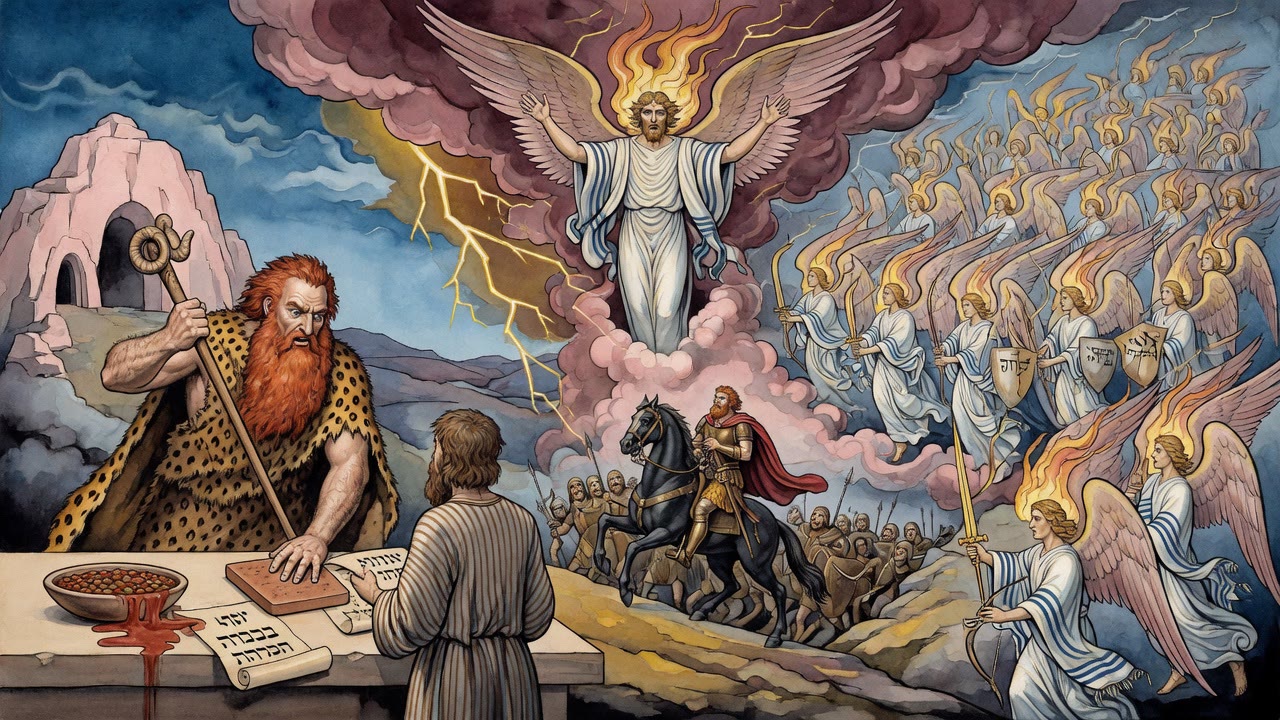
"Sell me your birthright first," Jacob said. And Esau sold it. The text does not pause for Esau's internal deliberation. There may not have been much. Hunger has a way of collapsing the future into a single point of present need. He swore the oath. He ate the bread and lentil soup. He rose and went his way. The Torah's summary is merciless in its brevity: Esau despised his birthright.
But the Ginzberg tradition, drawing on midrashim from the fourth and fifth centuries CE, gives the exchange a sharper theological edge. When Esau arrived and saw Jacob cooking, he asked what the stew was for. Jacob answered: "because our grandfather Abraham died today, and we are preparing a mourner's meal." This detail reframes everything. Esau is not selling his birthright for food on an ordinary hungry evening. He is selling it on the day the patriarch who had blessed and shaped and defined this entire family line was laid in the ground.
What He Did Not Know He Was Selling
Pirkei DeRabbi Eliezer, the eighth-century CE midrashic text, adds the detail that transforms the birthright from a title into a specific, physical inheritance. The birthright in the patriarchal family was not abstract primogeniture. It carried with it the right to be buried in the cave of Machpelah, alongside Abraham and Sarah, alongside the ancestors. When Esau sold the birthright to Jacob, the tradition says he also sold his place in that cave. He sold his burial plot. He sold his location in the family's permanent memory.
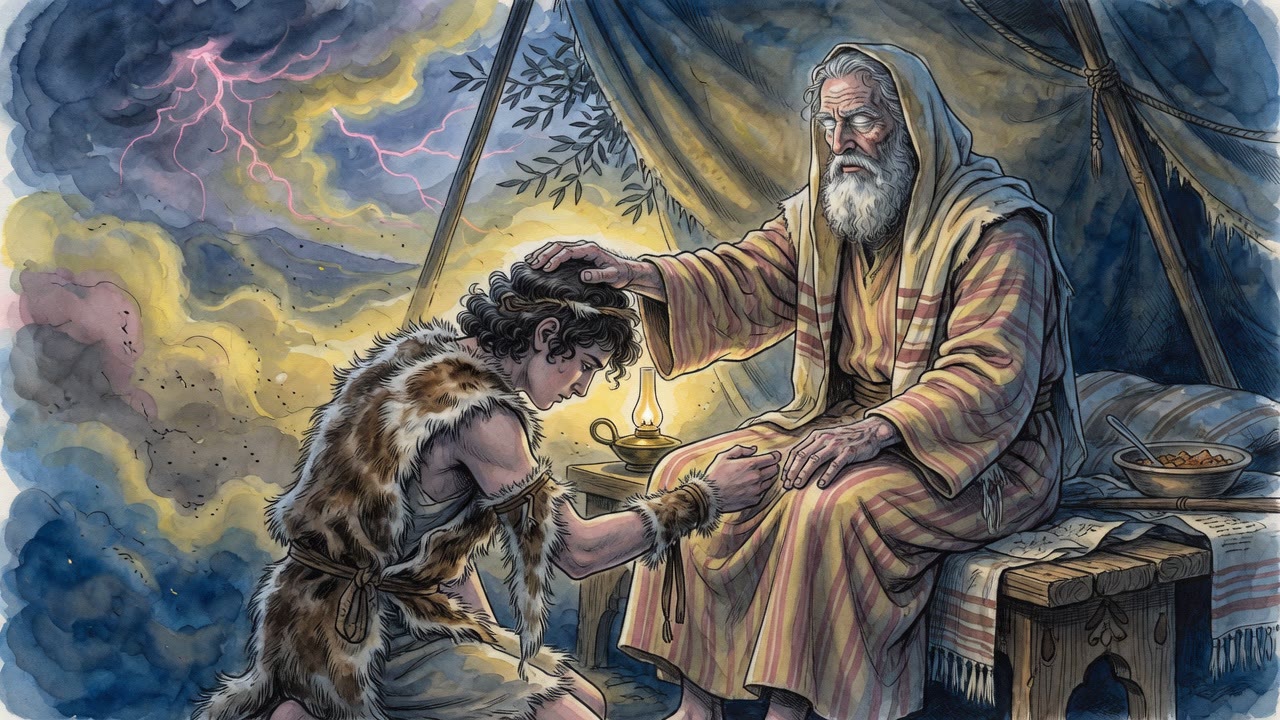
Esau stood up from the meal and walked away. He was satisfied in that moment, and there was nothing in the satisfaction that told him what he had just lost. The hunger that had felt like the most important thing in the world was gone. The future was what it always is for people who have just made irreversible decisions for immediate comfort: still invisible, already changed.
What Jacob Understood That Esau Did Not
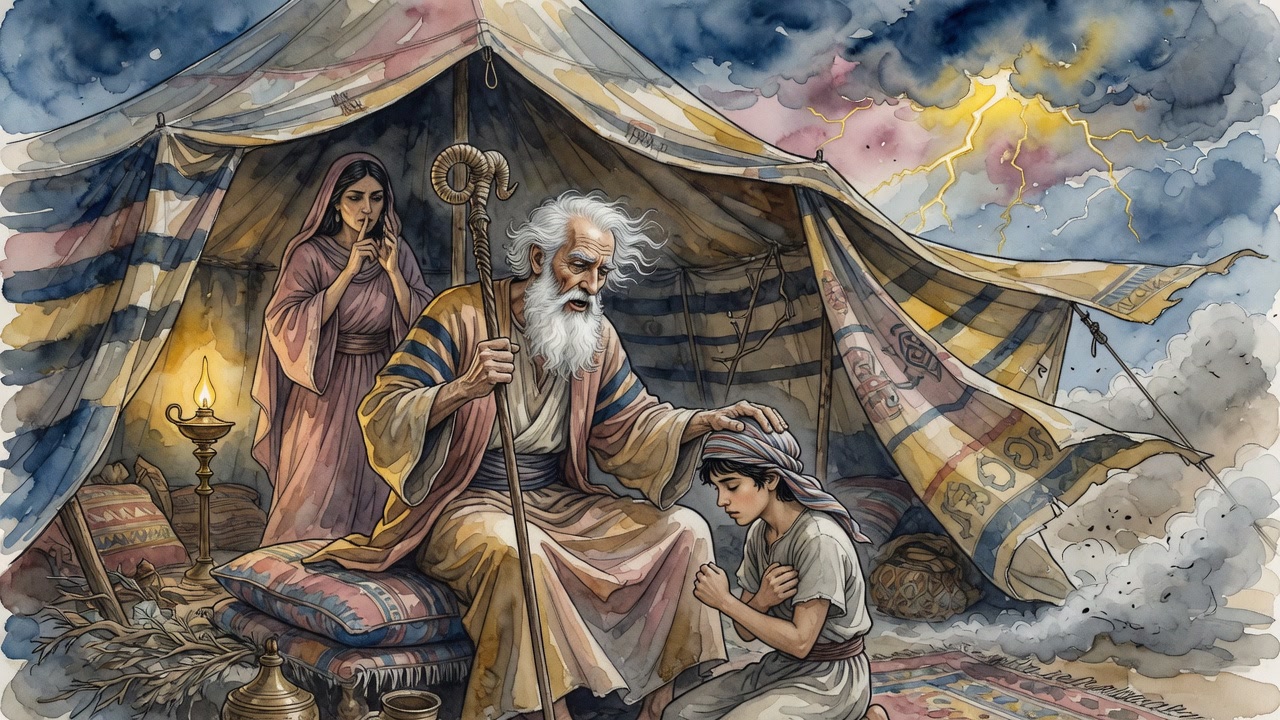
The midrashic tradition notes that Jacob had been cooking before Esau arrived. He was not cooking because he was hungry. He was cooking because Abraham had died that day and the meal was a mourner's meal, the traditional round lentils prepared for a house in grief. Jacob understood what the day was. He had absorbed from his father Isaac and his grandfather Abraham the meaning of the covenant line, the weight of the inheritance that came with the firstborn's portion. When Esau walked in from the field and asked for the red stew, Jacob saw clearly what his brother did not: that Esau was the firstborn of a man who had just been buried in the cave of Machpelah alongside Abraham and Sarah, and he was standing at the fire asking about soup. Jacob named the price. Esau paid it.
The Weight of the Lentils
The midrashic tradition spent considerable energy on the lentils specifically. Why lentils? Because they are round, like the wheel of fortune. Because they are the food of mourning, which is why Jacob was cooking them the day Abraham died. Because in every generation there is a moment when the round food of grief is offered to someone who needs comfort and does not understand what they are taking when they accept it.
Esau tasted the lentils and sold what could not be bought back. Jacob received the birthright and paid with food. The disproportion was not hidden from the tradition. What happened at the fire was not a contest of Jacob's cleverness against Esau's stupidity. It was the moment when what a person is became visible, what they are willing to trade, what they cannot see past, what hunger means to them when it arrives.
← All myths