The Angels Signed Jacob's Birthright and Guarded His House
Michael and Gabriel served as witnesses when Esau sold the birthright, then Michael carried Levi to the Throne before Jacob sent him as tribute to his brother.
Table of Contents
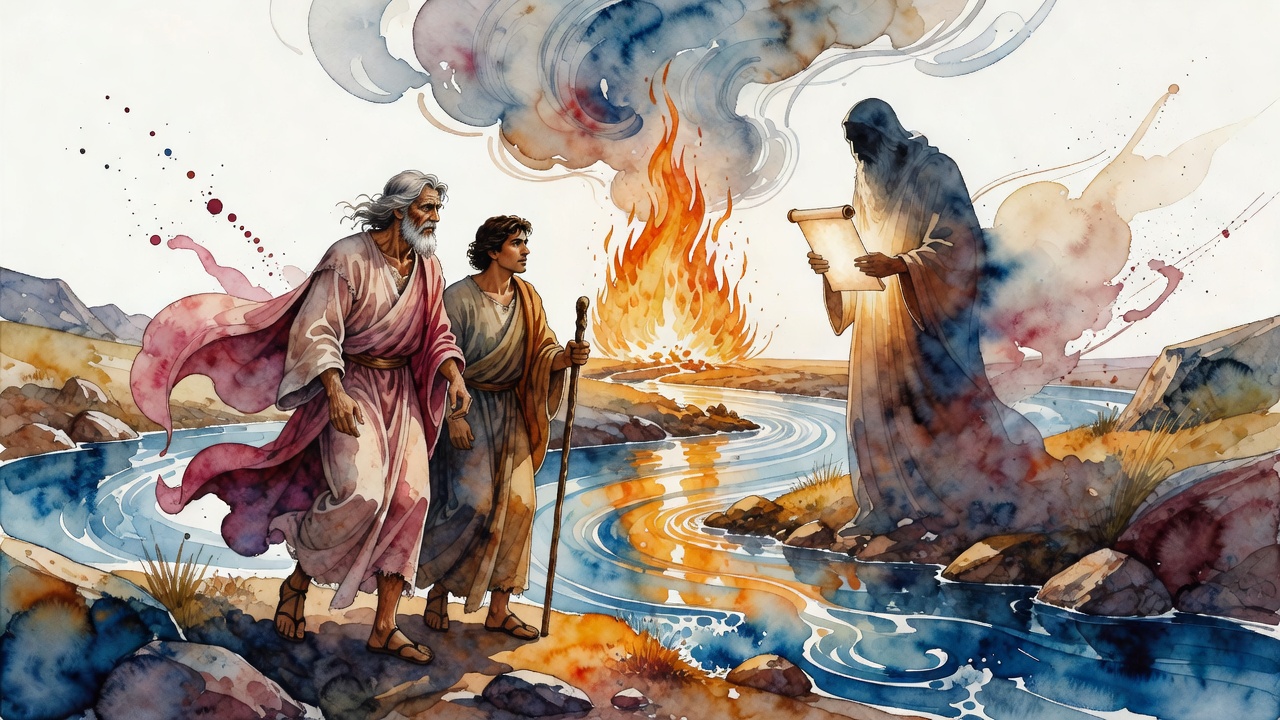
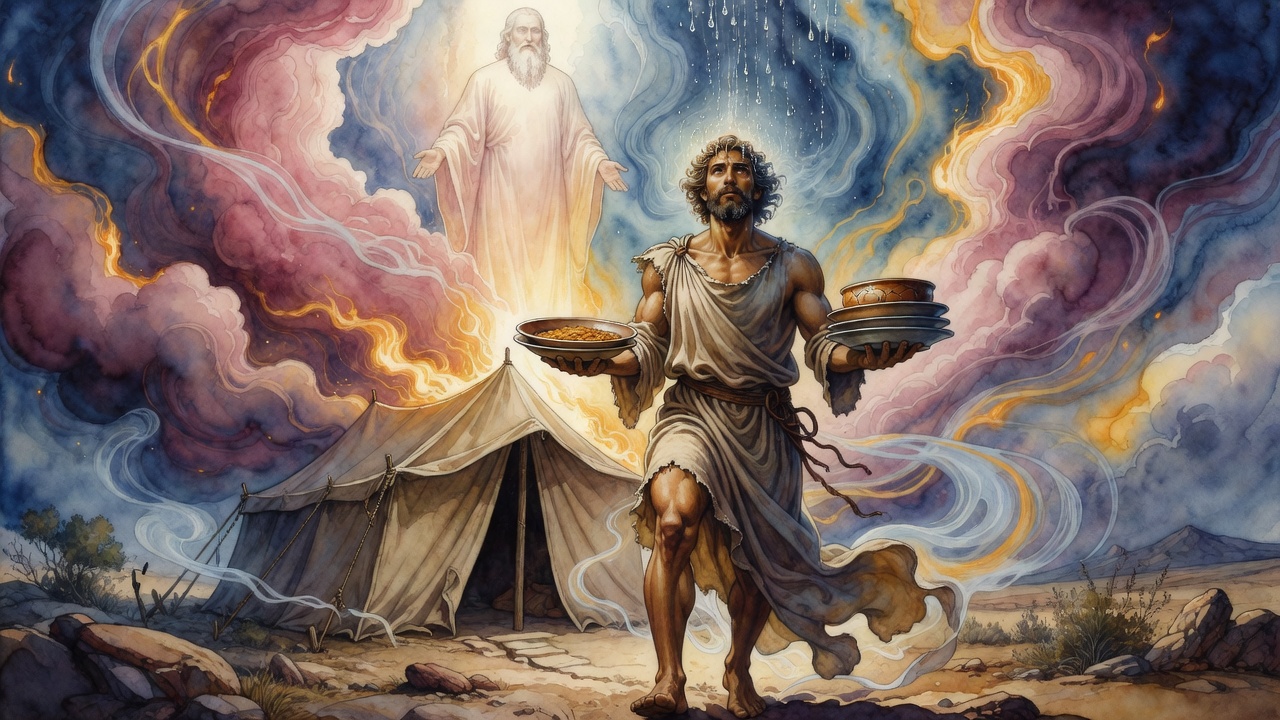
Jacob had a bowl of lentils and a brother who mocked him for it.
 Click for full size
Esau arrived with friends, men who laughed easily at the kind of thing that deserved solemnity. He looked at the food and the occasion and decided to enjoy both as a joke. Set the table, eat the food, laugh at the younger brother who actually believed the birthright meant something. Esau dragged scoffers to the meal the way a man calls witnesses to a display of contempt.
Heaven was watching. And heaven did not see a joke.
The Angels Wrote the Birthright Into the Record
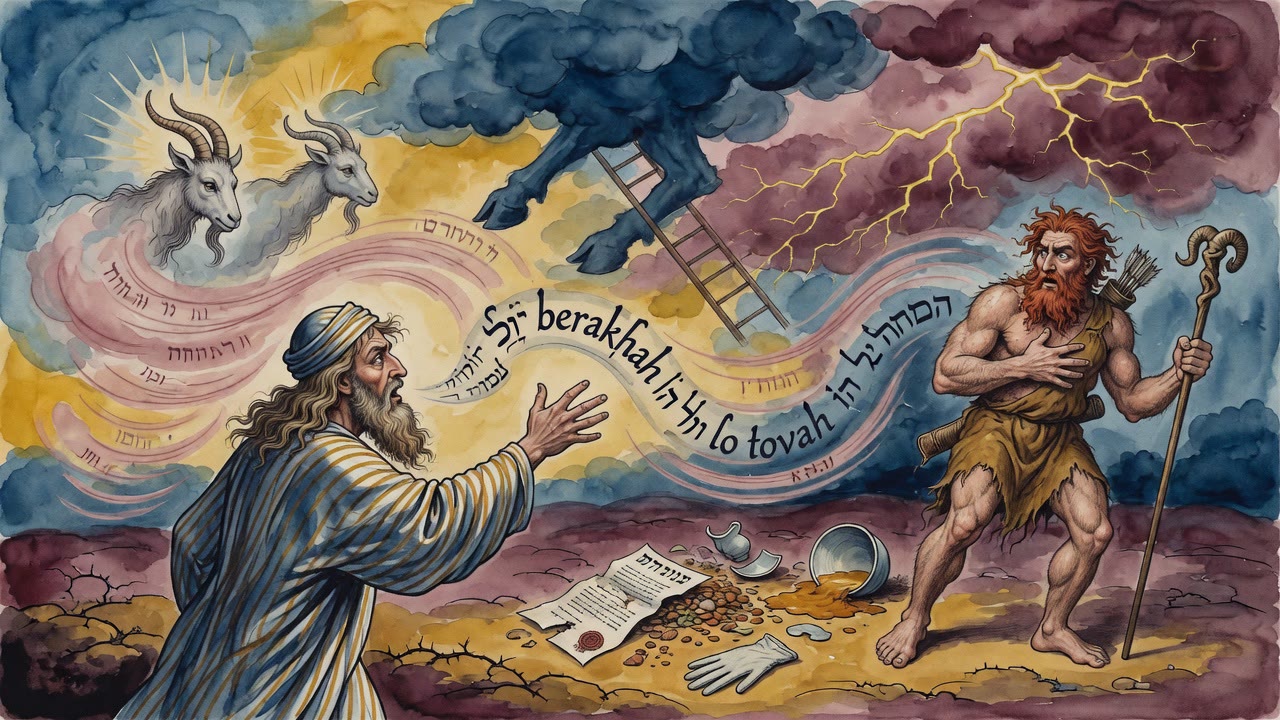
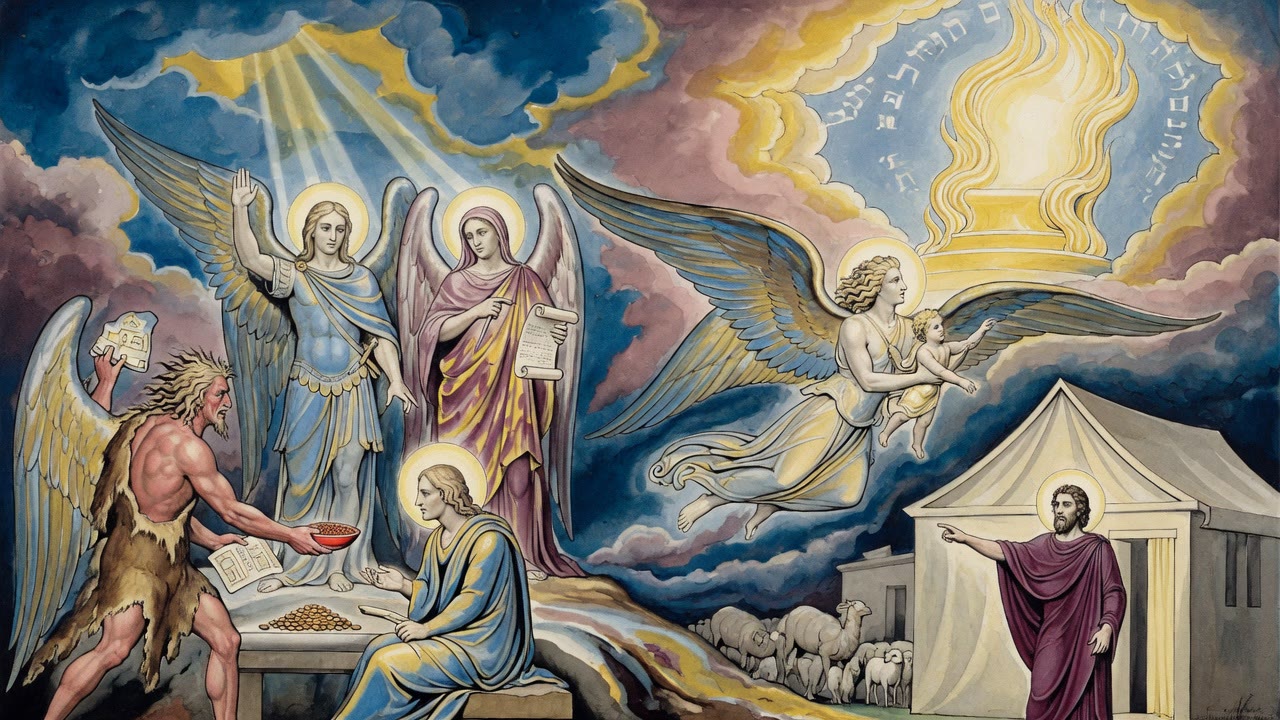
The Holy Spirit answered Esau's contempt with the prophet's words: set the table, light the lamp, let the princes rise. The sages heard instructions to the angels, not to a household. Michael and Gabriel were summoned as witnesses. Because Esau treated the birthright as sport, God sealed it as law. He declared afterward: "I will not change it." What was written that day with mockery was countersigned in heaven with permanence.
The lentils held two feelings at once. Abraham had just died, so the mourner's food was correct for grief. But Jacob had also received the birthright, so the same bowl held joy. One meal, two truths, sorrow and gladness folded together in a pot that Esau ate as though it were nothing.
Michael Carried Levi to the Throne
Rabbi Ishmael taught that Jacob counted his sons in a particular order, and when the count reached Levi, the boy was marked as holy to God. Then something remarkable happened above. Michael descended, took Levi, and carried him before the Throne of Glory.
Presenting the child to God, Michael announced: "this one is Your portion, the living tithe." God stretched out His right hand and blessed Levi, decreeing that his descendants would serve before Him on earth as the ministering angels serve in heaven. Michael pressed further and asked how the King's own servants would eat. The answer became the priestly law: the fire-offerings and the divine inheritance would be their bread.
Then Jacob did something that troubled Heaven. He gathered the tithe of his flocks and sent it as tribute to Esau. God rebuked him. The tithe belonged to the One who had taken Levi. It was not Jacob's to redistribute to the brother who had scorned the birthright at the very table where angels had witnessed its transfer.
The Name Israel Was a Victory Reported to Both Worlds
The angel who wrestled Jacob until dawn spoke a parting blessing: "you have striven with divine and human beings and have prevailed." The sages unfolded both halves. Jacob had wrestled with beings above and won. He had wrestled with beings below and won. The struggle reached into both worlds.
Rabbi Chama bar Chanina identified the night-wrestler as the guardian angel of Esau himself, and found the proof in Jacob's own morning. When the brothers finally met, Jacob told Esau: "I have seen your face as one sees the face of a divine being." The phrase was no mere flattery. As the divine face carries judgment, Esau's face carried judgment. As Scripture warns that none shall appear before the divine presence empty-handed, Jacob did not approach his brother empty-handed. The night's wrestling and the morning's meeting were two halves of the same reckoning.
Joseph Stood Between His Mother and Esau's Eye
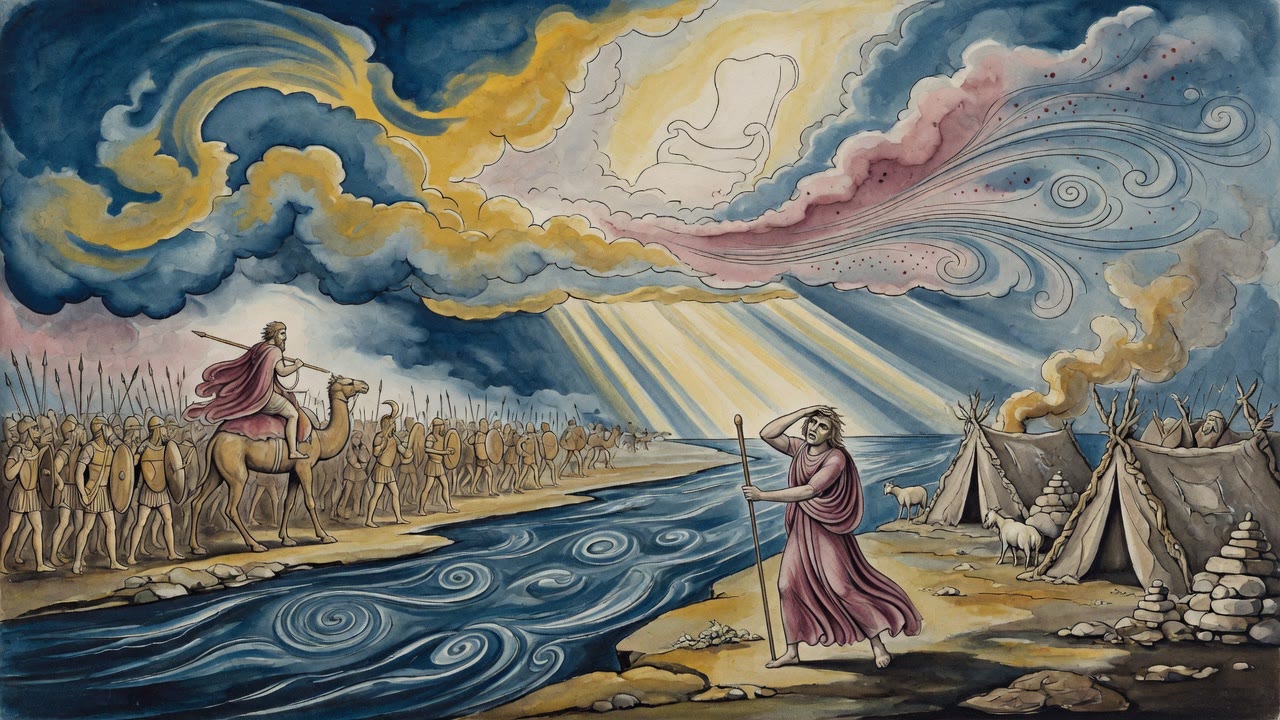
As Esau approached with his four hundred men, each mother stepped forward with her children to bow before the brother who had once wanted Jacob dead. But Joseph moved differently. He reversed the order, placing himself in front of Rachel rather than behind her.
The sages explained why. Joseph feared Esau's arrogant and lustful eye might fall on his beautiful mother. So Joseph stretched himself tall and put his body between Rachel and that gaze. He shielded her with himself. Jacob's later blessing of Joseph as a fruitful son over the eye carried this memory inside it. It fell to Joseph to block that wandering eye, and he accepted the task without being asked.
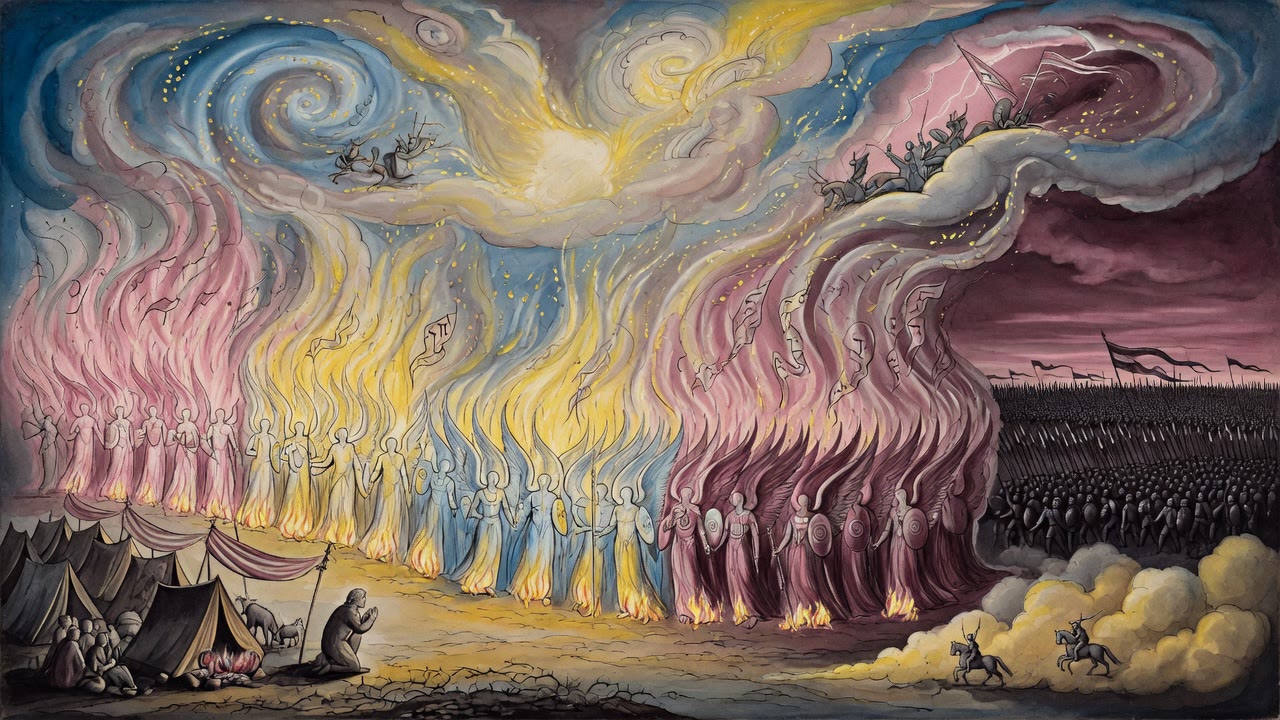
The night before, a hidden battle had already been fought. Esau came with four hundred men, but through the dark hours the ministering angels formed themselves into companies and bands and fell upon them. "Whose men are you?" the angels demanded. "Esau's," the soldiers answered. "Then you are not our concern," came the reply, and the angels drove them back. Jacob's household walked toward morning through a camp already swept clean by forces working in the dark.
← All myths