Esau Entered the World Marked Before He Had Spoken a Word
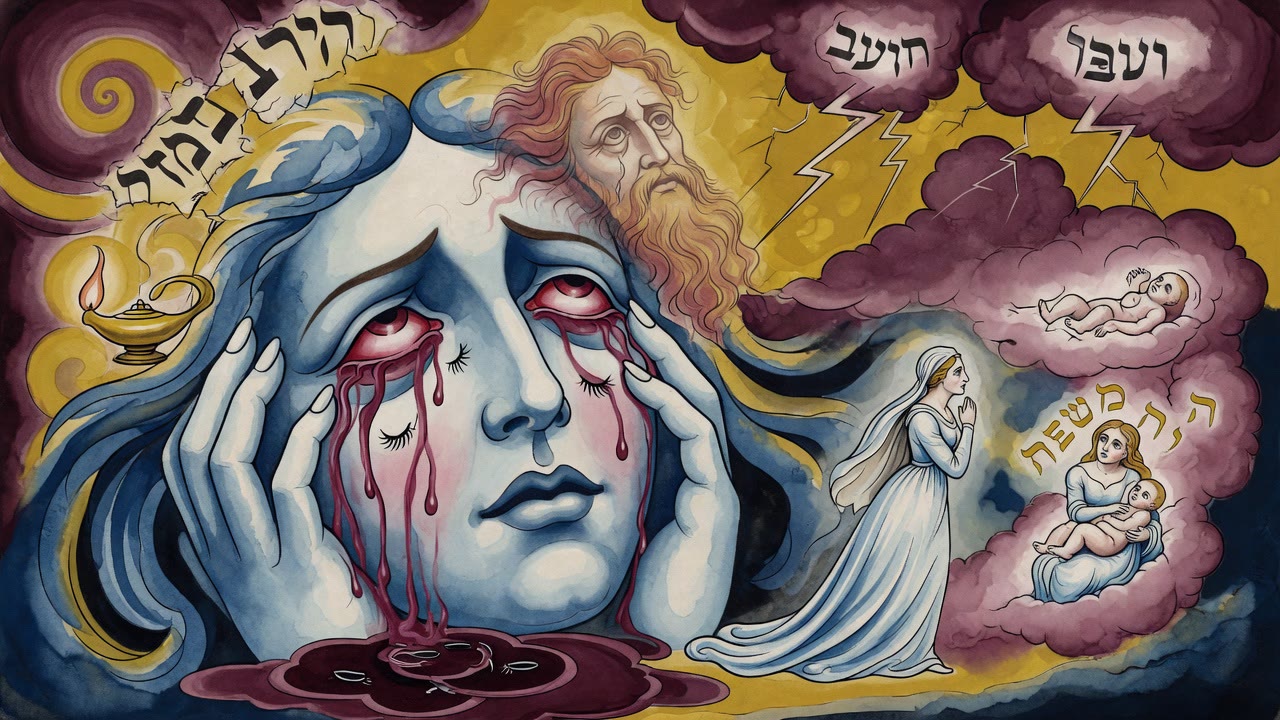
Esau was born with hair, teeth, and a serpent mark on his body. The signs on his skin read like a verdict before he had made a single choice.
Table of Contents
 Click for full size
The First Body Out
Rebekah had been told what was inside her. She had climbed to Shem's academy and received the prophecy: two nations, one rising as the other falls, the elder serving the younger. She had carried that knowledge through the rest of the pregnancy, turning it over against the kicking and the stillness, against the way the two within her seemed to strain in opposite directions. She knew what was coming. But knowing a prophecy and watching it take flesh are different things.
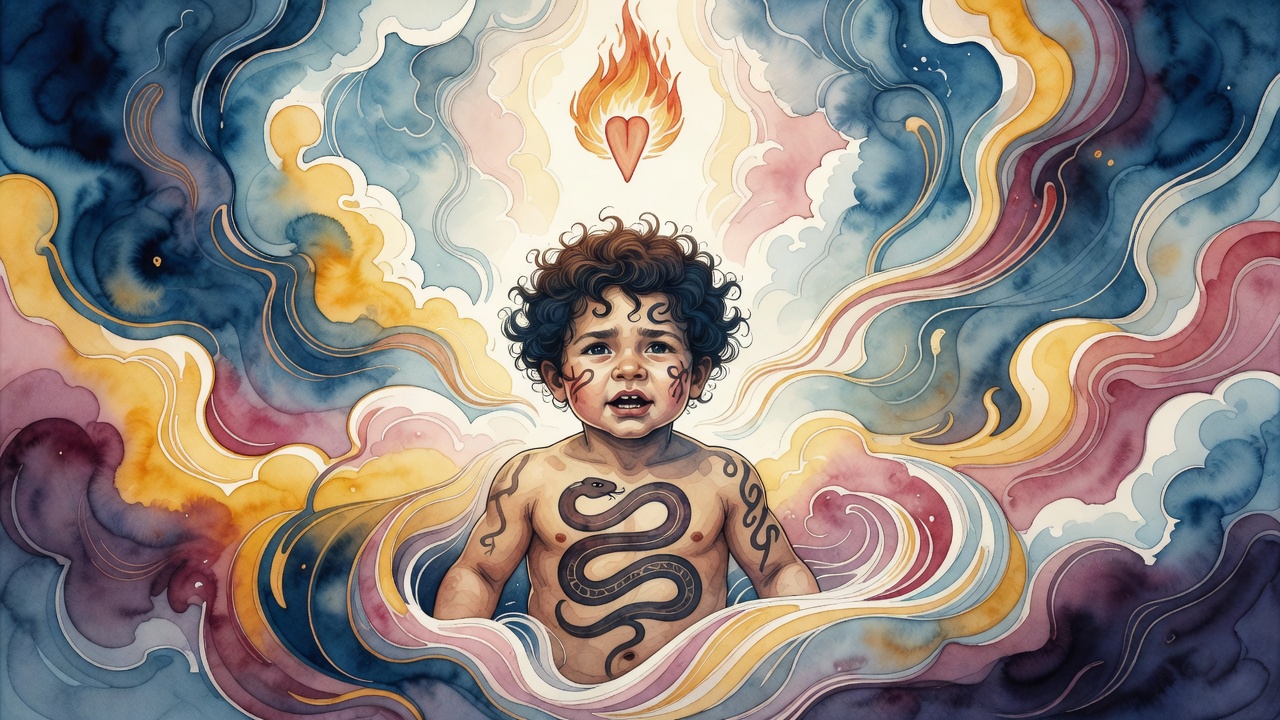
Esau came first. He came out covered in red hair, the down of it lying thick across his shoulders and down his back. He came out with a beard already on his face. He came out with teeth in the front of his mouth and teeth in the back, hard and set in the gums of an infant. He came out looking less like a newborn than like a man who had already been formed somewhere else and was simply arriving, his eyes open, his small body finished.
On his body sat the mark of a serpent, the nachash. The tradition does not explain this as a birthmark. It reads it as a sign, the way the ancients read signs on bodies at birth, not as decoration but as declaration. The nachash had been the instrument of the first catastrophe in human history, the voice in the garden that turned a command into a question. Esau arrived with its image on his skin, carried out of the womb on a body that had spoken nothing yet and already seemed to have been written upon.
The Covenant He Would Not Enter
On the eighth day, Esau was brought for circumcision. He screamed so violently that Isaac stayed his hand. The tradition records that he could not be circumcised without mortal danger, his body refusing the blade as if the rite itself were a wound it could not survive, and so it was deferred, and then deferred again, and eventually Esau never entered the covenant at all.
His brother Jacob, smooth-skinned, had no such difficulty. He entered on the eighth day without incident, the knife doing its quiet work on flesh that gave way to it. The distinction was already being drawn before either boy could speak. One body opened to the sign; the other closed against it.
The Day He Sold What He Was Born With
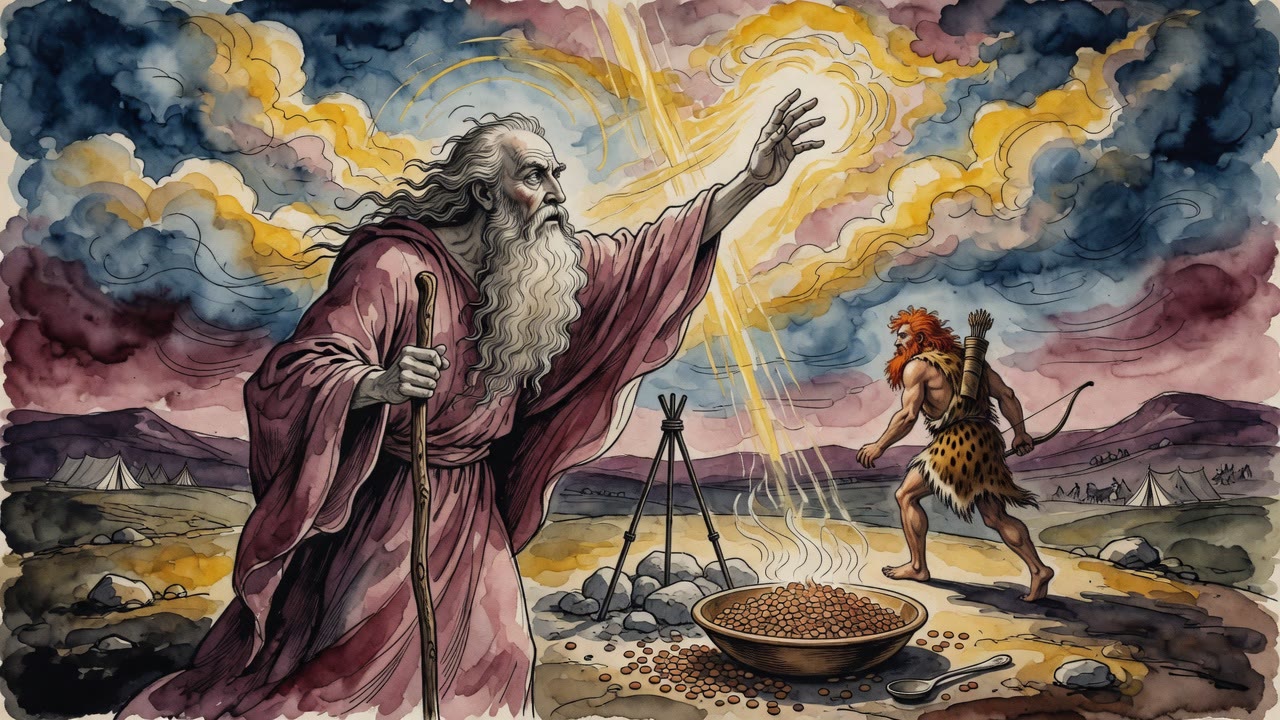
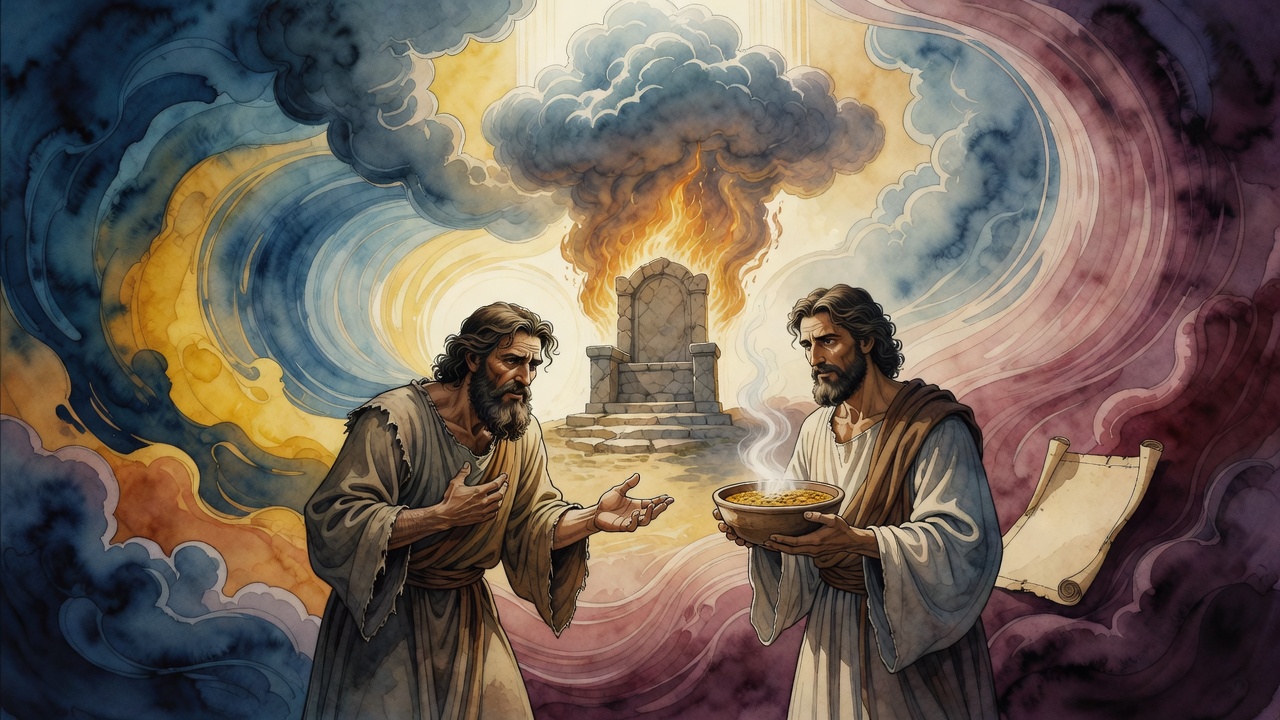
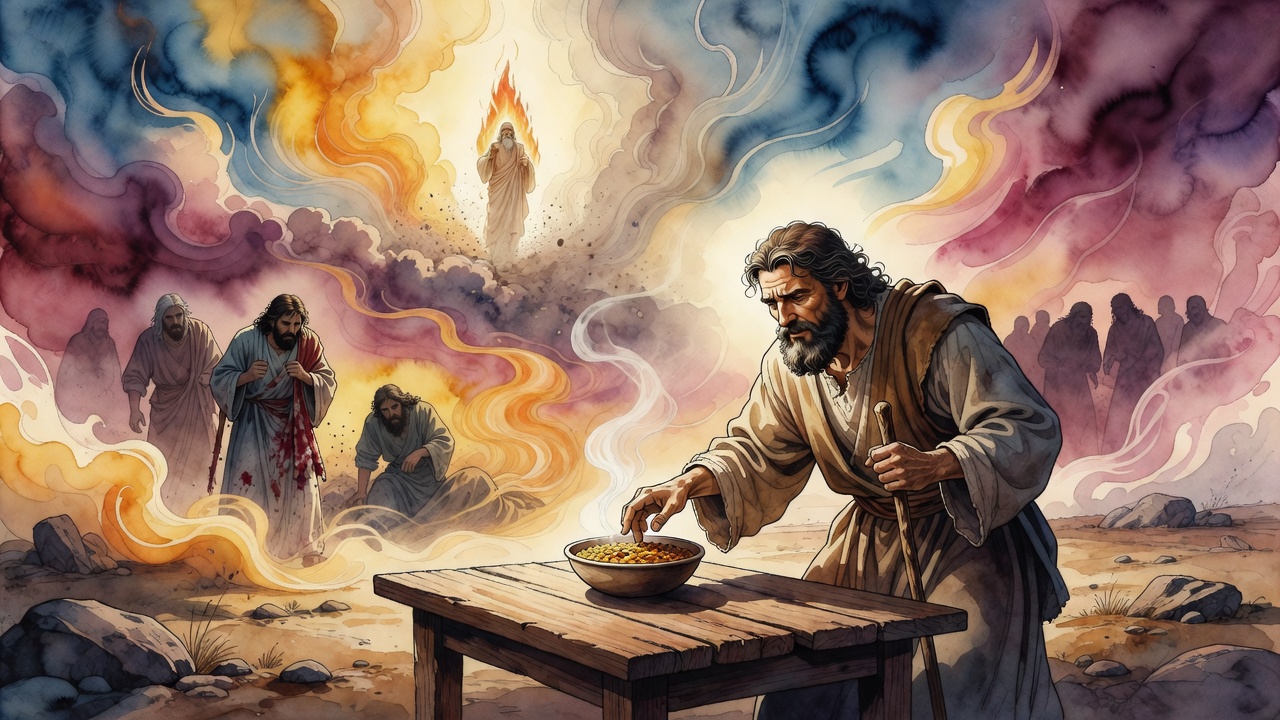
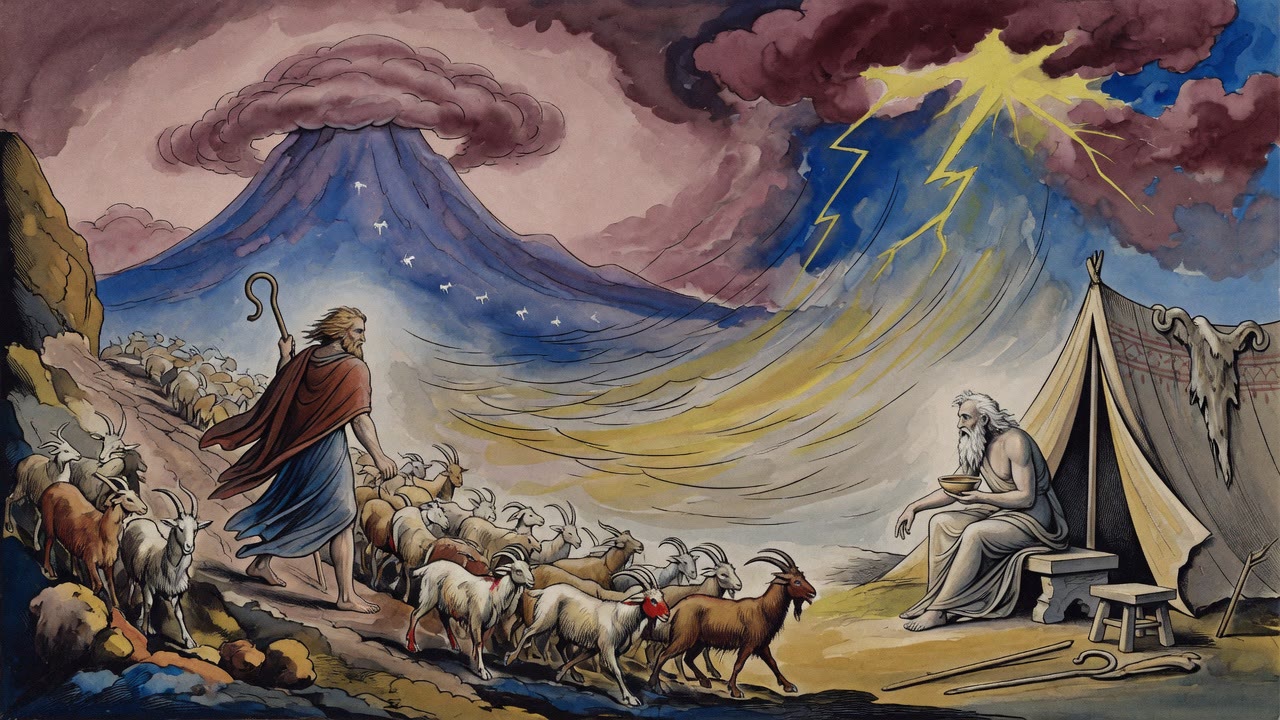
Years later, Esau came in from the field exhausted and found Jacob cooking lentil soup, the pot steaming over the fire, the red of it catching the light. He said: pour that red stuff into me, I am so tired I could die. He did not even name the food. He called it red, which was the color he had been born wearing, as though the hunger in him reached for the very shade that had marked his skin since the first morning of his life.
Jacob told him the price: the birthright.
What a Dead Man Keeps
Esau thought about this for approximately the length of a meal. He said: what use is a birthright to a dead man? He ate. He rose. He left. The tradition notes that he rose with contempt for the birthright, not merely indifference. He had already decided, before the bargain, that the birthright was worthless. The price Jacob asked did not lower Esau's estimation of what he was selling. He had already priced it at nothing.
The serpent mark on a newborn boy and the man who traded his future for a bowl of lentils are the same person at different ages. The tradition draws a line between them without embarrassment. The signs at birth did not make the choice inevitable. They named what Esau was choosing when the moment came, and the man who walked away from the fire with red on his lips fulfilled, by his own hand, the verdict that had been written on his skin before he could lift it.
← All myths