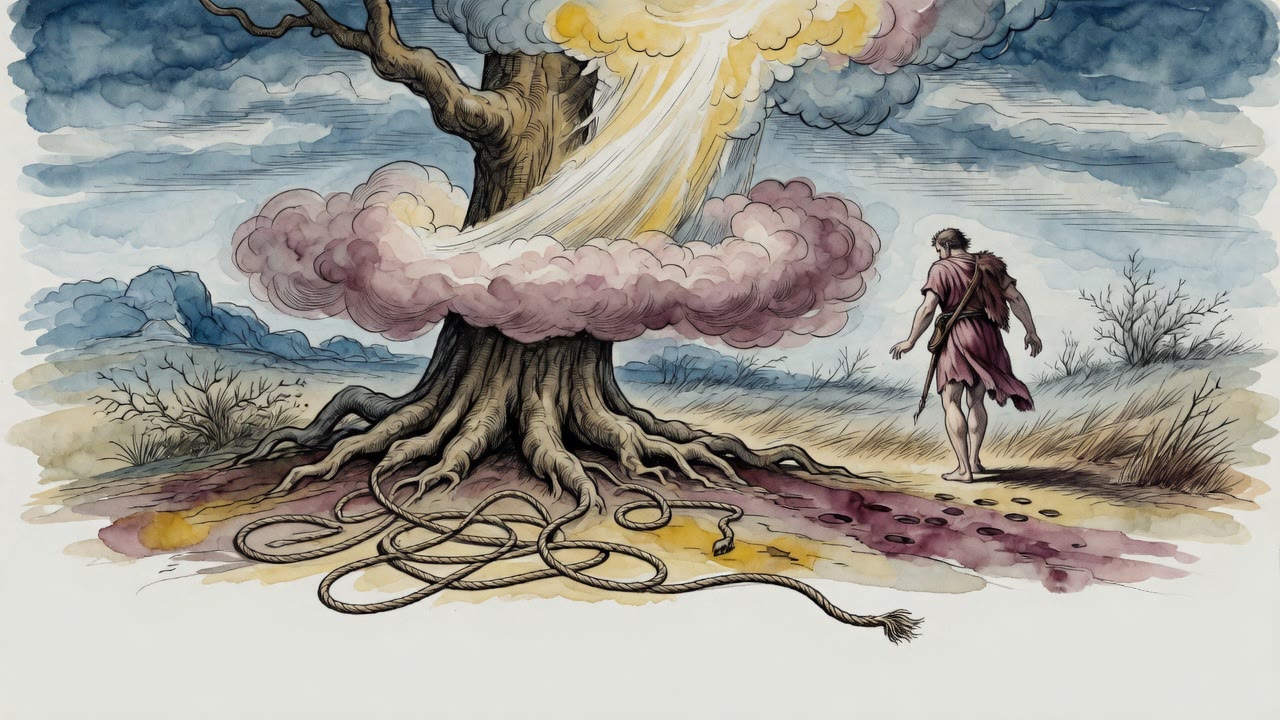
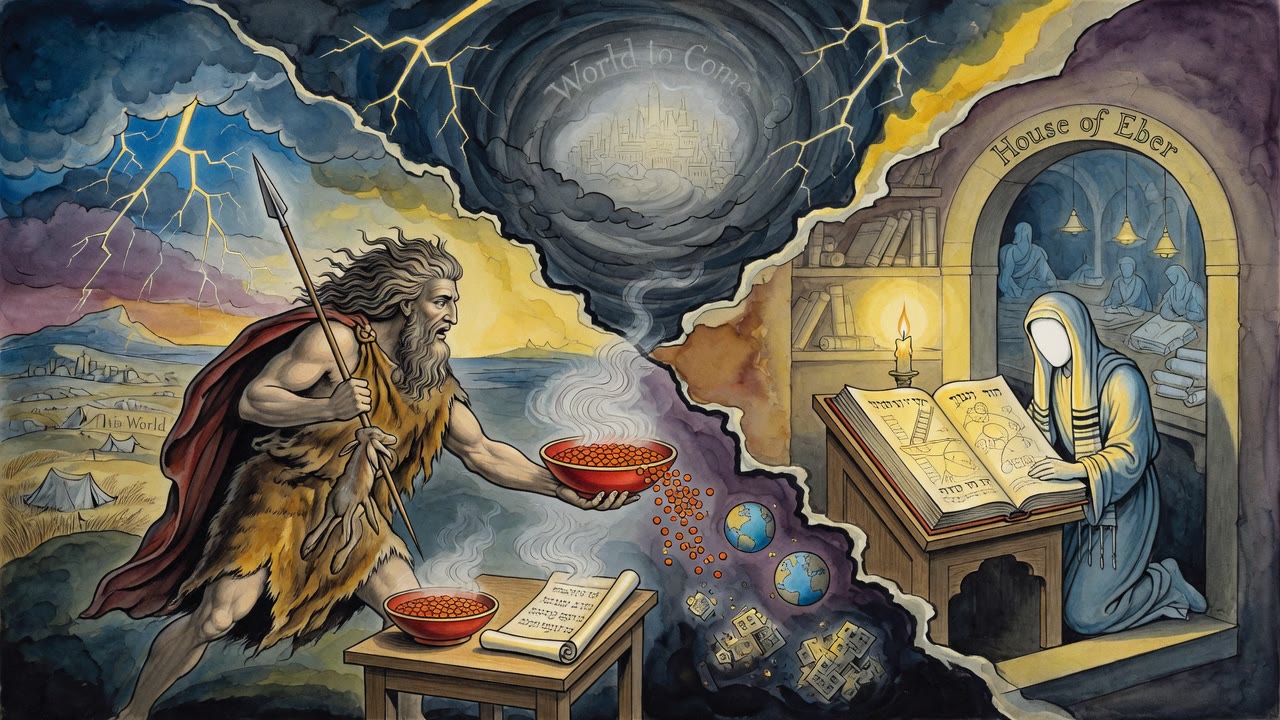
Jacob Saw Two Angel Armies and Still Feared Esau
He looked at the host and said they were not Esau's men, and not Laban's. Then the messengers came back with four hundred riders.
Table of Contents
Jacob crossed back toward Canaan with the dust of Haran still on the animals. He had been watched the whole twenty years.
 Click for full size
The Angels of the Land Came Out
When he fled, the angels of the Land had walked him to the border and stopped. They do not serve outside. A second host, the angels of the outside world, had taken him on toward Laban.
Now he was coming home. God called the angels who serve in the Land. "Jacob is returning. Go out to receive him."
A king whose son has been overseas for a wife does this. He tells his troops to come out to the son's arrival. Six hundred thousand of the Land's host came. Six hundred thousand of the outside host were still with him. He looked, and he knew the counterparts of the ones who had left him twenty years earlier.
He Named the Place Two Camps
He said it out loud, so the air would hold it.
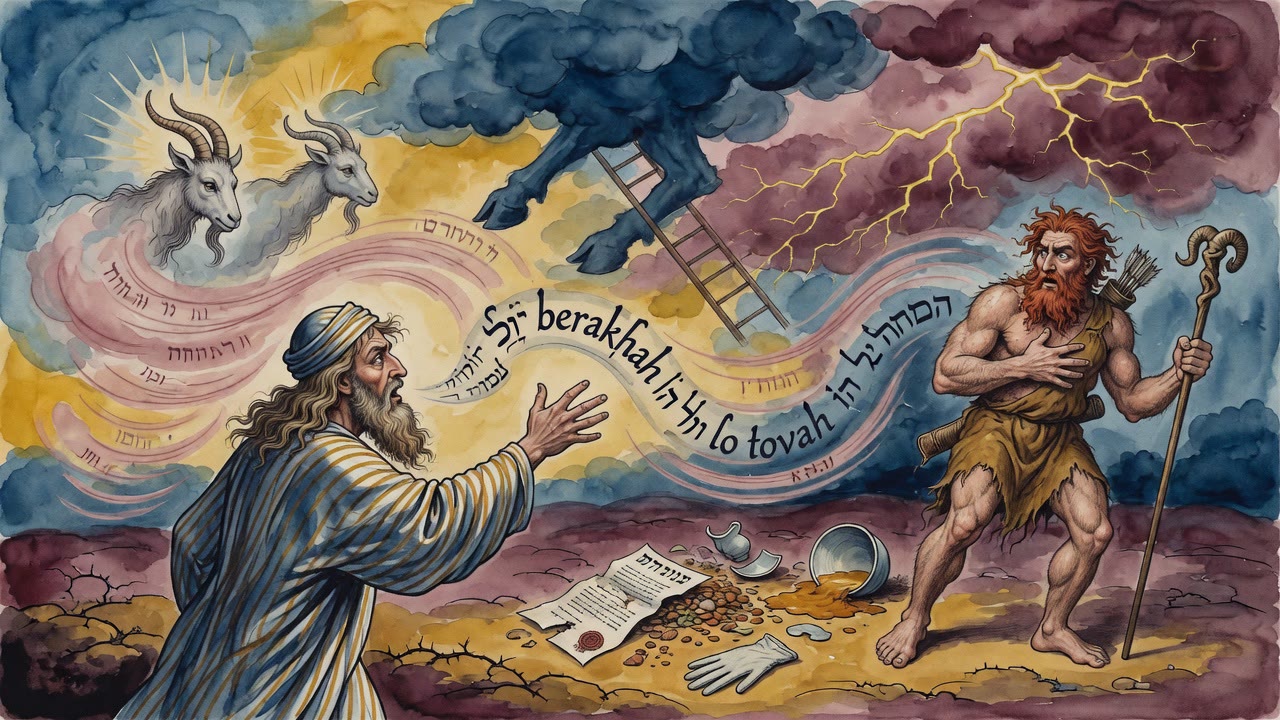
"These are not the host of Esau, who is preparing to go out to war against me, nor the host of Laban, who has returned from pursuing me. They are the host of the holy angels sent from before the Lord."
He named the place Mahanaim (מחניים), Double-Host, Two Camps. One army finishing the road from Haran. One army taking him into the Land. Two angel armies in one glance, and he had the sense to tell them apart from the two human armies he was afraid of.
Four Hundred Riders Were Not Angels
The messengers came back. Esau was riding toward him with four hundred men.
Six hundred thousand angels had just changed the guard at the border. Jacob's stomach still dropped. Four hundred men are not a wedding. They are a brother who has been counting years.
He divided his company into two camps, matching the name he had just given the ground. Wives, children, flocks, pack animals, split down the middle, far enough that one attack could not reach both.
"If Esau destroys one camp, the other will survive."
He had seen the angels with his own eyes. He still built a backup out of dread. The place called two camps now held a third meaning: the host that had finished, the host that had arrived, and the two huddles of frightened people Jacob had made with his own hands.
The Angel of Esau Caught Him Alone
He sent the camps over the Jabbok and stayed behind. A man wrestled him until the dawn.
The man could not prevail. He touched the joint of Jacob's thigh and put it out. Dust covered the one who had come against him. Jacob would later tell Esau, "I have seen your face as the sight of the face of angels, and you welcomed me" (Genesis 33:10).
The wrestler was Esau's guardian. Five amulets sat on Jacob while they fought: his own merit, his father's, his mother's, his grandfather's, his grandmother's. Heaven had already told that angel he could not stand against those five. The thigh still paid. Jacob limped into the morning with a new name and a brother still on the road.
Four Thousand Came in Iron
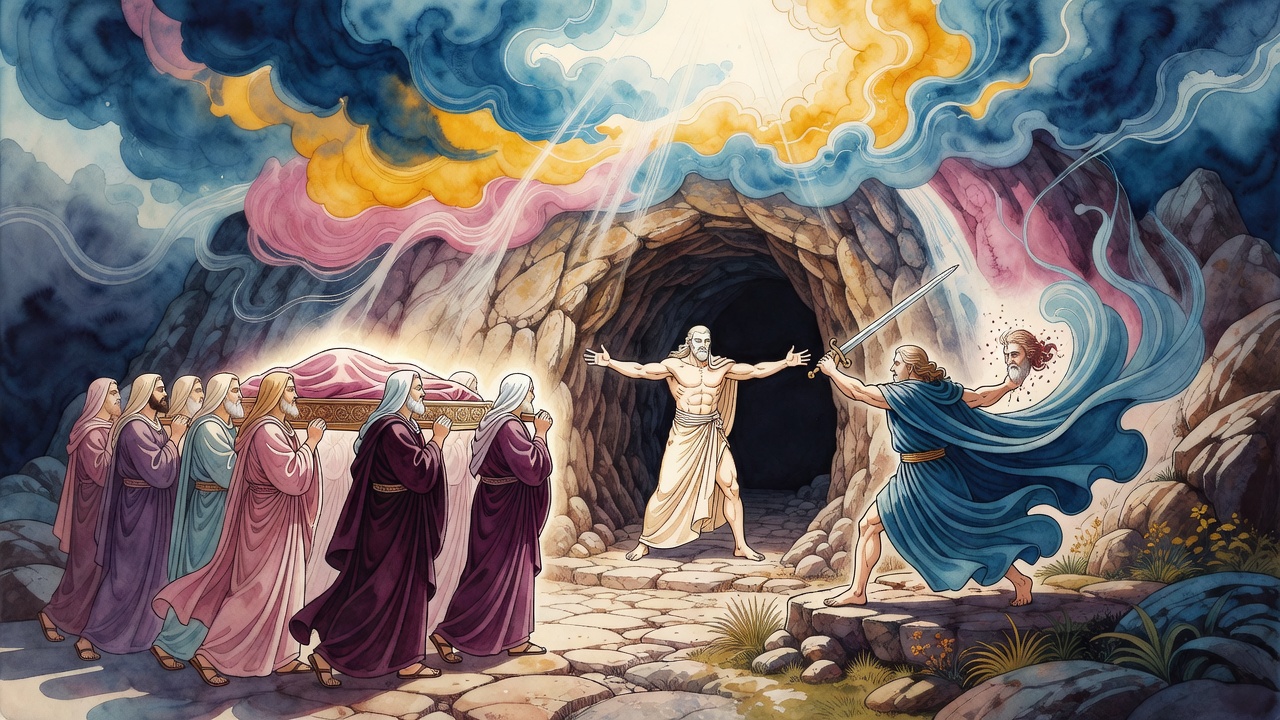
The four hundred at Mahanaim did not spend the hatred. Years later Leah died. Jacob and his sons sat in mourning. Esau came with four thousand, clad in iron and brass, with shields and bows and lances, and surrounded the fortress.
Jacob stood on the wall of the tower and spoke peace, friendship, brotherhood. Esau did not heed him.
Judah said to his father, "How long wilt thou speak unto him words of friendship, whilst he comes against us like an armed enemy?"
Jacob bent the bow. He killed Adoram the Edomite. He sent another arrow and hit Esau on the right shoulder.
The two camps of angels had been real. So was the brother.
← All myths