Angels Crowned Jacob as Celestial Dew Filled His Bones
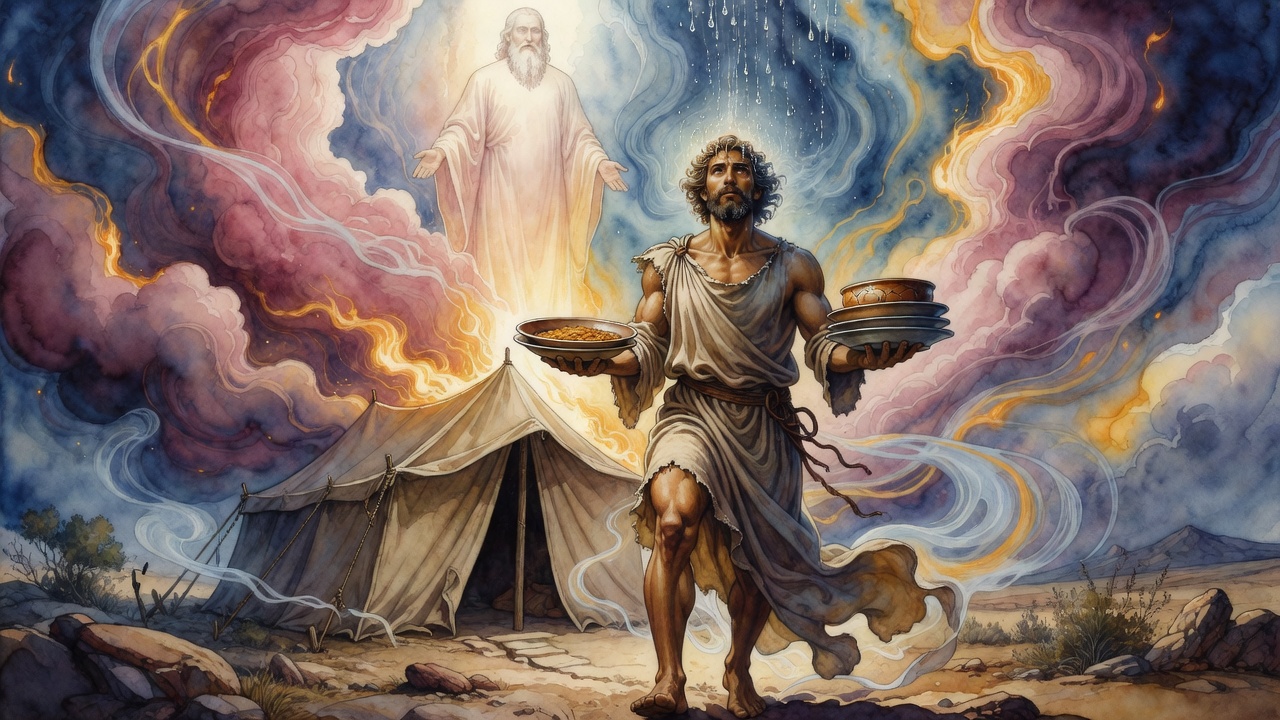
When Jacob stepped from Isaac's tent, celestial dew fell on him and changed his body. He was carrying his father's meal plates when it happened.
Table of Contents
 Click for full size
The Plates in His Hands
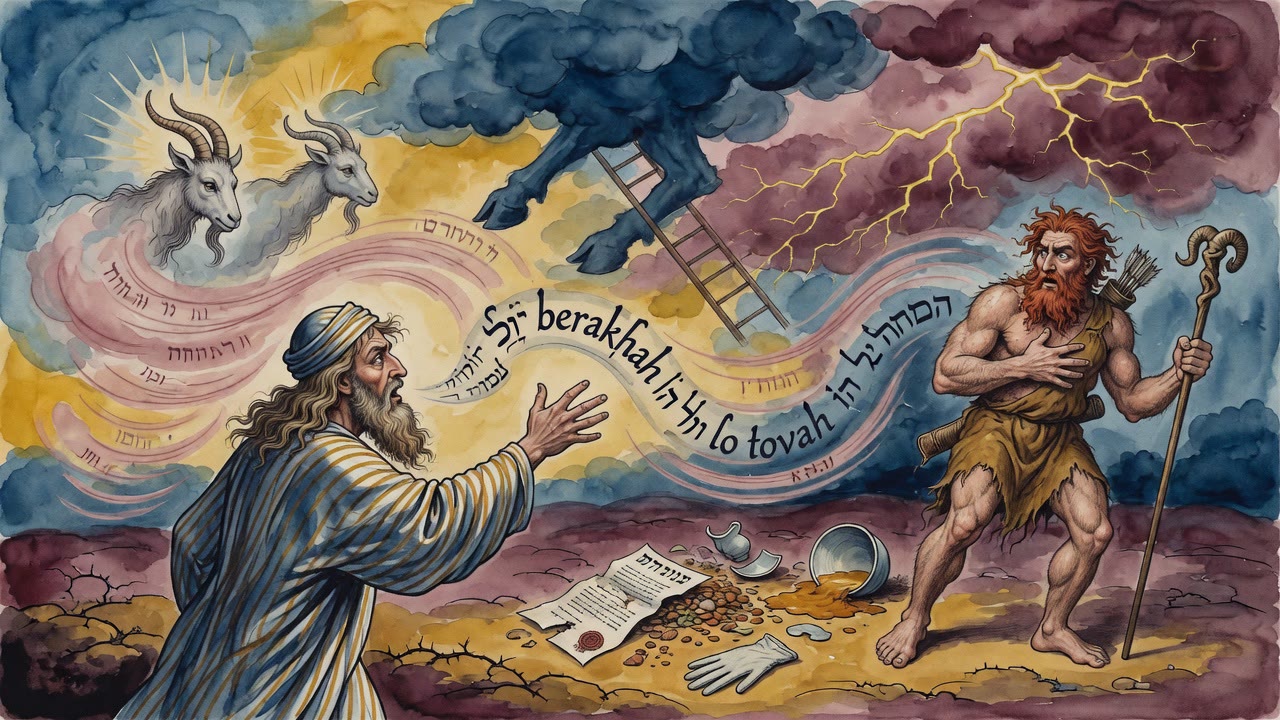
Jacob had just done the most dangerous thing he would do in his life up to that moment. He had entered his father's tent disguised as Esau, fed him the meal, received the blessing, and now he was walking toward the door carrying the empty plates. He could feel the smear of grease still on them, the weight of them awkward in hands that wanted to be free to run. He was focused on getting out. He could hear Esau returning from the hunt, the distant noise of a man who did not yet know what had been taken from him. Jacob had perhaps a minute, maybe less, before his brother walked through the same door he was trying to reach.
He did not know that something was happening to his body as he walked.
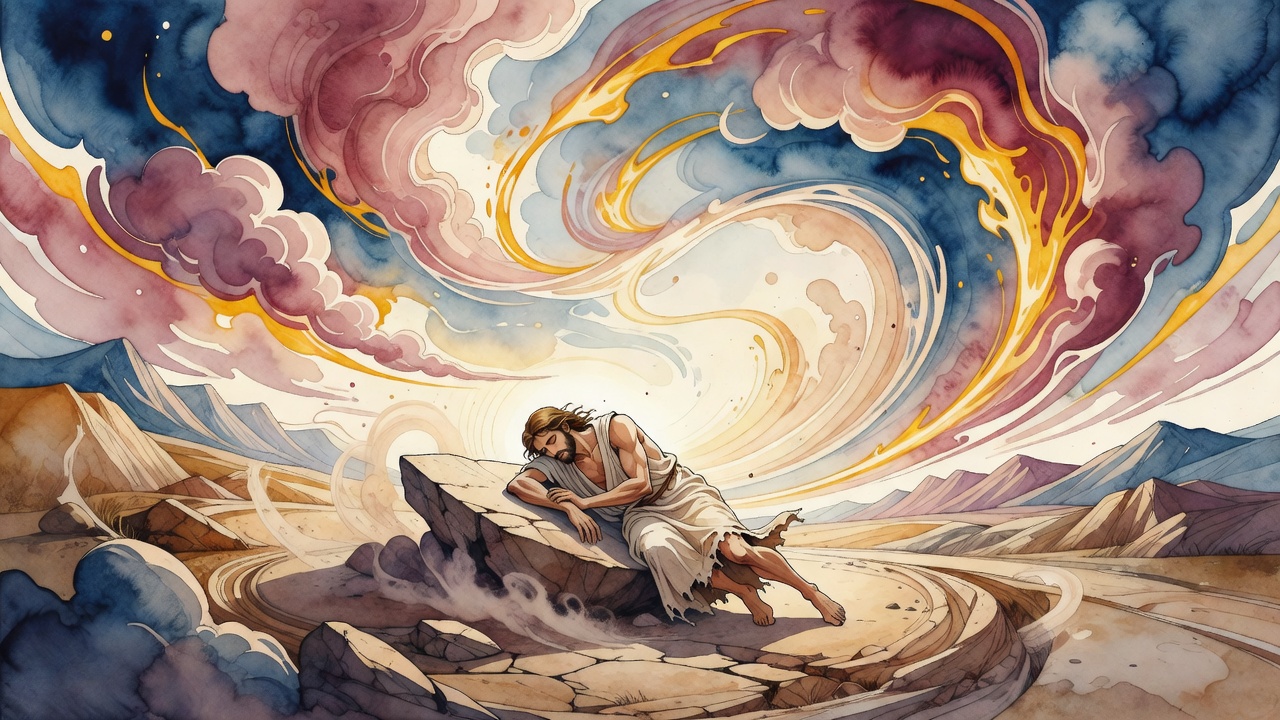
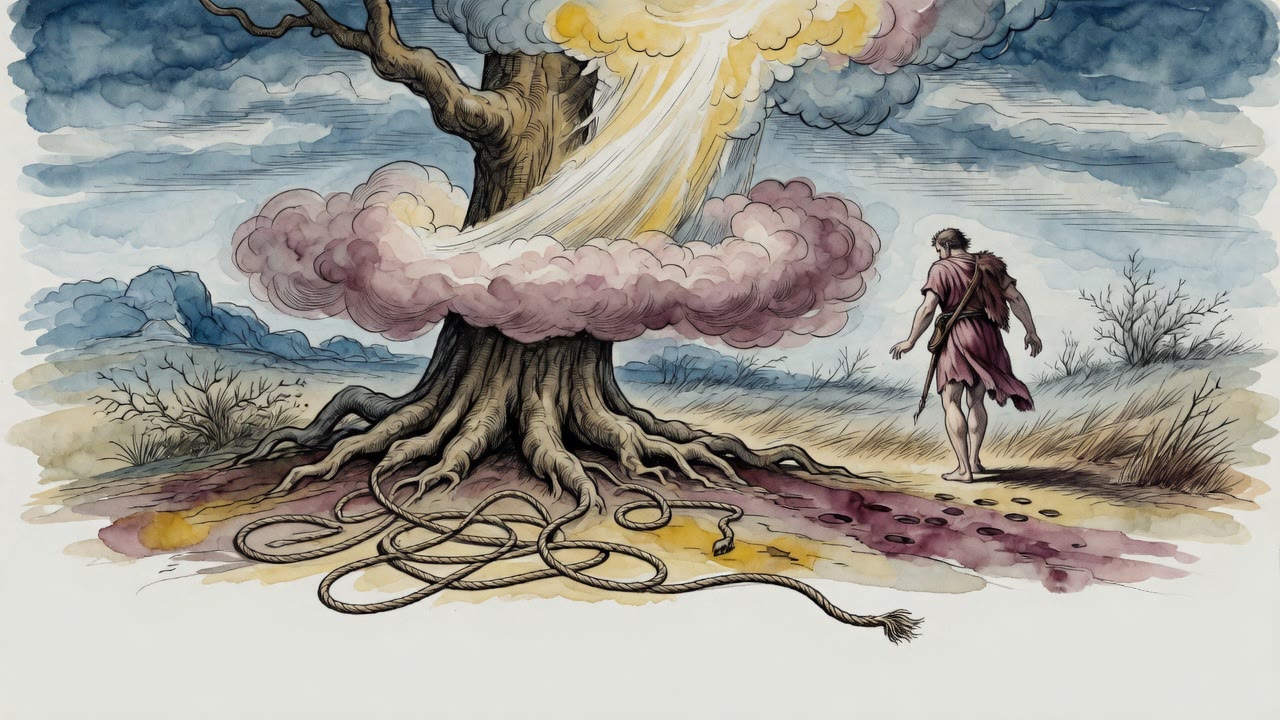
The moment he crossed the threshold of his father's tent, celestial dew fell on him. Not rain, not ordinary moisture, but the dew that the tradition associates with resurrection, with the transformation that the dead will undergo when God restores them, with something from a place higher than the world Jacob was walking through. It settled on his skin without a sound. It soaked into his bones. It filled them with marrow, and the marrow that filled them was not the marrow he had been born with. His body changed from what it had been into something harder and more complete, the frame of a man who would one day wrestle until dawn and not be thrown.
The Door That Revolved and Saved His Life
He spotted Esau approaching from across the field, a smear of motion against the open ground, closing fast. There was no escape except behind him, back through the door he had just crossed. He stepped behind it and pressed himself flat against the inside of it, the plates clutched to his chest so they would not knock and betray him. The door in Isaac's tent revolved, which meant that as Esau pushed through it from outside, Jacob could see his brother's face without being seen. He watched Esau enter. He held his breath until his chest ached. He waited until Esau was fully inside and the door had turned past him, and then he moved.
He did not run. He walked out into the field with the bearing of someone who had not been hiding behind a door, his steps even, his back straight, the plates still in his hands.
The Crown He Did Not Know He Wore
He also did not know he had been crowned. The celestial beings attending the transfer of the blessing, the same ones who had watched the deception unfold with the interests of heaven in mind, had done something else in that threshold moment: they had placed a crown on Jacob's head, the same kind worn by a bridegroom at the height of his joy. He felt nothing of its weight. He was walking away from his father's house as a fugitive, carrying stolen blessings and a brother's death threat, and he was crowned like a man entering a wedding canopy.
The Human Words and the Divine Portion
The dew and the crown together say something the words in the tent did not say in plain language: that the covenant was not merely transferred by a blessing spoken aloud, by a father's hands resting on a son's head, by the mechanics of a dying man bestowing what he had. It was completed by heaven. The words Isaac spoke over the meal were the human portion of what happened, fallible and tangled in deception. The dew that filled Jacob's bones and the crown the heavenly attendants set on his hair were the divine portion, given silently in the same breath of time. Jacob walked out into the field carrying both of them on his body, and he knew about neither. He felt only the danger behind him and the long road ahead, and he had no idea that he left his father's tent a changed and crowned man.
← All myths