Esau Sold the Birthright and Faced Jacob's Angels
Esau signed away the birthright and Machpelah claim, then marched on Jacob years later and met forty thousand angelic warriors.
Table of Contents
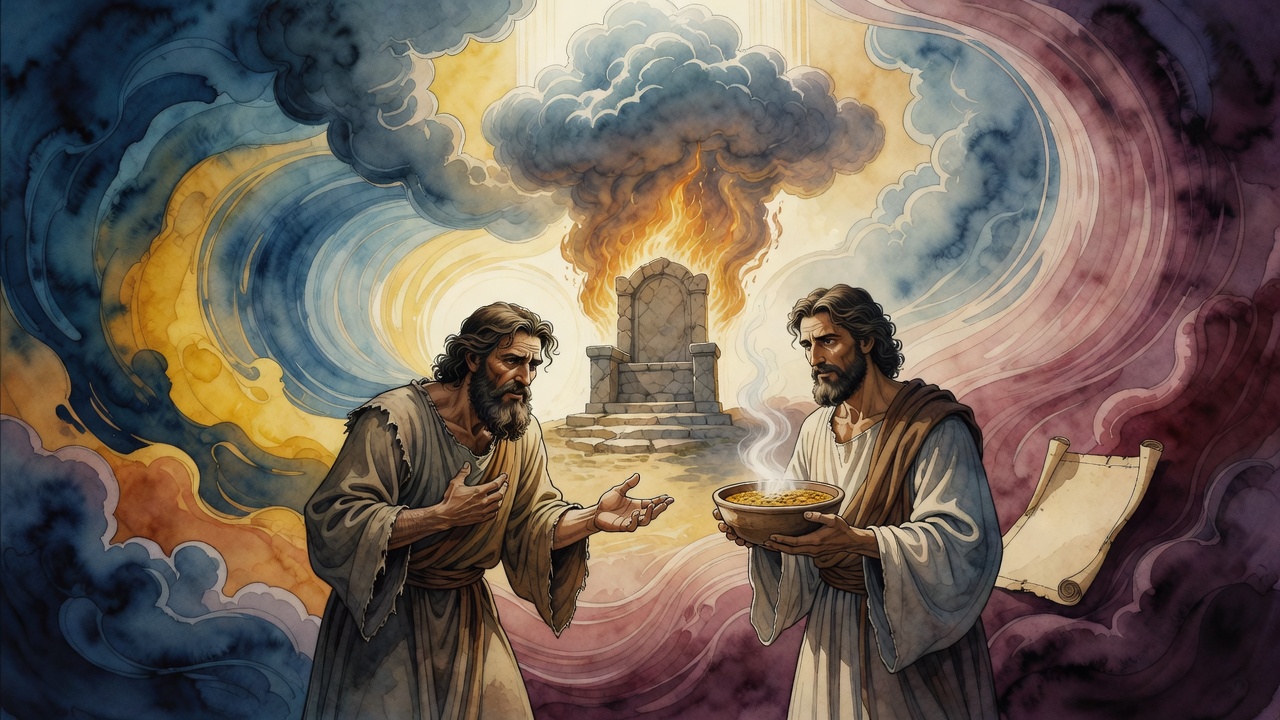
The pot could feed a hungry man. The oath could strip a house.
 Click for full size
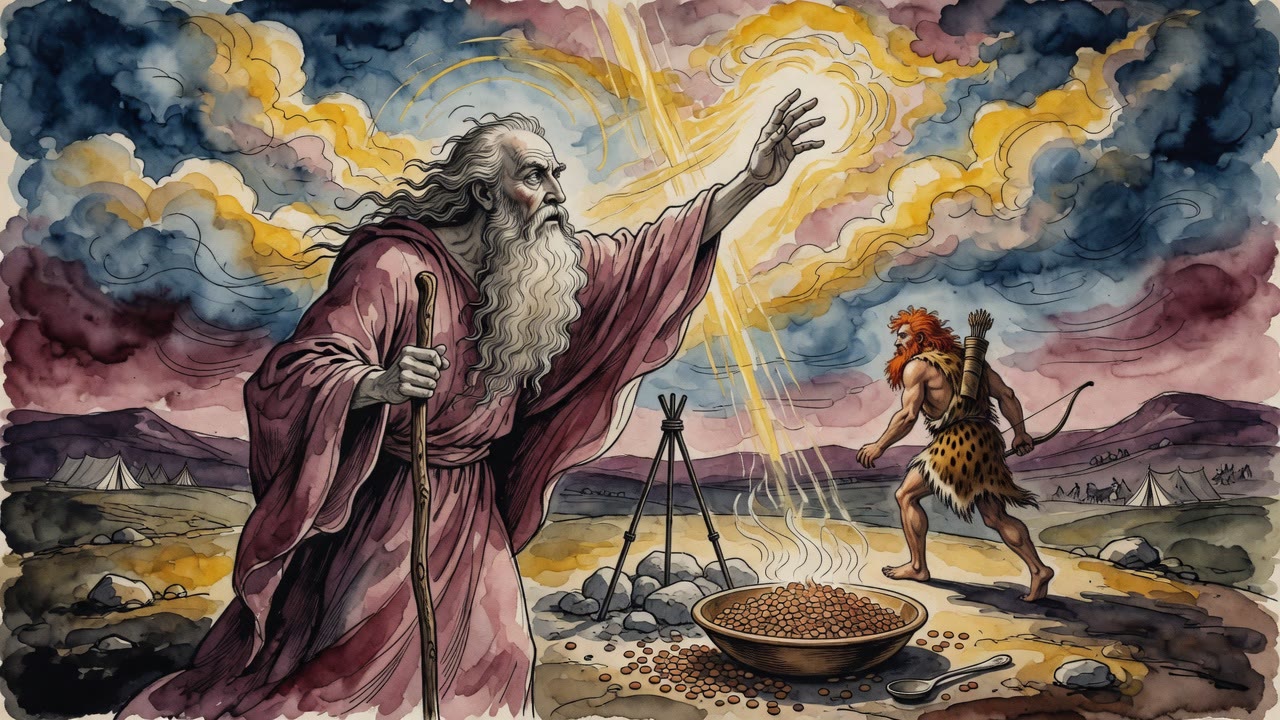
Esau came in from the field with hunger loud enough to drown out holiness, and Jacob heard the opening. The birthright sat between them, older than either brother's anger, heavy with priestly claim, inheritance, and burial among the fathers.
The Oath Over the Stew
Jacob did not trust appetite. Hunger fades. Men regret bargains when the bowl is empty and the mouth is clean again. So he reached for the one name Esau still honored without mockery: Isaac.
Swear by our father's life.
Esau could treat the birthright as nothing. He could sell tomorrow for lentils today. But Isaac's life was not nothing to him. The hunter who could come home rough from the field still stood straighter before his father. Jacob knew that, and he used it. The oath went down with the food.
The Cave Written into the Sale
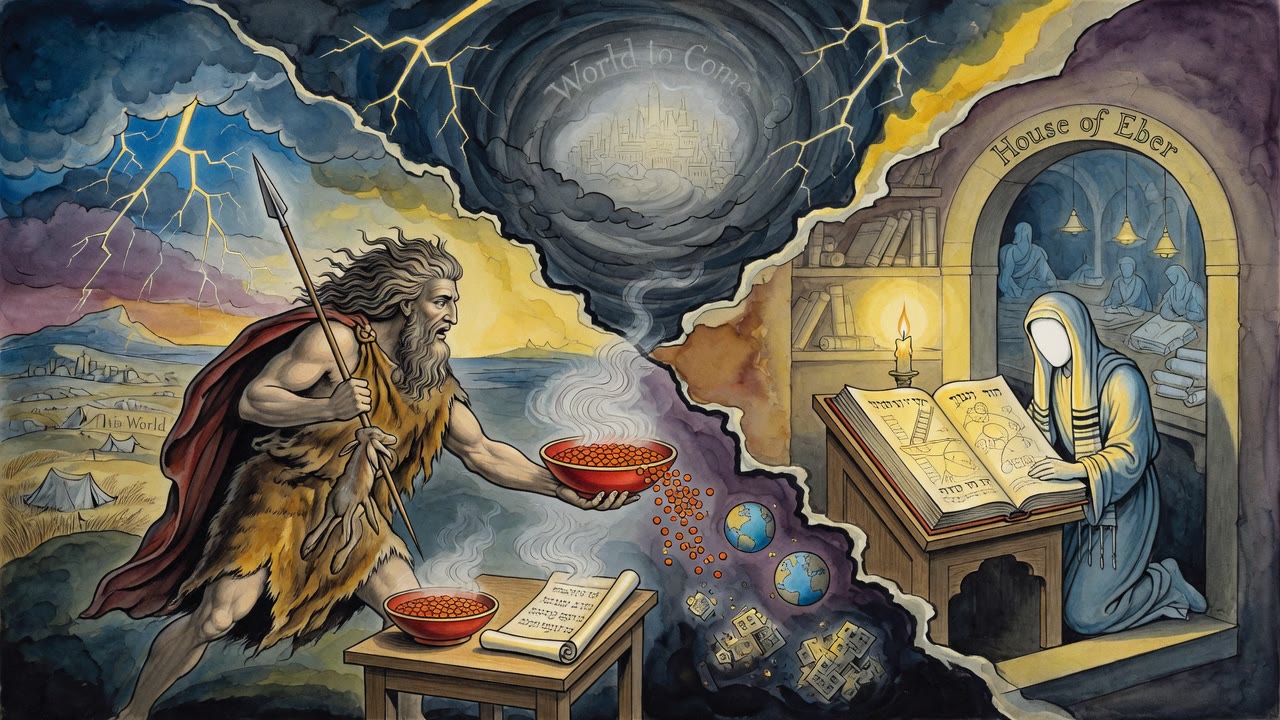
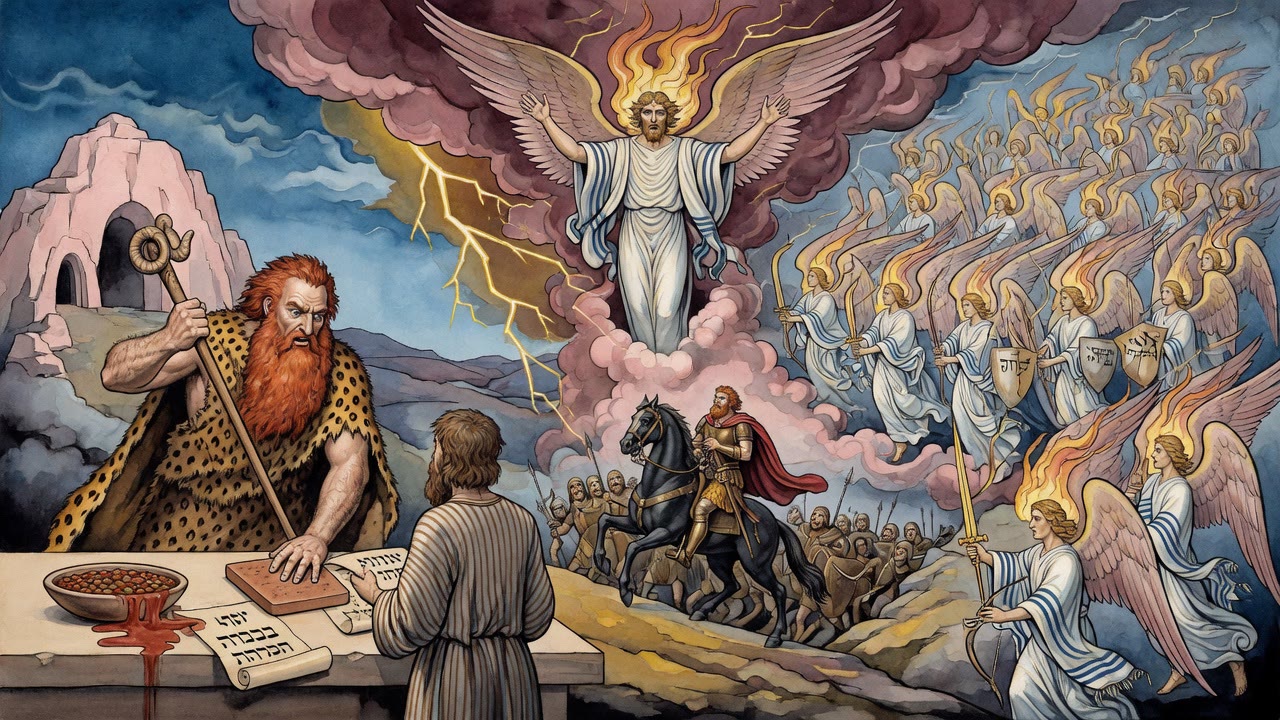
Then Jacob made the bargain harder than memory. Witnesses came. A document was drawn up. The birthright was written into it, and so was Esau's claim to a place in the Cave of Machpelah, the burial ground of Abraham and Sarah, the ground where family becomes covenant even after breath leaves the body.
Ink can make a private weakness public. Esau had not merely muttered away his standing near a cooking pot. He had signed it. Men could point to the witnesses. They could point to the document. They could point to the place in the cave that no longer belonged to him.
Machpelah was not a spare plot of earth. It was the family mouth of the cave, the place where Abraham and Sarah rested, the ground Isaac would inherit as memory and charge. To surrender a share there was to step back from the fathers even before death arrived.
The Long Shadow of Cunning
No blame clung to Jacob for wanting the birthright preserved. Esau had treated a holy thing like a trinket, and Jacob had grasped what his brother despised. Still, the taking had a sharp edge. It was cunning, and cunning leaves heirs.
From that edge came a sentence that ran beyond the brothers. The children of Jacob would one day serve the children of Esau. The document held. The price did too.
A family can win the room and lose sleep for generations.
Forty Thousand on the Road
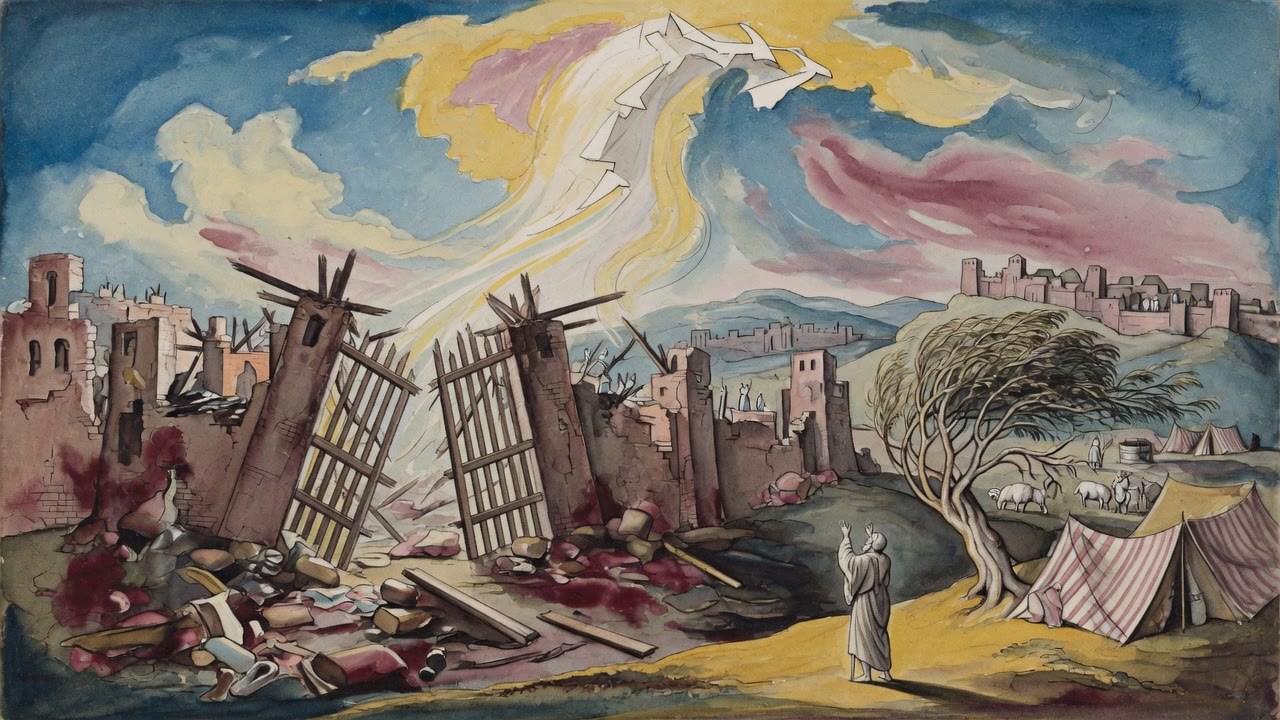
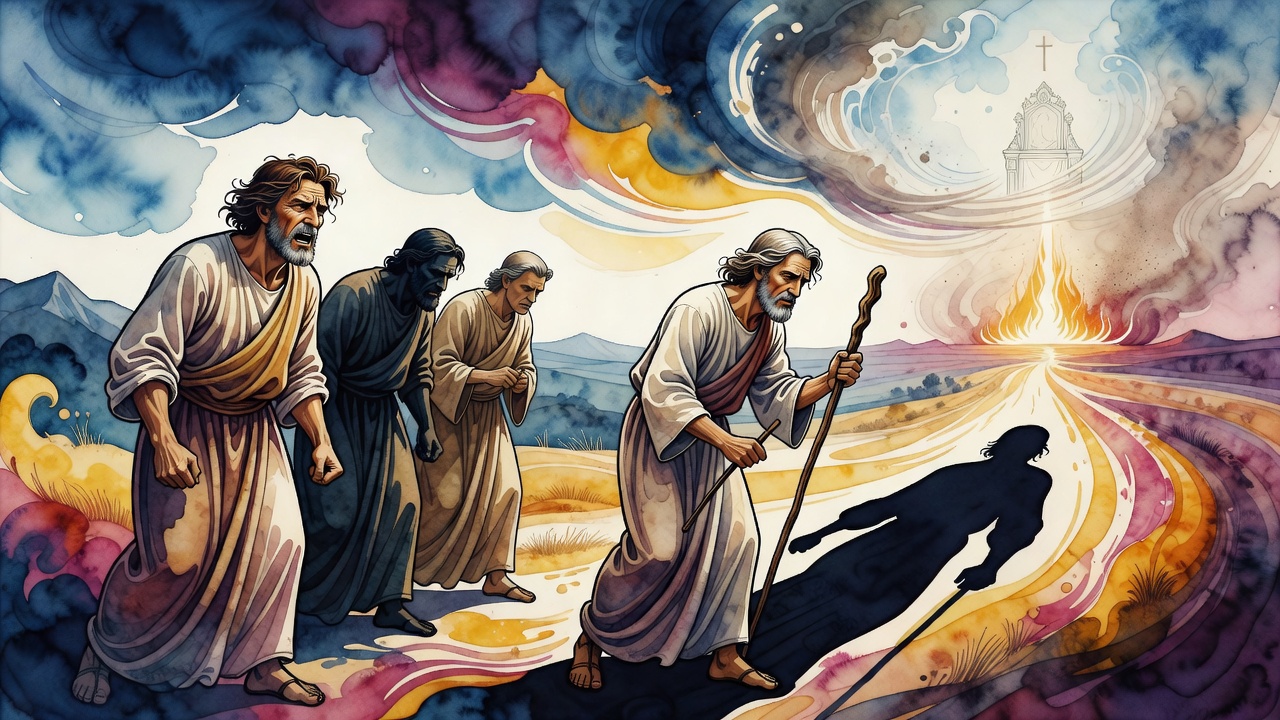
Years later, Esau marched toward Jacob with force at his back. He was no longer the hungry man at the pot. He came as a man who could make dust rise under an army.
Then the road broke open with soldiers.
Forty thousand warriors hurled themselves upon Esau and his men. Some came armored on foot. Some rode horses. Some thundered in chariots. Steel flashed. Wheels ground the earth. The host did not pause to introduce itself before striking.
It was an answer in Esau's own language. He understood men who advanced in ranks, horses that cut the road, chariots that made courage buckle. The unseen world met him dressed as the kind of power he trusted.
Esau shouted through the attack and demanded to know where they came from. The answer barely interrupted the blows. They belonged to Jacob.
The Brother Behind the Host
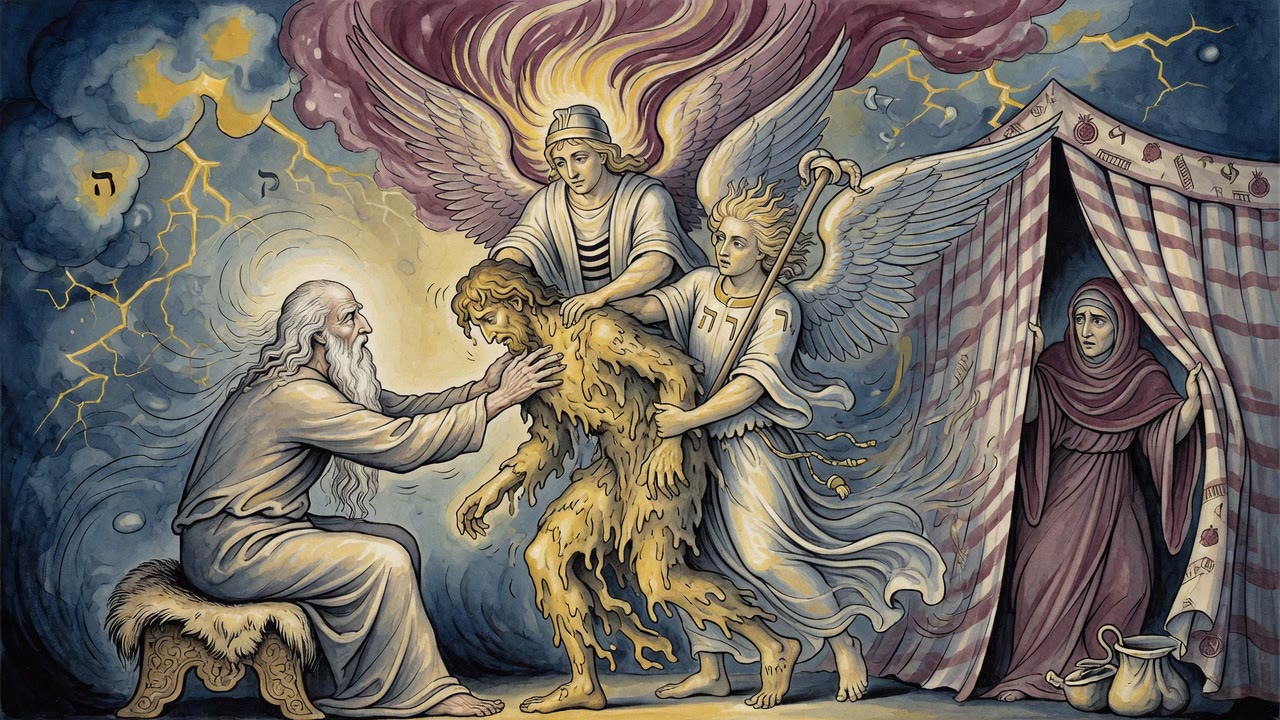
Only one word saved Esau from the assault: brother. He told them Jacob was his brother, and the warriors recoiled as if the name itself had raised a wall. Woe to them, they cried, if their master heard that they had harmed him.
By the time Esau reached Jacob, the question came out before anything else. What was that army he had met?
The attack had not changed the facts of the old sale. It changed the road. Esau arrived carrying the memory of warriors who could strike him and then recoil at the word brother.
The warriors had not been ordinary men. They were angels wearing the appearance of troops because Esau and his company understood armor, horses, and chariots. Even Jacob's messengers had been angels. No human envoy could be sent to face Esau on that road.
So the man who sold the birthright under oath met the brother he had threatened under guard. Esau had an army. Jacob had a document, a blessing, and unseen soldiers who stopped only when the attacker said the word brother.
← All myths