Heaven Objected When Jacob Called Esau His Lord
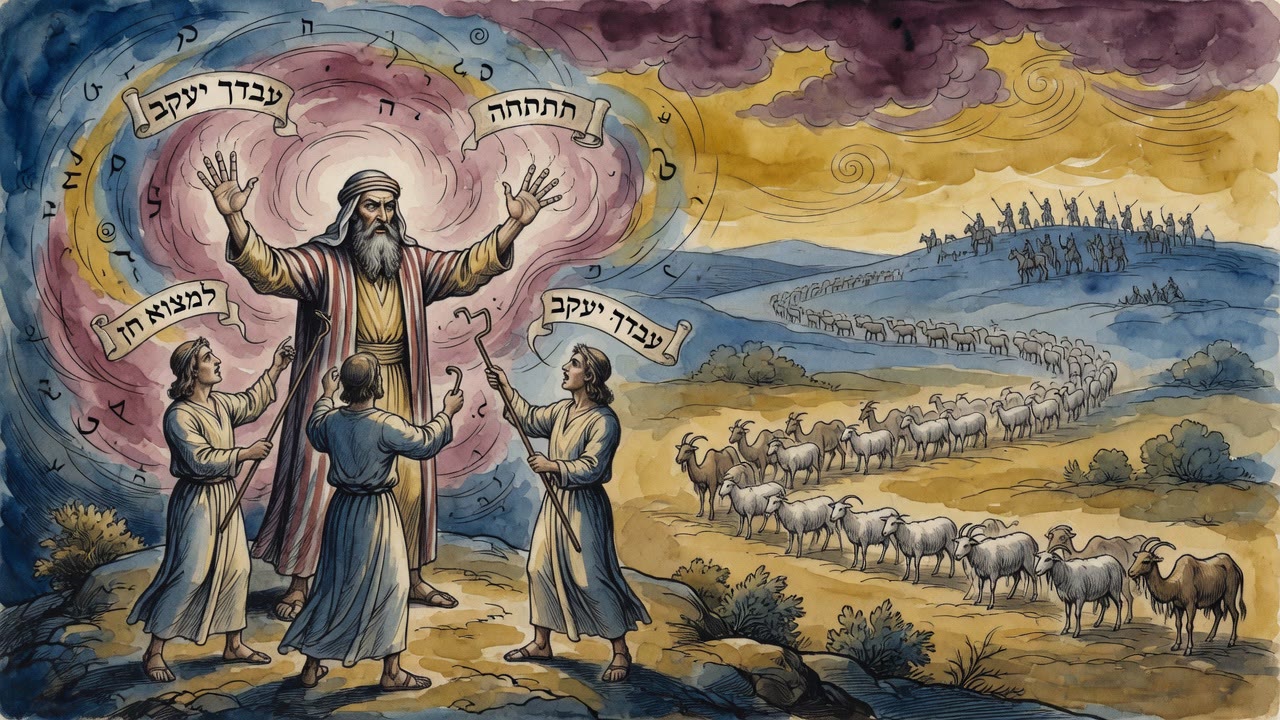
The drovers were told to call Esau lord. God heard the word leave Jacob's mouth and said he had made something holy common.
Table of Contents
 Click for full size
A Present for My Lord Esau
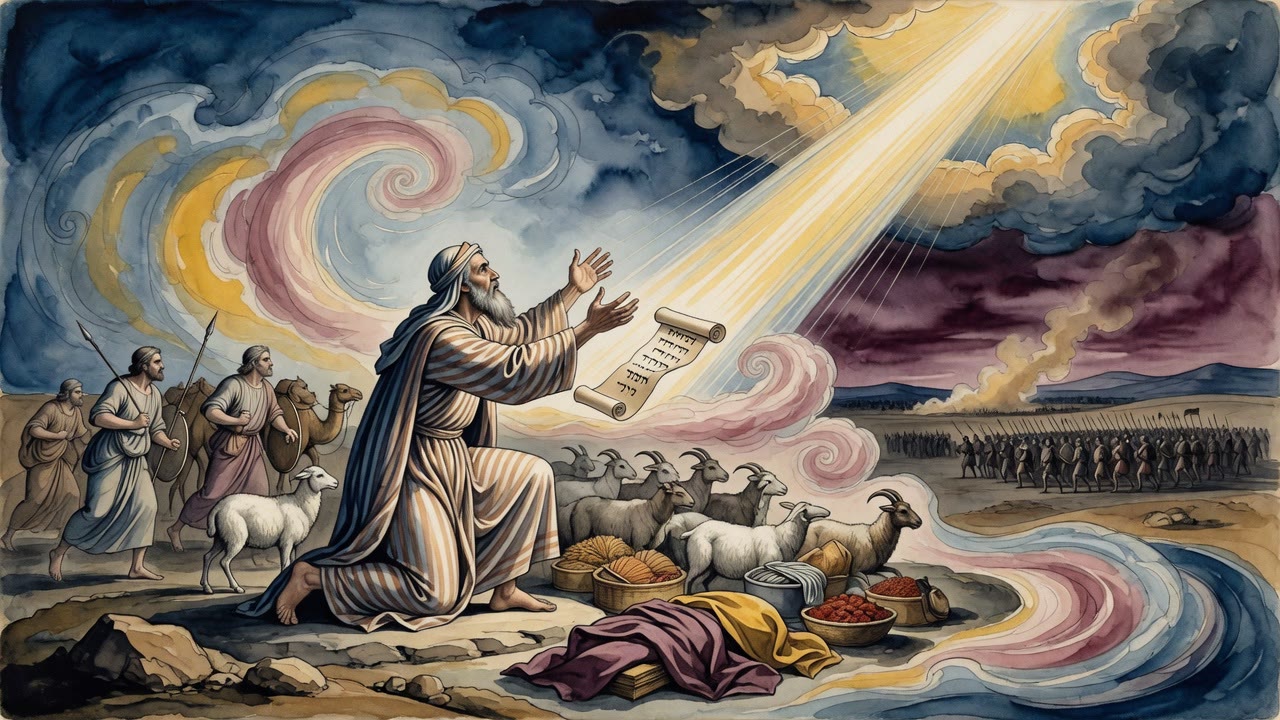
Jacob counted out the herds by the riverbank and worked out what a man's life was worth in goats. Two hundred she-goats, twenty he-goats, two hundred ewes, twenty rams, camels with their young, cows, bulls, donkeys. He split them into droves and put a gap between each drove so that his brother would meet the gift in installments and be softened by it three or four times before he ever saw a face he recognized.
Then he told the drovers what to say when they were stopped. This is an offering to my lord Esau, from his slave Jacob.
He had not seen Esau in twenty years. The last word anyone had brought him was that Esau meant to kill him as soon as their father was buried. Four hundred armed men were coming down the road, and Jacob wrote himself down as property.
God heard the message go out and did not like it. "You make holy things common," He told him, "when you call Esau lord."
Jacob had an answer ready. He was flattering a wicked man in order to walk away alive. He did not pretend it was anything else.
Three Angels That Looked Like Thousands
He prayed that night, and he did not only pray for himself. He asked that his children's children not be wiped off the earth by Esau's children. Heaven took note of the tears on his face and answered that for his sake they would come through every distress that was coming.
Then God sent three angels down the road toward Esau.
Three. What Esau saw was cavalry. Hundreds of them, thousands, armed to the teeth and riding in four columns, filling the road from edge to edge, and the first column came at him at speed.
Esau went off his horse into the dirt. His four hundred men scattered off the road in every direction, and the riders came past him shouting one line.
"We are the servants of Jacob, the servant of God. Who can stand against us?"
Esau Says It Back
Esau got up out of the road and started arguing with them, and what came out of his mouth was the exact word God had just objected to.
"Then my lord and brother Jacob is your lord," he said. "I have not seen him in twenty years, and I came out today to see him, and this is how you treat me?"
The riders looked down at him. "As the Lord lives, if Jacob were not your brother we would not have left one of you standing. Because of Jacob, we will do nothing to you."
Then they were gone, and Esau collected his men and went on. A league further down the road the second column came at him and did it all again. Then the third. Then the fourth. Four times he was ridden down, four times he was told whose servants they were, four times he was spared on his brother's account, and by the end of it he was not a man riding out to settle a debt. He was a man walking toward someone who apparently owned an army.
The Shepherd Who Would Not Run Out of Sheep
Jacob sent the droves ahead and came behind with his wives and his children, and at the ford of the Jabbok a shepherd was standing in the shallows with sheep and camels of his own.
Cross together, the stranger said. You help me and I will help you.
Jacob agreed on one condition. His animals went over first. He had barely finished saying it before every last one of his sheep was standing on the far bank, dry, as though the river had been folded up and put away.
Then it was his turn. He waded in and started carrying the shepherd's flock across. He carried them all night. However many he took over, there were more on the near shore, and the pile of them did not go down by one animal, and the sky started to gray.
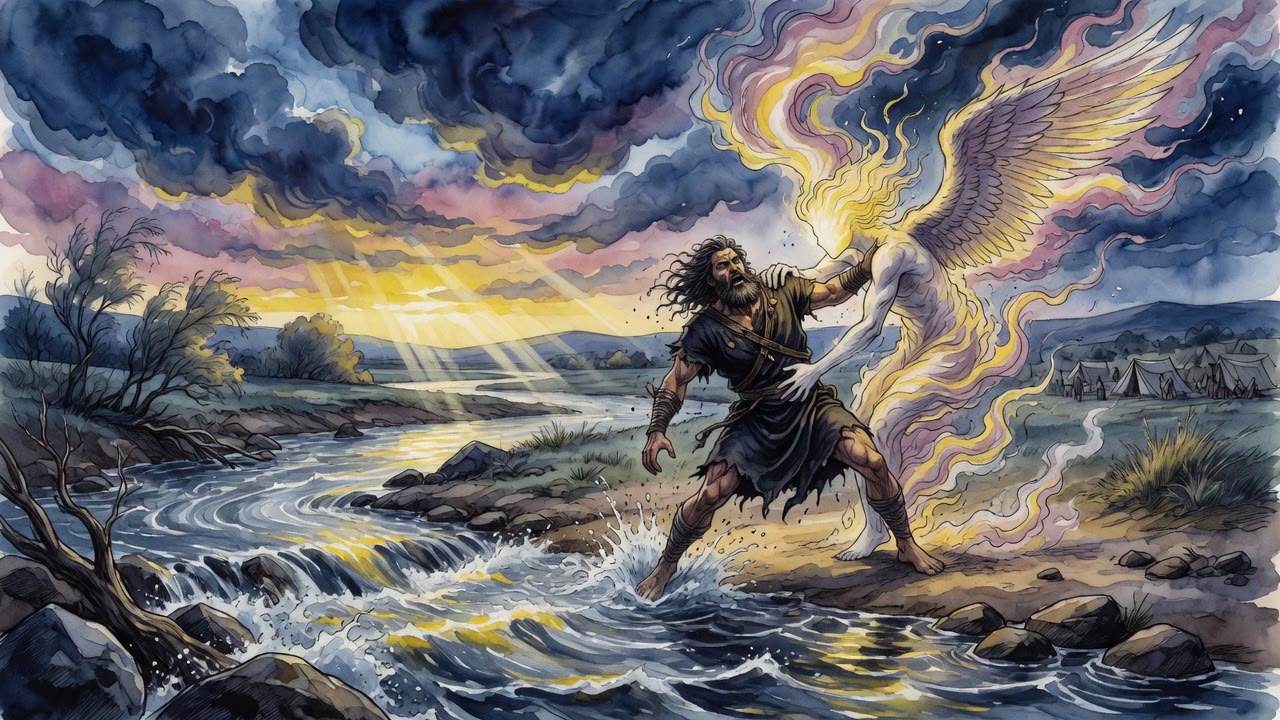
Jacob dropped the sheep he was holding and went for the shepherd's throat with both hands.
"Wizard," he said into his face. "You wizard. Enchantments do not hold at night."
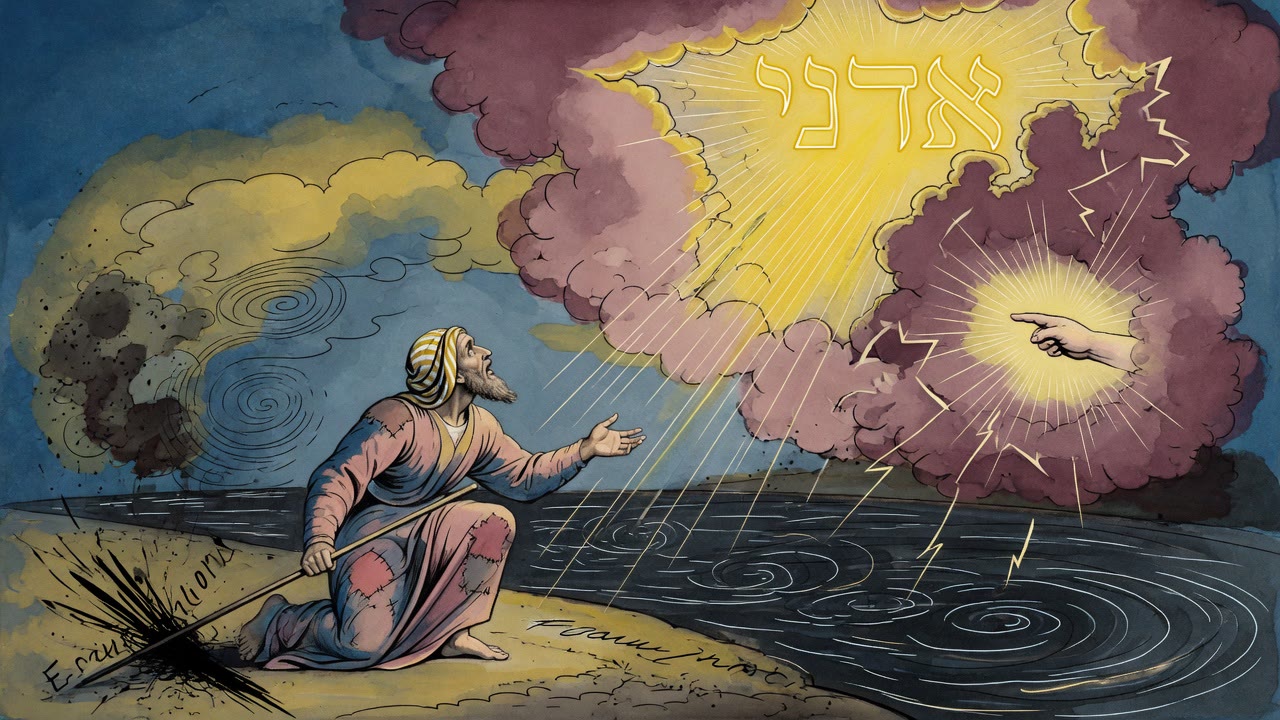
The stranger decided that Jacob should find out who he had been arguing with. He put one finger down on the ground and the ground opened and fire came up out of it between them.
Jacob did not let go. "You think you can frighten me with that," he said. "I am made of fire."
The Cattle Ran the Other Way
In the morning he handed over the present. A tenth of everything he owned on four legs, and pearls, and cut stones, and a hunting falcon on a perch, which was the sort of thing a man like Esau would want.
The animals would not go.
They knew the hand that had fed them and they knew the man standing opposite, and when the drovers tried to walk them over they broke and ran. They ran back through the camp, through the water, out into the scrub, anywhere. The drovers chased them and lost them.
What finally reached Esau was what could not get away. The lame ones. The sick ones. The old ewe that could not keep up. A hunting bird, some jewelry, and a herd of animals too weak to escape, handed over by a man who had signed himself a slave and had spent the night with his hands around an angel's neck.
Esau held his hand out even while his mouth refused the gift. Jacob saw the hand and pressed the present on him anyway. "I have seen your face as I have seen the face of angels," he said, and he chose the last word on purpose, so that Esau would hear, behind the flattery, the army on the road and the fire at the ford.
← All myths