Jacob Collided With God at Bethel in the Dark
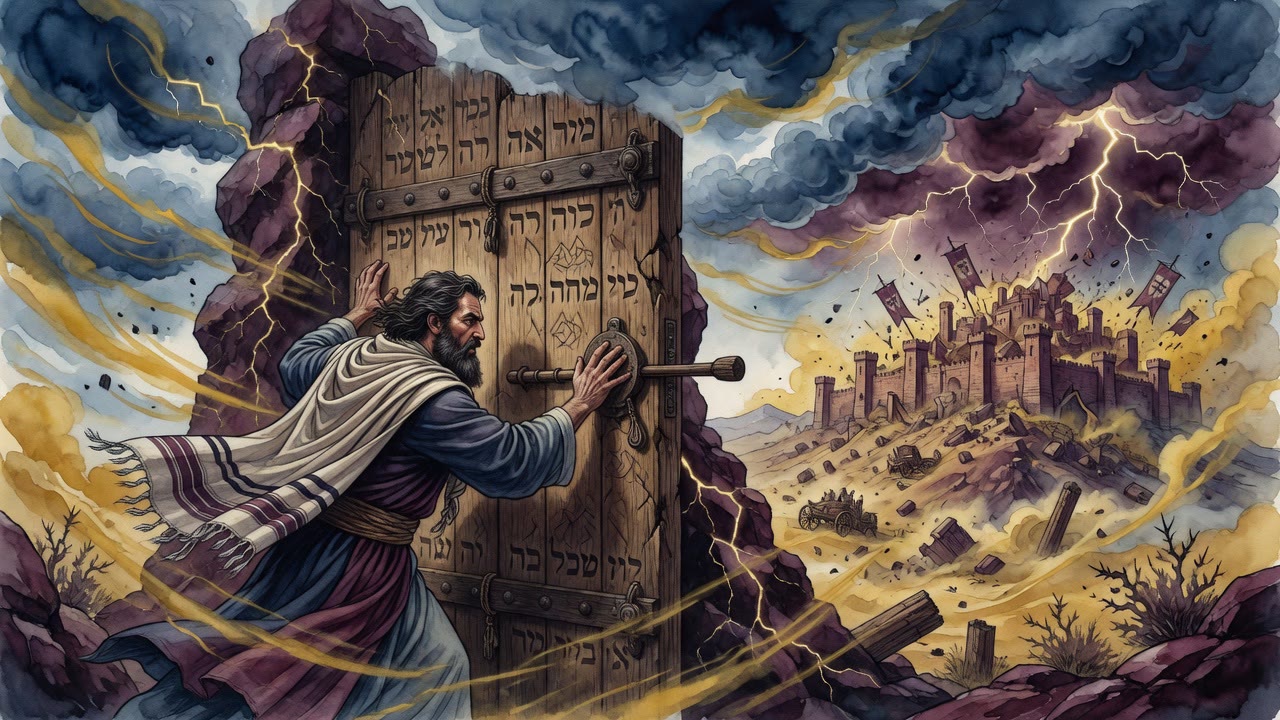
Jacob ran until the sun was gone. He struck the ground at Bethel. Stones went under his head because the place had stopped him.
Table of Contents
 Click for full size
He Hit the Ground at Bethel
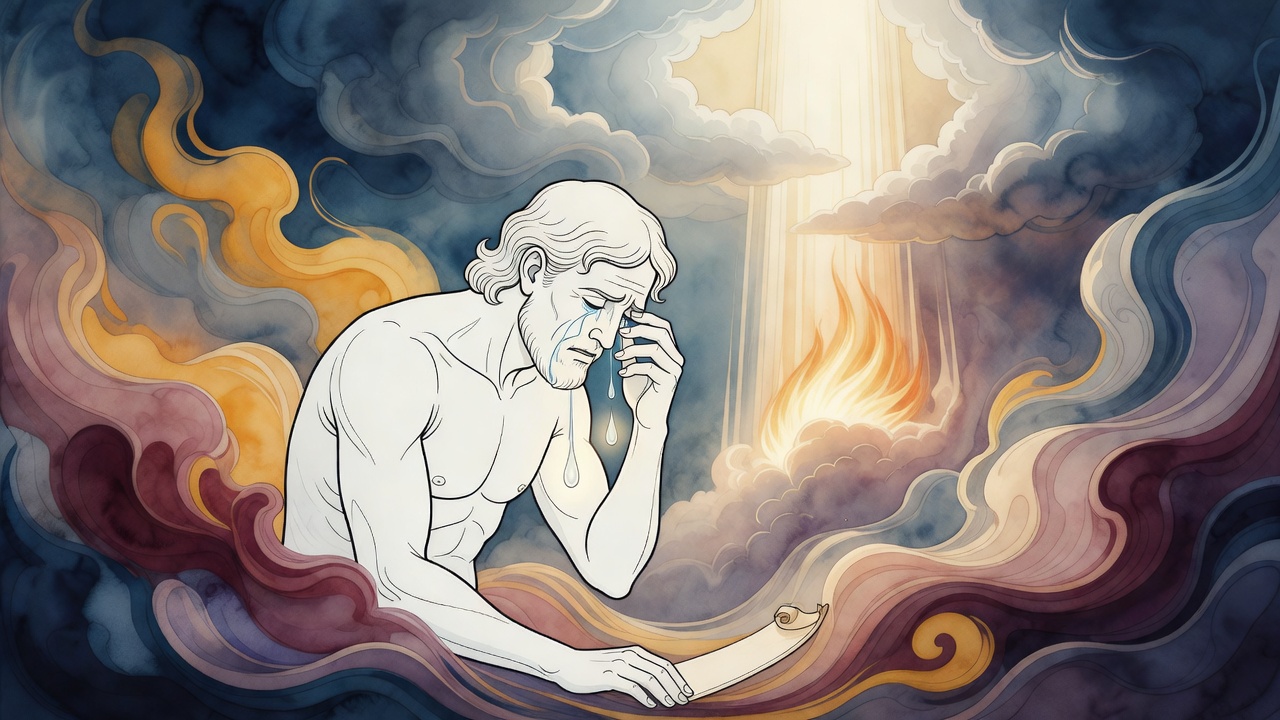
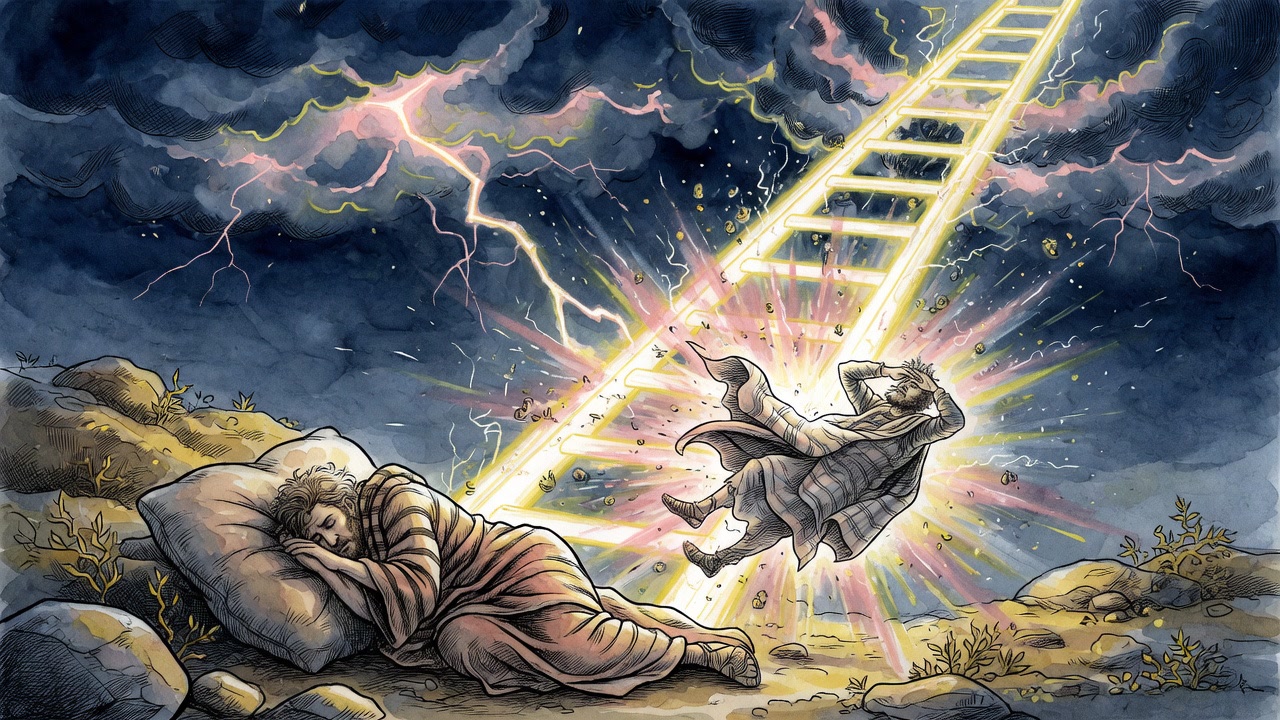
Jacob ran. From his brother's murderous fury, from the tent of his father, from the life he had known in Beer-sheba. The sun had already set when he reached the place. His foot caught. His body struck the ground. He did not ease into the night. He hit it.
He lay down with stones under his head on the hard earth. Before he slept he opened his mouth and shoved words at the dark. Not a polite hour. Not a prepared liturgy. A collision. The Torah would later write vayifga (ויפגע) for what he did there (Genesis 28:11). The root is pegiyah, to strike against. He did not merely arrive. He struck the place, and he struck at God from it.
The same hard verb shows up when God tells Jeremiah to stop: do not pray for this people, do not raise song or supplication, do not tifga bi (Jeremiah 7:16). Stop striking against Me on their behalf. That is what the night at Bethel sounded like from the ground: a man who would not be turned aside, hitting heaven with his voice because he had nowhere else to put his fear.
The Stones Under His Head
He slept. He dreamed of a ladder set on the earth, its top reaching heaven, angels of God ascending and descending on it. He woke into the same dark and said, "Surely God was in this place, and I did not know it."
His grandfather Abraham had prayed at dawn, standing in open daylight before a God he already knew. His father Isaac had gone out into the field toward evening, alone. Jacob, running in the darkness, with nothing left but stones under his skull, established the night prayer. Three times. Three men. Three qualities of address. The night one is the colliding kind.
He poured himself out on that ground until the words ran out. Then he slept on the hit. The angels kept moving on the ladder whether he watched or not. When he rose he did not name the place after his fear. He named it Bethel, the house of God, because the collision had held him instead of breaking him.
The Promise With No Conditions
In that same night God made him a promise without conditions. "Behold, I am with you, and I will keep you wherever you go" (Genesis 28:15). No qualifications. No expiration date. A direct guarantee of protection, spoken to a man still dusty from the road.
Jacob heard it. He built his life on it. He stacked the stones. He vowed. He went on toward Haran with the words in his mouth. The Guardian of Israel neither slumbers nor sleeps. By day the sun would not strike him, nor the moon by night. That was the hint. Four righteous people received hints about the future. Jacob was one of them.
He walked with that hint for years. He worked. He married. He fled Laban. The promise sat in him like a stone he had already slept on, hard and sure.
Four Hundred Men on the Horizon
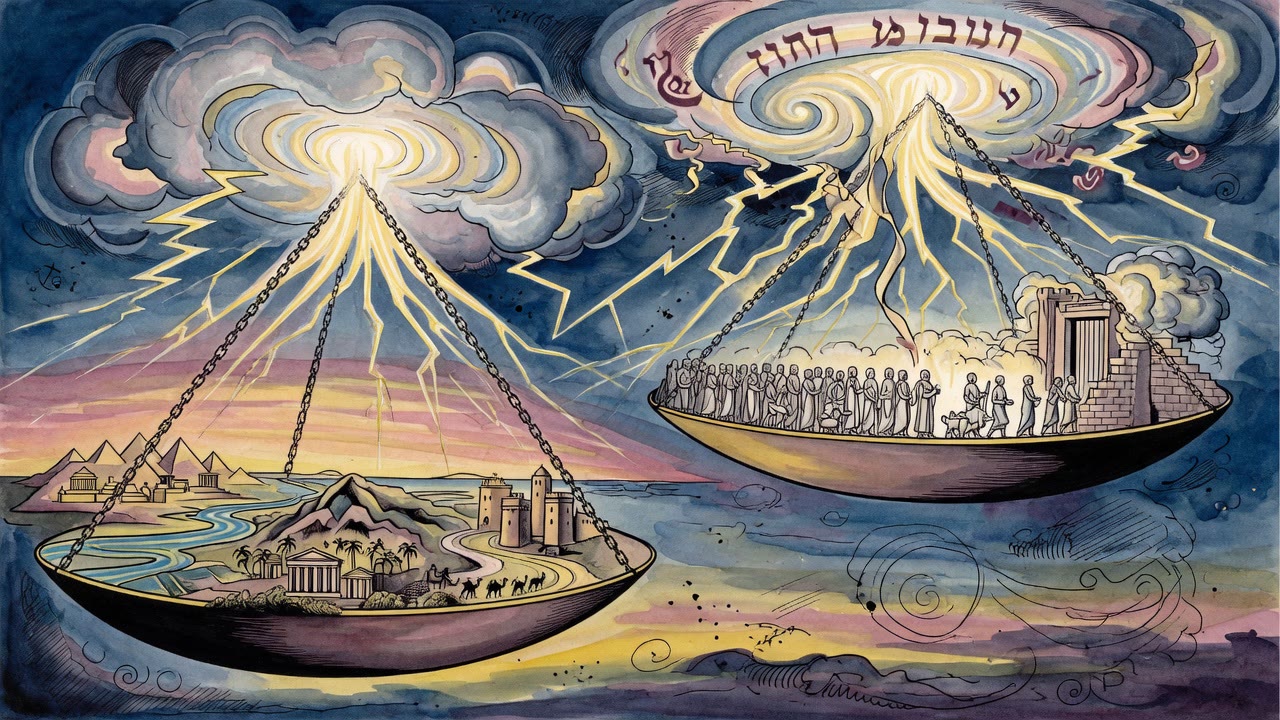
Years later he looked up and saw Esau coming with four hundred armed men. The Torah says Jacob feared greatly and was distressed (Genesis 32:8). The same man God had personally promised to protect. The four hundred were visible. The promise was not. His body chose the men he could count.
He divided the camp. He sent gifts ahead. He arranged the mothers and the children. He did the work of a man who has heard a guarantee and still cannot make his knees believe it. The hint had been given at Bethel in the dark. On this later afternoon, with dust rising from four hundred sets of feet, the hint was not enough to hold his fear in place.
He had struck against God once and been held. He could not make himself strike the same way now. He calculated. He flinched. The collision of Bethel had not deleted the brother on the road.
He Shut the Inner Door
He went into a tent and shut the flap. Not because he was finished with God. Because some hours are not the hour to argue. "My people, enter your chambers and shut your doors, hide yourself for a moment until the wrath passes" (Isaiah 26:20). The inner chamber is the heart itself. He closed it. He waited.
Hosea would later say Jacob fled to the land of Aram. The flight was geography, and it was also this: a man going inside until the wrath had somewhere else to spend itself. He had fled Beer-sheba. He had fled Laban. Now he fled, for a moment, into his own chest, and let the four hundred come as far as they would come without his voice meeting them first.
When he went back out, the stones of Bethel were years behind him and still under his head. He had hit the place in the dark, and it had held him. He had also shaken when the men appeared. Both things remained true. The night prayer he founded is the prayer of a person who collides, sleeps on stones, receives a promise, and still has to shut a door when the brother he wronged comes into view.
The ladder was gone. The four hundred were not. He walked toward Esau with the old hit still in his bones and the new fear still in his mouth.
← All myths