Jacob Told Esau That the Blessing Was Worth Nothing, Then Sent Gifts
Jacob wept when he heard of Esau's four hundred men. He sent word that the stolen blessing had left nothing in his hand but a few cattle.
Table of Contents
 Click for full size
He Wept When the Messengers Came
Jacob heard about the four hundred men and lifted his voice and wept bitterly. The messengers had also brought his mother Rebekah's word: humble yourself before your brother. He did as she commanded. He sat down and wrote.
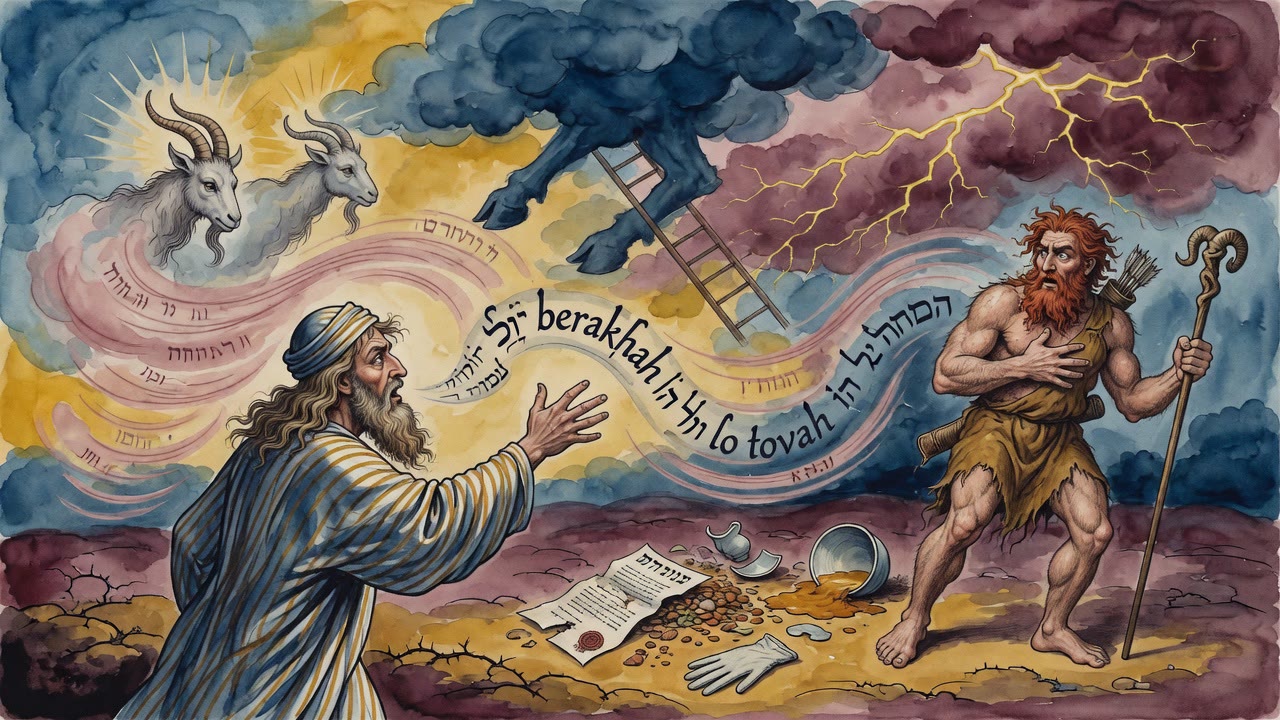
It was not a letter meant to look strong. He told the men to say, "Thus speaks your servant Jacob. My lord, think not that the blessing which my father bestowed upon me profited me." Twenty years he had served Laban. Laban had deceived him and changed his wages ten times. He had labored in cold and heat. He had been robbed of what he earned and had earned it again.
What he had now was not from the blessing Isaac spoke. What he had was from the work of his hands in a foreign land, and from God's mercy at the end of it. He was coming home to his father and mother in Canaan. He wanted Esau to hear that before he saw the flocks.
Nothing in My Hand
He made the claim even smaller. "Of all that in which my father blessed me there is nothing in my hand, but I have a few oxen and asses, sheep, and servants and handmaids. I have sent to tell my lord that that blessing has not profited me, that I may find mercy in your eyes, and that you may not keep enmity against me on account of it."
He was returning with eleven sons and a heavenly escort, and he called it a few cattle. He wanted mercy, not envy. A brother nursing twenty years of grudge needed to hear that the stolen blessing had not crowned him. It had tired him. He sent the word to appease Esau before the two of them stood on the same ground.
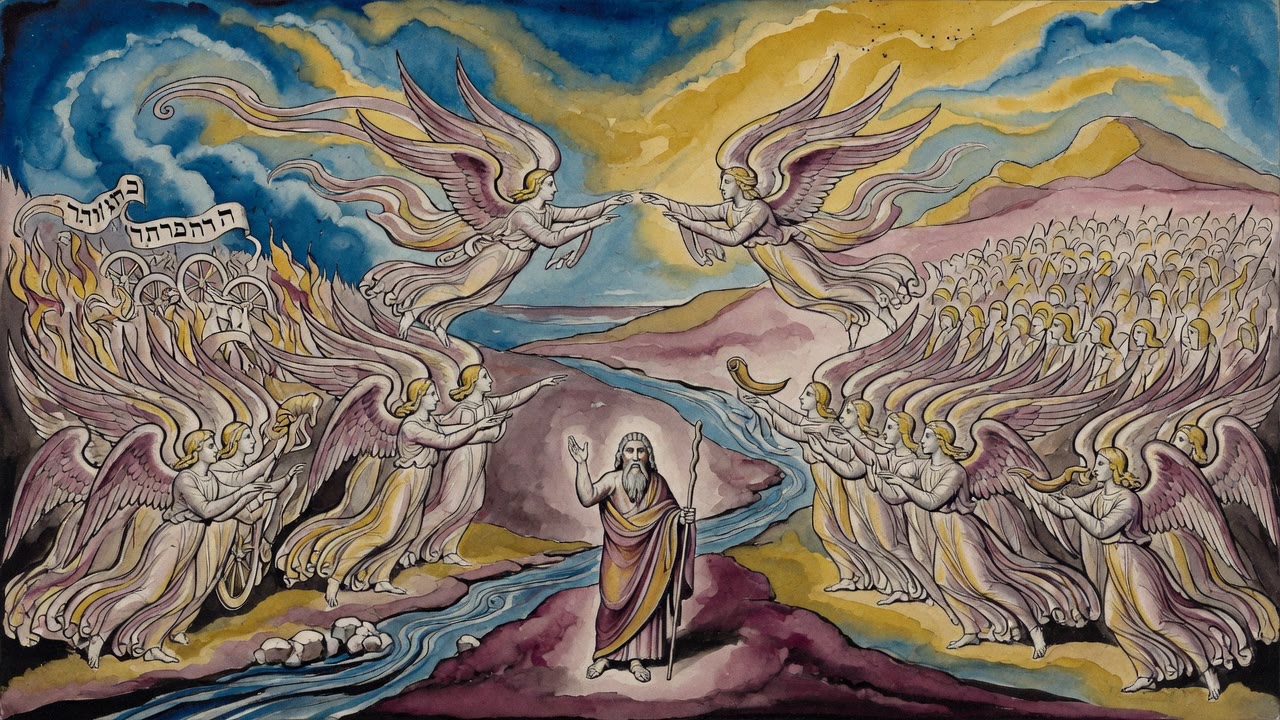
He also told the messengers to say he had become two camps. He was not the boy who left with a staff. He had earned what he had. If Esau came for peace, Jacob was ready. If Esau came for war, Jacob was ready for that too. "I have warriors, courageous and strong, who say something before God, and He performs their will on their behalf."
Eight Times He Said My Lord
He called Esau "my lord" and called himself servant, again and again, until the count stood at eight. God said to him, "You abased yourself and called him my lord eight times. As you live, I will establish eight kings from his descendants before your descendants."
The kings of Edom would reign before any king rose from Jacob's line. Jacob heard that cost and did not take the word back. He needed the night. He needed Esau's anger thinner by morning. He would pay in titles if titles would buy him a crossing.
He still hoped his brother had changed. Twenty years is long enough for a man to put down a hunt. It is also long enough for a hunt to get better at waiting. Jacob sent the messengers out with both possibilities in their mouths: peace, or war, and he would meet either one.
The Gifts Came in Waves
Then he sent the animals. Goats and rams and camels and cattle and donkeys, drove after drove, with servants between them, each wave arriving before Esau as a separate tribute. Each servant was told to leave a space, then say, "These are from your servant Jacob, a gift to my lord Esau. Jacob is coming behind us."
He did not dump the whole peace offering in one pile. He let Esau receive, and receive again, and receive again, so that by the time the man himself appeared the anger might already have had to swallow too much honor to stay sharp. Recognition. Tribute. A brother on his knees calling him lord. That was what Esau had always wanted from the stolen hour in Isaac's tent. Jacob paid it out along the road.
He had wept first. Then he had made the blessing small. Then he had spent eight "my lords" and a river of livestock to appease a man who still might kill him in the morning. He crossed toward Esau with empty hands in his message and full hands in his droves, and he did not know which of those Esau would believe.
← All myths