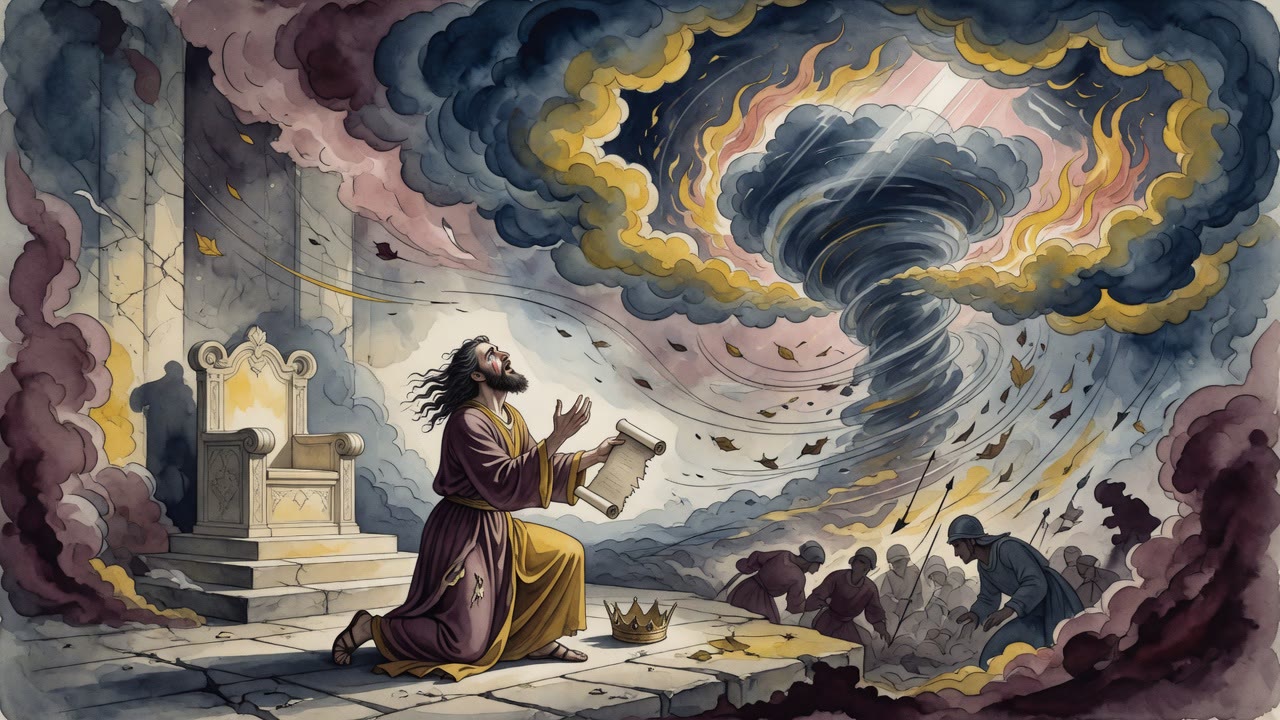
David Sang While Absalom Stole the Throne
David fled Jerusalem weeping, but a psalm rose from him because punishment still carried signs of mercy, survival, and return.
Table of Contents
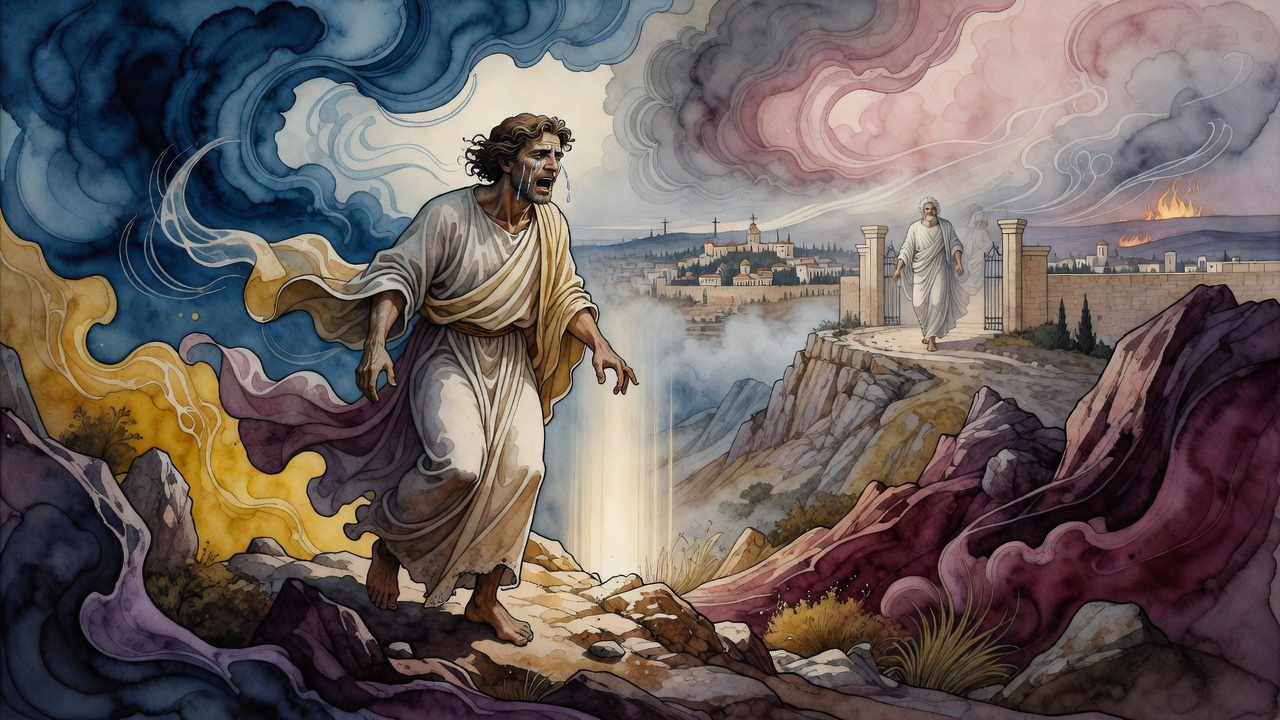
David left Jerusalem with the sound of his own city closing behind him.
 Click for full size
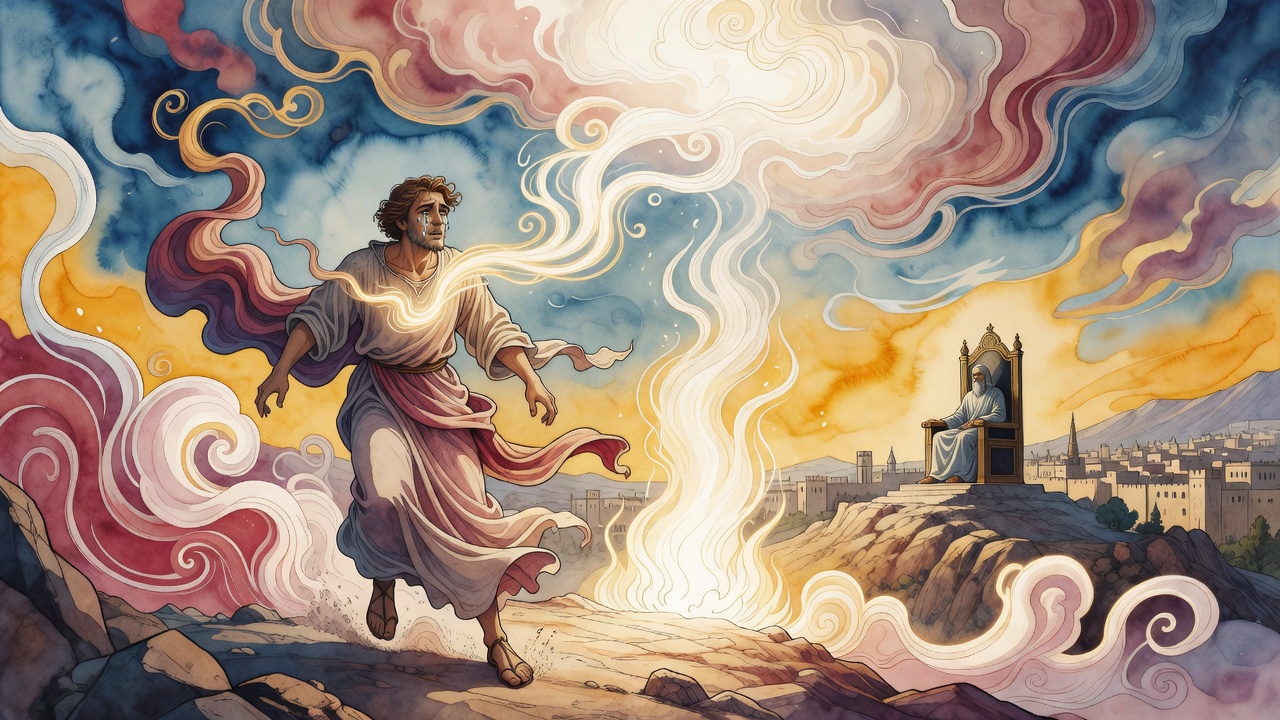
The road bent away from the palace. Servants hurried beside him. Dust rose around their ankles. Somewhere behind them, Absalom was taking the throne that still smelled of his father's oil, gathering men who had eaten at David's table, turning the gates of justice into a net. The king had no army ready for a clean answer. He had a broken house, a rebel son, and a city too full of blood to risk a battle in its streets.
The Road Out of Jerusalem
He went out weeping. That is the part no one could miss. A king can hide many things behind guards and curtains, but not a barefoot climb from his own capital while the people watch him pass. The Mount of Olives received him as a fugitive, not as a conqueror. Men who had once shouted for him now measured which way power was moving.
Then the song came.
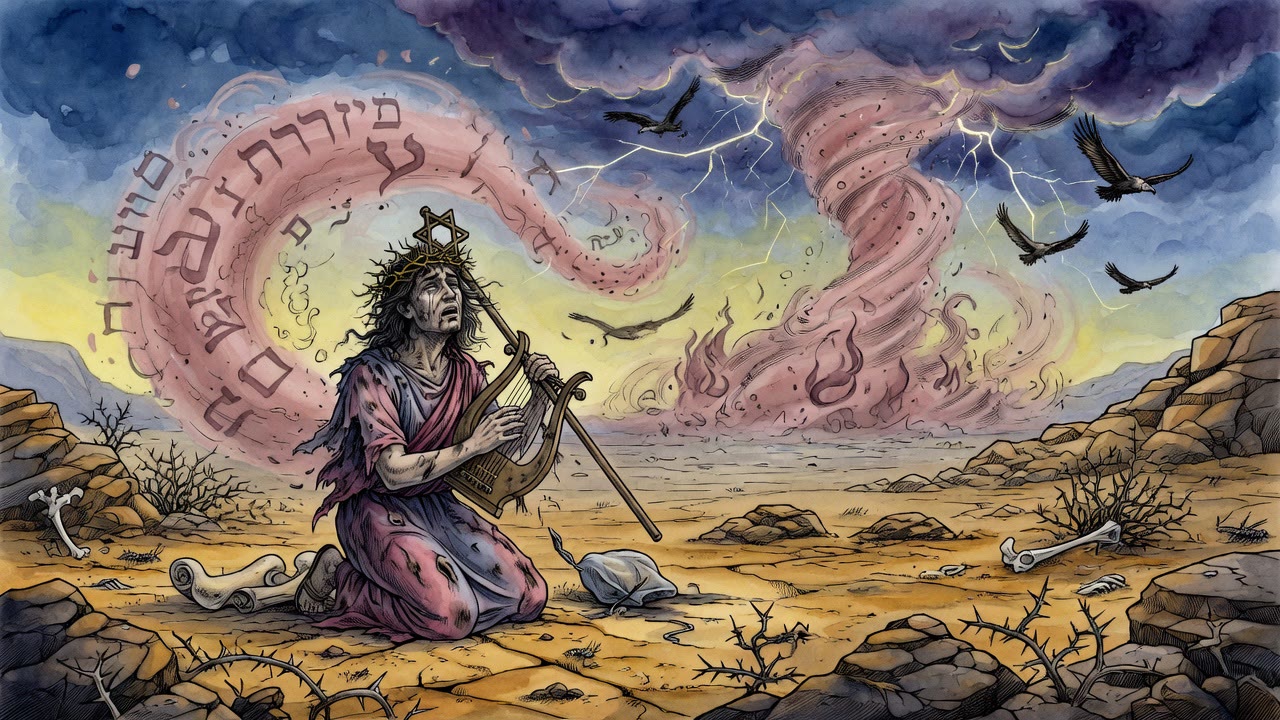
Not victory music. Not a court hymn. A psalm from a man surrounded by enemies, a man counting how many had risen against him, a father hearing his son's name inside every footfall. The strange thing was not that David cried. Any father would cry. The strange thing was that praise came out with the grief, as if the throat could not decide whether it was mourning a son or thanking God for leaving a path open.
The Song Inside the Punishment
A parable sits under that sound. A king became angry with his son and sent him away. The son walked into exile with a tutor at his side, and when the tutor found him he was doing two things at once. He was crying, and he was singing.
Asked why, the son gave both answers. He cried because he had angered his father. He sang because the decree was not death. His father had not locked him in a pit or handed him to executioners. He had sent him through provinces and roads, places where a living man could still breathe, repent, and someday return.
David knew that shape. He was not innocent, and he did not pretend to be. The road out of Jerusalem was punishment. But it was punishment with air in it. A dead man cannot sing. A man being escorted through humiliation can still hear mercy in the fact that his feet are moving.
The Debt David Could Not Dodge
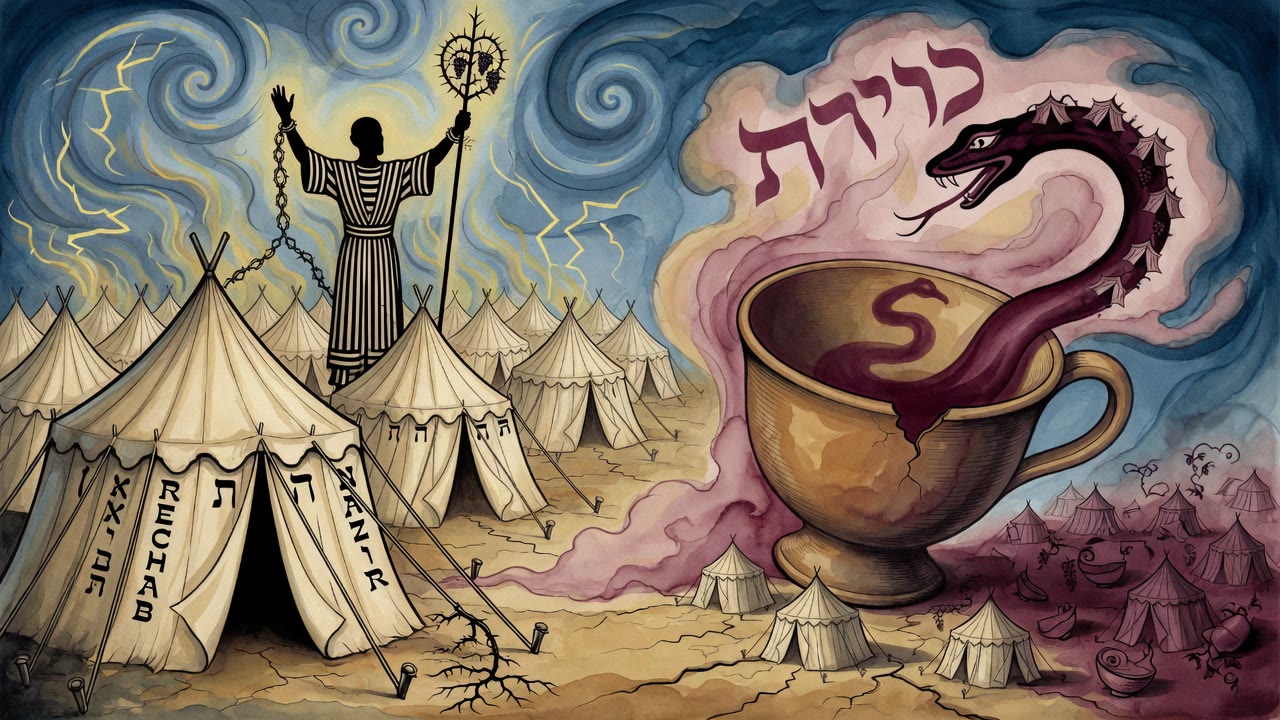
The wound in David's house had been planted long before Absalom sat by the gate and stole the hearts of Israel. David had taken what was not his. He had arranged for blood to cover desire. The sentence returned through his own roof, through the women of his household, through sons who turned against one another and against him.
The king had once spoken judgment with his own mouth. Fourfold payment, he had said, not knowing the words were being fitted to him. In the telling, one act opened into sixteen bitter returns. A single violation became a house full of violation. A single death became deaths that would not stop walking toward him.
So when Shimei cursed from the hillside, David did not order the man cut down. Let him curse, he said in effect. Maybe Heaven put the words there. A king who hears only insult has learned nothing. David heard an accounting.
The Ancestors Who Knew How to Run
Flight could have swallowed him with shame. Instead David reached backward.
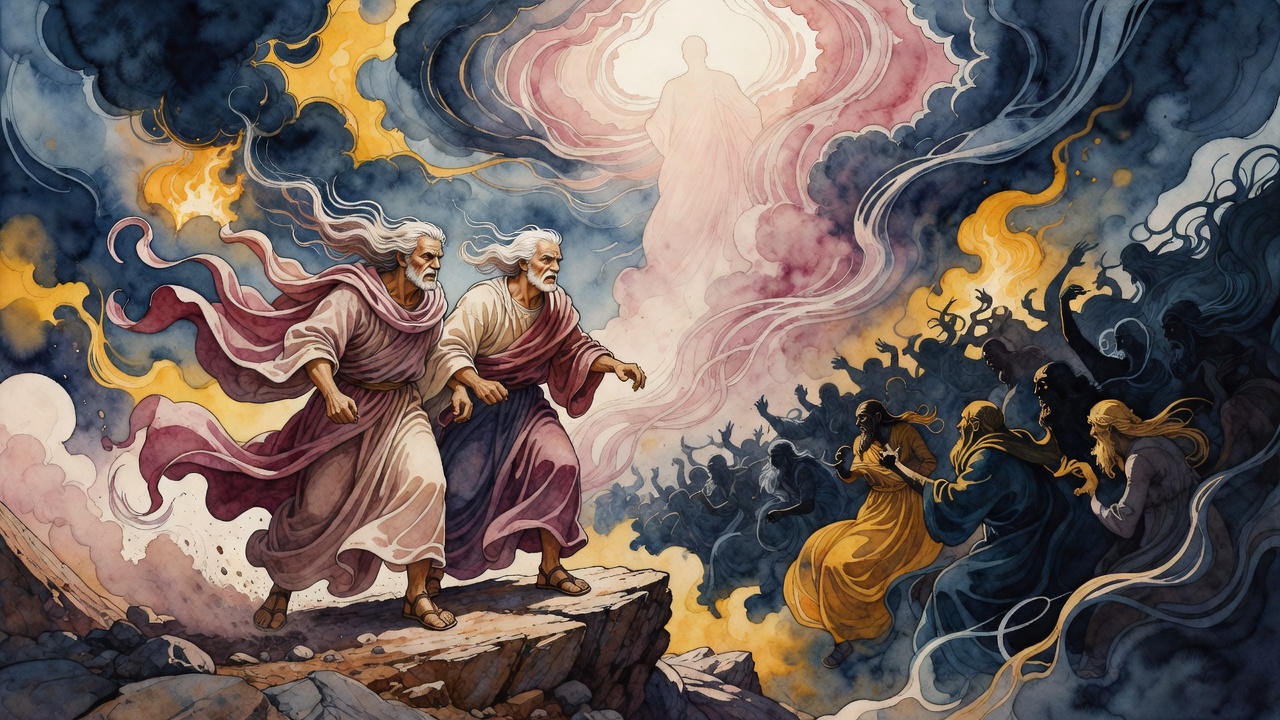
Jacob had fled. Moses had fled. The fathers and rescuers of Israel were not statues holding their ground in every storm. They knew when the hour was too sharp to stand against. They made room for the danger, and because they made room, the hour later fell into their hands.
That memory steadied David. He was not the first holy man to leave by night or dust or fear. He was not the first to trust that retreat could be part of return. The road was still humiliating. Absalom was still inside the city. But the old judgments of God had not ended with fugitives erased from the earth. Jacob came back with a name. Moses came back with a mission. David kept walking because the old roads had already proven that running was not always defeat.
Bread Came From the Men He Feared
Then the signs began to arrive in human hands.
Hushai came first, torn between friendship and danger, and David sent him back into the rebel court to break the counsel of Ahithophel. Prayer did not replace cunning. Song did not cancel strategy. David sang with spies moving through the palace behind him.
Later, at Mahanaim, men he had feared came carrying beds, basins, grain, beans, lentils, honey, curds, sheep, and cheese. Shobi came. Machir came. Barzillai came, old and wealthy, bringing food for a king whose own son had driven him hungry into the wilderness.
David looked at the bread and saw more than bread. Enemies do not usually arrive with supper. The men he feared had become the men who fed him. Peace had begun before the war was over.
A Throne Lost Without Losing Heaven
That is why the psalm could rise while tears were still wet on his face. David had lost the city, the throne, and the certainty that his own blood would stand beside him. He had not lost the ear above him.
Absalom could seize Jerusalem. He could sit in the place where petitions were heard. He could wear the look of a king and gather men around the sweetness of rebellion. But he could not turn David's punishment into abandonment. The road itself argued against it. The tutor in the parable was still walking beside the banished son. The provisions at Mahanaim were already being packed. Hushai was already on his way back through the gates.
David climbed out of the city and sang with a cracked voice. Behind him, Absalom took the throne. Ahead of him, mercy waited in the dust with bread.
← All myths