The Soul Guided From Its First Song to Its Final Reckoning
An angel carries each unborn soul through heaven by day, then lets it go down into labor, into affliction, into the long accounting.
Table of Contents
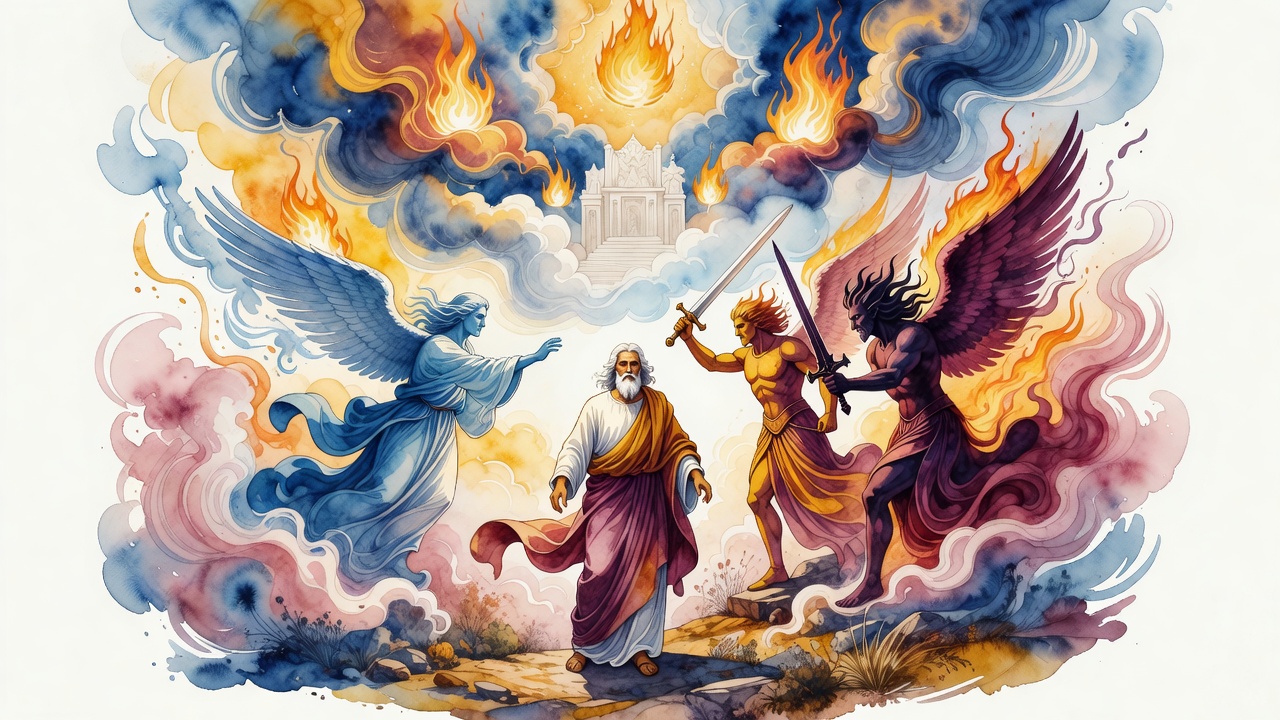
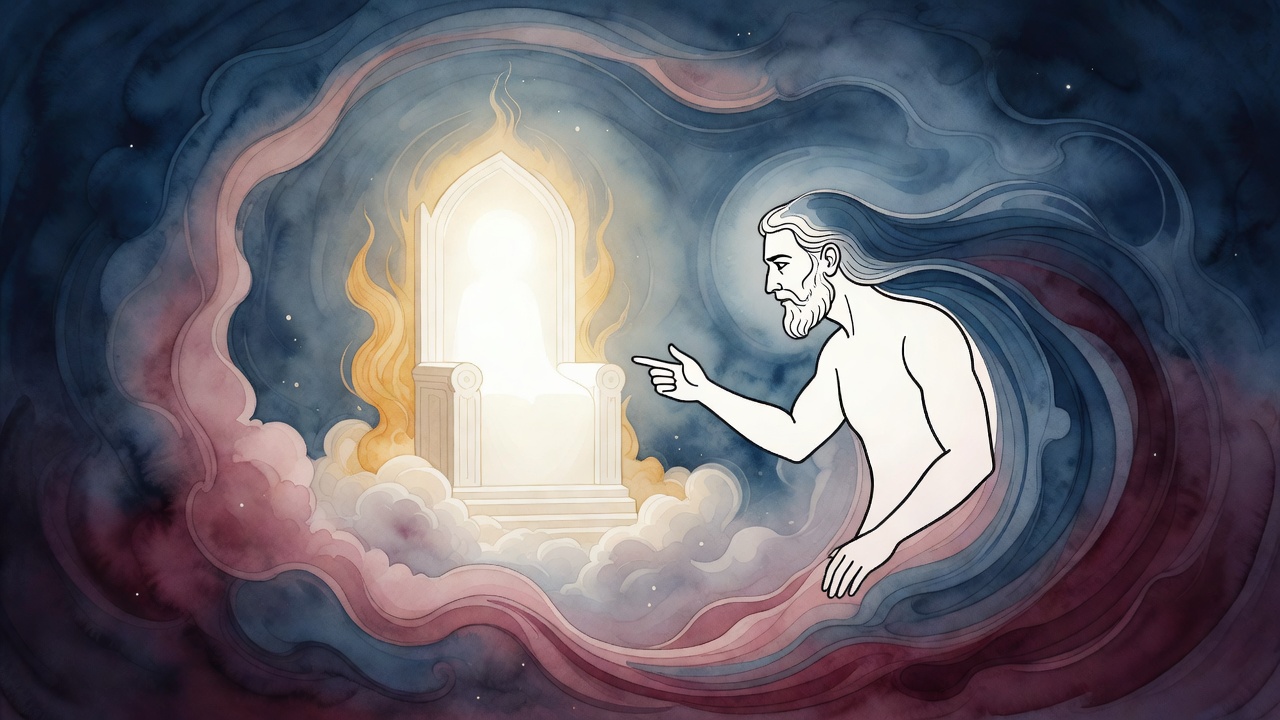
Before the soul has a body, it has a guide. The angel Lailah takes it up at morning and carries it across the whole width of heaven, and as the other angels sing it through the hidden chambers, that song is the first thing the soul ever knows. Between sunrise and dark she shows it all it will own. Here is the house where you will live. Here is the field where you will fall. Here, in this narrow strip of ground, is where they will lay you down. The soul looks and does not yet understand that looking is a kind of grief.
 Click for full size
She does not stop at the borders of one life. She tilts the soul toward the lit half of the world and the dark half together, the tzadikim and the resha'im standing in the same field of vision, the gentle and the cruel, reward and ruin laid side by side. The soul drinks all of it. Then evening comes, and Lailah folds the soul back into the warm hollow of the womb, and shuts the door for nine months.
The Door She Will Not Let Stay Closed
When the months are finished she comes again, and the soul has grown used to the dark and does not want to move. "The time has come for thee to go abroad into the open world," she says. The soul presses itself into the wall of its shelter. "Why dost thou want to make me go forth into the open world?" it asks. It has seen the field and the narrow ground. It knows where this ends.
Lailah does not soften the answer. "Know that as thou wert formed against thy will, so now thou wilt be born against thy will, and against thy will thou shalt die, and against thy will thou shalt give account of thyself before the King of kings, the Holy One, blessed be He." Still the soul clings. So she touches it once on the nose, and the small light above its head goes out, and the child is pushed into the air against its will, screaming, and in that first breath it forgets every chamber it was shown.
The Field of Brutal Labor
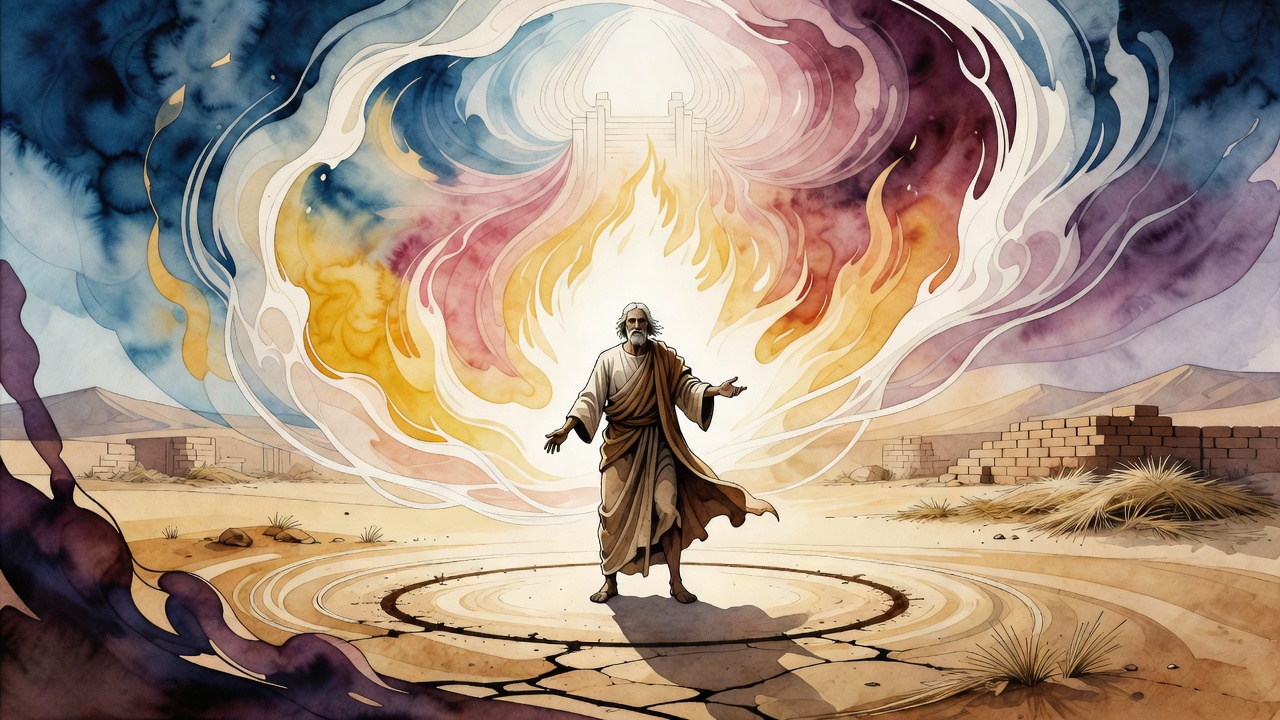
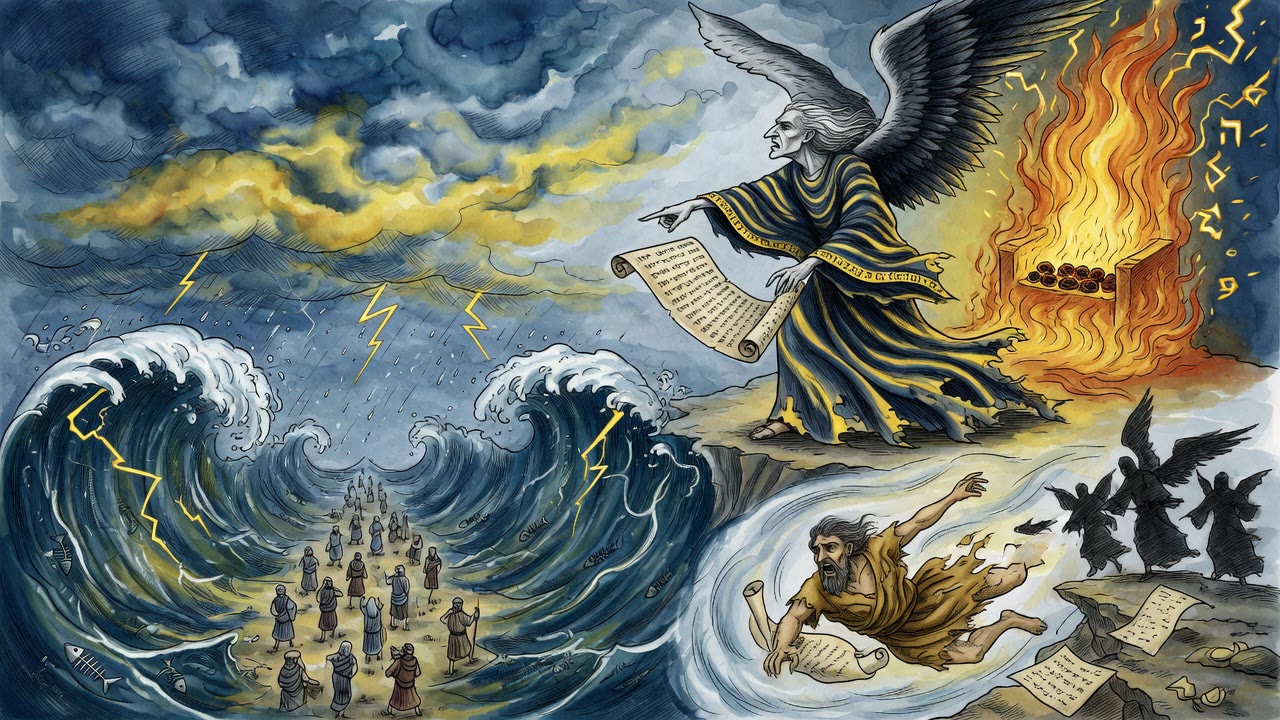
The soul forgets, but the field it was shown waits for it anyway. One such soul comes down into Egypt, into a country built of other men's backs. The bricks never stop. The whips never rest. There is no horizon where the work ends.
The child of that soul grows into a man named Moses, and his heart tears open at what he sees. He has no staff that splits seas yet, no voice from any bush. He has only words, so he walks out among the broken laborers and spends them. "My dear brethren," he says, "bear your lot with fortitude." He kneels by men too tired to lift their own arms. "Do not lose courage, and let not your spirit grow weary with the weariness of your body."
They look at him as though he were speaking of another world. He keeps speaking. "Better times will come, when tribulation shall be changed into joy." He points at the sky, where weather is the only thing in Egypt that changes. "Clouds are followed by sunshine, storms by calm." He tells them the one law their masters cannot repeal: "All things in the world tend toward their opposites, and nothing is more inconstant than the fortunes of man." It is the same accounting Lailah named in the womb, spoken now to men who have forgotten they ever heard it.
The Ash-Heap and the Accuser
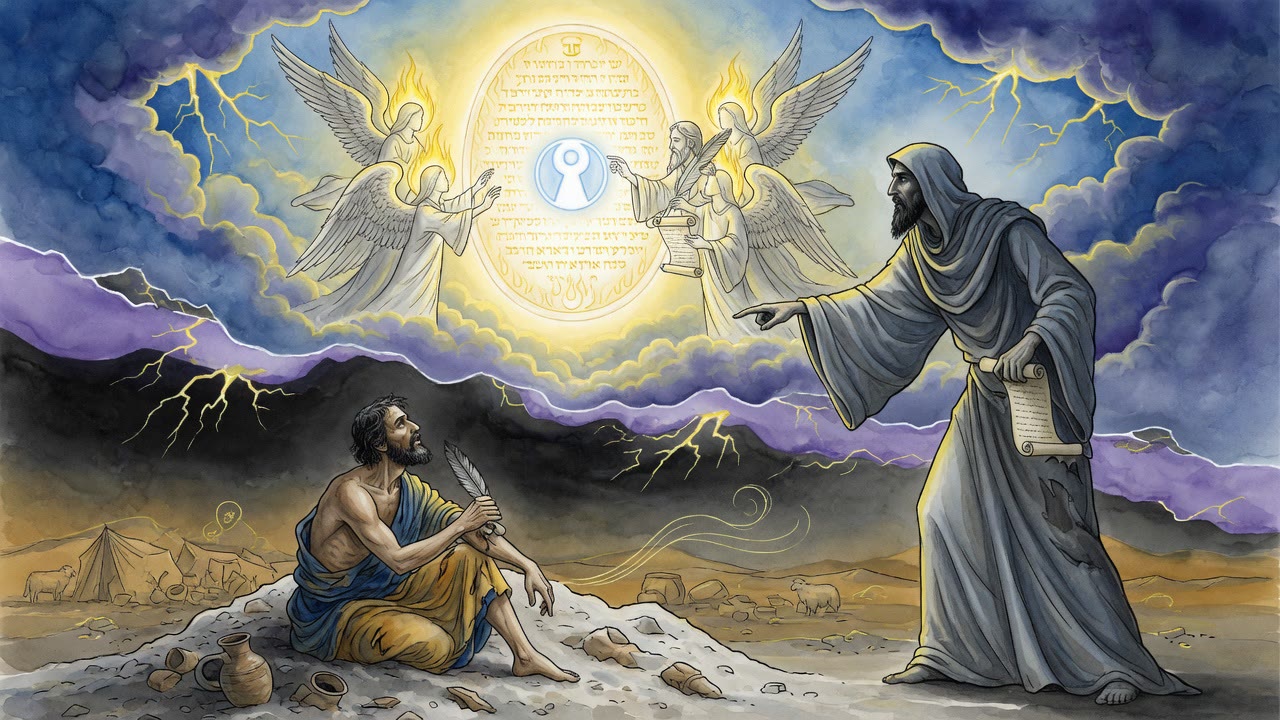
The thread runs on, down to another soul marked out before it ever drew breath. This is the soul of Job, and Satan, who stands as the Accuser, has already emptied his hands once. The wealth is gone. The children are buried. The man has not bent.
So the Accuser comes before the Holy One a second time and asks for the body itself. Permission is granted, with one wall left standing: the soul may not be touched. It is a strange errand, breaking the pitcher while forbidden to spill the wine. The storm hits the house and throws Job from his seat, and he lies three hours on the floor. Then the boils come, from the sole of his foot to the crown of his head. He drags himself outside the city to an ash-heap and sits in it.
His lower body weeps with open sores, his upper body cracks with dry ones. He scrapes at the itching with his nails until the nails fall away with his fingertips, and then he takes up a broken shard of pottery and scrapes with that. Vermin move through the wounds. When one tries to crawl off, he presses it back. "Remain on the place whither thou wast sent, until God assigns another unto thee," he says, as if even the worm were under orders.
The Account Rendered
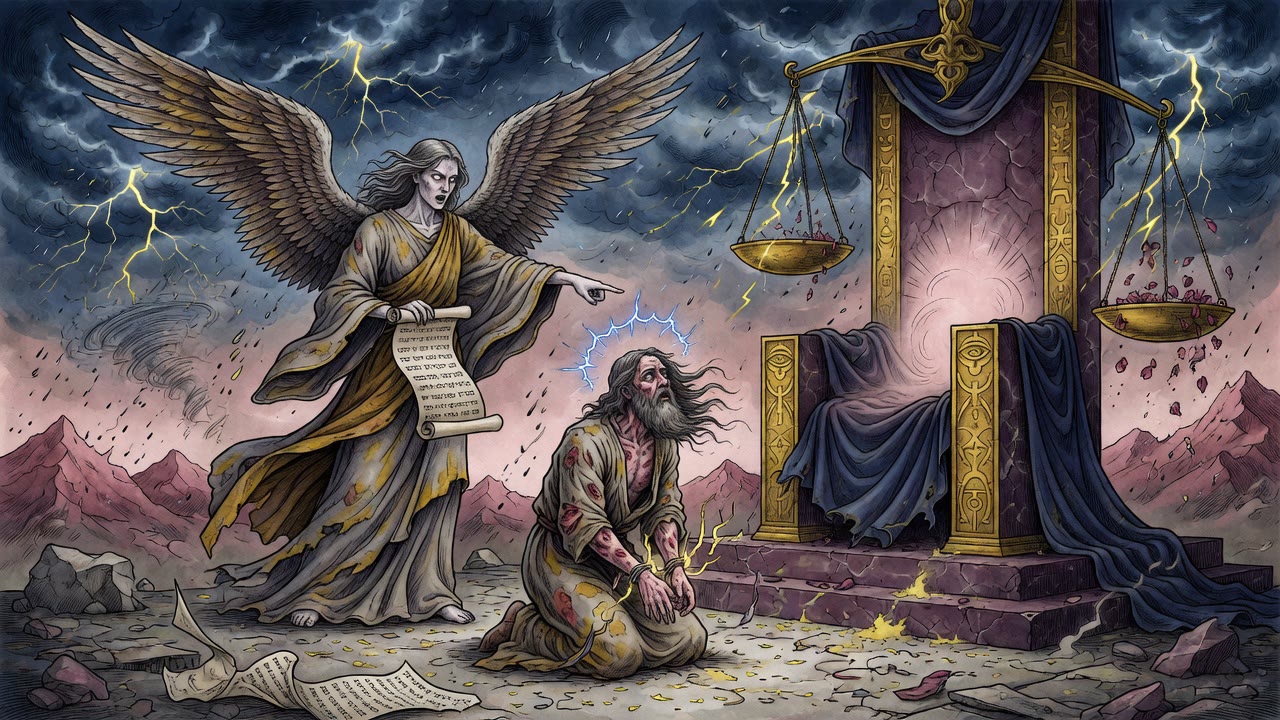
His wife stands over the ash-heap and cannot bear it. Pray for death, she begs him, that he might die while still an upright man. Job will not. "If in the days of good fortune, which usually tempts men to deny God, I stood firm, and did not rebel against Him, surely I shall be able to remain steadfast under misfortune, which compels men to be obedient to God."
And there it is, the account Lailah promised in the dark before any of this began. The soul she guided from its first song down to this ash-heap, shown its own grave, born screaming and forgetting, set down in the field of bricks and the field of boils, comes at last to the one thing it was always traveling toward. Not the house. Not the field. The reckoning rendered against its will, and rendered standing.
← All myths