God Stayed Close to Moses at the Burning Bush, the Sea, and Sinai
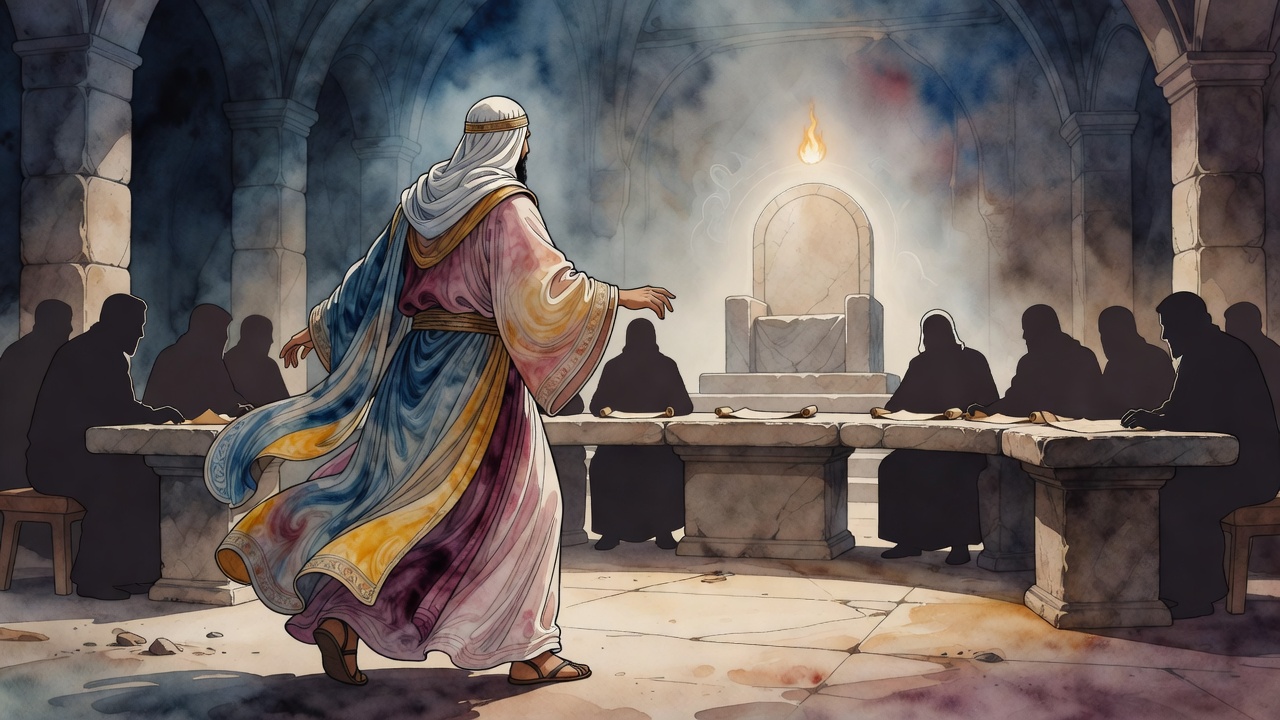
Moses ran out of Egypt with a dead taskmaster behind him and stopped at a well in Midian. Shepherds were driving women off it. He drew the water himself.
Table of Contents
 Click for full size
The Thornbush Where the Shechinah Waited
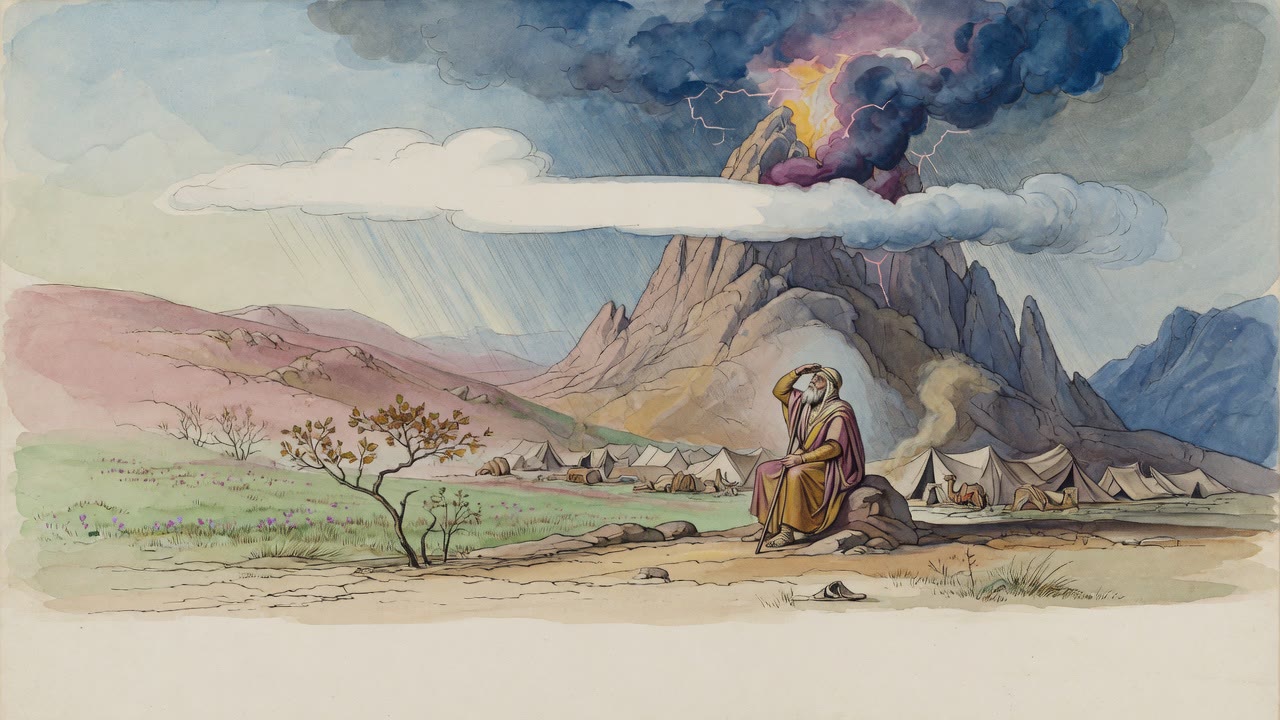
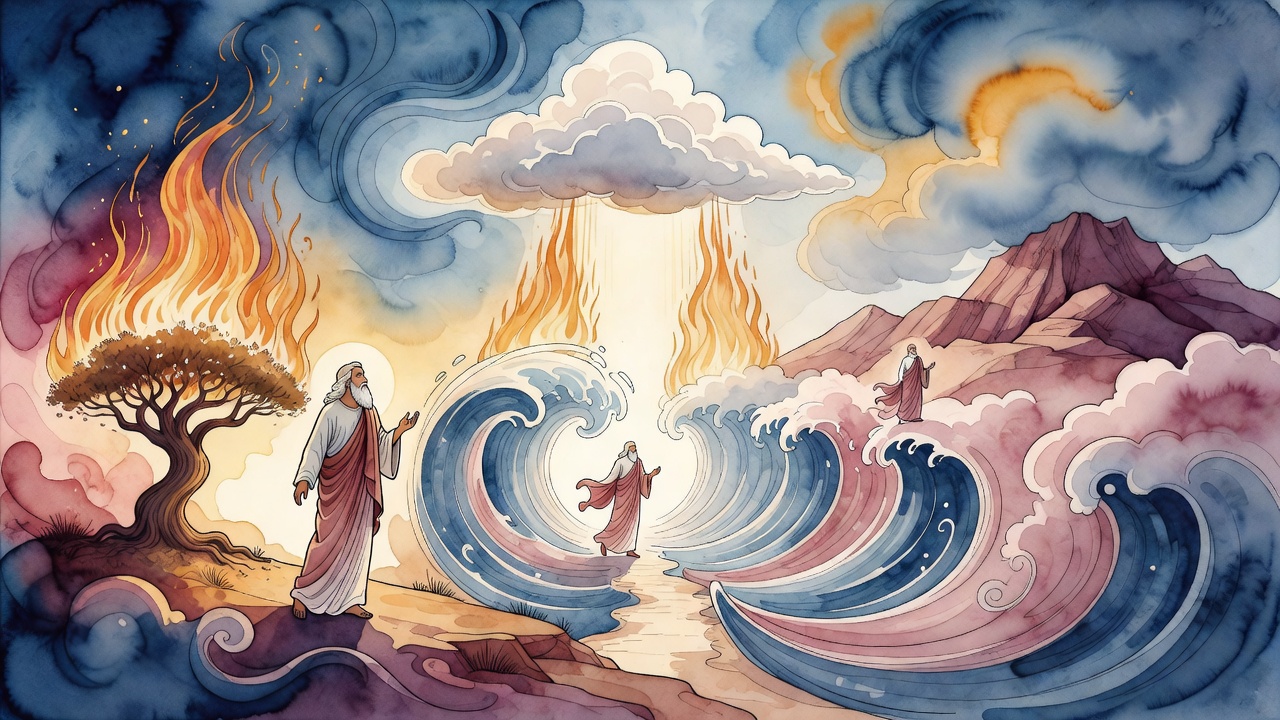
Moses is tending sheep in the wilderness when a bush catches fire and does not burn down. He turns aside to look. Shemot Rabbah asks a harder question than the text: where does the divine presence rest when the Temple is gone? Where is the Shechinah when the world is suffering and no sacred space stands?
The answer is the bush. Not a throne room. Not a palace. A low shrub in the wilderness, the kind of plant everyone walks past. The Shechinah (the Divine Presence) is present in the smallest, least dignified place, in the suffering itself, burning without being consumed. If Israel is in pain in Egypt, God is not too exalted to be found there. The bush is the proof: holiness can inhabit affliction without being destroyed by it. Moses must learn this before he can lead anyone out of anything.
A Well Held the Future
Moses flees from Egypt after killing the Egyptian taskmaster. He arrives at a well in Midian and finds women being pushed away from it by shepherds. He stands up for the women and draws water for their flocks. He does not know that one of the women is Zipporah, that he will marry her, that her father will become his father-in-law, that the descendants of this meeting will form part of his story for the rest of his life.
Shemot Rabbah slows down at the well because the rabbis believe that the three great figures of Israel, Abraham, Isaac, and Jacob, all found their wives near water. The well is where futures are made. Moses arrives at his well as a fugitive with blood on his past, and what waits there is not punishment but the beginning of a household. Divine nearness does not only appear at burning bushes. It appears at ordinary water where a stranger does something decent without being asked.
God Preceded Israel Across the Sea
When the sea splits and Israel walks through on dry ground, Shemot Rabbah says God went before them. This is not metaphor. The divine presence led the crossing, entered the water before Israel did, and only when Israel was safely across did the wall of water fall back on the Egyptians. The God who appeared in a lowly bush and waited at a Midianite well also waded into the sea ahead of the people it was rescuing.
Moses sings afterward. The song is not triumphal declaration but a binding: the song cements the covenant between God and Israel across every future generation. Whoever sings it in any generation joins the chorus at the sea. The event becomes eternal through the song, and the song carries the evidence of divine nearness into every mouth that sings it.
One Complete Shabbat
Shemot Rabbah records a tradition: if Israel were to keep one complete, undivided Shabbat, the Messiah would come. The wilderness generation received the manna, which came with its own Shabbat discipline built in. No manna fell on the seventh day. The people had to trust that what they had gathered on the sixth day was enough. They had to stop reaching for more. The Shabbat of the wilderness was not a gift that required nothing of Israel. It was a test of whether they could receive what they had been given without immediately wanting the day's additional portion that was not coming.
Moses Fasted and the Mountain Answered
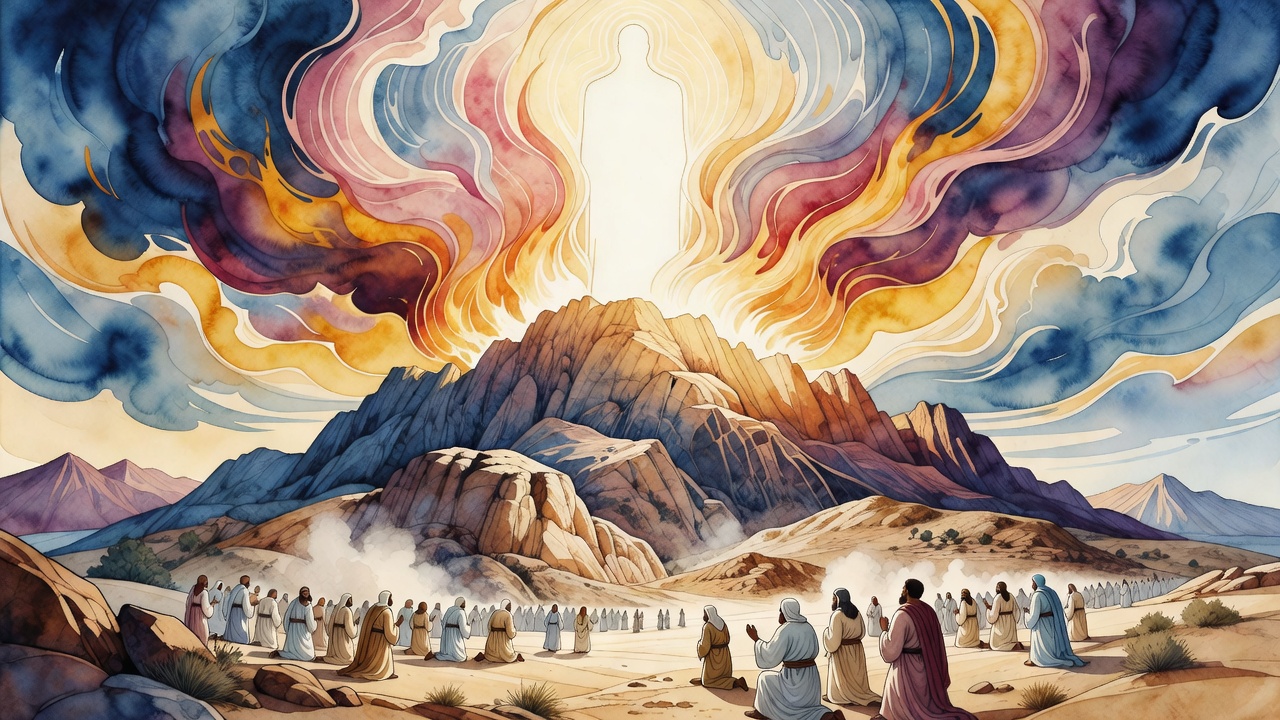
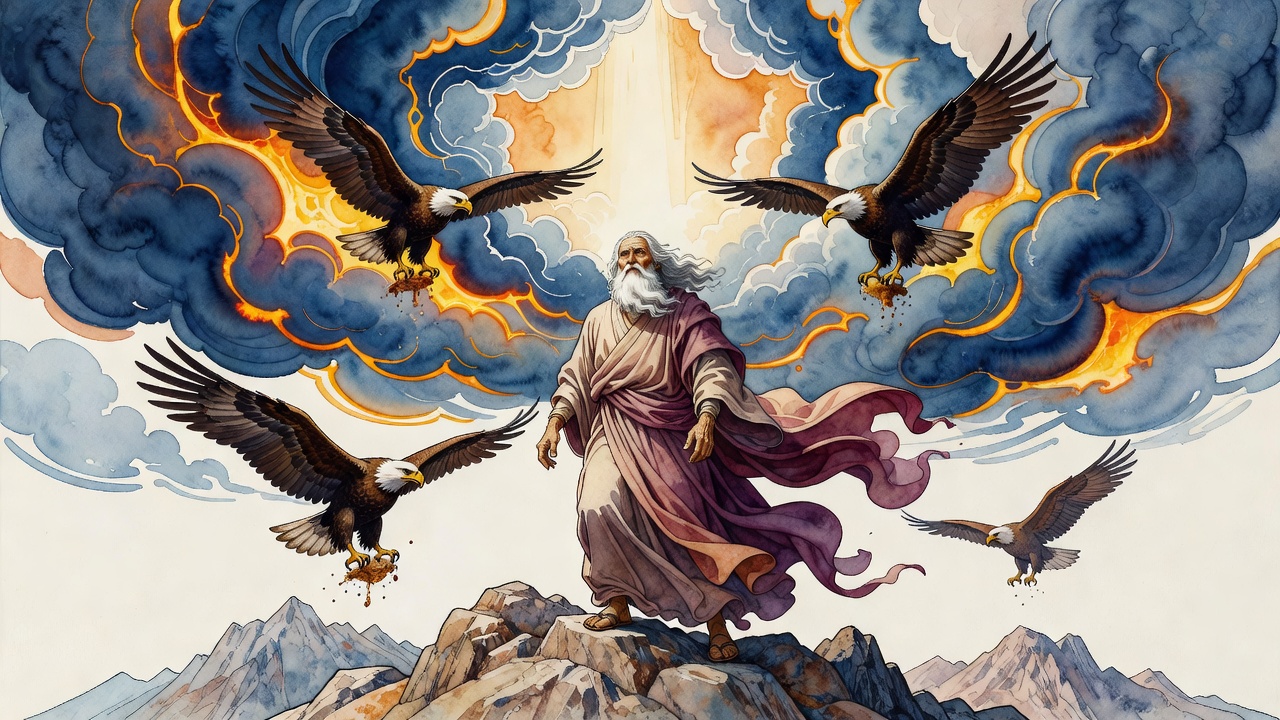
Moses spent forty days and forty nights on Sinai without eating or drinking. Then another forty. Then a third forty. One hundred twenty days on the mountain, sustained by something other than bread and water. Shemot Rabbah treats this as a form of testimony: the man who had drawn water from wells, who had stood in the sea, who had eaten manna in the wilderness, could also be sustained for months on divine presence alone. The body that had passed through all that water and fire could also pass through a fast that would have killed anyone moving under only human conditions.
← All myths