The Warrior-King of Uz Who Fed a City and Lost It All
Job ruled a city behind unbarred gates and led an army for the poor; ruin left his wife selling her hair for one loaf of bread.
Table of Contents
 Click for full size
The King Who Kept His Gates Unbarred
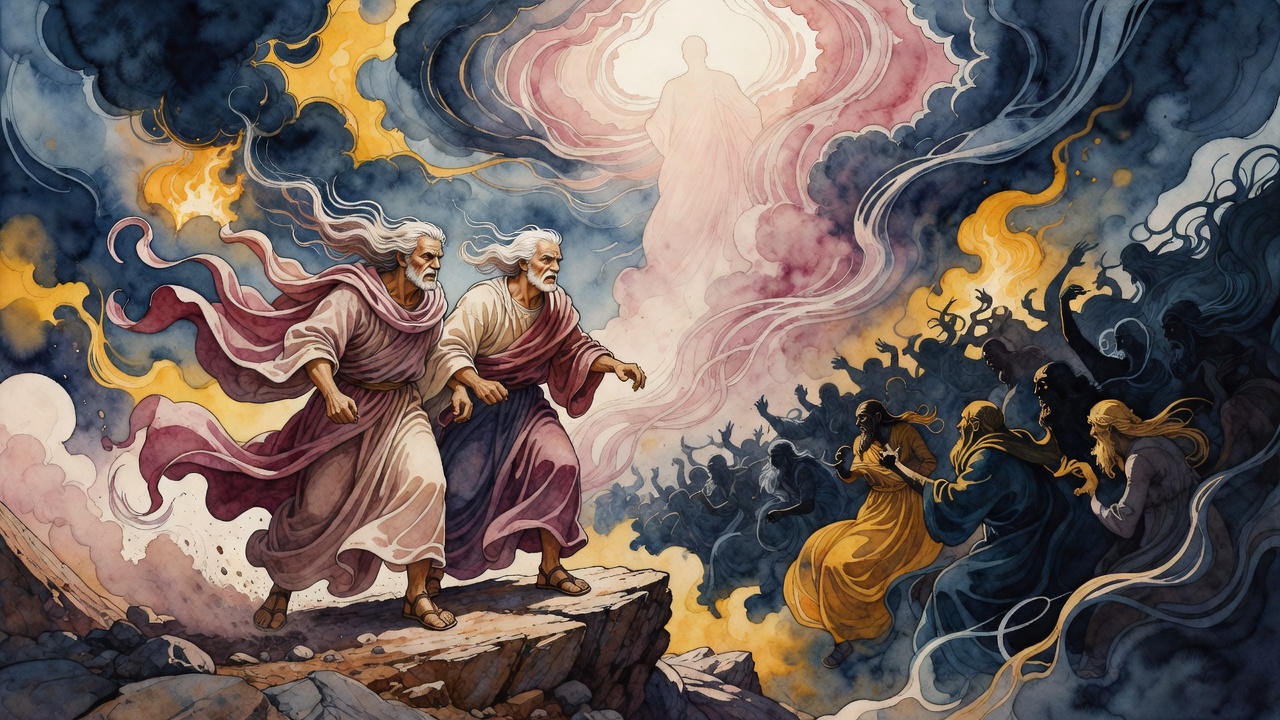
Before the ash heap, before the boils, before the scraping potsherd, there was a city in the land of Uz that never closed its doors. Job ruled it. He was a judge, and his word settled quarrels that armies elsewhere settled with blood. When a violent man dragged a poorer man before his tribunal, Job did not lecture. He sent for his soldiers. The threat of their spears was enough. The oppressor learned, quickly, that in this city the scales would balance whether he willed it or not, and that the widow and the orphan were guarded as if they wore crowns.
His house had four doors, one for each direction, so that no beggar coming from any road would have to walk around to find welcome. After every feast he slaughtered animals for sacrifice, then carried the meat out to the hungry. "Take and help yourselves," he told them, "and pray for my children. It may be that they have sinned, and renounced God, saying in the presumption of their hearts: We are the children of this rich man. All these things are our possessions. Why should we be servants to the poor?" He feared wealth more than he feared loss. He had seen what comfort did to the young.
Music for the Hungry and a Notary for the Dying
Job did not believe a full belly was the whole of charity. When the meal ended in his halls, musicians took up their instruments, and the poor who had eaten at his table were taught the songs of praise. When the players tired, the king himself lifted the cithern and went on playing, a ruler bent over the strings while paupers sang beside him.
He visited the sick the same way, rich and poor without distinction, and never came empty-handed. He brought a physician to the bedside. And when the physician shook his head and the case was hopeless, Job did not leave. He stayed with the family. He spoke to the weeping wife. "Trust always in the grace and lovingkindness of God," he would say. "He hath not abandoned thee until now, and He will not forsake thee henceforth. But if, which may God forefend, thy husband should die, I call Heaven to witness that I shall provide sustenance for thee and thy children." Then he sent for a notary. He had a deed drawn up and signed before witnesses, binding himself by law to feed the household if its head were lost. His comfort came with a signature. The dying blessed him, and the widows he had promised never went without.
When the Doors Could Not Save Him
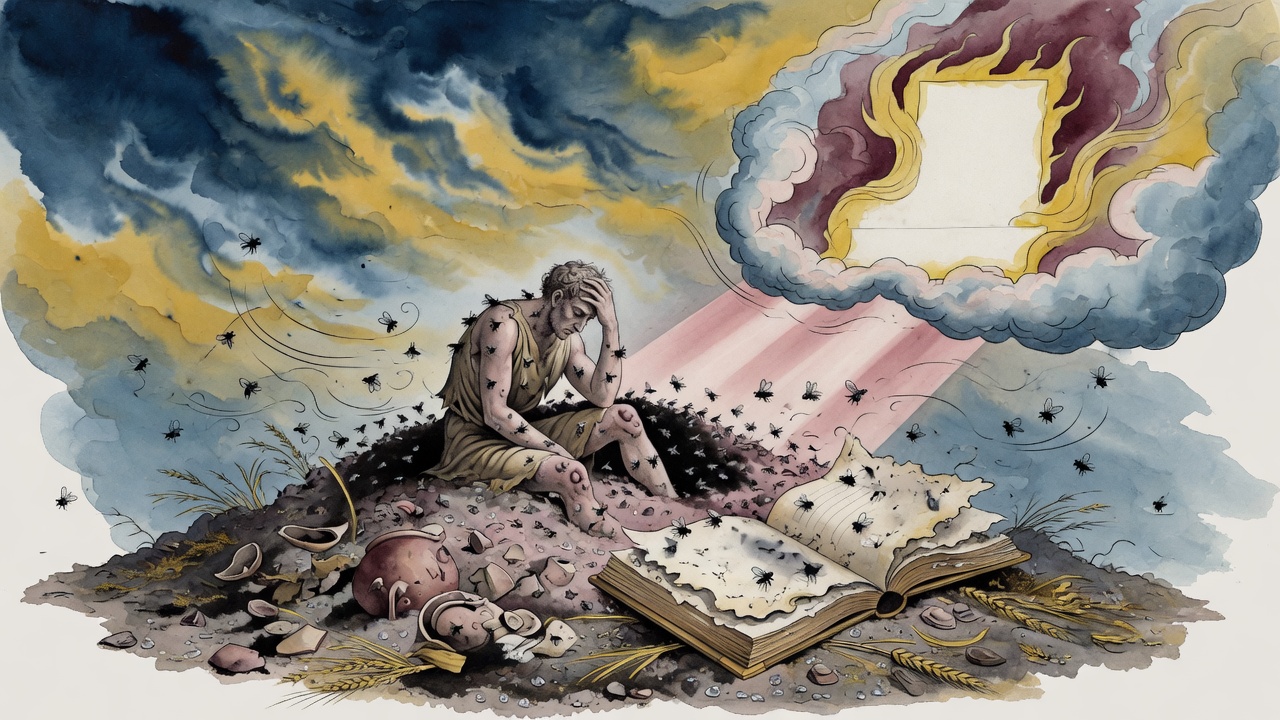
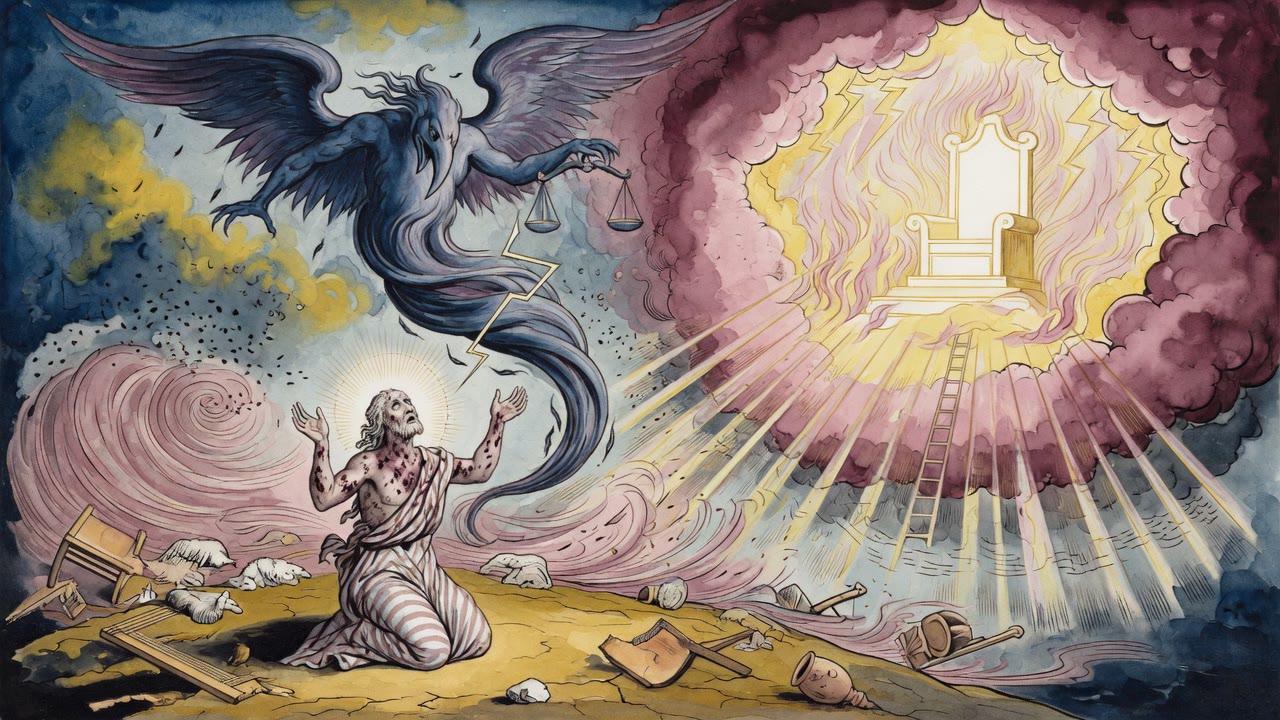
Then everything Job had built was taken. The herds, the harvests, the ten children, the strong body that had bent over the cithern. The man who had fed a city now sat outside it on a heap of ashes, scraping his sores with a broken shard. The four doors stood open onto nothing.
One soul did not abandon him. His wet nurse, who had known him since he was small, followed him into ruin. She lay down to sleep beside the cattle manger where the broken king now made his bed. In the morning she did not rise. She had died there of pure exhaustion, faithful to the last breath. The people of the city, who remembered what his house had been, came out and mourned her and composed an elegy in her honor, weeping for the servant as they could not weep for the master.
The Wife Who Sold Her Hair for a Loaf
And his wife, who had ruled beside him in the city with the open gates, now went out among strangers to beg bread for the husband rotting on the ashes. She who had given to the poor was now counted among them. When she had nothing left to trade, she sold the last thing that was hers. She cut off her own hair and gave it away for a single loaf, and carried it back to him.
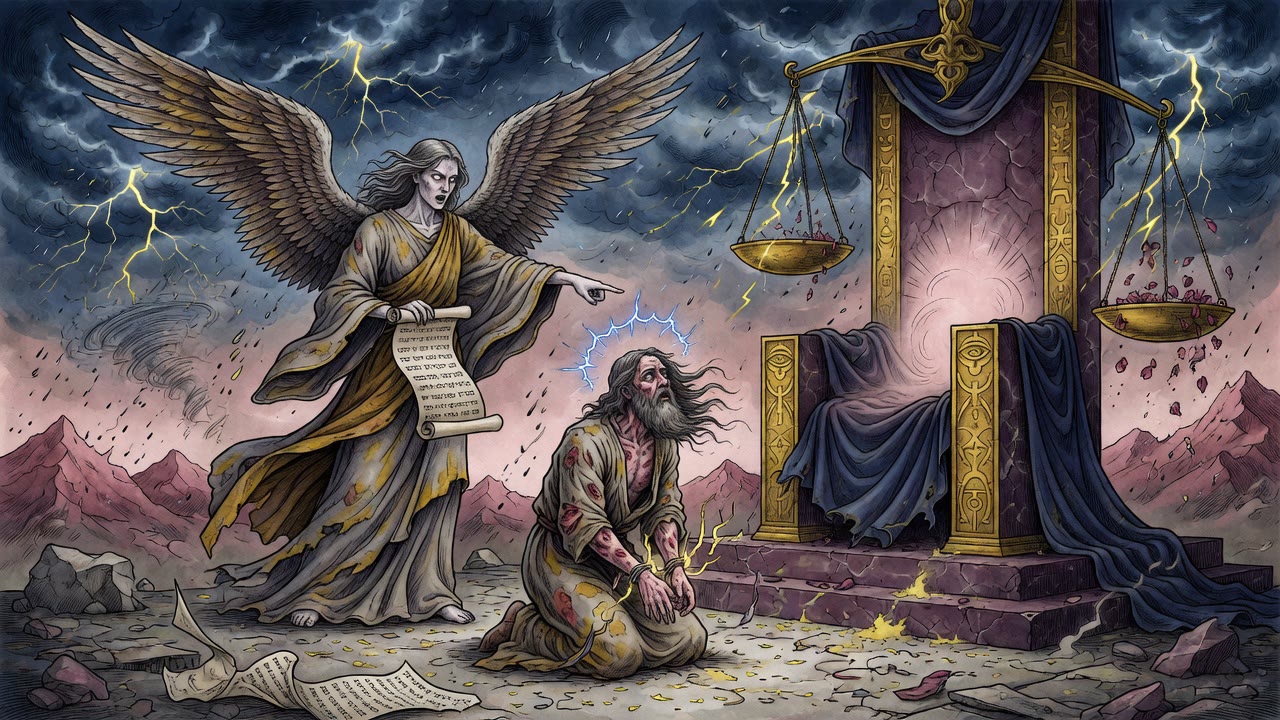
His friends came and could not bear his patience. The more Job insisted he had done no wrong, the angrier they grew, certain his agony was the wage of some hidden sin. Elihu, animated by Satan, spoke scurrilous words against him and mocked his faith. But God appeared at last, told Job that Elihu had been moved by Satan, and turned upon Eliphaz with a rebuke. "Thou and thy friends Bildad and Zophar have committed a sin, for ye did not speak the truth concerning my servant Job. Rise up and let him bring a sin offering for you. Only for his sake do I refrain from destroying you." The accused man was made the intercessor for his accusers, and his prayer was the only thing standing between them and the fire.
The Last Command and the Celestial Ribands
The years that followed restored him, and when Job felt his death approaching he called his ten children and gathered them close. He told them the whole story of his life, the blessing and the ruin and the blessing again. His last words held no bitterness. "See, I am about to die, and you will stand in my place. Forsake not the Lord, be generous toward the poor, treat the feeble with consideration, and do not marry with the women of the Gentiles." The first law of his house, even at the end, was charity.
He divided his earthly goods among his sons. To his daughters he gave something stranger. He had received from God a celestial girdle, a belt out of heaven, and from it he cut a riband for each daughter. They were not ornaments. The moment the daughters tied the ribands around their waists they were lifted into a higher nature, and with voices like the angels they broke into hymns no mortal throat could shape. The warrior-king who had fed a city and lost it and fed it again died hearing his daughters sing in the speech of heaven.
← All myths