Noah and Job Both Suffered as the Most Righteous Men Alive
Noah wept over the ruin he had survived. God rebuked him for not praying before it happened. Job suffered while still called God's servant.
Table of Contents
 Click for full size
The Survivor Who Asked Too Late
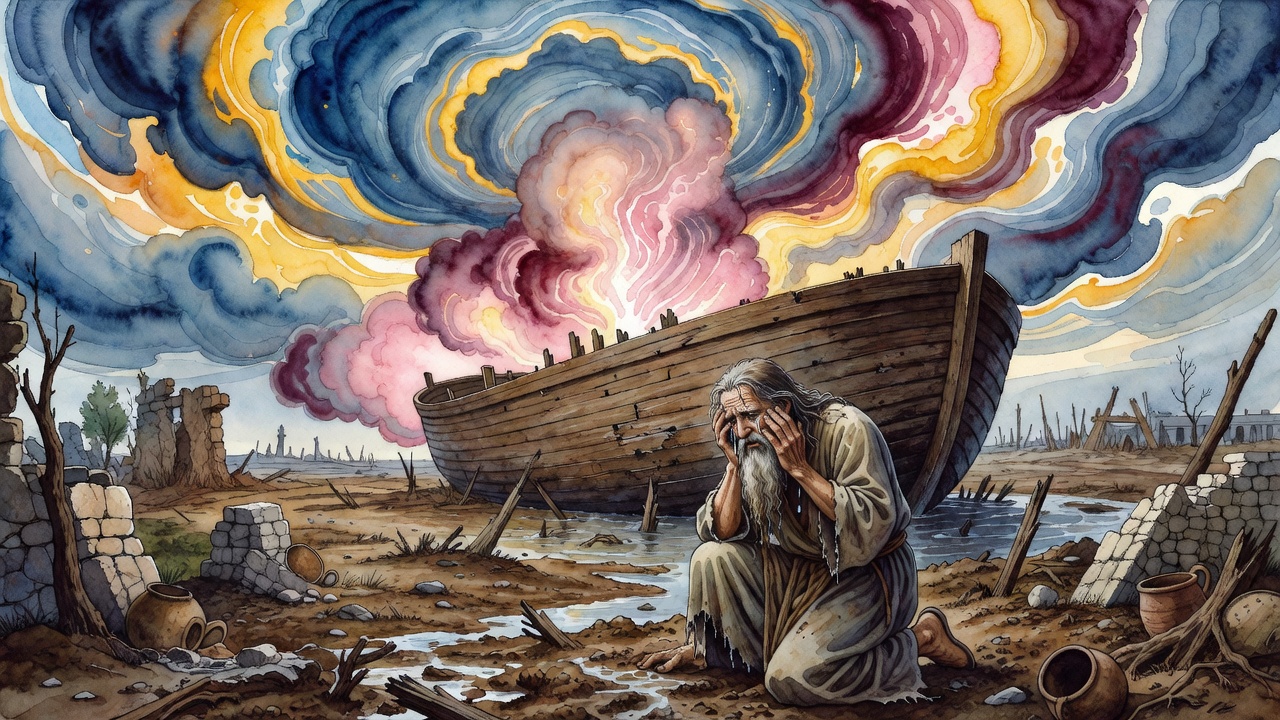
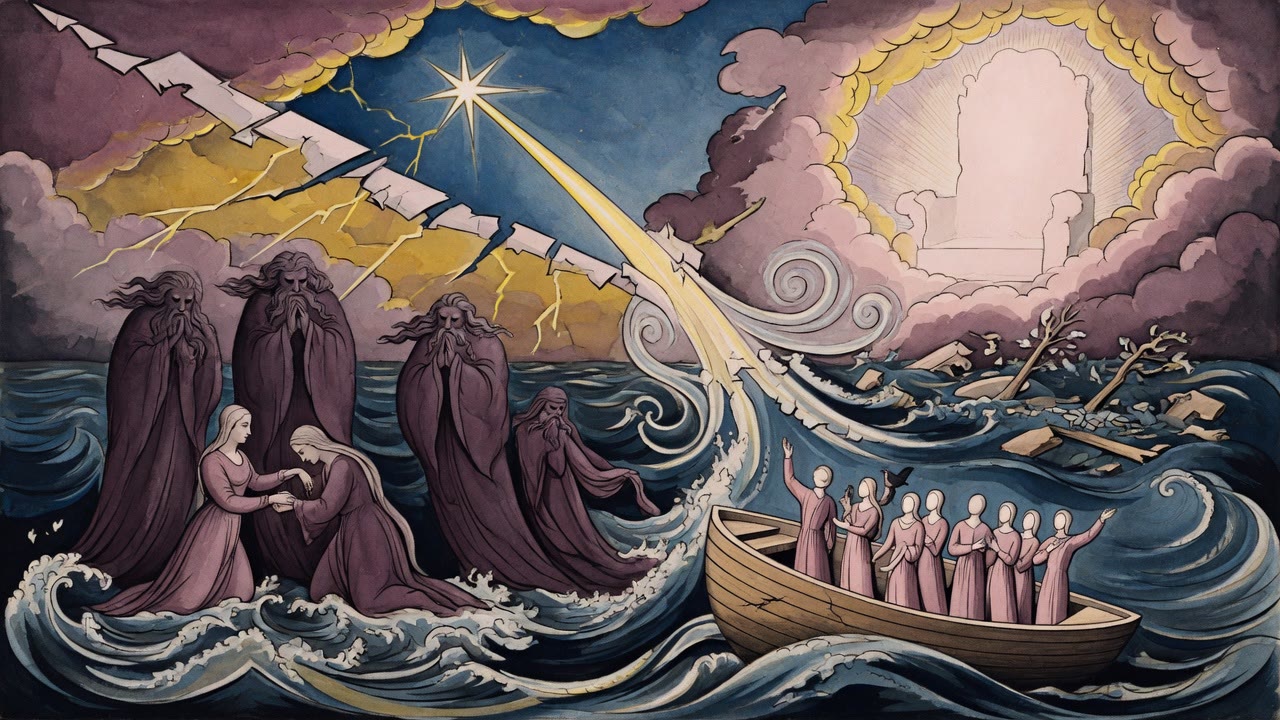
Noah stepped off the ark into a world scraped of everything familiar. He walked on ground that a year ago had been underwater. He looked at a horizon that had once held cities and fields and the faces of people he had known, and none of it was there anymore. Then he wept, and he asked God: why did You not have mercy on Your creatures?
God's answer was the most severe rebuke in Noah's story. Noah was asking the right question, God said, but he was asking it at the wrong time. God had told Noah that a flood was coming and that Noah was righteous and would be saved. Noah heard the first part, built for his own rescue, worked one hundred and twenty years on the ark, warned his neighbors, kept the animals alive, did everything he was instructed to do. He heard the second part, the part about destruction, and he did not ask for mercy for the world before the waters came. He asked afterward, when the world was already gone. He asked when asking cost him nothing.
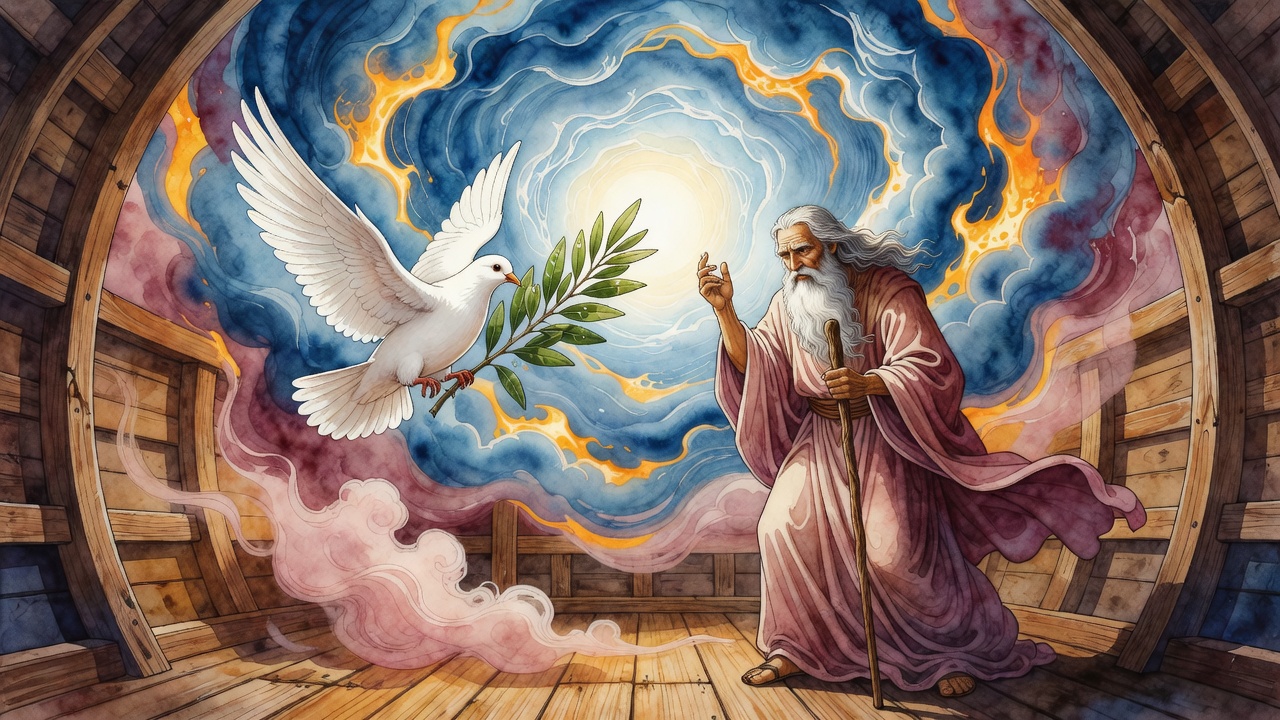
Abraham would later stand before God and argue for Sodom, a city of sinners, pleading for it to be spared if ten righteous could be found. Noah had a world full of people before him and he did not make that argument. He built his boat and warned the condemned and survived. The tradition does not call this wickedness. But it calls it a missed moment, a failure of the higher righteous action, the one that spends itself on behalf of others rather than on its own survival.
Job's Righteousness Made the Pain Worse
The suffering of Job has a different shape. God called him blameless and upright, one who feared God and turned away from evil. This is not a general endorsement. This is the highest possible divine certification. And then the adversary arrived in the heavenly court and said: of course he fears God, You protect him and bless everything he does. Remove the protection. Then see what he does.
The tradition records what Job had before the test: seven sons and three daughters, thousands of sheep and camels and oxen, the greatest household in the East. And what Job did with that wealth was not store it. He hosted feasts for all his children and rose early the morning after each feast to offer burnt offerings for each of them, in case any had sinned in their hearts. He was performing atonement preemptively, on behalf of his family, for sins they might have committed in private. His righteousness was not passive. It was constant, deliberate, labor-intensive.
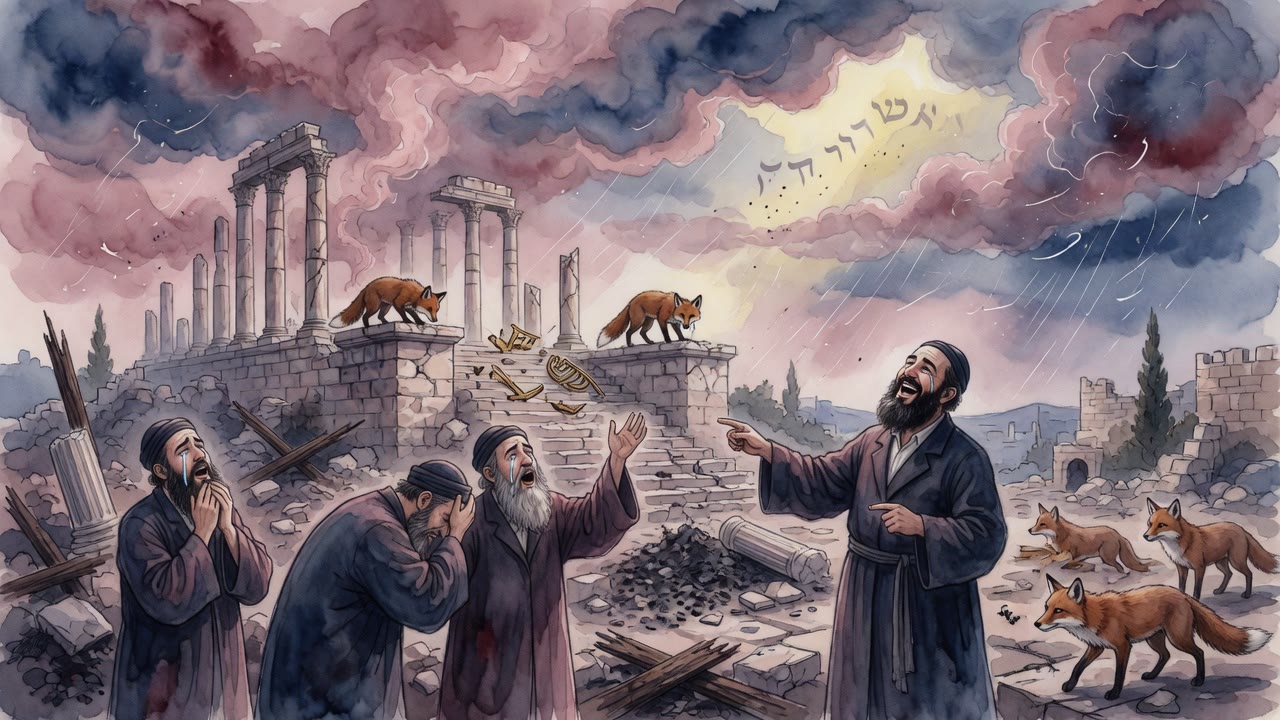
Everything was taken from him. Then his health was taken. He sat in ashes, scraping his sores with a potsherd, and his three friends arrived and said: you must have sinned. No innocent person suffers like this. The tradition's contempt for this argument is thorough. The friends were wrong, and the text says so explicitly. Job had not sinned. His suffering was not punishment. It was the price of being the most righteous person alive, the target of a test that could only have meaning if it was applied to someone genuinely blameless.
God's Answer to Job and the Shadow of Adam
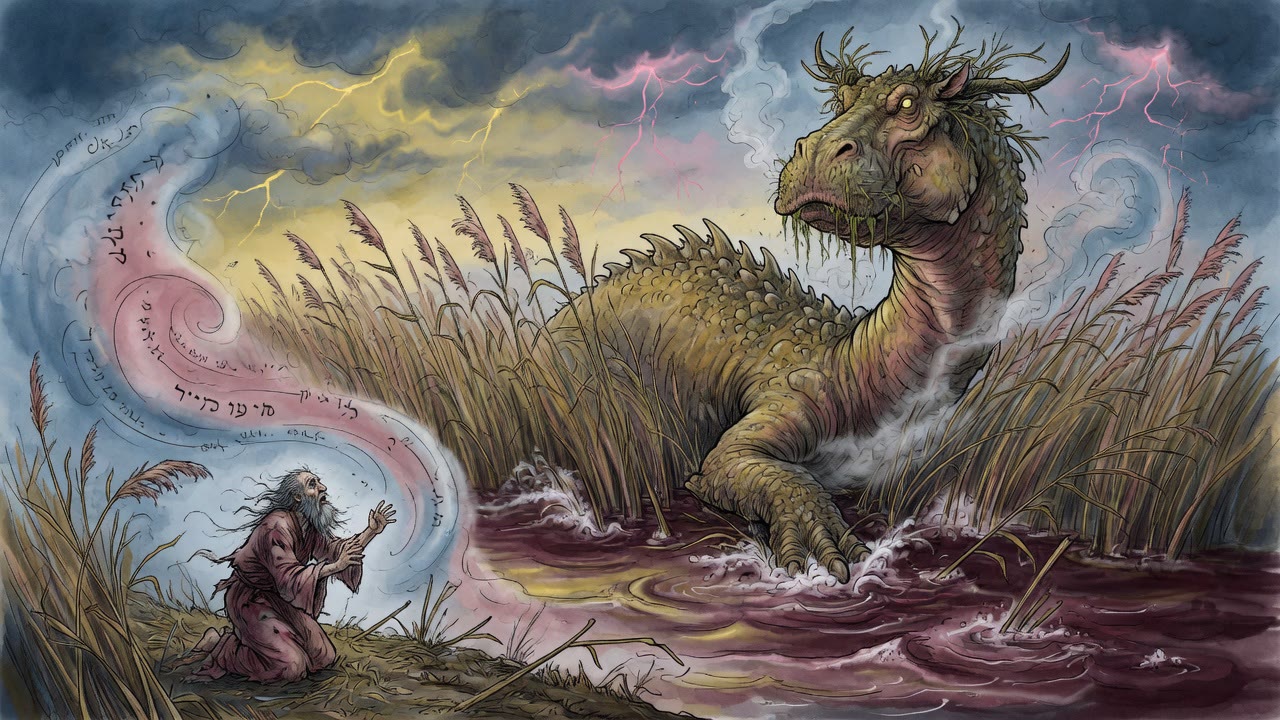
When God finally answered Job from the whirlwind, the answer was not an explanation. It was a demonstration. Where were you when I laid the foundations of the earth? Have you entered the storehouses of snow? Do you know the path to the place where light dwells? The questions were not rhetorical cruelty. They were the context in which Job's suffering needed to be understood: a context so vast that the entire scope of one human life, with its losses and its pain, was genuinely too small to demand an accounting.
But the tradition adds something the biblical text does not say directly. God told Job, in the midrashic reading: look at Adam. Adam suffered the loss of paradise itself, the original human home, the world as it was before the curse. Everything that Job lost, Adam had lost first and worse. The one who complained about his suffering was invited to consider the first man's suffering, the primal deprivation that preceded all subsequent human loss.
Eliphaz and the Line From Esau
One of the three friends who came to Job was Eliphaz the Temanite. The tradition identifies this Eliphaz as the son of Esau, the most righteous individual among Esau's descendants, the man who had caught Jacob on the road after Esau commanded him to kill his uncle and chose instead only to rob him. Eliphaz was righteous enough to refuse a murder he was commanded to commit. He was also, when he came to sit with Job in ashes, wrong about the most important theological question of his friend's life.
The tradition holds both things simultaneously. Eliphaz was righteous among his generation and he was still wrong. His wrongness was not the wrongness of a wicked man. It was the wrongness of a man applying a framework that was true in most cases to a case that was specifically the exception. The righteous can be profoundly mistaken about the righteous. Noah could weep at the right moment and pray at the wrong one. Job's comforters could be genuinely pious and still fail their friend completely.
← All myths