Nimrod Built Babel and Job Paid for It in the Land of Uz
Nimrod named his cities after his own defeats. His son Bel became the first idol. Job, living in Nimrod's shadow, became the test case for righteous suffering.
Table of Contents
 Click for full size
Cities Named After Failures
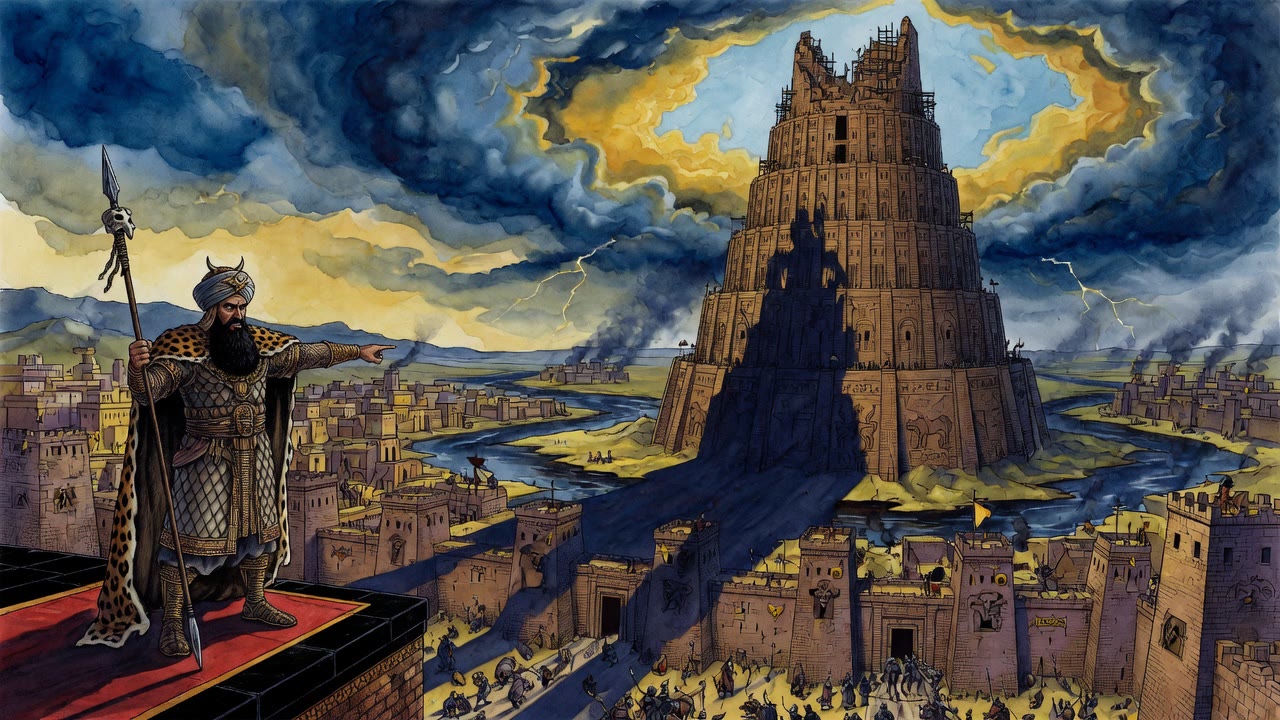
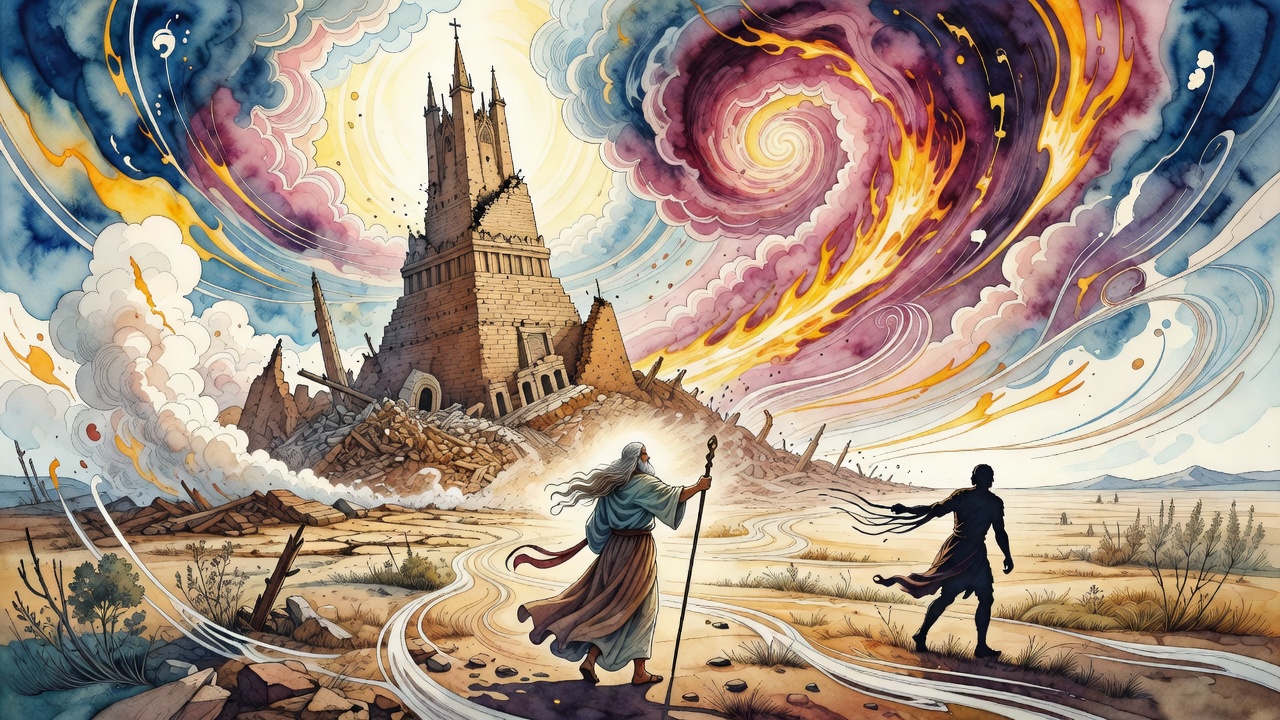
Nimrod was not just a hunter. He was an empire-builder who erected cities in the land of Shinar and gave them names that recorded, for anyone who could read them, his most significant defeats.
The Book of Jasher - an ancient compilation referenced in the Hebrew Bible itself, in Joshua 10:13 and 2 Samuel 1:18 - identifies the cities: Babel, named because God confused the language there. Erech, because from there God dispersed the people. Eched, memorial to a great battle. Calnah, where Nimrod's princes were consumed because they rebelled. Every city name was a monument to divine judgment. Nimrod built his empire and then, whether by some perverse pride or by divine compulsion, named each piece of it after the moment it had broken him.
He was a man who could not stop building even after he understood that what he was building would be taken apart.
What Nimrod Was Actually Doing at Babel
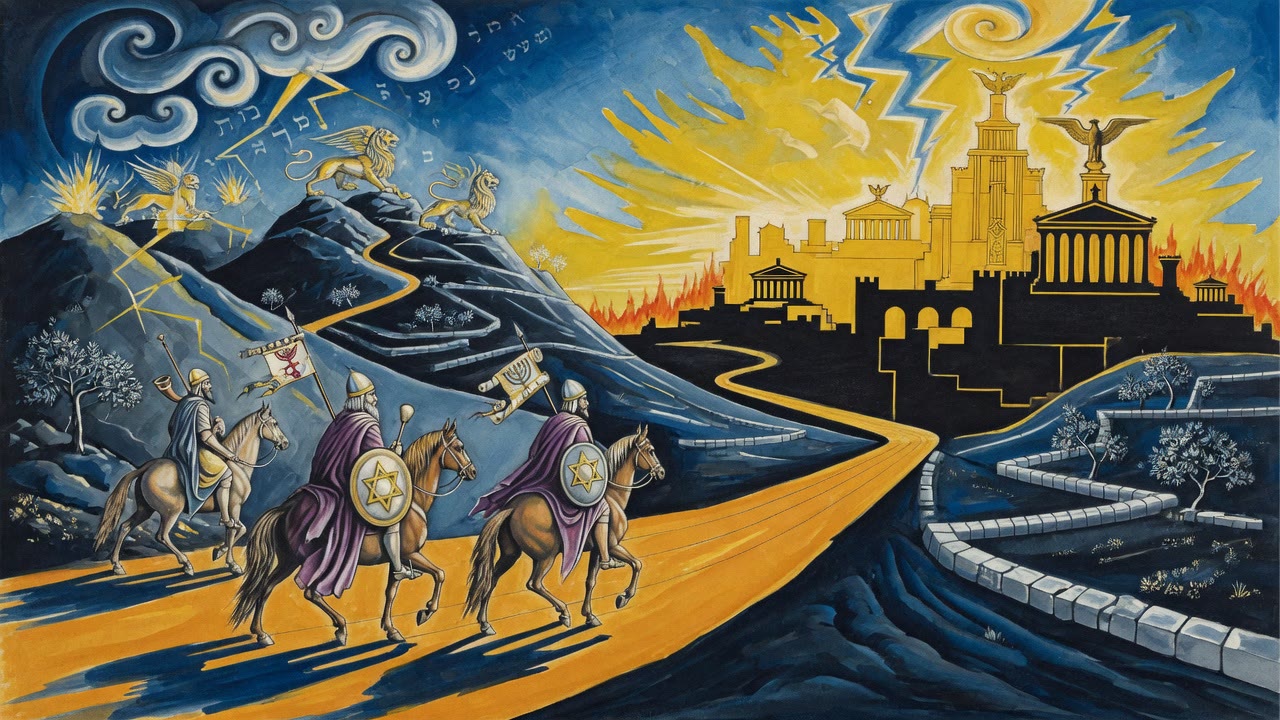
The Chronicles of Jerahmeel, a twelfth-century Hebrew chronicle drawing on ancient sources including the geographer Strabo of Caphtor, preserves a tradition that complicates Nimrod's lineage. According to this source, Nimrod was actually a son of Shem, not Ham - a descendant of the man who had inherited Eden and whose line would eventually produce Abraham. Before seizing power, Nimrod traveled to Jonithes, a son of Noah who possessed the spirit of God, and received from him a vision of four kingdoms. Jonithes showed him what Daniel would later see. He told him that Shem's descendants would rule first.
Nimrod used that vision to position himself. He began his reign in Babylon. He fathered a son named Bel. After Nimrod died, Bel took his father's statue and set it up as an object of worship. The idolatry that would plague the world for millennia began there: a son preserving his father's image, a people accepting the image as divine. Nimrod had built the tower to reach heaven. His son Bel settled for installing a stone version of his father in heaven's place.
Job in Nimrod's World
Job lived in the land of Uz, in Nimrod's shadow, in the region that had been shaped by Nimrod's ambition and Bel's idolatry. The Legends of the Jews traces his position with specificity: he was doubly related to Jacob's family, both a grandson of Esau and the son-in-law of Jacob, having married Dinah after Shechem. He was the most pious Gentile who ever lived, called the servant of God - a title given only rarely. But he was not part of the line that bore the covenant. He lived in a world that Nimrod had built and Bel had filled with false worship, and he maintained his righteousness there without the structure of the covenant to support it.
The Talmud asks: why is Job not named alongside Abraham, Isaac, and Jacob in the formula that defines Israel's God? What kept him from that level of recognition? The answer, in the Legends tradition: when his suffering became too great, he murmured against God. He said things he should not have said. He held, but not without breaking. Had he held without breaking, the formula might read differently.
How the Test Began
Near Job's home stood an idol, worshipped by the local people. Job looked at it and asked: is this truly the creator of heaven and earth? He was not a skeptic making a rhetorical point. He genuinely wanted to know. That night a voice spoke to him: "Jobab - Job is sometimes called Jobab in the tradition - arise, and I will tell you who the Creator is." The voice revealed what the idol was not. That revelation was the beginning of Job's righteous life in the land of Uz.
Satan held a grudge. The Legends tradition records that the accuser had old business with Job - some resentment that predated the wager of the book, rooted in an earlier time when Job had made a choice that the accuser had not forgiven. When the moment came to approach God with the challenge, the accuser was ready. He presented Job's prosperity as the explanation for Job's loyalty. Take it away, and the loyalty will follow.
What the Wager Actually Tested
God agreed. Strip him. Everything. Family, wealth, health. Leave him alive. See what he says.
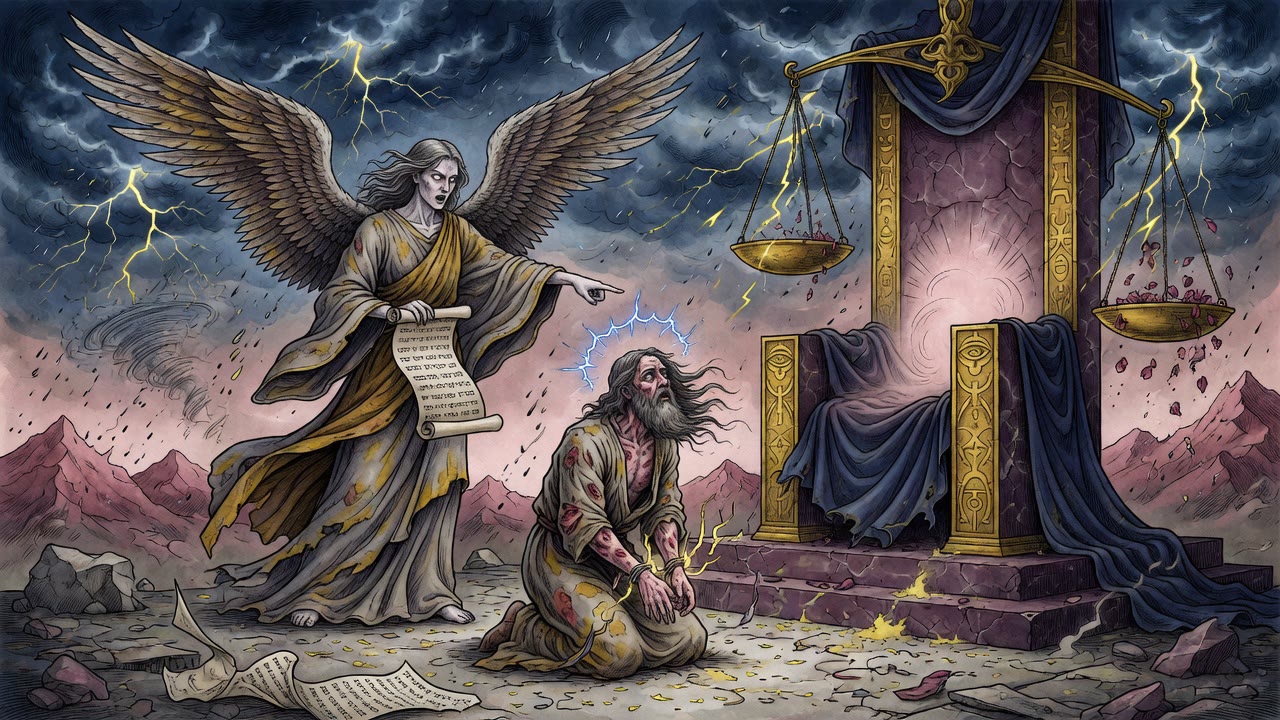
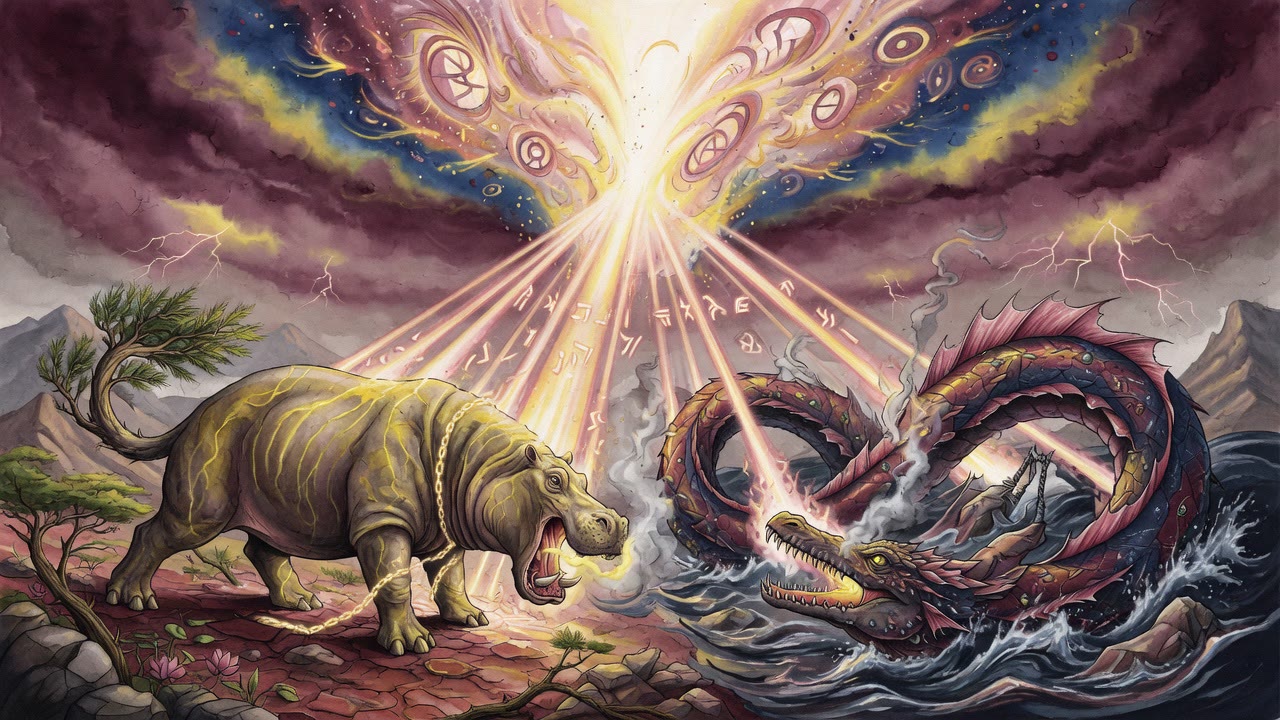
What Job said, after the boils and the deaths and the ash heap and the three friends who insisted that his suffering proved his guilt, was that he wanted to put God on trial. He believed in God's existence and power. He did not believe that what had happened to him was just, and he said so. He crossed a line. The tradition was uncomfortable with what he said and preserved it anyway, because what Job said across the forty-two chapters of his book was true in its own terms. The suffering was not a punishment. The friends were wrong. God said so from the whirlwind.
Job lived in the world Nimrod had made, worshipped in it against the current of what surrounded him, suffered in it beyond proportion to anything he had done, and argued his way back to standing before a God who acknowledged the argument's validity by restoring everything twice over.
← All myths