30 myths
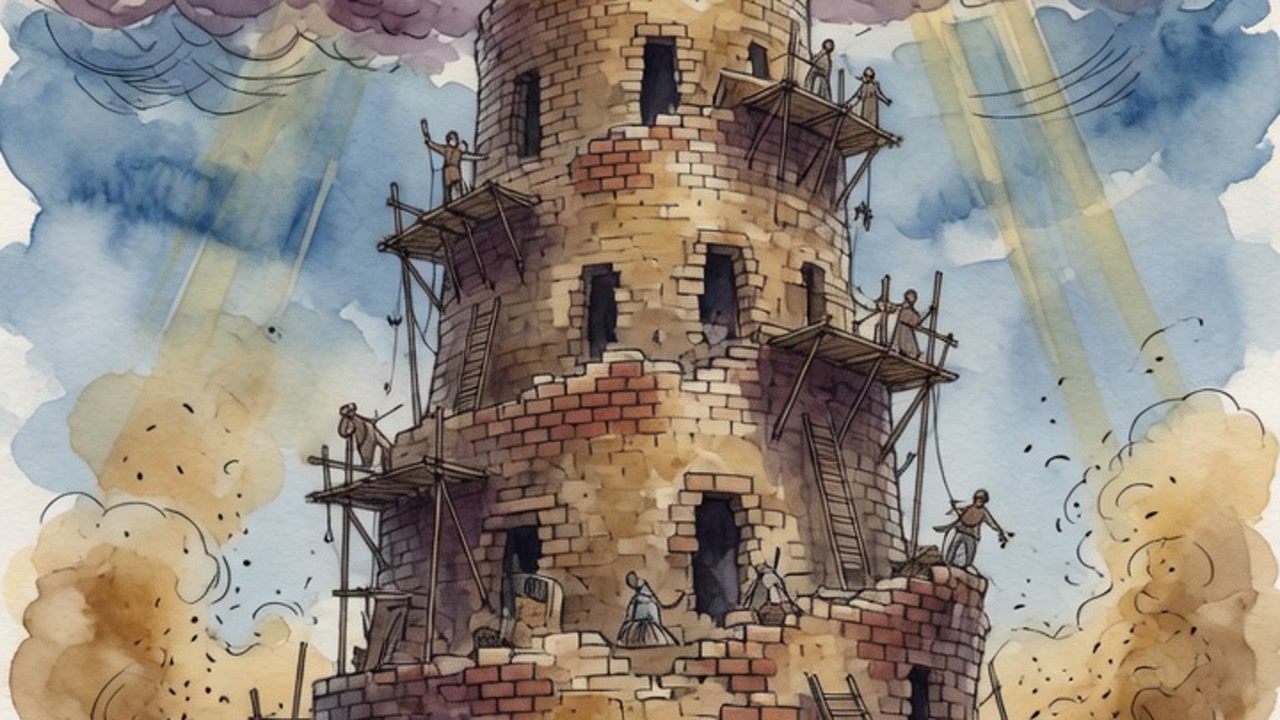
When a brick shattered, the work stopped and the men wept. When a man fell the same distance, they stepped over him and called for the next course.
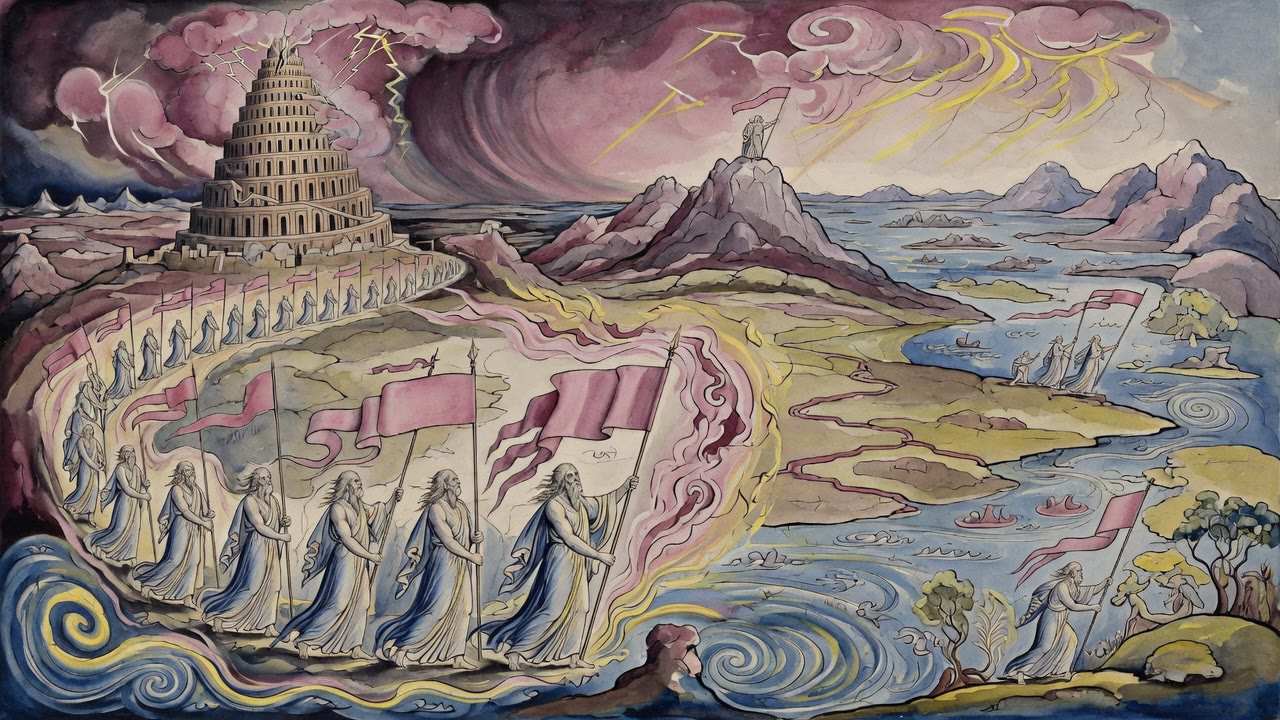
Gomer, Magog, and Javan walked away from Babel and gave their names to the land. One old book says they became Africa, Germany, and Macedonia.
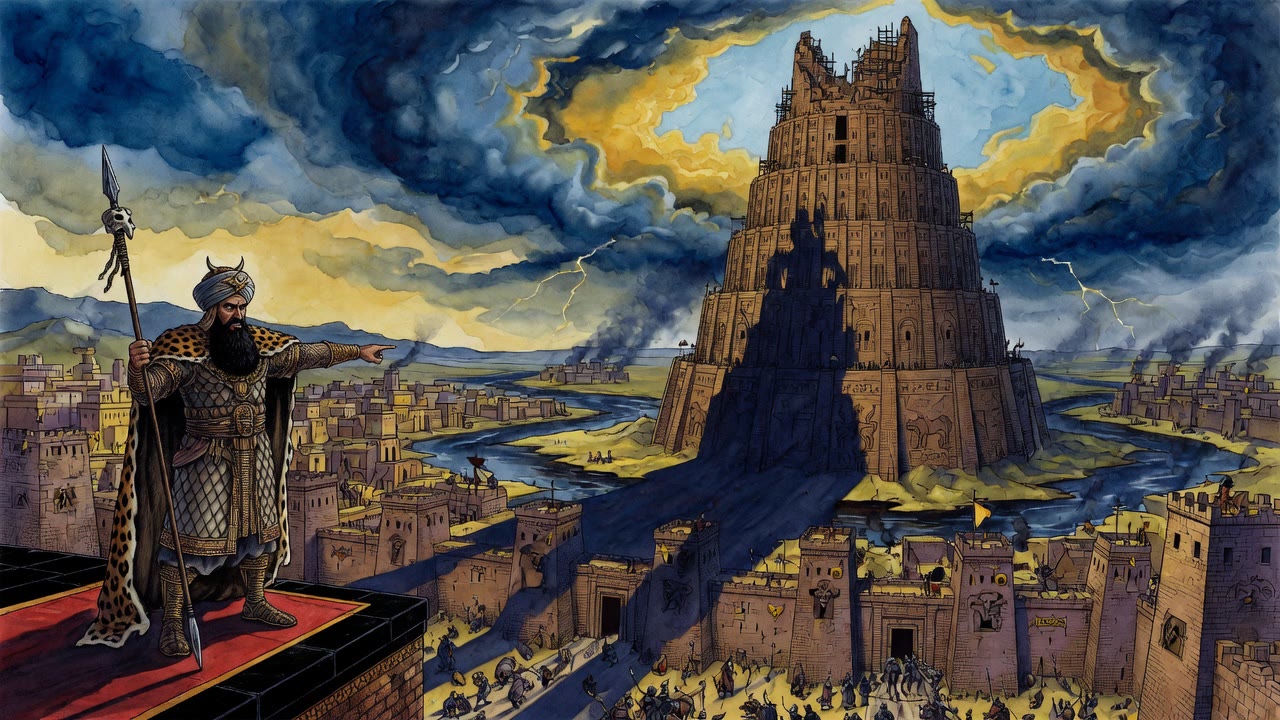
After the Tower of Babel fell, Nimrod did not repent. He built four cities and named them after what God had done to him. Then he threw children into a furnace.
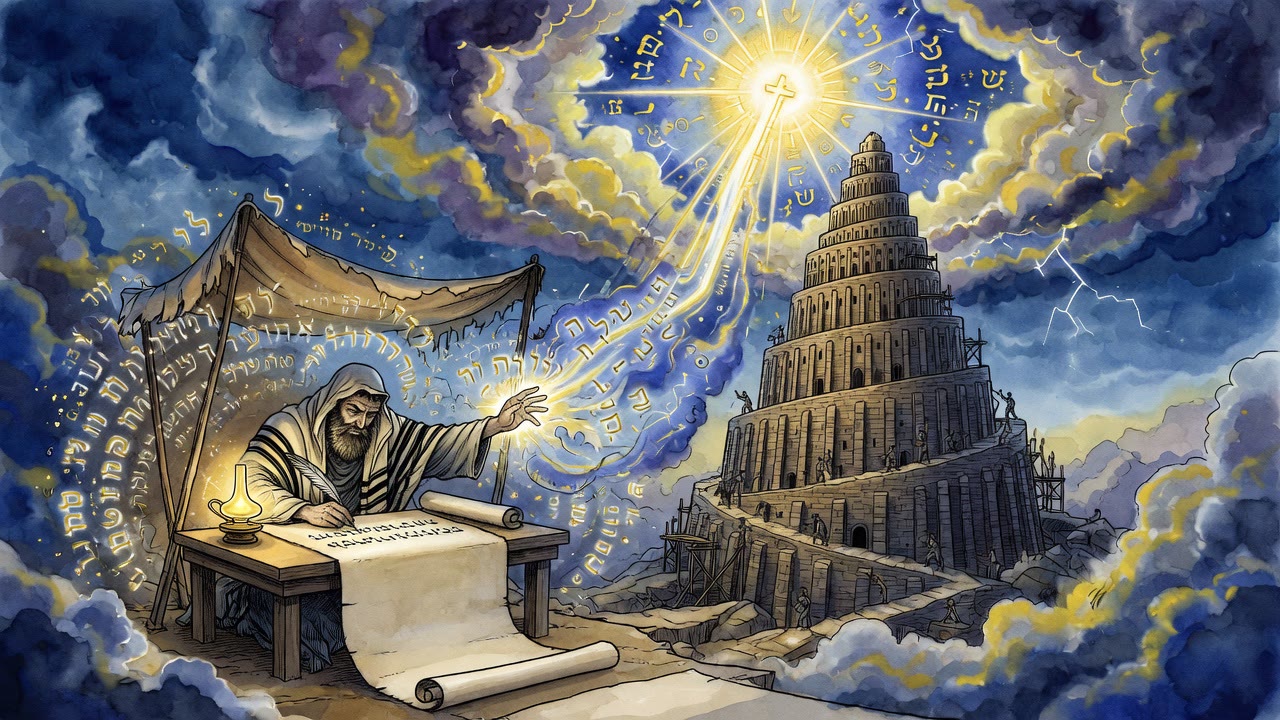
The builders of Babel raised a tower for their own name. Onkelos changed one verb and turned descent into revealed judgment.
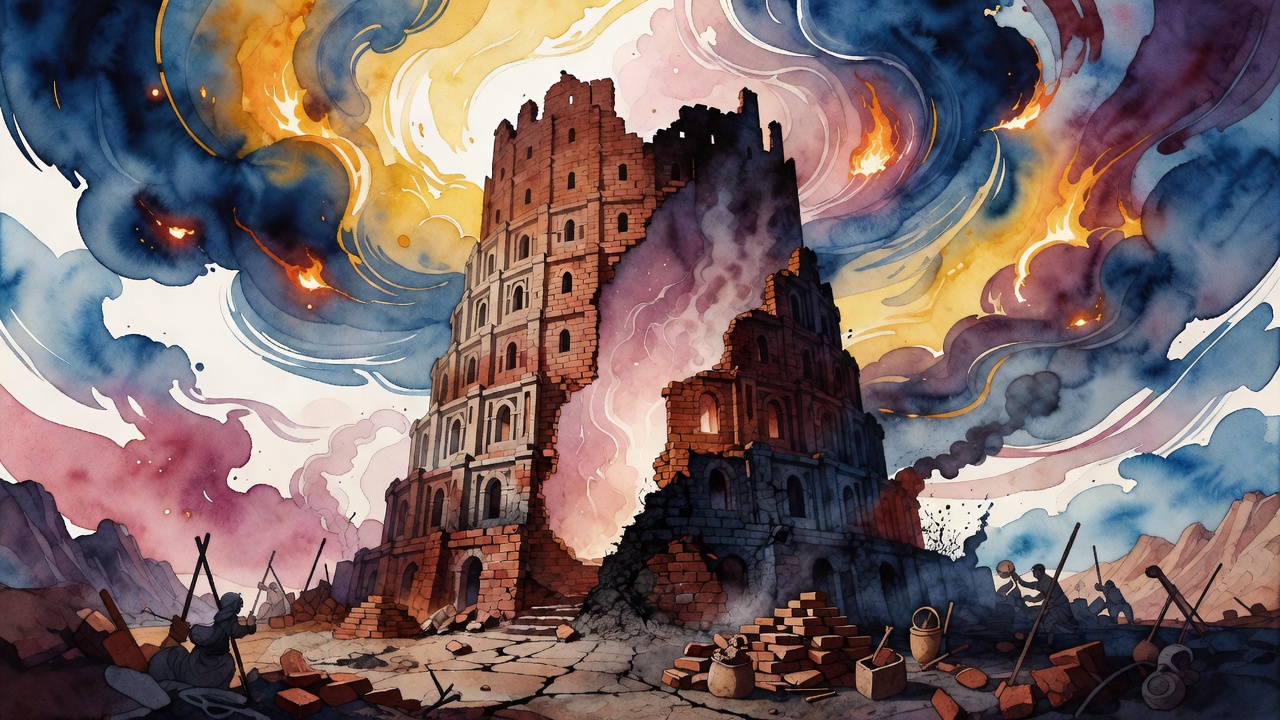
There was no stone on the plain of Shinar. They pulled bricks from the kiln so hot they stung. A name mattered more than the city under it.
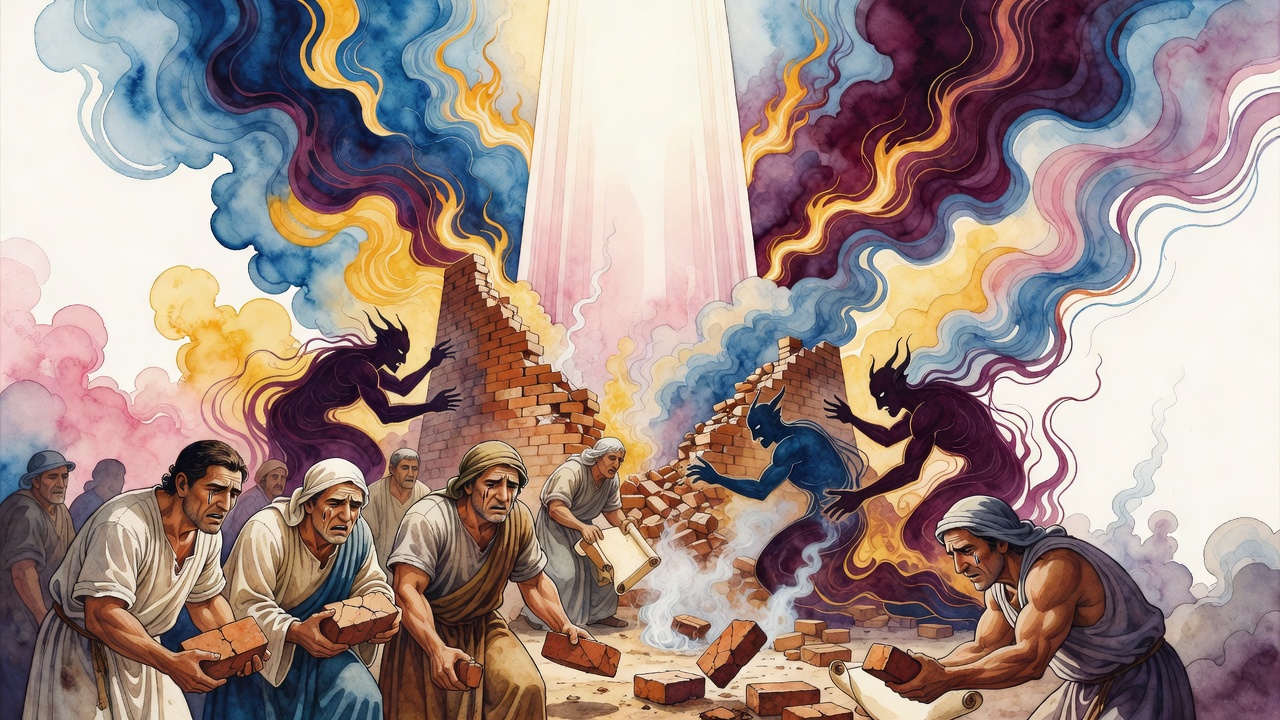
A man fell from the tower and the work did not stop. A brick fell and they sat down and wept. Replacing it would take a year.
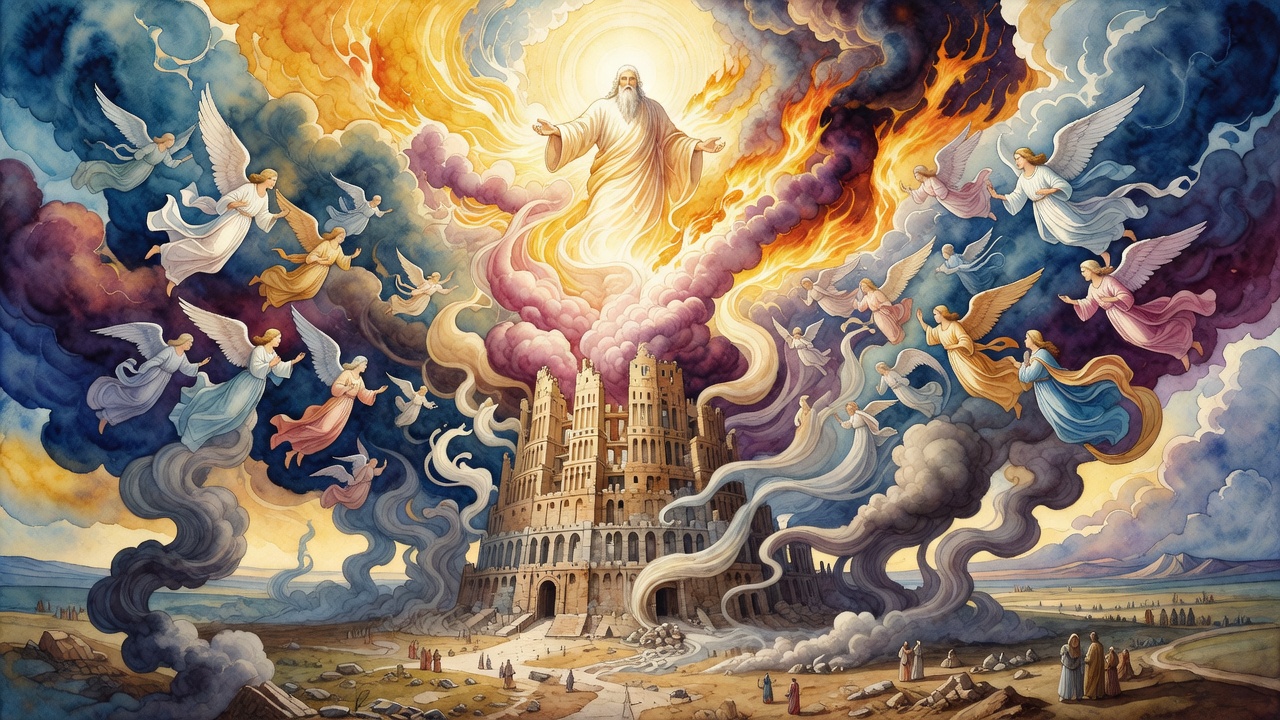
On the scaffold they wept for a fallen brick and stepped over a fallen man. Then their speech turned, and some of them went on all fours.
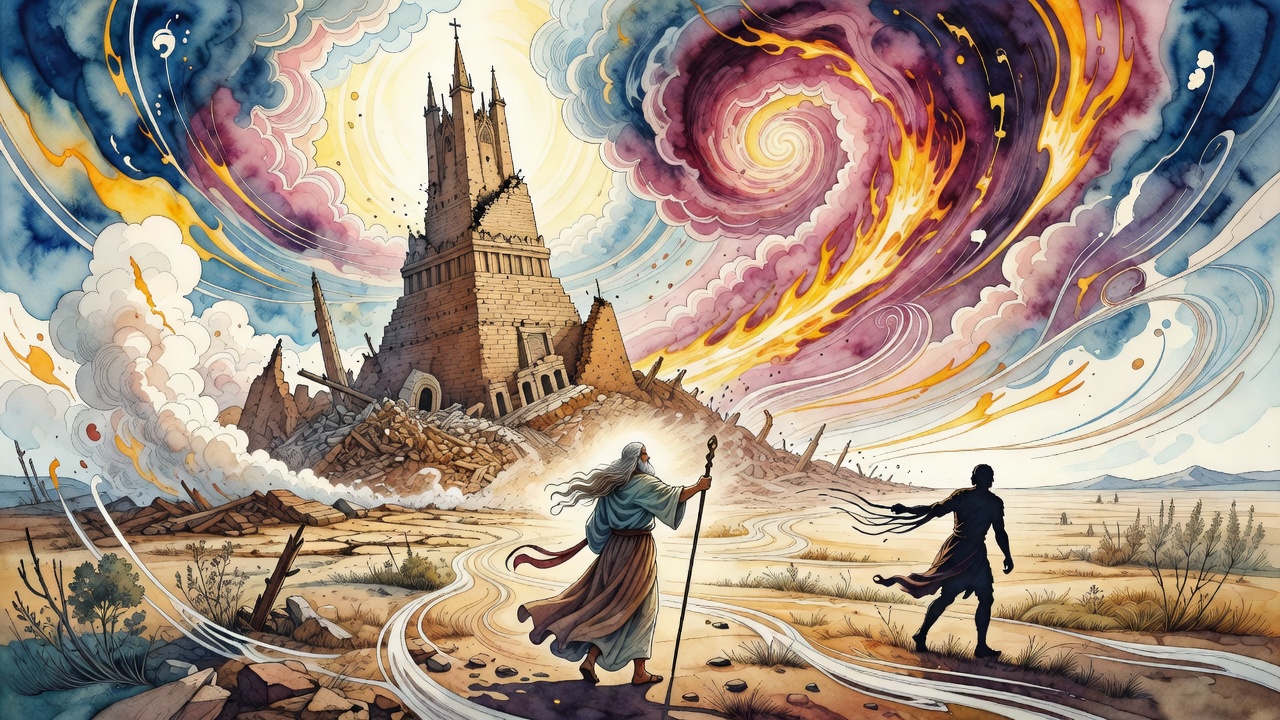
God's wind destroyed the tower. Noah named the rubble Overthrow and divided the earth. Then Canaan marched north into Shem's portion and refused every warning.
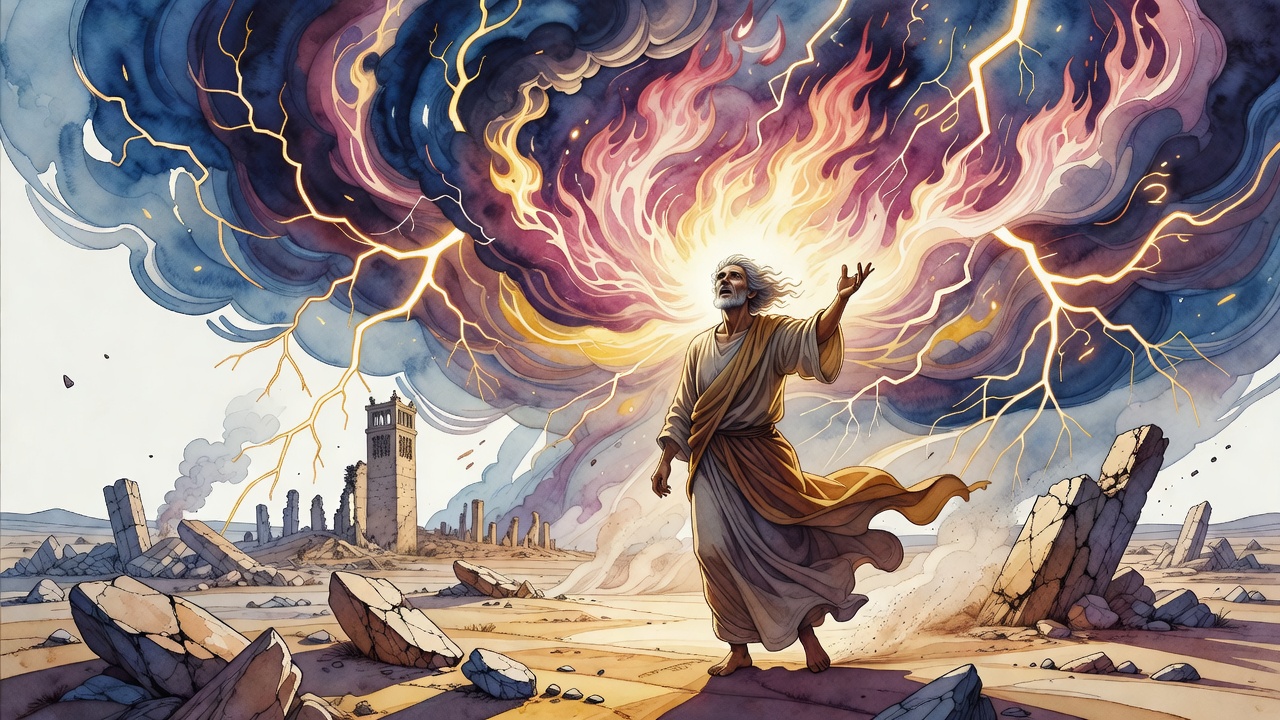
After the tower fell, Hebrew went silent in every human mouth. When God finally called Abraham, He opened his lips and restored the first language of creation.
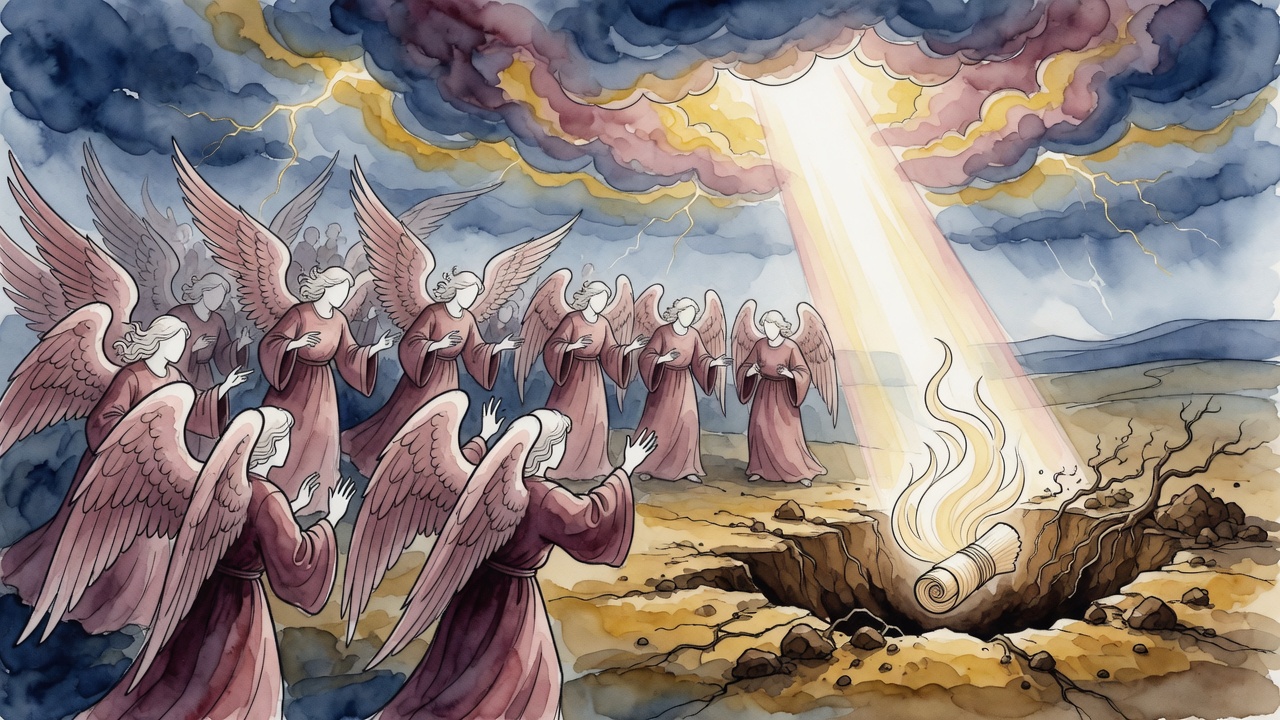
A woman went into labor in the brickyard at Shinar. She gave birth where she stood, tied the baby against her body with a sheet, and kept working.
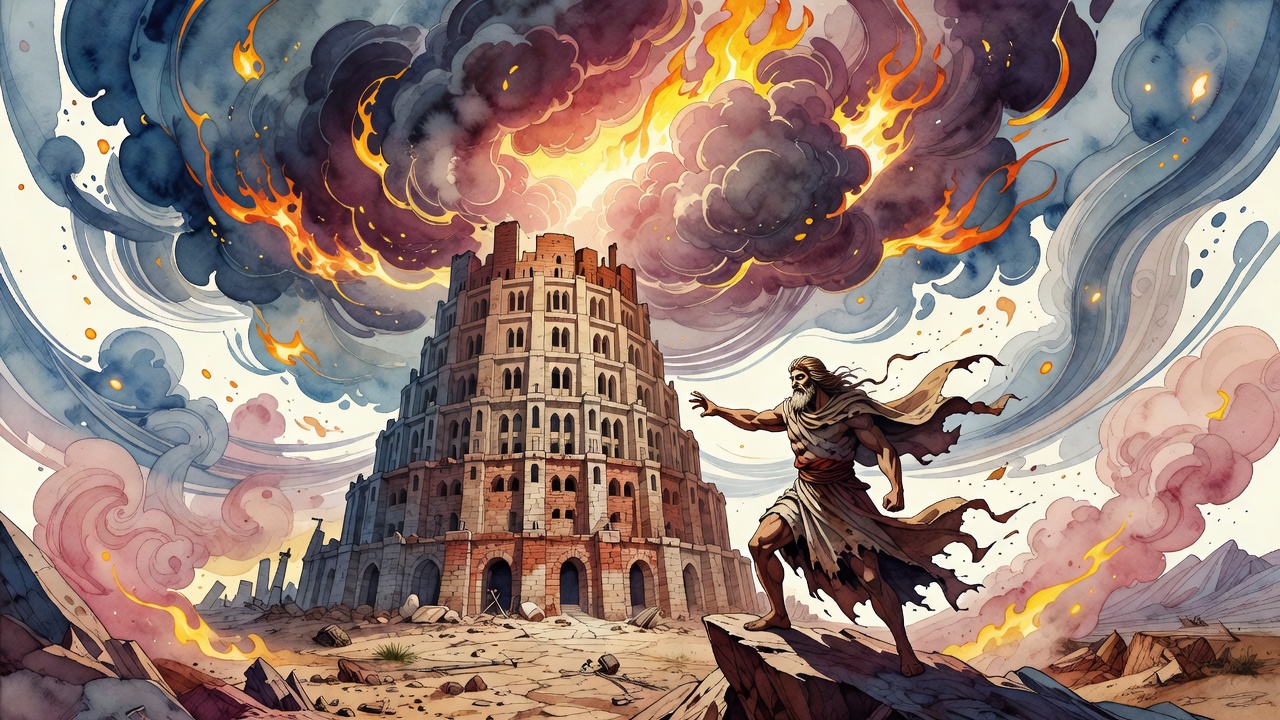
The bricks were fired hard and sealed with bitumen so no water could get in. Nimrod was not reaching for heaven. He was building above the flood line.
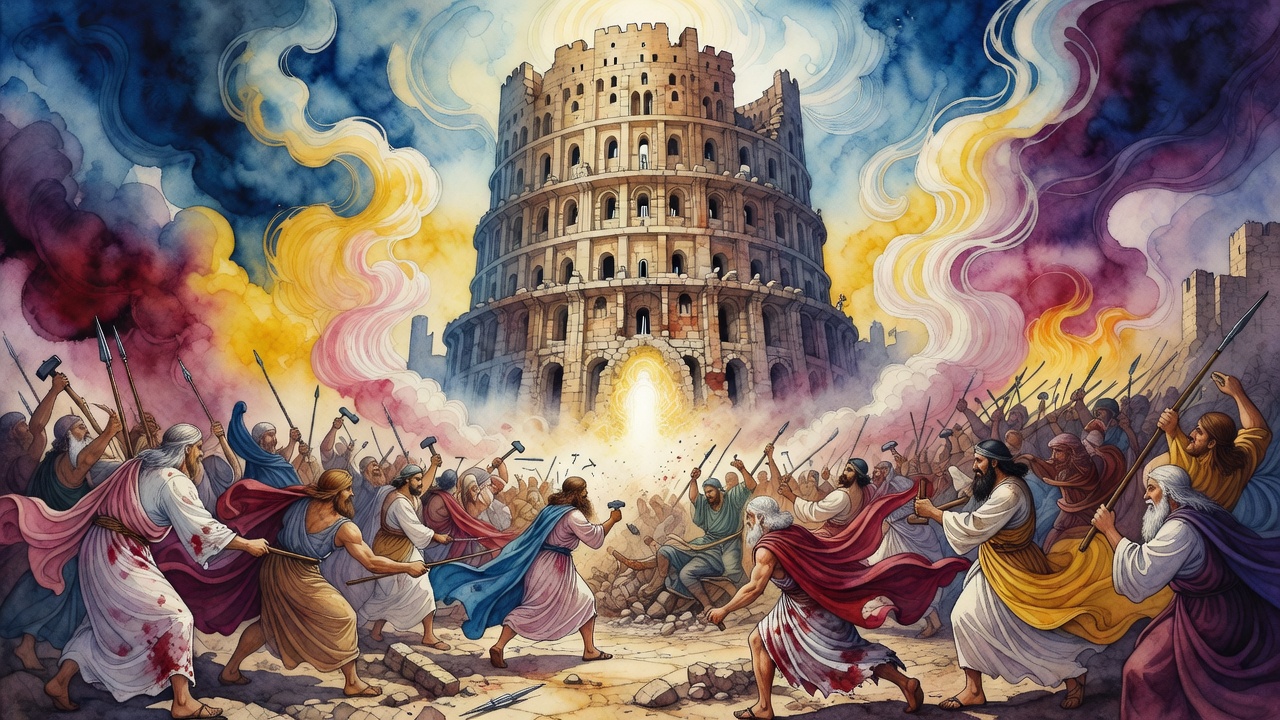
A builder asked for a brick. His fellow heard only noise and drew a sword. Half the workforce died before anyone left the plain.
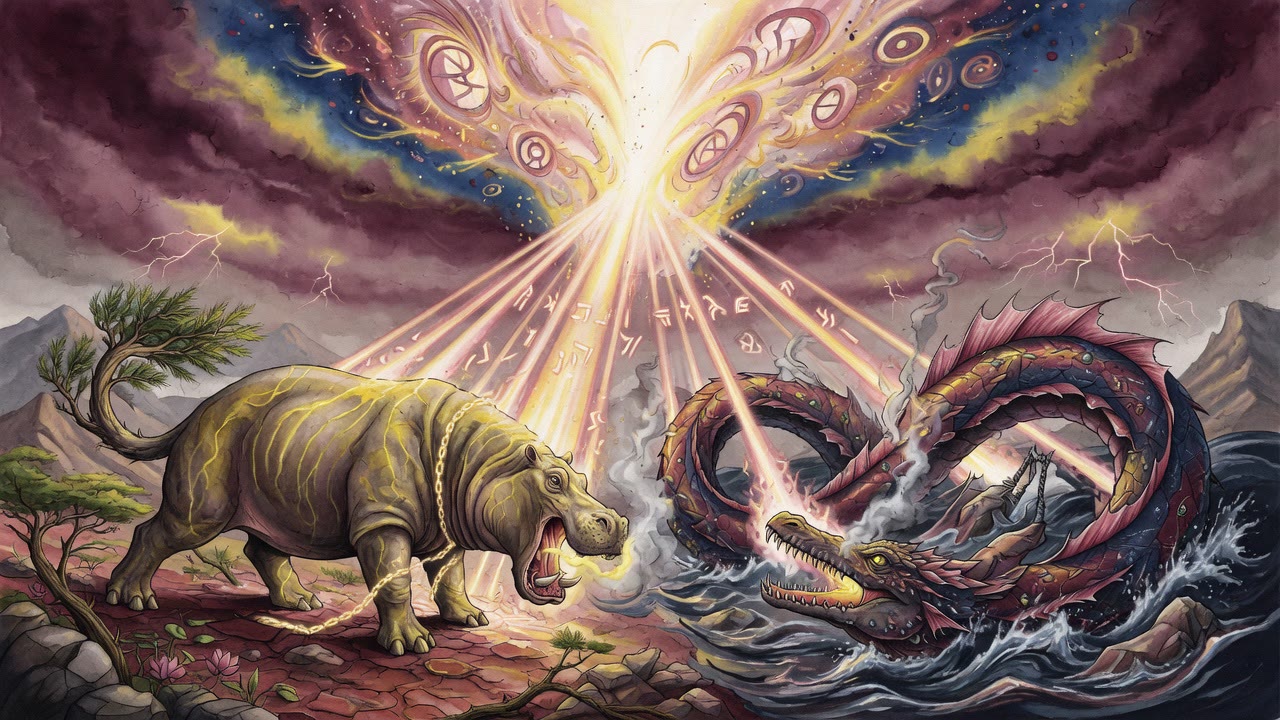
Nimrod named his cities after his own defeats. His son Bel became the first idol. Job, living in Nimrod's shadow, became the test case for righteous suffering.
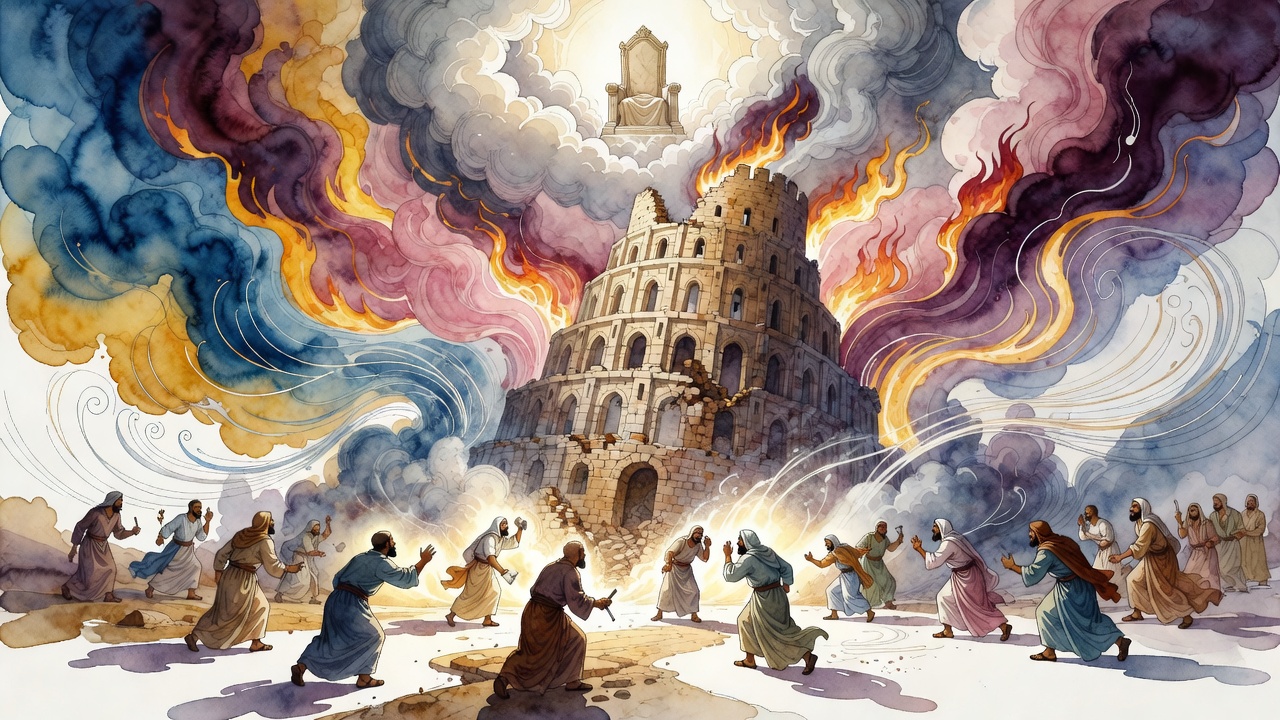
The builders of Babel spoke the tongue Adam used to name creation. When God scattered them, the world lost more than a common language.
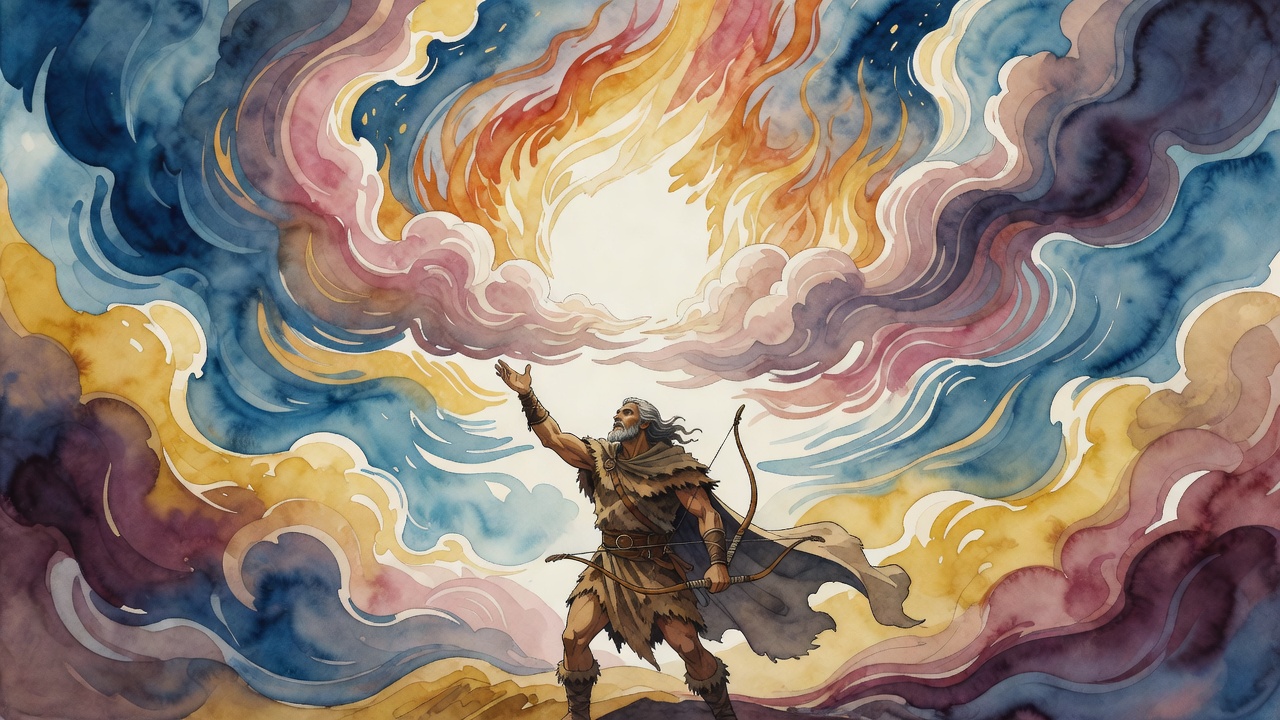
Genesis calls Nimrod a mighty hunter before God and leaves it at that. Jewish sources spent centuries asking whether he stood before God in service or defiance.
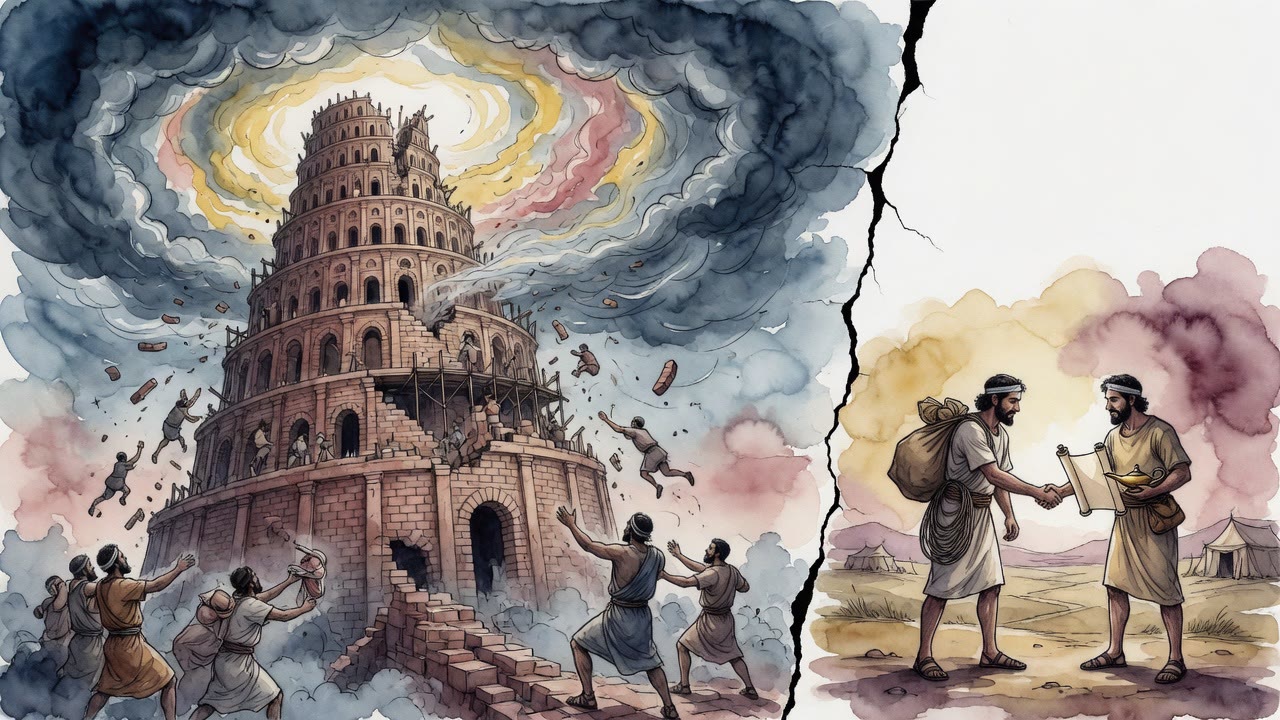
Babel's builders announced their own ruin mid-construction. Bereshit Rabbah sets that failure against the quiet commerce pact of Zebulun and Issachar.
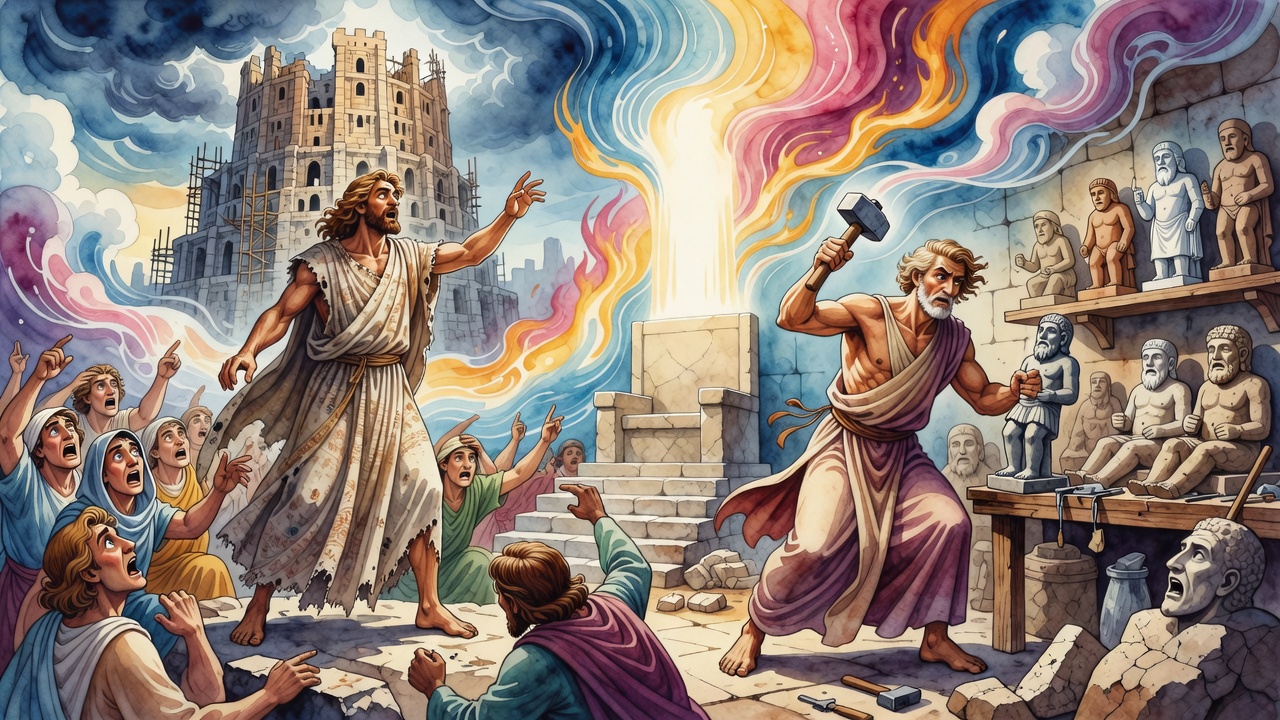
A brick fell off the tower and the whole work line sat down and wept. A man fell the same morning and nobody turned his head.
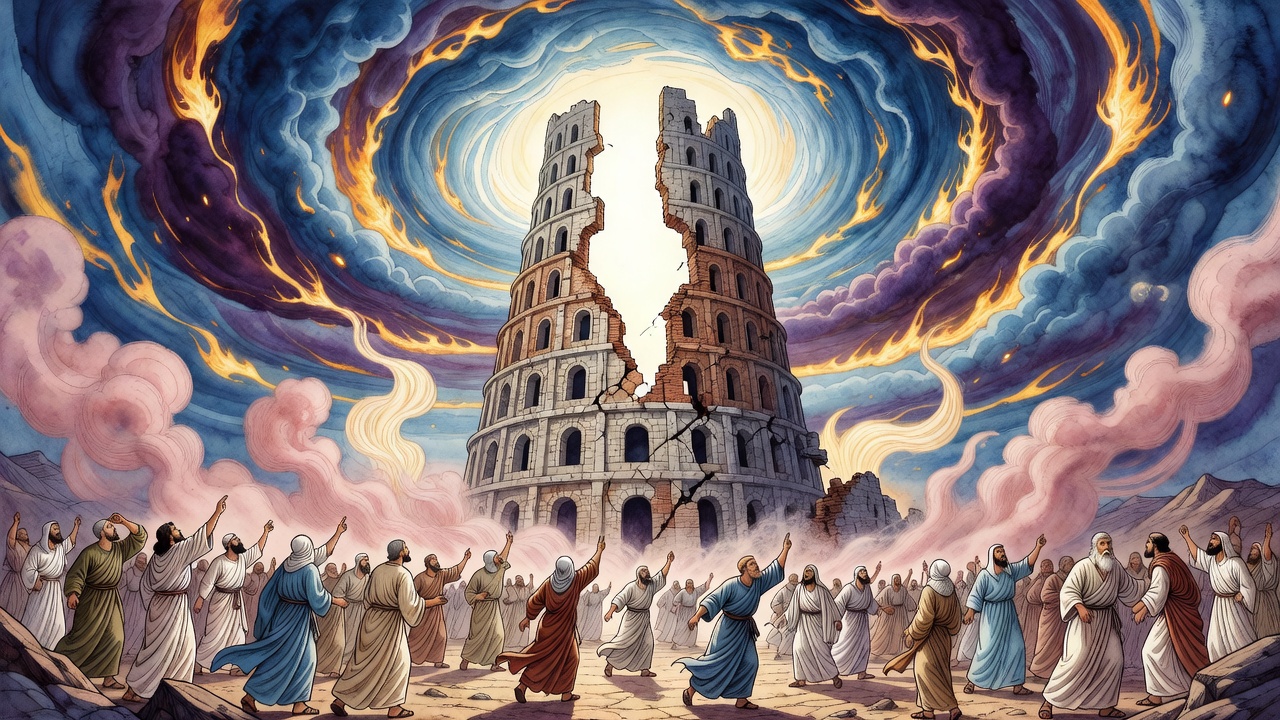
Babel's crews built high to avoid being scattered, and God scattered them with broken speech. Hebrew, the first tongue, shattered into seventy.
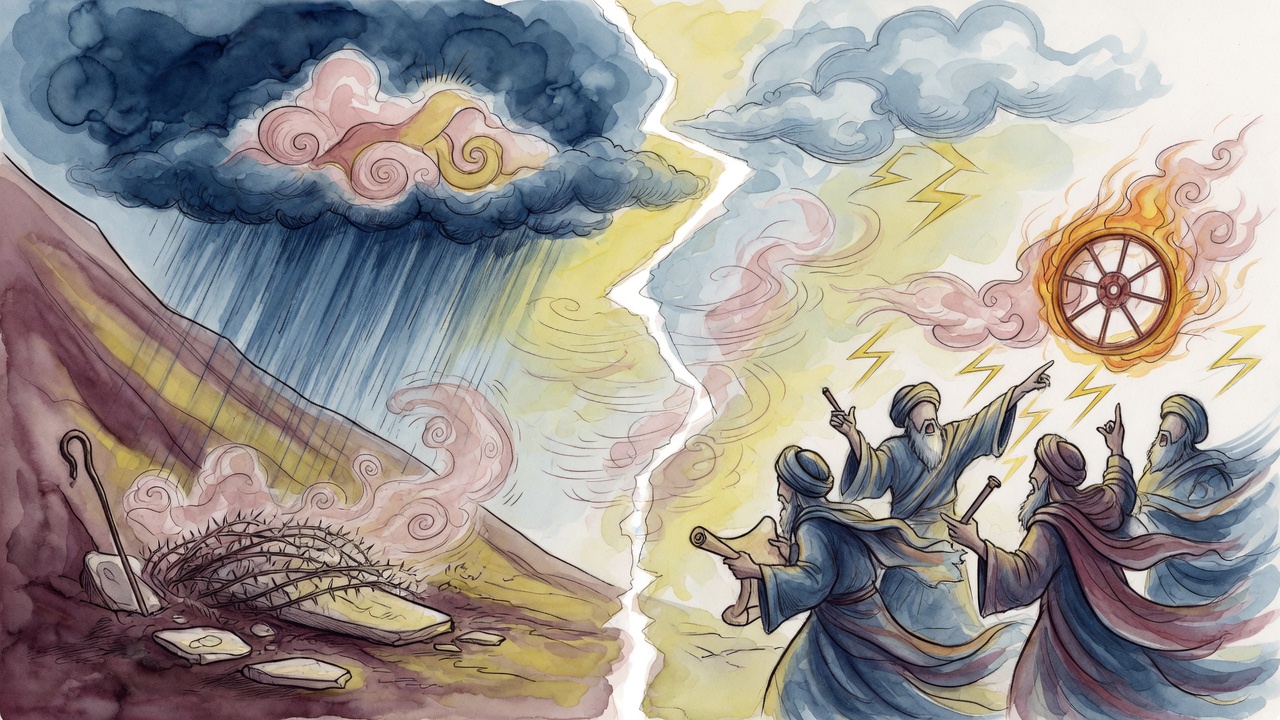
God sealed east, west, and south where sky meets earth, then left the north open. Any pretender claiming divinity would fail the unfinished quarter.
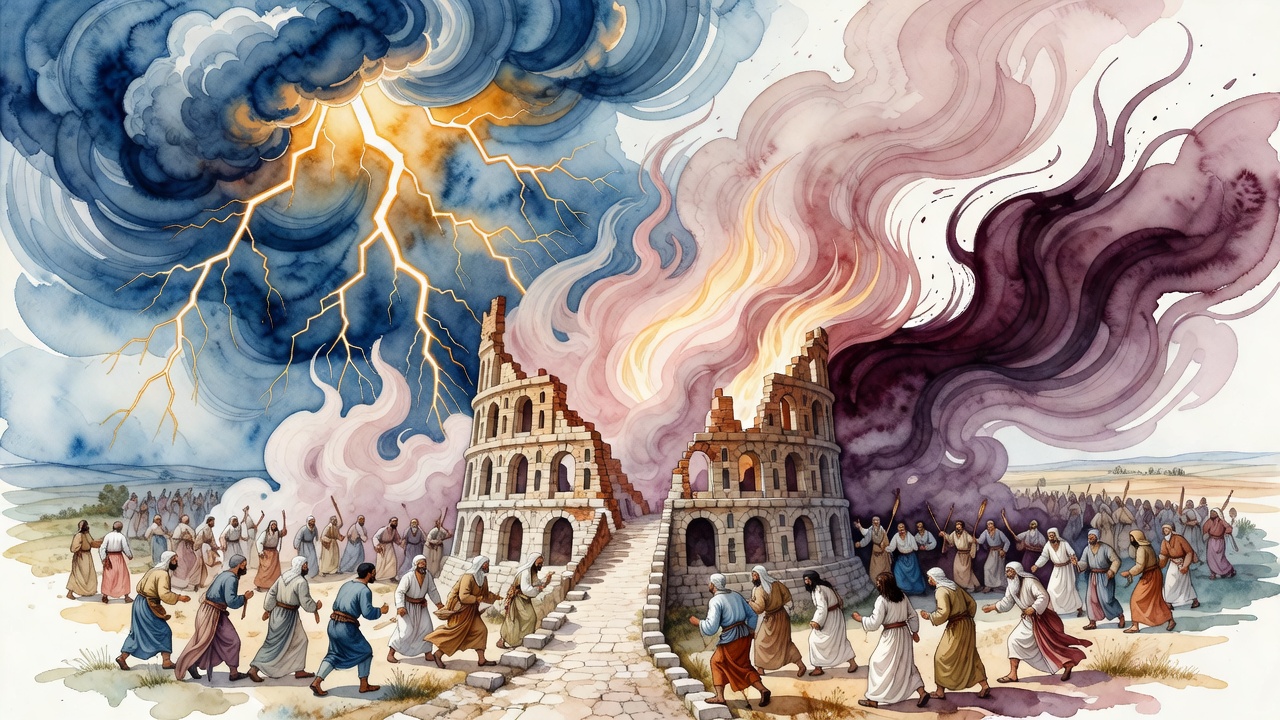
After the flood they still spoke with one mouth. On the plain of Shinar the crews split, and one of them brought axes for the sky.
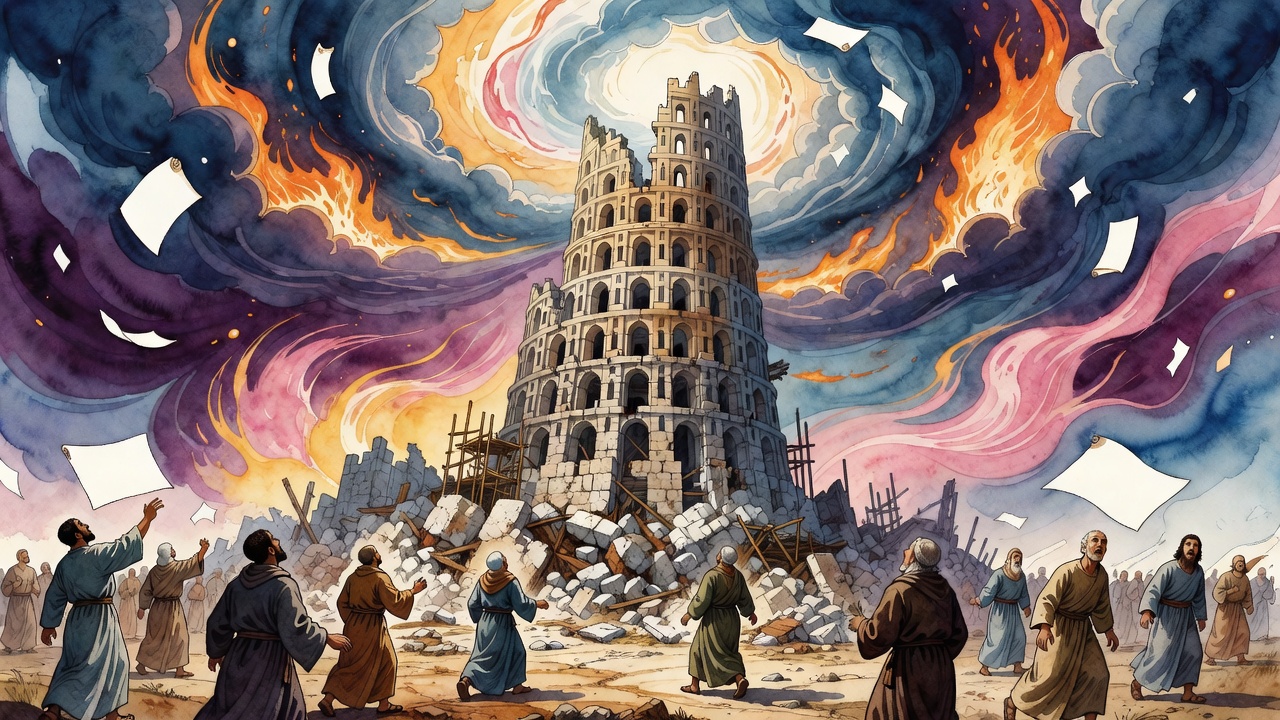
The tower was still climbing when speech broke. A man called for tar and was handed a tool he did not know how to use.
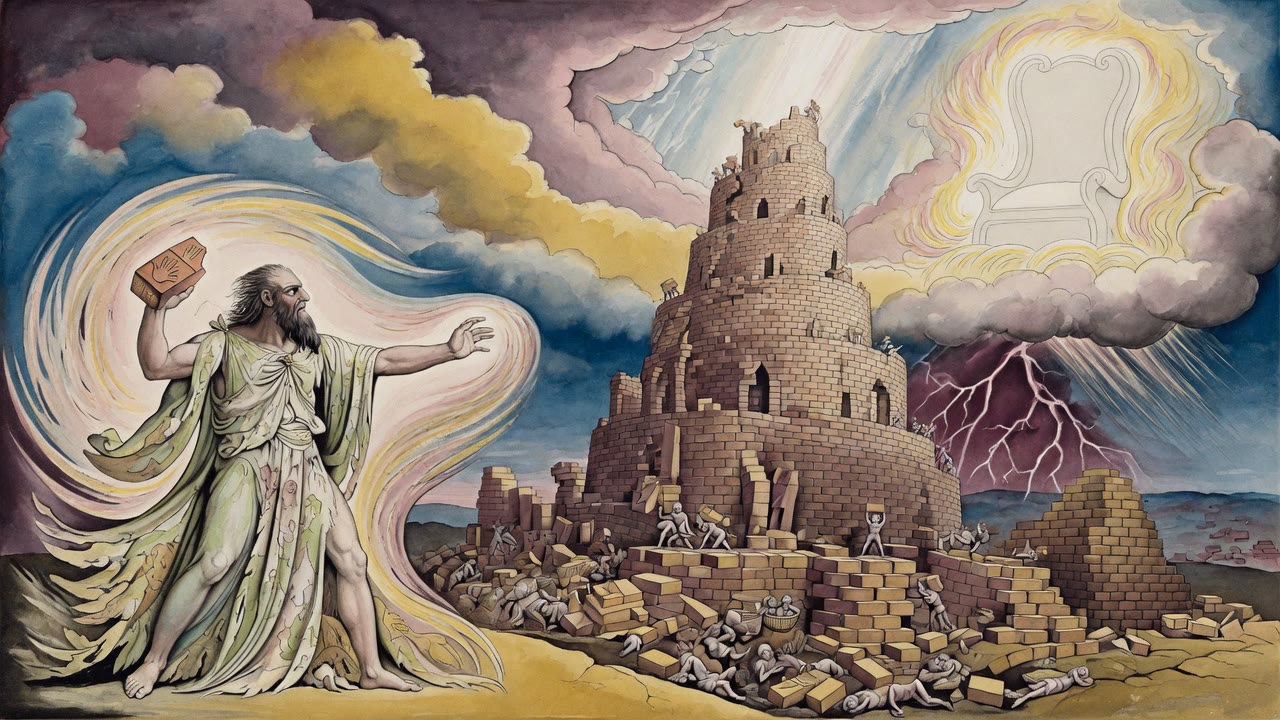
They had counted the years. The sky, they said, would fall again. They raised pillars instead of praying, and an east wind took their words.
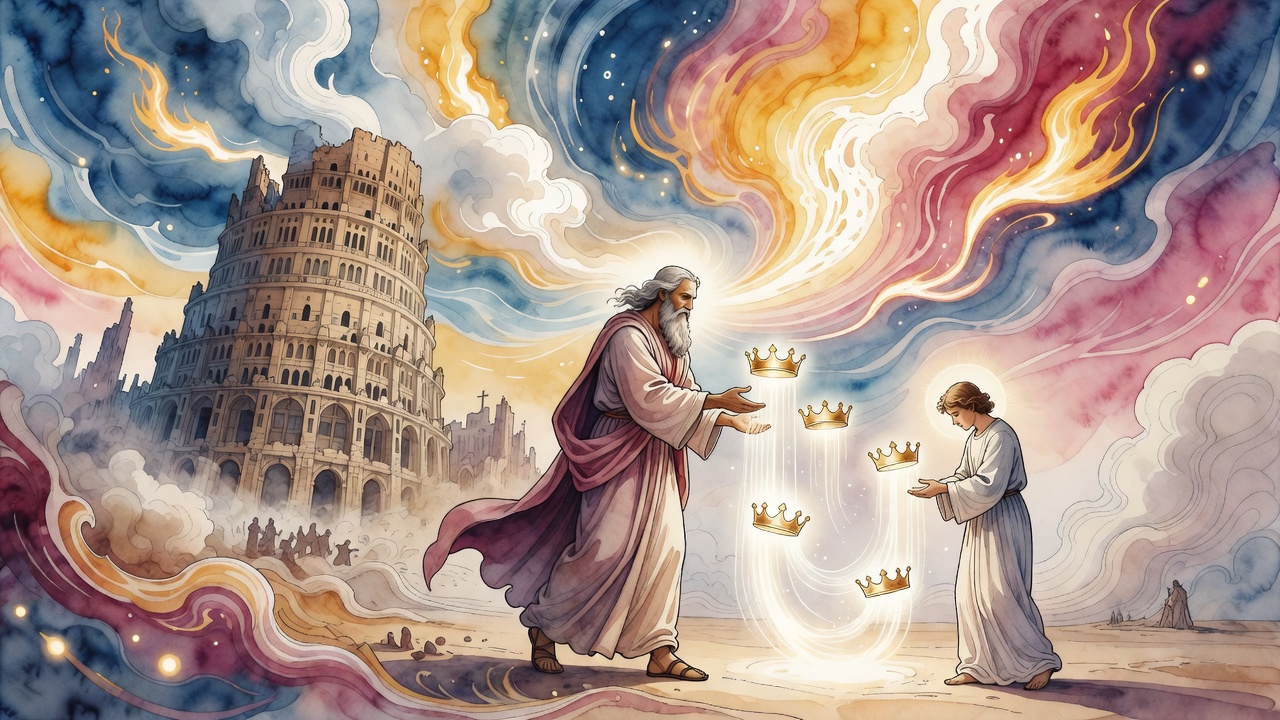
The tower builders came recruiting. Sit with us, they said, you are mighty, heaven has abandoned us down here. Abraham walked off toward the land alone.
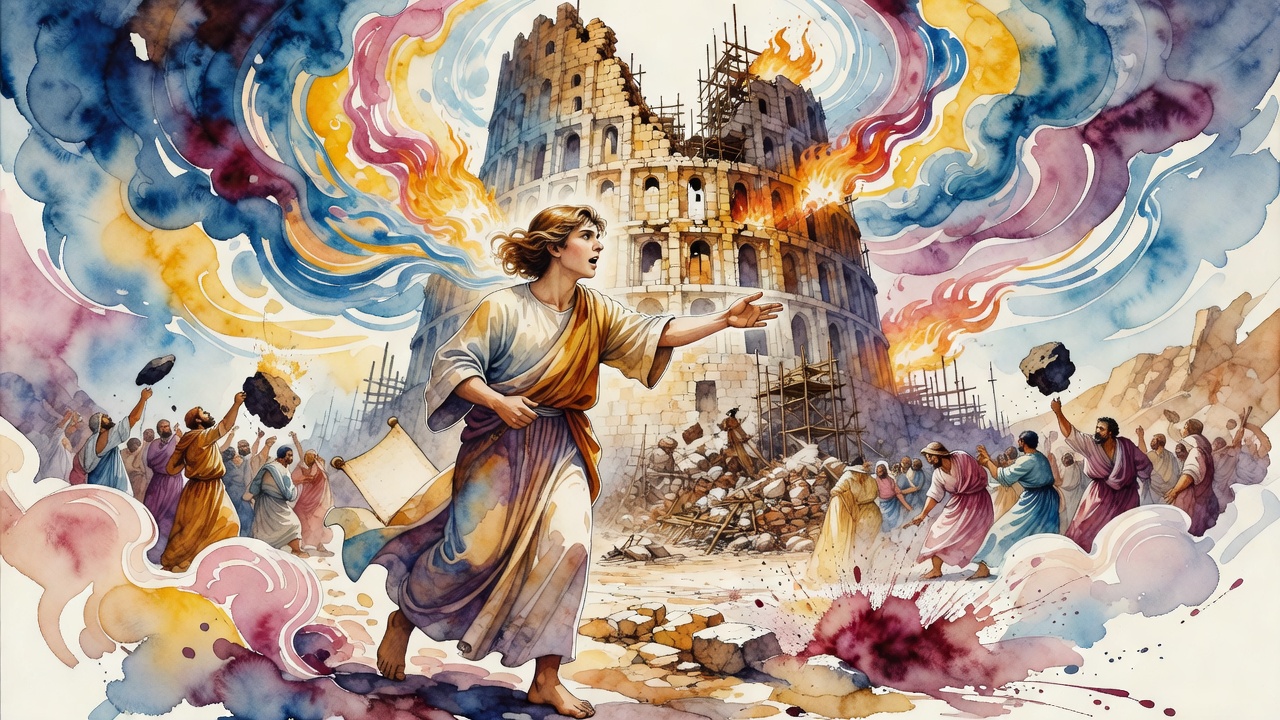
Brick dust hung over Shinar like a second sky. Men shouted in one tongue until a young man from Terah's house stopped as if he heard a knife.
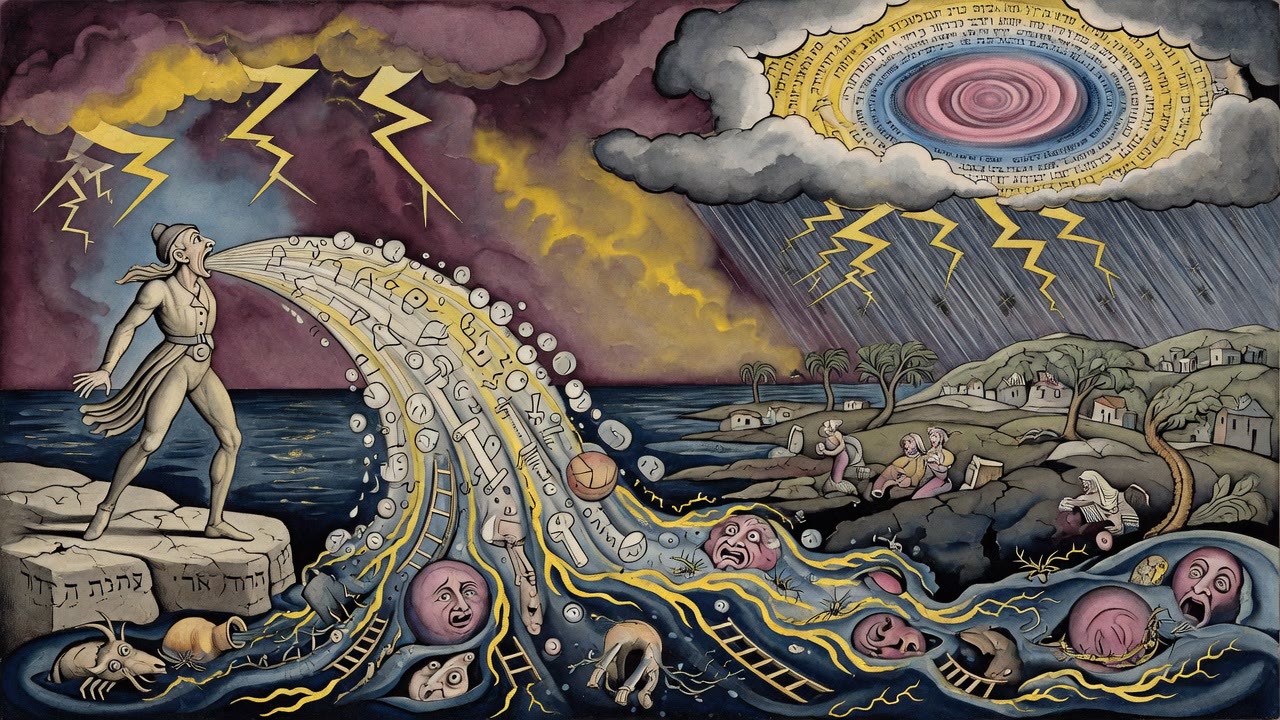
Dreams came thick after too much talk. Anger sat in the chest like a kettle. Two sages argued heaven's seats while the living spilled careless speech.
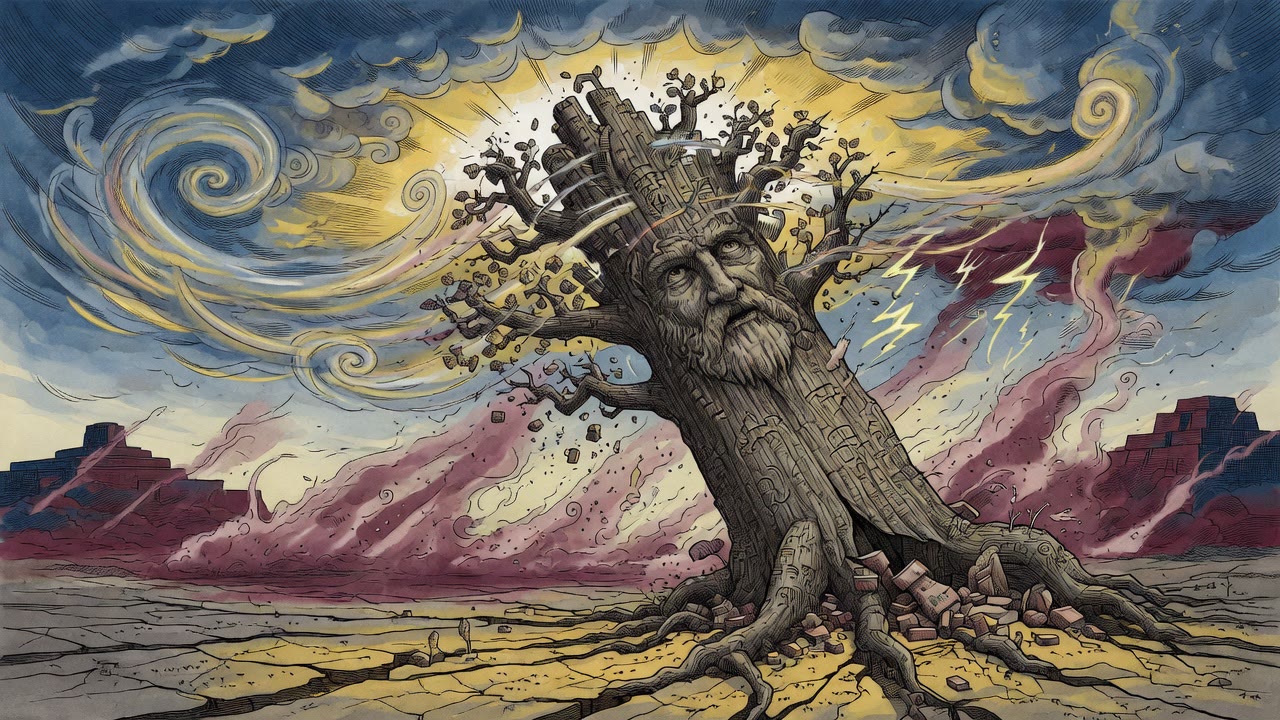
Nimrod walked the brickworks as if the sky were a roof he could raise. Crews asked for brick and heard the word for water instead.
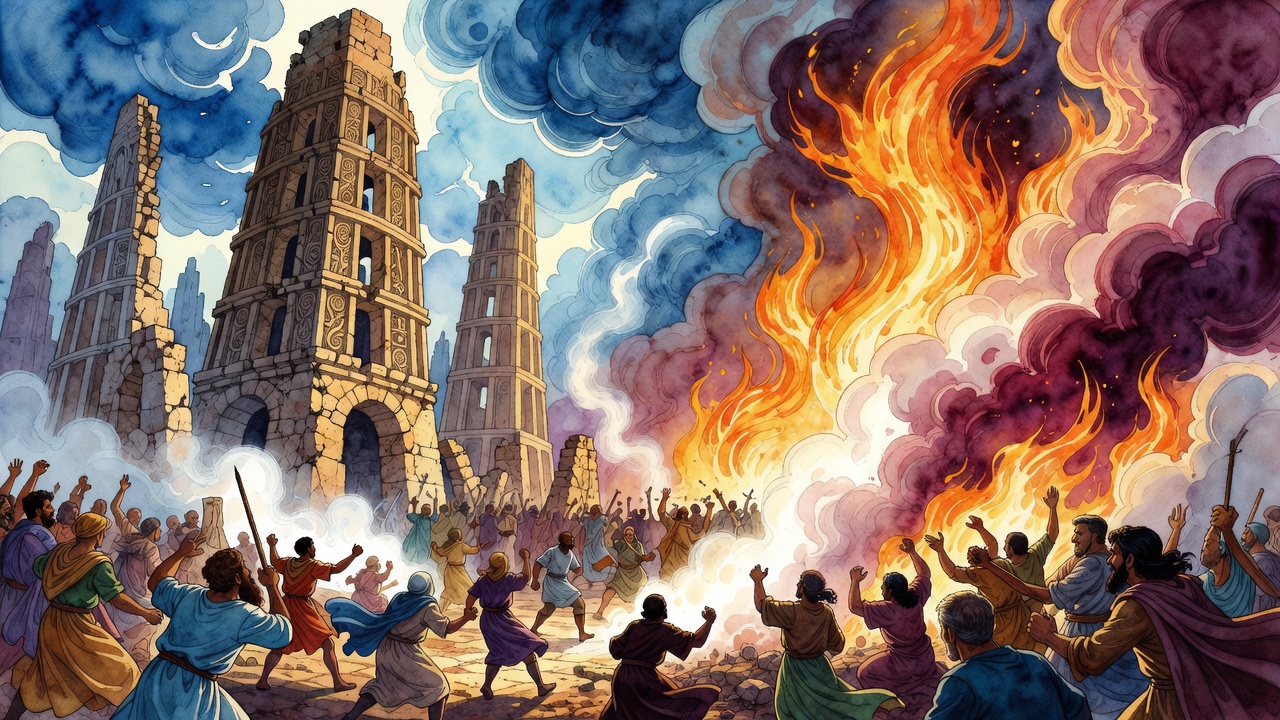
On the plain of Shinar the bricks rose fast because no one had to stop and translate a doubt. They aimed the one tongue upward like a spear.
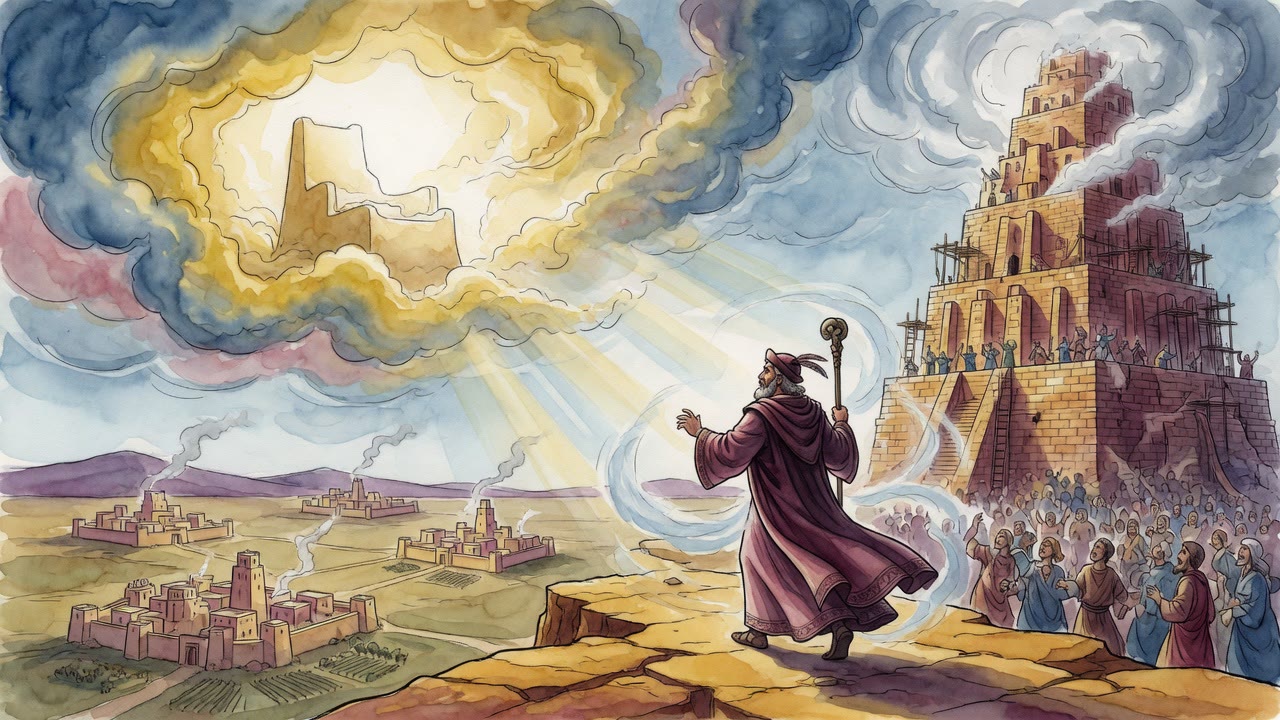
Nimrod left the counsel of a divided generation, quit the tower cities, and built four new ones. God gave him place for refusing the scramble of Babel.
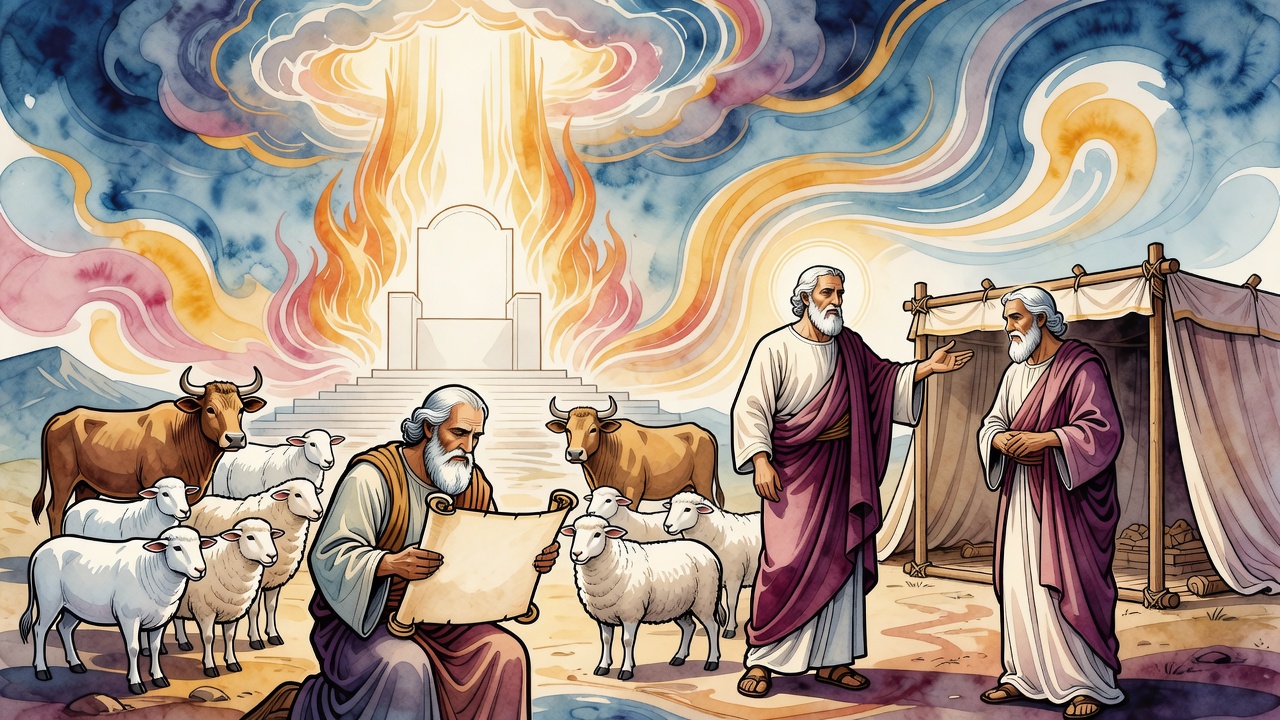
A dropped peg made the whole work yard flinch. Betzalel had just told the prophet his build order was wrong. Then the saws bit into wood again.
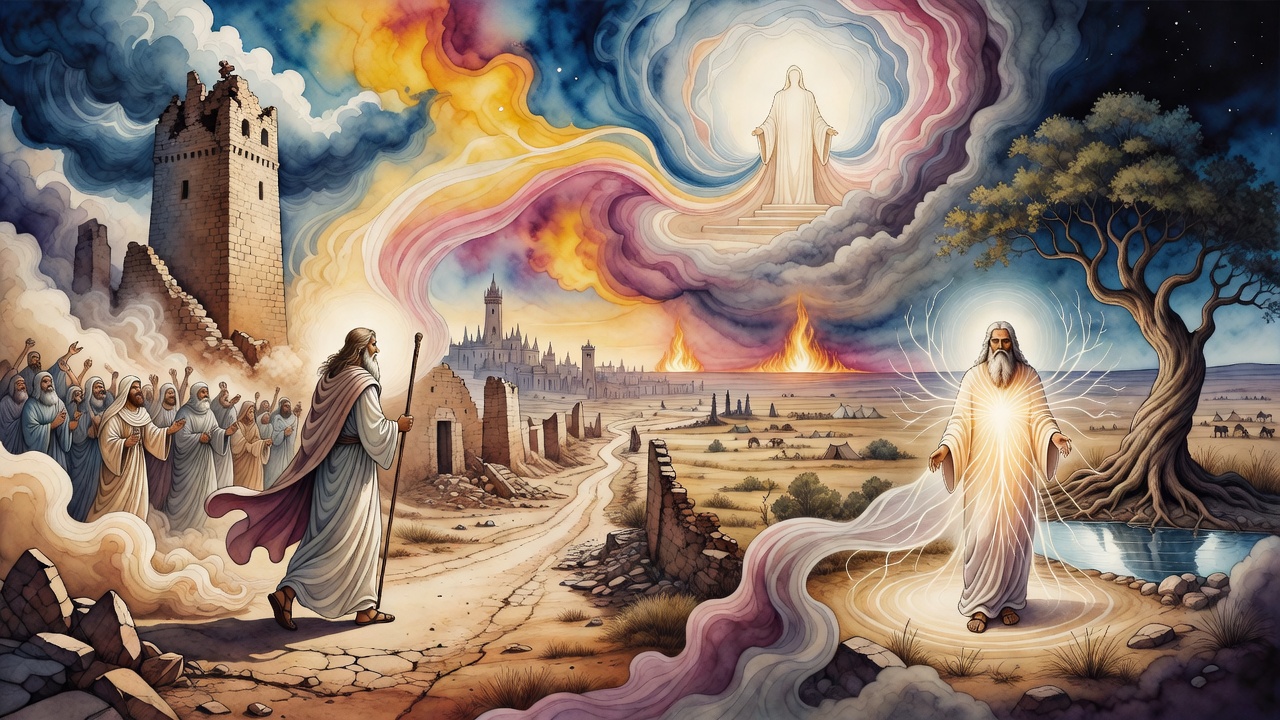
At Gerar the king told Abraham to settle anywhere he liked. Abraham heard the mockery in the offer and did not stay. At night his own body taught him Torah.
