The Plain Where the Tower Fell Was Named Overthrow, and Canaan Took Shem's Land
God's wind destroyed the tower. Noah named the rubble Overthrow and divided the earth. Then Canaan marched north into Shem's portion and refused every warning.
Table of Contents
 Click for full size
The Wind Came for the Tower
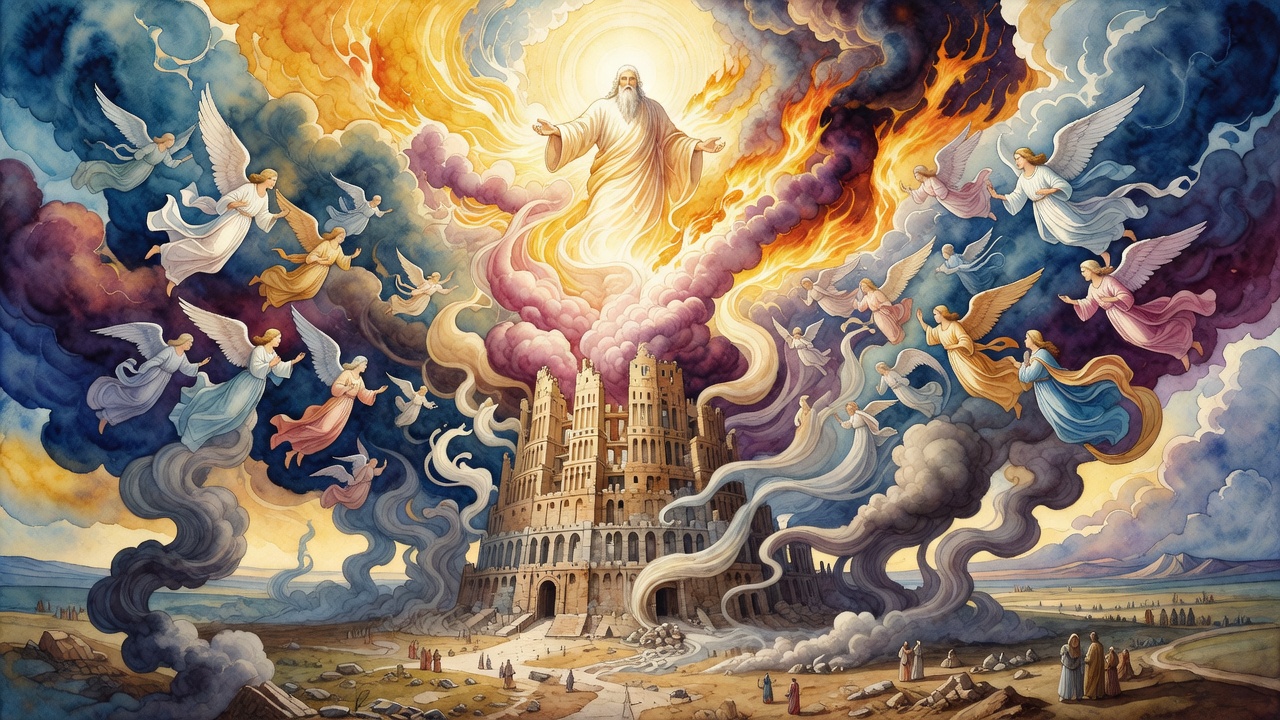
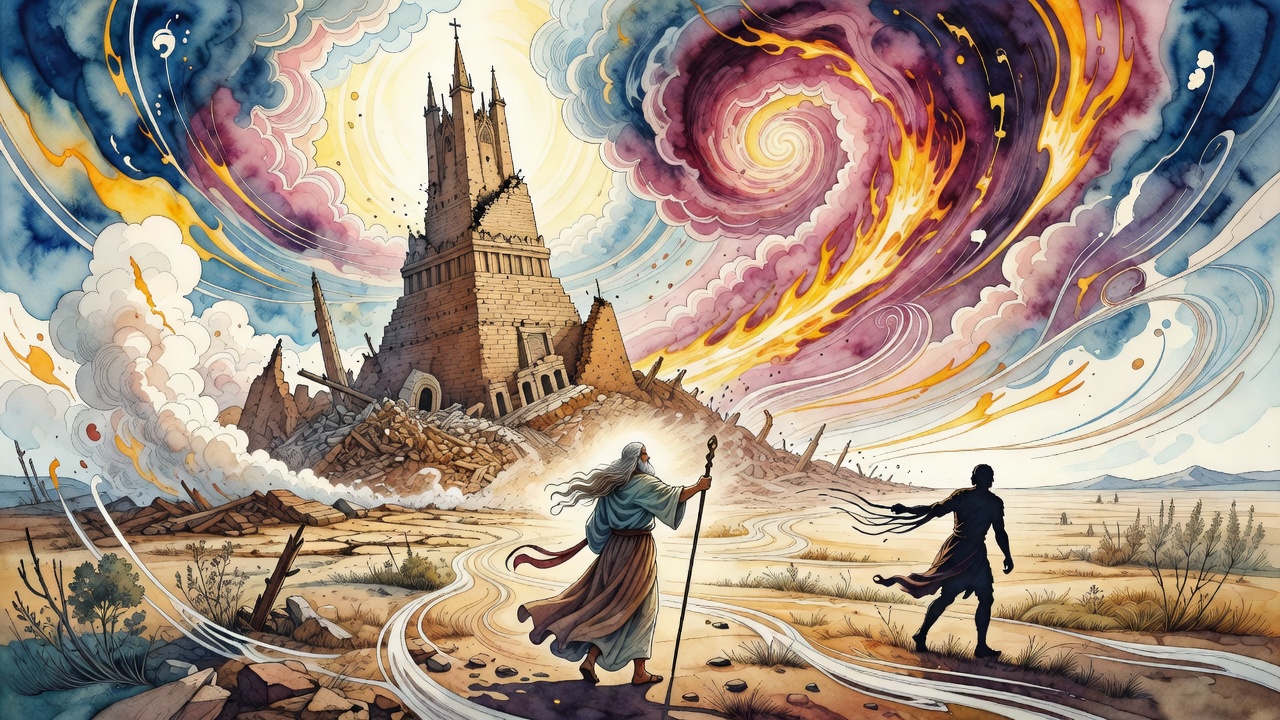
The languages had already come apart, so the crews were gone by the time the wind arrived. The tower itself was still standing. It stood between Asshur and Babylon in the land of Shinar with nobody working on it, half of an idea nobody could finish because the man holding the plumb line could no longer understand the man holding the brick, and then the Lord sent a mighty wind and threw the whole of it down across the plain.
Not water this time. A wind, which is the cheapest thing in the world to send. People walked out afterward to look at what was lying there, and the name they used for the place from then on was Overthrow.
Nimrod Named His Cities After the Disaster
Most of them left. Nimrod stayed, and he built on it.
He raised cities all through Shinar and gave them names, and the names are the strange part, because a man covering up a defeat picks different words. He called the first one Babel, because the Lord had confounded the language of the whole earth there. He called the next one Erech, because God had scattered the people from that spot. He called another Eched after a great battle, and he called the last one Calnah, which was where his own princes and mighty men had been consumed for rebelling against God.
Then he settled down in Babel, in the city named for the day his workforce stopped understanding each other, and went on exactly as before.
They Gave Him a Second Name
His men had a name for him too. They called him Amraphel, because at the tower his princes and his mighty men had fallen through his means.
He had wanted a name that reached the top of a building tall enough to be seen from anywhere in Shinar. Instead they handed him one that meant the men who followed him had died of following him, and he had to answer to it in the street, and in his own court, and from the mouths of the survivors' sons. He could not put it down. A man can abandon a tower, but the name went with him into the house he ate in.
He kept building anyway, and his son Mardon turned out worse than he was, which is where the old line comes from about wickedness going forth from the wicked.
The Families Went to Their Lots
In the thirty-fourth jubilee, in the fourth week, in the first year, the rest of them scattered out of Shinar. They did not wander. Noah had already divided the earth among his three sons on the mountain and the angels had witnessed it, so each household walked toward a country that had its name on it, and Ham and his sons went down into the land of the south that had come out in their lot.
Canaan went south with his father because that was where the family was going. He did not stay long.
Canaan Would Not Go West
He turned around and looked at what lay to the north instead, the land from Lebanon down to the river of Egypt, and he saw that it was very good. His own inheritance lay west, toward the sea. He did not go west.
His brothers went after him and told him what he was doing, and they had the words ready because the oath had been sworn in front of the holy judge and in front of Noah their father, and every one of them was bound by it. Cursed art thou, they said, and cursed shalt thou be beyond all the sons of Noah. He did not hearken to them. He settled in the land of Lebanon, from Hamath to the entering of Egypt, he and his sons after him, and he never went back.
So the country took his name, the way the plain had taken its own. Behind him, between Asshur and Babylon, a field of broken brick still answered to Overthrow. In front of him a whole coastline began to answer to Canaan, and his sons were born in it, and their sons after them, and when strangers asked whose land they were crossing they were given the name of the man who had taken it.
← All myths