God Gave Abraham the Language That Died at Babel
After the tower fell, Hebrew went silent in every human mouth. When God finally called Abraham, He opened his lips and restored the first language of creation.
Table of Contents
 Click for full size
He Put Down the Stars and Prayed
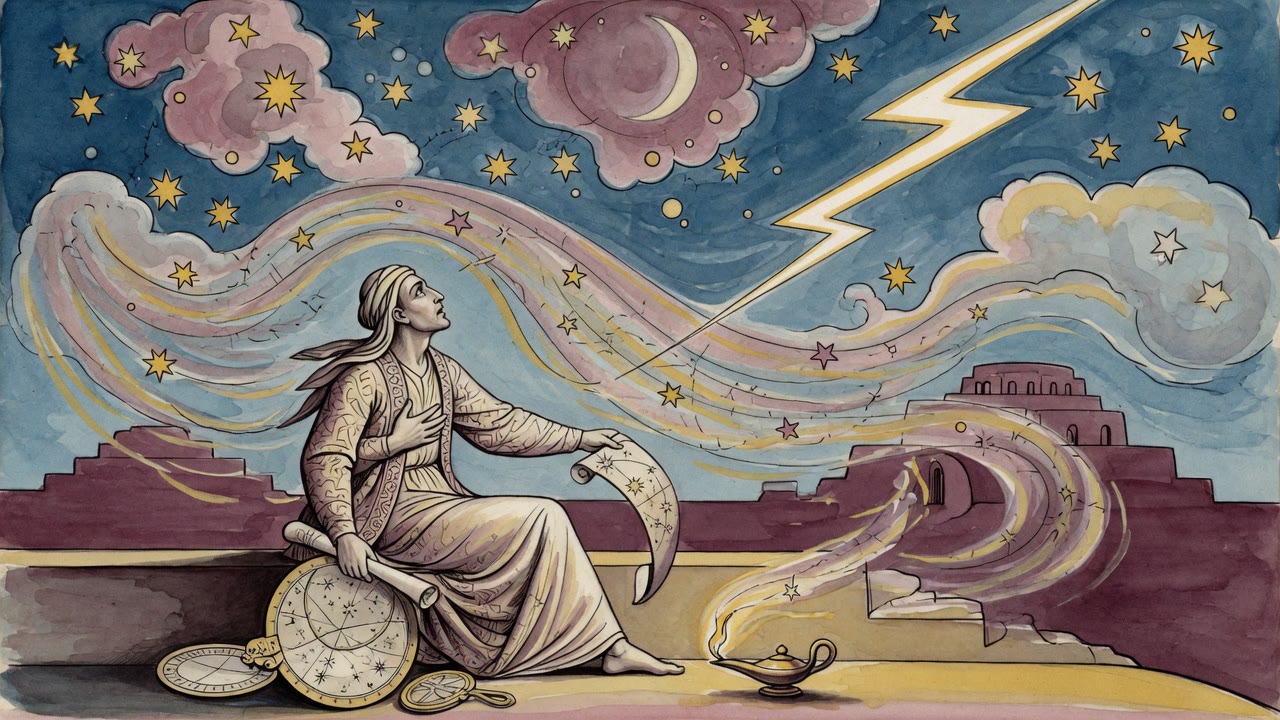
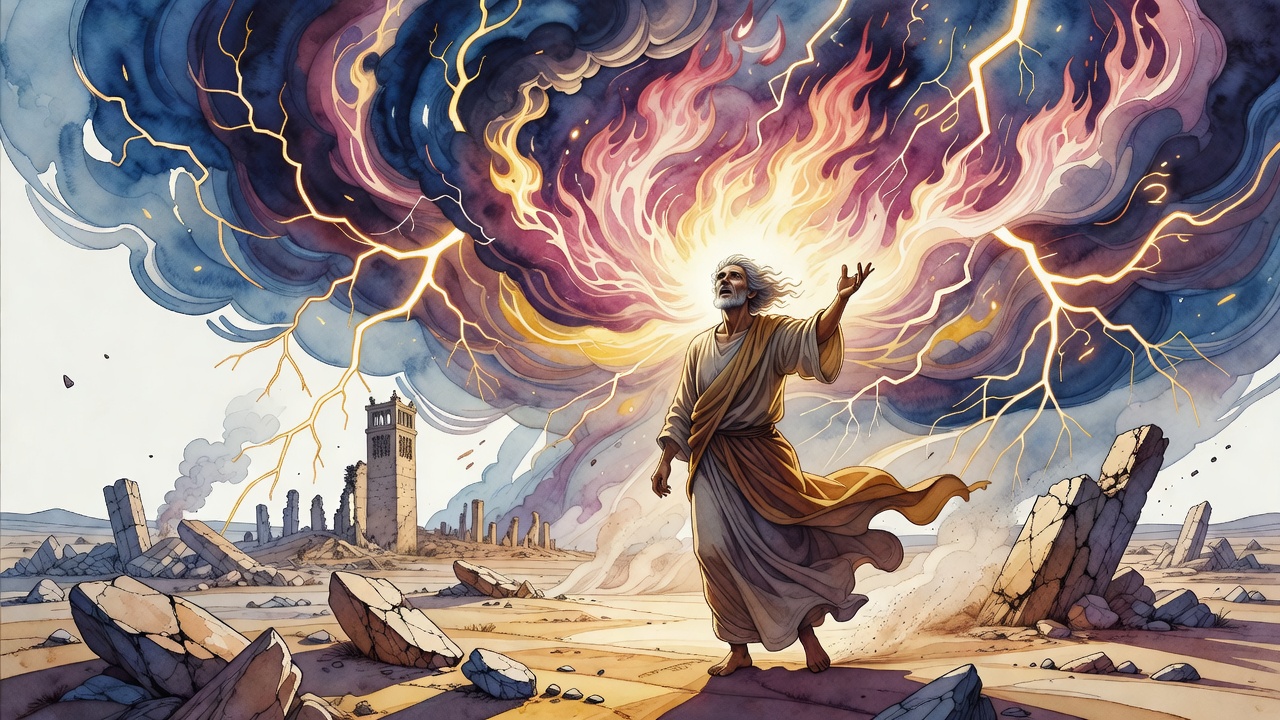
The Chaldeans read the sky for the coming year's rain, and Abraham had been trained to do it, and one night he stopped in the middle of the work. The rain was not in the stars. Whoever held the rain held the stars as well, so the calculations in front of him described a servant and not a master, and he put them down because there was nothing in them worth asking.
He prayed instead. "My God, God Most High, Thou alone art my God, and Thee and Thy dominion have I chosen." He asked to be kept out of the hands of the evil spirits who have the run of men's thoughts. He asked that he and his seed be established so that they would not go astray. He asked that the road ahead of him be made straight and that he not walk in the deceitfulness of his own heart.
Then he asked the practical question, the one he actually needed answered. Should he go back to Ur of the Chaldees, where people were asking after him and wanted him home, or should he stay where he was?
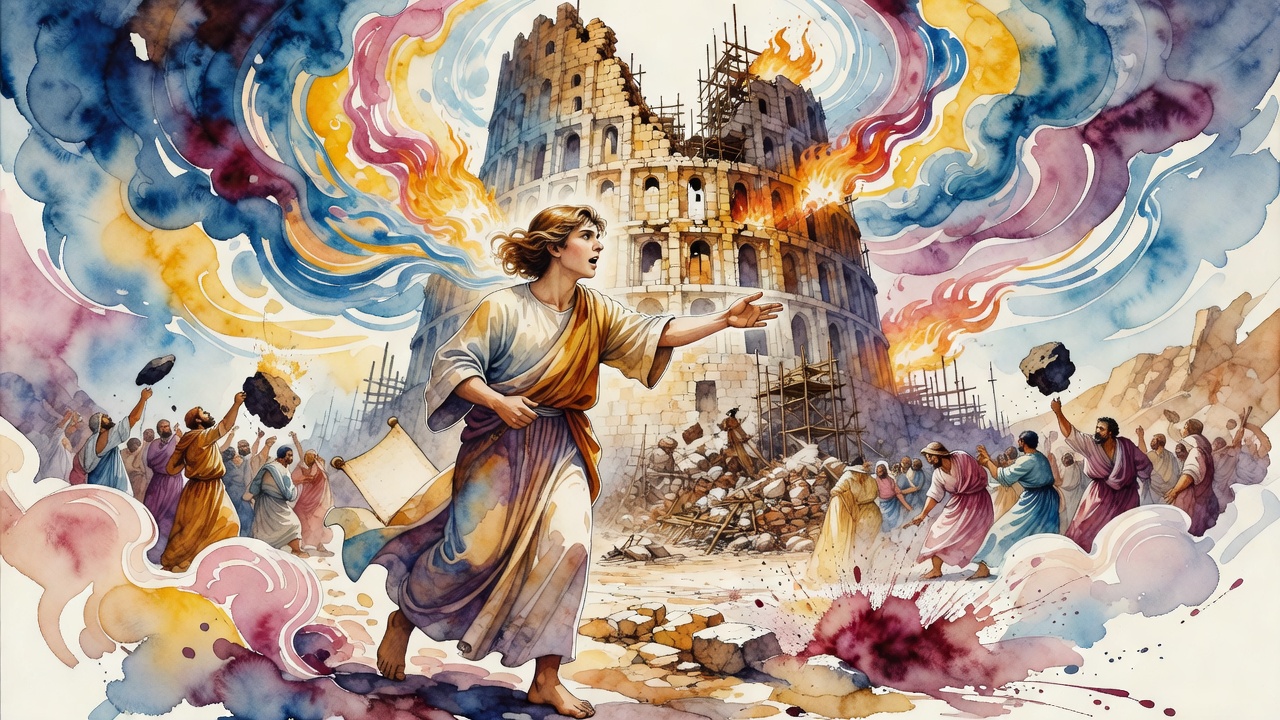
All of it went up in a tongue that had been made on the plain of Shinar. The first language had died in every human mouth on the day Babel was overthrown, and it had stayed dead for generations, so a man praying anywhere on earth that night was praying in one of the replacements.
Get Thee Up From Thy Country
The answer did not mention Ur. "Get thee up from thy country, and from thy kindred and from the house of thy father, unto a land which I shall show thee." Then the terms, laid out like a contract: a great and numerous nation, a blessing, a name made great, blessing on the earth through him.
There was a clause that reached past him entirely. God would be God to him and to his son and to his son's son and to all his seed, from that day and through every generation of the earth, so he had nothing to be afraid of. A man standing under the stars he had just given up on was being told what his great-grandchildren would inherit.
None of that was the strange part.
Open His Mouth and His Ears
"Open his mouth and his ears," God said, "that he may hear and speak with his mouth, with the language which hath been revealed."
The angel came and did it. He opened Abraham's mouth, and his ears, and his lips, and then he started speaking to him in Hebrew, the tongue of the creation. The words that had been said over the water and the light were being said again in a tent at Haran, into a pair of ears that had just been altered to receive them. Abraham answered in it. God gave one man back the language the whole world had lost, and the sounds came out of him as though he had always had them, which in a sense he had, because they had been in the mouth of every living man until Babel and in nobody's since.
The Books No One in the House Could Read
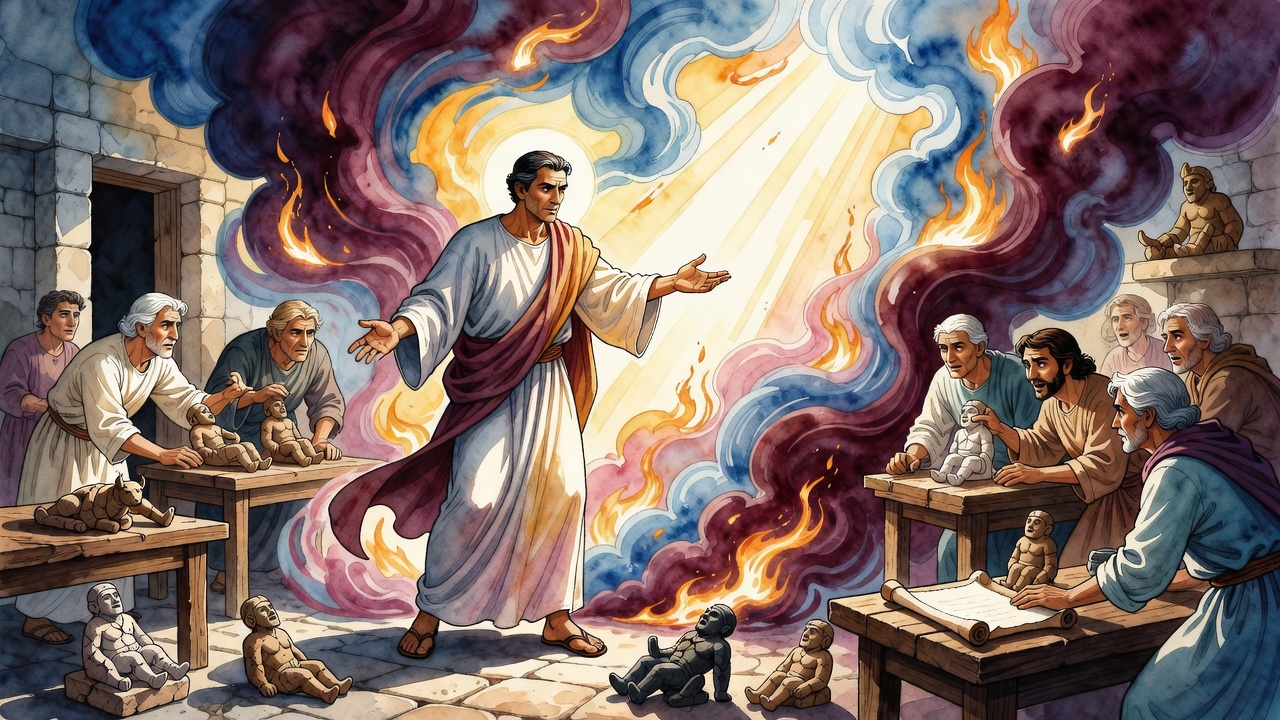
His fathers' books were in the household, and they were written in Hebrew, which is exactly why nobody in the household had ever been able to read them. Since the writing meant nothing to anyone in the house, the books had come down through the family as objects. Abraham took them out and copied them over in his own hand.
Then he sat with them through the six rainy months, working the letters, and where the sense would not come the angel told him what he could not understand on his own. Six months indoors with his ancestors, in a language that had been put into his mouth by an act of surgery, because until his mouth and ears were opened there was no way in. The man who had spent his nights taking omens off the sky spent that winter finding out what had been sitting on his father's shelf the whole time.
Go in Peace
In the seventh year of the sixth week he went to Terah and told him he was leaving Haran to go into the land of Canaan and see it, and that he would come back to him afterward.
Terah did not argue and did not ask what had changed in him. "Go in peace," he said. "May the eternal God make thy path straight, and the Lord be with thee, and protect thee from all evil."
So the father blessed him in whatever language the two of them had always used together, and the son walked out with his ancestors' books copied in his own hand, in a tongue nobody else in that house could speak, toward a country he had been given by description and had never seen.
← All myths