How Nimrod Became a Proverb Against Heaven
Genesis calls Nimrod a mighty hunter before God and leaves it at that. Jewish sources spent centuries asking whether he stood before God in service or defiance.
Table of Contents
 Click for full size
The Phrase That Would Not Stay Still
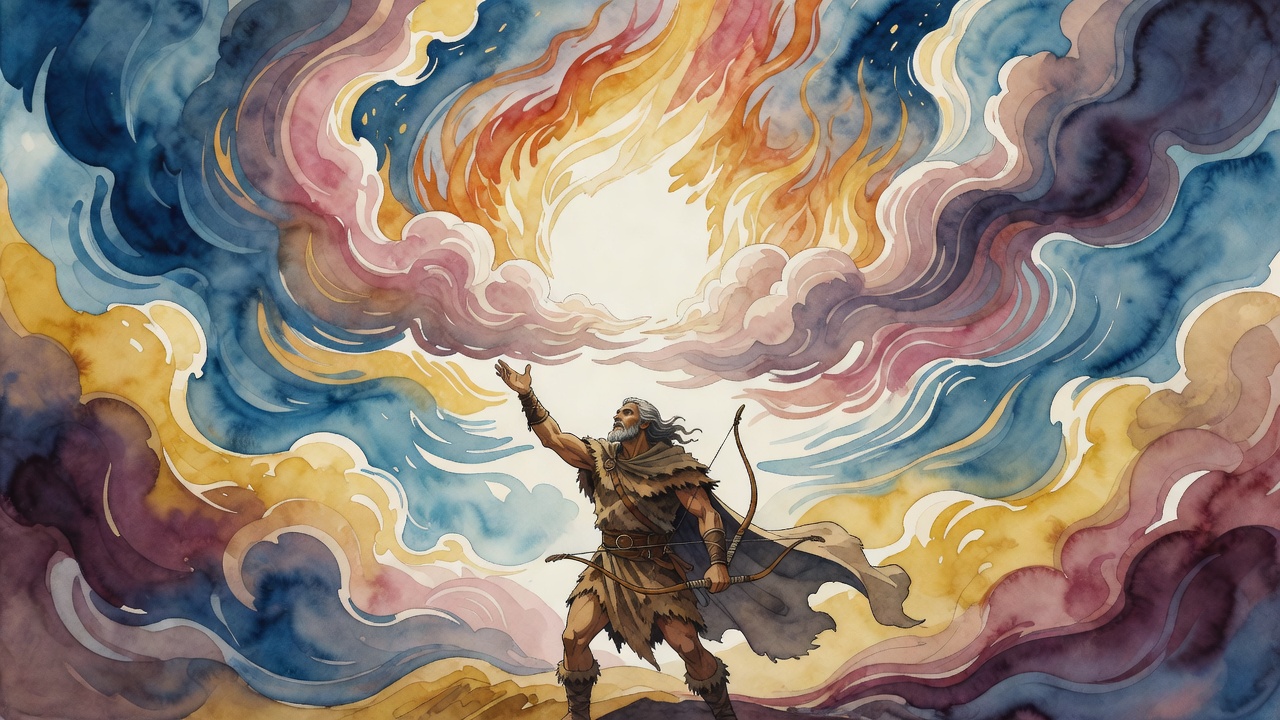
Genesis gives Nimrod ten words and nothing more: he was a mighty hunter before the Lord, and from him came the saying, like Nimrod (Genesis 10:9). The text does not say whether Nimrod was pious or defiant, whether he stood before God as a servant or as a challenger. It gives the proverb without an explanation. Jewish interpreters did the dangerous work: they asked what the proverb meant.
Philo of Alexandria, a first-century CE Jewish philosopher, preserved the question in its compressed form. The Midrash of Philo 8:1 asks why Cush fathered Nimrod, the giant and hunter before the Lord, and why people began saying "like Nimrod." Philo does not need a long biography to answer. The proverb is the biography. Nimrod became a way to describe a type, and the type was specific: a person who takes earthly power and turns it against the heaven that gave it.
Adam's Garments Made the Animals Bow
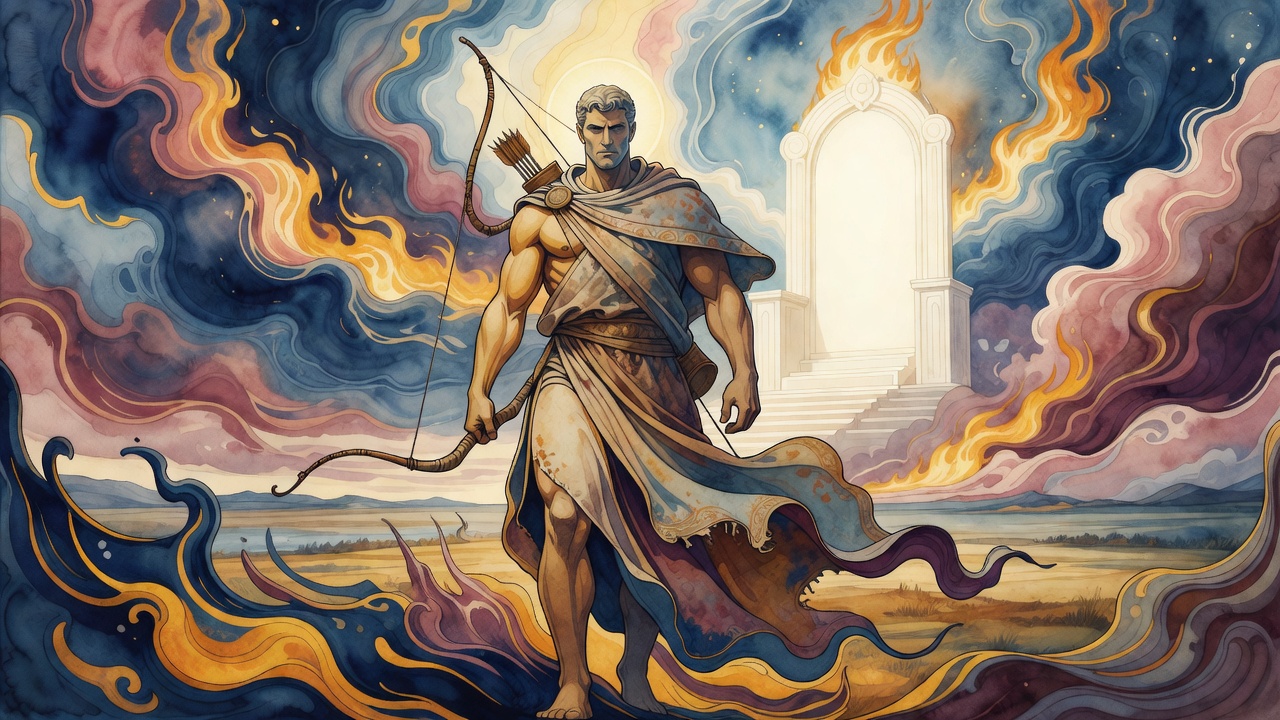
Pirkei DeRabbi Eliezer, an eighth-century midrashic collection, explains how Nimrod's power worked in practical terms. He wore the garments of Adam, the original clothing that God made for the first human after the expulsion from the garden. These garments were not ordinary. Animals had been created to submit to Adam, and they submitted to the garments that carried his authority. Whoever wore them commanded the animal world.
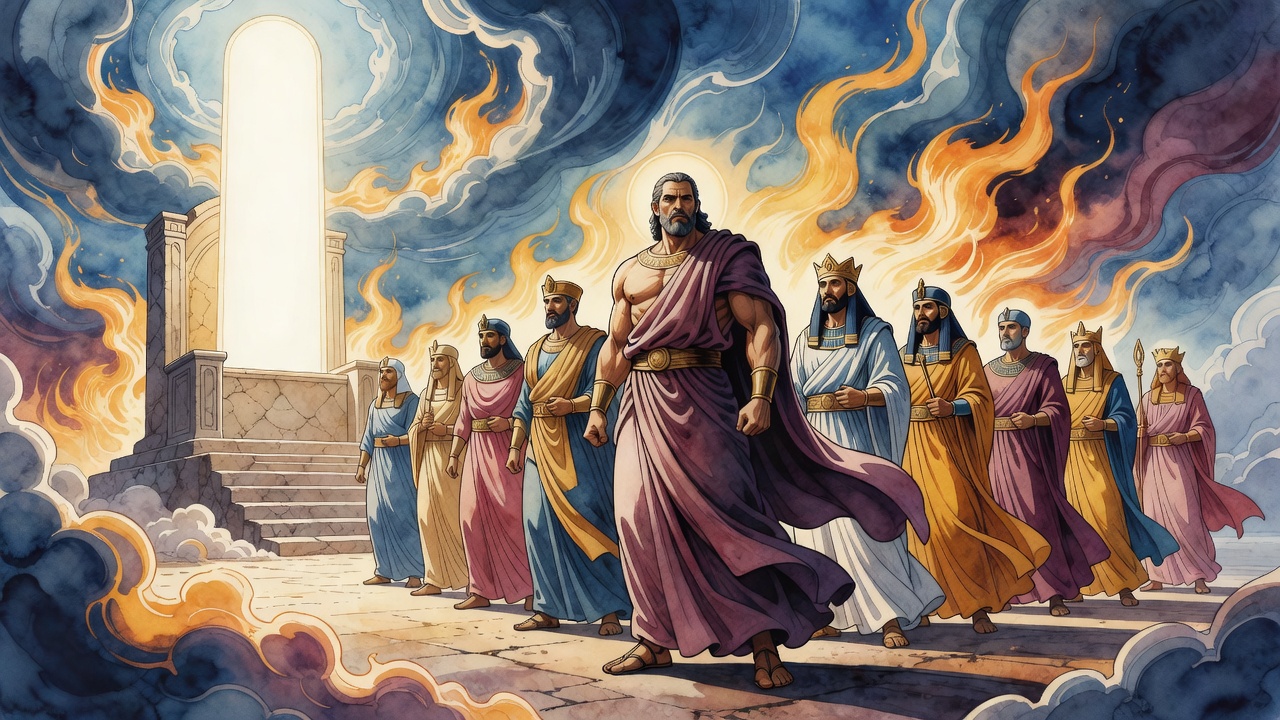
Nimrod acquired these garments and wore them into the field. The animals came to him. He killed them for offerings, and the people saw his power and drew the obvious conclusion: this man has divine favor. Rabbi Akiva's comment in the text is merciless. He calls Nimrod a slave, son of a slave, the descendant of Ham who was cursed to servitude. The people looked at spectacular power and offered their loyalty to it without asking how the power was obtained or what it was for. That is what the proverb names: not just Nimrod's defiance, but the willingness of everyone around him to mistake force for authority.
The First Tyrant After the Flood
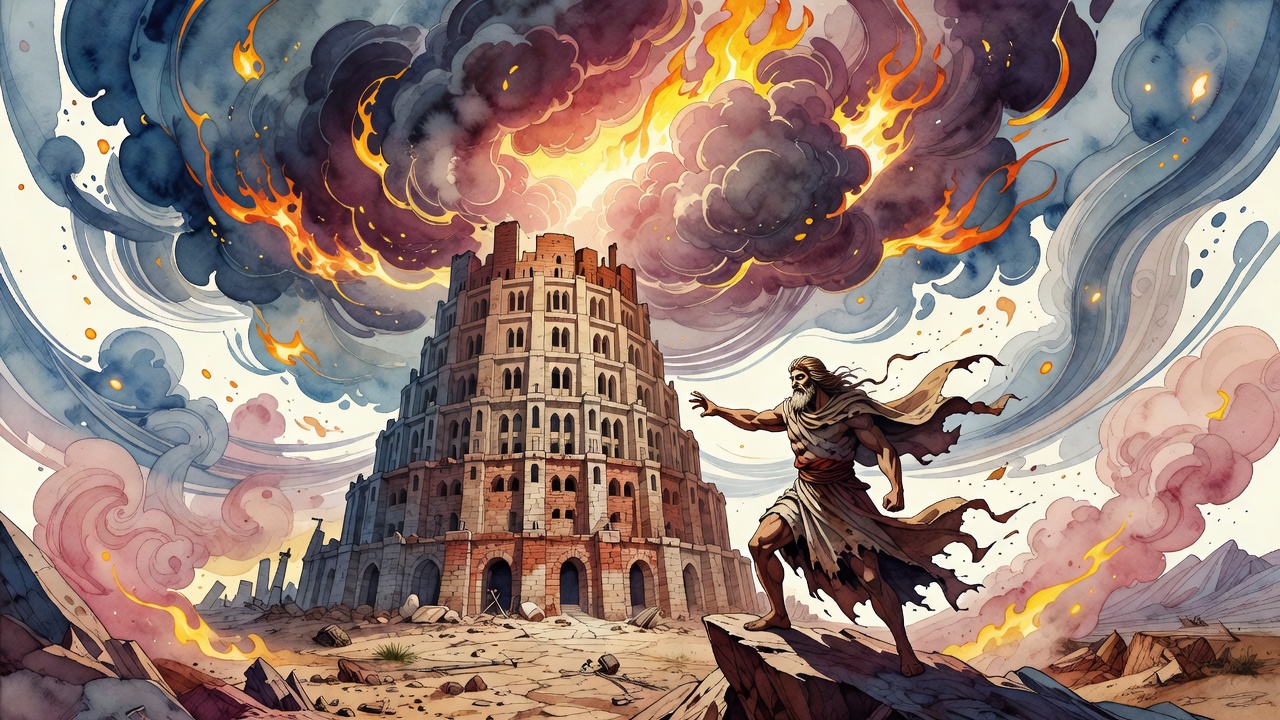
Ginzberg's Legends of the Jews, the early 20th-century synthesis of rabbinic traditions, specifies that since the great flood there had not been such a sinner. The language is strong: Nimrod was not simply impious in a private way. He was actively working against the covenant that God had established with Noah after the flood. He crafted idols. He forced others to worship them. He declared himself a god and built the architecture to support the claim.
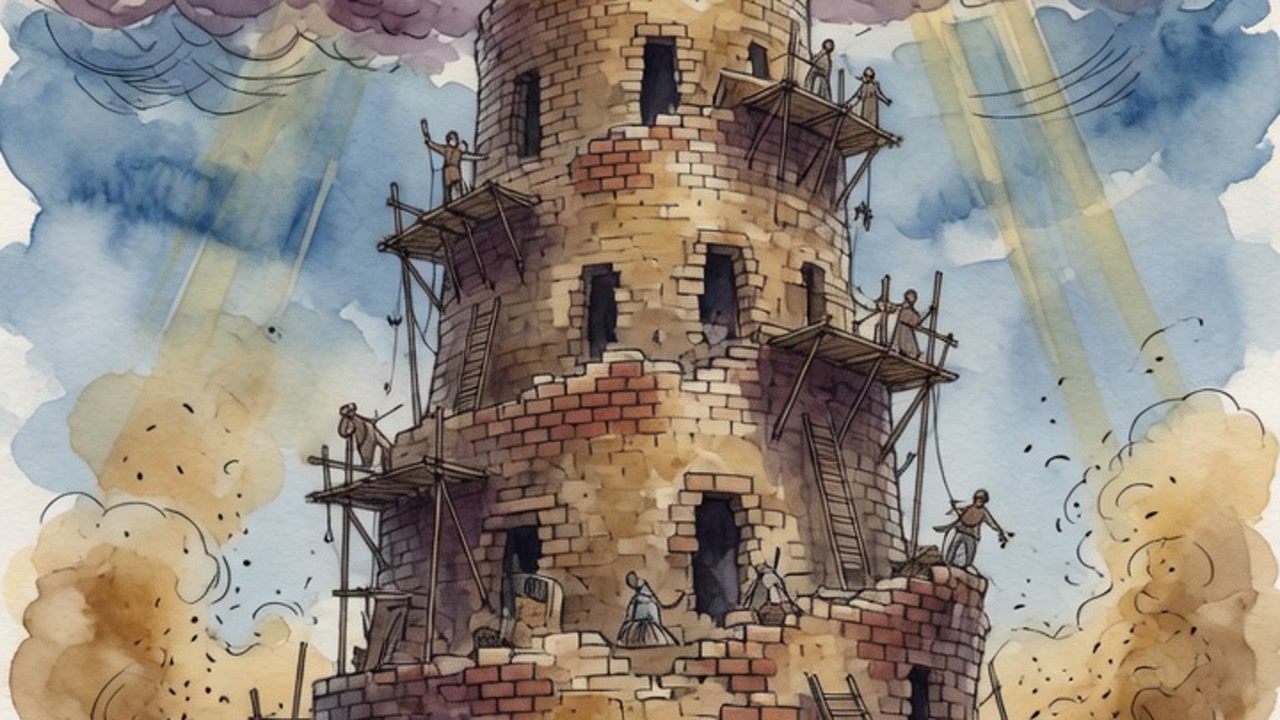
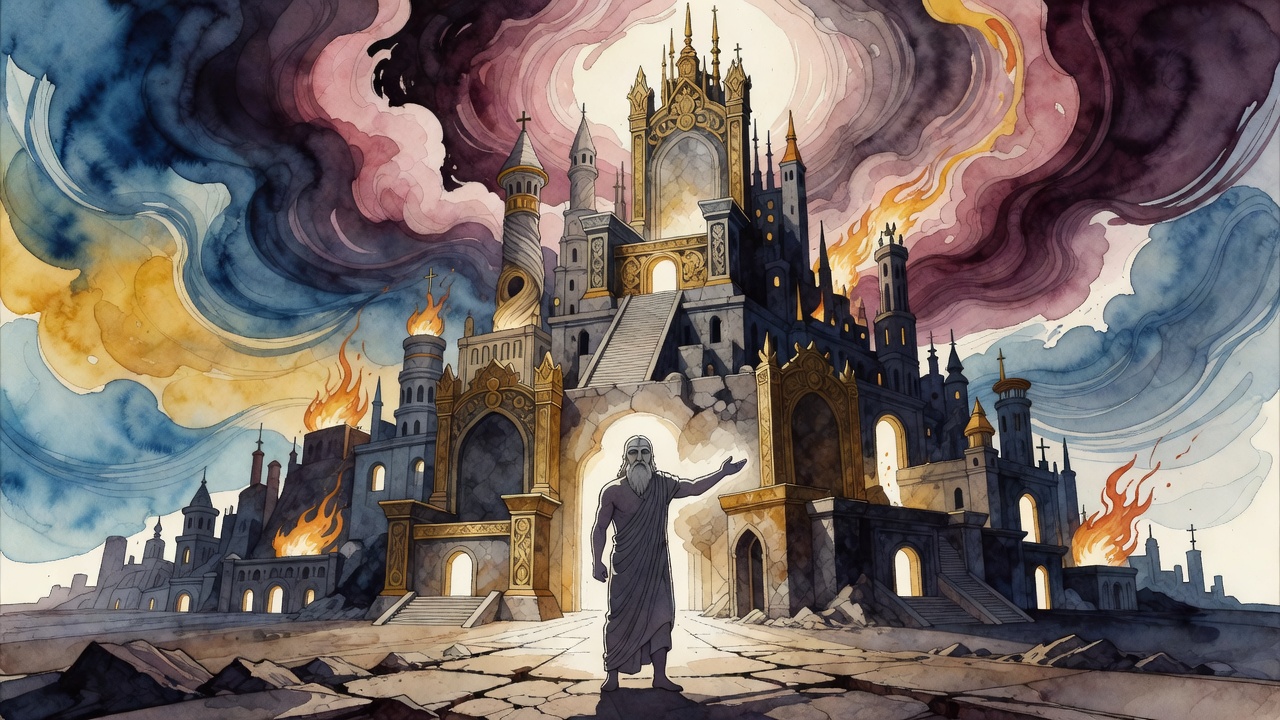
The Exempla of the Rabbis, a medieval collection, preserves the physical description: a round tower of stone planted in the middle of the earth, with thrones stacked seven layers high, each of a different material, the highest of pearl and precious stones. Nimrod sat at the top of that tower and called himself divine. When Abraham was born, the court magicians told Nimrod the birth had been foreseen as the end of his kingdom. Nimrod tried to buy the child from Terah. Terah refused and hid Abraham in a cave.
The Tower and Its 600,000 Builders
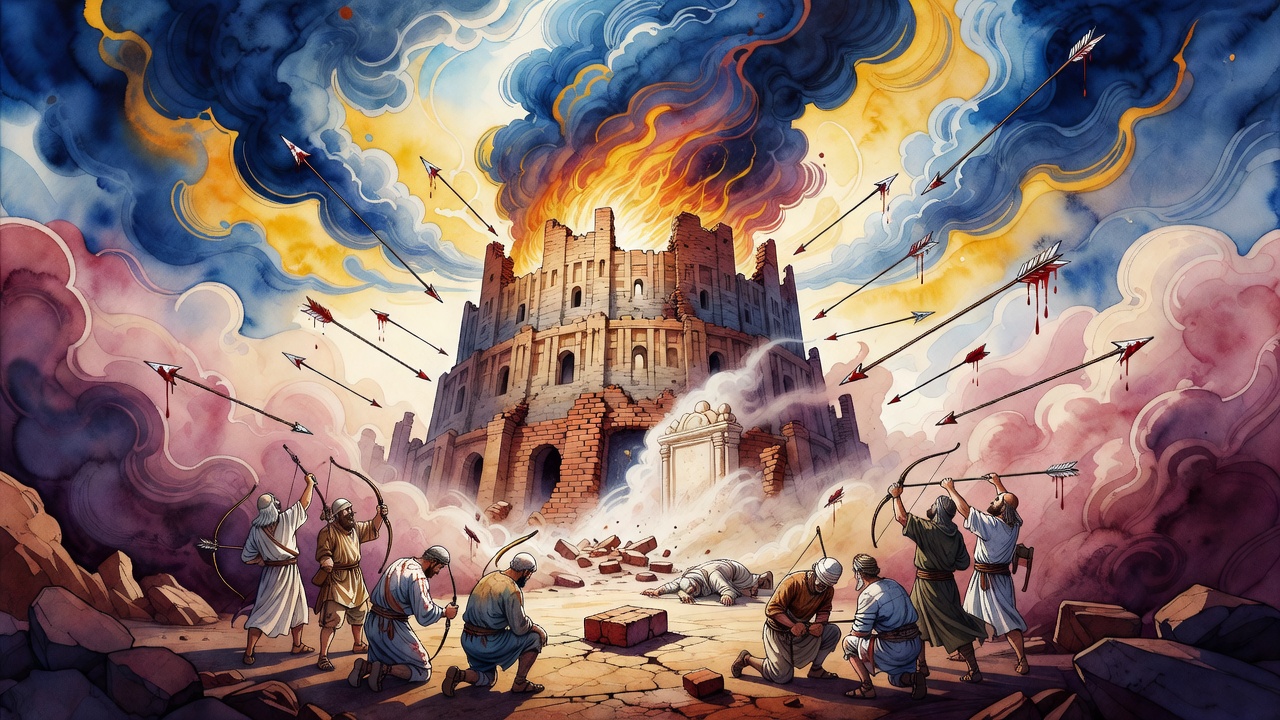
The legends preserved in Ginzberg's collection describe the Tower of Babel as Nimrod's final act of cosmic defiance, the project that turned private ambition into collective machinery. Six hundred thousand people came to the land of Shinar and began building. Nimrod's advisors had given him the plan: they would build a tower reaching heaven and take the fight to God directly. Some wanted to install idols at the top. Some wanted to use it to wage war. The project united, briefly, an entire civilization behind a single act of organized defiance.
God's response was not fire. It was confusion, the scattering of language, so that the builders could no longer coordinate. The tower stopped because the people could no longer speak to each other. Nimrod's power, built on the fear that aggregated masses feel for spectacular force, dissolved the moment communication broke down. The proverb survived him: like Nimrod, a mighty hunter before the Lord. The proverb cut both ways, and that ambiguity was woven into it from the start.
← All myths