A Brick Was Worth More Than a Man on Nimrod's Tower
A woman went into labor in the brickyard at Shinar. She gave birth where she stood, tied the baby against her body with a sheet, and kept working.
Table of Contents
 Click for full size
Nimrod Told Them Where God's Power Stopped
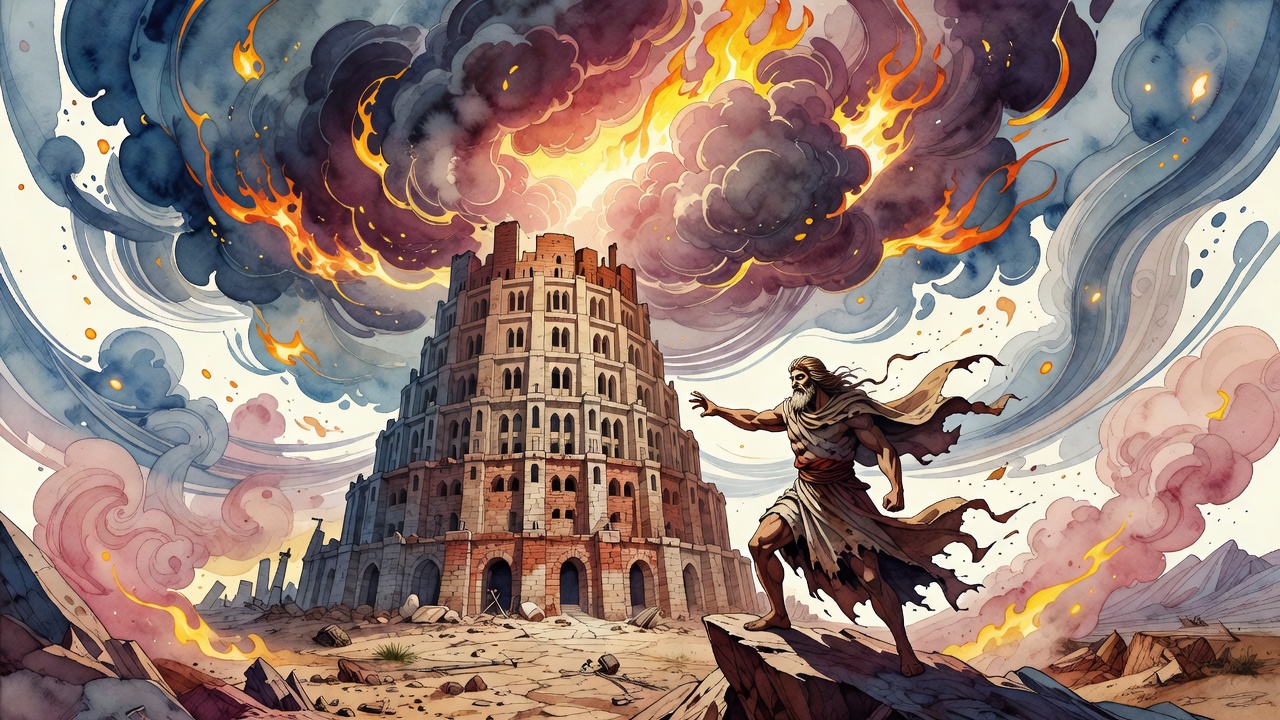
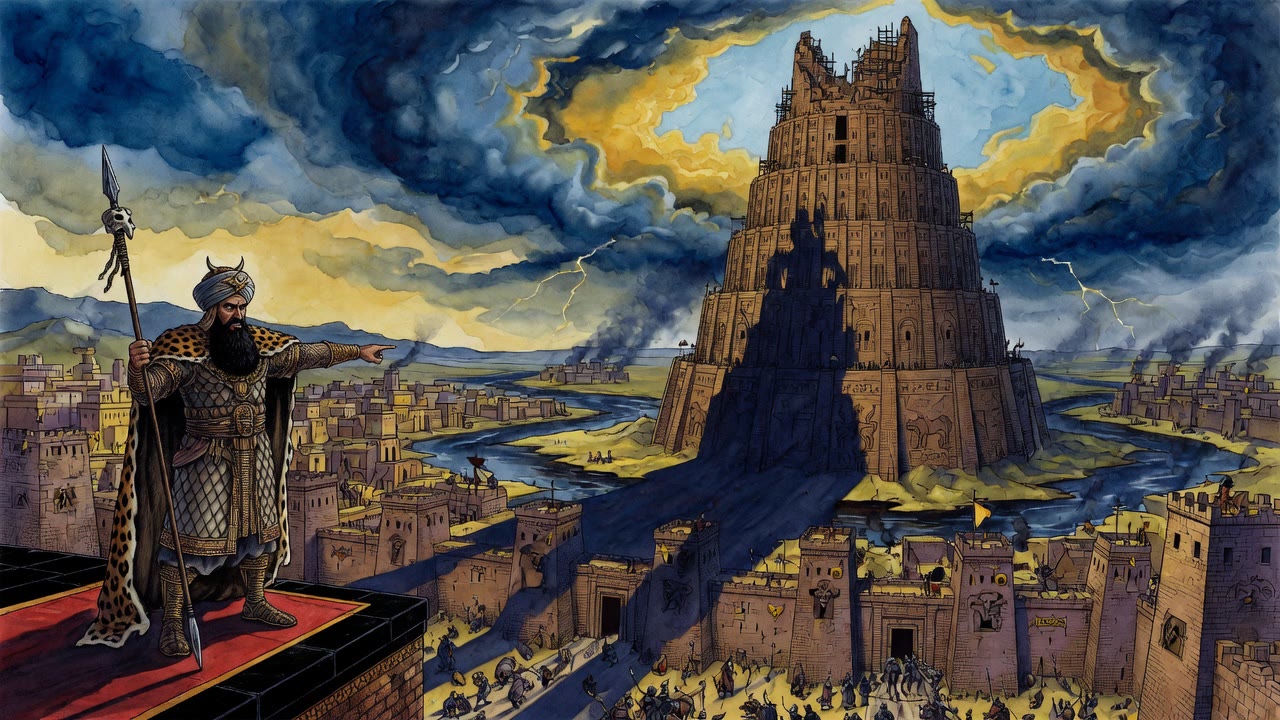
Nimrod stood on the plain of Shinar and explained the sky to his people. The power of the Holy One sits in the water, he told them. In the water held back above the world, and nowhere else. Reach that water and there is nothing over a man's head anymore.
He wanted one great city so that they would never be scattered across the earth the way the people before the flood had been scattered. He wanted a tower standing in the middle of it, going up. He wanted a name that would still be on the ground after all of them were under it.
Nobody argued. They all spoke the same language, and the work started that season.
There Was No Stone on That Plain
Shinar had nothing to quarry. No ledge, no outcrop, nothing to cut and nothing worth hauling in from anywhere close enough to matter.
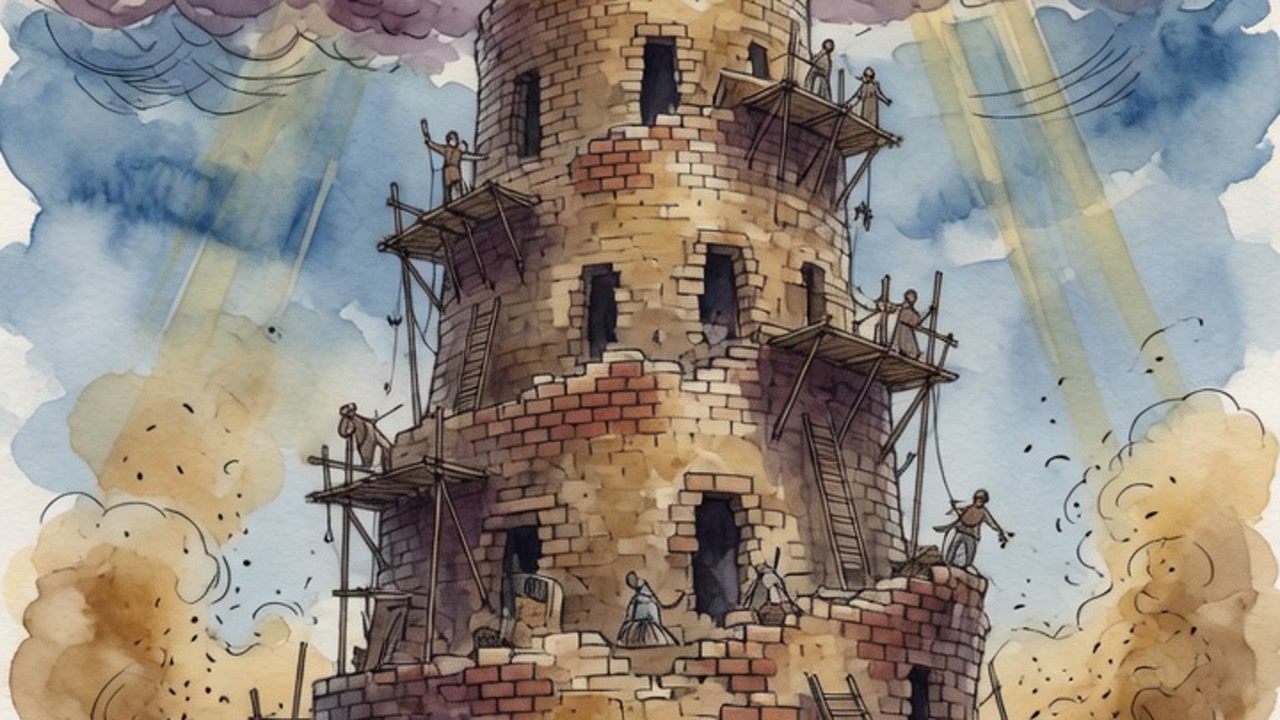
So they made their own stone. They dug the clay, moulded it, stacked the moulds in kilns and burned the bricks hard, and then they went back and dug more clay. The tower came up out of that mud one course at a time and did not stop coming up. It stood seven mils high before they were finished with it. Two ramps ran its faces, one climbing the east and one descending the west, and the traffic never crossed: men with bricks on their shoulders went up the eastern side, men with empty hands came down the western.
A man who started up the eastern ramp with a brick reached the top a year later.
The Day a Brick Slipped
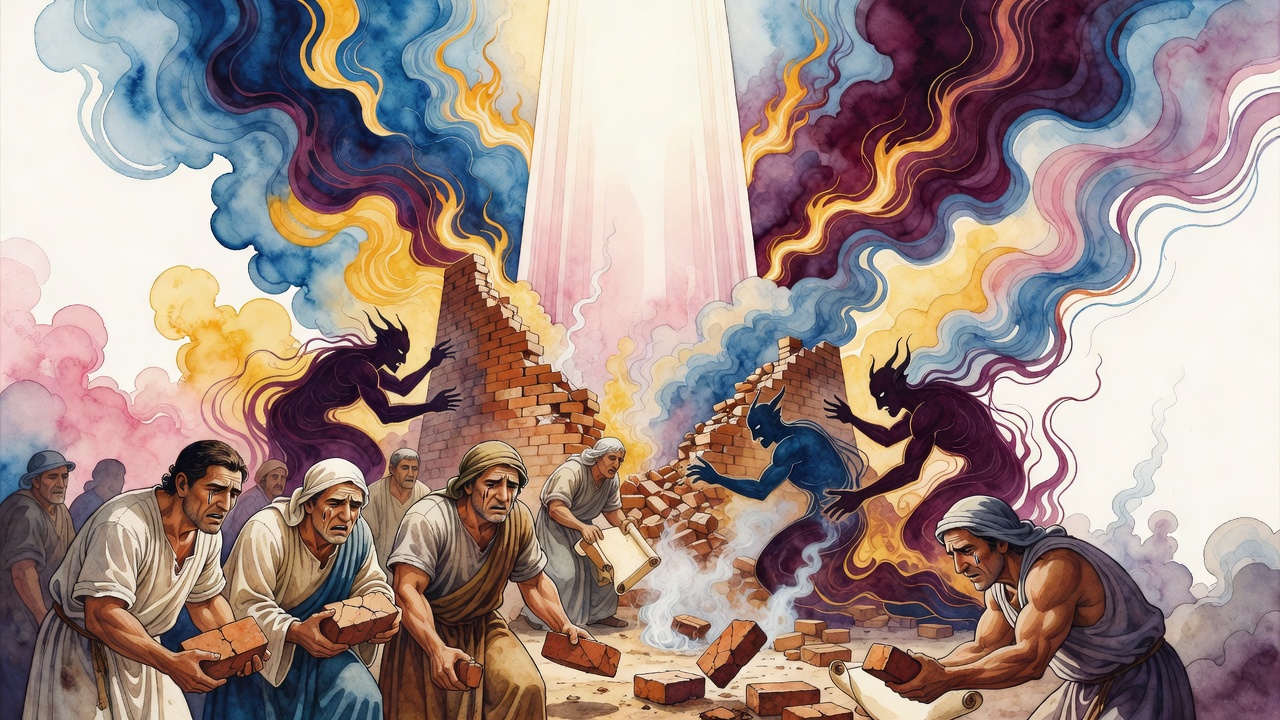
It happened often enough that they had a way of grieving for it. A brick would go out of a pair of hands somewhere high on the ramp, turn over once in the air, and fall the whole height of the tower into the dirt, where it broke. Every man who watched it go sat down where he stood and wept. "Woe to us," they said. "When will another one come up in its place?"
A year of climbing had just ended in pieces on the ground, and there was nothing to do about it but wait another year.
If a man fell, nobody turned his head.
He dropped the same distance the brick dropped and he landed in the same dirt, and the line on the ramp climbed over the gap where he had been. The brick had a year of walking inside it. He could be replaced before the next kiln cooled.
She Gave Birth in the Brickyard
Down at the bottom, in the yards where the clay was worked, the women filled the moulds. When a woman's hour came on her there, she was not permitted to interrupt herself. The moulds had to be filled, the kilns had to be fed, and the eastern ramp had to have something to carry in the morning.
So she gave birth standing in the brickyard with the wet clay in front of her. When the child was out she wrapped him in a sheet, tied the sheet around her own body, and put her hands back in the clay with her son hanging against her ribs.
Nobody wept for her either. She had not dropped anything.
The Ramps Went Quiet
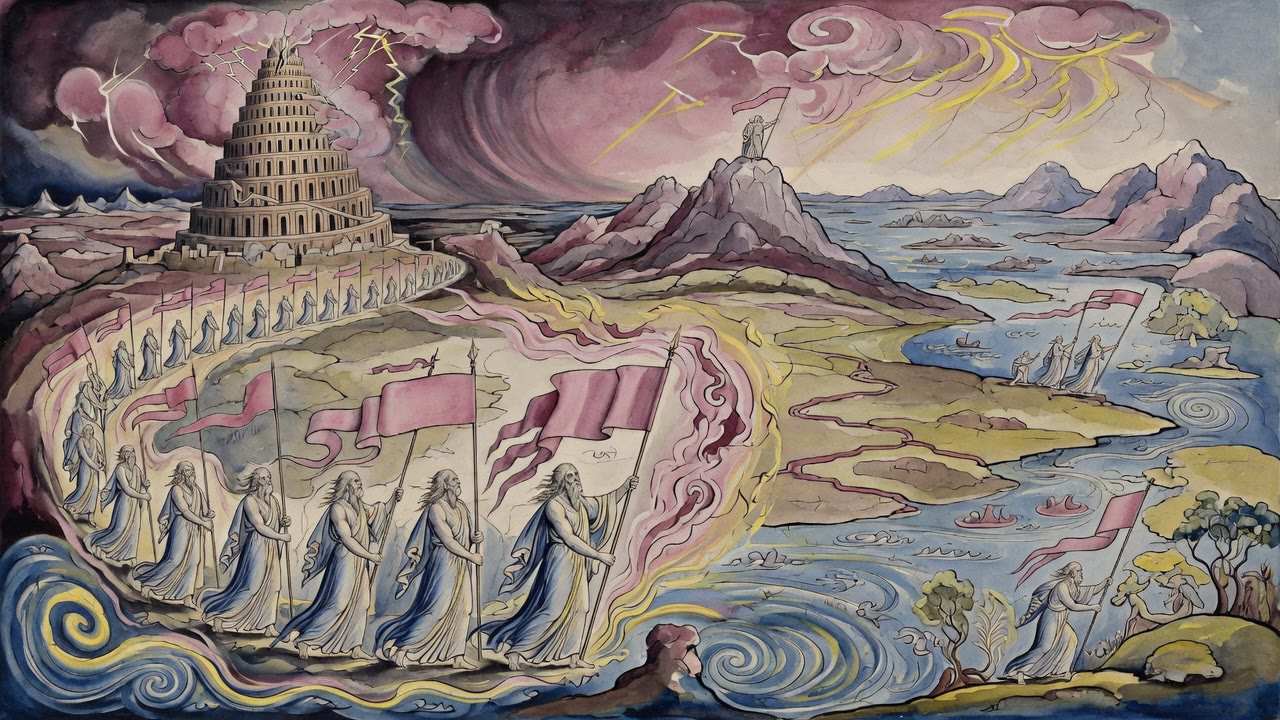
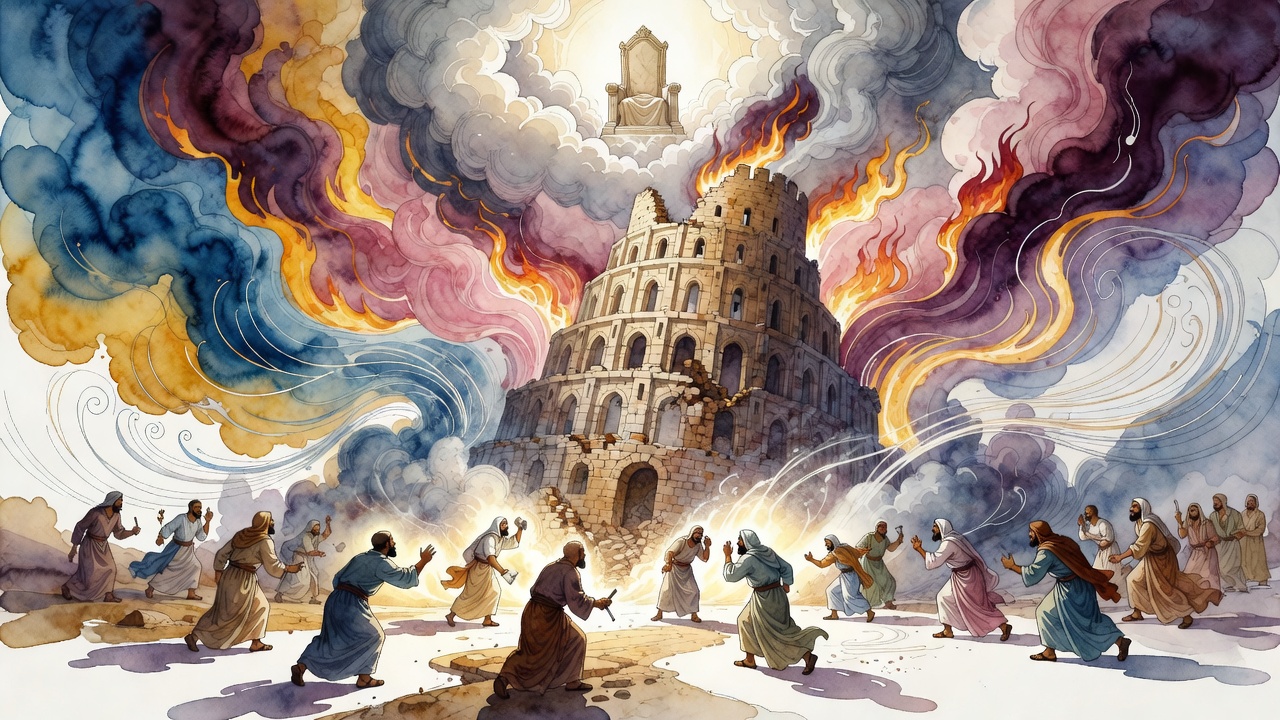
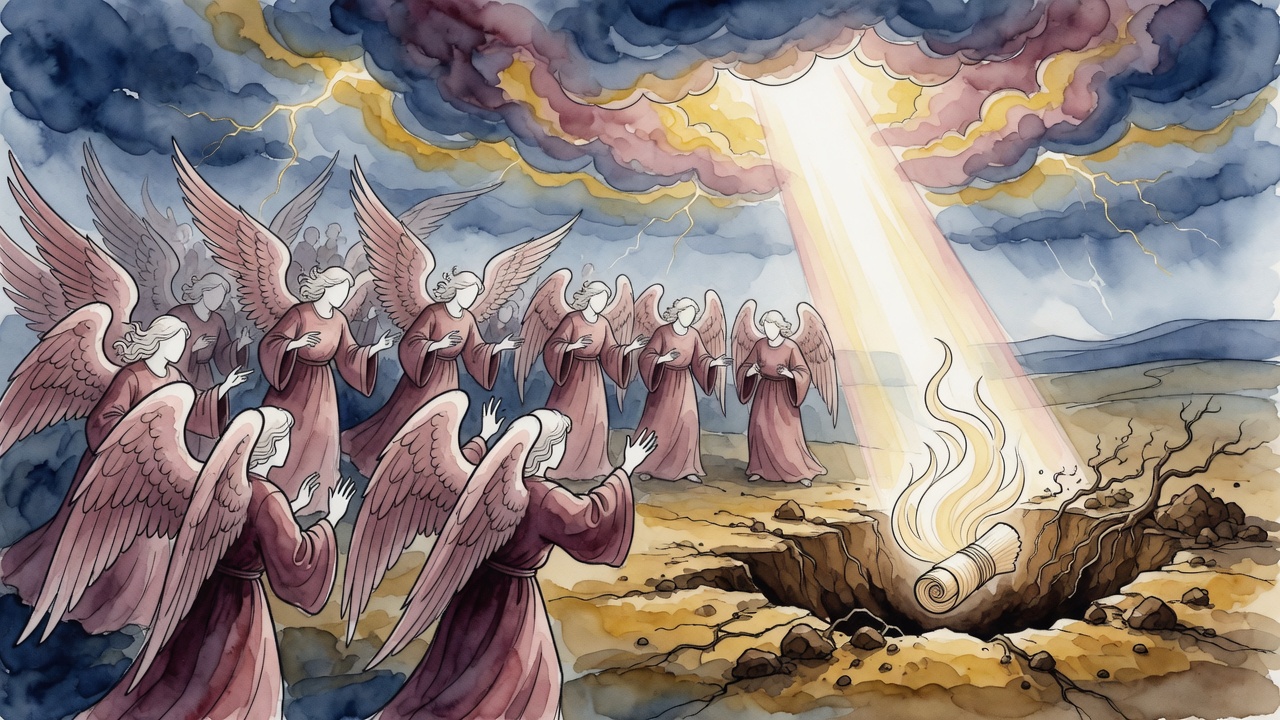
Then the languages came apart. A man halfway up the eastern face turned to ask the man behind him for something and heard noise come back at him. The man behind him heard noise too. It went down the ramp like that, mouth to mouth, until the whole tower was full of people shouting at each other in tongues that had been one language an hour earlier.
They left off building the city. They went out from Shinar in every direction, carrying their new speech with them, and the tower stayed where it was, seven mils of burned clay standing over an emptied plain.
The bricks were still on the ramps where the men had set them down. Each one had cost a year. Nobody sat beside them now, and nobody wept.
← All myths